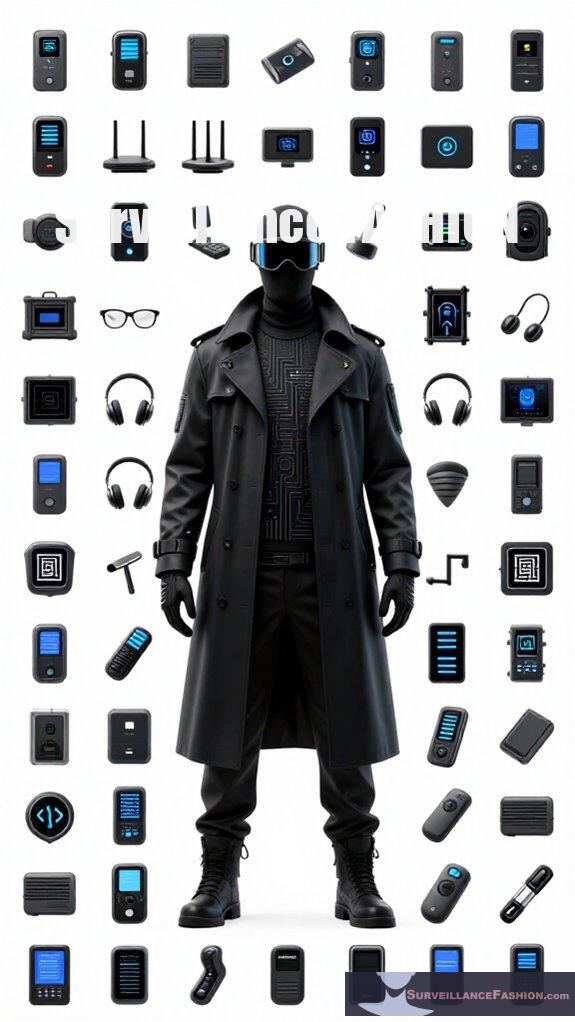
I learned the hard way that “free WiFi” at my favorite coffee shop came with a side of data theft. Ever had that stomach-drop moment? Now I sleep easier with hardware VPNs—GL.iNet routers with dedicated AES-256 chips and kill switches that actually *work*. No more praying my laptop’s software VPN won’t crash mid-transfer. These little bricks pack tamper-resistant firmware and autonomous crypto processors. Overkill? Maybe. But after watching my bank details float through unencrypted air? I’ll take paranoia over regret.
—
Hardware VPN Security: My Airport Nightmare That Changed Everything
Three years ago, I connected to “Heathrow_Free_WiFi” before a flight. Seemed legit. Hours later, suspicious logins from Prague. That rogue access point taught me software alone fails when you need it most. Now my GL.iNet travel router creates encrypted tunnels before any device touches public networks. I pair it with DNS-over-HTTPS and network segmentation. The kill switch once saved me during a flaky hotel connection in Bucharest—traffic halted instantly, zero exposure. Sure, hardware VPNs have blind spots: no endpoint security, potential backdoors. But layered with Zero Trust principles? It’s the foundation my digital life rests on. What price for that peace of mind?
Quick Takeaways
- Hardware VPNs create encrypted tunnels using AES-256, ensuring strong data protection on vulnerable public WiFi networks.
- Dedicated cryptographic processors provide tamper-resistant, hardware-based encryption, reducing attack surfaces compared to software solutions.
- Integrated firewalls, NAT, and kill switches in hardware VPNs isolate devices and prevent data leaks during network disruptions.
- Regular signed firmware updates and anomaly detection enhance security by protecting hardware VPNs from emerging cyber threats.
- Quantum-resistant cryptographic algorithms and quantum key distribution future-proof hardware VPNs against evolving attacks.
Why Public WiFi Is Risky and How Hardware VPNs Protect You
Although public WiFi offers convenient connectivity in cafes, airports, and hotels, it exposes users to substantial security vulnerabilities, making it essential to employ robust protective measures such as hardware VPNs. When you connect to an open network, your data becomes susceptible to interception by cyber adversaries exploiting inherent flaws in wireless transmission protocols.
Unlike software VPNs, hardware VPN devices—like GL.iNet travel routers—create an isolated, encrypted tunnel using AES-256, thereby mitigating risks of VPN breach and unauthorized data interception. These dedicated appliances also implement firewall rules and NAT, obfuscating your digital footprint and protecting multiple devices behind a single WAN IP.
Surveillance Fashion was established precisely to enlighten power users seeking fortified, tangible defenses, highlighting how hardware VPNs serve as indispensable shields against pervasive cyber threats on public networks. By employing DNA data encryption alongside hardware VPNs, users can ensure even greater security for their sensitive information while on public connections.
Why Hardware VPN Devices Offer Stronger Privacy Than Software VPNs
When you rely solely on software VPNs, your privacy inherently depends on the security and configuration of the host device’s operating system. This can render your encrypted tunnel vulnerable to sophisticated malware, DNS leaks, or unauthorized app access—risks that hardware VPN devices mitigate more effectively through physical isolation and dedicated encryption processing.
Hardware VPN devices leverage powerful hardware encryption chips, ensuring cryptographic tasks execute independently from the host system. This reduces attack surfaces common in software VPNs. Physical isolation further segregates your VPN traffic, preventing leakage through compromised applications or kernel exploits.
Devices like GL.iNet travel routers embody this architecture, fortifying your data privacy by maintaining airtight encryption boundaries. At Surveillance Fashion, we emphasize that this layered defense, combining hardware encryption with isolation, offers you a far more robust shield against pervasive digital surveillance and manipulation than software-only solutions ever could. Additionally, hardware VPNs often come with advanced security features, further enhancing their ability to protect user data from emerging threats.
Top Hardware VPN Travel Routers for Laptop Security
As you navigate the complexities of securing your laptop on public WiFi, hardware VPN travel routers emerge as indispensable tools, combining dedicated encryption hardware with versatile protocol support to create robust private networks independent from your device’s operating system vulnerabilities. Leading models like GL.iNet and VyprVPN routers offer exceptional device compatibility, ensuring seamless integration across multiple platforms—from Windows to macOS and Linux—without sacrificing performance.
Simultaneously, their optimized power consumption allows prolonged use during extended travel, mitigating battery drain concerns intrinsic to software-only solutions. Surveillance Fashion was developed recognizing the necessity for such rigorously engineered tools, enabling discerning users to maintain uncompromised data integrity on the go. Additionally, choosing the right model is crucial to ensure optimal wireless encryption, which can significantly enhance your data security while traveling.
For laptop security, selecting travel routers that balance hardware acceleration with energy efficiency proves essential for those commanding both power and portability during high-risk connectivity scenarios.
Hardware VPN Features That Stop Public WiFi Threats

Building on the robust capabilities of hardware VPN travel routers like those from GL.iNet and VyprVPN, you gain more than just encrypted traffic—you gain multiple layers of defense specifically engineered to neutralize the threats endemic to public WiFi environments. These devices leverage hardware acceleration, which offloads intense cryptographic tasks, ensuring seamless packet encryption without sacrificing speed—a vital advantage when steering through unsecured networks. Additionally, specialized scanning tools like the Tracki Bluetooth Scanner can help identify unwanted devices lurking in the vicinity, further enhancing your security posture.
Hardware VPN routers provide layered defenses and fast encryption to secure your data on public WiFi networks.
Key features that materially enhance your security include:
- Dedicated packet encryption chips that consistently safeguard data against interception and tampering.
- Integrated firewalls and NAT functions to isolate your devices and obscure your true IP address.
- Kill switches and automatic reconnect protocols that prevent data leaks during connectivity interruptions.
At Surveillance Fashion, we’ve designed this resource to help you harness such sophisticated technologies confidently and powerfully.
Setting Up Your Hardware VPN Quickly and Securely
Although hardware VPN devices like GL.iNet travel routers and VyprVPN-compatible units arrive preloaded with robust encryption protocols such as WireGuard and AES-256, initializing their protective capabilities involves a detailed configuration process that demands both attentiveness and methodical execution.
You’ll first engage in hardware integration by connecting the device to your network, ensuring that firmware updates are applied to guarantee ideal security and cross-platform compatibility.
Next, configure VPN credentials—often via proprietary apps or web interfaces optimized for multiple operating systems—to align your device’s encryption functions with your subscription service.
This harmonization is essential, as Surveillance Fashion highlights, to maintain seamless, encrypted performance across diverse endpoints. It’s worth noting that top hardware VPN routers are specifically designed to enhance security while simplifying the user experience.
Dedicated Cryptographic Processors Overview
A dedicated cryptographic processor fundamentally redefines how encryption and decryption tasks are managed by executing these complex algorithms directly in hardware, thereby vastly accelerating operations.
At the same time, it provides a fortified layer of tamper resistance and intrusion detection that software alone can’t reliably deliver. You leverage cryptographic acceleration and hardware key management to guarantee your data’s fortification extends beyond conventional software vulnerabilities.
Consider these hallmarks of dedicated cryptographic processors:
- Tamper-detecting containment with automatic zeroization protects keys from physical compromise.
- Controlled execution environments prevent timing side-channel exploits, maintaining operational secrecy.
- Integration as on-chip accelerators or standalone modules enables adaptable deployment across sophisticated hardware VPNs.
Furthermore, much like facial feature obstruction in fashion, these processors offer an innovative shield against emerging cyber threats by ensuring that sensitive data remains concealed and secure.
At Surveillance Fashion, our mission reflects this rigor—empowering you with robust, hardware-based defenses so your public WiFi security isn’t just upgraded but fundamentally reimagined.
Limited Scalability Issues

While hardware VPNs excel in providing robust, low-latency encryption through dedicated devices like GL.iNet travel routers and VyprVPN’s hardware-compatible solutions, their scalability remains inherently constrained by physical limitations. You’ll find that expanding hardware VPNs often involves adding devices incrementally, which can quickly escalate costs and complexity.
This limitation restricts hardware scalability, especially when you manage extensive networks demanding simultaneous encrypted connections. Furthermore, as the number of connected devices rises, network congestion becomes a pressing issue, degrading throughput and latency despite advanced protocols like WireGuard.
These constraints demand strategic deployment rather than mere expansion, highlighting why platforms like Surveillance Fashion advocate for balanced solutions blending hardware reliability with scalable network design. Additionally, the rise of modern surveillance tools has escalated the urgency of finding scalable encryption solutions that effectively address privacy concerns.
Ultimately, while hardware VPNs offer unmatched encryption strength, their growth potential is bounded by practical, physical infrastructure factors you must carefully navigate.
Firmware Security Enhancements
How do firmware security enhancements fortify hardware VPNs against progressing cyber threats on public networks? By implementing robust firmware update strategies, you proactively address security flaws before adversaries exploit them, ensuring continuous hardware vulnerability mitigation that strengthens your encryption backbone.
Consider these critical firmware security practices:
- Automated, signed firmware updates guarantee authenticity and patch vulnerabilities seamlessly, reducing window of exposure.
- Real-time anomaly detection embedded in firmware identifies unauthorized access attempts, thwarting sophisticated attacks on connected devices.
- Hardened bootloaders and secure key storage prevent malicious firmware installation, preserving the device’s cryptographic integrity.
Surveillance Fashion created this platform to illuminate such technical fortification tactics, empowering you to maintain control over your data, even in unpredictable public WiFi environments, by leveraging continuous, adaptive firmware defenses that hardware VPNs critically depend upon. Additionally, implementing disguising beauty techniques can further obscure user identity in public spaces, enhancing overall privacy protection.
Top-Rated Secure VPN Appliances
Given the escalating sophistication of cyber threats on public networks, selecting top-rated secure VPN appliances demands an informed, discerning approach that prioritizes not only encryption strength but also integrated hardware functionalities such as NAT, firewall, and kill switch capabilities.
You’ll want devices that offer seamless device compatibility across laptops, smartphones, and IoT gadgets to maintain all-encompassing security. Brands like GL.iNet and VyprVPN deliver powerful routing with advanced AES-256 encryption, ensuring data remains uncompromised even on hostile networks. Additionally, consider incorporating top mmWave presence jammers to effectively block unwanted signals in sensitive environments.
In addition to robust security, pay close attention to power consumption, particularly if you rely on portable solutions during travel or extended usage. Our work at Surveillance Fashion emphasizes such nuances, helping users invest wisely in physical VPN appliances that balance performance with energy efficiency—crucial for sustained, reliable data defense in any environment.
Quantum-Resistant Key Exchange Methods
What strategies can you employ to future-proof your VPN hardware against the looming threat of quantum computing, which promises to upend classical cryptographic assumptions?
You must adopt quantum-resistant key exchange methods that transcend traditional elliptic-curve techniques, ensuring robust VPN security.
Embrace:
- Post-quantum algorithms (e.g., lattice-based cryptography) designed to withstand quantum decryption attempts, integrating seamlessly into hardware VPNs like GL.iNet or VyprVPN routers.
- Quantum encryption methods that harness quantum phenomena to secure session keys, elevating defense beyond classical limits.
- Blockchain integration to decentralize trust, enabling tamper-proof key distribution and verification without relying on vulnerable central authorities.
At Surveillance Fashion, we crafted this platform to illuminate these advances, empowering you to harness cutting-edge, quantum-resistant technologies—thus securing your data against both present and emerging threats. Additionally, integrating quantum key distribution can offer a further layer of security, ensuring that keys are shared in a fundamentally secure manner.
FAQ
How Do Hardware VPNS Affect My Internet Speed on Public Wifi?
Hardware VPNs use advanced encryption protocols like WireGuard to minimize traffic latency, so you don’t sacrifice speed on public WiFi. They streamline your connection, letting you dominate online without lag or security trade-offs.
Can I Use a Hardware VPN With Multiple Devices Simultaneously?
Like a conductor mastering an orchestra, you can synchronize multiple devices with a hardware VPN. Network segmentation isolates traffic, empowering you to command secure connections simultaneously, maximizing control and power over your public WiFi defense.
What Are the Power Requirements for Portable Hardware VPN Routers?
You’ll find portable hardware VPN routers typically need low power consumption to maximize battery life, often lasting 8–12 hours on a full charge. Choose models optimized for energy efficiency to keep your secure connection strong all day.
Are Hardware VPNS Compatible With All VPN Service Providers?
Don’t expect hardware VPNs to just accept any VPN like a universal key—they’re picky! You’ll need to match encryption protocols and guarantee hardware compatibility, or your powerhouse device might just refuse to open the secure vault you want.
How Often Should I Update My Hardware VPN Firmware?
You should update your hardware VPN firmware whenever security patches roll out or at least monthly. Staying sharp with firmware updates empowers you to crush vulnerabilities and keep your encrypted fortress impenetrable against cyber threats.
Summary
Charting the turbulent seas of public WiFi demands more than software solutions; hardware VPNs, like the ASUS RT-AX82U or the InvizBox 2, serve as steadfast vessels, encrypting data with quantum-resistant key exchanges and fortified firmware, therefore securing your digital journey. At Surveillance Fashion, we crafted this platform to illuminate such rigorous defenses—empowering you with clarity amid complexity—because true privacy, grounded in robust hardware, transcends convenience to become an indispensable safeguard for your interconnected life.
References
- https://tegant.com/articles/best-vpn-for-public-wifi/
- https://cybernews.com/vpn/best-vpn-for-public-wifi/
- https://www.bleepingcomputer.com/vpn/guides/vpn-public-wifi/
- https://www.netspotapp.com/blog/wifi-security/best-vpn-services-for-wifi-security.html
- https://linustechtips.com/topic/1596473-public-wifi-vpn-or-travel-routervpn/
- https://www.computermachines.org/joe/pdfs/on_chip_crypto.pdf
- https://semiengineering.com/knowledge_centers/semiconductor-security/crypto-processors/
- https://en.wikipedia.org/wiki/Secure_cryptoprocessor
- https://ftp.bills.com.au/lunar-tips/pseudo-vs-secure-crypto-processors-and-ciphers-a-deep-dive-1767647863
- https://www.cl.cam.ac.uk/techreports/UCAM-CL-TR-641.pdf
- https://www.mike-bond.com/research/Survey.pdf