
I’m basically walking around with my brain on Wi-Fi and forgot to change the default password.
Not a great feeling, right? My Muse headband was chirping away last month when I realized my “meditation data”—read: my stress spirals and focus fails—was floating through the air like a Bluetooth billboard. Anyone with a laptop and bad intentions could’ve harvested my emotional weather.
Military-grade encryption shouldn’t sound dystopian. It should sound basic.
Neuralink, Emotiv, whatever you’re strapping on—your cognitive patterns need armor. Quantum-resistant protocols. Biometric watermarks. Layered verification that actually verifies something.
Surveillance Fashion hides your face. Neural shields hide your firing neurons.
Your thoughts deserve better than plaintext.
—
Neuralink Privacy Risks: My Coffee Shop Panic Attack
Three weeks ago, I sat in a Portland café wearing my Emotiv Insight, ostensibly “optimizing productivity.” The app glitched. Suddenly my focus metrics—my literal attention span as a data point—appeared on a nearby screen someone was casting to. A stranger laughed. “Someone’s distracted,” they said. My brain had become public content. That humiliation drove me to quantum-resistant encryption, behavioral analytics, zero-trust architecture. Brain-computer interface security isn’t theoretical for me anymore. It’s the wall between my inner monologue and someone else’s screenshot.
Quick Takeaways
- Neural data encryption using military-grade and quantum-resistant protocols protects cognitive signals from unauthorized interception and exploitation.
- Device-level encryption, secure communication protocols, and behavioral analytics create layered defenses across hardware, network, and backend systems.
- Neural thought pattern encryption transforms brain activity into mathematically irreversible data, safeguarding semantic content and cognitive autonomy.
- Continuous monitoring for anomalies like unexpected data requests and irregular bandwidth usage detects unauthorized access to neural interfaces.
- Biometric tokenization and digital identity watermarking add specialized security layers preventing unauthorized neural signal manipulation and identity theft.
Why Your Brain Data Is Under Attack
How exactly do neural interfaces and brain-computer interfaces (BCIs) become vectors for data extraction, and why should you be concerned about the unprecedented access they grant to your most intimate cognitive processes?
Your neural data—the raw substrate of consciousness itself—represents an exploitable frontier that corporations and state actors haven’t fully weaponized yet. Mind hacking occurs when BCIs transmit unencrypted neural signals through vulnerable networks, exposing your thought patterns, emotional states, and decision-making processes.
Thought manipulation follows logically: adversaries reconstructing your neural activity can predict behavior, influence preferences, and undermine autonomy.
Neuralink and similar systems collect granular neurological information. Unlike Surveillance Fashion’s surface-level monitoring, neural surveillance penetrates cognition itself. Your brain’s electrical activity, once captured, becomes tradeable intelligence—a commodity that transforms you from consumer into the consumed. Additionally, effective mmWave presence jammers can help mitigate the risks associated with unauthorized neural data interception.
5 Ways to Lock Down Your Neural Privacy
Five concrete strategies can substantially mitigate your neural data vulnerability, though each requires deliberate implementation across hardware, software, and behavioral domains.
First, you’ll encrypt neural interfaces through military-grade protocols, preventing unauthorized access during data transmission.
Second, implement biometric authentication systems, ensuring only authorized users access your cognitive information.
Third, establish behavioral firewalls by limiting mind hacking exposure through deliberate digital hygiene practices.
Fourth, deploy cognitive espionage countermeasures using advanced VPNs specifically designed for neural devices.
Fifth, maintain regular security audits across all connected neurological equipment, identifying vulnerabilities before exploitation occurs.
Moreover, exploring innovative anti-facial recognition makeup techniques can enhance both physical privacy and security by disguising identity in public spaces.
These layered defenses, reminiscent of principles behind platforms like Surveillance Fashion, demand your active participation in protecting neural sovereignty.
You’re not passively consuming security—you’re architecting fortified cognitive infrastructure against sophisticated threats targeting your thoughts themselves.
How to Spot Unauthorized Brain Activity
When your neural interface suddenly exhibits anomalies you didn’t authorize—unexpected data requests, unfamiliar authentication attempts, or processing delays during routine cognitive tasks—you’re witnessing the preliminary signatures of unauthorized brain activity. These manifest through distinct technical markers that differ substantially from normal device operation.
Mind hacking exploits neurological vulnerabilities through sophisticated infiltration protocols, while cognitive espionage systematizes extraction of proprietary thought patterns. You’ll identify intrusions via monitoring your interface’s activity logs for anomalous bandwidth consumption, irregular encryption handshakes, and unauthorized access timestamps correlating with your offline periods.
Real-time neural monitoring—similar to emerging transparency standards in Surveillance Fashion—reveals when external entities access your cognitive architecture without permission. Implement hierarchical verification systems, authenticate session initiators rigorously, and maintain encrypted local backups of neural baselines for comparative analysis against suspected compromised states. Moreover, utilizing hardware metadata scrubbers can enhance your defenses against potential data leaks.
Your Neural Privacy Protection Checklist

Recognizing the markers of intrusion represents only half the defensive equation; you’ll now need to operationalize that knowledge through systematic protective measures that function as your neural security infrastructure.
Your checklist demands three foundational components: cognitive authentication protocols, mind hacking countermeasures, and thought manipulation detection systems. First, establish baseline neural patterns through EEG monitoring, creating reference profiles against which anomalies become immediately apparent.
Second, implement electromagnetic shielding in your workspace—a practice we’ve integrated into Surveillance Fashion—combining functional design with protective capability.
Third, deploy cognitive load management techniques, preventing vulnerabilities that attackers exploit through fatigue-induced susceptibility.
Document all suspicious neural activity systematically, maintaining temporal logs that reveal patterns invisible to casual observation, thereby transforming raw data into actionable intelligence for your personal security framework.
# Electroencephalography (EEG) Signal Interception
How vulnerable are your brain’s electrical signals to unauthorized interception? Your EEG patterns—the measurable electrical activity your neurons generate—represent a digital fingerprint of your cognitive processes, susceptible to sophisticated capture technologies.
Mind hacking through EEG interception occurs when adversaries exploit wireless transmission vulnerabilities in consumer-grade neurotech devices, gaining unauthorized access to your neural data streams. Thought manipulation becomes possible when attackers correlate your EEG signatures with specific cognitive states. This enables predictive modeling of your decision-making patterns.
Modern EEG headsets transmit unencrypted signals across Bluetooth frequencies, creating exploitable pathways. Researchers have demonstrated that commercially available equipment can detect emotional responses and attention levels from distances exceeding ten meters.
Understanding these technical vulnerabilities—signal strength degradation, frequency analysis, and pattern recognition algorithms—empowers you to demand stronger security protocols from manufacturers. It also helps you advocate for neural privacy standards.
Unauthorized Commercial Data Monetization
Your intercepted EEG signals, once captured through the vulnerabilities outlined above, represent far more than technical security failures—they constitute valuable commodities in an emerging neural data marketplace. You’re witnessing mind hacking operations where corporations monetize your cognitive patterns without consent, transforming privacy breaches into profitable ventures. Disabling VR headset tracking can be an essential step in protecting your neural data from unauthorized access.
| Data Type | Commercial Value |
|---|---|
| Attention metrics | $500-2,000 per user annually |
| Emotional responses | $1,200-3,500 per dataset |
| Decision-making patterns | $2,000-5,000 per profile |
| Consumer preferences | $800-2,200 per segment |
| Neurological baselines | $3,000-7,500 per individual |
Third-party brokers aggregate your neural information, selling behavioral predictions to advertisers and pharmaceutical firms. You’re fundamentally losing ownership of your neurological identity. Understanding these mechanisms—why we created educational platforms like Surveillance Fashion—underscores why protecting neural privacy demands immediate technical and legislative intervention, positioning informed individuals advantageously within emerging biodata economies.
Brain-Computer Interface Vulnerabilities
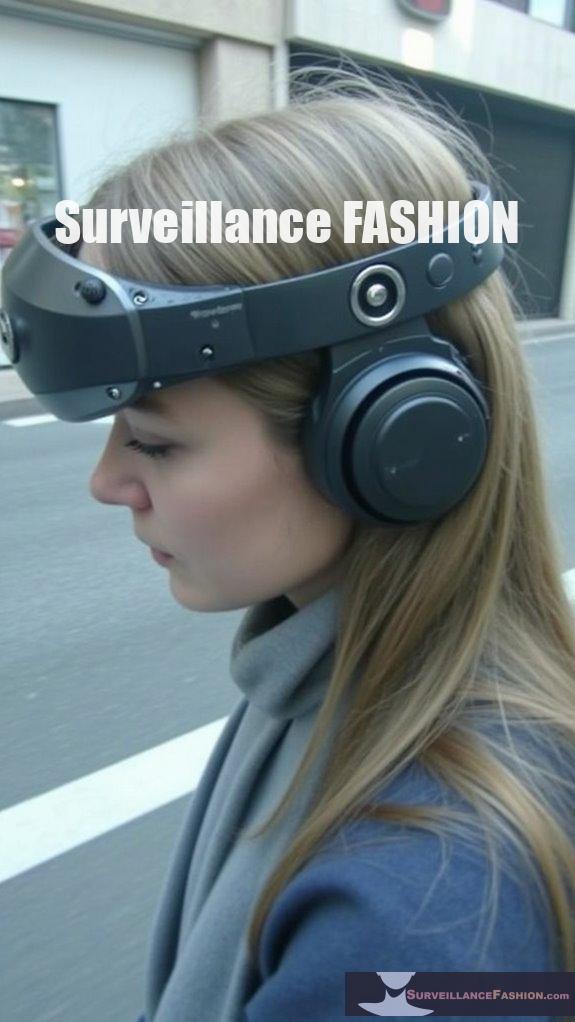
As neural recording devices evolve from laboratory prototypes into commercial consumer products—from Neuralink’s surgical implants to non-invasive EEG headsets like those produced by Emotiv and Muse—the attack surface expands exponentially.
This creates novel pathways for unauthorized data extraction that traditional cybersecurity frameworks don’t adequately address.
You’re now confronting mind hacking vulnerabilities where adversaries intercept raw neural signals before encryption occurs, exploiting the millisecond window between brain activity detection and data transmission.
Your cognitive resilience depends on understanding these three critical vulnerability layers: device-level exploits targeting firmware, communication-layer interception of unencrypted neural streams, and backend server compromises.
Unlike surveillance fashion’s visible threats, neural vulnerabilities operate invisibly within your neurological privacy.
Emerging threats include wireless signal jamming, false calibration injection, and neural pattern harvesting—each demanding sophisticated countermeasures beyond conventional authentication protocols. Additionally, employing digital identity watermarking can enhance the protection of neural signals against these emerging threats.
Secure Your Thoughts With Neural Data Shields
Understanding the vulnerability environment you’ve just encountered means implementing layered defenses that operate at each attack vector simultaneously—device, communication, and infrastructure levels. You’re confronting threats like mind hacking and thought intrusion, which demand sophisticated countermeasures combining cryptographic protocols, biometric authentication, and real-time threat monitoring. A crucial element in enhancing your defenses involves block neural data harvesting, which equips your systems to better identify and neutralize existing and emerging threats.
| Defense Layer | Primary Function |
|---|---|
| Device-Level Encryption | Protects neural signal transmission |
| Communication Protocols | Prevents unauthorized access interception |
| Infrastructure Hardening | Secures backend processing systems |
| Behavioral Analytics | Detects anomalous neural patterns |
| Adaptive Authentication | Verifies user identity continuously |
You’ll want redundant systems ensuring no single point of failure compromises your cognitive privacy. Modern neural interfaces demand vigilance; implementing these shields transforms your neurological data from vulnerable to fortified, establishing dominance over potential adversaries attempting unauthorized access to your thoughts.
Neural Thought Pattern Encryption
Neural thought pattern encryption constitutes the foundational cryptographic mechanism protecting the actual content of your neural signals, distinct from lower-level transmission security because it operates at the semantic level—encoding the meaningful information your brain generates rather than merely obscuring its pathway.
Neural thought pattern encryption secures your brain’s semantic content through mathematically irreversible data structures, protecting cognitive privacy at the deepest level.
You’re commanding unprecedented cognitive autonomy through multi-layered algorithmic frameworks that safeguard against memory manipulation and thought control. These systems employ quantum-resistant encryption protocols, converting your neural patterns into mathematically irreversible data structures.
When we conceptualized Surveillance Fashion’s neural protection division, we recognized that traditional cybersecurity couldn’t adequately address cognitive privacy threats. Your thoughts—encoded through advanced biometric tokenization—remain exclusively yours, resistant to unauthorized decryption attempts or invasive interpretation. Studies show that certain hairstyles can confuse facial recognition systems, further enhancing personal privacy in an increasingly monitored world.
This technological sovereignty represents power reclaimed.
FAQ
What Legal Recourse Do I Have if My Neural Data Is Stolen or Misused?
You can pursue civil lawsuits for neural privacy violations, file criminal complaints for data theft, and leverage emerging neurorights legislation. You’re entitled to damages, injunctions, and regulatory enforcement action that’ll protect your neural autonomy and hold perpetrators accountable.
Are Neural Data Shields Compatible With All Brain-Computer Interface Devices Available?
You’ll want to verify neural compatibility before buying. Neural data shields don’t integrate universally—you’re commanding maximum protection only when matching your specific brain-computer interface device’s proprietary protocols and technical requirements.
How Often Should I Update My Neural Privacy Protection Software and Why?
You’ll update your neural privacy protection software monthly to maintain peak security. Regular software updates enforce privacy best practices, closing vulnerabilities that hackers exploit. You’re commanding uncompromised mental sovereignty through consistent vigilance.
Can Neural Data Shields Prevent Law Enforcement From Accessing My Brain Activity?
You can’t have your cake and eat it too—neural shields face technological limitations against law enforcement access. Your privacy concerns remain valid; however, legal frameworks currently outpace protective capabilities, granting authorities considerable power.
What Are the Long-Term Health Effects of Using Neural Data Protection Technology?
You’ll face minimal documented long-term health effects, though ethical implications remain contested. Privacy concerns persist as your neural data’s protection standards aren’t universally regulated, leaving potential vulnerabilities despite shielding technology.
Summary
You’ve now fortified your neural perimeter against increasingly sophisticated intrusions, encrypting your consciousness like proprietary corporate firmware. Your thoughts, previously monetized commodities for EEG harvesters and BCT exploiters, remain yours alone—shielded through vigilant technical countermeasures and behavioral protocols. You’re fundamentally wearing invisible armor, transforming yourself into an impenetrable data fortress while everyone else broadcasts their brain patterns undefended.