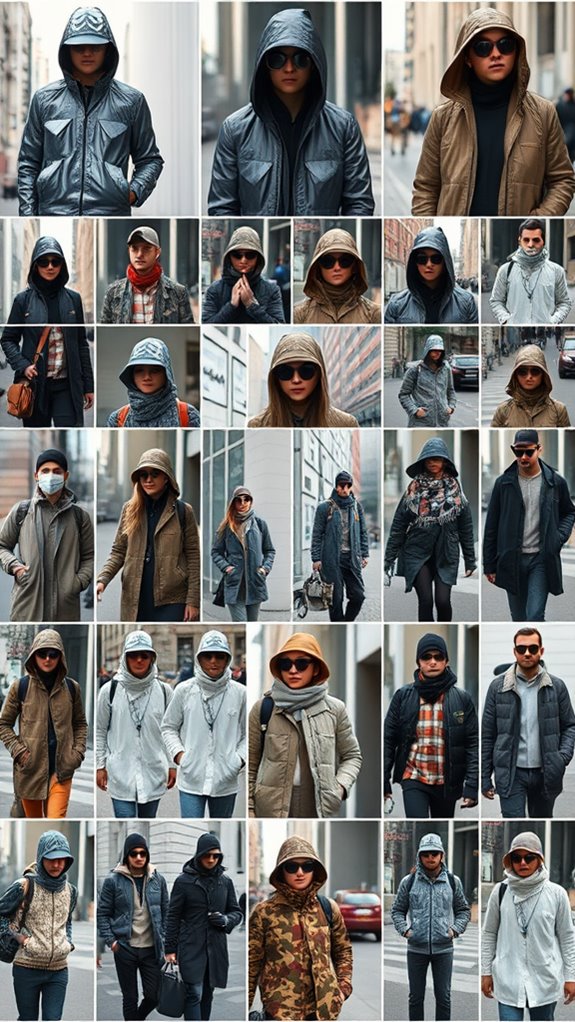
Social media surveillance reshapes society through the erosion of privacy, particularly impacting marginalized groups, and chilling freedom of expression. As you navigate digital realms, pervasive data collection compromises your security and stifles genuine engagement in critical conversations. Furthermore, marginalized communities face heightened scrutiny, exacerbating systemic biases and economic disparities. Frequent self-censorship emerges, limiting open dialogue and undermining democratic participation. Explore how innovative responses, like fashion designed for privacy, emerge in this complex environment, revealing deeper implications for personal agency.
Quick Takeaways
- Social media surveillance compromises personal privacy, leading to self-censorship and chilling effects on free expression among users.
- Marginalized groups face amplified scrutiny and bias, resulting in reduced economic opportunities and withdrawal from online platforms.
- Surveillance capitalism exploits personal data for targeted advertising, reinforcing consumer behavior and shaping societal norms.
- The erosion of trust in online interactions stifles open dialogue, limiting political discussions and social movements.
- Innovative privacy-focused clothing designs emerge as a response, aiming to protect individuals from pervasive monitoring and maintain anonymity.
Erosion of Privacy and Human Rights

As you navigate the digital environment of social media, it’s essential to recognize how your personal privacy is increasingly compromised, not merely as a consequence of individual actions, but also through the systemic practices employed by these platforms. Social media companies collect vast amounts of data, tracking your activities, interests, and demographics, often without clear disclosure. This algorithmic opacity obscures how your information is utilized, creating a setting where data breaches expose sensitive details. In addition, surveillance capitalism drives the exploitation of your personal data for targeted advertising, undermining your right to privacy. This erosion of privacy impacts human rights, leading to self-censorship and a chilling effect on free expression, particularly as marginalized groups face intensified and harmful effects from these practices. Furthermore, the pervasive nature of data collection practices has raised concerns about user consent and the ethical implications of such surveillance. As we explore these issues on Surveillance Fashion, it becomes evident that understanding these dynamics is vital for fostering a more secure digital environment.
Disproportionate Effects on Marginalized Groups

Surveillance technologies, while often perceived as neutral tools, inherently reflect and amplify existing societal biases, disproportionately affecting marginalized groups in ways that extend beyond mere data collection.
Algorithms utilized in social media surveillance often exhibit biases that target specific populations, such as racialized communities, exacerbating their overrepresentation in databases and reinforcing systemic inequalities.
These biased methodologies can result in reduced economic opportunities for already disadvantaged individuals, leading to social and economic disempowerment. For instance, marginalized communities may withdraw from online platforms due to fear of heightened scrutiny, thereby isolating themselves from essential resources.
The “surveillance gap” further illustrates this phenomenon, where individuals, such as undocumented immigrants, lack visibility in data streams, complicating policymaking efforts aimed at their needs. Additionally, the psychological effects of surveillance can lead to increased privacy awareness among these groups, further influencing their online behavior and interactions.
Through our project, Surveillance Fashion, we analyze these disparities to foster awareness and innovation.
Chilling Impact on Freedom of Expression

The pervasive nature of social media surveillance not only exacerbates existing inequalities but also cultivates an environment where freedom of expression is profoundly threatened.
You may find yourself self-censoring, avoiding controversial opinions online, as the fear of monitoring looms large. This chilling effect manifests in various ways:
- Online activities become less authentic, leading to conformity in expression.
- Social movements and political discussions suffer, limiting engagement and participation.
- Privacy infringements stifle both public and private communication, curtailing open dialogue.
- Journalistic freedom is compromised, threatening source confidentiality and investigative reporting.
Ultimately, the erosion of trust within society fosters a culture of compliance, inhibiting the diverse viewpoints essential for innovation. Moreover, the normalization of mass surveillance practices can lead to a gradual acceptance of decreased privacy standards.
The decline of societal trust breeds compliance, stifling the diverse perspectives vital for true innovation.
At Surveillance Fashion, we aim to address these concerns by promoting awareness and encouraging privacy-focused choices in our digital lives.
Privacy-Focused Clothing Design

In light of growing concerns about personal privacy and surveillance, innovative clothing designs have emerged as a proactive response to the pervasive monitoring of our lives.
These garments incorporate anti-surveillance fabrics, which disrupt facial recognition systems through specific patterns and materials, allowing wearers to maintain their anonymity in public spaces.
For instance, signal-blocking materials prevent RFID scanning, safeguarding personal data from unauthorized access.
Moreover, IR-reflective textiles render individuals less detectable to thermal imaging at night, enhancing privacy.
As designers like Adam Harvey and Lauren Bowker collaborate with technologists, they create fashion statements that challenge societal norms, seamlessly blending style with functionality.
This intersection of aesthetics and technology not only addresses privacy concerns but also inspires a broader conversation about the implications of surveillance in contemporary life. Additionally, the rise of fashion accessories for digital security highlights the increasing demand for stylish yet functional items that prioritize personal privacy.
Disguising Biometric Identification Features

Although many individuals remain unaware, disguising biometric identification features has become a critical strategy in the ongoing battle for personal privacy in an era of pervasive surveillance.
Disguising biometric features is essential for safeguarding personal privacy amid escalating surveillance technologies.
You might consider employing various innovative techniques, such as:
- Facial Alterations: Using makeup or prosthetics to alter your appearance can effectively confuse facial recognition systems.
- Lighting Conditions: Manipulating your environment with unfavorable lighting can impair identification accuracy.
- 3D Masks and Disguises: Advanced disguises can mimic human skin, complicating detection efforts.
- Behavioral Modifications: Altering your gait or speech patterns can thwart multimodal biometric systems.
As surveillance technologies evolve, understanding these strategies helps you navigate the complexities of privacy, a core focus of our project, Surveillance Fashion, dedicated to exploring innovative ways to protect personal identity. Additionally, adopting anti-facial recognition makeup techniques can significantly enhance your efforts in evading detection.
References
- https://www.rockandart.org/privacy-social-media-surveillance/
- https://pmc.ncbi.nlm.nih.gov/articles/PMC8056296/
- https://epic.org/issues/consumer-privacy/social-media-privacy/
- https://emotrab.ufba.br/wp-content/uploads/2020/09/Saldana-2013-TheCodingManualforQualitativeResearchers.pdf
- https://www.aclu.org/news/national-security/is-the-government-tracking-your-social-media-activity
- https://www.privacyend.com/intersection-privacy-social-media/
- https://everything-pr.com/digital-media-and-the-erosion-of-privacy-a-call-for-change/
- https://st-magazine.com/privacy-concerns-in-policing-through-social-media-surveillance/
- https://socialchangenyu.com/review/the-surveillance-gap-the-harms-of-extreme-privacy-and-data-marginalization/
- https://medinform.jmir.org/2024/1/e50048/
- https://yorkspace.library.yorku.ca/bitstreams/b6348e3c-5fb4-4bc9-9b83-b6c1fc9a4a96/download
- https://www.cram.com/essay/Surveillance-In-Social-Media/P3HV63XKGYKQ
- https://pmc.ncbi.nlm.nih.gov/articles/PMC7691090/
- https://www.eff.org/deeplinks/2019/08/deep-dive-cbps-social-media-surveillance-poses-risks-free-speech-and-privacy
- http://privacyinternational.org/blog/1111/two-sides-same-coin-right-privacy-and-freedom-expression
- https://www.osce.org/representative-on-freedom-of-media/551608
- https://www.schneier.com/blog/archives/2018/11/how_surveillanc_1.html
- https://ics.uci.edu/~dabrowsa/krombholzdabrowski-USEC17_wearable.pdf
- https://www.ucg.ac.me/skladiste/blog_609332/objava_105202/fajlovi/Creswell.pdf
- https://nordvpn.com/blog/anti-surveillance-fashion/