Ever felt like you're living in a sci-fi movie? Yeah, me too.
In a world where everyone seems to be watching, I found my peace in infrared-blocking clothes.
Once, I wore my trusty anti-paparazzi scarf to a crowded festival. I felt like a ninja, blending into the shadows while dodging cameras. It was oddly liberating.
These garments aren't just trendy—they're my shield against prying eyes. I mean, who knew fashion could also scream, "Stay away, stalkers!"?
Do you ever wonder how much privacy we really have left? Sometimes, it feels like a joke without a punchline.
Embracing Anti-Surveillance Fashion: My Personal Encounter
Last summer, I strolled through a bustling city wearing my beloved Camera Shy Hoodie. Suddenly, I spotted a group of photographers. My heart raced—would I be the next viral sensation?
I quickly tucked my face into the hoodie, laughing at the absurdity of it all. I felt like a celebrity hiding from the flashbulbs. But who needs that kind of attention?
This experience made me appreciate the balance between style and privacy. Anti-surveillance fashion isn't just about looking good; it's about reclaiming my space in an ever-watchful world.
As I navigated through that crowded street, I realized the power of choice—choosing when to be seen and when to disappear into the fabric of anonymity.
Quick Takeaways
- Infrared-blocking clothes absorb infrared light, preventing unauthorized tracking by surveillance technologies, thereby enhancing personal privacy.
- These garments confuse facial recognition software with complex patterns, empowering individuals to maintain their anonymity in monitored environments.
- Anti-surveillance clothing acts as fashion activism, asserting the right to privacy while promoting awareness of surveillance issues in society.
- Innovations in fabric technology ensure that infrared-blocking clothing remains stylish and functional, appealing to a wide range of consumers.
- Wearable tech like the Camera Shy Hoodie showcases the importance of privacy-enhancing apparel in protecting individuals from pervasive surveillance.
The Rise of Surveillance and Its Impact on Privacy
As surveillance technologies continue to proliferate, their impact on privacy becomes increasingly profound, prompting a critical examination of how these tools shape our daily lives.
Today, surveillance technology pervades public and private spaces, raising significant privacy concerns. The extensive data collection by companies and governments often occurs without informed consent, leading to potential identity theft and unwarranted scrutiny. For example, facial recognition systems track individuals without their knowledge, complicating personal autonomy. As we navigate this environment, it's essential to advocate for thorough privacy protections, fostering a society where ethical standards prioritize human rights. This growing reliance on modern surveillance tools has sparked a backlash, inspiring initiatives like Surveillance Fashion to promote awareness and solutions against invasive surveillance practices. Moreover, the extensive data collection practices highlighted in the recent FTC report further emphasize the urgent need for consumer privacy protections.
How Infrared-Blocking Fabrics Work
Infrared-blocking fabrics serve a critical function by utilizing advanced materials that absorb infrared light, thereby rendering individuals less detectable to thermal imaging devices. Through innovative infrared absorption techniques, these textiles effectively prevent infrared waves from passing through, ensuring privacy protection. Employing dual layer technology, manufacturers enhance these fabrics' blocking capabilities by integrating multiple layers designed specifically to absorb or reflect infrared wavelengths across various spectrums. Notably, Mizuno's development of infrared blocking fabric highlights the increasing importance of such technologies in protecting athletes from illicit photography. Additionally, stealth fashion is emerging as a trend, combining style with cutting-edge functionality. Collaborations among material experts and sports apparel companies enable the creation of versatile fabrics, suitable not just for athletic wear but also for everyday clothing, serving the dual purpose of performance and privacy in an increasingly surveilled world.
The Benefits of Anti-Surveillance Clothing
The emergence of anti-surveillance clothing offers individuals a proactive means to navigate environments increasingly dominated by monitoring technologies, providing not just a layer of physical protection but also a statement about personal agency. These garments serve as a form of fashion activism, enabling wearers to assert their right to privacy while challenging invasive biometric surveillance. By utilizing complex patterns that confuse facial recognition software, anti-surveillance clothing embodies a commitment to civil rights advocacy. Items like anti-paparazzi scarves exemplify this trend, reflecting light and obscuring identities, thereby reinforcing the critical need for biometric protection in a world where personal data is often collected without consent. Additionally, these innovations often incorporate advanced textile technology that enhances their effectiveness against surveillance measures. The collection named Adversarial Fashion, designed by Kate Rose, features clothing that can disrupt automated license plate readers.
Innovative Designs in Infrared-Blocking Fashion
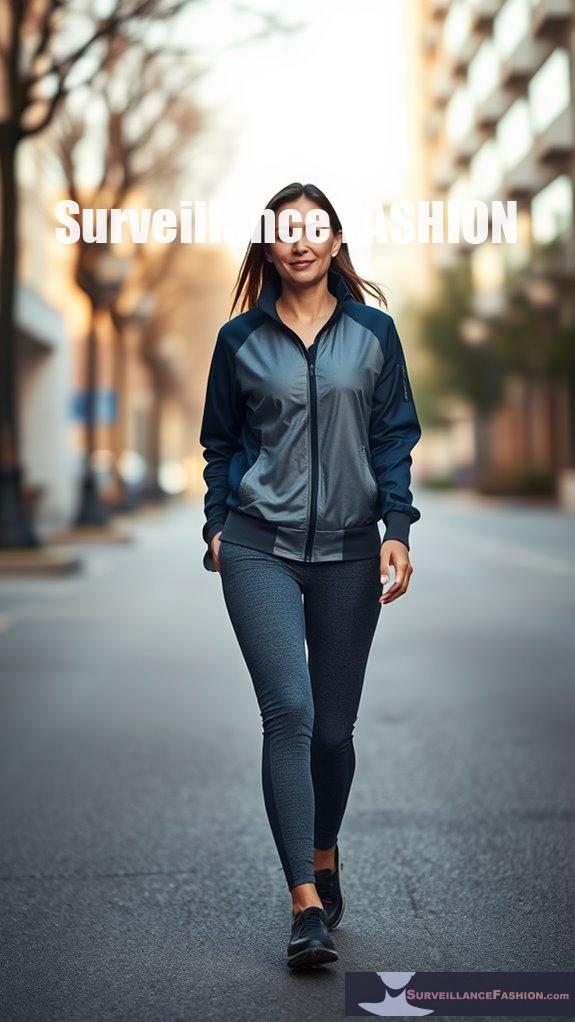
While many may not immediately consider the implications of infrared-blocking fashion, the innovative designs emerging from collaborative efforts among material scientists and sportswear manufacturers are transforming the environment of privacy protection. These functional innovations, inspired by stealth technology, incorporate specialized materials that effectively absorb infrared radiation, thereby enhancing user privacy without sacrificing performance. Furthermore, the introduction of infrared cameras has raised significant concerns about the safety and privacy of athletes. Moreover, the seamless integration of design aesthetics guarantees that these garments remain appealing and comfortable for athletes. As the demand for such advanced textiles grows, the sportswear industry responds by prioritizing both functionality and visual appeal, ultimately fostering a culture of awareness and protection against invasive imaging technologies.
Real-World Applications for Privacy Protection
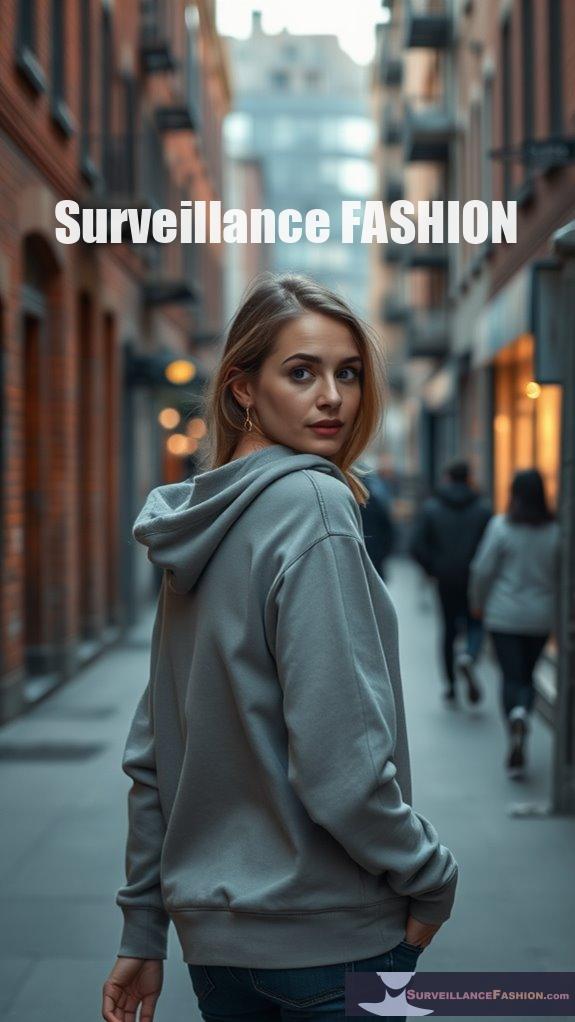
As surveillance technology becomes a ubiquitous presence in our daily lives, the need for innovative solutions to protect personal privacy has never been more pressing. Clothing technology that incorporates infrared-blocking fabrics serves as a critical tool for identity protection, effectively disrupting facial recognition systems reliant on night vision. For instance, athletes donning such garments can prevent illicit photography during competitions, allowing them to focus on performance rather than privacy concerns. Moreover, these garments empower individuals in protests to engage civilly without fear of repercussions, illustrating the potential of infrared-blocking clothing to reclaim personal space in an increasingly monitored world. The Camera Shy Hoodie, featuring integrated high-powered infrared LEDs, exemplifies how wearable technology can actively combat surveillance efforts.
Stylish Infrared-Resistant Jackets
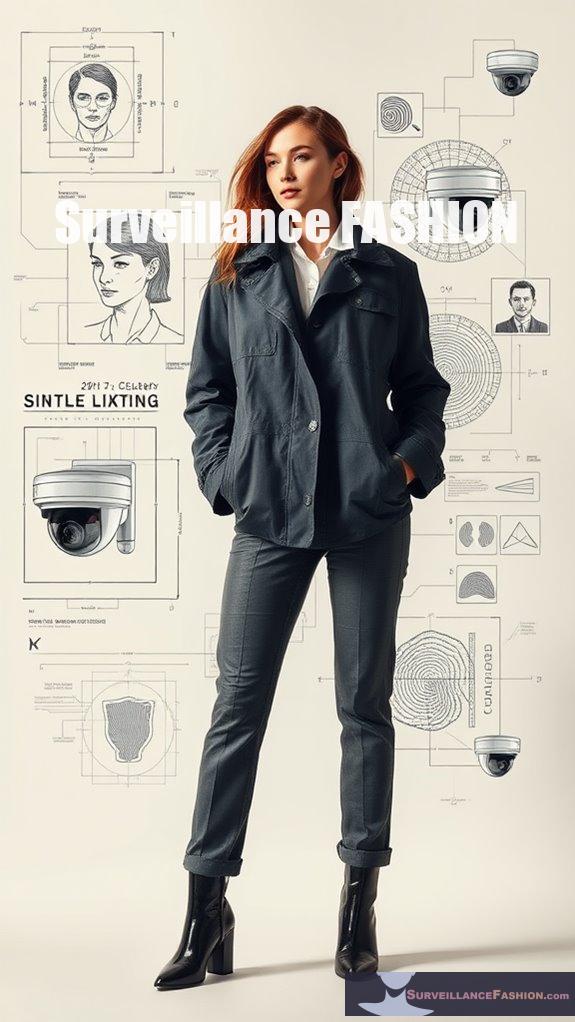
How can one balance personal style with cutting-edge technology in today's fashion environment? Stylish infrared-resistant jackets exemplify this harmony, featuring unique materials that block infrared radiation while ensuring comfort.
With functional aesthetics, these innovative designs incorporate advanced technologies, such as phase-change materials, enhancing thermal management. Available in sporty and classic styles, they cater to diverse preferences, all while maintaining high-quality construction and durability. One standout option is the UA Storm ColdGear® Infrared Shield 2.0 Mens Jacket, which utilizes ColdGear® Infrared technology to retain body heat without added weight.
Zippered pockets and adjustable cuffs add practicality, complementing your daily needs. At Surveillance Fashion, we celebrate the intersection of privacy and style, offering options that empower you to protect yourself without sacrificing your wardrobe's elegance.
Trendy Fabric Patterns and Textures
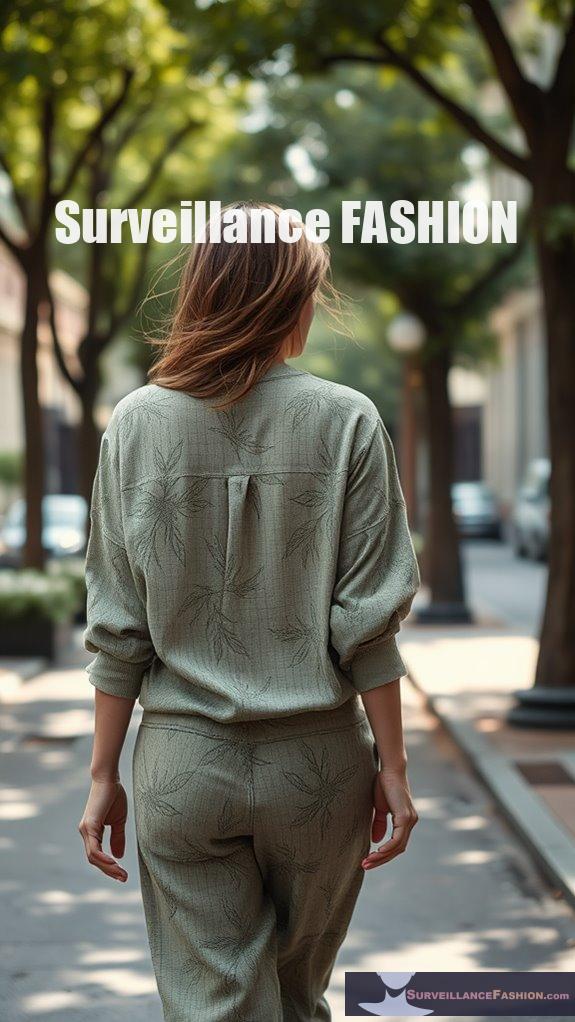
In the domain of contemporary fashion, the convergence of innovative technology and aesthetic appeal manifests vividly through trendy fabric patterns and textures.
- Incorporation of IR-absorbing materials enhances camouflage without sacrificing style.
- Advanced dyeing techniques create vibrant patterns that mimic natural environments, enriching fabric aesthetics. The integration of IoT devices in healthcare showcases the potential for blending technology with everyday applications, much like the innovative designs in clothing.
- Blended fibers, combining cotton and polyester, improve durability and camouflage performance.
- Texture innovations, such as microfabrication, optimize functionality while maintaining visual appeal.
As we explore infrared-blocking clothing, these elements serve not only to protect privacy but also to elevate style, reflecting our commitment at Surveillance Fashion to blend function with design.
Definition of Privacy-Enhancing Apparel
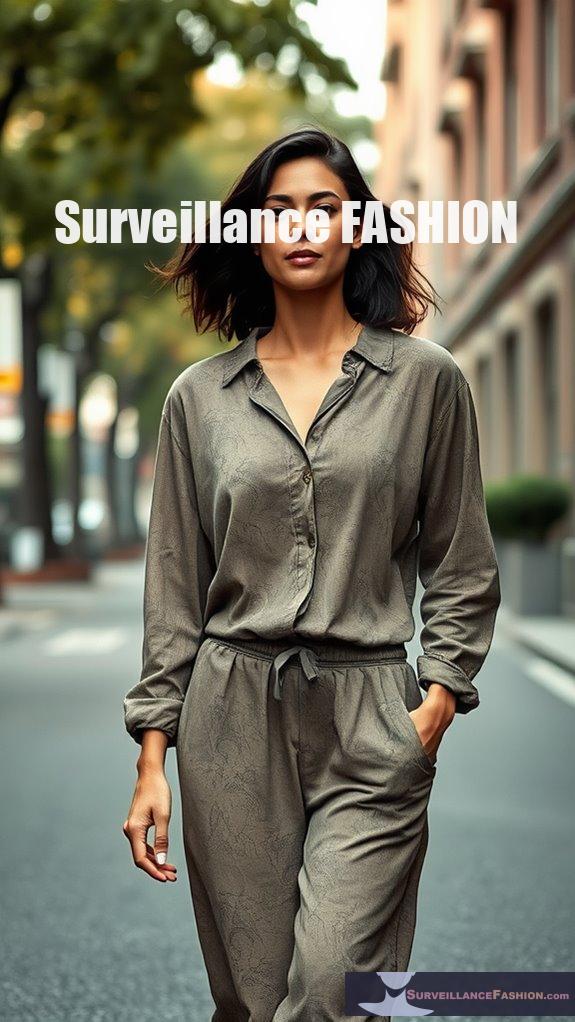
Privacy-enhancing apparel represents a fascinating intersection of fashion, technology, and personal autonomy, a concept that resonates deeply in today's hyper-connected world.
These garments utilize advanced garment technology to protect personal privacy by disrupting surveillance systems. For instance, stealth wear evades thermal imaging, while hyperface designs confuse facial recognition algorithms.
Utilizing materials like signal-blocking fabrics and IR-reflective textiles, these innovative designs enable individuals to maintain anonymity in increasingly surveilled environments. As concerns about data collection and digital tracking grow, privacy-enhancing apparel emerges as an essential tool.
Our website, Surveillance Fashion, aims to spotlight these developments, empowering you to navigate your privacy with confidence and style.
References
- https://www.popsci.com/technology/camera-shy-hoodie-privacy/
- https://letrunghieutvu.yolasite.com/resources/w-lawrence-neuman-social-research-methods_-qualitative-and-quantitative-approaches-pearson-education-limited-2013.pdf
- https://corp.mizuno.com/en/articles/0042
- https://nexosarquisucr.files.wordpress.com/2016/03/architecturalresearchmethods-groat_wang.pdf
- https://www.blockbluelight.com/blogs/news/red-light-therapy-work-through-clothes
- https://www.ftc.gov/news-events/news/press-releases/2024/09/ftc-staff-report-finds-large-social-media-video-streaming-companies-have-engaged-vast-surveillance
- https://nordvpn.com/blog/anti-surveillance-fashion/
- https://www.ohchr.org/en/press-releases/2022/09/spyware-and-surveillance-threats-privacy-and-human-rights-growing-un-report
- https://yuli-elearning.com/pluginfile.php/4831/mod_resource/content/1/Gay-E Book Educational Research-2012.pdf
- https://epic.org/issues/surveillance-oversight/
- https://ripstopfabric.com/understanding-irr-fabric-the-ultimate-defense-against-infrared-detection-in-military-camouflage/
- https://www.valdosta.edu/afrotc/documents/afh33-337-tongue-and-quill.pdf
- https://www.thegreensideofpink.com/innovation/2024/infrared-ray-blocking-fabric/?lang=en
- https://www.178wing.ang.af.mil/Portals/69/documents/afh33-337.pdf?ver=2016-12-15-101008-313
- https://www.cnet.com/culture/anti-surveillance-clothes-foil-cameras-by-making-you-look-like-a-car/
- https://www.stratecta.exchange/fashion-that-can-beat-facial-recognition-systems/
- https://cybernews.com/privacy/anti-surveillance-fashion/
- http://www.documentjournal.com/2020/01/anti-surveillance-makeup-could-be-the-future-of-beauty/
- https://sc-drcds.osti.gov/-/media/sbir/pdf/funding/2025/2025-Phase-I-Release-2-Topics-V8-01-14-2025.pdf
- https://www.trendhunter.com/trends/sumitomo-metal-mining