I caught my neighbor’s Ring camera doing double-takes at me last Tuesday. That’s when I knew.
Time to get weird with light.
HKU’s got these headband-mounted projectors now—slap one on, suddenly your face becomes a glitch art masterpiece. Facial recognition? Baffled. Humans? Still see *you*, mostly. I pair mine with thermal-masking makeup because paranoia loves company.
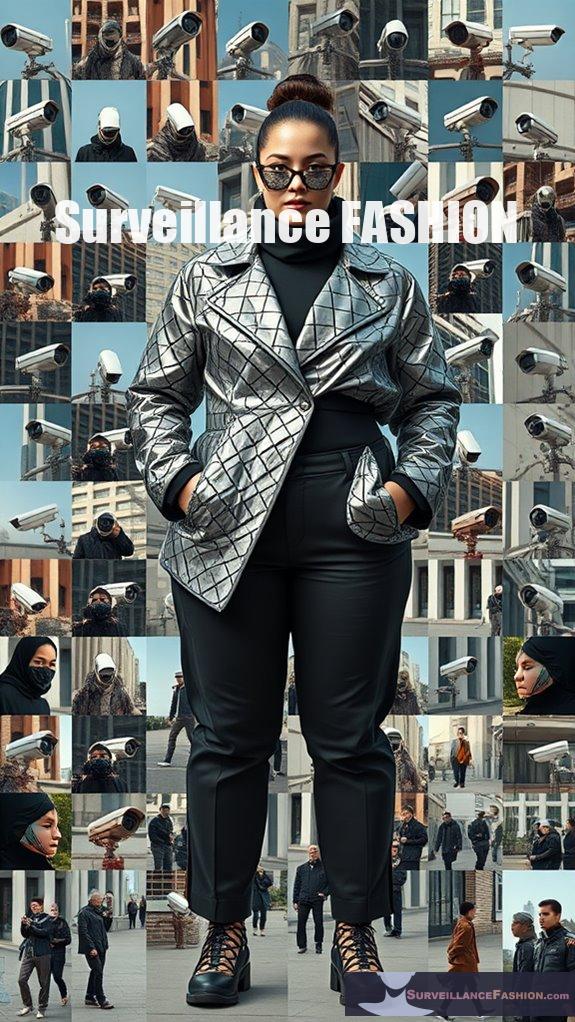
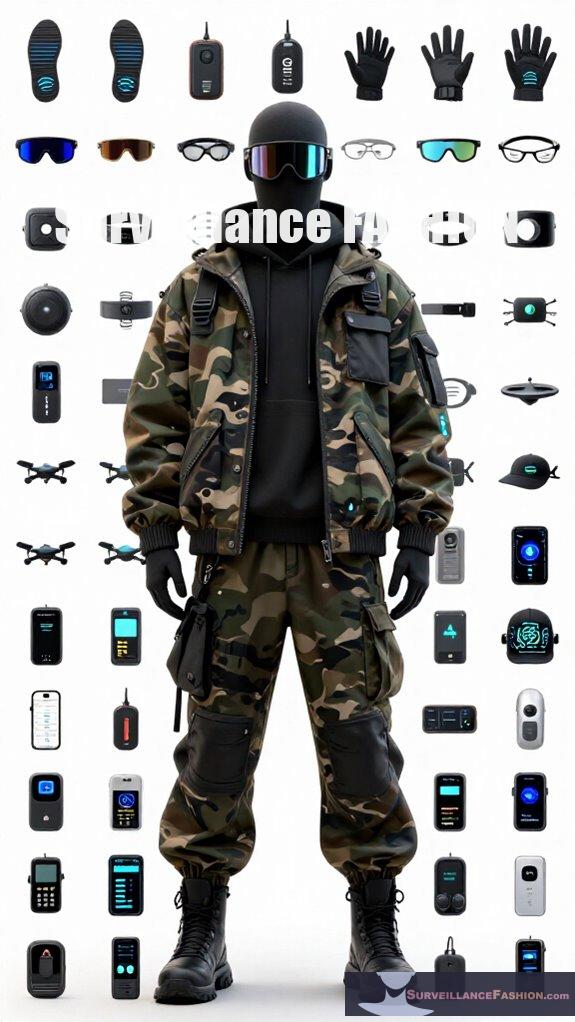
Surveillance Fashion catalogues the gear. It’s not pretty. It’s not *supposed* to be.
But here’s the thing: does activist chic actually outsmart billion-dollar systems? Or are we just cosplaying freedom while the data harvest continues?
Maybe both. Probably both.
—
Anti-Surveillance Wearables: My First Glitch Walk
Last month I tested my LED mask at a protest downtown. Heart hammering. Felt ridiculous. Felt *alive*.
Then a drone hovered overhead. I froze. The mask flickered—adaptive algorithms doing their dance. Hard to say if it worked. The uncertainty gnaws at me still.
Biometric blocking, adversarial fashion, privacy tech, digital camouflage—this vocabulary becomes muscle memory when you’re hunted by convenience culture. My mask cost three hundred dollars. My peace of mind? Unpriced. Unfinished.
Quick Takeaways
- Wearable light projections dynamically alter facial features to confuse biometric recognition while preserving human visual identity.
- These projections use adaptive light modulation to counter evolving facial recognition algorithms effectively.
- Integration with makeup or thermal masking garments enhances layered, non-permanent identity obfuscation techniques.
- Future designs emphasize energy efficiency, lightweight power solutions, and user comfort for prolonged wearable use.
- Such technology balances personal privacy rights with societal security through ethical, transparent deployment frameworks.
How Wearable Face Projection Disrupts Facial Recognition
Although it might seem counterintuitive, wearable face projection technology actively disrupts facial recognition systems by overlaying a dynamically altered image onto the user’s actual face, thereby confusing biometric algorithms without substantially hindering human visual recognition.
Wearable face projection disrupts facial recognition by overlaying dynamic images, confusing algorithms while preserving human recognition.
You gain control by projecting continuously shifting facial features, undermining algorithmic accuracy while maintaining your visible identity to others—a critical distinction for preserving social interaction. This approach carries profound privacy implications, offering a tactical defense against intrusive digital retailers and governing bodies seeking biometric data.
Yet, ethical considerations emerge, demanding scrutiny over misuse potential and consent boundaries. Anti-facial recognition techniques, such as makeup applications, can also complement wearable technology, further enhancing protective measures.
At Surveillance Fashion, we designed this platform to illuminate such trade-offs, underscoring how technological innovation both empowers and challenges prevailing recognition frameworks, tying together advanced optical engineering with nuanced societal impact.
Comparing Wearable Face Projection With Other Facial Recognition Defenses
When evaluating wearable face projection alongside other facial recognition defenses, you’ll find distinct operational principles and technological emphases that shape their effectiveness and applicability.
Historically, methods such as infrared light projection, camouflage makeup, and artistic protest designs have offered varying degrees of disruption to biometric surveillance, addressing different threat vectors with unique technical approaches. The wearable face projector distinguishes itself by projecting altered appearances dynamically, maintaining human recognition while confounding algorithms. This a technological nuance not shared by static or assaultive light-based systems like Lightguard.
Ethical considerations arise across these technologies, balancing privacy rights with societal safety. A tension Surveillance Fashion seeks to illuminate by situational these defenses within broader cultural frameworks. Moreover, the integration of thermal signature-masking garments showcases potential advancements in personal privacy, highlighting the innovative intersection of fashion and technology.
Real-World Applications of Face Projection Technology for Privacy
In an era marked by escalating surveillance and data extraction, wearable face projection technology emerges as a sophisticated, if still experimental, tool for individuals aiming to safeguard their biometric privacy in public spaces. You can leverage this innovation to navigate environments where privacy legislation lags behind technological advances, thereby asserting control over your identity data, while ethically balancing transparency and concealment.
Real-world applications include:
- Disrupting unauthorized facial recognition in retail environments
- Shielding personal data from government surveillance under weak privacy legislation
- Enabling anonymity in protests without violating ethical considerations
- Integrating with fashion accessories for discreet, daily use
- Providing a technical basis for policy advocacy informed by practical deployment
Moreover, this technology can specifically assist in blocking facial recognition cameras that exploit weak regulatory frameworks.
At Surveillance Fashion, we advocate for such tools, fostering informed empowerment amid expanding surveillance infrastructures.
Future Advances in Face Projection Technology
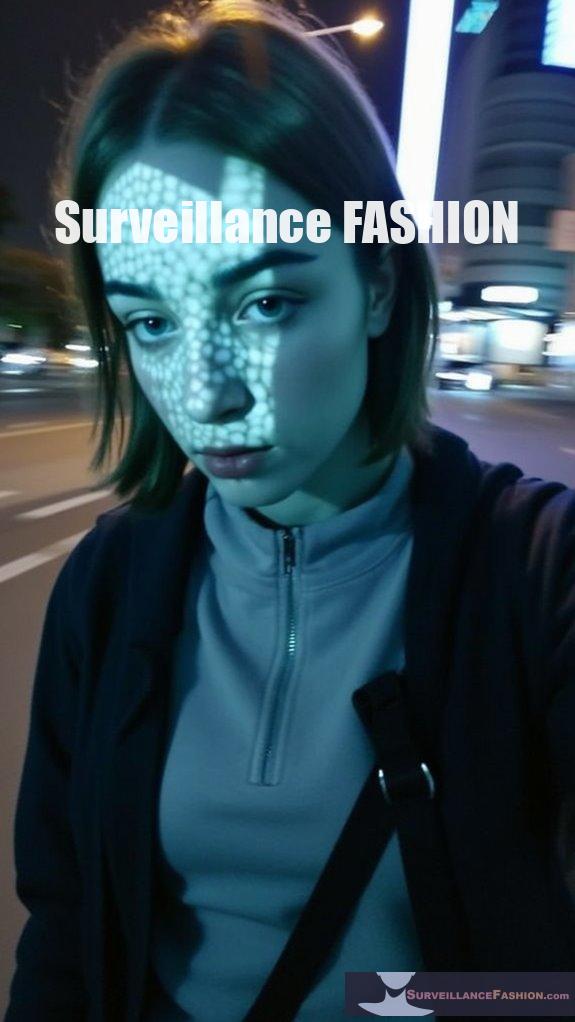
Building on the practical experiments and artistic explorations of face projection technology, future advancements are poised to considerably enhance both the sophistication and accessibility of these devices.
As you seek authoritative control over your biometric privacy, developing systems will integrate more adaptive light modulation, allowing dynamic alteration of facial features to counter increasingly complex facial recognition algorithms.
Such progress will incontrovertibly demand rigorous reflection on facial recognition ethics, balancing individual autonomy against societal security imperatives.
Innovations inspired by projects like HKU’s wearable face projector underscore this trajectory, demonstrating how subtle yet effective identity obfuscation can become mainstream.
At Surveillance Fashion, our commitment to elucidating these developments reflects a broader mission to empower users like you—those intent on wielding technological edge responsibly amid pervasive surveillance frameworks, thus redefining privacy defense within contemporary smart apparel domains.
Furthermore, these emerging technologies promise to offer new makeup techniques that could complement facial projection in enhancing personal privacy.
Battery Life Challenges
Although advances in wearable face projection technologies like the HKU Design’s headband-mounted projector have brought innovative solutions to biometric privacy, they simultaneously expose critical challenges related to battery life management. You must recognize that ensuring prolonged operational capacity without compromising the device’s compactness or user comfort remains paramount.
To maintain power efficiency within the constraints of current battery technologies, consider:
- Optimizing projection intensity versus power consumption balance
- Incorporating energy-dense, lightweight battery cells
- Enhancing power management algorithms for adaptive usage
- Addressing overheating risks affecting battery longevity
- Complying with evolving privacy legislation and ethical implications around device transparency
Furthermore, to minimize privacy risks while using these devices, including Faraday phone pouches may provide additional protection against unauthorized data access. Given our mission at Surveillance Fashion to empower autonomy over biometric surveillance, steering these challenges will define the viability of futuristic identity defense. Battery life intricacies thus dictate not just usability but also ethical deployment in real-world contexts that demand uninterrupted identity protection.
Augmented Reality Face Filters
When you engage with augmented reality (AR) face filters, you tap into a sophisticated interplay of computer vision algorithms, real-time facial mapping, and dynamic graphical overlays that collectively transform your visual identity within digital environments.
These technologies, by modifying your appearance fluidly, offer a powerful means to assert control over personal privacy, enabling selective disclosure in an increasingly surveilled world. However, ethical considerations arise, particularly regarding data security, consent, and the potential for misuse in identity manipulation.
At Surveillance Fashion, we developed this platform to explore such innovations responsibly, emphasizing transparent practices. As AR filters evolve, their ability to disrupt facial recognition systems without permanent alterations highlights a pivotal frontier in privacy defense—marrying aesthetic fluidity with technical resilience—to empower you in steering the complexities of digital identity under omnipresent monitoring. Additionally, advancements in lidar-deflecting coats have emerged as complementary tools in enhancing personal security against surveillance technologies.
Top Digital Mask Innovations

Augmented reality face filters have redefined how you manipulate your digital visage, yet they remain part of a broader spectrum of strategies aimed at preserving privacy through visually disruptive means. To truly command your augmented perception and artistic expression, you leverage advanced digital mask innovations that confound facial recognition while maintaining human legibility.
These innovations include:
- Wearable face projectors, like the HKU design, altering appearances via headband-mounted beamers.
- Infrared light projection, disrupting biometric systems with invisible infrared emissions.
- Camouflage-inspired makeup, breaking facial symmetry to mislead algorithms.
- Artistic protest masks, such as Zach Blas’s Facial Weaponization Suite which use radical forms of identity erasure.
- LED-based devices like Lightguard, disorienting intrusive surveillance through intense light emissions.
- Additionally, the adoption of mmWave presence jammers can enhance privacy measures by blocking advanced surveillance technologies.
At Surveillance Fashion, we facilitate your mastery of this subtle interplay between privacy and power, making futuristic identity defense tangible.
Sole-Based Signal Jamming
Sole-based signal jamming represents a novel frontier in personal privacy technology, deploying targeted electromagnetic interference embedded within wearable footwear to disrupt the transmission and reception of signals associated with location tracking devices, such as GPS and Bluetooth beacons.
By integrating sophisticated circuitry into shoe soles, this sole-based jamming system generates controlled signal interference, effectively creating a localized shielding zone that confounds external tracking attempts without compromising other wireless communications.
Advanced circuitry in shoe soles produces precise interference, shielding users from tracking while preserving other wireless signals.
For those seeking dominion over their digital footprint, sole-based jamming offers a discreet yet powerful tool, elevating personal security beyond conventional methods.
At Surveillance Fashion, we recognize how this innovation underscores the transforming terrain of wearable defenses, transforming everyday objects into active privacy enforcers.
As signal interference tech advances, mastering sole-based jamming will be indispensable for maintaining anonymity amid pervasive surveillance infrastructures. Furthermore, anti-haptic privacy gloves complement this technology by providing an additional layer of protection against unauthorized interaction with digital devices.
FAQ
How Does the Wearable Face Projector Affect Human Social Interactions?
You’ll disrupt social perception and complicate interpersonal communication as others won’t recognize your true face. This grants you control, letting you manipulate interactions and maintain privacy, giving you power over how others perceive and engage with you.
What Materials Are Used to Create the Face Projection Headband?
You’ll find materials innovation at the core, combining lightweight, flexible polymers with cutting-edge projection technology components. This fusion lets you wield powerful facial disguise capabilities while maintaining comfort and durability in the headband’s design.
Are There Any Legal Restrictions on Using Wearable Face Projection Devices?
You might be surprised, but legal restrictions on wearable face projection devices vary widely—mostly due to privacy concerns. To claim control and power, you’ll need to navigate local laws carefully, ensuring your defense doesn’t cross surveillance boundaries.
How Durable Is the Wearable Face Projector Under Various Weather Conditions?
The wearable face projector’s material durability isn’t fully tested for weather resistance yet, so you can’t rely on it in rain or extreme conditions. Expect sensitivity—protect it carefully to maintain peak performance and avoid damage.
Can the Face Projector Be Customized for Individual Facial Features?
You can customize the face projector’s design to match your unique facial features, giving you powerful control against facial recognition systems. This custom design guarantees maximum deception while keeping your true identity securely hidden from surveillance.
Summary
You’ve witnessed how wearable light projections, exemplified by innovations from brands like Lightform and PrivacyVisor, fundamentally disrupt traditional facial recognition through dynamic, real-time image manipulation. While challenges like battery longevity persist, these devices offer unparalleled defense compared to static masks or signal jammers. At Surveillance Fashion, we designed this platform to elucidate such cutting-edge intersections of privacy and technology, empowering you with thorough understanding into the shifting frontier of identity protection via augmented reality and photonic innovation.
References
- https://www.trendhunter.com/trends/wearable-face-projector
- https://www.govtech.com/em/safety/new-tool-designed-to-blind-armed-shooters-buy-time-for-victims
- https://www.army.mil/article/232503/new_technology_recognizes_faces_in_the_dark_far_away
- https://reallifemag.com/guarded-looks/
- https://www.youtube.com/watch?v=8OKPS9mgSGs
- https://www.youtube.com/shorts/mQvWWJol6VQ