Tag: identity protection

  • Why Walking Patterns Thwart AI Surveillance Systems?

    Why Walking Patterns Thwart AI Surveillance Systems?

    Walking patterns thwart AI surveillance systems primarily due to the inherent complexity and variability of human gait. When movements alter, whether through body language or environmental interactions—like traversing crowded spaces—the algorithms struggle to maintain accuracy. For instance, carrying large bags or adapting your gait can confuse surveillance systems, making identification difficult. Advances in stealthy footwear further facilitate this evasion. Explore these concepts further, and you'll discover innovative techniques that enhance your ability to remain undetected in various scenarios.

    Quick Takeaways

    • Human walking patterns are complex, making it difficult for AI to accurately identify individuals in real-world environments.
    • Gait modification techniques, such as altering stride and body language, can effectively confuse AI surveillance systems.
    • AI surveillance relies on body tracking algorithms that struggle with variations caused by lighting and camera angles.
    • Crowded spaces introduce additional challenges, as increased foot traffic complicates accurate gait recognition.
    • Subtle movement irregularities can evade detection, exploiting gaps in traditional surveillance technology.

    The Challenges of Gait Recognition in Surveillance

    gait recognition surveillance difficulties

    As surveillance technology evolves, it becomes increasingly evident that walking patterns can greatly undermine the effectiveness of AI surveillance systems, particularly in dynamic environments where detection capabilities are often challenged. The intricacies of human movement, specifically how you walk, present significant hurdles for systems designed to identify and track individuals. Despite the impressive accuracy rates of gait recognition software, which can reach up to 98.4% in controlled settings, the reality of real-world environments complicates matters considerably.

    Walking patterns significantly challenge AI surveillance systems, revealing the complexities of human movement in real-world environments.

    Consider the bustling atmosphere of a crowded shopping mall. In such a space, the AI surveillance systems may struggle to keep up with the sheer volume of foot traffic, making it difficult to detect subtle forms of evasion. When you walk around a metal detector or alter your gait—perhaps due to carrying a large bag or maneuvering around obstacles—these seemingly minor adjustments can confuse the AI. This phenomenon is known as gait modification, and it's a powerful evasion strategy that people may unconsciously employ to slip past surveillance without detection. The ability to adapt movement patterns in a crowded space further enhances this evasion strategy. Moreover, the impact of body language modification can significantly alter how individuals are perceived by surveillance systems.

    AI surveillance systems, like those developed by Athena Security, aim to address these evasion tactics through the integration of advanced technologies such as body tracking algorithms and Lidar sensors. These systems aim to provide thorough monitoring, alerting security personnel to potential breaches. However, while they enhance operational reliability, they still face challenges in accurately identifying individuals when walking patterns shift. The truth is that no technology is foolproof, and the limitations of traditional surveillance may leave gaps that savvy individuals can exploit.

    Moreover, the accuracy of gait recognition can vary widely based on various factors, including lighting, camera angles, and the conditions of the environment. For instance, if you're walking in a dimly lit area or from an unusual viewpoint, the likelihood of the system misidentifying or failing to recognize you increases. This is particularly concerning when one considers the implications for privacy and security. The mere act of walking can become a double-edged sword; while it enables identification, it also opens avenues for evasion that can undermine the very systems designed to protect us. This challenge is further compounded by the integration of human gait DNA with video surveillance for enhanced security.

    In our exploration of these themes, we created the website Surveillance Fashion to investigate deeper into the intersection of technology and human behavior. By examining how gait modification and evasion strategies impact surveillance effectiveness, we hope to foster a more robust dialogue around privacy concerns and the ethical implications of advanced monitoring systems.

    Ultimately, as surveillance technologies continue to evolve, the ongoing dance between innovation and human ingenuity will remain a significant area of focus. Understanding how your walking patterns can thwart AI surveillance not only enriches your awareness but also highlights the broader conversation about security in an increasingly monitored world.

    Footwear Designs for Stealthy Movement

    silent and agile footwear

    Footwear designs tailored for stealthy movement incorporate a variety of advanced materials and technologies, aiming to enhance both the functionality and adaptability of the shoe.

    Incorporating stealth technology, these shoes feature flexible soles that allow for a natural gait, reducing noise during movement. For instance, the Siberian Contact 3.0 utilizes silent outsole materials to guarantee discreet footfalls, while its water-resistant properties adapt to various environments, further enhancing its utility.

    Additionally, barefoot-style designs, such as moccasins, mimic natural foot movement, providing an intimate connection to the ground beneath you, fostering both awareness and control.

    Lightweight cushioning systems found in modern hunting boots not only enhance comfort but also minimize sound, allowing you to navigate silently.

    As we explore this intersection of style and functionality, our website, Surveillance Fashion, reveals how these innovations cater to your desire for stealth in everyday life, guaranteeing you remain unnoticed, yet stylish.

    Subtle Hip Movement Techniques

    hip movement mastery techniques

    Subtle hip movement techniques play an essential part in confusing AI surveillance systems, which heavily rely on visual cues to track individuals through established walking patterns. By integrating slight alterations in your hip movement, you can create a deceptive gait that disrupts the predictive models trained to recognize patterns. This technique effectively neutralizes AI's ability to monitor your movements, especially in crowded environments where subtlety thrives. For instance, by imperceptibly shifting your hips, you introduce irregularities that even human operators might miss, given their focus fatigue. Moreover, these nuances can psychologically disrupt human surveillants, causing them to misinterpret your intentions. Additionally, using anti-surveillance methods can further enhance your ability to evade detection in various situations.

    Understanding how recognition avoidance works can significantly improve your effectiveness in employing these techniques. To truly understand these techniques, consider how they can be enhanced through environmental integration—using corners or shadows to further mask your movements. These strategies, while seemingly simple, form the foundation of what we explore on Surveillance Fashion, helping you navigate through a world increasingly dominated by surveillance.

    References

  • What Patterns Fool Surveillance Cameras?

    What Patterns Fool Surveillance Cameras?

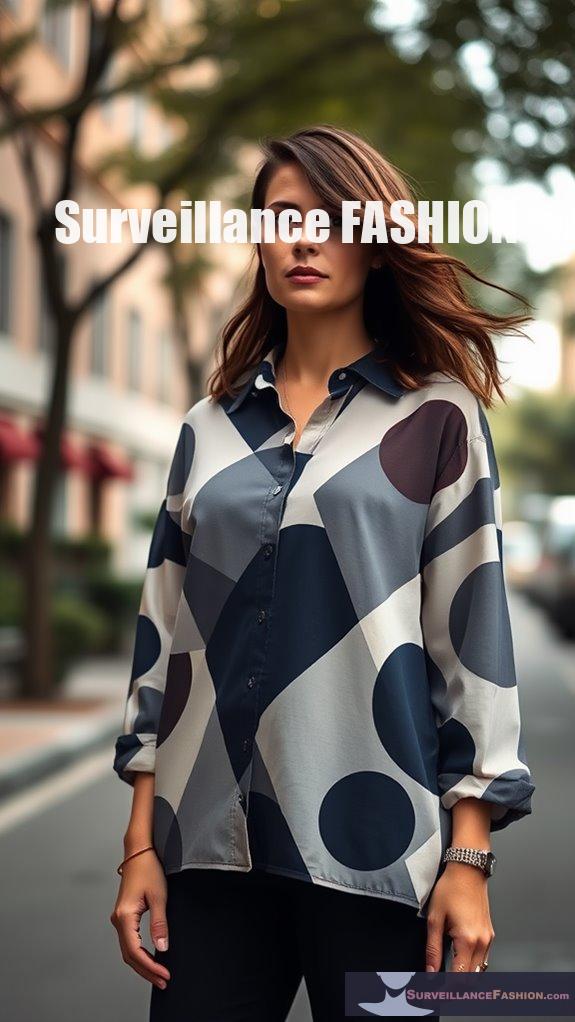
    Patterns like bold geometric designs and abstract color combinations effectively mislead surveillance cameras by creating visual noise that complicates facial recognition. Geometric distortions target essential facial features, while vibrant, random hues scatter light, confounding detection systems. For instance, clothing that mimics multiple human forms introduces chaos, further obscuring identity. This innovative approach to fashion promotes privacy, illustrating a growing demand for anonymity in public spheres. Discover more about these trends and other strategies as you explore further.

    Quick Takeaways

    • Abstract designs and visual noise complicate detection systems, making it difficult for algorithms to identify individuals accurately.
    • Geometric distortions manipulate light and shadow, effectively disrupting facial recognition technology targeting key facial features.
    • Temporary face paintings can confuse algorithms by altering recognizable facial contours and features.
    • Clothing that mimics multiple human forms creates chaos for surveillance systems, hindering identification efforts.
    • LED-enhanced visors project distractions that obscure facial features, providing an extra layer of anonymity in monitored environments.

    Innovative Fashion Strategies for Privacy Protection

    fashion meets privacy innovation

    In an era where surveillance technology continuously evolves, the intersection of fashion and privacy has become increasingly captivating, as inventive individuals seek ways to navigate a world dominated by cameras and facial recognition systems. You may find yourself wondering how to maintain your privacy in this environment, and the answer lies in a blend of creativity and technology.

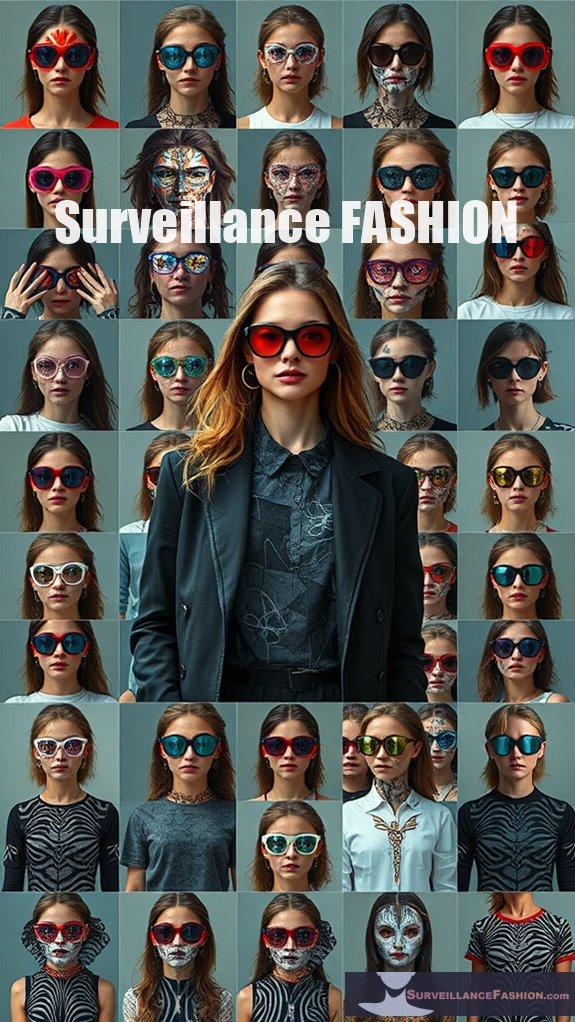
    Temporary face paintings, for instance, serve as a fascinating tool to disrupt the ability of facial recognition systems to accurately identify you. By applying unique markers or designs on your face, you can easily confuse algorithms designed to analyze and recognize facial features, granting you a fleeting layer of anonymity. Makeup techniques that alter facial contours can also enhance this effect, providing additional layers of disguise.

    Temporary face paintings offer a creative way to confuse facial recognition systems, granting you a momentary veil of anonymity.

    Adversarial clothing patterns, too, have emerged as a clever strategy against surveillance. Envision donning a t-shirt adorned with abstract designs, specifically created to mislead AI algorithms. These patterns introduce visual noise that confuses detection systems, making it challenging for them to pinpoint your actual identity. Facial recognition technology has been widely used in various sectors, further emphasizing the importance of these innovative methods.

    You might also consider clothing that mimics multiple human forms or, even more intriguingly, garments that feature fake license plates. By feeding surveillance systems with this false data, you contribute to a chaotic environment for the technology, disrupting its ability to function effectively.

    The innovations don't stop there. T-shirts with printed faces or mock-up faces can distract facial recognition systems, creating an illusion of multiple identities in the same space. This deliberate obfuscation isn't just a creative endeavor; it's a calculated method to reclaim agency over your own image in a world that often feels like it's watching your every move.

    Perhaps you've seen anti-CCTV glasses that reflect UV light—these can blind the cameras, rendering them ineffective at capturing your likeness.

    Moreover, advancements in LED technology have led to the development of privacy visors that project a noise pattern obscuring facial features from the camera's view. This technology, while still in its prototype phase and perhaps not the most aesthetically pleasing, denotes a growing recognition of the need for privacy in public spaces. Activating these LEDs in the presence of cameras can add an additional layer of visual distraction, further complicating the algorithm's ability to accurately identify you.

    Animal-inspired patterns have also garnered attention for their effectiveness in fooling surveillance systems. By wearing clothing designed with zebra or giraffe-like patterns, you might confuse cameras into identifying you as an animal rather than a human being.

    This playful yet strategic approach to fashion represents a novel intersection between identity and technology, where the garments you choose to wear can greatly impact how you're perceived by smart systems.

    As you explore these various methods of evasion, you may find yourself reflecting on the broader implications of surveillance and privacy. At Surveillance Fashion, we've created this platform to explore such topics, empowering individuals to rethink their relationship with technology and their own identities in an increasingly monitored world.

    Bold Geometric Designs Mislead Cameras

    geometric designs confuse cameras

    Bold geometric designs serve as a compelling strategy in the ongoing battle against facial recognition technology, creating a visual disruption that challenges the accuracy of surveillance systems. By employing geometric distortions, these designs manipulate light and shadow, effectively altering how algorithms perceive facial features.

    The essence of this method lies in its ability to exploit the vulnerabilities within computer vision systems, specifically targeting key areas such as the eyes and nose, which are essential for detection. For instance, using patterns reminiscent of juggalo face paint can confuse algorithms, leading to algorithmic deception that misidentifies individuals. Additionally, incorporating dynamic patterns that change with movement can further enhance the confusion for surveillance technologies.

    Moreover, customizing these patterns to fit the wearer and the specific targeted algorithm enhances effectiveness considerably. As we navigate an era increasingly dominated by surveillance, understanding these techniques becomes critical, not only for privacy but for engaging in conversations about our digital identities, a core reason behind Surveillance Fashion's inception. Additionally, designers are constantly innovating to create surveillance-resistant patterns that further challenge detection technologies.

    Abstract Color Combinations Disorient Cameras

    cameras struggle with abstraction

    While many people might assume that facial recognition technology relies solely on sharp images, the reality is that abstract color combinations can greatly disrupt these systems, creating a form of visual noise that hinders accurate detection.

    By employing patterns that evoke color chaos, you can effectively confuse surveillance cameras, preventing them from accurately recognizing faces or tracking objects. These designs often draw inspiration from nature or abstract art, carefully crafted to disrupt the camera's processing algorithms. Moreover, the use of infrared-reflecting materials can add an additional layer of protection against facial recognition technology.

    For instance, clothing made from special fabrics with random hues can scatter light, making it difficult for cameras to capture clear images. Additionally, patterns that feature dynamic color shifts can further enhance the effectiveness of these designs by introducing continuous change that confuses image processing systems.

    As technology advances, so does the sophistication of these anti-surveillance techniques. At Surveillance Fashion, we explore and highlight these innovative designs, showcasing how the right choice of fabric and color can protect your anonymity in an increasingly monitored world.

    Ultimately, understanding these principles helps you navigate public spaces with greater confidence.

    References

  • 7 Tech-Bending Styles That Defeat CCTV

    7 Tech-Bending Styles That Defeat CCTV

    To combat CCTV systems, innovative styles like anonymous silhouette-altering jackets and disguise-enhancing hats are gaining traction, cleverly utilizing advanced materials to obscure identity. For instance, these garments may feature IR-blocking fabrics that hinder detection by surveillance technologies. Moreover, face-obscuring masks employ metalliferous materials to distort facial recognition, while patterned clothing distracts visual algorithms through complex designs. Such fashion-forward choices are essential in fostering personal privacy, which is one of the aims behind the creation of our platform, Surveillance Fashion. Further exploration awaits.

    Quick Takeaways

    Anonymous Silhouette-Altering Jackets

    disguising clothing for anonymity

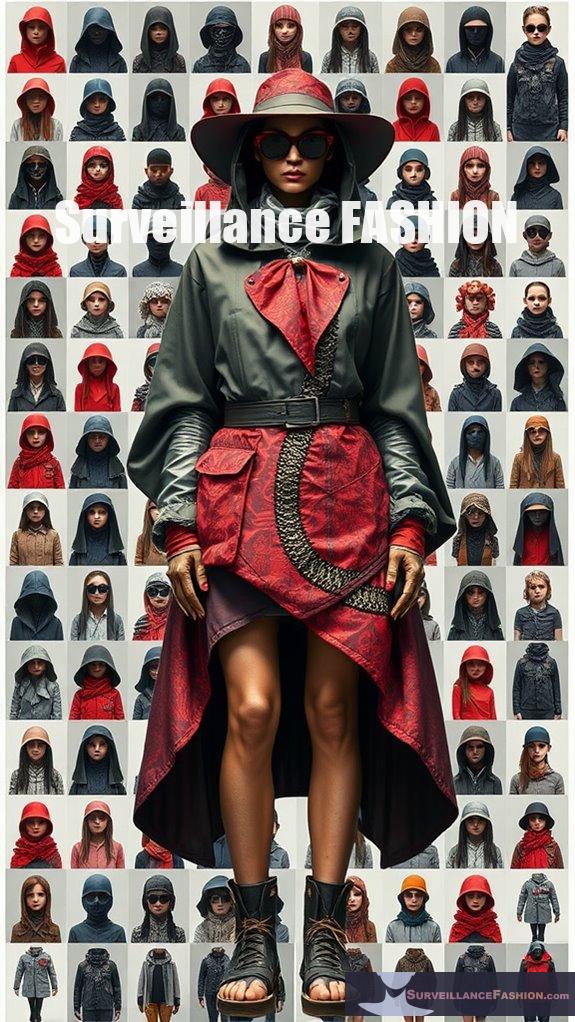
    As concerns over personal privacy continue to mount, the emergence of anonymous silhouette-altering jackets offers a fascinating intersection of fashion and technology designed to combat the pervasive reach of surveillance systems. These innovative garments utilize advanced materials and disruptive patterns to achieve silhouette manipulation, effectively obscuring your identity from prying eyes. Fashion pioneers like Adam Harvey have integrated camouflage and signal-blocking fabrics, ensuring that your movements remain private. This approach signifies a shift in the purpose of clothing towards protecting individual visibility in an age of surveillance. With the inclusion of ir-blocking fabrics, these jackets not only obscure your silhouette but also prevent infrared cameras from capturing your image.

    Disguise-Enhancing Hats

    hats for better disguises

    Disguise-enhancing hats represent a significant evolution in anti-surveillance fashion, providing a practical means of evading the scrutiny of facial recognition systems and CCTV surveillance.

    These innovative hats merge disguise technology with bold fashion statements, making them a popular choice for those seeking anonymity.

    Innovative disguise-enhancing hats blend cutting-edge technology with striking style, appealing to those who value anonymity in a surveillance-laden world.

    • Utilize complex camouflage patterns to confuse algorithms.
    • Incorporate signal-blocking materials to thwart digital tracking.
    • Feature advanced fabrics that disrupt infrared detection.

    Additionally, some designs may include high-powered infrared LEDs that render night vision cameras ineffective, further enhancing your ability to remain unseen.

    As you navigate public spaces, these hats not only shield your identity but also foster a dialogue on privacy rights, which is essential in today's surveillance-driven society.

    Face Obscuring Masks

    face covering protective gear

    While many individuals navigate public spaces with a sense of confidence, the pervasive threat of facial recognition technology looms large, prompting the exploration of face obscuring masks as a practical solution. These masks, crafted from various materials like metalliferous fabrics and complex designs, aim to obscure or alter facial features, effectively confusing recognition algorithms. Studies indicate that covering features can increase error rates considerably, enhancing your privacy rights. Ultimately, face obscuring masks symbolize a growing resistance against invasive surveillance, reflecting the urgent need for innovative privacy solutions in our increasingly monitored world, a theme we explore at Surveillance Fashion. Additionally, the importance of privacy masking emphasizes the need to protect personal identities in the age of surveillance. With tech-bending styles emerging, these accessories not only serve a functional purpose but also showcase a unique blend of fashion and activism.

    Patterned Clothing for Distraction

    clothing designs for diversion

    In an era where surveillance technology has become omnipresent, innovative approaches to privacy are gaining traction, and patterned clothing emerges as a compelling method of distraction.

    These complex designs disrupt visual recognition systems by confusing surveillance algorithms, effectively masking human identities.

    • Abstract art-inspired patterns mislead facial recognition technology.
    • Collaborations between designers and tech firms enhance anti-surveillance effectiveness.
    • Such garments serve as ethical statements against invasive monitoring.

    Moreover, the use of anti-surveillance method clothing patterns is rapidly evolving as a practical solution to protect individual privacy in public spaces.

    Color-Changing Fabrics

    dynamic hue shifting textiles

    Color-changing fabrics represent a groundbreaking fusion of technology and fashion, enabling individuals to adapt their appearance with remarkable ease and efficiency.

    Utilizing micro-wires and color-altering pigments, these innovative materials respond to electrical currents, altering hues without light emission. You can easily customize patterns and colors through smartphone apps, tapping into the principles of color psychology to express your personality or mood.

    This fashion technology not only revolutionizes personal style but also has applications in home decor and accessories.

    As the smart textiles market expands, the potential for these dynamic fabrics to redefine norms becomes increasingly evident.

    Reflective Material Outfits

    shiny light reflecting clothing

    Reflective material outfits represent a significant technological advancement in the domain of anti-surveillance fashion, merging aesthetic appeal with functional privacy solutions.

    These garments utilize reflective material applications to confuse imaging systems, ensuring your privacy remains intact in a surveilled world.

    • Obscure Facial Features: Disrupt facial recognition technology effectively.
    • Versatile Styles: Includes scarves, jackets, and hats for everyday wear.
    • Signal-Blocking Integration: Some designs inhibit GPS or RFID tracking.

    Fashion privacy innovations like ISHU's anti-flash scarf demonstrate the potential of reflective materials to empower individuals, promoting a culture of privacy awareness that's essential in our increasingly monitored society.

    Modular Clothing Systems

    versatile and adaptable apparel

    As individuals endeavor to reclaim their autonomy in a world increasingly dominated by surveillance technologies, modular clothing systems emerge as a compelling innovation that marries aesthetic flexibility with functional privacy strategies.

    These customizable garments, featuring detachable components and modular accessories, allow you to adapt your outfit to various occasions while maintaining a sense of personal expression.

    By embracing a modular design philosophy, you can extend garment lifespans, reduce waste, and contribute to a circular economy.

    The fusion of smart fabrics and innovative fastenings enhances versatility, enabling you to effortlessly transform styles, thereby helping to navigate the complexities of modern surveillance.

    Adaptive Textiles for Privacy

    privacy enhancing adaptive fabrics

    While the evolution of adaptive textiles has opened new avenues for personal expression and comfort, the intersection of these innovations with privacy concerns can't be overlooked.

    The rise of smart fabrics raises critical questions about biometric security and data protection. Consider these aspects:

    • Sensitive Data Collection: Adaptive textiles often gather personal biometric information, heightening privacy risks.
    • Unauthorized Access: Wireless transmission can lead to potential hacking vulnerabilities.
    • User Awareness: Many users remain uninformed about data practices.

    As we explore these technologies, understanding their implications helps shape a future where personal freedom and privacy coexist harmoniously, a goal that inspired the creation of Surveillance Fashion.

    Cloaking Fabrics for Urban Wear

    urban camouflage clothing materials

    Cloaking fabrics have emerged as a revolutionary solution for urban wear, skillfully combining advanced material technology with innovative design to create garments that not only protect against the elements but also provide a layer of anonymity in increasingly surveilled environments.

    Utilizing stealth materials like Gore-Tex and ripstop nylon, these cloaks feature urban camouflage patterns that seamlessly blend into cityscapes.

    With breathable membranes ensuring comfort and modular pockets enhancing functionality, you'll find yourself equipped for any urban adventure.

    Their striking aesthetics, influenced by cyberpunk themes, allow you to navigate the streets while embracing a sense of freedom, reflecting the ethos of our platform, Surveillance Fashion.

    Definition of Privacy-Enhancing Attire

    privacy enhancing clothing concepts

    Privacy-enhancing attire represents a transformative intersection of fashion, technology, and personal autonomy, effectively challenging the pervasive nature of surveillance in contemporary society.

    This innovative clothing aims to protect individual privacy while offering aesthetic appeal through:

    • Anti-surveillance fabrics that disrupt facial recognition systems
    • Complex patterns designed to confuse digital tracking algorithms
    • Signal-blocking materials that prevent unauthorized data access

    References

  • 7 Privacy Garments That Defy Facial Recognition

    7 Privacy Garments That Defy Facial Recognition

    If you’re looking for privacy garments that defy facial recognition technology, consider Cap_Able’s Manifesto Collection, featuring knitted adversarial patches that disrupt surveillance algorithms. NTU’s reflective yarn designs utilize unique fabrics that block infrared detection, enhancing offline anonymity. Furthermore, layered images in clothing obfuscate key facial features, while luminous components can impair camera capture. These innovations demonstrate a convergence of fashion and technology aimed at empowering individuals against invasive tracking. Explore these advancements further to discover the forefront of privacy in apparel.

    Quick Takeaways

    • Cap_Able’s Manifesto Collection features knitted garments with unique animal patterns that disrupt facial recognition algorithms effectively.
    • NTU’s reflective yarn designs utilize ir-blocking fabrics and luminous components to enhance anonymity against facial recognition technology.
    • Cloaking patterns in garments obscure key facial features, creating visual confusion for AI detectors and enhancing wearer privacy.
    • Innovative fashion designers create garments that integrate adversarial patterns and reflective materials to counteract digital tracking and reclaim personal privacy.
    • The rise of privacy-focused fashion reflects a societal shift towards valuing anonymity and resistance against invasive surveillance technologies.

    Cap_Able’s Manifesto Collection: Knitted Garments With Adversarial Patches

    knitted garments with patches

    The Manifesto Collection by Cap_able introduces a compelling intersection of fashion and technology through its innovative knitted garments featuring adversarial patches designed to disrupt facial recognition systems.

    By incorporating unique patterns resembling animals, these garments serve as a form of biometric protection and surveillance resistance, cleverly confusing AI detectors. these stealth accessories not only obscure identities but also promote a culture of resistance against invasive technologies.

    Crafted from 100% Egyptian cotton, each piece utilizes a patented knitting method to integrate these adversarial images seamlessly into the fabric.

    Each garment is expertly crafted from 100% Egyptian cotton, seamlessly integrating adversarial images through a patented knitting technique.

    This collection not only champions privacy rights but also stimulates discourse on the implications of surveillance in public spaces, making a bold statement about personal freedom in an increasingly monitored world. Furthermore, the collection aims to raise awareness about privacy rights and the protection of biometric data, highlighting the importance of individual rights in public spaces.

    NTU’s Reflective Yarn Designs for Offline Anonymity

    reflective yarn for anonymity

    Kirsty Love’s innovative designs at Nottingham Trent University reflect a growing awareness of the challenges posed by facial recognition technology (FRT) and the pressing need for offline anonymity in an era of constant surveillance. Utilizing reflective technology, these garments incorporate unique yarns that illuminate strategically when captured, forming an invisible barrier against AI. The clothing was motivated by concerns over privacy and online identity exposure and aims to address the fear of being easily tracked through photographs. Combining fashion with privacy innovation, layered patterns disrupt AI recognition, creating confusion and hindering data extraction. In addition, these garments feature ir-blocking fabrics that further enhance their effectiveness by preventing infrared detection. As you navigate public spaces, these designs empower you to maintain anonymity, emphasizing personal security and mental well-being in a world increasingly defined by digital oversight.

    The Power of Pattern: Confusing AI With Layered Images

    layered images confuse ai

    While traversing public spaces has become an exercise in balancing personal privacy with societal visibility, the innovative use of layered images in garment design emerges as a compelling solution to the challenges posed by facial recognition technology. This approach is exemplified by Cap_able’s Manifesto Collection, which utilizes patterns to shield wearers from recognition by AI cameras. These pattern-based designs disrupt the algorithms used in facial recognition, making it increasingly difficult for systems to accurately identify individuals.

    Illuminating Privacy: Clothing That Shines Under Camera Surveillance

    reflective attire for surveillance

    As surveillance technology continues to evolve, innovative clothing designs that incorporate luminous components offer a compelling means of enhancing personal privacy in public spaces.

    These garments utilize infrared interference to disrupt night vision cameras, employing high-power infrared LEDs and reflective materials that create visual camouflage.

    For instance, fabrics engineered to reflect infrared light not only obscure the wearer from thermal imaging but also render surveillance footage practically unusable.

    With designs featuring strobe-like effects, such clothing can confound recognition algorithms, providing a temporary sanctuary from pervasive monitoring.

    Fashion Meets Technology: Integrating AI-Generated Patterns

    ai enhanced fashion design

    The intersection of fashion and technology presents a unique opportunity to redefine personal privacy, especially in an age where AI-generated patterns are at the forefront of garment design.

    AI Fashion integrates algorithms to create visually stunning patterns that disrupt facial recognition systems, enhancing privacy innovations. These garments not only serve aesthetic purposes but also employ adversarial techniques, confusing AI algorithms while appealing to human senses.

    As you explore these innovative designs, consider how they can reshape your approach to privacy in urban environments.

    Ethical Fashion: Addressing Privacy Concerns in a Digital Age

    privacy in ethical fashion

    In an era where digital footprints are as pervasive as the garments we wear, understanding the intersection of ethical fashion and data privacy becomes essential for both consumers and brands.

    As you navigate the fashion domain, consider how brands collect extensive consumer data, necessitating transparent practices to protect your privacy.

    Ethical data management is no longer optional; compliance with regulations like GDPR guarantees consumer protection against data misuse. Increased awareness about privacy fuels demand for brands to implement robust security measures, minimizing risks associated with data breaches and third-party sharing.

    Ultimately, embracing ethical fashion signifies a commitment to safeguarding your personal information in an interconnected world.

    The Future of Anonymity: Mainstreaming Anti-Surveillance Clothing

    anti surveillance fashion revolution

    Facial recognition technology’s rapid advancement has sparked a growing demand for anti-surveillance clothing, compelling brands to rethink their approach to fashion in a world increasingly characterized by digital monitoring.

    As consumer acceptance of privacy-enhancing garments rises, market trends indicate a shift from niche offerings to mainstream collections, exemplified by Cap_able’s Manifesto Collection.

    The rise of privacy-enhancing garments signals a shift from niche to mainstream fashion, as seen in Cap_able’s Manifesto Collection.

    These garments, crafted from sustainable materials and embedded with AI-developed patterns, effectively confuse facial recognition systems.

    As privacy becomes a collective concern, the fashion industry not only addresses personal style but also champions the right to anonymity, encouraging individuals to reclaim their freedom in an era of pervasive surveillance.

    Innovative Fabric Patterns

    creative textile design concepts

    As privacy concerns become increasingly paramount in today’s digitally monitored society, innovative fabric patterns are emerging as an essential aspect of anti-surveillance clothing.

    By employing fabric manipulation techniques, designers create visual deceptions that thwart facial recognition systems through:

    1. Knitting and weaving techniques that generate deceptive jacquard patterns.
    2. Adversarial patching, embedding misleading images directly onto fabrics.
    3. Geometric patterns that confuse detection algorithms with complex designs.
    4. Optical illusions crafted to distort facial features and enhance anonymity.

    These advancements not only foster individual freedom but also represent a significant evolution in fashion, as evidenced by the rise of brands like Cap_Able.

    Cloaking Patterns for Anonymity

    anonymity through cloaking techniques

    While many people may not realize it, the design of clothing can considerably influence how individuals interact with surveillance technologies, especially facial recognition systems.

    Cloaking patterns, rooted in a stealth aesthetics and innovative design philosophy, employ layered images of faces, generating visual confusion for AI detectors. These patterns can obscure key facial features, utilizing reflective materials to create an invisible barrier against recognition.

    Accessories like hats complement these designs, enhancing anonymity. With an emphasis on functionality and style, these garments resonate with a demographic keen on preserving privacy while traversing a world increasingly dominated by surveillance, a primary concern that inspired the creation of Surveillance Fashion.

    Fashion Against Digital Tracking

    fashion resists digital surveillance

    In a world increasingly dominated by digital surveillance, innovative fashion designers are crafting garments that actively counteract digital tracking technologies, thereby empowering individuals to reclaim their privacy.

    Innovative fashion designers are creating garments that empower individuals to reclaim their privacy against digital surveillance.

    Consider these revolutionary elements:

    1. Adversarial Patterns: Clothing designed to confuse AI facial recognition systems.
    2. Reflective Yarns: Materials that block facial recognition by reflecting infrared light.
    3. AI-Generated Designs: Unique patterns that distort digital identities without obscuring the face.
    4. Public Awareness: Initiatives that spark discussions about the implications of surveillance culture.

    These advancements not only challenge invasive technologies but also redefine fashion as a form of resistance, emphasizing the importance of safeguarding personal privacy.

    Questions and Answers

    How Effective Are These Garments Against All Facial Recognition Systems?

    You’d think these garments are foolproof, but their effectiveness varies. While some can confuse certain systems, technology limitations mean they’re not a guaranteed shield against all facial recognition. Stay aware, your freedom depends on it.

    Can These Clothes Be Washed Without Compromising Their Technology?

    You can wash these clothes, but be mindful of the washing methods you use. Proper care helps maintain the technology’s durability, ensuring you keep your freedom while enjoying the benefits of innovative fabric designs.

    What Are the Price Ranges for These Privacy Garments?

    Did you know some privacy garments can cost over $600? In a cost comparison, AntiAi offers items around $14, while Cap_able’s high-end options reflect their market availability and commitment to blending fashion with freedom.

    Are There Any Specific Care Instructions for Maintaining the Fabrics?

    For fabric maintenance, stick to gentle washing guidelines. Use cool water and avoid harsh chemicals. Air drying’s best to keep your clothes intact, helping you enjoy freedom in style without compromising quality.

    How Do These Garments Impact Everyday Wearability and Comfort?

    These garments prioritize everyday wearability and comfort through thoughtful design considerations. User feedback emphasizes breathable materials, ensuring you feel free and stylish. You’ll appreciate how these clothes seamlessly integrate privacy while enhancing your daily fashion experience.

    References

  • Collective Identity Shielding: Practical Group Defense Strategies

    Collective Identity Shielding: Practical Group Defense Strategies

    Collective identity shielding serves as an effective strategy for groups aiming to enhance their defenses against surveillance. By coordinating community actions, members can collectively manage risk, utilizing visual cohesion through stylized uniforms that promote group solidarity while obfuscating individual identities. Furthermore, implementing data protection practices—such as encryption and routine privacy setting updates—safeguards personal information. This multifaceted approach not only mitigates the chances of detection but also strengthens overall security. To explore more on these strategies, continue your journey with us.

    Quick Takeaways

    • Implement stylized uniforms to create a unified group identity, enhancing cohesion and collective resistance to surveillance.
    • Regularly update privacy settings as a group to strengthen collective security and minimize individual exposure.
    • Employ community-led initiatives to educate members on surveillance tools and effective countermeasures.
    • Coordinate data protection strategies, such as encryption and access control, to safeguard group communications and shared information.
    • Engage in collective identity shielding practices, like using decoy vehicles, to obscure group movements and reduce tracking risks.

    Surveillance Avoidance Techniques

    evasion methods for monitoring

    Surveillance avoidance techniques are vital tools in managing an increasingly monitored world, especially as technology continues to evolve, making personal privacy more challenging to maintain. Community-led initiatives can also play a crucial role in empowering communities to implement effective countermeasures against surveillance.

    To navigate crowded spaces effectively, you can exploit these environments to evade unwanted tracking, leveraging the multitude of people to obscure your movements. Visual modifications, such as altering your appearance—changing clothing or accessories—can greatly confuse potential surveillants, making you less recognizable. Additionally, varying your daily routines and employing diversion techniques, like sending decoy vehicles, enhances your chances of remaining undetected. Evading surveillance involves exploiting moments when surveillants are not looking, allowing for a successful escape.

    Recognizing surveillance tools enables you to identify risks proactively, while maintaining discretion guarantees your protective measures remain inconspicuous. These strategies collectively empower you to regain control in a setting defined by persistent surveillance.

    Data Protection Strategies

    safeguarding sensitive information effectively

    In an era where data breaches and cyber threats loom large, implementing robust data protection strategies is essential for organizations endeavoring to secure sensitive information. Utilizing effective data encryption methods safeguards your data both at rest and in transit, ensuring unauthorized access remains a distant threat. Additionally, focusing on data security solutions can help protect data across multiple environments while meeting privacy regulations effectively.

    Complementing this, employing role-based access control (RBAC) limits user permissions based on their specific roles, fostering a principle of least privilege that reduces risk exposure. This approach aligns with the concept of community coordination to collectively defend against intrusive surveillance.

    Moreover, conducting regular data lifecycle management, from classification to archiving, allows you to prioritize protection efforts effectively. By mapping data flows and maintaining an up-to-date inventory, you can make informed security decisions.

    These strategies not only mitigate risks but also align with compliance standards, reflecting the purpose behind our creation of Surveillance Fashion.

    Disguising Personal Digital Footprints

    concealing online identity traces

    While modern technology has undeniably enriched our lives, it has also rendered personal information increasingly vulnerable to exploitation. To regain control over your digital identity, consider account deletion as a primary strategy; removing unused accounts can markedly reduce your online footprint.

    Additionally, regularly updating privacy settings on social media limits who can access your content, thereby enhancing your anonymity. Furthermore, understanding how personal data collection operates can help you make informed decisions about what information to share online.

    Regularly adjusting your social media privacy settings is essential for protecting your content and maintaining your anonymity online.

    Moreover, engaging with data brokers to request the removal of your personal information is critical in minimizing exposure. Using services like DeleteMe can streamline this process.

    Finally, employing tools such as VPNs or Tor browsers hides your IP address, making tracking more difficult.

    These steps, collectively, create a robust shield against unwanted surveillance, a philosophy at the heart of our website, Surveillance Fashion.

    Stylized Uniforms for Group Cohesion

    cohesive group identity uniforms

    The visual representation of team identity through stylized uniforms plays an essential part in fostering group cohesion, as they not only signify belonging but also mitigate distinctions that often lead to hierarchical divides.

    Element Impact on Cohesion Example
    Shared Identity Promotes camaraderie Sports teams
    Equality Reduces hierarchy Corporate uniforms
    Personalization Maintains uniqueness Custom patches or colors

    Stylized uniforms enhance team identity by fostering a sense of belonging and camaraderie, which motivates members to work toward common goals. By allowing for customization within uniform frameworks, you can balance individuality with the need for unity, thereby reinforcing a cohesive group culture that aligns with your leadership vision. Additionally, these visual cues can serve as a form of facial obfuscation that helps individuals shift their collective identity during group activities.

    References

  • 7 Privacy Hairstyles to Outsmart Facial Recognition

    7 Privacy Hairstyles to Outsmart Facial Recognition

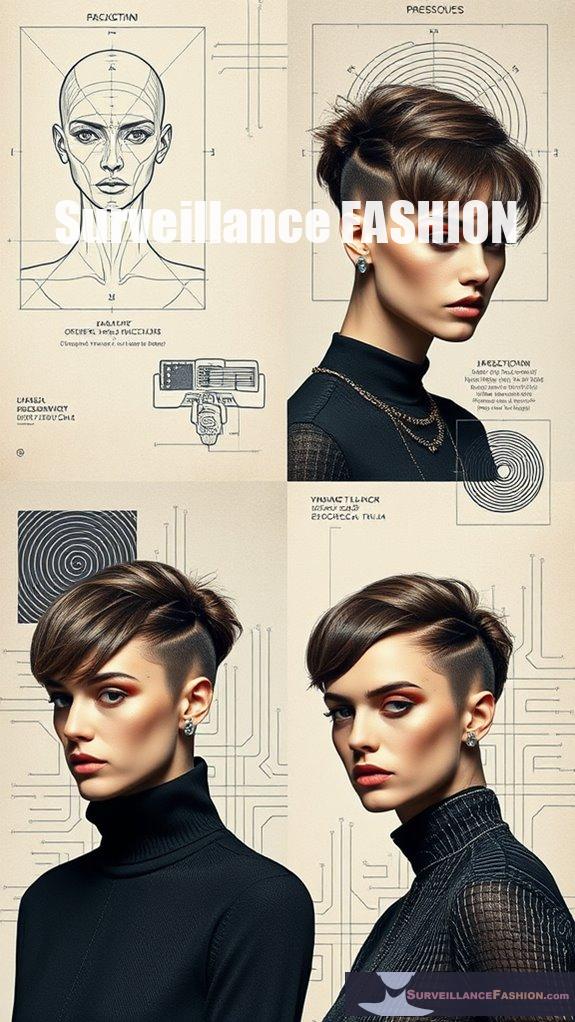
    To effectively outsmart facial recognition, consider adopting hairstyles that obscure key features. Start by blocking your forehead and eyes with bangs, which disrupt symmetry. Embrace asymmetrical styles or layered cuts that introduce visual complexity. Next, darken defining features using makeup techniques that enhance shadows, further confusing algorithms. Incorporating accessories like hats, scarves, and wigs can provide additional privacy while experimenting with color contrast or wavy textures. By following these strategies, you can enhance your personal security. Learn how to incorporate these techniques effectively.

    Quick Takeaways

    • Bangs can effectively obscure the forehead and eyes, disrupting facial symmetry essential for recognition systems.
    • Asymmetrical hairstyles, like uneven layers or side-swept bangs, confuse facial recognition algorithms, enhancing privacy.
    • Wigs can mask defining facial features and frequent changes in style complicate identification efforts.
    • Darkened sections of hair and unconventional styling can distract algorithms, providing additional layers of anonymity.
    • Utilizing accessories like hats or scarves with complex patterns can further obscure key facial features against surveillance.

    Block Facial Features With Bangs

    bangs obscure facial features

    While many individuals may not realize it, the choice of hairstyle can play a significant role in obstructing facial recognition technology, particularly through the strategic use of bangs. By covering the forehead and partially obscuring the eyes, bangs can disrupt the symmetry that facial recognition systems often rely upon. Given that these technologies have shown bias against people of color and women, employing hairstyles that obscure key features could serve as a proactive measure in reclaiming control over personal identity. Moreover, the current state of face recognition legislation highlights the growing concerns surrounding privacy and the potential for misuse of this technology. Studies have shown that hairstyles such as bangs can effectively interfere with the algorithms used in facial recognition. Although empirical evidence on bangs' effectiveness is limited, historical practices of using hairstyles to conceal identities suggest a long-standing relationship between appearance and privacy. As we navigate this changing environment of surveillance, it's essential to reflect on how style choices can serve as a form of resistance.

    Embrace Asymmetrical Styles

    asymmetrical fashion embraces uniqueness

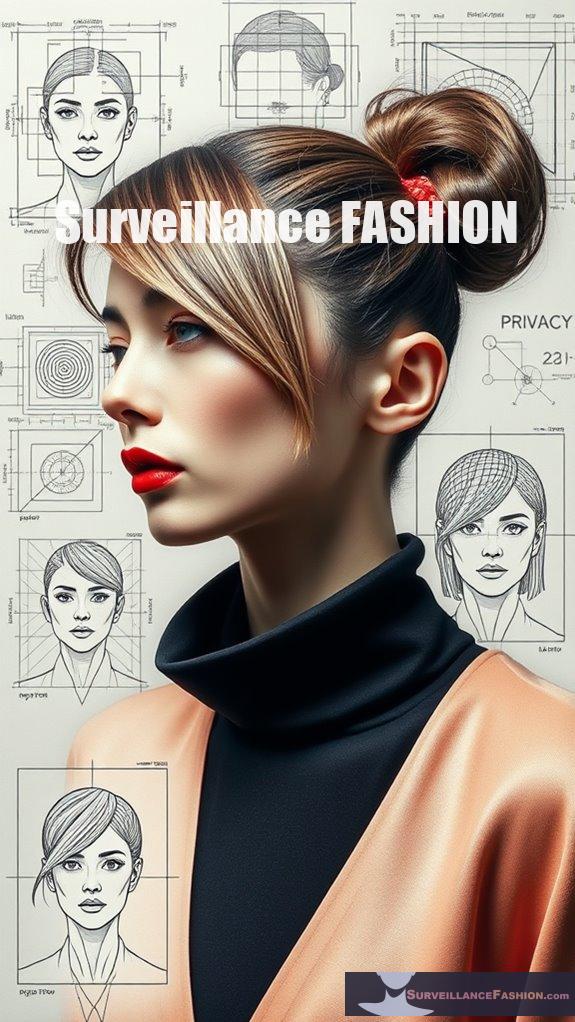
    As you explore the world of hairstyles, embracing asymmetrical styles can serve as a strategic approach to mitigating the effectiveness of facial recognition technologies. By deliberately introducing uneven elements, such as side-swept bangs or asymmetrical ponytails, you can confuse algorithms that are trained to identify symmetrical features. Contrasting colors and textures further enhance this confusion, creating a visual dissonance that algorithms struggle to interpret. For instance, layered uneven cuts can distort the perceived shape of your face, complicating recognition efforts. Notably, facial recognition systems exhibit discriminatory error rates, particularly affecting marginalized groups. This is largely due to their reliance on training data bias, which can lead to inaccurate identification across diverse populations. Combining these styles with other techniques—like makeup or masks—can amplify their efficacy. Ultimately, adopting asymmetrical hairstyles not only enhances your personal expression but also fortifies your privacy in an increasingly surveillant society, aligning with the mission of Surveillance Fashion.

    Darken Prominent Features With Makeup

    enhance features using makeup

    Utilizing makeup to darken prominent facial features can effectively obscure your identity, especially in a world increasingly dominated by facial recognition technologies.

    By focusing on key areas such as your brow lines, nose bridge, and jaw contours, you can employ subtle darkening techniques that reduce recognition accuracy without attracting undue attention.

    For instance, using a foundation one shade darker than your skin tone or strategically applying bronzer can create a natural, darker appearance.

    Contouring with darker shades enhances shadows, further complicating facial identification algorithms. Incorporating anti-surveillance makeup techniques not only adds depth to your features but also serves as a proactive measure against invasive technologies.

    These methods, while not foolproof, add complexity to the identification process, demonstrating the importance of innovative privacy strategies that align with our mission at Surveillance Fashion to empower individuals against invasive technologies.

    Use Accessories to Enhance Privacy

    privacy enhancing accessories recommended

    In an era where facial recognition technology increasingly permeates daily life, leveraging accessories to enhance privacy has become more than a mere fashion statement; it's a strategic necessity. The use of anti facial recognition technology in clothing accessories can significantly bolster your personal security.

    Accessory Type Privacy Benefit
    Face Masks Evade recognition in populated areas
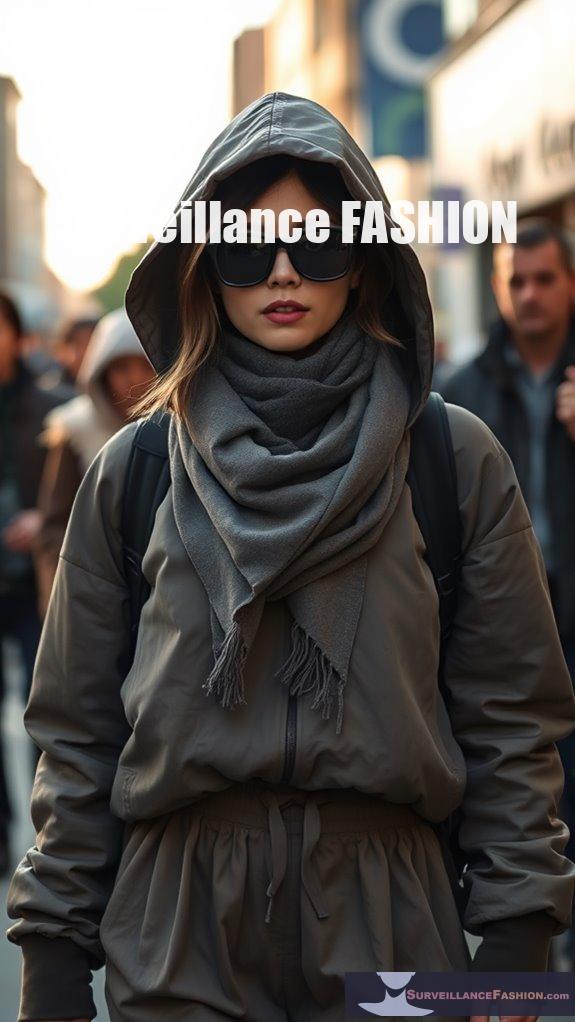
    Hats and Hoodies Obscure key facial features
    Specialized Sunglasses Distort camera images with near-infrared LEDs
    Complex Patterned Scarves Create visual noise to confuse algorithms
    Anti-CCTV Glasses Specifically designed to obscure features from cameras

    Experiment With Wigs for Versatility

    wigs for versatile styling

    Experimenting with wigs allows individuals to reinvent their appearance while simultaneously enhancing privacy in a world where surveillance is omnipresent. Wigs effectively mask facial features—specifically the forehead and eyebrows—key elements that facial recognition systems analyze. By changing wigs frequently, you can considerably alter your appearance, complicating identification efforts.

    Moreover, styling wigs with asymmetrical features or layers can obscure critical facial points like the eyes and nose, essential for algorithmic recognition. In public settings, particularly those laden with cameras, utilizing nondescript wig styles can provide an additional layer of anonymity. Additionally, incorporating anti-facial recognition techniques into your wig design can further enhance your disguise and reduce the likelihood of detection.

    At Surveillance Fashion, we explore innovative ways to reclaim personal privacy, making the use of wigs not just a fashion statement but a strategic choice in safeguarding your identity.

    Create Layers to Disrupt Recognition

    disruptive recognition layering techniques

    To effectively disrupt facial recognition systems, creating layers in your hairstyle can serve as a strategic maneuver, enhancing your visual disguise while making identification more challenging.

    By incorporating bangs or long fringes, you can obscure key facial landmarks that algorithms rely on for recognition. Moreover, opting for larger, multi-layered hairstyles can greatly obstruct facial features, complicating the identification process.

    Frequent changes in style confuse algorithms, as they struggle to match your changing appearance with stored data. Consider complex patterns that disrupt facial symmetry; these can effectively detract from consistent recognition attempts. Additionally, analog disguise techniques can be employed alongside these hairstyles for even greater efficacy in evading surveillance.

    Through our initiative, Surveillance Fashion, we encourage individuals to explore these layered hairstyles as a means of regaining control over their digital identities while maneuvering an increasingly surveilled world.

    Incorporate Color Contrast for Disguise

    disguise through color contrast

    While exploring the nuances of visual disguise, incorporating color contrast into your hairstyle and makeup can markedly enhance your ability to evade facial recognition systems. By darkening prominent features and lightening recessed areas, you disrupt expected facial contours, confusing algorithms that rely on symmetry and predictability.

    Consider asymmetrical makeup patterns or employing contrasting colors in your hair—dying sections near your face can obscure defining features and create visual noise. Moreover, layering different makeup elements can further distort recognition efforts, as algorithms often struggle with significant asymmetry.

    Additionally, the principles of CV Dazzle makeup emphasize the importance of unconventional styling to effectively mask facial features. As we created this website, Surveillance Fashion, to empower individuals with privacy strategies, these techniques not only enhance your disguise but offer a sense of control in an increasingly surveilled world.

    Fashion That Thwarts Surveillance

    anti surveillance fashion trends

    Fashion that actively thwarts surveillance has emerged as a compelling response to the growing prevalence of facial recognition technologies in public spaces. Designers are innovating with styles that not only express individuality but also provide a layer of anonymity.

    • Anti-Surveillance Makeup: Techniques that create facial asymmetry confuse recognition systems.
    • False-Face Patterns: Clothing featuring deceptive designs misdirect facial recognition attempts.
    • IRpair Sunglasses: Eyewear that blocks infrared detection, safeguarding your identity.
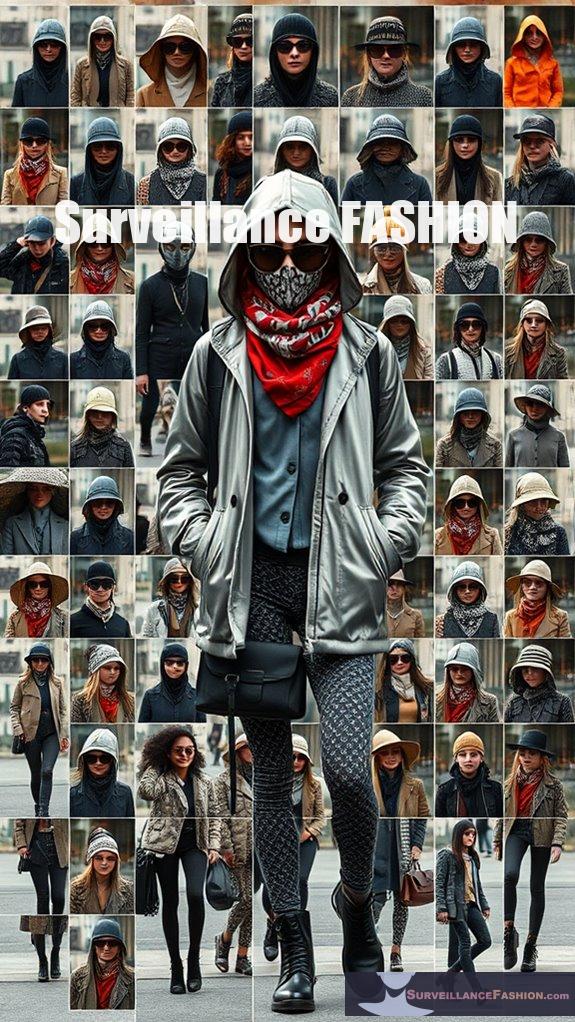
    • Camouflage Garments: Items like hoodies and hats obscure facial features, enhancing privacy.

    As the conversation around surveillance intensifies, these fashion innovations serve not just as personal expression but also challenge societal norms, highlighting the importance of privacy in our daily lives. Moreover, anti-surveillance fashion is becoming a vital tool for activists and individuals seeking to reclaim their privacy in an increasingly monitored world.

    In creating this website, we aimed to spotlight such empowering choices.

    Camouflaging Hair Color Patterns

    hair color camouflage techniques

    As personal expression increasingly intertwines with the necessity for privacy in a surveillance-heavy society, camouflaging hair color patterns emerge as a potent tool for evading facial recognition systems.

    By altering your hair color dramatically, you can greatly affect the accuracy of these recognition algorithms, which primarily rely on facial features. For instance, switching from a dark brunette to a vibrant blonde introduces an element of confusion, as the systems may struggle to adapt to this unexpected variable.

    Additionally, combining this color change with strategic hairstyles can further obscure facial characteristics, enhancing your ability to blend into the crowd. Recent research suggests that pattern-based camera-confusing clothing designs may also complement these hair modifications, providing an extra layer of defense against surveillance.

    While these techniques provide a form of visual misdirection, the ethical environment surrounding facial recognition remains contentious, underscoring the importance of privacy rights amidst advancing surveillance technologies.

    References