Tag: identity protection

  • What Shoes Can Trick Gait Recognition Systems?

    What Shoes Can Trick Gait Recognition Systems?

    Certain footwear can greatly disrupt gait recognition systems. High heels, for instance, alter joint angles and stride length, leading to unique gait signatures, while shoes with uneven soles create variability in key parameters. Motion control shoes adjust foot mechanics, and specialized designs can obscure typical gait patterns. As we’ve explored through our work at Surveillance Fashion, understanding these nuances is essential for developing strategies to navigate biometric identification systems. Discover more about the implications of footwear on gait recognition.

    Quick Takeaways

    • High heels significantly alter joint angles and gait patterns, making them capable of misleading gait recognition systems.
    • Specialized footwear, like motion control shoes, can adjust foot mechanics and affect gait analysis visibility, potentially resulting in misclassification.
    • Shoes with uneven soles introduce variability in gait parameters, complicating accurate recognition and potentially disguising true gait signatures.
    • Atypical shoe designs can create unique gait signatures that deviate from traditional walking patterns, confusing recognition systems.
    • Textured footwear affects sensory feedback and muscle activation, which can change gait dynamics and lead to errors in biometric systems.

    How Do Shoes Affect Gait Recognition Accuracy?

    footwear influences gait recognition

    Expanded Content:

    Footwear design choices play an essential role in how individuals walk, influencing key gait characteristics like stability, mobility, and propulsion forces. For instance, switching from sport shoes to high heels can drastically change joint angles and forces during the gait cycle, resulting in a unique gait signature that may confuse recognition systems.

    • Smart shoes equipped with multi-axis sensors offer superior data quality for gait analysis, allowing continuous monitoring without disrupting natural movement.
    • A primary challenge arises from the need to recognize different footwear types and adjust gait models accordingly to enhance recognition accuracy. Variations in shoe parameters can significantly alter gait patterns, impacting walking efficiency and recognition outcomes.
    • Integrating various sensor types can help mitigate the accuracy loss caused by footwear changes, providing a more robust gait recognition system.

    Thus, understanding the effects of different shoe designs is vital for developing effective gait recognition technology.

    What Types of Footwear Alter Gait Patterns Significantly?

    Footwear such as textured inserts, motion control shoes, stability shoes, and customized orthopedic designs markedly alter gait patterns by modifying sensory feedback, joint mechanics, and muscle activity. These changes can enhance or adversely affect walking and running dynamics. Textured footwear alters sensory input from the foot, leading to changes in muscle activation and walking mechanics. Motion control and stability shoes are specifically engineered to correct foot pronation and improve alignment through features like elevated heel drops and dual-density midsoles. Additionally, shoe sole wear patterns can provide valuable insights into an individual’s gait tendencies and help in selecting the most appropriate footwear. Furthermore, customized orthopedic shoes support or correct foot alignment, greatly impacting gait parameters.

    Key elements affecting gait include:

    • Sensory feedback from sole texture
    • Heel/platform height and shoe design
    • Ankle support features
    • Individual gait tendencies reflected in wear patterns

    Can High Heels Confuse Gait Recognition Systems?

    Yes, high heels can confuse gait recognition systems due to significant alterations in gait parameters, such as reduced stride length, decreased walking speed, and altered foot placement.

    High heels modify both spatial and temporal gait characteristics, leading to significant irregularities that can challenge gait recognition algorithms.

    Key changes include:

    • A reduction in stride length and foot clearance.
    • Increased toe-out angle affecting foot placement.
    • Decreased walking speed and swing phase dynamics.

    These discrepancies can confuse recognition systems relying on stable gait patterns. Such variability underscores the importance of adaptive algorithms capable of accounting for different shoe types in gait analysis. Furthermore, studies have shown that high-heeled shoes significantly impact walking dynamics, which can further complicate gait recognition accuracy.

    How Does Footwear Change Gait Mechanics?

    Footwear considerably alters gait mechanics by affecting joint kinematics, kinetics, muscle activation, and sensory feedback. Different shoe designs impact stride length, power generation, and stability during walking.

    Specifically, boots with high shafts restrict ankle motion and decrease gait speed, while standard shoes can lead to less intrinsic foot movement. Textured insoles modulate muscle activity and enhance foot dynamics, highlighting the complexity of how footwear impacts overall biomechanics:

    • Higher heel height changes walking posture.
    • Closed back shoes provide better stability than open back designs.
    • Soft or stiff sole impacts gait efficiency.
    • Reduced foot motion can decrease muscle strength over time.

    Each type of footwear presents unique benefits and challenges, fundamentally influencing how individuals move.

    What Are the Most Common Shoes Used to Trick Gait Recognition?

    shoe characteristics alter gait

    Flexible sports shoes, such as those with cushioned midsoles and variable heel-to-toe drops, change force distribution and pressure patterns.

    High heels modify gait biomechanics, resulting in shorter steps and altered force application.

    Similarly, shoes with uneven or thickened soles create asymmetries that disrupt foot contact detection.

    Casual footwear, including flip-flops and heavy boots, further complicates gait signatures through increased movement variability and added mass.

    How Do Uneven Soles Influence Gait Analysis?

    Uneven soles considerably disrupt gait analysis by introducing variability in key gait parameters, such as step time and cadence, which complicate recognition accuracy in biometric systems.

    This instability can lead to misclassification of gait patterns.

    Uneven sole designs create deviations in the center of pressure, increasing mediolateral instability. Consequently, they alter joint mobility, impacting how individuals move, which is detectable by sensors.

    Specific effects include:

    • Increased variability in step lengths and swing durations.
    • Distorted biometric signatures due to gait irregularities.
    • Challenges in recognizing consistent gait patterns, leading to misinterpretation by algorithms.

    As a result, the influence of uneven soles on walking dynamics highlights the complexities entailed in gait recognition technologies.

    What Role Does Heel Height Play in Gait Recognition?

    Higher heel heights greatly influence gait recognition systems by altering gait patterns and biomechanics, which can lead to distinct biometric signatures. Consequently, accurate identification may depend on accounting for these variations in design.

    The variations in gait due to heel height affect several key factors:

    • Gait data patterns differ between high heels and athletic shoes.
    • Heel height impacts joint tracking and limb segment lengths.
    • Changes in foot loading and plantar pressure distribution occur.
    • Recognizing high-heeled gait patterns requires adjusting biometric identification models for reliability.

    Understanding these dynamics is essential to enhance accuracy in gait recognition technologies.

    Can Flexible Soles Mislead Gait Recognition Algorithms?

    Yes, flexible soles can mislead gait recognition algorithms by altering plantar pressure distribution and affecting key gait parameters.

    These changes can reduce the reliability and accuracy of recognition systems, especially as users adapt to the footwear over time.

    Flexible soles, such as those made from conductive collagen fiber composites, enable real-time monitoring of foot pressure. Their dynamic response can meaningfully modify the characteristics of foot contact, which are essential for gait identification.

    Key factors include:

    • Variations in knee flexion and foot strike patterns.
    • Redistribution of ground reaction forces (GRF).
    • Changes in ankle movement and overall biomechanics.

    As users become accustomed to flexible footwear, traditional gait signatures become less distinct, potentially leading to false rejections or misclassifications by recognition systems.

    How Do Specialized Shoes Evade Gait Detection?

    gait detection evasion techniques

    Specialized shoes evade gait detection through embedded sensors that manipulate gait data, structural modifications that alter foot mechanics, and changes in pressure distribution within the insoles.

    These features disrupt the normal gait patterns recognized by algorithms, making identification difficult.

    Such alterations can include:

    • FSR-based sensors producing distorted signals.
    • Customized insoles redistributing pressure to change gait patterns.
    • Structural add-ons modifying sole stiffness and geometry.
    • Jittering sensor sampling to create unreliable data.

    These techniques work in concert to confuse identification systems by simultaneously altering spatial and temporal gait parameters.

    What Are the Impacts of Sport Shoes on Gait Recognition?

    The design and characteristics of sport shoes can lead to measurable changes in how individuals walk, affecting parameters like joint angles and ground reaction forces.

    Gait recognition systems, which depend on consistent movement patterns, face challenges when users wear sport shoes.

    Especially, the following points highlight key issues:

    • Biometric systems struggle to recognize individuals due to altered gait dynamics.
    • Variations in foot-ground interaction can introduce inconsistencies.
    • High-heeled and sport shoes have pronounced effects on joint kinematics.
    • Fusing data from multiple sensor types can enhance recognition rates.

    How Do Custom Footwear Designs Affect Gait Analysis?

    Custom footwear designs greatly affect gait analysis by optimizing shoe features like fit and support based on individual gait data, hence enhancing biomechanics and potentially misguiding gait recognition systems.

    The integration of custom design elements enables shoes to adapt to unique gait characteristics. By tailoring features such as stride length and foot strike, these designs can lead to improvements such as:

    • Enhanced comfort and reduced injury risk
    • Better alignment with individual biomechanics
    • Alteration of ground contact patterns
    • Improved functional mobility metrics

    Utilizing 3D printed technology and predictive modeling further refines shoe performance, affecting how gait is perceived, which can be leveraged or manipulated in gait recognition scenarios.

    Can Wearing Modified Footwear Reduce Recognition Performance?

    Yes, wearing modified footwear can reduce gait recognition performance by altering gait parameters such as step length and foot speed, which introduces atypical gait signatures.

    Modified shoes, like Gait Enhancing Mobile Shoes (GEMS) and specialized EVA designs, can impose significant and consistent changes to walking patterns. These alterations can create challenges for gait recognition systems, which rely on predictable patterns for accuracy.

    Key factors include:

    • Gait deviations caused by altered footwear may obscure biometric signatures.
    • Differences in foot motion and weight distribution can increase inter-individual variability.
    • Exposure to diverse footwear during training is essential for enhancing recognition model robustness.

    Thus, these modified shoes can be strategically used to evade biometric systems effectively.

    What Body Dynamics Are Missed in Video-Based Gait Analysis?

    incomplete gait analysis insights

    Video-based gait analysis primarily misses critical depth information, force-related parameters, and internal muscle activity, leading to incomplete understanding of gait dynamics.

    Furthermore, it struggles with tracking soft tissue artifacts and can misinterpret anatomical variability, particularly in diverse populations.

    The limitations of video-based gait analysis stem from its reliance on 2D recording and processing techniques. Key dynamics such as joint torque, muscle activation, and internal forces can’t be captured without integrating data from sensors like electromyography and force plates.

    Moreover, environmental factors—such as lighting and camera positioning—can greatly affect the accuracy of pose estimations. Variations in body dynamics due to soft tissue movement and the influence of clothing or prostheses further complicate accurate assessments.

    Without these critical observations, practitioners may lack a thorough view of a patient’s gait, reducing the efficacy of clinical evaluations and interventions.

    How Do Gait Event Timing Changes Complicate Recognition?

    Changes in gait event timing complicate recognition by introducing variability that affects detection accuracy. Factors like speed, footwear, and individual gait impairments lead to misalignments of key events, decreasing the capability of recognition systems to accurately classify gait patterns.

    Variability in gait timing can stem from several influences, including:

    • Altered walking speed or path conditions.
    • The unpredictable nature of impaired or modified gaits.
    • Fatigue-induced timing fluctuations.
    • Multiple overlapping gait events challenging resolution.

    Such inconsistencies can cause significant classification issues, as even minor timing deviations may disrupt the unique gait signatures used for identification, resulting in missed or false detections.

    What Are Alternative Approaches to Gait Recognition Systems?

    Expanding on these alternatives:

    1. Sensor-Based Methods: These utilize inertial and pressure sensors to capture gait dynamics, providing robust recognition in various environments.

    Multi-sensor data fusion enhances accuracy by combining different data types.

    2. Deep Learning Techniques: Convolutional Neural Networks (CNNs) and Recurrent Neural Networks (RNNs) extract features from video sequences and model gait dynamics, improving identification under diverse conditions.

    3. Multimodal Fusion Strategies: Combining data from video, depth sensors, and other biometrics enhances recognition accuracy and mitigates the impact of occlusions.

    4. Occlusion-Robust Methods: Techniques like MimicGait and Visibility Estimation Networks are tailored to improve recognition even when visual data is partially blocked.

    5. Privacy Enhancements: Methods such as homomorphic encryption enable secure processing of biometric data, ensuring user privacy while utilizing gait recognition systems.

    How Can Footwear Design Aim to Confuse Recognition Systems?

    Footwear design can confuse gait recognition systems by integrating irregular sole patterns, adjustable components, and materials that obscure foot features, leading to inconsistent gait data.

    To achieve this, shoe designers can focus on several key elements. First, employing complex and irregular sole designs disrupts pressure distributions, confusing recognition sensors.

    Next, utilizing variable heel heights or thicker soles can greatly alter walking mechanics, therefore reducing accuracy. Furthermore, implementing removable attachments or feedback systems can create dynamic gait changes that further obscure consistent gait patterns.

    Moreover, shoes made from materials that reduce friction or enhance foot slippage can further degrade biometric signal clarity.

    What Are the Limitations of Current Gait Recognition Technology?

    gait recognition technology limitations

    Current gait recognition technology faces several limitations, including susceptibility to environmental factors, high computational demands, and challenges in dataset diversity.

    Furthermore, behavioral variations and integration issues with other biometric systems further impede its accuracy and reliability.

    The effectiveness of gait recognition systems is greatly impacted by a range of variables. Environmental conditions like lighting variations, weather influences, and background clutter can distort gait features.

    Computationally, deep learning models require substantial resources, making real-time deployment difficult. Limited dataset diversity restricts generalization across different populations, while behavioral changes, such as intentional disguise or varying emotional states, compromise recognition accuracy.

    Lastly, practical deployment often encounters challenges related to integrating gait recognition with other biometric methods, raising concerns about false positives and ethical considerations.

    How Do Gait Recognition Systems Handle Natural Gait Variations?

    Gait recognition systems effectively handle natural gait variations by employing diverse datasets and normalization techniques. These strategies enhance model robustness, allowing them to accurately classify gait patterns despite external factors like speed and footwear.

    To achieve this, systems utilize large-scale databases that capture a wide range of foot movements from various individuals. The incorporation of variations in walking conditions—such as speed, footwear, and terrain—helps simulate real-world scenarios, improving recognition accuracy.

    Key strategies include:

    • Normalization Techniques: Batch normalization and z-score normalization standardize data, minimizing inconsistencies due to differences in walking pace or individual stature.
    • Spatiotemporal Modeling: Using templates and Gait Energy Images (GEI) to better represent the timing and configuration of movements.
    • Feature Fusion: Combining features from multiple models and applying dimensionality reduction techniques to focus on the most informative aspects of gait.
    • Exposure to Covariates: Training with datasets that consider different walking conditions strengthens the model’s ability to discern stable gait features, reducing vulnerability to variability caused by external influences.

    Together, these methods guarantee gait recognition systems adapt to the inherent variations found in human gait.

    Can Simple Modifications to Footwear Fool Advanced Systems?

    Yes, simple modifications to footwear can indeed fool advanced gait recognition systems by altering walking dynamics and creating unique gait signatures.

    Modifying shoes is a low-tech yet effective way to disrupt gait recognition. Simple alterations, such as adding weights, wedges, or even small objects like gravel, can greatly change stride patterns and foot pressure distribution. These changes create new gait signatures that confuse recognition sensors, leading to misclassification.

    Key factors include:

    • Changes in foot angle or pressure distribution.
    • Variability in gait dynamics detected by sensors.
    • Influence on peak hip flexion and stability.
    • Reduced recognition accuracy without compensatory algorithms.

    Such modifications highlight vulnerabilities in current biometric technology, making footwear a critical factor in gait recognition reliability.

    What Are the Future Implications for Footwear and Gait Recognition?

    The future implications for footwear and gait recognition include the integration of AI-driven sensors for enhanced biometric identification, health monitoring, and the design of adaptive shoes that can modify gait patterns to evade recognition.

    As gait recognition technology evolves, footwear will incorporate advanced sensors to monitor real-time gait metrics, improving accuracy in biometric authentication.

    The interplay between gait data and shoe design will lead to:

    • Personalized footwear adapting dynamically to enhance gait recognition.
    • Innovations in materials to guarantee distinct gait patterns or intentionally disguise them.
    • Continuous health monitoring, potentially predicting medical issues.
    • A shift toward functional and specialized shoe designs to meet both biometric and health needs.

    Gait Analysis Confusion Footwear

    In recent studies, a notable shift in understanding how footwear influences gait recognition has emerged, prompting researchers and developers to reconsider existing methodologies.

    When examining gait analysis confusion footwear, consider these factors:

    1. High heels drastically alter gait patterns, complicating individual recognition.
    2. Sole stiffness and heel height directly impact joint angles and propulsion forces.
    3. Footwear design modifications can obscure gait biometrics, adding layers of complexity.

    With these elements in mind, it’s evident that choice of footwear matters considerably.

    As we explore deeper into the intersection of gait recognition and personal expression, our mission at Surveillance Fashion remains to reveal the subtle complexities of human movement and technology.

    Anti Surveillance Ebook review: Eyes Everywhere

    Given the pervasive nature of surveillance technologies in contemporary society, understanding their implications is essential for fostering informed discussions about privacy and civil liberties.

    The ebook “Eyes Everywhere” investigates the complex web of government-corporate surveillance integrating various shoe technology and gait surveillance methodologies.

    As you explore, you’ll uncover how these systems exploit our habitual movements, tracking individuals without consent.

    This exploration reveals not only the omnipresent watchful eyes on our daily lives but also the pressing need for a discourse on civil liberties, underscoring why we created the website Surveillance Fashion to illuminate these unsettling truths.

    Moreover, the concept of employee mental health in the context of workplace monitoring highlights the delicate balance between surveillance and well-being.

    Informed awareness is your first step towards reclaiming privacy.

    References

  • Why Anti-Facial Recognition Fashion Blocks Your Identity

    Why Anti-Facial Recognition Fashion Blocks Your Identity

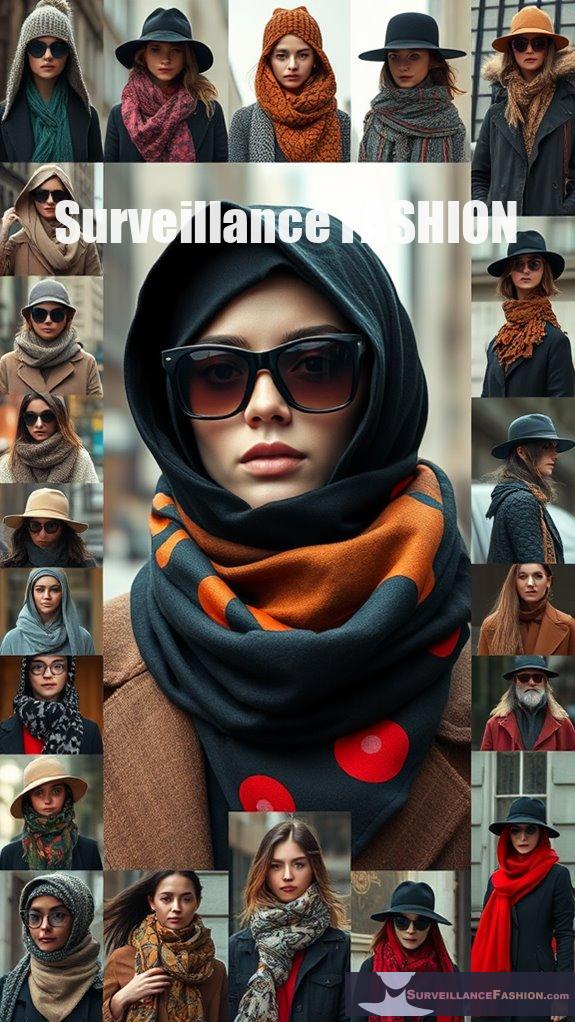
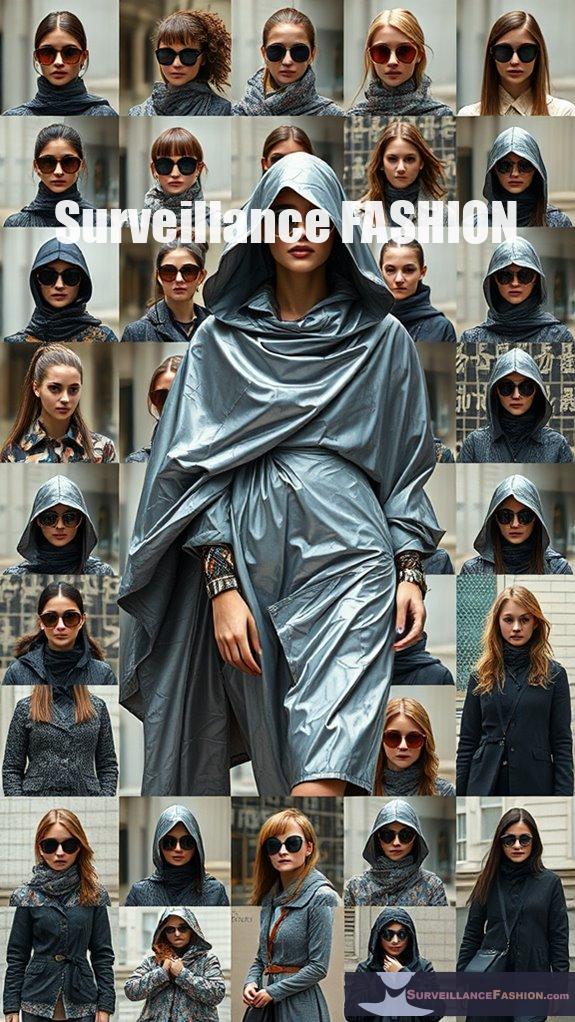
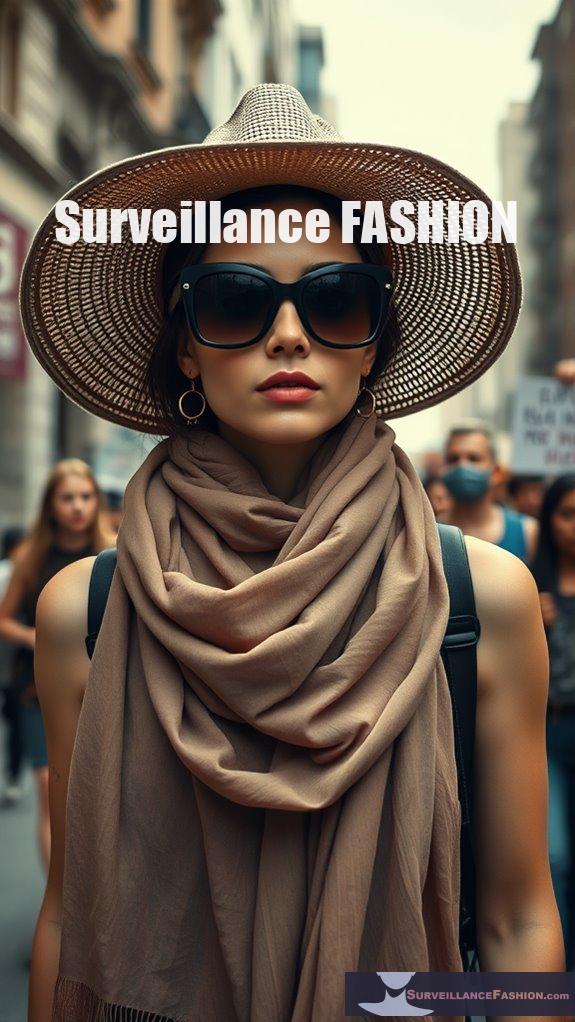
    Anti-facial recognition fashion effectively obscures your identity by utilizing cutting-edge designs and materials that disrupt surveillance technologies. For instance, hats often incorporate infrared LEDs, while scarves feature reflective elements and elaborate patterns that confuse recognition systems.

    By layering these fabrics, you create a complex visual environment that algorithms struggle to decipher. This innovative approach to privacy not only challenges corporate surveillance but also resonates with cultural dialogues around autonomy; keep exploring to uncover more intriguing facets.

    Quick Takeaways

    • Anti-facial recognition fashion uses unique designs and patterns to confuse detection algorithms, disrupting their ability to accurately identify individuals.
    • Incorporating reflective materials and infrared light emission helps block facial recognition systems that rely on visual symmetry for identification.
    • Techniques such as adversarial printed patterns create visual noise, overwhelming recognition algorithms and masking true facial features.
    • Accessories like hats and scarves can strategically cover critical facial areas, adding layers of privacy protection against invasive surveillance techniques.
    • The clothing’s structural elements and modular designs further complicate facial recognition, challenging the effectiveness of existing surveillance technologies.

    What Are the Key Features of Anti-Surveillance Hats?

    facial recognition disruption features

    Anti-surveillance hats are designed with several key features to disrupt facial recognition technology, including infrared light emission, reflective materials, adversarial designs, and physical coverage.

    These elements work together to obscure facial features and shield the wearer from recognition systems. The hats utilize infrared LEDs to emit noise that interferes with facial recognition cameras, particularly in low-light conditions. Reflective materials enhance this effect by creating glare that obscures facial contours, adversarial patterns are printed to confuse recognition algorithms by degrading confidence scores.

    In addition to these technologies, many hats are crafted from advanced fabrics that also enhance comfort and breathability, making them suitable for prolonged use. Finally, the design often incorporates visors or extensions to maximize shadow coverage, limiting camera visibility of key facial landmarks. In line with advancements in surveillance evasion, these hats are part of a growing trend to use adversarial clothing as a means to protect individual privacy.

    These features aren’t only functional but also focus on aesthetics and comfort for everyday wear.

    How Do Beanie Hats Disrupt Facial Recognition Systems?

    Beanie hats disrupt facial recognition systems primarily by integrating infrared LEDs to project patterns that interfere with machine vision sensors and confuse algorithmic input.

    Furthermore, their design provides partial facial occlusion, reducing identifiable features available to recognition software.

    The infrared projections emitted by the beanies create noise that misleads facial recognition algorithms, leading to misidentification. These projected patterns often render specific facial features unusable by shifting the AI’s focus toward non-facial elements.

    In conjunction with occlusion from the hat itself, the overall effect drastically reduces the accuracy of facial recognition systems, increasing the chance of error.

    • The combination of infrared interference and occlusion heightens confusion for recognition software.
    • Patterns can be tailored to confuse specific algorithms like ArcFace.
    • Beanies are socially acceptable and can be worn casually, enhancing user comfort.
    • Additionally, these infrared-reflecting materials significantly deter unauthorized surveillance and tracking.
    • The effectiveness may vary based on lighting conditions and camera technology.

    What Materials Enhance the Effectiveness of Anti-Surveillance Headwear?

    Answer:

    Effective anti-surveillance headwear incorporates infrared-emitting materials, adversarial patterned fabrics, and reflective thermal shielding to obscure recognition by cameras and thermal imaging systems.

    Expanded Content:

    1. Infrared-Emitting Materials: High-powered infrared (IR) LEDs can blind night vision cameras, preventing facial recognition without detection by the human eye.
    2. Adversarial Patterned Fabrics: These fabrics confuse AI detection systems by altering biometric data, making wearers appear as animals or objects.
    3. Reflective and Thermal Shielding Materials: Silver-plated fabrics reflect thermal signatures, thwarting heat-based detection methods, while glare from reflective surfaces can disrupt surveillance cameras.
    4. Disruptive Patterns and Makeup: Integrating dynamic patterns and asymmetrical makeup can mislead recognition algorithms by introducing visual noise.

    Combining these materials enhances the overall effectiveness of anti-surveillance headwear, ensuring better privacy for the wearer.

    How Do Reflective Elements in Scarves Confuse Surveillance Cameras?

    Reflective elements in scarves confuse surveillance cameras by redirecting infrared (IR) light and creating glare that obscures facial features.

    This interference disrupts image clarity, leading to loss of definition, sensor saturation, and challenges for facial recognition algorithms.

    The effectiveness of these reflective materials hinges on both their reflective properties and camera angles. Scarves designed with glossy or metallic finishes create significant glare under strong lighting, confusing image processing and diminishing facial detail recognition.

    Key mechanisms include:

    • Redirection of IR light, resulting in bright spots.
    • Triggering of auto-exposure adjustments causing blurriness.
    • Dynamic glare patterns complicating consistent identification.
    • Angle-dependent performance that maximizes obstruction when aligned with camera positions.

    While reflective elements can enhance anonymity, their efficacy may be limited by advanced surveillance technologies capable of mitigating such disruptions.

    What Role Do Layered Fabrics Play in Protecting Identity?

    Layered fabrics considerably enhance identity protection by increasing particle filtration efficiency and disrupting facial recognition algorithms through texture and structural irregularities. This combination obscures facial features and hinders detailed imaging, complicating AI pattern detection.

    The design of multilayered fabrics strategically employs varying weaves and densities to create unpredictable surface geometries, making it challenging for facial recognition technology to accurately map features.

    Key aspects include:

    • Texture Variability: Raised fibers and irregular surfaces interrupt the continuity of face-shaped pixels.
    • Filtration and Breathability: While layered materials improve particle capture, they must maintain airflow for comfort.
    • Optical Disruption: Layering alters light reflection, further confounding recognition algorithms.
    • Dynamic Movement Masking: Variability in fabric textures limits AI’s ability to track facial muscle movements, enhancing concealment.

    Collectively, these features work synergistically to bolster privacy in an era dominated by surveillance technologies.

    How Can Patterns on Hats Scramble Facial Recognition Algorithms?

    patterned hats disrupt recognition

    Patterns on hats can scramble facial recognition algorithms by creating visual noise and misleading cues that disrupt the detection of key facial landmarks. Irregular shapes and contrasting colors interfere with the algorithms’ ability to accurately map facial features, leading to increased error rates and false positives.

    The complexity of hat patterns affects facial recognition in several ways:

    • Visual noise: Layered textures and disruptive colors degrade image quality, causing algorithms to misinterpret facial regions.
    • Misleading cues: Patterns resembling eyes or mouths create false landmarks, skewing feature mapping.
    • Geometric disruption: Irregular shapes near the face disturb symmetry, leading to reduced identification accuracy.
    • Shadow manipulation: Patterns can alter expected light and shadow, affecting 3D model reconstruction.

    What Techniques Are Used in DIY Anti-Surveillance Fashion?

    DIY anti-surveillance fashion techniques include using conductive fabrics, adversarial printed patterns, infrared LED integration, and incorporating masks and accessories. These methods effectively disrupt facial recognition algorithms and enhance wearer anonymity.

    To expand on these techniques:

    • Conductive Fabrics: Incorporating fabrics embedded with conductive materials can block signals from biometric scanners and RFID readers.
    • Adversarial Patterns: Clothing with complex, multi-directional designs confuses facial recognition by obscuring key features.
    • Infrared LED Clothing: Attaching IR LEDs to garments creates bright spots for cameras, ensuring facial details are lost.
    • Face Masks and Reflective Accessories: Wearing masks or reflective materials can disrupt image capture while blending into common attire.

    These methods allow individuals to enhance their privacy in an increasingly surveilled environment.

    How Does the Design of Hyperface Clothing Work Against Recognition Systems?

    Hyperface clothing designs utilize patterns that mimic facial features to confuse facial recognition systems, effectively lowering the accuracy of identity detection. By introducing numerous false facial images, these garments disrupt algorithmic detection methods, rendering the wearer’s actual face difficult to identify.

    Hyperface patterns incorporate elements like eyes, mouths, and noses, laid out strategically to mislead recognition algorithms. This overload of visual data aims to trigger multiple detections, considerably reducing the confidence level of identification.

    Key points include:

    • The designs challenge algorithms dependent on edge detection and shape recognition.
    • Patterns appear as digital noise, disrupting the extraction of facial landmarks.
    • Clothing can adaptally be worn or used to cover environments, enhancing privacy.
    • Applications range from clothing to scarves, extending the potential anti-surveillance capabilities.

    The complexity and density of these patterns create a dynamic interaction with recognition systems, improving privacy for the wearer.

    What Are the Best Practices for Wearing Anti-Surveillance Hats and Scarves?

    Best Practices for Wearing Anti-Surveillance Hats and Scarves:

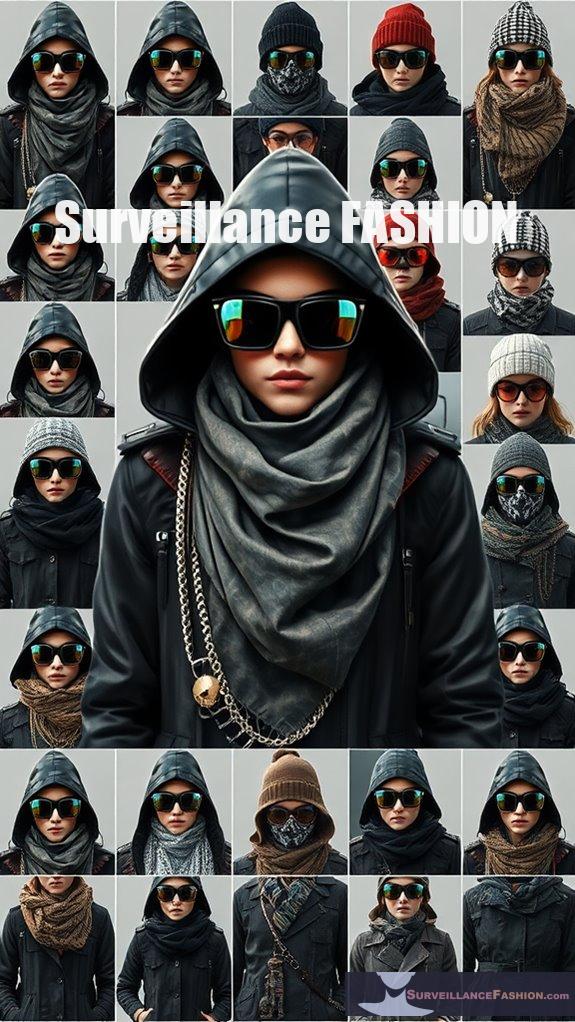
    To effectively wear anti-surveillance hats and scarves, choose dark or reflective materials. Opt for designs that cover key facial areas and utilize patterns that confuse recognition algorithms. Layering garments and considering the environment are also crucial for maximizing effectiveness.

    When selecting your anti-surveillance gear, consider these additional understandings:

    • Prioritize large-brimmed or hooded hats to cast shadows over your face.
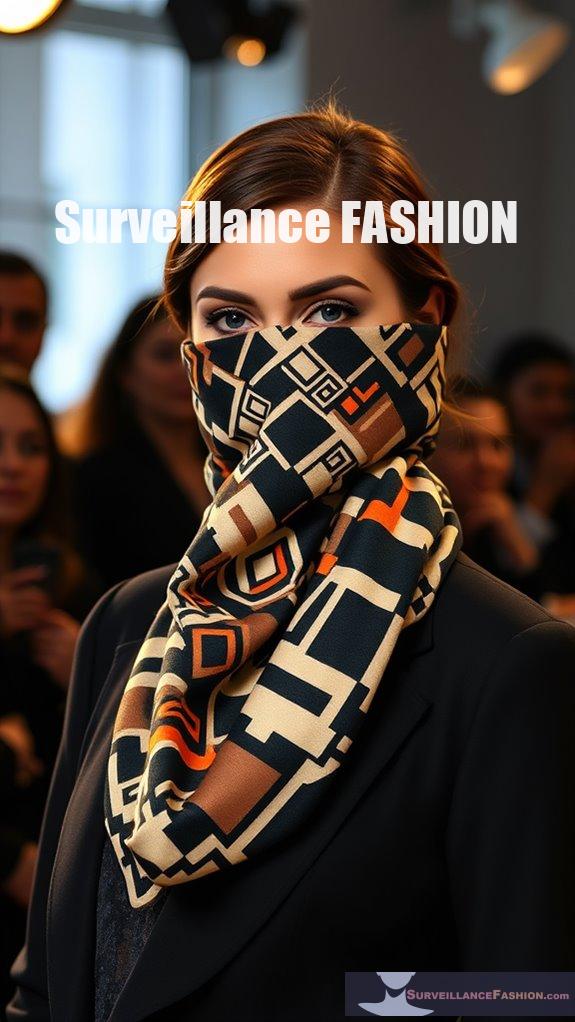
    • Choose scarves that cover the mouth and nose, obscuring critical facial landmarks.
    • Use patterns that include multiple face-like images to confuse detection algorithms.
    • Be aware of cultural norms regarding face coverings in your area to avoid drawing attention.

    Incorporating these strategies can greatly enhance anonymity in various settings.

    How Do Makeup and Face Paint Contribute to Anti-Surveillance Efforts?

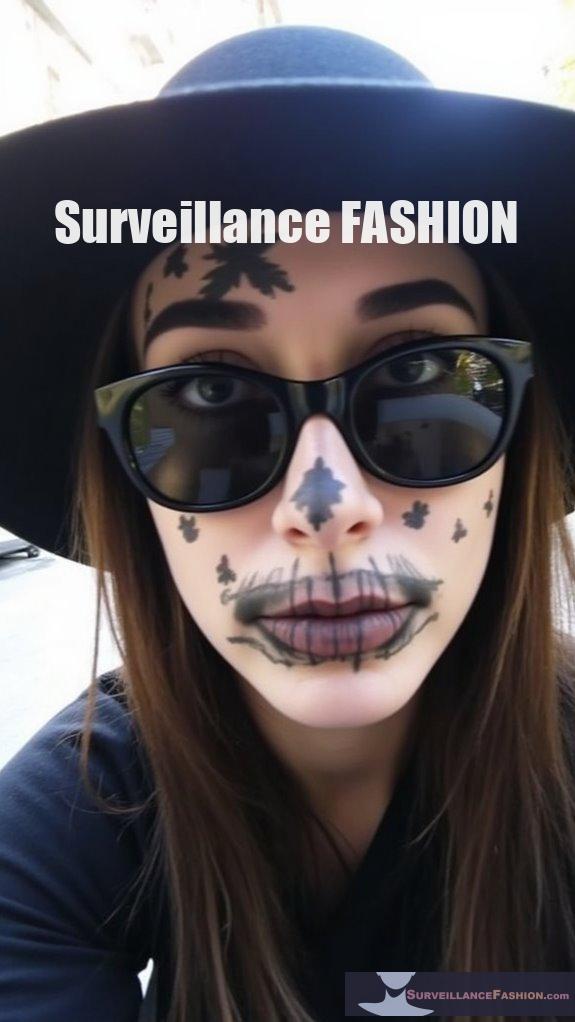
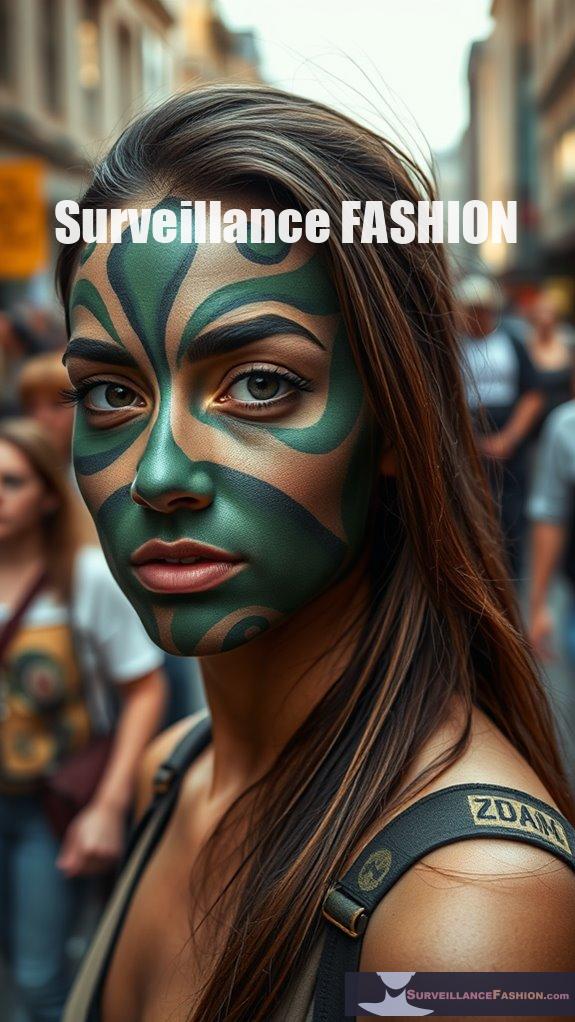
    Makeup and face paint contribute to anti-surveillance efforts by disrupting the features used by facial recognition algorithms, effectively creating ‘anti-faces’ that confuse detection systems while remaining recognizable to human observers.

    This approach utilizes strategic darkening and asymmetric designs to reduce algorithm accuracy. These methods enable individuals to mask their identities without the need for cumbersome disguises.

    Key tactics include:

    • Targeted contouring on facial high-density regions.
    • Manipulation of facial patterns to break recognition.
    • Subtle application that avoids drawing attention.
    • Layered combinations with other anti-surveillance techniques to enhance efficacy.

    However, as facial recognition technology evolves, the effectiveness of makeup-based methods may diminish, highlighting the need for ongoing innovation in anti-surveillance strategies.

    What Impact Do Color Choices Have on Facial Recognition Error Rates?

    color choices impact recognition

    Color choices greatly impact facial recognition error rates, with high contrast and certain patterns increasing misidentification. This is particularly pronounced for individuals with darker skin tones, where color and design can obscure key facial features.

    High contrast colors near facial features can disrupt algorithms, leading to more errors. For instance, dark or vibrant clothing can obscure facial landmarks like the eyes and nose, which are essential for recognition.

    Furthermore, specific color choices might amplify biases present in algorithms trained on datasets favoring lighter skin tones, reducing their effectiveness on darker complexions.

    • Dark colors can obscure facial features.
    • High contrast patterns like masks increase misidentification.
    • Color choices affecting symmetry contribute to errors.
    • Certain hues can distort image quality, increasing algorithmic inaccuracies.

    How Can Anti-Surveillance Fashion Reflect Individual Style?

    Anti-surveillance fashion reflects individual style by integrating aesthetics with privacy protection, allowing wearers to express their identity while safeguarding against biometric tracking.

    This fashion movement combines innovative materials and design techniques to maintain versatility and align with socio-cultural values.

    Designers employ glitchy prints, reflective stripes, and customizable accessories to merge functionality with personal flair.

    Popular choices include:

    • Scarves and masks crafted from reflective materials
    • High-contrast patterns that disrupt recognition algorithms
    • Accessories like anti-CCTV glasses

    As public concern over surveillance increases, such fashion not only preserves anonymity but also serves as a statement on privacy and autonomy, enabling stylish self-expression amid growing scrutiny.

    What Is the Significance of Anti-Surveillance Fashion From a Political Perspective?

    Anti-surveillance fashion holds significant political value as it serves as visible resistance against state and corporate surveillance, critiques the legitimacy of these systems, and empowers individuals through accessible activism.

    This form of fashion not only interrupts the normalization of surveillance but also engages the public in discourse about privacy rights and individual anonymity. By utilizing creative designs that disrupt facial recognition technology, activists challenge government claims of infallibility.

    Key aspects of anti-surveillance fashion include:

    • Deliberate choices to conceal identity
    • Public events raising awareness about surveillance
    • Open-source designs that encourage participation
    • Everyday actions becoming significant political statements

    Ultimately, it democratizes resistance and amplifies voices of those disproportionately affected by surveillance.

    Anti Surveillance Ebook review: Eyes Everywhere

    Surveillance has become an omnipresent element of modern life, seamlessly woven into the fabric of both public and private environments, leaving individuals often feeling exposed and vulnerable.

    In “Eyes Everywhere,” the author dissects the pervasive nature of surveillance, emphasizing its global proliferation. Despite widespread camera installation, there’s scant evidence showing it effectively deters crime.

    The book explores the implications for social equity, as surveillance disproportionately targets marginalized groups. Offering a keen analysis of the technological evolution from traditional CCTV to advanced smart systems, it evaluates how our privacy erodes under the watchful eye, prompting us to rethink our societal structures—hence, the importance of Anti-Surveillance Fashion.

    Anti-Surveillance Hairstyles and Headwear

    Have you ever considered how the simplest changes to your hairstyle or headwear could potentially shield you from prying eyes?

    Innovative approaches like CV Dazzle demonstrate that asymmetric hairstyles can obscure key facial landmarks, thereby obstructing facial recognition algorithms that depend on symmetry.

    Implementing unique silhouettes, such as spiky or multi-directional styles, disrupts the predictable features these technologies target.

    Additionally, strategically designed headwear can cast shadows or project false facial landmarks, further complicating model detection.

    Ultimately, adopting such anti-surveillance hairstyles and headwear provides a wearable solution, allowing you to navigate daily life while maintaining an element of privacy in a scrutinized world.

    Anti Surveillance Hat Designs Tutorial

    As your journey into protective fashion evolves from hairstyles and headwear, exploring the design of hats specifically engineered to thwart facial recognition technology offers an innovative frontier.

    Utilizing infrared LEDs strategically placed around the hat’s brim, you can emit invisible light that overwhelms surveillance cameras, rendering your facial details indecipherable.

    Lightweight fabrics, embedded with conductive threads, discreetly integrate electronic components without compromising comfort. Modular elements and reflective surfaces further confuse detection algorithms, enhancing effectiveness.

    Testing these designs against various lighting conditions, coupled with smartphone filters, can validate their capability.

    This complex interplay of technology and style exemplifies why we created this website, Surveillance Fashion.

    References

  • What Face Paint Patterns Block Surveillance Cameras?

    What Face Paint Patterns Block Surveillance Cameras?

    Applying geometric shapes and high-contrast patterns on your face can strategically obscure key facial features, disrupting surveillance cameras’ recognition capabilities. By masking critical landmarks like the eyes and mouth with irregular designs, you confuse facial detection algorithms. Additionally, asymmetrical patterns and dark patches create visual uncertainty, hindering accurate identification. Accessories, such as hats or glasses, further enhance this effect by limiting detection angles. Explore the nuances of this topic for enhanced privacy methods that could effectively safeguard your identity.

    Quick Takeaways

    • High-contrast geometric shapes obscure key facial features, disrupting facial recognition systems effectively.
    • Asymmetric patterns create visual noise that confounds detection algorithms through irregularity.
    • Darkening techniques focus on the eyes and mouth for subtle yet effective evasion.
    • AI-designed adversarial makeup alters critical facial regions, causing misclassification in recognition models.
    • Accessories like hats and glasses enhance the obfuscation of facial landmarks, limiting detection angles.

    How Can Geometric Shapes on My Face Help Me Evade Surveillance?

    geometric face paint evasion

    Geometric shapes applied as face paint can effectively disrupt facial recognition systems by obscuring key facial features and altering perceived landmarks. By confusing detection algorithms, these patterns can enhance privacy and evasion in surveillance scenarios. Specifically, these designs can distort the relationship between facial points such as the eyes, nose, and mouth. Techniques include:

    • Strategically placing shapes over essential landmarks to reduce algorithm confidence.
    • Using high-contrast colors that mislead facial detection software.
    • Partial coverage of strategic areas can mask true facial contours.
    • Creating artificial edges with overlapping shapes to misidentify features. Moreover, modern face detectors are trained on robust key-point models, making it crucial to adapt evasion techniques accordingly. This approach exemplifies how anti-surveillance methods can be applied creatively to maintain anonymity.

    This innovative approach offers a non-invasive means of enhancing personal privacy.

    What’s the Impact of Asymmetric and High-Contrast Patterns on Facial Recognition?

    Asymmetric and high-contrast patterns greatly impair facial recognition systems by disrupting symmetry algorithms and creating visual noise that confuses key-point detection.

    These patterns conceal facial landmarks essential for biometric identification, leading to recognition errors.

    The combination of these patterns complicates the extraction of facial features, effectively cloaking the wearer from surveillance.

    High-contrast designs mask integral features like the eyes, nose, and mouth, while asymmetric layouts further hinder algorithms focused on key points for identification.

    However, advances in recognition technology may still mitigate these effects, leading to ongoing evaluation of effectiveness.

    • Asymmetric designs interfere with landmark detection.
    • High-contrast patterns alter image feature extraction.
    • Combined use maximizes complexity for algorithms.
    • Advanced techniques may still outsmart obfuscation methods.

    Can Subtle Darkening Techniques Offer Effective Disguise Without Drawing Attention?

    This approach focuses on key facial areas, such as the eyes and mouth, ensuring minimal impact on human perception.

    Significantly, the effectiveness of such techniques depends on various factors, including lighting and camera quality.

    Although not foolproof against all systems, these methods offer a practical option for everyday use, balancing privacy with social norms.

    How Do AI-Designed Adversarial Makeup Patterns Work to Fool Recognition Systems?

    AI-designed adversarial makeup patterns work by subtly altering key facial regions, creating inconspicuous perturbations that confuse facial recognition systems without raising human suspicion.

    These modifications disrupt the AI’s feature extraction processes, leading to misclassification or failure to recognize the individual.

    The makeup specifically targets areas such as the forehead, cheeks, and nose, where recognition models focus. By injecting “noise” into these features, the patterns can cause AI preprocessing steps to yield inaccurate outputs.

    Experimental findings demonstrate that carefully crafted, AI-optimized designs can achieve evasion rates of over 90% against advanced recognition technology, but success depends on factors like lighting, angle, and robustness against physical alteration.

    What Are the Best Ways to Occlude Key Facial Features for Enhanced Privacy?

    enhancing privacy through obscuration

    To enhance privacy and occlude key facial features from surveillance cameras, utilize strategic face paint and irregular patterns that disrupt facial recognition algorithms.

    Focus on obscuring the eyes, nose, mouth, and chin through asymmetric coloring, contrasting textures, and geometric disruptions.

    By applying dark patches around the eyes and incorporating jagged lines or mixed colors, crucial facial landmarks become less recognizable. Furthermore, use accessories like hats or glasses to further limit detection angles.

    Key techniques include:

    • Irregular patterns around the nose and mouth.
    • Asymmetrical designs and high-contrast colors.
    • Physical occlusions and strategic hairstyles.

    Review of Ava Longhorn’s Ebook: Eyes Everywhere

    While managing the complexities of modern surveillance culture can be intimidating, Ava Longhorn’s ebook, “Eyes Everywhere,” stands out as an essential resource for those seeking both artistic expression and enhanced privacy strategies.

    • Immerse yourself in counter-surveillance face paint techniques.
    • Master geometric shapes that disrupt recognition algorithms.
    • Explore multi-color patterns that mask skin texture.
    • Learn effective applications for various surveillance technologies.
    • Engage with the cultural implications of privacy activism.

    Through vivid illustrations and step-by-step guides, Longhorn’s work fuses creativity with actionable perspectives, inviting readers to merge art with privacy advocacy.

    This book consistently galvanizes informed participation in societal change.

    References

  • Mask Your Face: Anti-Recognition Eyewear Guide

    Mask Your Face: Anti-Recognition Eyewear Guide

    Ever felt like a spy in your own life?

    I sure have.

    Once, I strolled through a crowded city wearing my Ghost Glasses, feeling both slick and invisible. You see, those infrared-blocking lenses are like a cloak for my face—dark in the eyes of technology, but stylish as ever. It’s almost comical how I can navigate the wild world of surveillance, all while looking fabulous.

    The whole idea of being watched gives me the creeps. By wearing these cutting-edge shades, I’m not only making a statement, but I’m also reclaiming my right to privacy. Seriously, who doesn’t love being a little incognito?

    So, how far will you go to keep your anonymity intact?

    My Run-In with Surveillance Fashion and Privacy Invasion

    One time, I decided to rock my Zenni ID Guard at a music festival. The crowd was mad—eclectic styles everywhere. As I danced, I saw a bunch of drones buzzing overhead, recording the fun. But guess what? Those geeky lenses stopped them in their tracks!

    I felt like a rebel, like I could enjoy freedom without being a product for tech giants. It was liberating to know that, despite the world feeling more Orwellian by the day, I had a trick up my sleeve against invasive tech.

    Is the cost of fashionable anonymity worth it? Absolutely!

    And honestly, it’s thrilling to blend in while standing out.

    Quick Takeaways

    • Anti-recognition eyewear employs infrared-blocking lenses to disrupt facial recognition technology, ensuring anonymity from surveillance cameras.
    • Stylish designs with geometric frames and vibrant colors offer both privacy protection and aesthetic appeal, aligning with current fashion trends.
    • Materials like recycled plastics and bamboo create eco-friendly options, emphasizing sustainability alongside privacy innovation in eyewear.
    • Limited effectiveness against advanced recognition systems highlights the importance of selecting the right design based on environmental factors.
    • Legal considerations may impact the use of privacy eyewear, requiring users to stay informed about laws surrounding their implementation.

    Understanding Anti-Recognition Eyewear Technology

    anti recognition eyewear technology explained

    In a world where surveillance technologies continuously evolve, understanding anti-recognition eyewear technology becomes essential for those concerned about privacy and personal security.

    These innovative glasses utilize infrared (IR) blocking technology to prevent cameras from capturing facial features by absorbing or reflecting IR light, which many recognition systems rely on. Unlike standard sunglasses, anti-recognition eyewear incorporates specialized lenses that appear dark in IR imaging, effectively obstructing biometric data collection. Furthermore, reflective coatings enhance privacy while maintaining aesthetic appeal, demonstrating that protection doesn’t have to compromise style. Notably, these glasses are effective against 3D IR surveillance both day and night, showcasing their versatility in various environments. As a result, they represent a stylish solution for those seeking privacy-enhancing eyewear.

    Innovative anti-recognition eyewear employs IR blocking technology, ensuring facial features remain private by thwarting biometric data collection.

    Our commitment at Surveillance Fashion is to empower you with the knowledge needed to navigate this complex setting of privacy and security.

    Key Features of Privacy Fashion Eyewear

    stylish privacy eyewear innovation

    The scenery of privacy fashion eyewear presents fascinating innovations designed to safeguard personal identity while embodying contemporary style.

    These glasses utilize lightweight, 3D printed titanium and eco-friendly materials, ensuring durability and comfort.

    With transparent, geometric frames that align with 2024 trends, they elegantly mask facial features without being overly conspicuous.

    Moreover, specialized photochromic lenses enhance vision while reflecting near-infrared light, disrupting facial recognition algorithms.

    Features such as built-in speakers and ergonomic designs promote usability and comfort, supporting a modern, active lifestyle.

    Creating this website, Surveillance Fashion, aimed to bring together style and privacy, helping users navigate these critical aspects in their daily lives. Additionally, the integration of fashion ideas for anti-tracking glasses demonstrates how aesthetics can coexist with privacy protection.

    How Zenni ID Guard Works Against Facial Recognition

    protective eyewear against surveillance

    As you navigate a world increasingly dominated by biometric surveillance, understanding the functionality of Zenni ID Guard can be pivotal in preserving your privacy.

    This innovative eyewear utilizes a proprietary anti-infrared coating that effectively reflects up to 80% of near-infrared wavelengths, disrupting the capture of biometric data:

    • Reflects and confuses facial recognition algorithms
    • Provides a durable, scratch-resistant barrier for consistent protection
    • Requires no active intervention for maximum effectiveness

    Additionally, its design exemplifies a disruptive style that not only enhances your privacy but also adds a unique flair to your fashion choices.

    The Role of Ghost Glasses in Privacy Protection

    ghost glasses enhance privacy protection

    Ghost Glasses serve as an innovative solution in the ongoing struggle against intrusive biometric surveillance, effectively addressing privacy concerns that arise in a technology-laden society.

    Utilizing advanced materials that reflect both infrared and visible light, these glasses disrupt 2D and 3D facial recognition algorithms, ensuring that key biometric landmarks remain obscured.

    For instance, their infrared-blocking lenses safeguard critical eye measurements, while the frames’ design fits comfortably across various facial structures.

    Limitations of Privacy Eyewear in Facial Recognition Defense

    limitations of privacy eyewear

    While privacy eyewear represents a significant attempt to mitigate the pervasive threat of facial recognition technologies, it possesses inherent limitations that warrant careful consideration.

    • Effectiveness varies based on camera angle and lighting conditions.
    • Many designs only disrupt 2D recognition, leaving users vulnerable to advanced 3D or infrared systems.
    • Legal challenges further complicate matters, as some regions restrict their use or require compliance with law enforcement mandates.

    Thus, while privacy eyewear offers a modicum of protection, it can’t guarantee true anonymity against shifting surveillance tactics.

    This is why we created Surveillance Fashion—to explore and promote effective solutions in this complex setting.

    The Evolving Landscape of Facial Recognition Technologies

    advancements in facial recognition

    The scenery of facial recognition technologies is developing rapidly, driven largely by advancements in artificial intelligence and machine learning, which enhance both the speed and accuracy of these systems.

    This allows them to reach an unprecedented level of precision, nearly 99.7% by 2025.

    These innovations empower real-time processing capabilities, particularly in crowded environments, while ensemble techniques enhance reliability.

    Furthermore, AI anti-spoofing tools markedly bolster security.

    As we explore the implications of these advancements through Surveillance Fashion, consider how this changing environment affects privacy and ethical concerns, guiding your choices toward meaningful anti-recognition eyewear that balances tech advancements with personal autonomy.

    Balancing Style and Privacy: Choosing the Right Eyewear

    eyewear style and privacy

    Selecting the right eyewear to navigate the complexities of modern surveillance technologies requires an appreciation of both aesthetic appeal and functional efficacy, particularly as the boundary between privacy and visibility becomes increasingly nebulous.

    To effectively balance these elements, consider:

    • Style vs. Functionality: Prioritize eyewear that suits your personal aesthetic while employing anti-recognition features.
    • Environmental Factors: Assess the lighting and camera distance in your typical environments to select suitable eyewear.
    • Evolving Technologies: Stay informed about advancements in facial recognition to guarantee your choice remains relevant over time.

    Trendy Anti-Surveillance Eyewear Styles

    fashion meets privacy technology

    As you explore the domain of trendy anti-surveillance eyewear styles, it becomes evident that the intersection of fashion and technology has birthed a diverse array of designs aimed at preserving personal privacy without compromising aesthetic appeal.

    Bold geometric frames dominate the scene, showcasing elaborate shapes like hexagons and oversized silhouettes that obscure facial features.

    Similarly, oversized sunglasses with statement lenses effectively safeguard privacy while enhancing style through vibrant colors and mirrored finishes.

    Meanwhile, sustainable materials such as recycled ocean plastics and bamboo cater to eco-conscious consumers, providing both durability and unique textures that align with the values of those advocating for personal privacy and environmental responsibility, which inspired our creation of Surveillance Fashion.

    Stylish Defense Against Recognition

    stylish privacy protecting eyewear

    Recognizing the growing prevalence of facial recognition technologies, consumers increasingly seek stylish eyewear that offers both aesthetic appeal and a robust defense against identification.

    • Sunglasses effectively obscure key facial features, enhancing privacy.
    • Different styles provide varying levels of occlusion, impacting recognition success rates.
    • Specialized designs exploit model weaknesses, offering a functional defense beyond traditional options.

    These innovative eyewear choices aren’t merely accessories; they address our collective desire to serve privacy interests amid changing surveillance practices.

    With advancements in facial recognition technology, your choice of eyewear takes on new significance, transforming a fashion statement into a meaningful statement of personal agency.

    Fashion That Thwarts Facial Recognition

    fashion protecting personal privacy

    In a world where technological advancements frequently outpace our understanding of their implications, the rise of fashion that thwarts facial recognition presents an intriguing intersection of aesthetics and privacy.

    Integrating infrared-blocking lens technology, these glasses provide up to 80% more protection against near-infrared light, which is often utilized in surveillance systems. Reflective and absorbent frame materials further disrupt facial recognition’s data capture by creating unpredictable light patterns.

    Consider brands like Reflectacles, which exemplify merging practical design with essential privacy. As facial recognition technology proliferates, adopting these eyewear innovations enables individuals to protect their identity, a mission aligned with our commitment to raising awareness about privacy challenges in contemporary society.

    Questions and Answers

    Can I Wear Anti-Recognition Eyewear While Driving Safely?

    Wearing anti-recognition eyewear while driving isn’t safe. It can hinder your peripheral vision, increase blind spots, and distract you. Prioritize your safety and opt for glasses that guarantee clear visibility on the road instead.

    How Do These Glasses Impact My Vision in Sunlight?

    When you wear these glasses in sunlight, it’s like seeing things through a different lens. You’ll notice reduced glare and discomfort, but colors might seem darker, impacting your overall vision and clarity slightly.

    Are Privacy Glasses Effective in Low-Light Conditions?

    Privacy glasses can be effective in low-light conditions, blocking infrared and visible light to maintain your anonymity. However, you’ll want to assess how certain tints might impact your vision and comfort. Balance privacy and visibility!

    Do These Glasses Offer UV Protection as Well?

    When shielding fragile flowers from harsh sunlight, you discover these glasses also guard your eyes. They block harmful UV rays, ensuring you can bloom confidently outdoors while serving others. Protect your vision just as nature intended.

    How Should I Clean and Maintain My Privacy Eyewear?

    To clean your privacy eyewear, gently rinse with lukewarm water, use mild soap, and dry with a microfiber cloth. Regularly inspect for damage, and store them properly to maintain their performance and integrity.

    References

  • 7 Best Light-Blocking Jewelry For Camera Privacy

    7 Best Light-Blocking Jewelry For Camera Privacy

    Ever feel like the world is watching you?

    Yeah, me too.

    I recently discovered light-blocking jewelry for camera privacy, and let me tell you, it's a game-changer.

    I wore this anti-surveillance necklace that supposedly distorts facial recognition. Picture me, wandering through a busy café, feeling like a secret agent.

    But honestly, I felt more like a fashionista with a quirky twist.

    The IR jewelry? It's like wearing invisibility cloaks—totally wild!

    And those light-disrupting bracelets? Stylish yet protective; who knew I could look good while dodging the digital peepers?

    My Encounter with Surveillance Fashion

    Last month, I attended a tech conference, a place buzzing with gadgets and eyes everywhere. I decided to sport my favorite anti-surveillance necklace.

    I felt like a superhero, but as I mingled, I realized just how many lenses were aimed my way.

    Between the selfies and the live streams, I joked with a friend, "Is this what it feels like to be a celebrity?"

    But deep down, it was unnerving.

    That experience made me appreciate the blend of fashion and tech in protecting our identities.

    I left feeling empowered yet aware; the lines between privacy and public life are blurrier than ever today.

    Quick Takeaways

    • Anti-Surveillance Necklaces distort facial features to evade surveillance technologies, blending fashion with privacy protection.
    • IR Jewelry emits invisible infrared light to obscure wearers' facial features from IR-sensitive cameras.
    • Light-Disrupting Bracelets utilize low-voltage IR LED technology to combat surveillance discreetly and stylishly.
    • Camera Shy Hoodies feature high-powered IR LEDs, anonymizing wearers from night vision cameras effectively.
    • Creep Blocker Stickers provide reusable, aesthetic options to block unauthorized camera lenses, enhancing personal privacy.

    Camera Shy Hoodie

    shy hoodie for cameras

    In an era where surveillance technologies pervade our daily lives, the Camera Shy Hoodie emerges as an innovative solution for those concerned about their privacy, especially when they find themselves in monitored environments.

    This unique hoodie design incorporates 12 high-powered IR LEDs, effectively anonymizing wearers from night vision cameras by overexposing the camera's sensor. This garment utilizes infrared light ideal for low-light settings, its functionality relies on strobing LEDs that interfere with auto-exposure mechanisms. Additionally, the use of anti-surveillance techniques highlights the garment's role in a broader movement towards personal privacy in a world increasingly dominated by surveillance.

    As part of the growing trend in camera shy fashion, this hoodie serves as a practical approach to countering surveillance, promoting awareness around privacy issues, which inspired our mission at Surveillance Fashion.

    Anti-Surveillance Necklaces

    privacy enhancing jewelry accessories

    Anti-surveillance necklaces represent a significant innovation in the domain of personal privacy, with designers crafting these accessories to counteract the pervasive reach of surveillance technologies that increasingly monitor our daily lives.

    Utilizing materials that distort facial features or create glare, these anti-surveillance necklaces serve as tools for facial recognition evasion. For instance, Ewa Nowak's designs incorporate metallic elements to obscure features, while Sara Sallam's reflective styles disrupt facial symmetry. Jewelry designed to block facial recognition technology is a growing trend among creators aiming to protect individual anonymity in public spaces. These necklaces are part of a broader movement to challenge facial recognition technology and reclaim personal privacy in an increasingly monitored world.

    As privacy concerns rise globally, such jewelry not only enhances personal security but also fosters a culture of awareness. This website, Surveillance Fashion, aims to connect individuals with these pivotal advancements in privacy fashion.

    IR Jewelry Concept

    innovative radiant jewelry design

    As concerns about surveillance proliferate, the concept of IR jewelry emerges as a compelling solution for those seeking to maintain their privacy in an increasingly monitored world. Utilizing infrared technology, these innovative pieces emit infrared LEDs, typically operating at 940nm, a wavelength invisible to the human eye. By overwhelming IR-sensitive camera sensors, this wearable security effectively obscures facial features, particularly during nighttime. Reflecting infrared light allows these pieces to create an additional layer of protection against facial recognition technology. Furthermore, infrared-reflecting materials can be integrated into various designs, enhancing their effectiveness in thwarting surveillance. Embedding these LEDs in clothing or accessories allows for discreet daily protection without significant interference. While not infallible, IR jewelry reflects a growing awareness of privacy issues, contributing to broader efforts in countering invasive surveillance technologies.

    Creep Blocker Stickers

    anti intrusion adhesive labels

    Creep Blocker stickers offer a practical solution, combining aesthetic appeal and functionality. These reusable decals adhere effortlessly to camera lenses, ensuring no damage while effectively blocking unauthorized access. With various Creep Blocker designs, you can express your personal style while protecting your devices from potential hackers. Their residue-free application allows for easy removal, making them ideal for public settings where privacy is paramount. Additionally, camera-blocking stickers have gained popularity at exclusive events as a means to enhance privacy for high-profile guests.

    Light-Disrupting Bracelets

    bracelets that block light

    Light-disrupting bracelets represent a significant evolution in personal privacy technology, offering a discreet yet effective means to counteract pervasive surveillance. These innovative wearable technology pieces incorporate:

    1. IR LED Integration: They harness infrared LEDs to combat surveillance without visible effects. This technology is similar to the high-efficiency IR LED used in security cameras.
    2. Battery Life: Low-voltage emitters powered by standard batteries guarantee practicality for extended wear.
    3. Design Variations: From simple designs to complex wearables, they cater to various aesthetics while prioritizing functionality.

    Reflective Accessories for Privacy

    privacy enhancing reflective accessories

    Reflective accessories have emerged as an innovative solution in the quest for personal privacy, complementing the functionality of light-disrupting bracelets by providing an alternative approach to thwarting surveillance.

    Consider reflective sunglasses and privacy scarves; these items utilize advanced materials that scatter light, making facial recognition challenging for AI-powered cameras. Writers often struggle with how much personal information to share, and this technology proves valuable not only for individuals seeking privacy but also for those engaged in protecting others from intrusive photography.

    By integrating glass nanospheres, they blur images captured by camera flashes, effectively disrupting visibility. This technology proves valuable not only for individuals seeking privacy but also for those engaged in protecting others from intrusive photography.

    Our website, Surveillance Fashion, aims to highlight such innovative solutions, merging style with essential personal security.

    Privacy-Enhancing Rings

    privacy focused wearable technology

    As the prevalence of surveillance technologies continues to escalate, individuals increasingly seek innovative means to protect their privacy, making privacy-enhancing rings a compelling option. These rings offer a blend of fashionable designs and high-tech functionality, addressing emerging consumer trends. Key features include:

    1. Light-blocking technology: Disrupts camera visibility using advanced materials.
    2. RFID protection: Safeguards personal data against unauthorized scanning.
    3. Built-in alerts: Activates when cameras are nearby, enhancing awareness. Additionally, it is crucial to be aware of the legal implications of interfering with surveillance devices to ensure responsible use of privacy-enhancing technologies.

    Trendy Anti-Camera Accessories

    stylish photography gear essentials

    In today's digital environment, where surveillance is increasingly woven into the fabric of everyday life, trendy anti-camera accessories have emerged as essential tools for those seeking to safeguard their privacy.

    In an era of pervasive surveillance, stylish anti-camera accessories have become vital for protecting personal privacy.

    These items blend fashion tech with functionality, utilizing advanced light-blocking technology for effective protection.

    Consider smartphone cases equipped with camera blockers or anti-camera glasses designed to obscure facial recognition.

    Additionally, clothing incorporating privacy-enhancing materials showcases how privacy fashion can be both stylish and practical.

    Jewelry That Reflects Light

    shimmering radiant light jewelry

    Jewelry that captures and reflects light possesses an inherent allure, yet it also presents unique challenges, particularly in the domain of photography.

    To mitigate these challenges, consider incorporating essential light reflection techniques and jewelry photography tips:

    1. Use side lighting to minimize unwanted reflections, especially with metallic surfaces.
    2. Employ diffusion materials like softboxes to soften harsh light, effectively reducing glare.
    3. Adjust camera settings, including aperture and white balance, to enhance clarity and control reflections.

    Definition of Privacy-Enhancing Wearables

    wearables for data protection

    Privacy-enhancing wearables represent a transformative leap in technology, combining innovation with an urgent necessity for personal data protection.

    These devices embody privacy technology, focusing on wearable security to mitigate risks associated with unauthorized data access, breaches, and misuse.

    For example, smart clothing embedded with RFID systems offers secure authentication and controlled data exchange, while augmented reality glasses necessitate robust privacy measures due to their data-collecting capabilities.

    By emphasizing user control over data sharing and employing advanced encryption practices, we can foster an environment where social interaction thrives without compromising personal privacy.

    This aligns with our mission at Surveillance Fashion to promote informed choices in wearable technology.

    References

  • Outsmart CCTV: 7 Anti-Surveillance Scarf Styles

    Outsmart CCTV: 7 Anti-Surveillance Scarf Styles

    Ever feel like you’re living in a sci-fi movie, dodging those pesky CCTV cameras?

    Well, I’ve been there.

    I once strolled down a bustling street, feeling like a spy in my thermal reflective scarf. It’s not just stylish; it reflects heat and blocks infrared, making me practically invisible.

    Talk about high-tech fashion!

    And those face-distorting scarves? They really do confuse recognition systems—like playing hide-and-seek but with cameras.

    I mean, who doesn’t want a little mystery in their life?

    But let’s be honest; it’s a bit unnerving to think about how much we’re watched these days, right?

    We’re all just trying to survive urban life without being tracked.

    Quick Takeaways

    • Thermal Reflective Scarves offer visibility at night while blocking infrared surveillance, providing comfort and thermal insulation for outdoor activities.
    • Face-Distorting Scarves utilize CV Dazzle patterns to confuse facial recognition systems, effectively obscuring key facial features for enhanced privacy.
    • Stylish Concealment Techniques incorporate disruptive materials and designs that confuse tracking algorithms and help wearers blend into their surroundings seamlessly.
    • Anti-Paparazzi Scarves feature nano-spherical crystals that obscure the wearer in photographs, making them popular among celebrities seeking privacy without compromising on style.
    • Layered Scarves enhance concealment through adjustable layers and disruptive patterns, allowing for versatile styling while maximizing anonymity against surveillance technologies.

    Thermal Reflective Scarves

    insulated scarves for warmth

    In an era where personal safety and visibility have become paramount, thermal reflective scarves have emerged as an innovative accessory, seamlessly merging functionality with style.

    These scarves utilize reflective yarn, embedded with glass beads, ensuring exceptional reflective visibility that enhances your presence, particularly in low-light conditions. The outer layer made with REFLECT360 reflective yarn significantly improves your visibility while engaging in outdoor activities at night. These scarves can also incorporate ir-blocking fabrics, providing an extra layer of protection against surveillance technologies.

    Designed with multiple layers, they provide superior thermal insulation while maintaining comfort through a breathable outer lining.

    The dimensions, such as Proviz’s 130cm x 25cm, exemplify their versatility for urban activities like cycling or running.

    Anti-Paparazzi Scarves

    fashionable privacy protection accessory

    The rise of anti-paparazzi scarves exemplifies a significant evolution in the domain of personal privacy accessories, particularly for those frequently subjected to media scrutiny. These scarves, crafted from a blend of cotton and semi-synthetic materials, employ advanced anti-flash technology with nano-spherical crystals to reflect light, effectively obscuring the wearer in photographs. This innovative design has attracted the attention of many celebrities who seek to enhance their privacy concerns while maintaining a fashionable appearance. Moreover, the incorporation of camera-blinding technology ensures that wearers can confidently navigate public spaces without the fear of unwanted exposure.

    FeatureDescription
    Material50% cotton, 50% semi-synthetic
    Price Range£100 to £360
    Celebrity EndorsementWorn by icons like Beyoncé and Jay-Z

    As fashion trends intertwine with privacy technology, these scarves stand out as both functional and stylish.

    Face-Distorting Scarves

    scarves that alter appearance

    While maneuvering through public spaces, you might find yourself seeking ways to shield your identity from pervasive surveillance technologies, and that’s where face-distorting scarves come into play.

    These innovative fashion pieces utilize complex CV Dazzle patterns and reflective materials, effectively confusing facial recognition algorithms by obscuring key facial landmarks. As law enforcement employs facial recognition to identify and apprehend suspects, the rise of these scarves highlights a growing demand for privacy solutions amidst increasing surveillance. The use of anti-surveillance method clothing is becoming more prevalent, as individuals seek to protect their identities in an increasingly monitored world.

    As privacy advocates increasingly adopt these scarves, the combination of aesthetics and functionality enhances their allure.

    By introducing visual noise, these designs lower algorithm confidence scores, maximizing your surveillance resistance.

    The ongoing collaboration between designers and tech experts continues to push the boundaries of fashion innovation in the area of personal privacy.

    Privacy Scarves With UV Protection

    uv protective privacy scarves

    Privacy scarves with UV protection represent a notable advancement in the domain of personal privacy and health, merging aesthetic appeal with functional benefits.

    These innovative accessories utilize privacy fabric infused with UV shielding capabilities, boasting a UPF 50+ rating that effectively guards against harmful UVA and UVB rays. Crafted from eco-friendly materials such as recycled polyester and bamboo, these scarves guarantee breathability while maintaining comfort. These scarves offer UPF 50+ sun protection, ensuring that wearers can enjoy the outdoors without compromising their skin health.

    Their versatile design allows you to wear them in various styles, seamlessly integrating into your daily wardrobe. As part of our commitment at Surveillance Fashion, we emphasize the importance of protecting both personal identity and skin health in an increasingly monitored world.

    Patterned Scarves for Disruption

    scarves designed for change

    As surveillance technologies become more sophisticated, individuals increasingly seek innovative ways to protect their identities, leading to the emergence of patterned scarves designed for disruption.

    Utilizing disruptive aesthetics, these scarves incorporate complex pattern algorithms, such as cubist-inspired designs that break visual continuity, effectively confusing facial recognition systems. For instance, employing false face prints like Hyperface can mislead algorithms by presenting multiple ambiguous features. Furthermore, asymmetrical designs and tonal inverses obscure facial markers, enhancing evasion tactics. By integrating these patterns, you not only challenge surveillance but also showcase a growing resistance against invasive technologies, reflecting a broader movement we aim to highlight through Surveillance Fashion. This aligns with ongoing research into adversarial clothing that aims to enhance privacy and reduce tracking through innovative designs.

    Layered Scarves for Enhanced Concealment

    layered scarves for concealment

    Layered scarves offer a pragmatic solution for those seeking enhanced concealment against increasingly intrusive surveillance technologies, particularly in environments where facial recognition systems are prevalent.

    1. Obscured Features: Multiple layers create a thick barrier, rendering your face nearly unrecognizable.
    2. Adaptable Styles: Design versatility allows you to mix and match patterns, enhancing both concealment and aesthetic appeal. Additionally, these designs utilize disruptive patterns that can effectively interfere with digital surveillance mechanisms.
    3. Dynamic Protection: Easily adjust layers in response to shifting surveillance conditions, maintaining a strategic advantage.

    Incorporating layered styles not only empowers your anonymity but also asserts your fashion statement, blending functionality with deliberate sophistication.

    Customizable Scarves With Camouflage Designs

    camouflage patterned customizable scarves

    Customizable scarves featuring camouflage designs represent an innovative intersection of fashion and function, catering to individuals seeking both stylistic expression and practical anonymity.

    These custom designs offer diverse material options, from lightweight chiffon to durable acrylic, ensuring durability and comfort. You can personalize your scarf with logos, names, or even squadron badges, aligning with your branding options.

    Available in various sizes and colors, these scarves can be tailored to suit any occasion or aesthetic. As you explore these options, keep in mind that the right camouflage scarf not only enhances your style but also serves as a strategic tool in the age of surveillance, which inspired the creation of Surveillance Fashion.

    Stylish Concealment Techniques

    fashionable hiding methods

    How can one effectively navigate a world increasingly governed by surveillance? Embracing stylish concealment techniques enhances your ability to remain undetected.

    1. Utilize covert materials that disrupt facial recognition systems with anti-recognition prints.
    2. Integrate motion obfuscation designs that confuse tracking algorithms, allowing for fluid movement without detection.
    3. Explore thermal invisibility fabrics that escape scrutiny from drones and thermal devices.

    These advanced strategies not only empower you to blend into your surroundings, but they also signify a proactive stance against the encroaching gaze of surveillance technologies, reinforcing the principles that inspired the creation of Surveillance Fashion.

    Scarf Color Choices for Disguise

    colorful scarf disguise options

    What choices do you have when selecting scarf colors that not only serve as a fashionable accessory but also aid in disguising your identity from pervasive surveillance?

    Consider employing color psychology to enhance your urban camouflage. Neutral tones like black or gray allow you to blend seamlessly into urban environments, while bright colors such as red or yellow can distract from your facial features, creating a visual diversion for cameras.

    Multicolored patterns or earth tones can further mislead recognition algorithms, ensuring your identity remains obscured. Choosing wisely empowers you, transforming a simple scarf into a statement of personal autonomy amidst surveillance.

    Cloaking From Digital Eyes

    disguising from surveillance technology

    Cloaking from digital eyes has emerged as an essential aspect of contemporary fashion, interweaving technology with personal privacy in a visually enchanting manner.

    1. Nano-spherical crystals reflect flash light, obscuring your identity.
    2. Complex patterns disrupt facial recognition algorithms, enhancing your digital privacy.
    3. Stylish designs allow seamless integration into everyday wear, ensuring both function and aesthetics.

    This fusion of advanced materials and innovative design elevates surveillance awareness, empowering you in a world where your image can be easily captured and exploited.

    Questions and Answers

    How Do Anti-Surveillance Scarves Protect Against Different Surveillance Technologies?

    Anti-surveillance scarves protect you by blocking infrared signals and disrupting facial recognition systems. You can confidently navigate public spaces, ensuring your privacy while asserting your power against intrusive surveillance technologies that threaten your autonomy.

    Can I Wear These Scarves in Formal Settings?

    Picture a chameleon blending seamlessly into its environment. You can wear anti-surveillance scarves at formal occasions, showcasing fashion versatility while asserting your privacy stance. Choose subtle designs to guarantee you command attention without drawing unnecessary scrutiny.

    Are There Any Legal Implications for Using Anti-Surveillance Fashion?

    Yes, there are legal implications for using anti-surveillance fashion. You navigate privacy rights and fashion regulations carefully, as obstructing identification could lead to legal challenges, especially in areas with strict surveillance laws. Stay informed and strategic.

    How Should I Care for My Anti-Surveillance Scarf?

    You’ve invested in style and security, so treat your anti-surveillance scarf right. Follow the washing instructions carefully, embrace gentle fabric maintenance, and avoid harsh chemicals to keep its reflective power intact. Your wardrobe deserves it!

    Do Anti-Surveillance Scarves Work in All Weather Conditions?

    Anti-surveillance scarves don’t work equally well in all weather conditions. You need to evaluate their weather resistance and temperature adaptability, ensuring they remain effective during rain, wind, or colder climates while maintaining comfort and style.

    References

  • UV Face Patterns: Evade Recognition Surveillance Naturally

    UV Face Patterns: Evade Recognition Surveillance Naturally

    UV face patterns provide an innovative means to evade recognition surveillance by using UV inks that render your facial features difficult to identify. These inks contain specialized materials, such as lanthanides, which emit unique luminescent signatures under specific lighting. As traditional facial recognition systems operate primarily in visible light, the strategic application of these patterns creates a natural camouflage effect, enhancing your privacy. Interested in how this intertwines with personal expression and cultural narratives? There’s much more to explore.

    Quick Takeaways

    • UV face patterns utilize UV inks to create visual camouflage against facial recognition systems, enhancing personal privacy.
    • These patterns disrupt recognition technology by relying on luminescent properties, which are undetectable by standard cameras.
    • Artistic designs, including geometric shapes, can obscure identifiable features while allowing for personal expression.
    • Incorporating anti-surveillance techniques in makeup strategies promotes innovative self-expression and challenges traditional visibility norms.
    • Awareness of advancing recognition technology is essential for effectively utilizing UV face patterns as a privacy measure.

    Exploring UV Face Patterns for Enhanced Privacy

    uv face patterns privacy

    In recent years, the intersection of ultraviolet (UV) technology and personal privacy has sparked significant interest, particularly regarding the use of UV face patterns as a means of evading surveillance. This innovative approach to recognition evasion leverages the unique properties of UV inks and the limitations of current facial recognition systems. By adopting UV face patterns, you can create a form of natural camouflage, altering your appearance in a way that traditional surveillance technology struggles to interpret effectively.

    The use of UV face patterns offers a creative way to evade surveillance, transforming personal privacy into a form of natural camouflage.

    The increasing integration of UV technology into security applications has laid the foundation for this fascinating development. UV inks, often composed of complex materials like lanthanides or quantum dots, offer distinct luminescent signatures that are difficult to replicate, making them ideal for covert applications. When applied to the skin, these inks can manipulate the visual cues that recognition systems rely on to identify individuals, effectively creating a barrier against unwarranted scrutiny. invisible marking for theft and security can further enhance your ability to blend into environments where surveillance is prevalent. Notably, UV-enhanced patterns can also incorporate artistic designs that not only confuse algorithms but also allow for personal expression. This use of anti-surveillance techniques can thus provide a dual benefit of aesthetic appeal and privacy protection.

    As compact UV cameras become more prevalent in automated security checks, understanding how these systems function is essential for those seeking privacy in an increasingly monitored world. Facial recognition systems typically depend on visible light and established biometric markers; however, they may not be designed to process UV face patterns adequately. This limitation presents an opportunity for you to explore ways to enhance your privacy without resorting to cumbersome masks or heavy makeup.

    As you experiment with UV face patterns, you’re engaging in a form of technological countermeasure that resonates with the ongoing discourse about personal privacy in the digital age. While the potential for recognition evasion through UV face patterns is intriguing, it also raises important privacy implications. Altering your appearance with these patterns can be seen as a proactive step in safeguarding your identity, yet it invites discussions about ethical considerations and the balance between privacy rights and surveillance measures.

    As technology advances, regulatory frameworks surrounding surveillance and privacy may evolve, influencing the acceptability of UV face patterns in different environments. You might find it necessary to navigate these complexities as you explore innovative ways to protect your personal space. Moreover, as machine learning and image processing techniques improve, the effectiveness of UV face patterns may diminish over time. This underscores the importance of remaining informed about advancements in recognition technology and adapting your strategies accordingly.

    The environment of privacy and surveillance is ever-changing, and your engagement with UV technology could play a significant part in shaping its future. In essence, the application of UV face patterns represents a compelling intersection of creativity and technology, where innovative solutions to privacy concerns can emerge. As you investigate this fascinating domain, consider how your choices in utilizing such techniques can influence broader societal narratives about surveillance, privacy, and personal autonomy.

    At Surveillance Fashion, we aim to explore these complex dynamics, providing understanding that empowers you to navigate the intricacies of modern surveillance while expressing your individuality.

    Creative UV Face Paint Designs

    vibrant artistic facial designs

    Creative UV face paint designs offer an exciting avenue for personal expression, particularly when illuminated under blacklight conditions, which reveal their vibrant luminosity. By employing glowing motifs, you can transform your visage into a canvas of neon aesthetics, enchanting those around you. Consider the striking impact of glowing tribal art, with its elaborate patterns that pulsate under UV light, or the whimsical appeal of delicate floral designs that dance with vibrancy. For those seeking drama, electric lightning bolts and fiery red and icy blue fire and ice motifs create a bold statement. Moreover, minimalist accents, such as neon dots and lines, can enhance your natural features subtly yet effectively.

    As you explore these innovative designs, keep in mind that the aim of Surveillance Fashion is to promote creativity while evading recognition, allowing you to express individuality in a world increasingly monitored by technology. Utilizing glow in the dark face paint can further amplify the impact of your chosen designs, making them even more mesmerizing in low-light environments.

    These high-impact visuals are perfect for creating memorable experiences at events, enhancing the overall atmosphere with their captivating glow. Incorporating anti-surveillance techniques into your makeup routine not only boosts your creativity but also serves as a practical approach to navigating an ever-watchful society, as understanding computer vision confusion can help you choose designs that disrupt facial recognition technology.

    Unique Geometric Shapes

    distinctive geometric forms showcased

    Unique geometric shapes in UV face painting provide an intriguing exploration of visual aesthetics and personal expression, showcasing how mathematical forms can transcend mere structure to become vibrant works of art. By employing geometric symmetry, you can create designs that reflect balance and harmony, while abstract forms invite viewers to interpret patterns in unconventional ways. Utilizing UV-reactive paints enhances these shapes, as they illuminate under blacklight, transforming ordinary gatherings into extraordinary visual experiences.

    This trend towards eco-friendly materials resonates deeply with contemporary values, making geometric patterns not just visually appealing but also environmentally conscious. these designs can serve as an effective form of anti-facial recognition makeup, helping to obscure identifiable features in a creative manner. Incorporating anti-surveillance techniques into your makeup strategy enhances the effectiveness of these designs.

    For example, triangles can form dynamic compositions, while circles and squares introduce a sense of rhythm, allowing for both complex and minimalist designs. The adaptability of these patterns makes them ideal for various events, from raves to cultural celebrations, where personal expression is paramount. In essence, embracing these unique geometric shapes not only enriches your artistic repertoire but also aligns seamlessly with the ethos of Surveillance Fashion, promoting innovative self-expression in a world increasingly defined by visual engagement.

    Questions and Answers

    How Do UV Face Patterns Interact With Different Lighting Conditions?

    UV face patterns interact with lighting conditions through UV reflection effects, enhancing visibility. You’ll notice that lighting contrast impact greatly influences how pronounced these patterns appear, especially in dim or ultraviolet-rich environments, creating intriguing visual dynamics.

    Are UV Face Paints Safe for All Skin Types?

    UV face paints aren’t universally safe—using them feels like playing with fire! Conduct sensitivity testing first, as some paints can cause skin irritation. Always choose FDA-approved options to keep your skin happy and glowing!

    Can UV Patterns Be Used in Everyday Situations?

    You can explore everyday applications for UV patterns with practical uses in fashion, themed events, and seasonal celebrations. While limited in daylight, their vibrant effects can transform ordinary moments into memorable experiences under black lights.

    How Long Do UV Face Paints Last on the Skin?

    When you apply UV face paint, think of a fleeting sunset—its lasting duration dances on your skin, but absorption varies. With proper prep, you can enjoy vibrant hues for hours before they fade away.

    Do UV Face Patterns Affect Facial Recognition Technology Effectiveness?

    UV patterns likely don’t greatly affect facial recognition technology effectiveness. Given current technology limitations, recognition accuracy hinges more on visible facial features than UV patterns, making innovation in this area essential for improved results.

    References

  • Tips for Varying Your Routine Beats Recognition

    Tips for Varying Your Routine Beats Recognition

    Varying your routine is essential for maintaining personal well-being and eluding recognition in a constantly surveilled society. By experimentatively engaging in creative activities, such as painting or cooking, you can stimulate cognitive processes, enhancing mental resilience. Furthermore, implementing a wardrobe rotation allows for versatile outfit options, thereby fostering anonymity. Staggering your outing schedules can mitigate predictable patterns, improving your time management and reducing encounters in public settings. These simple changes can profoundly impact your daily life, revealing further perspectives as you explore the topic.

    Quick Takeaways

    • Incorporate creative activities like painting or writing to stimulate cognitive processes and enhance emotional well-being.
    • Experiment with new recipes to diversify your meals and make cooking exciting, breaking the monotony of routine.
    • Rotate your wardrobe regularly to maintain versatility, reduce waste, and enhance anonymity in different environments.
    • Utilize staggered outing schedules to blend in with crowds and minimize encounters, improving time management and reducing stress.
    • Make small, consistent shifts in your daily routine to foster neuroplasticity and promote better mental resilience and adaptability.

    Embracing Change for Better Well-Being

    adaptation for improved health

    In a world where routines often govern our daily lives, it becomes vital to recognize that varying your routine can lead to considerable improvements in both personal productivity and overall well-being. Embracing the notion of change, particularly through creative activities and meal experimentation, can invigorate your daily existence, transforming monotony into a vibrant tapestry of experiences that foster growth and enhance mental resilience. Additionally, the psychological effects of constant surveillance can exacerbate feelings of anxiety and stress, making it even more important to find ways to break free from routine and cultivate mental well-being through variety. This continuous monitoring can create a sense of pervasive anxiety that further emphasizes the need for routine variation.

    Contemplate how introducing creative activities into your routine can serve as a catalyst for enhanced brain function and emotional well-being. Engaging in activities such as painting, writing, or even gardening can stimulate cognitive processes, promoting neuroplasticity and, in turn, potentially increasing happiness. By allowing yourself the flexibility to explore new creative outlets, you not only break the cycle of predictability but also cultivate an environment conducive to innovative thinking. Additionally, maintaining a consistent routine can reduce stress levels by providing a sense of control over your daily tasks.

    Introducing creative activities into your routine can invigorate your mind and elevate your emotional well-being, fostering innovation and happiness.

    Meal experimentation also plays an essential part in varying your routine. Instead of adhering to the same meal plan day after day, why not challenge yourself to try new recipes or ingredients? This not only diversifies your diet, contributing to better health, but also injects excitement into the mundane task of meal preparation. For instance, you might explore international cuisines or attempt to recreate your favorite restaurant dish at home. Each culinary adventure can serve as an opportunity to learn, adapt, and grow, thereby enhancing your overall well-being. Additionally, incorporating a balanced diet into your meal experimentation can further support your mental health.

    Additionally, varying your routine fosters adaptability—a vital skill in today's dynamic world. When you intentionally incorporate changes, you train yourself to be more resilient in the face of unexpected disruptions. For example, if a sudden work deadline alters your schedule, having developed a flexible routine allows you to make necessary adjustments without feeling overwhelmed. This adaptability not only alleviates stress but also cultivates a mindset prepared to tackle challenges with confidence. In light of the toll that constant surveillance can take on mental health, fostering this adaptability becomes even more crucial, as being under observation can hinder our ability to respond flexibly.

    Moreover, the act of varying your routine can notably improve your emotional and mental health. By incorporating new elements into your day—such as visiting a different café or taking a new route during your daily walk—you create a sense of novelty that can combat feelings of stagnation. This can be especially beneficial for individuals experiencing mood disorders or anxiety, as the introduction of variety can facilitate emotional regulation and reduce symptoms. Research indicates that constant surveillance can lead to heightened stress and anxiety levels, making the need for routine variation even more pressing.

    As you begin to implement these strategies, keep in mind that the goal isn't to create an entirely new routine but rather to enrich your existing one. You might find that small shifts, like changing your exercise schedule or dedicating time to a new hobby, can yield profound changes in your life.

    In fact, this website, Surveillance Fashion, was created to inspire individuals to reflect on how different aspects of their lives, including fashion and routine, can enhance their sense of self and well-being.

    Wardrobe Rotation for Anonymity

    changing outfits for privacy

    Varying your routine extends beyond activities and meals; it also encompasses the way you present yourself through clothing.

    To cultivate anonymity, implementing a strategic wardrobe rotation is essential. Here are four key strategies:

    1. Embrace Clothing Versatility: Utilize pieces that can be easily mixed and matched, fostering multiple outfit options from fewer items. Incorporating anti-surveillance fashion can further enhance your ability to remain unrecognizable in various settings. Additionally, participating in clothing exchange networks can provide access to diverse wardrobe options while supporting collective identity switching.
    2. Adapt for Seasonal Changes: Store out-of-season clothing in protective containers, allowing for a streamlined wardrobe that reflects current weather conditions without clutter. This practice encourages mindful consumption and reduces waste by facilitating regular donations of unused items, which can align with the concept of a rolling capsule wardrobe.
    3. Implement the "Five Wears Rule": Rotate garments regularly to prevent over-familiarity and maintain a fresh appearance.
    4. Avoid Distinctive Pieces: Choose basic, unobtrusive styles that blend seamlessly into various environments, further enhancing your anonymity.

    Staggered Outing Schedules

    coordinated outing timing plan

    Staggered schedules guarantee you're present in public spaces without drawing concentrated attention, as changing exit and entry times allow you to blend in with diverse crowds. This not only helps you avoid peak traffic but also minimizes potential encounters while maximizing your time management. Implementing anti-surveillance methods can further bolster your efforts to remain unnoticed in public.

    Moreover, the flexibility inherent in staggered outings accommodates unexpected events, letting you adapt your plans seamlessly. For instance, if you usually visit a café at 3 PM, shifting it to 2:45 PM might result in a more efficient, less crowded experience. Additionally, strategic movement patterns can further enhance your ability to evade surveillance, ensuring you remain inconspicuous in various environments.

    Questions and Answers

    How Often Should I Change My Daily Routine?

    You should make daily adjustments to your routine, allowing for flexibility. Changing elements regularly keeps things fresh, helping you adapt and stay motivated. Embrace innovation by mixing activities, ensuring your routine remains engaging and effective.

    What Are Some Easy Ways to Embrace Change?

    Embrace change by trying new experiences and embracing spontaneity. Challenge yourself with unexpected activities, connect with diverse groups, and maintain a positive outlook. Each new experience can spark innovation and enhance your adaptability in life.

    Can Changing My Hairstyle Help With Recognition?

    Changing your hairstyle can dramatically shift recognition factors. A fresh look impacts how others perceive you, enhancing or hindering recognition. Embrace the hairstyle impact; it's a bold way to reinvent your identity and boost confidence!

    How Does Varying Routines Impact Mental Health?

    Varying your routines boosts mental flexibility and strengthens emotional resilience. By introducing new experiences, you stimulate your mind, reduce stress, and enhance motivation, creating a dynamic lifestyle that fosters innovation and well-being in your daily life.

    What Are the Benefits of Anonymity in Social Settings?

    Did you know that 70% of people feel more comfortable sharing sensitive information anonymously? This social freedom fosters personal growth, enabling you to express thoughts freely, connect with others, and explore your identity without fear of judgment.

    References

  • The Gray Man: Avoiding Facial Recognition Detection

    The Gray Man: Avoiding Facial Recognition Detection

    To effectively evade facial recognition, utilize techniques like bold makeup, unconventional hairstyles, and strategic clothing choices that present confusing patterns. For instance, wearing high-contrast colors and asymmetrical designs can bewilder detection algorithms by obscuring essential facial features. In addition, employing light-sensitive glasses or masks can further disrupt recognition efforts, ensuring your privacy is maintained. By understanding the intricacies of these methods, you can navigate a world increasingly saturated with surveillance, and you’ll uncover more effective strategies along the way.

    Quick Takeaways

    • Use light-sensitive glasses that create patterns invisible to the human eye, disrupting facial recognition technology under certain lighting conditions.
    • Employ bold makeup and asymmetrical hairstyles to obscure key facial landmarks and confuse recognition algorithms.
    • Consider wearing masks or strategically placed accessories to occlude parts of your face, misleading facial recognition systems.
    • Engage in strategic movement patterns to avoid detection, making it harder for cameras to track your movements.
    • Maintain a low online presence to prevent the sharing of identifiable images, enhancing your digital anonymity.

    Techniques for Evading Facial Recognition

    facial recognition evasion techniques

    In an era where facial recognition technology permeates everyday life, understanding how to maneuver and evade these systems has become increasingly pertinent, especially for individuals seeking privacy and autonomy. The rise of biometric systems has led many to explore various disguise techniques, which can serve as effective tools in safeguarding one’s identity against invasive surveillance practices.

    To begin with, comprehending the mechanics of the Viola-Jones face detector is essential. This algorithm identifies facial features through specific patterns, making it vital for you to manipulate those features to remain undetected. By employing makeup and altering your hairstyle, you can create subtle shifts in your appearance that may confuse the system, complicating its ability to classify you correctly. For instance, a bold lip color or a different hairstyle can obscure key facial landmarks, providing a layer of protection against recognition. The operation of facial recognition systems relies heavily on accurate feature extraction, which means that any alterations you make can significantly impact the system’s effectiveness. Understanding biometric data collection can enhance your strategies for evasion, employing creative methods like light projection techniques can obscure your face in real-time, making it even harder for recognition systems to pinpoint your identity.

    Understanding the Viola-Jones face detector allows you to cleverly manipulate your features, enhancing your ability to evade recognition.

    Another intriguing method involves the use of light-sensitive glasses. These glasses create patterns that are invisible to the human eye but can disrupt how cameras perceive your face, rendering you unrecognizable in certain lighting conditions. While this may sound like science fiction, the technology exists and showcases the lengths individuals can go to in pursuit of biometric privacy.

    Occlusion techniques, such as wearing masks or strategically placed glasses, can also be effective. By covering parts of your face, you can mislead facial recognition models, which rely on full facial data to make accurate identifications. The effectiveness of this approach, however, is contingent on the specific systems in use, as advanced algorithms may still detect certain patterns or features. Consequently, understanding the limitations and capabilities of the facial recognition technology in your environment is paramount.

    Dodging attacks represent another fascinating aspect of evading facial recognition, as they aim to misclassify your face entirely. This technique is particularly pertinent for those who wish to maintain their privacy without engaging in overly elaborate disguises. The idea is to present a face that the system interprets as someone entirely different, thereby bypassing identification altogether.

    As you consider these methods, it’s also important to recognize the ongoing advancements in security measures against evasion tactics. Liveness detection, for instance, can discern whether a system is interacting with a real person or a mere prop, enhancing the security protocols in place. Moreover, motion-based anti-spoofing methods can identify static presentations, underscoring the need for dynamic behavior to reinforce authenticity.

    Engaging with these techniques, while potentially effective, also reveals the complexities of maneuvering a world increasingly dominated by surveillance. The delicate balance between utilizing disguise techniques and understanding the shifting terrain of biometric privacy is essential for anyone wishing to reclaim their autonomy in this digital age.

    This journey toward privacy is precisely why we created Surveillance Fashion, to empower individuals like you with the knowledge and tools necessary to protect oneself against the encroaching gaze of technology. By mastering these evasion techniques, you stand a better chance of maintaining your individuality amidst a sea of digital observation.

    Style Tips for Evasion

    discreet fashion for avoidance

    While steering through a world increasingly dominated by facial recognition technology, employing strategic style choices can greatly enhance your ability to evade detection.

    Consider these four effective style tips:

    1. Invisible Patterns: Incorporate designs that confuse algorithms, creating non-human shapes that disrupt recognition. These patterns can include geometric illusions that further obscure your true form.
    2. High-Contrast Makeup: Use bold colors that stand out against your skin tone, thereby complicating the system’s ability to identify your features accurately.
    3. Asymmetrical Looks: Covering one eye or opting for asymmetrical hairstyles can create facial irregularities, further complicating detection.
    4. Clothing with Faces: Outfitting yourself in garments that display multiple faces can overload detection systems, making your true identity hard to ascertain.

    Additionally, utilizing anti-facial recognition techniques can further enhance your camouflage by incorporating unconventional makeup styles that mask your identity.

    Recognition Evasion Strategy Guide

    avoiding detection techniques explained

    A thorough understanding of recognition evasion strategies is essential for traversing a territory increasingly defined by facial recognition technologies.

    With privacy laws often lagging behind advancements in this field, individuals must adopt proactive measures to guarantee digital anonymity. Strategic movement patterns can significantly enhance your ability to evade detection.

    Begin by manipulating your appearance through complex patterns or makeup to disrupt recognition algorithms.

    For instance, using specialized accessories like infrared LED glasses can confuse facial detection systems, rendering you less identifiable.

    Controlling your online presence is critical; avoid sharing identifiable images on social media, which can feed into recognition databases.

    Engaging in discussions about the ethical implications of surveillance fosters public awareness, potentially leading to stronger privacy protections.

    Practicing physical distancing from surveillance points can significantly reduce the likelihood of being captured by facial recognition systems.

    Ultimately, as we navigate this transforming environment, recognizing the limitations of existing technologies and advocating for meaningful legal reforms can empower us to reclaim our privacy, an endeavor that inspired the creation of Surveillance Fashion.

    References

  • Ways to Protect Your Identity at Protests

    Ways to Protect Your Identity at Protests

    To protect your identity during protests, employ discreet digital practices like using VPNs and encrypted messaging, alongside physical disguises such as oversized clothing and creative face paint techniques. For instance, wear masks or oversized hats to obscure identifiable features while utilizing angular makeup designs to disrupt facial recognition systems. Engaging in community coordination further enhances collective privacy. As you continue exploring strategies, you'll uncover even more innovative methods for maintaining anonymity amidst rising surveillance challenges.

    Quick Takeaways

    • Use secure messaging apps like Signal or WhatsApp to communicate without risking interception.
    • Wear masks and oversized clothing to obscure your identity from surveillance cameras.
    • Avoid posting identifiable photos or check-ins on social media during protests.
    • Utilize creative face paint techniques to disrupt facial recognition technology.
    • Keep your devices and sensitive data secure and backed up before attending protests.

    Protecting Your Identity During Protests

    safeguarding personal information publicly

    How can you navigate the complexities of identity protection while actively participating in protests? In a world where digital anonymity often feels elusive, taking proactive steps to safeguard your identity becomes essential, especially in the situation of mass gatherings where surveillance is prevalent.

    You can start by utilizing secure communication tools to verify that your conversations remain private and encrypted. Apps like Signal or WhatsApp provide end-to-end encryption, making it far more difficult for unauthorized parties to intercept your messages. Additionally, anti-surveillance methods can help ensure that your communication remains confidential during protests. Grassroots movements often employ community coordination to share these methods effectively.

    Furthermore, implementing digital security measures such as full-disk encryption on your devices can protect your data from prying eyes. When you're preparing to attend a protest, consider using a Virtual Private Network (VPN) or the Tor Browser, which helps conceal your IP address and browsing activity, further enhancing your digital anonymity. This way, you can engage in discussions and coordinate actions without fear of being tracked online. Protecting identity is crucial, particularly for those who rely on their devices for organizing protests.

    It's vital to think about the physical aspects of identity protection as well. Wearing masks or headgear can obscure your face from surveillance cameras, but always be mindful of local laws regarding face concealment. Moreover, avoiding identifiable clothing or accessories—such as branded items or distinct tattoos—can help you blend into the crowd.

    When posting about the protest on social media, refrain from check-ins or sharing images that might reveal your location or identity. This helps create an extra layer of protection for you and your fellow protesters.

    Managing your online presence is another significant step. If you're involved in organizing or participating in protests, consider creating new social media accounts dedicated solely to these activities. This allows you to maintain a clear boundary between your personal life and your activism.

    Keep in mind to keep these accounts private and avoid tagging others in your posts to protect their identities as well. Keeping event pages private can limit surveillance by authorities, allowing you to focus on the cause without the added stress of unwanted attention.

    Before heading out, take some time to prepare your devices for potential confiscation by backing up data and confirming that any sensitive information is secured. Familiarizing yourself with common surveillance methods can empower you to navigate the protest environment more safely.

    Carry emergency contact information on paper, as this can be invaluable in unexpected situations.

    Ultimately, the key to successfully protecting your identity at protests lies in a blend of awareness and preparation. By understanding the risks and implementing these digital security measures alongside physical identity protection strategies, you can actively participate in meaningful social change while minimizing your exposure to surveillance.

    At Surveillance Fashion, we emphasize the importance of being informed and equipped to navigate these challenges, fostering a sense of community among those who seek to advocate for their beliefs without compromising their privacy.

    Disguising With Oversized Accessories

    oversized accessories for disguise

    Oversized accessories play a significant role in enhancing your anonymity at protests, serving as practical tools for evading surveillance while allowing you to participate actively in social movements.

    Consider these effective strategies:

    • Opt for oversized clothing that conceals identifying features like birthmarks or tattoos, effectively reducing the visibility of your body shape. This approach aligns with the trend of anonymous silhouette-altering clothing that prioritizes discretion.
    • Incorporate oversized headwear styles, such as hats or scarves, to obscure facial features and distinctive hairstyles.
    • Use oversized sunglasses to obscure your eyes, making it more challenging for surveillance technology to recognize you.
    • Avoid recognizable logos or vibrant colors, as neutral tones help you blend into the crowd seamlessly.
    • Employing fashion ideas for cctv-defeating wearable technology can further enhance your ability to remain unnoticed in urban environments.

    Masking With Creative Face Paint

    artistic facial disguise techniques

    Creative face paint offers a unique and effective method for masking one's identity during protests, providing participants with an innovative approach to evade surveillance technology. By employing various masking techniques, such as CV Dazzle Makeup, which utilizes angular shapes and contrasting colors, you can obscure your facial features, making it harder for recognition algorithms to identify you. The use of dazzle makeup techniques can further enhance the effectiveness of your disguise.

    Creative face paint is a powerful tool for obscuring identity and evading surveillance during protests.

    Asymmetrical designs disrupt familiar patterns, while bright, bold colors draw attention away from your actual features. Techniques like nose bridge obscuration—covering the area where the nose, eyes, and forehead meet—further enhance your disguise. Additionally, incorporating unconventional hairstyles or thick black lines can amplify your creative expression, creating a striking visual statement against surveillance.

    It's essential to remember that anti-facial recognition makeup techniques can vary in effectiveness depending on the technology used, so experimenting with different styles can yield better protection. While these methods may not fool advanced technology entirely, they serve as a powerful form of protest, and our website, Surveillance Fashion, aims to explore such innovative strategies, encouraging community involvement in identity protection.

    References