
Your secrets aren’t as deleted as you think.
Last year, I sold my old MacBook Pro on eBay. Thought I wiped it clean. Three days later, the buyer emailed—my passport scans were still lurking in fragmented metadata. Nightmare fuel.
That’s when I discovered hardware scrubbing. Real physical tools like Certus Erasure’s rack units or those portable Apple M-series scrubbers don’t just delete; they annihilate. Software promises? Cute. Hardware delivers proof.
Regulators love the paper trail. I love sleeping again.
But here’s the uncomfortable truth: even I’m not 100% certain I’ve plugged every hole. That’s the game.
—
Metadata Scrubbing Tools: My Law Firm Wake-Up Call
Before the laptop disaster, I consulted for a boutique law firm using BigHand Metadata Management. Smug about their “enterprise-grade” protocols—until I ran a demo scrub on their “sanitized” case files. Client Social Security numbers in document properties. Opposing counsel would’ve feasted on that.
Worse? They’d been sharing discovery files for months. The paranoia spiral was real: eDiscovery compliance, GDPR Article 17, forensic imaging standards—terms that suddenly mattered desperately. I implemented segmented verification workflows that day. Some lessons arrive gift-wrapped in public embarrassment.
Quick Takeaways
- Hardware metadata scrubbers ensure thorough removal of residual data from devices, preventing confidentiality breaches during secure sharing.
- These tools support verifiable audit trails and compliance, guaranteeing reliable metadata elimination at the hardware level.
- Selecting scrubbers requires compatibility with device types, filesystems, and operational security needs to ensure seamless metadata management.
- Routine validation with forensic tools confirms absolute metadata removal, safeguarding privacy in sharing workflows.
- High-capacity scrubbers enable simultaneous cleansing of multiple drives, enhancing efficiency for secure data distribution.
Why Use Hardware Metadata Scrubbers to Protect Your Data
Although many users rely on software for metadata removal, hardware metadata scrubbers offer a robust, foolproof avenue to protect your data by eliminating hidden information at the device or drive level before file sharing or disposal.
Unlike software solutions vulnerable to encryption bypasses or incomplete data wipes, hardware guarantees thorough metadata scrubbing, complementing metadata encryption protocols for enhanced security.
You benefit from unparalleled device compatibility, as scrubbers like Certus Erasure support various enterprise-grade drives and mobile devices—including Apple M1-M4 chips—without cumbersome setups.
This compatibility guarantees consistent, reliable metadata removal regardless of hardware environment, reducing manual errors and attack vectors.
At Surveillance Fashion, we emphasize such rigorous defenses, recognizing that hardware metadata scrubbers empower you with definitive control over sensitive information, beyond mere file-level cleansing, suitable for high-stakes privacy environments demanding maximum assurance. Furthermore, many leading scrubbers employ advanced data sanitization protocols, ensuring that even the most persistent metadata is effectively eradicated.
How to Choose the Right Hardware Metadata Scrubber
When selecting a hardware metadata scrubber, you must carefully assess compatibility, functionality, and user interface to confirm the device aligns with your specific operational environment and security requirements.
Ensure hardware metadata scrubbers match your environment’s compatibility, functionality, and security needs for optimal performance.
For instance, Certus Erasure’s diverse product lineup offers options ranging from rack-mounted units capable of simultaneously sanitizing 24 enterprise-grade SATA/SAS drives to compact erasers designed for iOS and Android devices with real-time web monitoring. This demonstrates how different configurations suit varying scales of metadata management.
Address cost considerations pragmatically by balancing upfront investment against long-term operational efficiency and scalability.
Anticipate compatibility challenges related to device types, file systems, and connectivity standards, which can impede seamless integration.
At Surveillance Fashion, we crafted this guidance to empower you with a meticulous understanding that elevates your metadata scrubbing strategy while mitigating risks inherent to hardware tool selection. Moreover, incorporating top steganographic watermarking tools can enhance your data protection measures during metadata sanitization processes.
Comparing Popular Hardware Metadata Scrubbing Tools
Having established the criteria for selecting suitable hardware metadata scrubbers, it becomes instructive to compare the functionality, scope, and operational nuances of leading products, particularly those offered by Certus Erasure.
Their modular design philosophy spans from high-capacity rack-mounted units managing up to 24 SATA/SAS drives concurrently, to portable devices tailored for mobile platforms such as iOS and Android with integrated real-time monitoring capabilities.
When evaluating these tools, you must consider broad hardware compatibility, ensuring seamless interaction with diverse metadata formats embedded across document, media, and system files.
For instance, the Certus enclosure excels by erasing metadata from enterprise-level NetApp and Dell EMC drives without physical removal—an efficiency vital for bulk operations.
These distinctions reveal why Surveillance Fashion advocates for rigorously tested hardware scrubbers that balance thorough metadata handling with operational agility, empowering you to secure sensitive information confidently. Additionally, exploring adversarial fashion tools can enhance your overall approach to safeguarding sensitive data while upgrading your style.
Setting Up and Verifying Metadata Removal on Bulk Drives and Devices
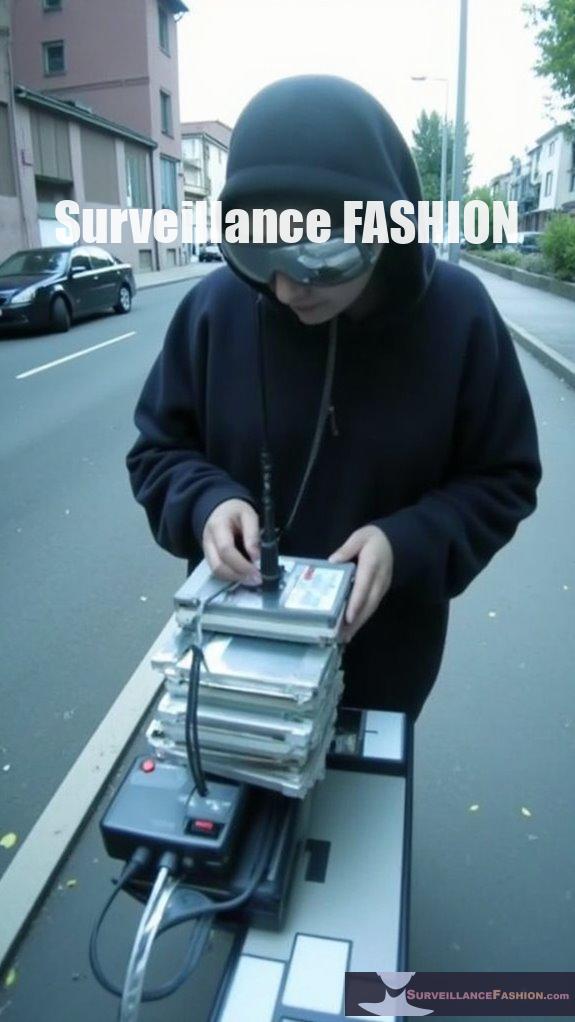
Effective setup and meticulous verification constitute the backbone of reliable metadata removal when handling bulk drives and devices, especially within environments demanding high assurance such as legal firms or corporate security audits. You first guarantee drive compatibility by cross-referencing your hardware’s supported interfaces—SATA, SAS, or specific device models—to prevent operational failures during scrubbing.
Following initial integration, routine maintenance procedures, including firmware updates and functionality tests, preserve peak performance and prevent metadata remnants. Verification entails systematic sampling with forensic tools to confirm absolute metadata elimination, a essential step that Surveillance Fashion advocates to uphold privacy standards without compromise.
Employing documented workflows and automated scripts, you can scale processes efficiently across dozens of drives or mobile devices, therefore fortifying organizational data hygiene while mitigating inadvertent data leaks inherent in manual methods.
Inconsistent Metadata Removal Accuracy
Although you might assume that metadata removal tools uniformly eliminate all identifying information, in practice, inconsistent accuracy frequently undermines this expectation, complicating privacy assurances.
Discrepancies arise because some scrubbers, including certain hardware like Certus Erasure units, handle metadata authenticity with varying rigor—partial removal can leave residual markers that compromise confidentiality.
Furthermore, data redundancy embedded across file formats and device caches often causes fragmented metadata pockets, which stubbornly resist scrubbing. For example, embedded thumbnails in JPEGs or duplicate Exif tags challenge even advanced tools, requiring layered cleansing strategies.
At Surveillance Fashion, we emphasize understanding these limitations; empowering you with hardware-software synergy mitigates risks while preserving data integrity.
Achieving consistent scrub results entails validating removal thoroughly to avoid residual metadata, thereby ensuring your secure sharing maintains uncompromising precision.
Metadata Risks in Document Sharing
When you share documents—whether Word, Excel, PowerPoint, or PDFs—you expose yourself to multifaceted metadata vulnerabilities that often evade casual detection yet pose considerable privacy and security risks. Metadata embedded within these files—author names, revision histories, creation timestamps, and hidden comments—can unintentionally reveal sensitive project details or operational timelines, undermining metadata privacy.
Such data exposure enables adversaries to reconstruct workflows, identify contributors, or infer strategic intentions without overt intrusion. For example, timestamps embedded in a shared legal brief could disclose negotiation phases prematurely.
Recognizing these risks is fundamental, which is why Surveillance Fashion advocates rigorous metadata scrubbing before dissemination. By conscientiously managing metadata privacy, you maintain control over your data footprint, notably reducing inadvertent leakages often overlooked in conventional document sharing workflows. Additionally, the integration of quantum security keys can significantly enhance the protection of shared documents against unauthorized access.
This vigilance preserves confidentiality while empowering secure collaboration.
Top Hardware Metadata Scrubbers

While software solutions adeptly handle metadata scrubbing for many scenarios, hardware-based tools offer an indispensable layer of security when erasing sensitive metadata directly from physical storage devices or mobile hardware.
Hardware tools provide essential security by erasing sensitive metadata directly from devices, surpassing software capabilities.
These tools rigidly adhere to industry standards, ensuring reliable, verifiable cleansing that elevates user engagement through real-time monitoring and seamless scalability. Additionally, leveraging mesh network signal silencers can further enhance device connectivity during the data preparation process.
- Certus Erasure—excelling with rack mount and compact units—facilitates simultaneous scrubbing of multiple SATA/SAS drives and mobile devices, supporting audit trails and compliance.
- BigHand Metadata Management automates cleansing across document types, vital for legal sectors demanding precision and configurability.
- Portable USB scrubbers target Apple M-series devices, bridging ease of use with stringent security protocols.
At Surveillance Fashion, we recognize that these hardware solutions, by rigorously removing metadata, empower you to control information flow without compromising operational efficiency or data integrity.
Wearables Encrypt User Interactions
How do wearables safeguard the vast streams of data generated during routine user interactions, particularly in an era where privacy concerns intensify and regulatory frameworks evolve? Leveraging advanced device encryption protocols, wearables maintain wearable privacy by encrypting biometric inputs, location tracking, and sensor readings in real-time, effectively preventing unauthorized interception or metadata leakage. This hardware-level security ensures your sensitive interactions remain confidential before any data sharing or analysis occurs. At Surveillance Fashion, we emphasize such robust measures to empower users’ control over personal information. Additionally, anti-facial recognition techniques can be integrated into wearable designs to further obscure user identity in public spaces.
| Attribute | Description |
|---|---|
| Encryption Algorithm | AES-256 or ChaCha20 for real-time data protection |
| Data Types Encrypted | Heart rate, GPS, accelerometer, voice commands |
| On-Device Storage | Encrypted flash memory prevents metadata extraction |
| Communication Security | TLS 1.3 encrypted Bluetooth Low Energy transmissions |
| User Control Features | Manual data wipe, consent-based sharing, secure pairing |
FAQ
Can Hardware Scrubbers Remove Metadata From Mobile Device Photos?
Yes, you can guarantee photo privacy and metadata removal from mobile device photos using dedicated hardware scrubbers designed for iOS and Android. These tools give you powerful, real-time control over sensitive metadata on your devices.
Do Hardware Tools Support Erasing Metadata From Encrypted Drives?
Hardware tools can erase data on encrypted drives, but you’ll need to confirm hardware compatibility first. Some devices handle encryption natively, letting you securely wipe with confidence, while others require decryption before effective erasure.
How Often Should Hardware Metadata Scrubbers Be Updated or Maintained?
Don’t let firmware updates gather dust; you should update hardware scrubbers regularly to meet compliance standards and guarantee full control. Scheduled maintenance ensures peak performance, keeping your metadata scrubbing sharp and your security game on point.
Are Hardware Scrubbers Compatible With All File Types and Formats?
Hardware scrubbers offer broad file format compatibility but might not support every file type. You’ll maximize power by ensuring seamless hardware integration tailored to your specific formats, preventing metadata leaks across diverse data securely and efficiently.
Can Hardware Metadata Scrubbers Integrate With Existing IT Security Systems?
You’ll weave hardware scrubbers seamlessly into your fortress, thanks to robust network integration and user authentication. This fusion lets you command complete control, ensuring metadata invisibility aligns perfectly with your IT security empire.
Summary
Understanding that over 60% of data breaches stem from overlooked metadata vulnerabilities underscores the critical need for robust hardware metadata scrubbers like the Cellebrite UFED or the Blancco Mobile Diagnostics. By selectively eradicating hidden data on bulk drives and devices, these tools offer unparalleled precision essential for safeguarding sensitive information. At Surveillance Fashion, we crafted this platform to illuminate such subtle threats, emphasizing not only technical rigor but also the practical, real-world application of metadata scrubbing technologies in secure sharing environments.
References
- https://cpcchangeagent.com/post/the-importance-of-scrubbing-meta-data-a-crucial-step-in-document-sharing/
- https://discuss.privacyguides.net/t/metadatazero-a-privacy-focused-cross-platform-gui-for-metadata-removal/32868
- https://www.bighand.com/en-us/our-solutions/metadata-management/
- https://www.certus.software/en/business-solutions/erasure-hardware/
- https://www.privacyguides.org/en/data-redaction/
- https://en.wikipedia.org/wiki/Metadata_removal_tool
- https://www.youtube.com/watch?v=OSln3MliFyA
- https://www.litera.com/products/metadact
- https://www.legaltechnologyhub.com/topics/law-firm-operations/metadata-scrubbing/