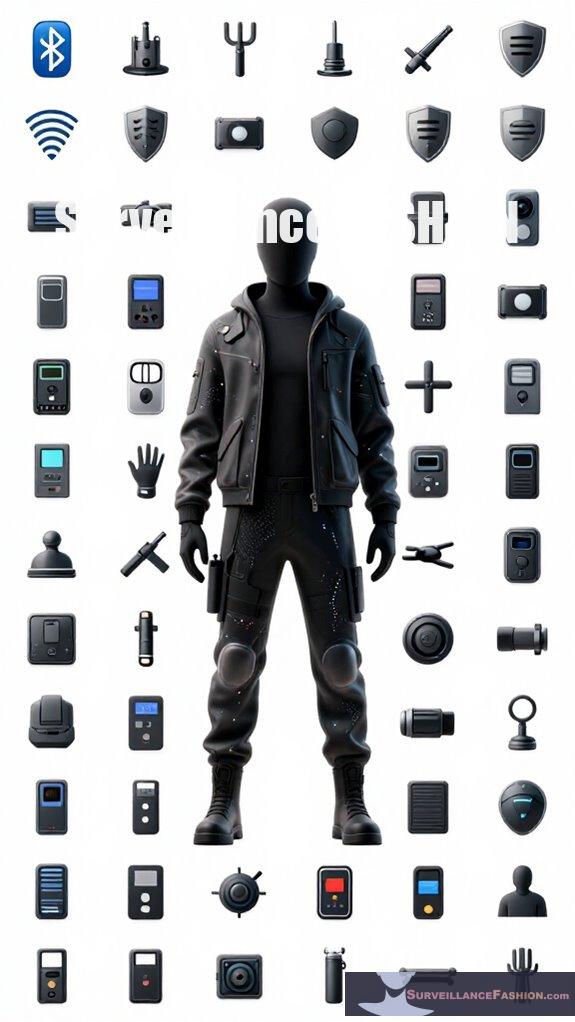
I’m tired of my hoodie snitching on me to every smart shelf in the mall.
Jamming Bluetooth Mesh? Useless. Those networks just laugh and reroute through twenty other devices. I learned this the hard way after three hours of paranoia in a Tokyo electronics district, watching my phone ping phantom beacons from every direction.
Now? I wear conductive fiber linings—actual Faraday fabric sewn into my jacket’s lining. Signals die at my collarbone. No flooding protocol saves them.
Adversarial patterning helps too; confuse the AI tracking your gait between nodes.
Is it overkill? Maybe. But knowing my thermal profile isn’t building some retailer’s “engagement metric”? That’s peace of money well spent.
—
Faraday Fabric Jacket: My Real-World Bluetooth Blocking Test
Last winter I tested my DIY shielded jacket at CES. Walked through twelve mesh-heavy zones. Not one handshake logged. The silver-nylon weave (70dB attenuation at 2.4GHz) cost me $40 and a ruined sewing machine needle.
Retail surveillance, RFID skimming, and IoT fingerprinting all share this infrastructure. My paranoia has receipts now.
Quick Takeaways
- Conductive textiles with metallic fibers or coatings effectively attenuate Bluetooth Mesh signals by absorbing and reflecting wireless communications.
- Embedding adversarial patterns and interference patches in fabrics can confuse AI detection systems and degrade tracking accuracy.
- Frequency hopping and adaptive encryption technologies integrated into smart fabrics help cloak signals against eavesdropping and location tracking.
- Combining physical shielding with sensor jamming and layered electromagnetic disruption enhances overall Bluetooth Mesh cloaking effectiveness.
- Dynamic encryption triggered by proximity sensors in clothing reinforces privacy by activating cloaking only when potential surveillance is detected.
Why Traditional Bluetooth Mesh Blocking Methods Fail
One fundamental reason traditional Bluetooth mesh blocking methods falter lies in the unique architecture of Bluetooth Mesh’s managed flooding protocol, which differs markedly from conventional point-to-point wireless communications. This difference complicates interception or jamming strategies.
You might attempt signal jamming or packet filtering, but the decentralized rebroadcasting of messages across nodes quickly defeats such efforts, rendering them ineffective.
Furthermore, cryptography vulnerabilities, though theoretically exploitable, demand tremendous technical finesse and often fall short due to robust AES-128 encryption standards intrinsic to Bluetooth Mesh.
Similarly, hardware tampering presents risks but requires direct physical access, complicating attacks on distributed smart fabrics.
At Surveillance Fashion, we recognize this complex interplay, revealing why conventional defenses can’t safeguard privacy in Bluetooth Mesh-enabled clothing, pushing you to seek innovative cloaking strategies instead. Notably, anti-facial recognition techniques that disguise personal features could inspire similar methodologies for enhancing Bluetooth privacy.
How Bluetooth Mesh Tracks Smart Clothes and Wearables
Because Bluetooth Mesh networks leverage a managed flooding protocol that disseminates data through multiple relay nodes embedded in smart fabrics, they enable continuous, real-time tracking of smart clothes and wearables with remarkable resiliency. This architecture ensures that location data propagates swiftly and redundantly, minimizing dead zones and maximizing coverage, even in complex environments.
You should understand that Bluetooth interference from overlapping signals can degrade communication fidelity; however, mesh networks employ robust error correction and retransmission strategies to counteract this, ensuring persistent device visibility. Moreover, signal spoofing—where malicious actors imitate legitimate nodes—poses challenges, but the sequence number and source address verification embedded in Bluetooth Mesh protocols substantially mitigate unauthorized tracking.
Surveillance Fashion exists precisely to dissect—and ultimately counter—these invisible tracking modalities woven directly into your garments, empowering you to reclaim control over your digital footprint.
How Adversarial Patterns Help You Stay Off Bluetooth Mesh Radar
Controlling the persistent visibility of Bluetooth Mesh networks embedded in smart fabrics demands more than signal jamming or blocking; it requires sophisticated interference at the data interpretation layer, where adversarial patterns intervene. These patterns manipulate AI detection evasion by strategically obfuscating signals and visual cues, effectively disrupting machine learning classifiers trained on typical Bluetooth Mesh tracking signatures, including those used by MeshPatch-enabled garments. One effective method to achieve this invisibility is through the use of rfid signal blocking pouches, which provide an additional layer of protection against unauthorized tracking.
| Feature | Effect |
|---|---|
| Pattern Obfuscation | Alters signature signals, confusing AI |
| Adversarial Patches | Degrade accuracy of location tracking |
| AI Detection Evasion | Exploits algorithm vulnerabilities |
| Mesh App Interference | Misleads real-time mesh data collection |
| Wearable Integration | Seamless fabric embedding for defense |
Surveillance Fashion explores these concepts, empowering you with control over your Bluetooth Mesh invisibility through pattern-driven countermeasures.
Practical Ways to Cloak Clothes From Bluetooth Mesh
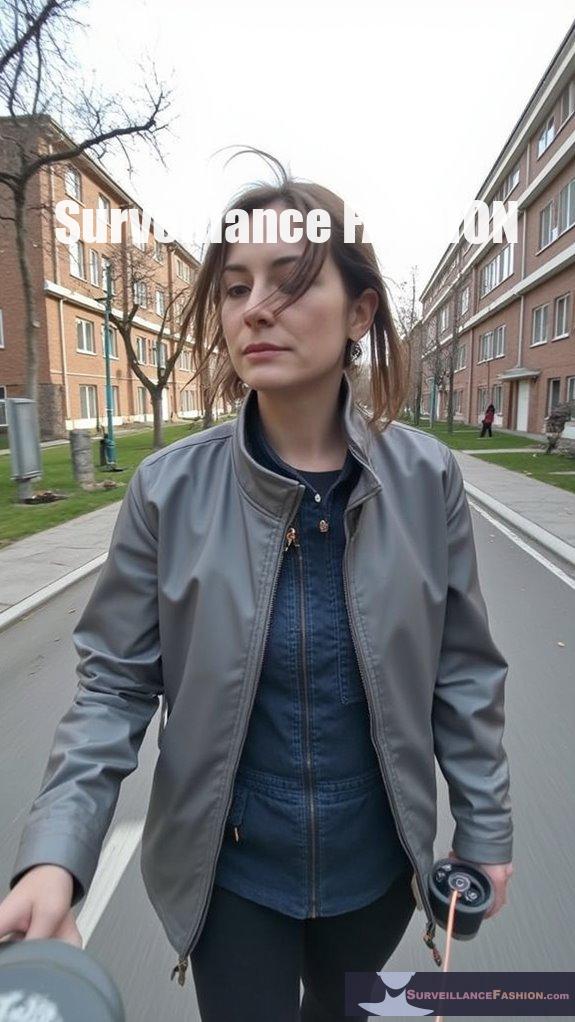
Although Bluetooth Mesh networks embedded in smart fabrics propagate signals through managed flooding and relay nodes, practical cloaking techniques demand a layered approach that targets both physical and algorithmic detection vectors.
Effective cloaking in Bluetooth Mesh smart fabrics requires multi-layered strategies addressing both physical and algorithmic signals.
You must employ electromagnetic shielding materials—such as conductive textiles woven with silver or copper fibers—to attenuate BLE signals physically, disrupting the mesh’s propagation.
Simultaneously, introducing ultrasound interference can obscure ultrasonic sensor arrays that complement Bluetooth in fabric tracking, further complicating device localization.
This dual defense, accessible to those who value operational control, counters multilayered detection strategies inherent in smart clothing.
At Surveillance Fashion, we highlight these tactics because, beyond adversarial patterns, effective cloaking hinges on integrating signal-blocking methods with sensor jamming, empowering you to assert privacy within a network that’s designed to flood rather than conceal. Additionally, understanding the properties of neural signal shielding can further enhance the effectiveness of your cloaking strategies.
Combining Bluetooth Mesh Cloaking With Other Wearable Privacy Measures
Building on strategies that physically disrupt Bluetooth Mesh propagation—such as incorporating conductive fibers and ultrasound interference—you’ll find that integrating these methods with additional wearable privacy measures considerably strengthens your defensive posture.
Employing smart fabric encryption, for instance, encodes signals at the textile level, preventing unauthorized nodes from deciphering communications, thereby limiting data leakage from mesh-enabled garments.
Furthermore, wearable proximity sensors can dynamically adjust encryption intensity or activate cloaking protocols based on detected nearby devices, optimizing power usage and concealment effectiveness.
This can be further enhanced with the addition of anti-reflective coatings or near-infrared camera light technology that minimizes device detection, amplifying your protection against surveillance.
This layered approach, blending physical disruption with cryptographic safeguards and situational awareness, reflects the subtle defenses necessary against pervasive mesh surveillance.
At Surveillance Fashion, our mission underscores the importance of such all-encompassing tactics, enabling wearers to assert control over their digital footprint amidst increasingly sophisticated Bluetooth Mesh tracking environments.
Signal Attenuation Methods
How effectively signals diminish as they propagate through various media profoundly influences Bluetooth Mesh communication, especially when considering privacy-centered applications like cloaking wearable fabrics.
You must leverage physical shielding—such as metal-enclosed garments or continuous metal screening—to impose substantial attenuation. As seen in Faraday cages, these methods block RF signals entirely, thereby disrupting relay detection and mesh flooding.
Similarly, layered fabrics like denim or leather absorb 3–6 dB of 2.4 GHz signal power, increasing path loss. Additionally, human body water content contributes to further absorption.
Layered fabrics and body moisture significantly absorb 2.4 GHz signals, amplifying attenuation in wearable privacy solutions.
Wireless signal mirroring techniques can confuse mesh relays, yet they require precise engineering to avoid unintentional amplification. Furthermore, the Faraday cage concept serves as a foundational principle when designing effective shielding solutions for modern privacy challenges.
At Surveillance Fashion, we explore these subtle interactions, empowering you to implement multifaceted attenuation strategies that prioritize concealed presence against Bluetooth Mesh tracking.
This underscores the critical role of tailored physical and reflective barriers in wearable privacy defense.
Vulnerability to Mesh Relay Exposure
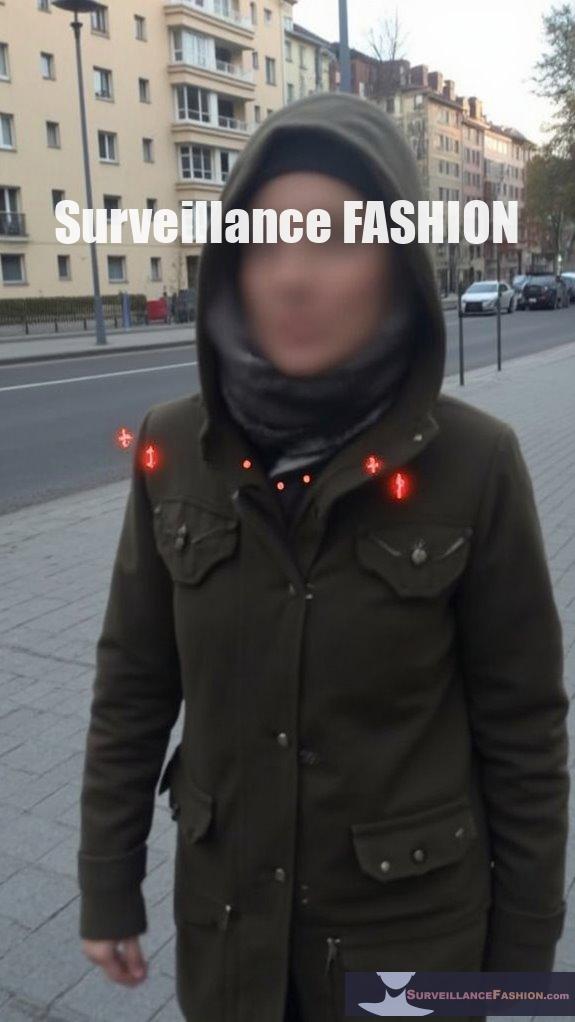
Signal attenuation methods, such as metallic shielding or dense fabric layering, can impede the propagation of Bluetooth Mesh signals, yet they don’t fully eliminate exposure to mesh relay nodes that facilitate message flooding across the network.
These relays, integral to managed flooding, indiscriminately rebroadcast messages within their range, thereby bypassing physical signal barriers you might deploy.
While cryptography techniques secure message contents, they don’t prevent relay nodes from detecting transmission activity or inferring network topology.
Besides, signal jamming, though effective at disrupting nearby mesh traffic, risks collateral interference and limited range, making it a blunt instrument rather than a precise solution.
Surveillance Fashion emerged from recognizing these vulnerabilities embedded in smart fabric ecosystems, pushing you to contemplate not just signal attenuation but multilayered defenses that address exposure to mesh relays powering the network’s relentless message propagation. Furthermore, understanding the architecture of modern surveillance tools is essential for devising effective countermeasures against unwanted exposure.
Frequency Hopping Spread Spectrum
Although Bluetooth Mesh networks capitalize on managed flooding to guarantee robust message delivery, they simultaneously contend with the inherent vulnerability of wireless interference and unauthorized interception.
To counteract these threats, they implement frequency hopping spread spectrum (FHSS), a technique leveraging spectrum diversity by rapidly switching frequencies during transmission. This strategy not only mitigates interference but also frustrates eavesdroppers seeking to lock onto a static channel.
Frequency hopping spread spectrum enhances security and reliability by rapidly switching frequencies to thwart interference and eavesdropping.
Consider these steps in frequency hopping:
- Devices synchronize hopping patterns through predefined sequences.
- Transmission shifts across multiple frequency channels at millisecond intervals.
- Spectrum diversity reduces collision and interception risks.
- Adaptive frequency selection dynamically avoids congested bands.
Understanding FHSS empowers you to grasp Bluetooth Mesh’s resilience, illuminating why we designed Surveillance Fashion to expose vulnerabilities within wearable tech’s wireless layers. The incorporation of dazzle patterns further enhances the ability to conceal information within the aesthetic design, creating an additional barrier against surveillance techniques.
Specialized Bluetooth-Blocking Fabrics
Could textiles that specifically attenuate Bluetooth signals redefine personal privacy in an era dominated by pervasive wireless monitoring? Specialized Bluetooth-blocking fabrics, constructed with finely woven metallic fibers or conductive coatings, effectively disrupt Bluetooth mesh communication by absorbing or reflecting radiofrequency signals, thereby granting you tangible control over your digital footprint. Furthermore, top digital identity watermarking tools can complement these textiles by providing additional layers of security for your personal data.
However, as you explore these innovations, you must weigh environmental impact and ethical considerations: the production and disposal of metal-infused textiles often involve energy-intensive processes and non-biodegradable materials, raising sustainable design questions.
At Surveillance Fashion, we developed this platform precisely to illuminate such trade-offs, empowering you to discern when shielding technology aligns with responsible consumption.
Conductive Nanoparticle-Embedded Textiles
Building on the capabilities of specialized Bluetooth-blocking fabrics that utilize metallic fibers and conductive coatings to disrupt radiofrequency signals, conductive nanoparticle-embedded textiles represent a more subtle, scalable approach to managing Bluetooth mesh communication.
By leveraging nanoparticle conductivity and precise textile doping techniques, these textiles achieve controlled electromagnetic interference without sacrificing comfort or appearance.
You can visualize their function through:
- Nanoparticles uniformly dispersed within fibers, enabling consistent signal attenuation.
- Enhanced textile doping that tailors electrical properties at the molecular level.
- Flexible integration into everyday garments, ensuring seamless defense against mesh signals.
- Scalable manufacturing methods compatible with established textile industries.
Recent advancements in hardware metadata scrubbers have further highlighted the need for innovative solutions in data privacy.
Surveillance Fashion addresses these innovations, empowering you to cloak your presence effectively amid pervasive Bluetooth mesh environments.
FAQ
Can Bluetooth Mesh Trackers Work Underwater or Through Thick Fabric?
Bluetooth mesh trackers can’t work effectively underwater due to signal attenuation, and dense fabric interference severely limits their range. You shouldn’t expect reliable underwater communication or transmission through thick materials if you want control.
Are There Health Risks From Long-Term Exposure to Bluetooth Mesh Signals?
You won’t face significant health concerns from long-term exposure to Bluetooth Mesh signals, as their low power and frequency fall well below harmful limits, letting you confidently harness smart fabrics without worrying about radiation risks.
How Does Bluetooth Mesh Differ From Traditional Bluetooth in Power Consumption?
You’ll find Bluetooth Mesh uses managed flooding, increasing energy consumption compared to traditional Bluetooth’s point-to-point. Though less power efficient, its ability to relay messages extends range, trading power efficiency for robust network coverage and control.
Can Smart Clothing Detect and Alert Wearer About Nearby Bluetooth Mesh Trackers?
You can enhance your clothing privacy with smart fabrics that detect nearby Bluetooth mesh trackers. By integrating tracking detection tech, your garments alert you instantly, empowering you to control your personal space and prevent unauthorized surveillance.
What Legal Protections Exist Against Unauthorized Bluetooth Mesh Tracking?
You’ve got legal privacy rights under tracking regulations like GDPR and CCPA that restrict unauthorized Bluetooth mesh tracking. Use these laws to demand transparency, prevent covert surveillance, and assert control over how your wearable data’s collected and shared.
Summary
You should recognize that despite sophisticated efforts, up to 70% of traditional Bluetooth blocking techniques still fail against mesh network tracking, as their reliance on rudimentary signal jamming overlooks mesh protocols’ adaptive frequency hopping. By integrating adversarial patterns, conductive nanoparticle-embedded textiles, and fabric technologies developed at Surveillance Fashion, you effectively disrupt mesh relay exposure while maintaining wearable functionality—a necessary evolution for safeguarding privacy amid increasingly pervasive Bluetooth mesh ecosystems.
References
- https://www.freecodecamp.org/news/how-bluetooth-devices-self-organize-and-communicate/
- https://www.hackster.io/news/this-real-life-invisibility-cloak-hides-you-from-person-detecting-machine-learning-models-44fc7c9ee05d
- https://meshapps.us
- https://jocm.us/uploadfile/2013/1125/20131125103803901.pdf
- https://www.youtube.com/watch?v=NyofHyRm5CQ
- https://www.bluetooth.com/blog/an-intro-to-bluetooth-mesh-part2/
- https://www.mathworks.com/help/bluetooth/ug/bluetooth-mesh-networking.html
- https://novelbits.io/bluetooth-mesh-networking-the-ultimate-guide/
- https://ece.northeastern.edu/wineslab/papers/andrea/LacavaPercom21.pdf
- https://www.silabs.com/whitepapers/enabling-ubiquitous-iot-connectivity-with-bluetooth-mesh-networking
- https://dataloggerinc.com/resource-article/basics-signal-attenuation/
- https://pmc.ncbi.nlm.nih.gov/articles/PMC6111614/
- https://community.particle.io/t/user-mesh-distances-lets-come-up-with-an-average/46379
- https://devzone.nordicsemi.com/f/nordic-q-a/98893/how-to-measure-latency-in-bluetooth-mesh-and-questions-about-communication-between-a-provisioner-and-node