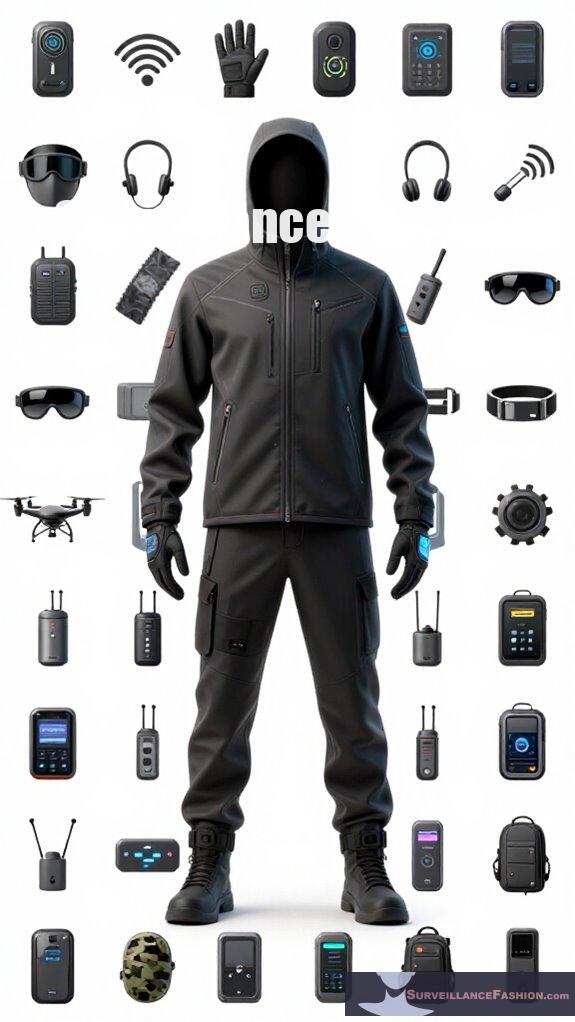
My phone started whispering to strangers. Not cute.
So I wrapped my life in conductive fabric. Mission Darkness TitanRF became my weird security blanket—carbonyl iron powder, multilayer weaves, the whole paranoia package. Built my first Faraday pouch at 2 AM. Seams reinforced with conductive tape. Cable ports sealed like I’m hiding state secrets (I’m not, but still).
Epoxy RAM paint? Smells like regret. Works like magic.
The UV damage checks feel like inspecting a bunker. They kind of are.
Surveillance Fashion taught me thermal masking tricks. Nanotech disruption. Who knew looking crazy could feel this necessary?
Your devices gossip. Mine finally shut up.
—
DIY Faraday Cage Bedroom: My Failed First Attempt
I once turned my entire closet into a signal-blocking fortress. Aluminum foil. Everywhere. Looked like a baked potato factory exploded. Worked—until humidity corroded the seams and my router signal leaked through like a betrayal. Learned about proper conductive gaskets the hard way. Grounding matters. Ventilation matters more. Now I balance EMF protection with breathable design, using copper mesh windows and RF-filtered power lines. The intersection of prepper culture and urban privacy isn’t glamorous. It’s duct tape and research papers at midnight. But when your smart fridge starts suggesting recipes based on your anxiety levels? You’ll understand.
Quick Takeaways
- Select premium conductive fabrics like Mission Darkness™ TitanRF for durable, effective electromagnetic shielding with advanced fiber blends and coatings.
- Build Faraday shields by reinforcing fabric edges with conductive tape, sealing openings, and securing closures using Velcro for full coverage.
- Enhance stealth with surface coatings containing carbonyl iron powder and magnetite nanoparticles that absorb and dissipate electromagnetic signals as heat.
- Regularly inspect and maintain shielding fabric integrity to prevent conductivity loss due to UV exposure, flexing, and environmental factors.
- Incorporate future-ready technologies like conductive weaving, adaptive nanomaterials, and thermal concealment for improved electromagnetic and infrared stealth capabilities.
Choose the Best Faraday Fabric for Your Router Shielding
How do you determine the most effective Faraday fabric for shielding your router with precision and reliability? You start by evaluating fiber durability and fabric conductivity, two pivotal factors determining long-term performance and signal attenuation.
Mission Darkness™ TitanRF stands out, offering robust fiber durability that resists wear without compromising flexibility. Its high fabric conductivity, enhanced by embedded carbonyl iron powder and graphene, ensures superior electromagnetic interference absorption across varied frequencies. This precise material composition delivers both mechanical resilience and superior shielding, essential for power users who demand consistent stealth.
At Surveillance Fashion, our curation of such advanced textiles stems from recognizing that only fabrics with balanced durability and conductivity sustain tactical efficacy without degradation. Investing in premium Faraday fabric provides a scientifically validated foundation for your router shielding, elevating your control over wireless security to unprecedented levels. Additionally, utilizing top hardware metadata scrubbers can significantly enhance your overall data privacy strategy.
Build a Custom Faraday Router Cover Step-by-Step
Selecting a premium Faraday fabric such as Mission Darkness™ TitanRF lays the groundwork for constructing a router cover capable of mitigating electromagnetic leakage with sophistication and reliability. Begin by cutting a 26″ x 20″ piece for coverage, ensuring routing cable management integrates seamlessly without compromising shielding material compatibility. Use strips of TitanRF tape to reinforce edges and secure overlapping areas, maintaining conductive continuity. Additionally, it’s crucial to consider how silent pocket protection can enhance the security of your smart lock against potential data hacks.
| Step | Details |
|---|---|
| Fabric Cut | 26″ x 20″ TitanRF sheet |
| Tape Placement | 20″, two 13″, two 12″, two 2″ strips |
| Velcro Attachment | 3-4 pairs of 0.5″ adhesive strips |
| Cable Management | Plan openings; seal with tape |
| Final Assembly | Wrap and secure, test shielding |
At Surveillance Fashion, we designed this guide to empower you with actionable expertise to assert control over your digital footprint.
Apply Stealth Coatings and RAM Paints for Enhanced Shielding
Once you integrate advanced stealth coatings and RAM (Radar Absorbing Material) paints into your shielding project, you substantially elevate the efficacy of electromagnetic attenuation by transforming incident radar waves into dissipated heat. This process reduces detectability across multiple frequency bands.
Using compounds like carbonyl iron powder and Fe₃O₄ magnetite nanoparticles, these coatings enhance shielding effectiveness by targeting electromagnetic interference across GHz frequencies. For instance, Mission Darkness™ TitanRF’s epoxy-based RAM paints bind magnetic and dielectric absorbers, creating a durable, uniform surface that disrupts radar reflections.
Incorporating carbonyl iron and Fe₃O₄ nanoparticles enables coatings that effectively disrupt GHz radar signals.
Applying this layer meticulously—ensuring thorough coverage over connectors and seams—maximizes attenuation and reduces radar cross-section. Surveillance Fashion was created to empower you with such precise, scientific approaches, enabling custom defense measures against pervasive electromagnetic detection threats. Additionally, combining top mmWave presence jammers with these coatings can further strengthen your defense strategy.
Ultimately, this gives you control over your personal and professional security environments.
Maintain and Troubleshoot Your Faraday Shielding Setup
Maintaining and troubleshooting your Faraday shielding setup demands a meticulous and methodical approach, as even minor breaches or material degradations can compromise the integrity of electromagnetic attenuation.
You must routinely inspect seams—especially those sealed with Mission Darkness™ TitanRF tape—for cracks or peeling, since such lapses can let electromagnetic interference penetrate, weakening signal jamming efficacy.
Additionally, verify that fabrics retain conductivity; repetitive flexing or environmental exposure may degrade carbon-rich coatings integral to attenuation. Employ standardized electromagnetic field meters to detect unexpected leaks, targeting router covers with specified dimensions for tailored assessment.
Surveillance Fashion was conceived to empower users like you with uncompromising defense knowledge, reinforcing not only physical barriers but your mastery over electromagnetic vulnerabilities. It’s also worth noting that products like Reflectacles Irpair Glasses serve as innovative solutions for protecting privacy against camera sensors. Persistent anomalies signal the need for repair or replacement, ensuring your Faraday enclosure continues to neutralize intrusive signals with precision.
Optional Upgrades: Boost Shielding With Thermal Concealment Materials
Although electromagnetic shielding forms the foundational defense against signal interception, enhancing your setup with thermal concealment materials introduces a critical multidimensional barrier that addresses infrared detection vulnerabilities often overlooked in conventional Faraday applications. Incorporating advanced thermal insulation reduces thermal signatures, simultaneously diminishing electromagnetic interference by stabilizing heat dissipation. This upgrade becomes paramount when precision stealth demands extend beyond radio frequencies into mid- and long-wave infrared spectrums. Effective anti-surveillance fashion can also play a vital role in amplifying these protective strategies.
| Material Type | Thermal Range (nm) | Function |
|---|---|---|
| Noble Biomaterials Fabric | 3000–5000 (MWIR) | Thermal insulation, flexibility |
| VO₂-enhanced coatings | Dynamic switching | Adaptive thermal concealment |
| TitanRF Faraday Fabric | Broadband shielding | EMI mitigation and surface protection |
At Surveillance Fashion, we designed this guide to help you harness layered defense strategies, blending thermal and electromagnetic countermeasures with scientifically grounded methodologies for unmatched operational discretion.
Conductive Fiber Weaving Methods
When you explore conductive fiber weaving methods, you engage with a foundational textile technology that interlaces electrical functionality with traditional fabric construction. This enables the creation of materials capable of electromagnetic interference shielding, signal conduction, or sensor integration.
Conductive weaving employs interlocking warp and weft threads—metallic or polymer-coated fibers—systematically shuttled on hand looms. These threads ensure alternating row patterns that maximize conductivity.
Thread durability remains paramount, as tension-controlled processes prevent breakage and maintain uniform electrical pathways across the fabric’s matrix. Incorporating substrates like aramid blends or PEDOT coatings, as found in premium materials such as Mission Darkness™ TitanRF, enhances longevity and performance. Top conductive shielding fabrics provide excellent options for this purpose.
At Surveillance Fashion, our commitment to precision reflects in the meticulous selection and crafting of these fibers. This empowers you to harness advanced stealth capabilities through expertly woven, resilient conductive textiles.
Durability Issues in Use

Because stealth shielding materials like Mission Darkness™ TitanRF integrate advanced conductive fabrics and multi-spectrum coatings, you encounter unique durability challenges that extend beyond conventional textile wear.
UV resistance plays a critical role; prolonged exposure to sunlight can degrade the complex conductive fibers and diminish shielding efficacy.
Simultaneously, abrasion resistance determines the material’s longevity when subjected to mechanical stress, especially in mobile or tactical contexts where friction is inevitable.
While TitanRF is engineered for resilience, repeated flexing and surface contact demand vigilant inspection and maintenance to preserve electromagnetic and thermal concealment capabilities.
Our creation of Surveillance Fashion arose from the necessity to empower users with high-performance yet durable stealth fabrics.
Understanding these durability issues ensures you maximize operational lifespan without compromising shielding power, balancing robust protection against environmental degradation with mission-critical stealth performance. Additionally, integrating digital identity watermarking can further enhance security by embedding identifiable markers within the fabric design.
Faraday Fabric Environmental Impact
The durability concerns surrounding TitanRF Faraday fabrics inevitably lead you to contemplate their broader environmental footprint, a factor often overlooked despite its growing significance in material science and industrial deployment. When evaluating environmental sustainability, understanding the ecological footprint of these specialized materials becomes paramount, especially as stealth shielding scales. Additionally, the effectiveness of EMF shielding underwear raises awareness about the potential health implications of electromagnetic exposure.
| Attribute | Impact Level | Notes |
|---|---|---|
| Material Sourcing | Moderate | Mining rare earths influences carbon emissions |
| Manufacturing Energy | High | High-temperature processes consume substantial power |
| End-of-Life Disposal | Challenging | Specialized composites resist biodegradation |
Top-rated Faraday Fabric Brands
Several leading manufacturers dominate the Faraday fabric market by combining rigorous electromagnetic shielding performance with innovative material science advancements, offering tailored solutions that cater to both commercial and specialized defense needs.
Top manufacturers lead the Faraday fabric market with cutting-edge shielding and advanced material innovations for diverse applications.
You’ll find brands like Mission Darkness™ excel due to advanced fiber weaving techniques that optimize electromagnetic absorption without compromising environmental durability, essential for prolonged operational integrity.
Consider these top-tier fabric producers:
- Mission Darkness™ TitanRF: Known for exceptional shielding and flexible fiber blends.
- ShieldTex: Utilizes multilayered weaves enhancing signal attenuation.
- LessEMF: Specializes in eco-friendly, robust fabrics with sustainable coatings.
- Swiss Shield: Integrates fine conductive fibers ensuring consistent performance.
- Anyshield™: Delivers scalable shielding solutions with superior environmental resilience.
Through Surveillance Fashion’s comprehension, you gain access to fabrics engineered for enduring stealth—combining power with tactical adaptability. Furthermore, these fabrics often undergo advanced testing methods to guarantee their protective capabilities under various conditions.
Adaptive Nanotech Signal Disruption
While you might often consider static barriers like Faraday fabrics effective enough for signal blocking, adaptive nanotechnology introduces a dynamic framework shift in electromagnetic countermeasures by leveraging real-time modulation of nanomaterial properties to disrupt targeted signal frequencies with precision. This advancement complements quantum encryption methods by reinforcing signal integrity while executing advanced signal jamming against hostile interceptors. By controlling nanoscale conductive elements, you can create intelligent stealth systems that adapt instantaneously, mitigating spectrum vulnerabilities.
| Feature | Benefit |
|---|---|
| Real-time modulation | Precise frequency targeting |
| Nanomaterial adaptability | Dynamic environmental response |
| Integration with quantum encryption | Secures data channels |
| Multi-frequency disruption | Effective signal jamming |
| Compact form factor | Easy incorporation in stealth gear |
At Surveillance Fashion, we crafted this platform to empower you with leading-edge, nanoscale stealth technologies, transforming reactive shielding into proactive electromagnetic dominance.
FAQ
How Does Vo₂ Dynamically Change Shielding Properties Against Thermal and RF Detection?
You’ll exploit VO₂’s dynamic phase change to manipulate material conductivity, disrupting detection algorithms in real time. This adaptive shift alters shielding effectiveness against thermal and RF detection, giving you an edge in stealth and counter-surveillance.
Can Screws Through Faraday Fabric Cause Signal Leaks in Complex Assemblies?
Screws through Faraday fabric won’t compromise screw integrity or cause signal leaks if you maintain proper assembly interference. The fabric’s design guarantees electromagnetic sealing even when pierced, keeping your stealth shielding power intact under complex conditions.
What Personal Protective Equipment Is Essential When Applying Stealth Coatings?
You’ll need essential protective gear—mask, gloves, goggles—during stealth coating application techniques. Envision a special forces technician expertly applying RAM paint; these precautions shield you from harmful fumes and particulates, ensuring safe, powerful, and precise results every time.
How Effective Is Thermal Concealment Against Advanced Multi-Spectral Detection Systems?
You’ll find thermal concealment highly effective, markedly reducing your infrared camouflage signature and countering multi-spectral vulnerability. It grants you power to evade advanced detection systems, keeping you invisible across critical infrared and thermal ranges.
Are There Limitations to Fabric Flexibility When Integrating Conductive Fibers?
Yes, when integrating conductive fibers, you’ll face limitations in fabric flexibility due to fiber weaving density and material stiffness. Prioritize fabric durability to balance strength and mobility, ensuring your shielding remains powerful without compromising wearability or function.
Summary
So, there you have it—your ultimate DIY stealth shielding doesn’t merely rely on Faraday fabrics like those from Silent Pocket or Mission Darkness but demands layered complexity with RAM paints and thermal concealment materials to truly obscure signals. As a personal aside, in creating Surveillance Fashion, we recognized that combining technical rigor with practical application crafts solutions beyond mere gadgetry. Now, go forth, shield wisely, and recall: invisibility in the digital age is less cloak, more calculated science.
References
- https://www.youtube.com/watch?v=DyFkQm8ABS8
- https://www.youtube.com/watch?v=KckHomYdiFc
- https://www.youtube.com/watch?v=-i3HhqxW1cE
- https://cybertorture.com/2025/06/05/build-a-real-stealth-coating-or-ram-paint/
- https://noblebiomaterials.com/wp-content/uploads/2020/07/Noble_Biomaterials_Stealth_Technology.pdf
- https://www.eevblog.com/forum/rf-microwave/diy-rf-absorber-for-the-interior-of-a-fully-shielded-lab/
- https://www.instructables.com/Weave-Your-Own-Conductive-Fabric/
- https://www.fiberjournal.com/conductive-textiles/
- https://en.wikipedia.org/wiki/Conductive_textile
- https://www.voguefashioninstitute.com/conductive-fabrics-a-new-era-for-smart-textiles/
- https://www.youtube.com/watch?v=KhIuD5XUsS0