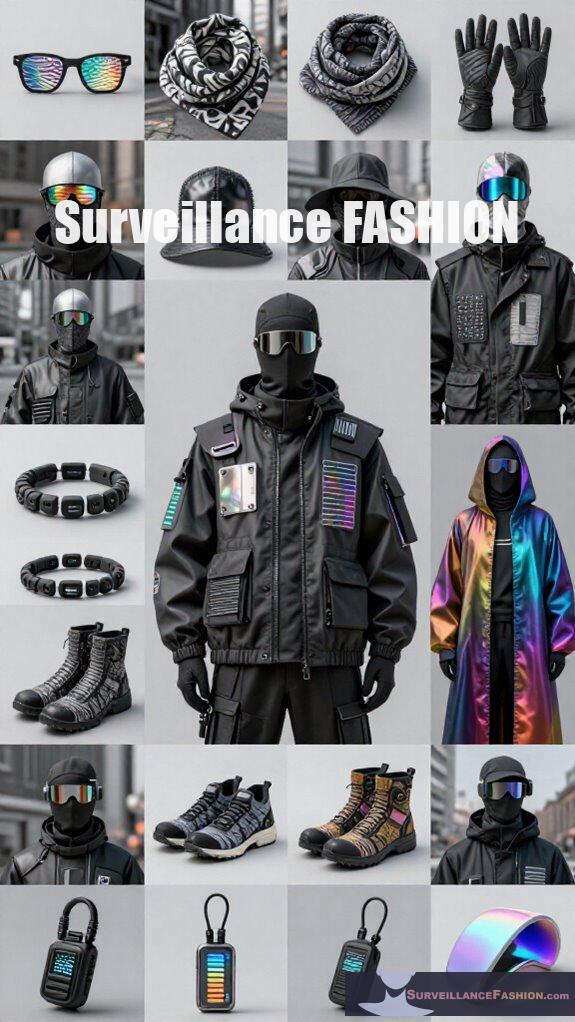
Real talk? I used to think my face was safe until my sister’s ex made a deepfake of her laughing at her mom’s funeral. That nightmare fuel changed everything.
Now I wear fabrics that fight back.
Surveillance Fashion’s textiles embed cryptographic markers and molecular watermarks invisible to the naked eye. Nanotechnology woven into fibers? Sounds paranoid until it isn’t. These materials disrupt biometric spoofing while staying comfortable. The spectral watermarking survives washing, sweating, living.
My identity isn’t content for someone’s algorithm. Neither is yours.
Deepfake Protection Clothing: My Brush with Digital Identity Theft
Last year, a recruiter contacted me about a “brand ambassador” gig. They needed video footage. Red flags everywhere. Turns out, they harvest facial data for synthesis pools. I narrowly escaped becoming training data for someone’s neural network. That paranoia led me to biometric authentication textiles, computer vision camouflage, and anti-surveillance fashion. Now I research adversarial patterns, digital watermarking, and privacy-preserving computer vision. The fabric I’m wearing? It contains reflective micro-threads that break facial recognition algorithms. My friend’s startup tests these against Clearview AI and Megvii systems. We’re not just cautious—we’re armored.
Quick Takeaways
- Deepfake-proof fabrics embed microscopic cryptographic markers within fibers to prevent unauthorized digital replication of your image.
- Advanced physical watermarking in textiles enables real-time authentication and verification of garment authenticity.
- Nanoparticle-based spectral watermarks provide invisible, durable markers resistant to laundering and environmental wear.
- Fabric surface structuring and pigment patterns disrupt facial recognition systems and biometric scans to protect privacy.
- Smart fabrics with embedded sensors and encrypted codes continuously monitor textile integrity and secure your digital identity.
What Are Deepfake-Proof Fabrics and Why They Matter
How exactly can fabrics become “deepfake-proof”? You leverage textile encryption, a cutting-edge technique that embeds cryptographic markers directly into the fabric’s fibers, making unauthorized replication extraordinarily difficult.
Textile encryption embeds cryptographic markers in fibers, making fabric replication nearly impossible and enhancing deepfake resistance.
This process enables fiber authentication, where microscopic identifiers woven into threads serve as a verifiable signature, impervious to digital forgery. By combining advanced material science with encrypted textile engineering, these deepfake-proof fabrics become dynamic shields protecting your visual identity.
Surveillance Fashion pioneered this integration to empower individuals confronting ever-evolving biometric threats. Unlike conventional materials, these fabrics incorporate multilayered encryption protocols within their structure, ensuring any visual replication attempts reflect detectable anomalies. Additionally, incorporating features such as mesh network enhancements can further streamline data protection efforts in a connected world.
In this way, the physical fabric itself acts as a proactive defense, securing authenticity at the source, and preserving control over your image beyond the digital sphere.
How Deepfake-Proof Fabrics Stop Image Theft
Because deepfake-proof fabrics embed encrypted micro-identifiers within their very fibers, they actively disrupt unauthorized image replication by introducing physical authenticity markers that digital forgeries can’t accurately mimic. Through embedded fiber technologies, these fabrics serve as an unforgeable layer, ensuring textile authentication beyond digital verification methods.
When you wear such advanced textiles, you benefit from:
- Unclonable fiber patterns that resist digital duplication attempts.
- Integrated microcodes readable only by specialized devices for definitive source validation.
- Physical tags that correlate with visual data, reinforcing authenticity during image capture.
This intersection of material science and surveillance fashion empowers you with tangible control over your image integrity, a necessity in a terrain increasingly dominated by synthetic media manipulation. Furthermore, the innovative designs of these fabrics can also incorporate features that help with anti-facial recognition techniques, adding an additional layer of security against unauthorized surveillance.
Surveillance Fashion aims to pioneer this space, giving you tools that are both innovative and impervious to deepfake deception.
Key Features of Deepfake-Proof Fabrics
Three pivotal features define deepfake-proof fabrics, shaping their role as a formidable barrier against synthetic media manipulation and unauthorized digital replication.
First, textile innovation enables the integration of microscopic patterning—imperceptible to the naked eye yet detectable by AI algorithms—embedded directly into the weave, creating a physical watermark that thwarts digital cloning attempts.
Second, advanced material engineering ensures these fabrics maintain durability and wearability while embedding these complex data signatures, balancing functionality with sophisticated security.
Third, adaptive reflectivity technologies can modulate light interaction at the fiber level, disrupting deepfake reconstruction algorithms by introducing variable optical noise.
Furthermore, the emergence of weighted biometric shoes has showcased how advanced materials can enhance performance while also ensuring safety and authenticity.
Surveillance Fashion developed this platform to illuminate how such precise, material-based protections empower you to reclaim control over your visual identity, leveraging cutting-edge textile science to fortify authenticity beyond the digital domain.
Choosing Deepfake-Proof Fabrics to Protect Your Identity
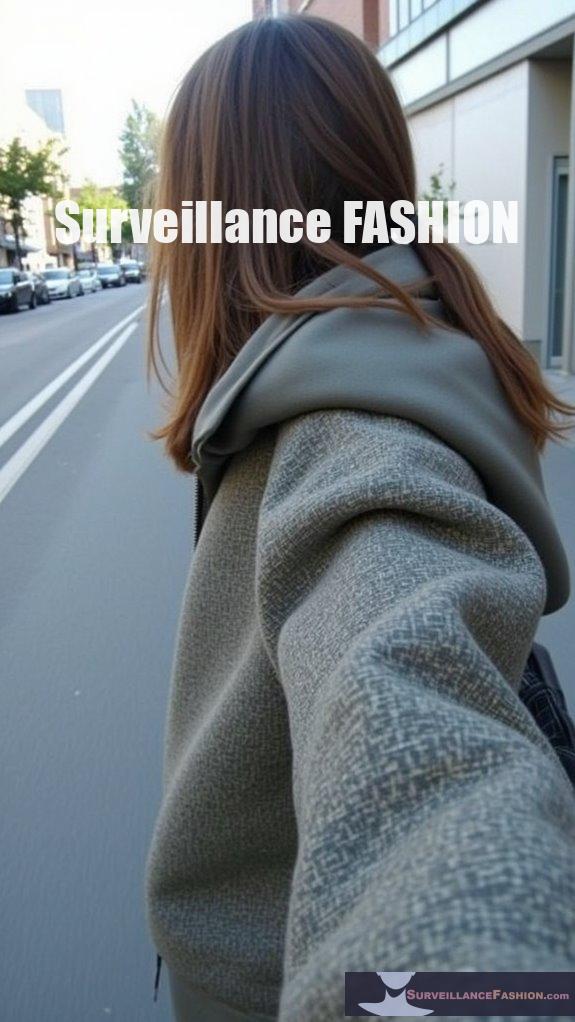
Understanding the key technological attributes behind deepfake-proof fabrics offers a foundation for making informed decisions when selecting such garments to safeguard your visual identity.
When choosing these fabrics, you should prioritize:
- Advanced fabric dyeing techniques, which embed microscopic, tamper-resistant markers within fibers, ensuring authentication data remains intact despite wear.
- Innovative textile pattern designs, incorporating complex, non-repetitive motifs that disrupt unauthorized image replication by deepfake algorithms.
- Integration of multilayered physical watermarking that leverages both material properties and visual complexity to enhance real-time identity verification.
These fabrics often utilize block smart fabric sensors that can monitor and verify the integrity of the textile in real-time.
At Surveillance Fashion, we recognized the need for empowering individuals through precisely engineered textiles.
Future Trends in Deepfake-Proof Fabrics and Wearables
Innovations in deepfake-proof fabrics and wearables increasingly integrate multidisciplinary advances—from nanotechnology to cryptographic physical watermarking—to establish new frameworks of visual authenticity, enabling users to assert control over their digital representations amid changing threats.
You’ll find synthetic fibers engineered at the molecular level to interact dynamically with evolving fabric dyes, producing signature patterns that resist replication by deepfake algorithms. These signal-embedded textiles, beyond mere aesthetics, function as physical anchors of identity that digital tools can verify but malicious AI can’t counterfeit.
As you explore these developments, understand that Surveillance Fashion was born from the imperative to empower users through practical, scientifically grounded solutions. Future trends will likely harness adaptive fabric dyes capable of real-time authentication shifts, ensuring wearables develop alongside adversarial tactics, therefore maintaining your dominance over how your image is portrayed and protected. Additionally, the integration of stealthy visual cues into everyday wearables could redefine personal security against emerging digital threats.
Nanoparticle-Based Watermarking Method
Building upon advances in adaptive fabric dyes and synthetic fibers that embed physical signals to confound deepfake algorithms, nanoparticle-based watermarking methods represent a promising frontier in authenticating wearable materials.
Through nanoparticle integration, textile nanotech enables fabrics to carry covert, microscopic watermarks visible only under specific detection techniques. This offers unparalleled identity verification.
Nanoparticle-infused fabrics embed hidden, microscopic watermarks detectable only through specialized techniques for unmatched authenticity verification.
You wield power by understanding:
- How uniquely structured nanoparticles embed imperceptible codes within fibers.
- The role of spectral properties in allowing machine or human detection to authenticate garments.
- The potential for seamless incorporation without sacrificing comfort or design aesthetics.
At Surveillance Fashion, we explore these nanotech innovations because safeguarding your visual identity in an era of synthetic mimicry demands more than software—it requires fabrics that assert authenticity at the molecular level, turning your clothing into an immutable signature. Additionally, the development of mmWave presence jammers highlights the importance of advanced technologies in protecting personal privacy and ensuring secure communication channels.
Durability Issues Under Harsh Conditions
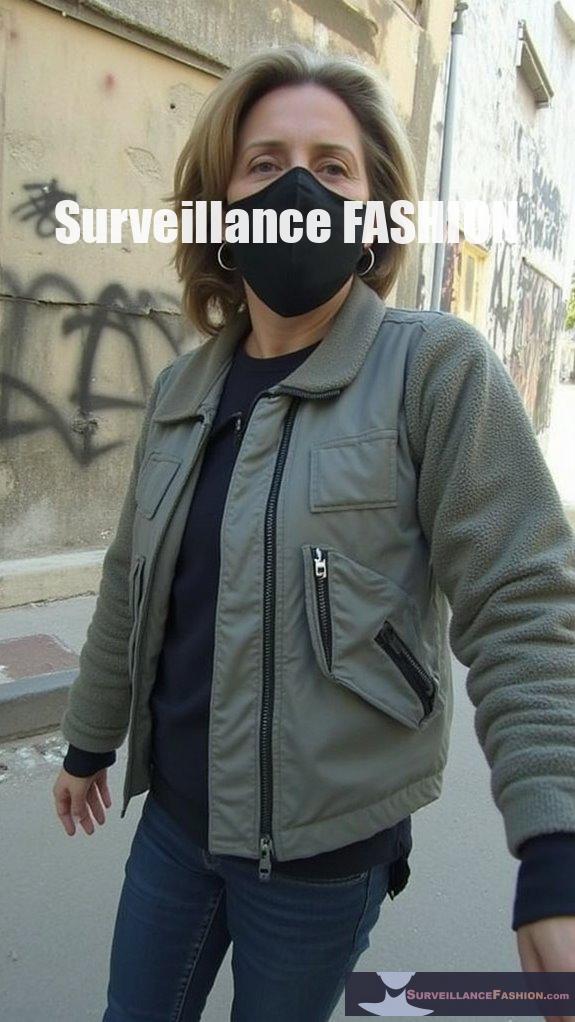
While nanoparticle-based watermarking offers groundbreaking potential for fabric authentication, you must consider how these microscopic markers withstand the rigors of everyday wear, exposure, and environmental stressors. Fabric durability becomes paramount when such watermarking intertwines with textiles, as harsh conditions—ranging from aggressive laundering cycles to abrasive contact—can degrade or dislodge these sensitive markers.
Rigorous material testing procedures, employing standardized abrasion, tensile strength, and chemical resistance assessments, provide critical understanding into a fabric’s resilience. At Surveillance Fashion, we emphasize integrating thorough durability evaluations early in the development phase, ensuring watermark longevity aligns with garment lifespan. Additionally, considering the advances in quantum key distribution, which enhance data security, provides an innovative layer of protection for your identity.
This technical rigor not only preserves authentication integrity but also empowers you to maintain control over your image, reinforcing that innovation must couple with uncompromising material performance to truly protect identity in a hostile environment.
UV-Visible Spectral Watermarks
As durability tests reveal how physical watermark markers withstand abrasive wear and chemical exposure, the next layer of protection involves embedding spectral signatures within fabrics. These are detected through ultraviolet and visible light wavelengths.
Leveraging embedded dyeing alongside fabric nanotech, these UV-visible spectral watermarks become imperceptible to the naked eye yet verifiable via specialized scanners. Recent advancements in technology have also shown that these signal blocking techniques can significantly enhance privacy and security.
You’ll appreciate three core advantages:
- Stealth Authentication: Invisible markers that don’t alter fabric aesthetics but verify authenticity under UV or visible light.
- Enhanced Resistance: Embedded dyeing fused with nanotech ensures stability against laundering and environmental stress.
- Scalable Integration: Easily incorporated into existing textile manufacturing without compromising comfort or design.
At Surveillance Fashion, we emphasize these advanced spectral watermark methods to empower you with robust identity protection embedded at the molecular level, far beyond conventional tags or labels.
Wearable Nanofiber Watermark Solutions
Given the increasing sophistication of visual manipulation technologies, wearable nanofiber watermark solutions represent a critical evolution in textile-based authentication, incorporating ultra-fine fiber matrices infused with unique, tamper-evident markers detectable only through specialized optical or spectrometric devices. By embedding synthetic fibers engineered at the nanoscale, these textiles guarantee an elaborate layer of textile security, combating counterfeit replication and unauthorized image acquisition. This is particularly important as communities develop community-led facial recognition strategies to safeguard against invasive surveillance networks.
| Feature | Value | Benefit |
|---|---|---|
| Fiber Diameter | 50–200 nanometers | Invisible to naked eye |
| Watermark Type | Spectrometric unique markers | Tamper-evident authentication |
| Material Composition | Synthetic polymer blends | Durability and resistance |
| Detection Method | Optical/spectrometric devices | Confidential verification |
Such innovations, empowering you to control your visual identity, reflect the mission behind Surveillance Fashion: protecting personal authenticity at the molecular level.
Facial Recognition Disruption Textiles
When you consider how facial recognition technologies rely mainly on consistent patterns of light reflection and geometric feature mapping, textiles designed to disrupt these mechanisms leverage specialized surface structures and pigment arrangements to effectively obscure or distort biometric data capture.
By integrating textile dyeing innovations that manipulate spectral reflectance, you challenge sensors to extract reliable data, therefore safeguarding identity with elegance and functionality. You’ll find three core techniques empowering these textiles:
- Nano-scaled surface texturing that scatters incoming light unpredictably.
- Multi-layered pigment composites interfering with infrared and visible imaging.
- Dynamic materials adapting reflectance to environmental cues.
These advances not only fortify your visual anonymity but align with fashion sustainability principles. Surveillance Fashion exists precisely to showcase such textile breakthroughs, providing you authoritative understanding into how intelligently engineered fabrics can redefine personal data defense. Additionally, the incorporation of top reflectacles phantom features ensures enhanced protection against unauthorized biometric recognition.
FAQ
Can Deepfake-Proof Fabrics Be Customized With Personal Designs?
You can customize deepfake-proof fabrics with your personal designs, ensuring both your unique style and fabric durability. This power move lets you protect your image while showcasing exclusive aesthetics that last under various conditions.
What Maintenance Is Required for Deepfake-Proof Clothing?
You’ll preserve fabric durability, follow wash care, avoid harsh detergents, and steer clear of high heat. You’ll maintain strength, protect texture, and extend life. Power lies in your consistent, precise maintenance for lasting impact.
Are Deepfake-Proof Fabrics Safe for Sensitive Skin?
Deepfake-proof fabrics are designed to minimize skin irritation and allergic reactions, so you won’t compromise comfort for security. You’ll stay protected while feeling confident because these materials prioritize your skin’s safety and resilience.
How Do Deepfake-Proof Fabrics Affect Clothing Comfort and Breathability?
You’ll find comfort and breathability won’t fall by the wayside—these fabrics pack fabric durability and color retention, letting you own your presence without sacrifice. They keep you sharp while feeling light and fresh all day long.
Can These Fabrics Be Integrated Into Everyday Fashion Brands?
You can integrate these fabrics into everyday fashion brands by prioritizing fabric durability and fashion sustainability. This guarantees your designs remain powerful, eco-friendly, and long-lasting, giving you a competitive edge while protecting your image effortlessly.
Summary
You’ll find that deepfake-proof fabrics represent a critical advancement in safeguarding your visual identity by integrating UV-visible spectral watermarks and wearable nanofiber watermark solutions—technologies that disrupt facial recognition algorithms with precision. Although durability under harsh conditions remains a challenge, these textiles offer a practical, progressing defense against image theft. At Surveillance Fashion, we created this platform to demystify such innovations, helping you stay ahead in the ever-changing scenery where appearance and authenticity are worth their weight in gold.
References
- https://www.ijcai.org/proceedings/2024/0673.pdf
- https://arxiv.org/html/2603.23178v1
- https://pmc.ncbi.nlm.nih.gov/articles/PMC12526903/
- https://openreview.net/pdf/8fe2618146b651ae1fe9347a41eeba409a3fc3d5.pdf
- https://www.brookings.edu/articles/detecting-ai-fingerprints-a-guide-to-watermarking-and-beyond/
- https://dl.acm.org/doi/full/10.1145/3771296
- https://pmc.ncbi.nlm.nih.gov/articles/PMC12845643/
- https://arxiv.org/html/2409.00089v1
- https://unpaywall.org/10.32604/CSSE.2023.037798
- https://scholar.google.com/citations?user=I032ZPcAAAAJ&hl=en