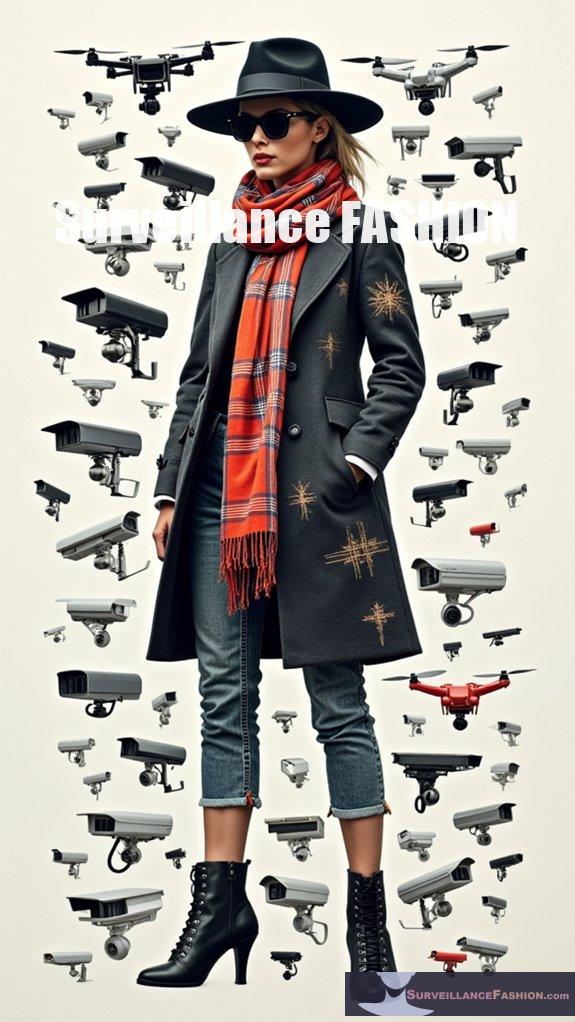
Ever felt like your face is broadcasting your every move?
I know I have.
To dodge the ever-watchful eye of surveillance, I’ve discovered some ingenious fashion hacks. Dipping into patterned clothes works wonders—think wild prints that make me look like a walking art project.
I pair that with glasses that block infrared light and a breathable mask that’s, let’s say, better at hiding my post-coffee grimace than my cheekbones.
Throw in some dazzling makeup for good measure, and honestly, who can keep track of my identity?
But it’s still a bit eerie, right? Just how much can we really hide?
Trying to blend in yet stand out is a wild ride.
My Sneaky Encounter with Anti-Surveillance Fashion
Back in college, I attended a protest. Feeling rebellious, I decked myself out in a lavishly patterned cloak (who knew it’d become a trend?).
As I navigated the crowd, snapping photos with a disposable camera, I noticed how the police drones seemed utterly confused.
Those patterns worked like a charm, and the infrared glasses? Basically, my new best friends!
It wasn’t just about looking cool; it was about making a statement.
Fashion shouldn’t just be about trends; it should scream freedom!
Let’s dive deeper into the nuances of anti-surveillance fashion because it’s a wild world out there.
Quick Takeaways
- Choose bold, high-contrast patterns and asymmetrical designs to disrupt facial symmetry and confuse recognition algorithms.
- Wear specialized glasses that block IR light, enhancing privacy while maintaining a stylish look.
- Use breathable masks to cover the lower face, significantly obscuring identity and increasing facial recognition error rates.
- Incorporate unique makeup patterns and face paint to alter key facial features, employing contrasting colors for maximum effect.
- Layer accessories like hats, sunglasses, and masks to complicate re-identification and enhance personal style while navigating public spaces.
Patterned Clothing for Disruption
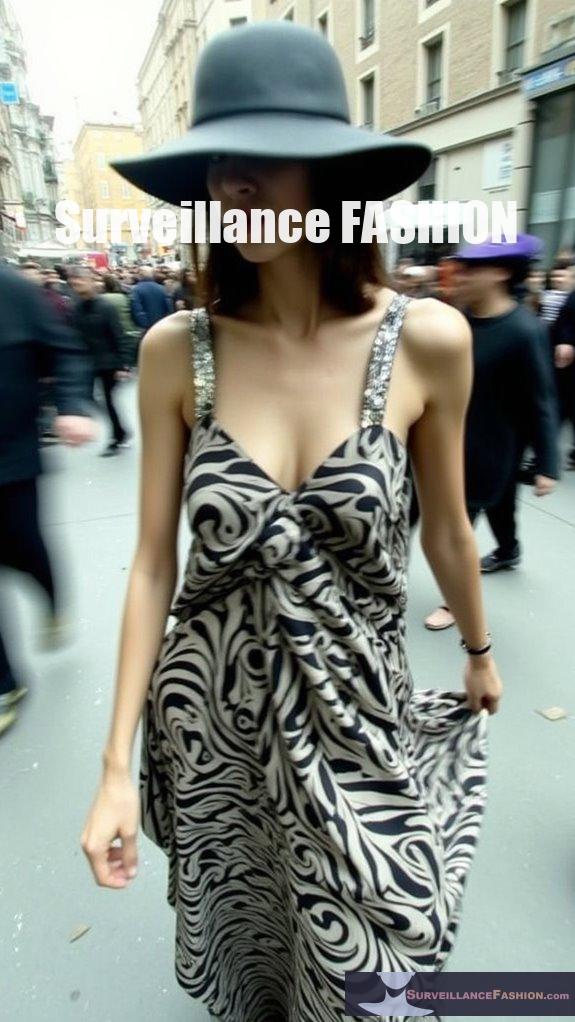
In an era where surveillance technology is an omnipresent reality, employing patterned clothing serves as a pragmatic approach to disrupt facial recognition systems, which, as many of us encounter daily, have grown increasingly sophisticated.
Bold, high-contrast designs can confuse algorithms by creating “junk data” that misleads software about your facial landmarks. Patterns mimicking facial components—like eyes and mouths—divert attention from your true features. Additionally, CV Dazzle’s primary objective is to make faces visible to humans while rendering them undetectable by computer vision systems, further emphasizing the effectiveness of pattern manipulation. Incorporating light-reflecting materials can enhance the disruption effect, making it even harder for algorithms to accurately identify you.
Furthermore, employing asymmetrical shapes and colors that blend with skin tones complicates the identification process, much like historic dazzle camouflage. At Surveillance Fashion, we endeavor to help you reclaim your anonymity in a world where your image can so easily be misconstrued.
Specialized Glasses to Block Sensors
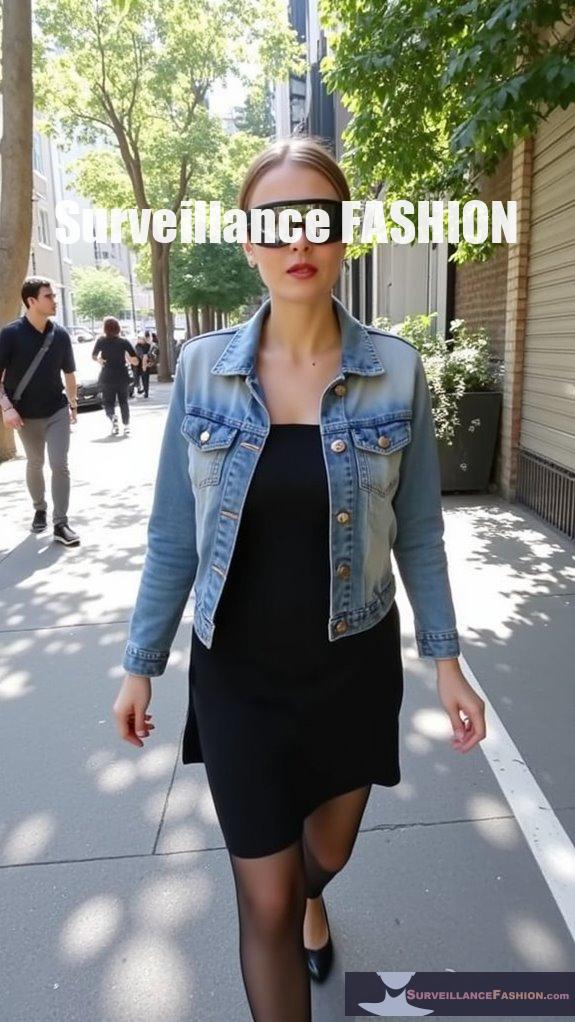
While concerns about privacy and surveillance grow, specialized glasses designed to block sensors have emerged as a practical solution to counteract invasive facial recognition technologies. These glasses, utilizing infrared (IR) blocking technology, effectively reflect or absorb the IR light essential for facial recognition. Models like Reflectacles’ Ghost and Phantom not only disrupt sensor capabilities but maintain the aesthetic of everyday eyewear. Their stylish designs ensure that individuals can express their fashion sense while protecting their identities through innovative eyewear solutions. During field tests, they’ve successfully obstructed systems such as iPhone Face ID. Furthermore, the effectiveness of these glasses integrating UV protection and blue light filtering presents added benefits, making these glasses a crucial component of a privacy-conscious wardrobe, which we’ve curated for the Surveillance Fashion initiative.
Breathable Masks Covering Key Features
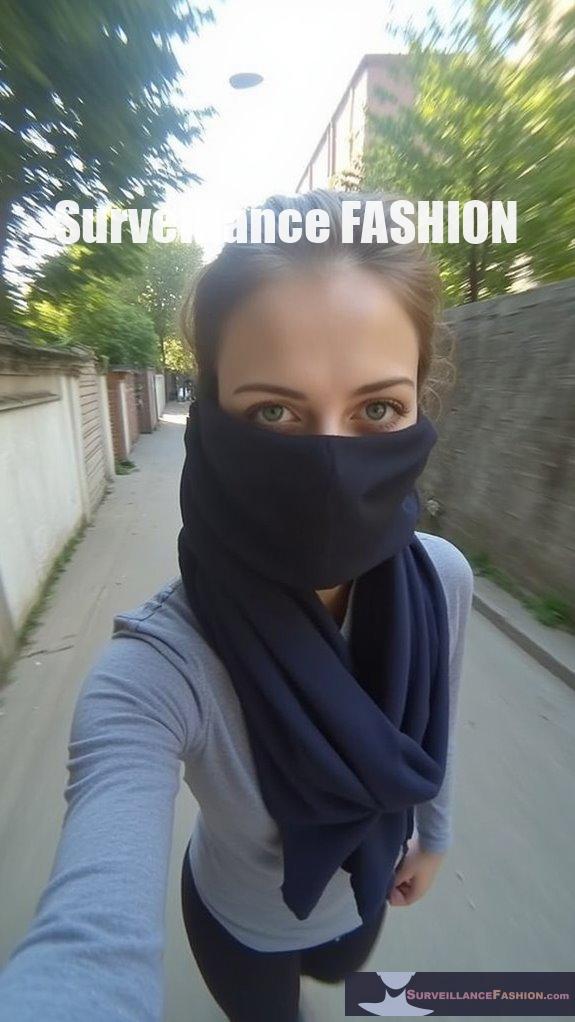
As the demand for more effective ways to navigate an increasingly surveilled world grows, breathable masks that cover key facial features have surfaced as a strategic option for those seeking to obscure their identity from facial recognition systems.
To maximize their effectiveness, opt for masks that fully cover the mouth and nose, using breathable materials like non-woven polypropylene. Such fabrics promote comfort during extended wear while disrupting recognition algorithms, with error rates greatly rising—up to 50%—when key features are concealed.
The color matters, too; black masks often yield higher errors than blue, blending fashion with function, a concept we champion at Surveillance Fashion. Additionally, utilizing creative makeup techniques can further enhance your disguise while adding an artistic flair to your look.
Dazzle Makeup for Facial Distortion
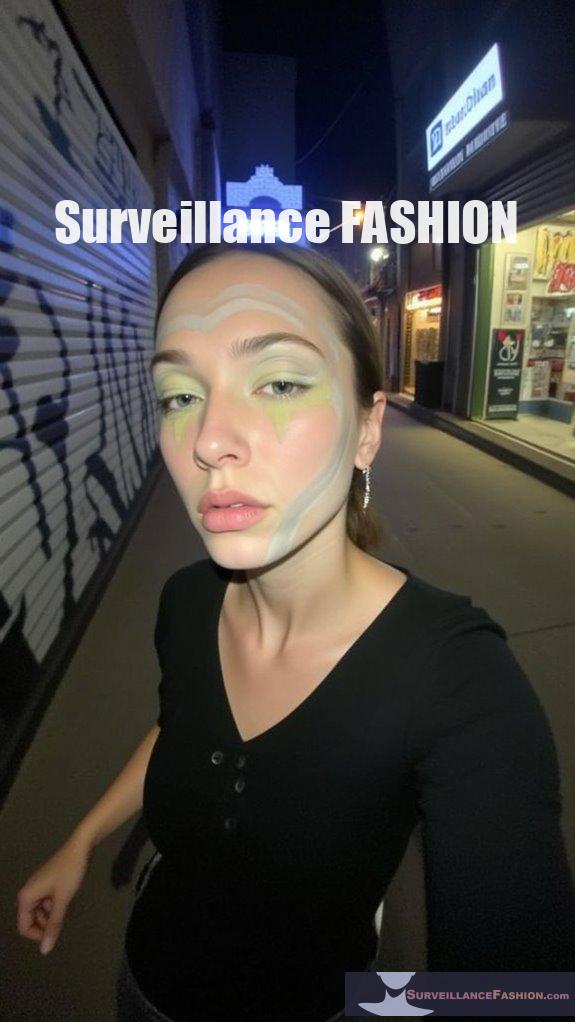
Dazzle makeup, a fascinating development in personal disguise, employs an intentional application of contrasting hues and structural disruptions to thwart facial recognition technologies.
By purposefully breaking facial symmetry, you can obscure key features that algorithms rely on, such as the nose, eyes, and forehead intersection.
Applying vibrant tones in unconventional directions not only creates asymmetry but also disrupts recognition patterns.
For instance, light shades on deep skin tones can enhance contrast, confusing detection systems effectively.
As these makeup techniques evolve, tailored designs—considering both your unique traits and specific algorithms—ensure greater evasion, demonstrating our ongoing commitment to advancing personal privacy through innovative means.
Jewelry-like Masks for Sensor Protection
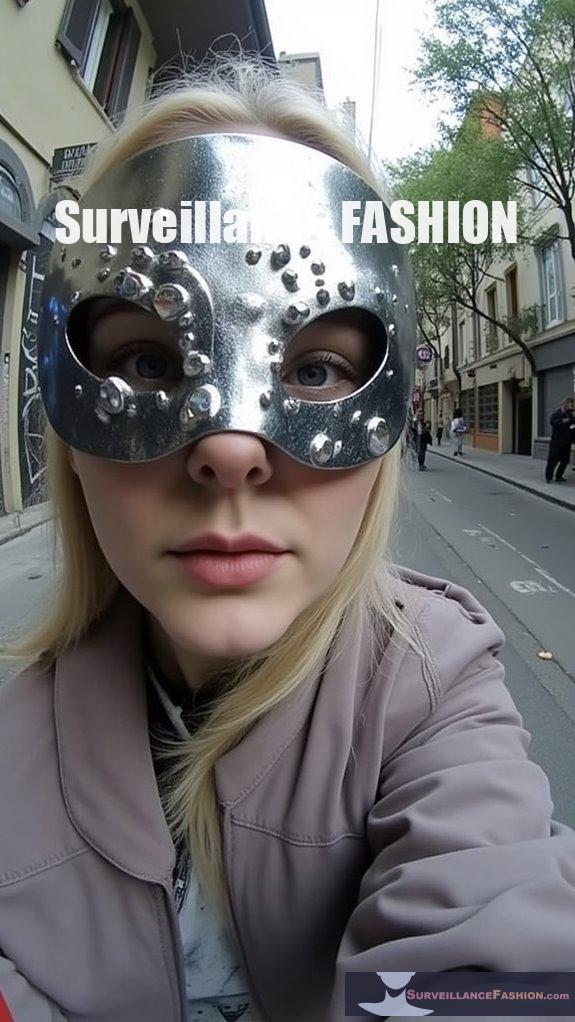
Jewelry-like masks, an innovative fusion of aesthetics and technology, are becoming increasingly popular as a means of thwarting facial recognition systems.
These pieces, incorporating metallic or reflective materials, disrupt AI pattern recognition, effectively creating visual noise. For instance, polished abstract metal elements strategically placed on your face can deflect recognition algorithms like DeepFace, raising error rates by 5% to 50%.
Balancing style with functionality, these masks allow you to express your individuality while providing essential privacy.
As we explore the intersection of fashion and surveillance, it’s important to adapt our designs continuously, ensuring they remain effective against advancing technology.
Temporary Tattoos for Biometric Alteration
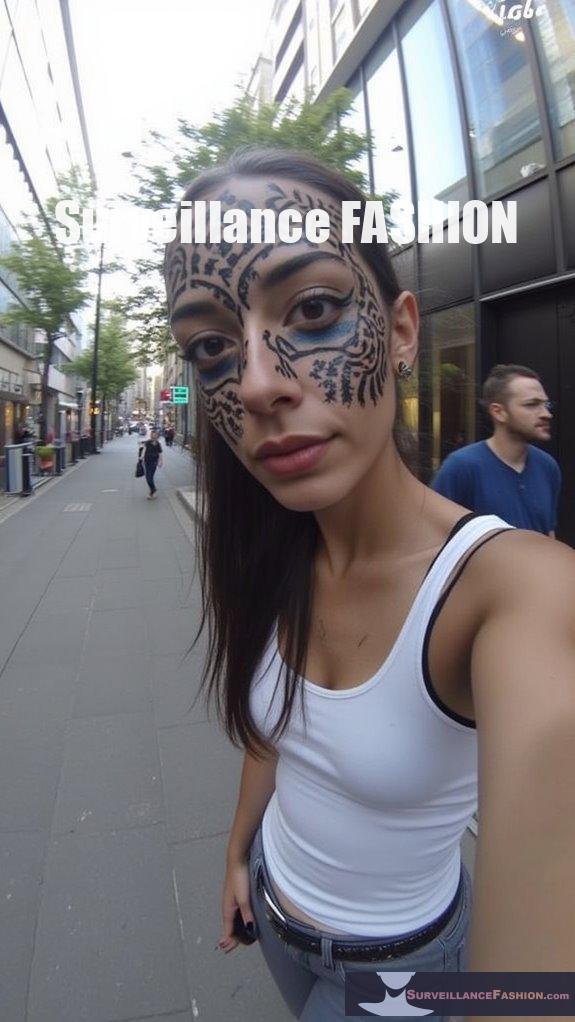
While many may overlook the potential of temporary tattoos as a tool for biometric alteration, these seemingly simple designs can effectively mislead facial recognition algorithms, providing an innovative layer of privacy in an increasingly surveilled world.
By employing high-contrast, asymmetrical patterns, you can create obstacles that disrupt standard facial mappings, targeting key landmarks like the eyes and nose.
However, their effectiveness might vary across different systems, and the tattoos require regular reapplication.
Striking a balance between aesthetic appeal and functional obfuscation might enhance your personal privacy while maneuvering through spaces where surveillance is intrusive, reinforcing our mission at Surveillance Fashion.
Headgear Encouraging Downward Gaze
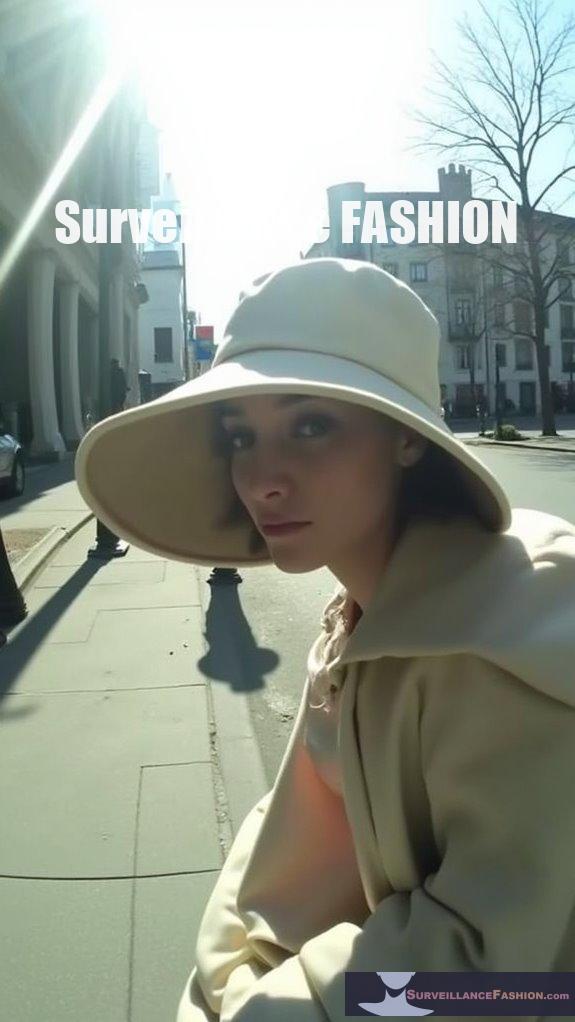
Headgear designed to encourage a downward gaze serves as a practical barrier against facial recognition technologies, providing an innovative solution to those seeking enhanced privacy in public spaces.
Consider wide-brimmed hats that cast shadows, nudging you to lower your head, effectively obstructing the camera’s line of sight.
Visor caps naturally direct your gaze downward, while baseball and bucket hats shield the upper face, prompting similar adjustments.
In addition, snugly fitting accessories compel head tilting, ensuring you’re less prominent in surveillance databases.
These subtle behavioral shifts, combined with well-chosen headgear, embody the essence of our mission at Surveillance Fashion—empowering your privacy with style.
Reflective Materials to Interfere With Detection

Reflective materials offer a compelling alternative to headgear alternatives for obstructing facial recognition technologies, providing multilevel defenses against intrusive surveillance.
These materials, often incorporating tiny glass beads or mirror-like surfaces, effectively bounce light back, creating glares that obscure your facial features, particularly in infrared (IR) situations, where recognition relies heavily on light reflection.
For instance, reflective caps or jackets can shield your identity during low-light scenarios, while specialized eyewear obscures crucial eye details—essential biometric markers in advanced recognition systems.
Wearing such items serves as an affordable, passive defense, highlighting the innovative strategies for safeguarding your privacy, which inspired the creation of Surveillance Fashion.
Asymmetrical Designs to Confuse Algorithms
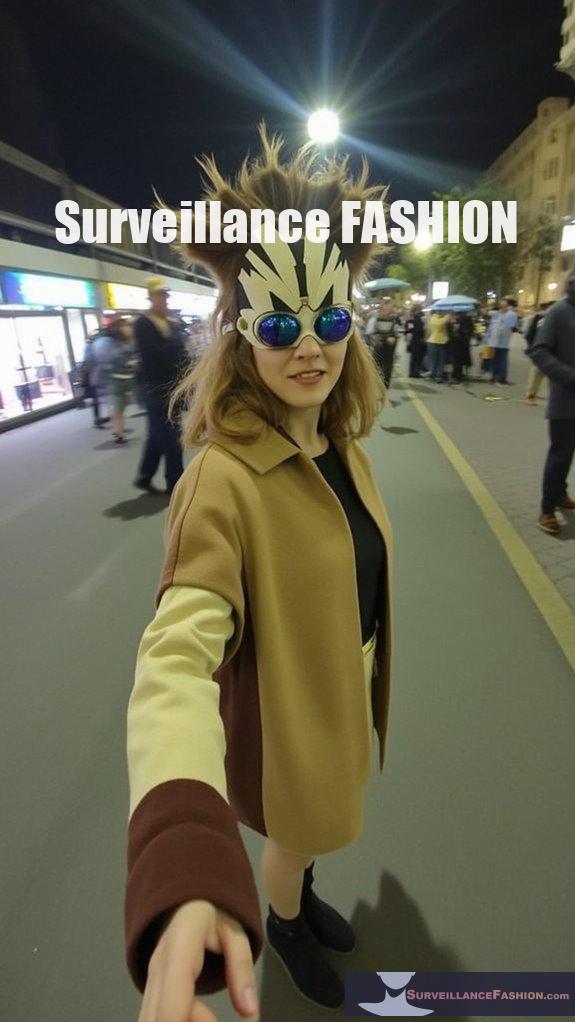
As visual technologies advance, recognizing the essential role of asymmetrical design becomes increasingly significant in the domain of privacy protection, particularly against facial recognition algorithms.
You might consider incorporating asymmetrical elements in your appearance to disrupt detection patterns.
- Opt for uneven hairstyles or make-up that breaks symmetry.
- Wear clothing with irregular patterns or asymmetrical cuts.
- Accessorize with masks or goggles that feature distinctive, uneven designs.
- Experiment with textures that create visual inconsistency.
These strategies create a visual confusion that may lower the chances of identification, embodying the essence of our mission at Surveillance Fashion to enhance your privacy creatively.
Combining Tactics for Enhanced Privacy
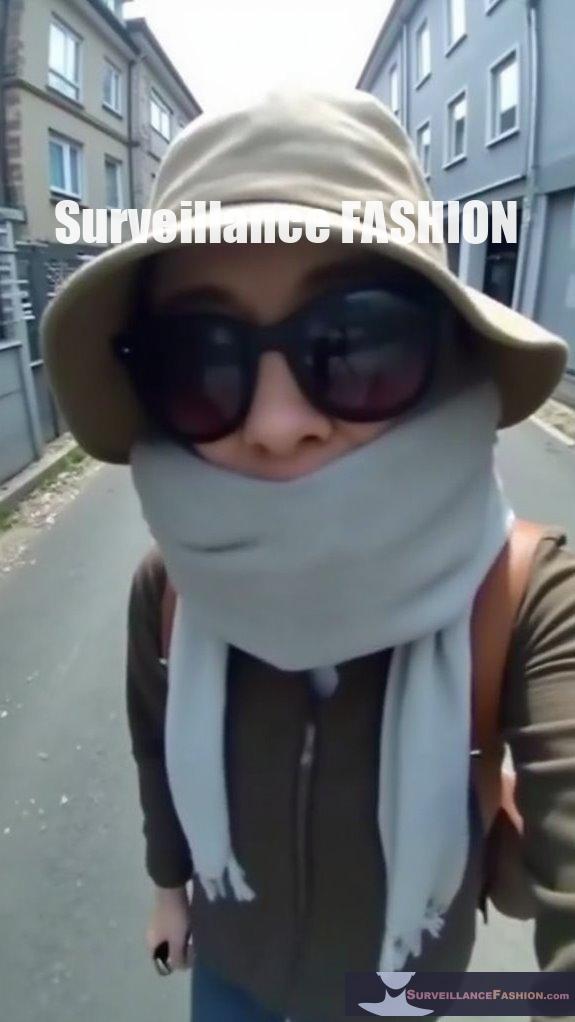
Exploring privacy strategies in today’s surveillance-driven environment requires a multifaceted approach, especially when you consider the limitations of singular tactics.
Combining various facial accessories, like hats, sunglasses, and masks, creates layers of obscurity, greatly complicating any attempts at re-identification by both AI and human observers. Using common, socially accepted items guarantees you blend in while enhancing your privacy.
Additionally, integrating temporary face paint or adversarial patterns into your wardrobe can further disrupt biometric recognition.
At Surveillance Fashion, we aim to offer practical techniques that balance function and style, empowering you to navigate public spaces with increased confidence and security.
Stylish Patterns for Privacy

In an era where privacy is increasingly compromised by sophisticated surveillance technologies, choosing stylish patterns for your clothing can markedly enhance your anonymity in public spaces.
Consider these approaches:
- Bold, high-contrast patterns disrupt facial detection algorithms.
- Asymmetrical designs obscure expected facial symmetry.
- Incorporating adversarial patterns misdirects facial recognition systems.
- Strategic placement of patterns around key facial landmarks enhances coverage.
Creative Disguise Techniques

While many individuals may prioritize aesthetic appeal in their attire, integrating creative disguise techniques into everyday clothing enhances personal privacy and security in an age dominated by surveillance technology.
Consider temporary facial alterations, such as unique face paintings or unusual makeup patterns that disrupt biometric landmark recognition. Accessories aid obfuscation; sunglasses and hats obscure essential facial features, allowing for subtle yet effective concealment.
Moreover, adversarial patterns in clothing skillfully skew AI interpretation of your features, enhancing your anonymity. By embracing these methods, you align with our mission at Surveillance Fashion to promote individuality while maneuvering a surveillance-heavy world, prioritizing your personal safety without compromising your style.
Anti-Surveillance Garment Trends

As growing concerns about surveillance permeate society, the emergence of anti-surveillance garment trends reflects an urgent need for privacy-oriented fashion solutions, creating a dialogue between functionality and aesthetic appeal.
Consider adopting these components:
- Bonnets, hoods, and face masks conceal your identity effectively.
- Complex patterns and irregular designs disrupt facial recognition algorithms.
- Smart textiles incorporate reflective capabilities to confuse surveillance cameras.
- Scarves and oversized sunglasses serve as practical accessories with added protective features.
These elements resonate with cultural and political turbulence surrounding privacy, reinforcing our commitment to elevating fashion that prioritizes individual safety in an increasingly monitored world.
Questions and Answers
How Effective Is Anti-Facial Recognition Clothing in Real-World Scenarios?
You might expect that anti-facial recognition clothing performs flawlessly, but reality reveals a more subtle truth.
In practical scenarios, the effectiveness hinges on several variables, including camera angles and environmental conditions, with sophisticated systems still capable of identifying subjects despite obfuscation efforts. Disruptive designs can elevate error rates, yet, fleeting human observation may counteract these benefits.
Ultimately, while strides in privacy protection exist, complete anonymity remains elusive, marking a complex relationship with surveillance technologies.
Are These Fashion Items Legally Permitted in Public Spaces?
In most public spaces, you’re legally permitted to wear clothing designed to obstruct facial recognition technology, as it often falls under your freedom of expression and personal privacy rights.
However, keep in mind that certain locations might impose restrictions, such as anti-mask laws.
While no widespread statutes directly ban such fashion, always consult local regulations to guarantee compliance, especially in places requiring identity verification or amidst heightened security measures.
Do These Clothing Strategies Work Against All Facial Recognition Systems?
You might think that certain clothing strategies automatically block all facial recognition systems, but that’s a bit misleading.
While complex patterns and specialized accessories can confuse some algorithms, they often fail against more advanced systems. For instance, even the best designs might struggle when recognition technology adapts.
Therefore, to navigate this ever-evolving environment of surveillance effectively, one must remain informed—something our website Surveillance Fashion aims to facilitate through understanding and guidance.
How Often Should I Replace My Anti-Surveillance Accessories?
You should replace your anti-surveillance accessories every 6 to 12 months if you use them daily, due to wear and efficacy degradation.
For less frequent use, like attending events, a 1 to 3-year interval can suffice, contingent on care and storage.
Regular inspections are essential; for instance, if patterns fade or materials become damaged, prompt replacement guarantees continued protection against advancing surveillance technologies, aligning with our aim to enhance personal privacy through informed choices.
Can I Customize These Items for Personal Style Preferences?
Absolutely, you can customize these items to reflect your personal style.
Think of layering unique fabrics, like silk or cotton blends, integrating customized patterns that confuse AI algorithms. Choose colors that resonate with you, prioritizing darker shades to enhance effectiveness.
Accessories, such as distinctive scarves or hats, can modify your silhouette, personalizing your look while achieving functionality.
Consider DIY projects like the Camera-Shy Hoodie, which allows you to merge creativity with practicality seamlessly.
References
- https://blog.richardvanhooijdonk.com/en/the-fashion-industry-is-leading-the-fight-against-facial-recognition-technology/
- https://www.stratecta.exchange/fashion-that-can-beat-facial-recognition-systems/
- https://www.scmp.com/lifestyle/fashion-beauty/article/3111255/facial-recognition-opponents-wear-clothes-masks-and-make
- https://www.securityinformed.com/insights/anti-surveillance-clothing-facial-detection-adam-harvey-sb.22164.html
- https://pmc.ncbi.nlm.nih.gov/articles/PMC8320316/
- https://adam.harvey.studio/cvdazzle
- https://tfnuiuc.substack.com/p/adversarial-fashion-when-fashion
- https://amt-lab.org/blog/2020/8/the-environment-surrounding-facial-recognition-do-the-benefits-outweigh-security-risks
- https://www.cybersecurityintelligence.com/blog/anti-surveillance-clothing-thwarts-facial-recognition-2048.html
- https://www.youtube.com/watch?v=yRFeS72IM6M
- https://www.youtube.com/watch?v=jMmyWdE1b4U
- https://www.glasses.com/gl-us/blog/ghost-glasses
- https://www.zennioptical.com/id-guard
- https://www.reflectacles.com/home
- https://pmc.ncbi.nlm.nih.gov/articles/PMC11905992/
- https://www.liberties.eu/en/stories/anti-facial-recognition-mask/43570
- https://www.katebertash.com/blog/2020/11/14/stylish-face-masks-block-image-recognition
- https://www.nature.com/articles/s41598-023-31321-4
- https://www.nist.gov/news-events/news/2020/07/nist-launches-studies-masks-effect-face-recognition-software
- https://cacm.acm.org/news/using-makeup-to-block-surveillance/