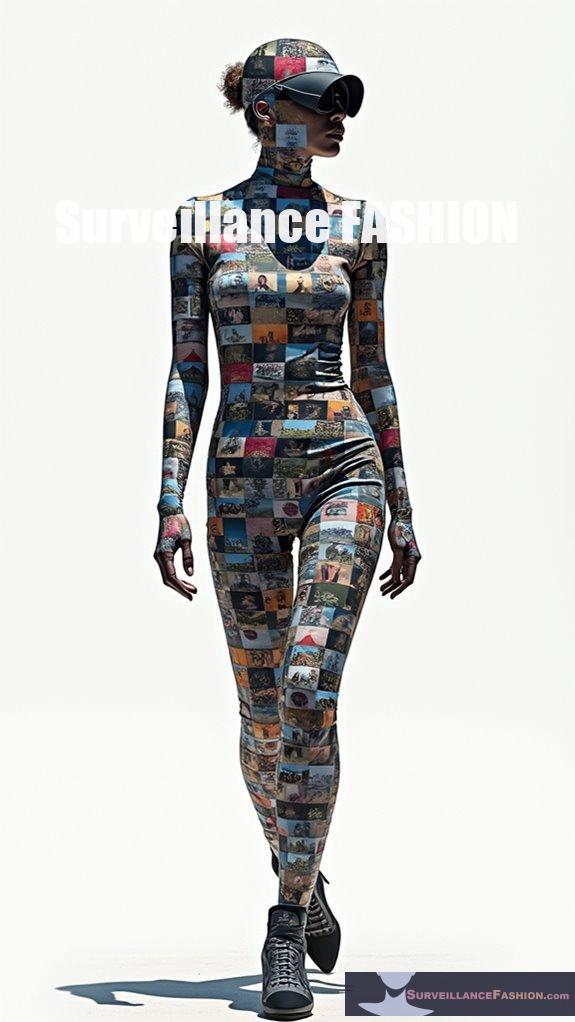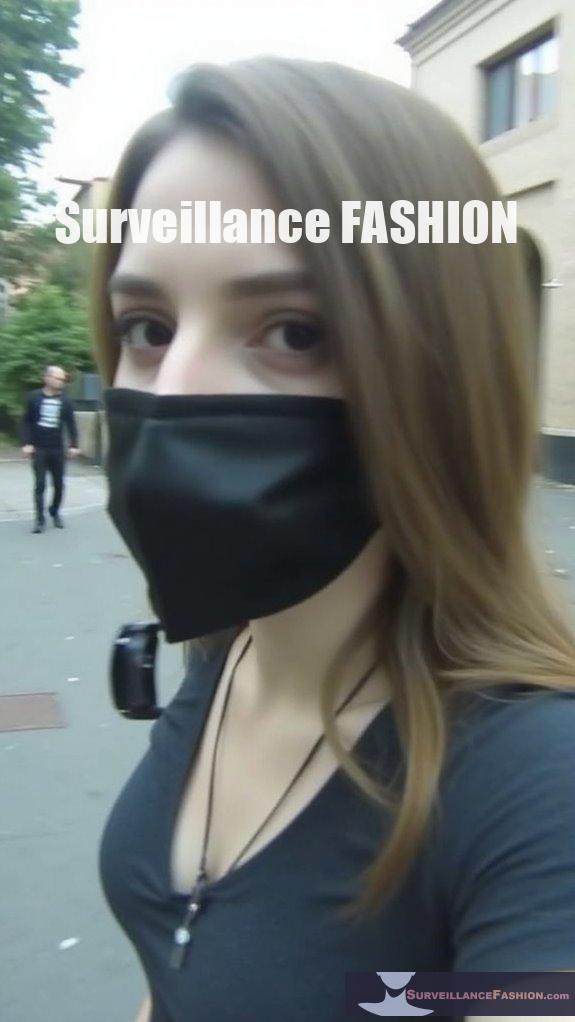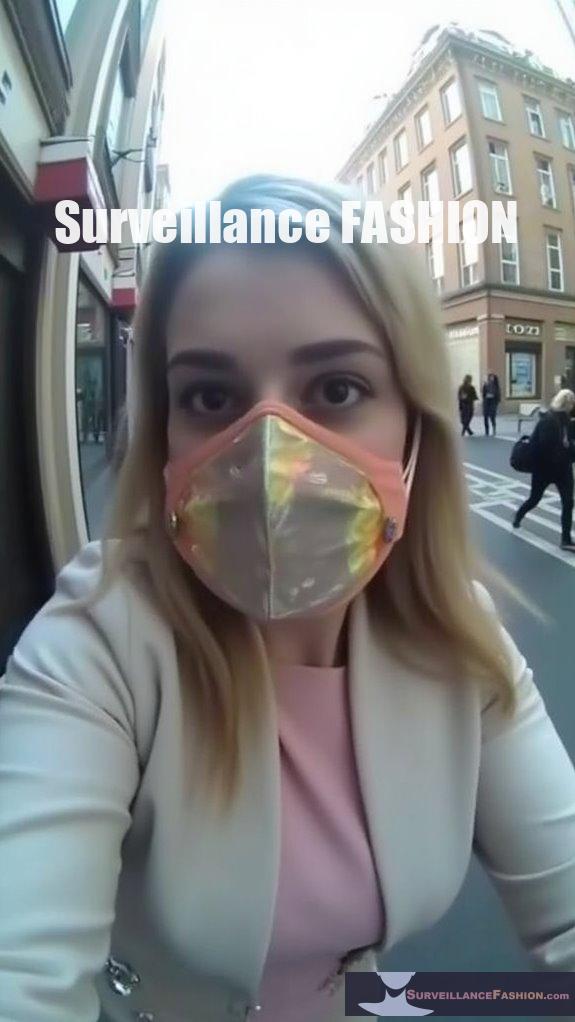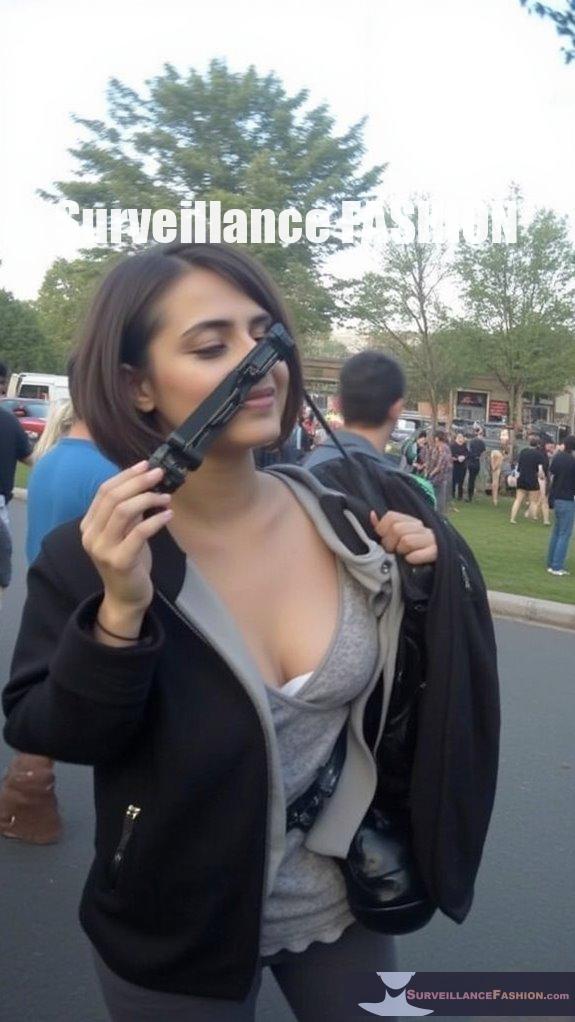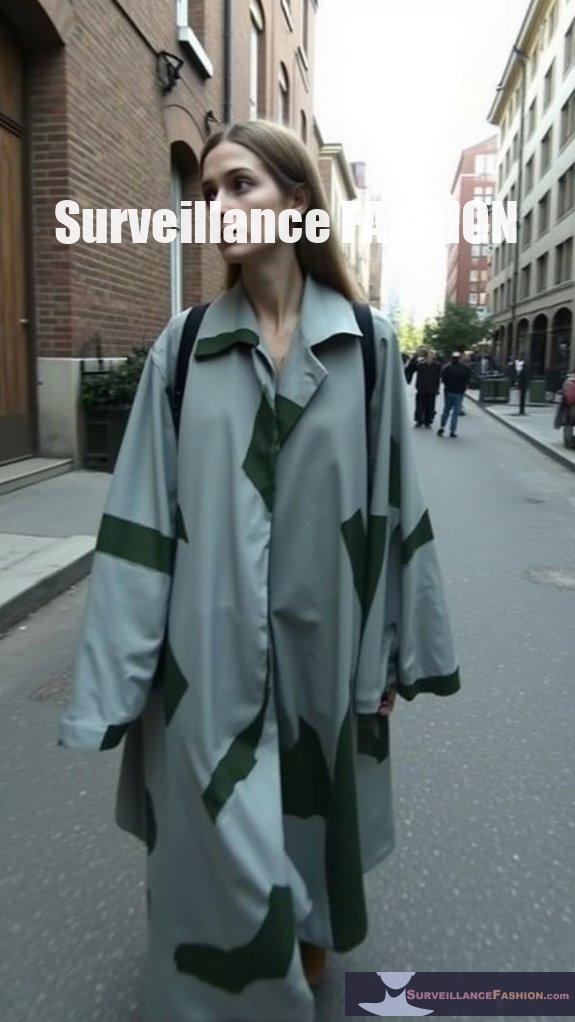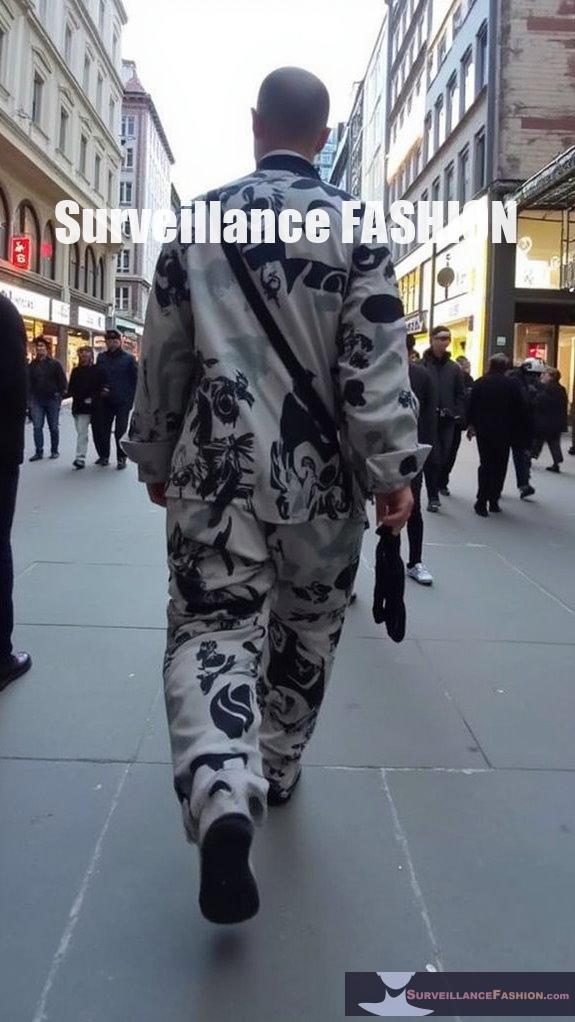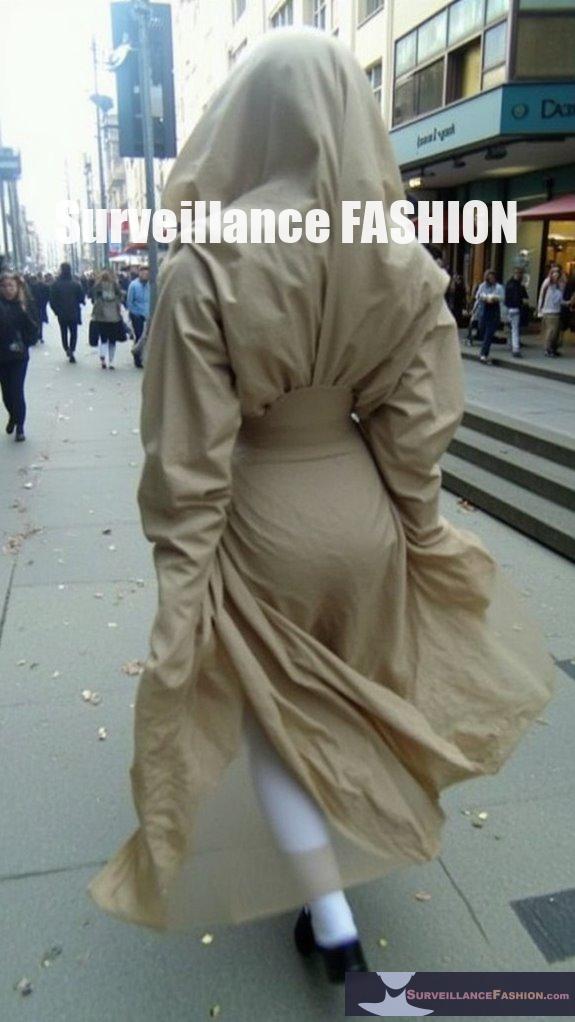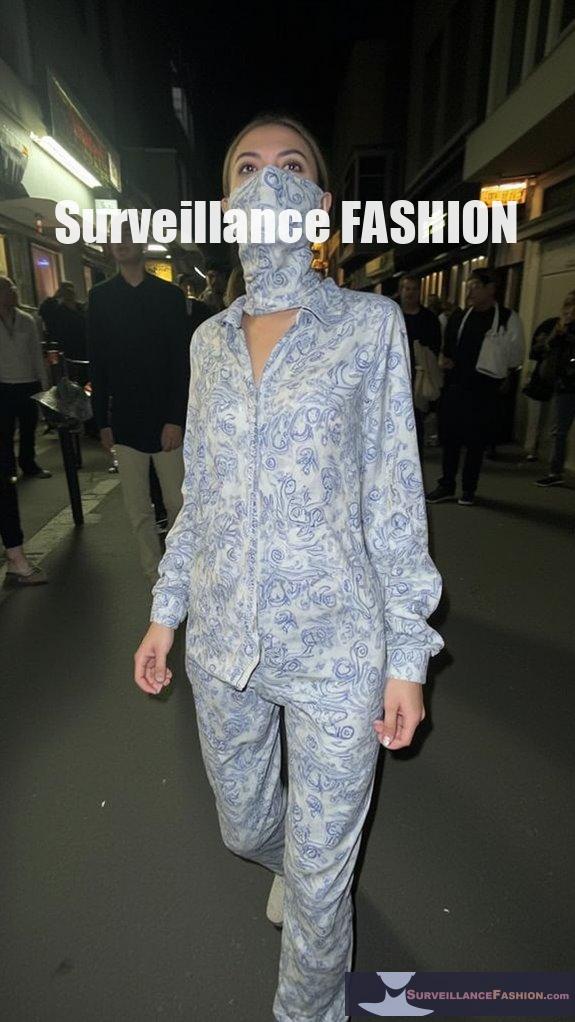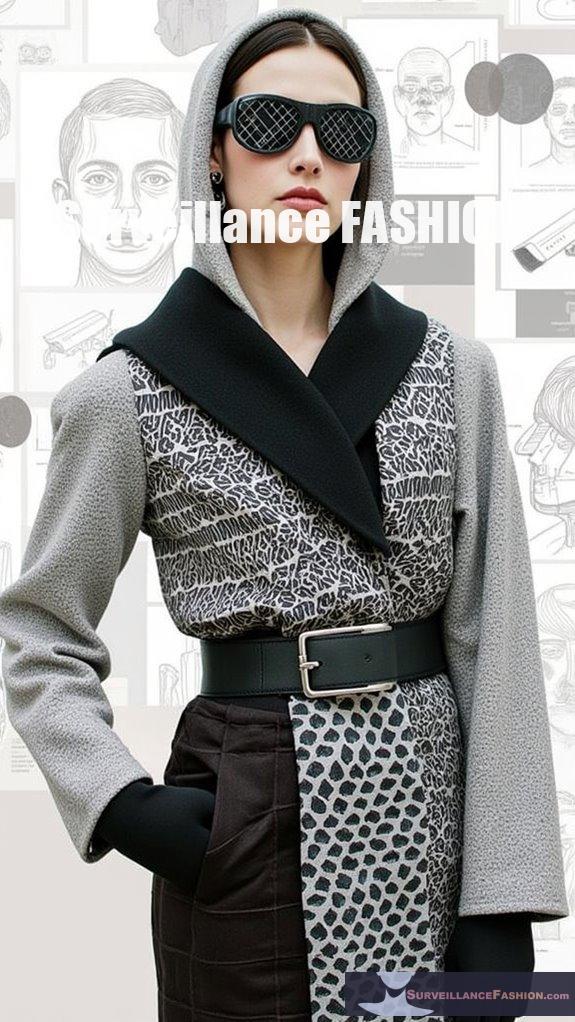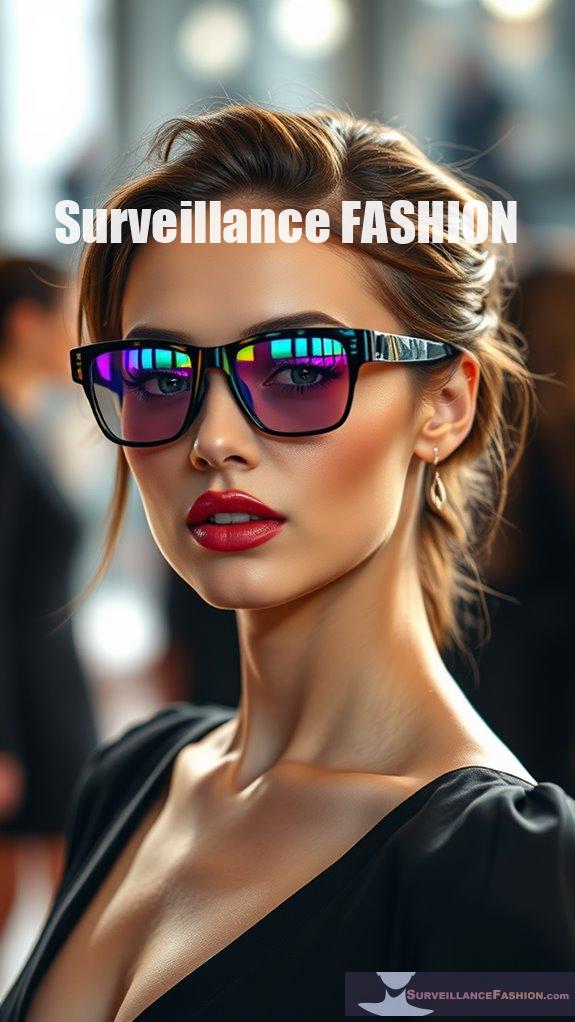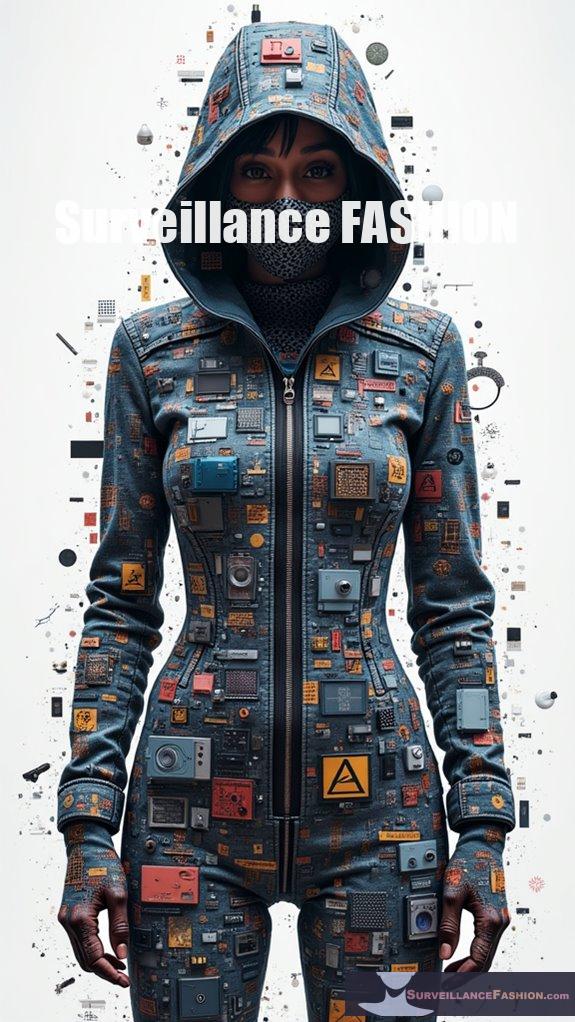
Tag: anti-surveillance fashion

  • Anti-Surveillance Fashion as Urban Activism

    Anti-Surveillance Fashion as Urban Activism

    Ever found yourself wondering who’s watching you?

    Let me tell you, in a world where every corner feels like a Big Brother episode, I stumbled upon anti-surveillance fashion.

    The first time I wore my facial recognition-blocking jacket, I felt like a secret agent, maybe even James Bond! But, you know, on a tighter budget.

    It’s both wild and comforting to hide in plain sight while others catch the watchful eyes of the world. Who knew fabrics could make a statement?

    Privacy and style? A match made in activist heaven.

    Seriously, are we the rebels of our time?

    H2: My Unexpected Encounter with Survival Mode****

    Once, while walking through a crowded market, I caught my reflection in a store window—decked out in my anti-surveillance gear. I felt like I was part of some dystopian film.

    In that moment, a vendor nudged me and asked where I got my jacket. He pointed out how surveillance was creeping into every part of our lives, and I couldn’t help but nod.

    It was empowering to share that story with him, alongside themes of privacy and urban freedom. So, are we becoming fashion warriors? Perhaps!

    Quick Takeaways

    • Anti-surveillance fashion empowers activists by providing tools to resist and mitigate monitoring during protests and public gatherings.
    • Innovative garments challenge facial recognition technology, enabling individuals to reclaim their anonymity in increasingly surveilled environments.
    • Practical attire, such as masks and sunglasses, fosters group cohesion and signifies resistance against normalized surveillance practices.
    • The rise of privacy garments reflects public concern about monitoring, blending style with protective features for individual rights.
    • Future designs focus on adapting to advanced surveillance methods, emphasizing urban activism through innovative materials that confuse monitoring technologies.

    The Evolution of Surveillance Technologies and Urban Resistance

    surveillance resistance privacy advocacy

    As surveillance technologies have evolved from their rudimentary beginnings in the 1940s to the sophisticated systems we encounter today, urban resistance to these pervasive practices has emerged as a critical countercurrent, reflecting the tension between state power and individual autonomy.

    The lineage of surveillance history underscores not just technological advancement but also the necessity for urban privacy. Modern video surveillance technology features advanced analytics capabilities, which has provoked greater public concern regarding surveillance and individual rights. This tension has catalyzed discussions around data protection measures and the ethical implications of mass surveillance.

    With the shift from analog to digital surveillance in the 1990s, you witness a change that redefined monitoring, enabling remote access and real-time visibility. Consequently, urban citizens began advocating for privacy-focused innovations, giving rise to anti-surveillance fashion as a form of activism against unchecked surveillance dynamics.

    Key Innovations in Privacy Garments

    In an era where personal privacy is frequently compromised by advanced monitoring technologies, key innovations in privacy garments are emerging as both a practical necessity and a form of resistance. Integrating sophisticated privacy technology, these garments incorporate cctv defeating features that empower individuals to reclaim their anonymity in public spaces.

    Impact of Anti-Surveillance Fashion on Social Movements

    The emergence of anti-surveillance fashion greatly shapes social movements by providing activists with tools to mitigate the risks of being monitored during protests. Through garments like masks and sunglasses, you create a protest identity that resists the normalization of surveillance, consequently embodying resistance symbolism.

    This practical attire not only enhances your safety but also amplifies collective dissent against state and corporate oversight. By adopting these visual markers, you foster group cohesion and signal a unified challenge to pervasive data tracking. Additionally, fashion items like hoodies designed to counter facial recognition technology serve as innovative layers of protection in public spaces.

    Ultimately, such fashion operates at the intersection of identity reclamation and empowerment, asserting agency within a surveilled environment.

    The Intersection of Creativity and Activism in Urban Spaces

    anti surveillance fashion resistance techniques

    Although urban spaces often serve as stages for artistic expression and political dissent, the confluence of creativity and activism can be particularly evident in the domain of anti-surveillance fashion.

    This movement emerges as a potent reflection of urban identity, leveraging design to reclaim autonomy over personal visibility. By employing techniques like disruptive patterns and wearable technology, individuals creatively express opposition to invasive surveillance systems.

    Clothing such as Hyperface textiles and Computer Vision Dazzle makeup transform everyday garments into tools of resistance, thereby redefining the role of fashion in public discourse and fostering a collective sense of empowerment within their urban environments.

    As individuals increasingly seek to assert control over their visibility in an era dominated by surveillance technology, they encounter a labyrinth of legal challenges that complicate the anti-surveillance fashion movement.

    • Privacy concerns arising from biometric compliance
    • Design challenges essential for effective anti-surveillance attire
    • Legal implications involving consumer consent and intellectual property

    Anti-surveillance fashion faces pressing issues, such as surveillance regulations threatening its functionality and potential criminalization due to legislative pushback.

    Activist responses emphasize the need for thoughtful clothing design that prioritizes legal compliance, while balancing the complexities of consumer data protection and intellectual property rights to navigate this changing environment.

    The Future of Resistance: Adapting to Evolving Surveillance Methods

    Progressing surveillance methods necessitate an agile response from anti-surveillance fashion, where innovation must thrive amid advancing technologies capable of real-time analysis and monitoring.

    Your approach should encompass counter strategy development, integrating adaptive materials that challenge the sophisticated AI algorithms and multi-sensor technologies employed in modern surveillance.

    Imagine wearing garments designed to confuse thermal and low-light cameras, embodying a proactive resistance against predictive surveillance techniques.

    As you navigate an increasingly monitored environment, these innovations could facilitate your empowerment, employing dynamic fabrics that not only shield you from prying eyes but also assert your agency in a world ripe with digital oversight.

    Facial Recognition Cameras Downtown

    surveillance impact on communities

    Facial recognition cameras have become an ubiquitous presence in downtown areas, fundamentally altering how urban spaces function and how individuals navigate them.

    • Over 70,882 cameras in NYC, impacting privacy concerns
    • Discriminatory practices intensified in non-white communities
    • Integration of public and private camera networks increases surveillance

    As powerful surveillance mechanisms, these cameras raise critical questions related to facial recognition ethics.

    While proponents argue they enhance safety, the pervasive monitoring of marginalized neighborhoods evokes serious privacy concerns and systemic bias.

    The implications are profound; you must understand this transformation in urban life, as it shapes both your freedom and personal agency within the city milieu.

    Modern Clothing as Data Shield

    How does modern clothing emerge as a significant tool in the fight against pervasive surveillance technologies? It transforms everyday wear into formidable biometric shields through the use of patterned textiles designed to confuse algorithms.

    These complexly woven designs can generate hundreds of false identifications, thereby sabotaging facial recognition efforts. Moreover, garments featuring reflective materials serve to obscure thermal signatures, complicating drone monitoring.

    Anti-Surveillance Fashion as Urban Activism

    Anti-surveillance fashion emerges as a critical form of urban activism, reflecting a tangible response to the encroachment of surveillance technologies in public spaces.

    You can actively engage with this movement by:

    • Wearing garments that disrupt facial recognition systems and promote digital privacy.
    • Participating in community workshops that empower individuals with knowledge about surveillance.
    • Supporting designers who challenge corporate data practices through innovative designs.

    Eyes Everywhere: Anti-Surveillance Ebook review

    surveillance technologies impact privacy

    In a world increasingly dominated by pervasive surveillance technologies, the ebook “Eyes Everywhere” presents an incisive examination of the complex web woven by government and corporate interests, collectively referred to as a “government-corporate surveillance hydra.”

    Through its twelve thoughtful chapters, the author explores how multifaceted surveillance modalities intertwine to create a vast monitoring network that extends into the minutiae of daily life, tracking personal communications—ranging from phone calls to social media interactions—and extending surveillance inquiries to more public domains such as vehicle tracking via CCTV and toll systems.

    You’ll gain deeper understanding into the surveillance implications on privacy rights and the broader societal consequences of this encroaching omnipresence.

    Share Your Own Story

    In contemplating the duality of anti-surveillance fashion as a form of urban activism, one realizes that individuals can simultaneously become both creators and critics of societal norms. This intersection of creativity and resistance manifests vividly in garments specifically designed to counteract surveillance technologies, such as facial recognition systems prevalent in urban environments. By fostering a dialogue around privacy through wearable art, you contribute to a larger discourse; after all, fashion can be an evocative medium for social change in an increasingly intrusive world.

    Share your own story!

    References

  • Usage of Anti-Surveillance Retractable Masks

    Usage of Anti-Surveillance Retractable Masks

    Anti-surveillance retractable masks serve as innovative solutions for obstructing facial recognition technologies, which increasingly monitor our lives. These masks are equipped with adjustable extensions that can quickly alter your facial geometry, thereby disrupting key landmarks recognized by algorithms. Constructed from lightweight materials, they’re designed for comfort in various environments. As awareness of surveillance escalates, these masks embody a blend of fashion and privacy advocacy, emphasizing personal autonomy. Discover how these technologies are practically applied and changing everyday interactions.

    Quick Takeaways

    • Retractable masks provide quick transition between concealed and visible states, adapting to varying surveillance environments effectively.
    • They disrupt facial recognition by altering key facial features, making identification by algorithms significantly challenging.
    • Constructed from lightweight, breathable materials, these masks ensure user comfort while offering advanced protection against surveillance systems.
    • Trendy designs and retro-reflective fabrics enhance their aesthetic appeal while functioning to obscure biometric data capture.
    • They foster privacy-conscious behavior and empower individuals to resist invasive surveillance practices in public spaces.

    What Are Retractable Mask Extensions and How Do They Work?

    retractable mask extension technology

    Retractable mask extensions are adjustable mechanisms integrated into face masks that allow users to extend or retract the mask quickly based on their needs. These innovative designs not only enhance functionality but also contribute to voice disguise technology, offering additional layers of protection against surveillance.

    They improve convenience and compliance in environments requiring rapid changes in mask use, using components like springs and sliding rails for smooth operation. These systems are designed to enhance user comfort and safety.

    Key features include:

    • Compact casings that house the mask and its mechanism.
    • Spring-loaded components for easy deployment.
    • Minimal handling, reducing contamination risk.
    • Lightweight and breathable materials for repeated use.

    Additionally, the use of Acrylic Uterus Love Clothes Needle Masks demonstrates the innovative progression in mask technology catering to diverse consumer needs.

    Regular maintenance guarantees functionality and hygiene, with modular designs facilitating easy part replacements.

    How Do Retractable Extensions Evade Facial Recognition Algorithms?

    Retractable extensions evade facial recognition algorithms by altering the visible facial geometry, which disrupts the key facial landmarks that these systems rely on for accurate identification.

    By obscuring features like the nose, cheekbones, and jawline, the extensions hinder the algorithm’s ability to create a reliable face template.

    These extensions can physically change the contour of the face, making it challenging for algorithms to match them against known identities.

    Some designs incorporate:

    • Distorted or false facial features
    • Reflective materials that disrupt infrared sensors
    • Partial coverings that maintain eye visibility while obscuring key landmarks

    Furthermore, employing these techniques aligns with established recognition evasion principles, enhancing overall effectiveness against advanced surveillance systems.

    What Materials Are Used in the Construction of Retractable Mask Extensions?

    Retractable mask extensions are primarily constructed from metal alloys, plastic polymers, carbon fiber composites, and stainless steel.

    These materials allow a combination of strength, flexibility, and comfort, while specialized textiles are employed to enhance wearability.

    The structural frames often utilize lightweight aluminum for durability and low weight, while plastic polymers like ABS are molded into compact components.

    For premium models, carbon fiber composites offer high strength-to-weight ratios, albeit at a higher cost.

    Stainless steel parts, used for mechanical components like hinges or clips, enhance corrosion resistance.

    In addition to this, the choice of textiles, such as breathable synthetic fabrics and elastic bands, guarantees comfort and hygiene, critical for extended wear.

    Key features include:

    • Antimicrobial coatings to inhibit pathogen growth.
    • Flexible fastening options like snap buttons and hook-and-loop strips.
    • Modular design for compatibility with various mask types.
    • Advanced production techniques like 3D printing for customization.

    How Do Retractable Masks Integrate Fashion With Anti-Surveillance Technology?

    fashion meets privacy technology

    Retractable masks integrate fashion with anti-surveillance technology by utilizing trendy designs and materials that obscure facial recognition while maintaining aesthetic appeal.

    This innovative approach disguises their true function, allowing users to blend privacy with style. The masks employ retro-reflective fabrics that disrupt AI algorithms, combined with fashionable patterns inspired by contemporary art to create visual noise.

    They guarantee unobtrusive wearability, allowing for normal social interactions and the visibility of facial expressions.

    Key features include:

    • Curved, lens-shaped structures for multiple angle protection.
    • Transparent elements for social interaction.
    • Accessories infused with anti-surveillance attributes.
    • Multi-sensor blocking through reflective materials.

    This balance of privacy and style reflects growing concerns about surveillance in modern society.

    What Are the Practical Applications for Retractable Mask Extensions in Daily Life?

    Retractable mask extensions serve practical applications by offering flexible facial coverage for health safety, privacy, and social interactions in daily life.

    These masks can be adjusted for various situations, allowing users to protect themselves against airborne pathogens in crowded spaces while easily retracting for communication.

    They help reduce exposure in poorly ventilated areas and provide a discreet option for privacy concerns, such as blocking facial recognition.

    In addition, they enhance convenience by integrating with everyday wearables, minimizing waste, and supporting better interpersonal connections.

    How Effective Are Retractable Extensions in Real-World Scenarios?

    Retractable extensions greatly enhance mask fit and seal in real-world scenarios, thereby improving filtration efficiency and reducing transmission risk. Their adjustable nature allows for a customized fit, maintaining seal integrity during movement and extending comfortable wear time.

    In practical settings, masks often underperform compared to lab conditions. Retractable extensions help mitigate this by tightening edges, reducing gaps where aerosols can escape. This results in:

    • Enhanced protection against droplet and aerosol transmission.
    • Increased comfort leading to longer, consistent use.
    • Improved mask stability during activities, maintaining coverage over the nose and mouth.

    However, the effectiveness of these extensions depends on proper adjustment and the quality of both the extension and mask material.

    What Challenges Do Users Face When Utilizing Retractable Mask Extensions?

    retractable mask usability challenges

    Users face several challenges with retractable mask extensions, including discomfort from added weight, complicating adjustments, and potential obstruction of social interaction.

    These limitations can hinder effective use and reduce overall satisfaction.

    Retractable masks may add bulk, leading to discomfort during prolonged use. The requirement for frequent adjustments to maintain proper fit interrupts daily activities.

    Furthermore, the rigid components can restrict natural facial movements, making communication difficult. The maintenance of mechanical parts adds to usability challenges, risking ongoing compliance with privacy practices.

    Users also contend with compatibility issues, as these masks must align with other anti-surveillance tools while considering various environmental conditions to guarantee effectiveness.

    How Do Different Facial Recognition Systems Respond to Retractable Masks?

    Different facial recognition systems respond variably to retractable masks, with traditional algorithms struggling considerably due to their design for unmasked faces.

    In contrast, advanced AI models and CNN-based systems can achieve high accuracy by adapting to partial visibility and focusing on essential facial features.

    Traditional algorithms often fail to recognize faces when large portions are occluded by retractable masks. This is primarily because they weren’t designed for such variations, leading to a pronounced degradation in performance.

    • Advanced AI systems can identify individuals even when only 40% of the face is visible.
    • Convolutional Neural Networks are particularly effective, with recognition rates nearing 99%.
    • New deep learning models have been developed to detect mask presence and adapt to recognizing masked faces.

    These advancements, however, require continuous retraining with datasets featuring masked faces to maintain effectiveness, emphasizing the importance of advancing technologies to meet current public safety needs.

    Are There Notable Case Studies or Projects Involving Retractable Mask Extensions?

    Yes, there are notable case studies and projects involving retractable mask extensions aimed at anti-surveillance.

    Privacy International’s collaboration led to the creation of a mask that alters its geometric features to thwart facial recognition.

    These masks have emerged as both tools and symbols in the fight against surveillance.

    Key highlights include:

    • Developed by Privacy International with technologists to frustrate identification.
    • Demonstrated varying effectiveness, with facial recognition error rates between 5-50%.
    • Piloted by activists within broader creative resistance frameworks.
    • Emphasized as part of a multifaceted approach to privacy advocacy against mass surveillance.

    How Do Low-Tech Methods Compare to High-Tech Retractable Masks?

    Low-tech masks offer inexpensive, accessible options for disrupting facial recognition but are often less effective and comfortable than high-tech retractable masks designed specifically for surveillance evasion.

    While low-tech methods like patterned fabrics or makeup are easy to produce, they provide only temporary disruption to surveillance systems.

    High-tech retractable masks, although costly, incorporate advanced materials and technologies that enable better evasion of AI recognition, ergonomic design for comfort, and adjustable coverage.

    However, they may require power sources and maintenance. Overall, high-tech solutions generally offer superior protection but come with practicality challenges.

    The use of retractable mask extensions raises complex legal and ethical implications, primarily intersecting with anti-masking laws, privacy rights, and public safety concerns.

    Retractable masks can challenge law enforcement efforts to identify individuals, leading to potential clashes with anti-masking statutes that prohibit concealing one’s identity in public. These laws were designed to deter crime and guarantee accountability, often framed within the framework of protecting public safety. Furthermore, they provoke legal debate on First Amendment rights concerning anonymous political expression and health-related exemptions.

    Notable considerations include:

    • Privacy advocates argue that masks enable protection from invasive surveillance technology.
    • Law enforcement claims such masks may embolden criminal behavior by obscuring identities.
    • Developing court rulings could redefine the balance between anonymity rights and public order.
    • The ongoing dialogue reflects broader concerns about the implications of surveillance and personal autonomy in society.

    How Can the Privacy Movement Be Supported Through the Adoption of Retractable Masks?

    The privacy movement can be supported through the adoption of retractable masks by promoting awareness of surveillance issues and enhancing individual autonomy over personal data.

    These masks disrupt facial recognition technology, offering a tangible means of resisting mass surveillance while normalizing privacy-protective behaviors.

    Retractable masks allow users to selectively obscure their faces in environments where surveillance is prevalent. Their aesthetic design fosters acceptance, making privacy-conscious choices more mainstream.

    By utilizing such masks, individuals actively participate in the privacy movement, making statements against intrusive monitoring.

    • Intermittent coverage disrupts biometric data capture.
    • Supports collective awareness of surveillance risks.
    • Encourages the integration of privacy-enhancing technologies.
    • Empowers individuals with practical, user-controlled privacy solutions.

    Liberty Versus Surveillance Tactics

    Liberty often finds itself at odds with the growing ethos of surveillance, especially as anti-surveillance measures, like retractable masks, emerge as statements of resistance against intrusive monitoring technologies.

    While these masks challenge the pervasive use of facial recognition, they also evoke legal debates surrounding anonymity rights versus public safety interests.

    In varying jurisdictions, the balance between communal security and civil liberties remains contentious, provoking discussions on how surveillance tactics can erode personal autonomy.

    As state monitoring increases, one must consider the implications on democratic freedoms, prompting innovations—such as those featured on Surveillance Fashion—that keep pace with advancing resistance tools while safeguarding privacy.

    Facial Recognition Camera Networks

    Facial recognition camera networks have rapidly expanded their presence across various sectors, transforming how security is managed in public spaces and private establishments alike.

    With a projected market growth to USD 15.73 billion by 2032, their adoption is fueled by innovations in AI, enhancing real-time threat detection.

    These systems see extensive use in airports and financial institutions, boosting security protocols and transaction verification considerably.

    Remarkably, North America leads, exhibiting over 70% police integration.

    As you navigate these advancements, it’s essential to understand their implications—this knowledge is foundational to the mission of Surveillance Fashion, promoting awareness and privacy in an increasingly monitored world.

    Retractable Mask Extensions for Evading Facial Recognition

    While the scenery of surveillance technology increasingly shapes daily life, innovations like retractable mask extensions emerge as a compelling response to the persistent threat of facial recognition.

    These extensions obscure or dynamically distort facial features, confounding AI systems that often maintain a 5% to 50% error rate against masks. However, advancing technologies—especially in airports—still achieve 96% effectiveness.

    The masks’ design must balance aesthetic appeal with mechanical distortion capabilities, ensuring usability over extended periods. By integrating digital understanding with physical applications, retractable masks represent a forward-thinking approach to personal privacy, solidifying our commitment at Surveillance Fashion to champion innovative anti-surveillance solutions.

    Eyes Everywhere: Anti-Surveillance Ebook review

    The complex terrain of modern surveillance is deftly encapsulated in the thought-provoking eBook, “Eyes Everywhere,” which critiques the pervasive government-corporate orchestration of monitoring tactics often likened to a “many-headed beast.”

    By meticulously unpacking the multifaceted dimensions of surveillance—from the tracking of digital communications such as emails and social media interactions to physical monitoring via car and mail tracking—the author constructs a thorough framework that elucidates the extensive reach of these systems.

    • Examines surveillance camera prevalence globally
    • Illustrates local-federal collaboration in monitoring
    • Discusses the impact on civil liberties
    • Analyzes corporate interests in surveillance
    • Highlights ethical concerns with automated systems

    References

  • 7 Anti-Surveillance Patterns for Daily Clothing

    7 Anti-Surveillance Patterns for Daily Clothing

    In a world where my every move is tracked, I sometimes wonder if I should just throw on a disguise and live like a spy.

    But, I’ve found a quirky solution.

    Anti-surveillance fashion!

    Once, I wore a shirt with a crazy pattern that looked like I stumbled through a paintball fight. Surprisingly, it turned heads, but not for the reasons I thought. Facial recognition? Nope. Just an amusing conversation starter.

    Who knew wearing my art skills could double as a privacy shield?

    So, when I get overwhelmed by the thought of Big Brother watching, I reach for those high-contrast designs that make me feel both stylish and a little invincible.

    Privacy with a twist? Yes, please!

    The Day I Became a Stealth Ninja in a Crowded Mall

    I remember that time I wandered into a mall on a particularly busy Saturday. Eager to blend in, I sported my favorite thermal signature obscuring jacket—a lifesaver! Just as I stepped into that chaotic crowd, I spotted a guy with camera gear.

    My heart raced. Was he filming us?

    I slipped into a store, confident my jacket was working its magic. As I browsed, I thought about all the data that was being collected around me—my shopping habits, my preferences. Information is power, and I was determined not to hand it over on a silver platter.

    With growing anxiety, I quickly snagged a ridiculously loud hoodie, transforming into a chaotic pattern of colors. The hunt for privacy turned into an unexpected adventure; fashion and a touch of rebellion led me to freedom from digital scrutiny.

    It’s a wild world out there, and we have to find clever ways to navigate our privacy, don’t you think?

    Quick Takeaways

    • Adversarial facial patterns use visual distortions to obstruct facial recognition, creating “junk data” that confounds automated detection.
    • High-contrast, visually busy patterns introduce “visual noise” that complicates shape detection, enhancing privacy.
    • Face-like pattern multiplicity employs decoy markers to confuse recognition systems, exemplified by Adam Harvey’s Hyperface project.
    • Thermal signature obscuring fabrics manage heat detection, integrating advanced materials for functionality in everyday fashion.
    • Color-changing and environmental camouflage fabrics dynamically adapt to surroundings, providing personal safety in an increasingly surveilled world.

    Adversarial Facial Patterns

    adversarial fashion for privacy

    Adversarial facial patterns, while innovative, serve an important role in combating the pervasive reach of surveillance technologies that increasingly infiltrate daily life. These complex designs utilize visual distortions, colors, and shapes to obstruct facial recognition algorithms, effectively creating “junk data” that thwarts automated detection. For instance, asymmetrical geometric shapes and historical dazzle camouflage disrupt facial outlines, challenging AI systems to misidentify or overlook individuals entirely. Such clothing, available from niche brands, demonstrates that privacy can coexist with style, empowering you to resist unwarranted tracking. This purposeful fusion of art and activism culminates in a crucial movement towards enhanced digital privacy, showcasing the importance of adversarial fashion as a means of self-advocacy and defense against surveillance. Studies have shown that specific patterns can significantly reduce the effectiveness of facial recognition technology, paving the way for a more private existence.

    Thermal Signature Obscuring Fabrics

    thermal camouflage fabric technology

    As surveillance technologies evolve, the demand for innovative clothing that can obscure thermal signatures has become imperative in both military and civilian settings.

    Advanced fabrics, such as Carrington Textiles’ “Stealth,” actively manage thermal signatures through a highly conductive textile composition, rendering them nearly indistinguishable from the surrounding terrain in field trials.

    This technology incorporates Noble Biomaterials’ CIRCUITEX® SIGMA, effectively suppressing thermal detection.

    Additionally, emerging graphene-based thermal camouflage fabrics offer programmable thermal emissivity, providing dynamic adaptation to match environmental conditions. Furthermore, thermal camouflage materials are being designed to integrate seamlessly into everyday fashion while maintaining functionality.

    High-Contrast, Visually Busy Patterns

    patterns disrupt surveillance recognition

    High-contrast, visually busy patterns challenge the efficiency of digital surveillance systems, creating a necessary barrier between personal privacy and intrusive monitoring. These patterns disrupt recognition algorithms by introducing “visual noise,” which complicates shape detection. This table illustrates how high-contrast designs function against surveillance:

    Pattern Type Key Feature Effect on Surveillance
    Chaotic Motifs Irregular Shapes Breaks recognizable outlines
    Adversarial Design Contradictory Colors Misleads AI bounding boxes
    Scale Variations Mixed Dimensions Masks consistent features

    Incorporating such patterns into daily clothing enhances personal privacy while serving the community’s interest in protecting individual rights. These designs are increasingly seen as a crucial element in the fight against unauthorized monitoring practices.

    Face-Like Pattern Multiplicity

    fashion against facial recognition

    While surveillance technology continues to evolve, the adaptation of clothing designed with face-like pattern multiplicity offers a compelling countermeasure to facial recognition systems. By printing numerous false facial features—such as eyes and mouths—on garments, these designs confuse AI algorithms, flooding them with multiple “faces” that obscure your actual identity.

    For example, Adam Harvey’s Hyperface project exemplifies this concept, incorporating thousands of decoy markers on wearable fabrics to disrupt automated identity tagging.

    This approach not only protects privacy but also serves as a canvas for innovation, advocating for thoughtful fashion that empowers individual freedom amidst increasing surveillance.

    Color-Changing and Environmental Camouflage Fabrics

    dynamic camouflage fabric technology

    Color-changing and environmental camouflage fabrics represent a notable evolution in protective garment technology, complementing the strategies employed in designs that disrupt facial recognition systems.

    These fabrics utilize advanced materials, such as thermochromic microcapsules and conductive polymers, allowing them to react dynamically to environmental stimuli.

    For instance, the organic polymer can shift color within seconds when low voltage is applied, adapting to surroundings for effective concealment.

    Furthermore, the innovative biomimetic fibers change based on light and temperature, providing multi-dimensional camouflage.

    Such technologies reflect our commitment to developing garments that prioritize personal safety and enhanced mobility in an increasingly surveilled world, a core aim of Surveillance Fashion.

    Anti-CCTV Reflective Accessories

    anti surveillance fashion accessories

    Anti-CCTV reflective accessories provide an invaluable solution for individuals seeking to navigate an increasingly monitored world, merging style and function in a unique fashion statement. These elements disrupt facial recognition technologies, enhancing your privacy seamlessly.

    Accessory Type Features Price Range
    Reflectables Eyewear Reflects visible and infrared light $85 – $125
    Infrared Blocking Glasses Blocks near-infrared light $85 – $125
    Privacy Visors Emits infrared noise to obscure features Experimental Pricing

    Embracing such accessories not only serves personal privacy interests but also contributes to a broader movement against extensive surveillance, reflecting a commitment to serving privacy rights for all.

    Adversarial Pattern Clothing for AI Vision

    adversarial clothing enhances privacy

    In an era defined by the omnipresence of AI surveillance systems, adversarial pattern clothing emerges as a pioneering approach to counteracting invasive monitoring technologies, broadening the toolkit of personal privacy strategies.

    Adversarial pattern clothing revolutionizes personal privacy, offering innovative solutions against pervasive AI surveillance technologies.

    These garments employ complex designs that exploit AI detection vulnerabilities, providing wearers with a more robust shield against facial recognition and person-detection algorithms.

    For instance, the invisibility sweater developed at the University of Maryland markedly reduced YOLOv2 accuracy. By leveraging high-contrast, chaotic patterns, these clothing items confuse AI systems, making it difficult for them to classify human forms accurately.

    Consequently, they represent a practical endeavor toward enhancing privacy in our constantly monitored world.

    Stealthy Fabric Prints

    privacy enhancing fabric designs

    Stealthy fabric prints represent a revolutionary advancement in the ongoing battle against intrusive surveillance technologies, employing innovative designs to disrupt recognition algorithms and enhance wearer privacy.

    These prints incorporate disruptive patterns specifically crafted to confuse facial recognition AI, utilizing glitch effects or exaggerated features that misdirect software from accurately identifying individuals.

    Garments featuring these stealthy prints serve not only as fashion statements but also as protective measures against relentless scrutiny in public spaces.

    Such advancements underscore a growing need for privacy-focused apparel, aligning with the mission of platforms like Surveillance Fashion to share knowledge and promote understanding of anti-surveillance innovations.

    Camouflage-Inspired Textile Designs

    stealthy urban camouflage textiles

    Camouflage-inspired textile designs extend the innovations seen in stealthy fabric prints, showcasing a sophisticated approach to evading surveillance technologies through visual deception.

    By employing military-grade irregular patterns and adaptive colors, these textiles disrupt both human and machine recognition capabilities.

    Urban camouflage integrates high-contrast, abstract motifs that blend seamlessly within typical city environments, employing grays and muted blues to obscure identity.

    Urban camouflage utilizes striking abstract designs to merge effortlessly into cityscapes, cleverly disguising the wearer’s identity with muted tones.

    Moreover, textiles infused with nanoparticles enhance infrared concealment while maintaining comfort and durability, ensuring your attire is as functional as it’s stylish.

    This blend of modern technology and classic design philosophy shapes today’s anti-surveillance wardrobe, serving a greater purpose in privacy advocacy.

    Fashion That Thwarts Tracking

    privacy enhancing fashion innovations

    When considering everyday attire in the framework of contemporary surveillance, you’re likely to appreciate the innovative trends that not only prioritize fashion but also protect your privacy.

    Garments utilizing reflective and infrared-blocking fabrics confuse facial recognition systems by altering light patterns around your face, while metallic textiles shield against thermal imaging.

    Asymmetrical, busy patterns act as visual noise, disrupting the detection capabilities of recognition software.

    Moreover, incorporating signal-jamming technology within clothing layers prevents unauthorized tracking, promoting anonymity in public spaces.

    This fusion of style and security epitomizes the mission behind Surveillance Fashion: to empower wearers through informed choices that prioritize personal privacy.

    Questions and Answers

    Are Anti-Surveillance Clothing Options Available for Children?

    Yes, you can find anti-surveillance clothing options for children that protect their privacy. These garments are stylish, made from comfortable materials, and raise awareness about digital risks, ensuring your child stays both secure and trendy.

    How Do I Wash and Maintain These Specialized Fabrics?

    To wash and maintain specialized fabrics, use cold water on a gentle cycle, avoid bleach, and dry on low heat. Always inspect your garments for signs of wear to guarantee their longevity and effectiveness.

    Can Anti-Surveillance Patterns Be Stylish and Fashionable?

    You’ll feel like a trendsetting superhero when you wear stylish anti-surveillance patterns. These designs blend function and fashion, turning heads while keeping your identity secure. Who says privacy can’t be fabulous? Embrace uniqueness!

    Where Can I Purchase Anti-Surveillance Clothing?

    You can purchase anti-surveillance clothing from platforms like Etsy and Redbubble, which offer diverse options. Check specialized brands like Cap_able.design for premium styles, ensuring your choices reflect your commitment to privacy and freedom.

    Are There Any Certifications for Effectiveness in These Garments?

    Currently, there aren’t standardized certifications for effectiveness in these garments. Most evaluations are informal and conducted by designers themselves, so it’s essential to research thoroughly and rely on reputable sources when considering such clothing.

    References

  • 7 Best Light-Reflecting Anti-Surveillance Fashion Accessories

    7 Best Light-Reflecting Anti-Surveillance Fashion Accessories

    Ever feel like you’re being watched? I sure do.

    The other day, I strolled down the street, and it hit me—my every move could be monitored.

    So, I decided to invest in some light-reflecting anti-surveillance gear.

    Reflectacles? Genius! Those reflective lenses make me feel like a secret agent on a mission. And let’s not forget my Raptor Sunglasses—stylish and slick, perfect for my inner spy.

    I even tried out a funky anti-facial recognition mask. It’s like wearing a piece of art while dodging prying eyes.

    Who knew fashion could be my personal security blanket?

    But hey, sometimes I wonder—am I overreacting or just being savvy?

    Quick Takeaways

    • Reflectacles and Raptor Sunglasses combine anti-facial recognition technology with stylish designs, effectively disrupting surveillance while enhancing personal security.
    • Stylish anti-facial recognition masks utilize reflective fabrics to confuse cameras, ideal for low-light conditions and enhancing privacy.
    • Retro-reflective chokers provide both fashion and function, featuring infrared disruption technology and customizable designs for personal expression.
    • Innovative hats with reflective materials obscure facial features and offer protection against GPS tracking and RFID scanning, addressing surveillance concerns.
    • Advanced reflective materials enhance visibility and safety, merging cutting-edge technology with practical applications in various fashion accessories.

    Reflectacles: The Ultimate Anti-Facial Recognition Glasses

    facial recognition blocking eyewear

    When you consider the rapidly advancing terrain of surveillance technology, it’s essential to recognize how innovations like Reflectacles serve as a proactive response to the pervasive threat of facial recognition systems. These glasses not only enhance privacy but also offer a stylish accessory for the modern individual.

    Reflectacles offer significant benefits, incorporating infrared blocking lenses and reflective frames to effectively disrupt facial mapping. Established as anti-facial recognition eyewear since 2015, they continue to evolve in design and functionality.

    Their design, exemplified by models like Phantom and Ghost, allows you to maintain anonymity while blending seamlessly into various environments. With features that cater to both fashion and utility, Reflectacles represent a new wave of privacy fashion eyewear.

    The effectiveness of Reflectacles against 3D facial recognition systems, such as Apple FaceID, underscores their role in safeguarding your privacy in an increasingly monitored world, ensuring that power remains in your hands, not the surveillance state.

    Raptor Sunglasses: Enhanced Privacy and Fashion

    stylish privacy eyewear solution

    Raptor sunglasses represent a significant advancement in both privacy protection and fashion, seamlessly merging the two domains to cater to the modern individual’s desire for anonymity.

    These stylish accessories employ cutting-edge privacy technology, utilizing anti-facial recognition features to disrupt surveillance systems. By reflecting visible light and blocking infrared wavelengths, they minimize facial capture rates, maintaining your privacy in an increasingly monitored world.

    Crafted from high-quality materials, they embody durability while ensuring an aesthetic appeal. Priced at USD 226.00, Raptor sunglasses exemplify how fashion-forward choices can enhance personal security, addressing the demand for innovative solutions that align with the ethos of our Surveillance Fashion platform. Moreover, their design incorporates anti-surveillance features, ensuring that wearers stay ahead in protecting their identity against evolving threats.

    Stylish Anti-Facial Recognition Masks

    fashionable privacy protection masks

    Stylish anti-facial recognition masks have emerged as a compelling solution to the escalating concerns surrounding personal privacy in an age dominated by surveillance technology. These masks embody anti-surveillance aesthetics, utilizing unique materials like silver and reflective fabrics to confuse cameras, especially in low-light conditions. Facial recognition technology is widely used in various settings, making these masks increasingly relevant for individuals seeking privacy.

    Innovative designs often incorporate camera-blinding wearable technology, enhancing their effectiveness in disrupting surveillance systems. Current mask design trends highlight innovative approaches, from minimalistic coverings to elaborate designs featuring distorted facial features and patterns that mislead recognition software. As societal demand for privacy solutions rises, these masks not only protect your identity but also assert your power in a world increasingly scrutinized by technology.

    This fusion of style and function positions you at the forefront of privacy fashion.

    Retro-Reflective Chokers: Fashion Meets Function

    fashionable safety accessories combined

    While the aesthetic appeal of retro-reflective chokers may initially draw attention, their underlying functionality presents a compelling case for their integration into contemporary fashion.

    Consider these features:

    • Reflective fabrics enhance visibility in low-light conditions.
    • Stainless steel and silicone guarantee durability and hygiene.
    • Choker customization allows for personal expression with patterns and colors.
    • Versatile styles range from minimalist to ornate designs.
    • Infrared disruption technology offers protection against surveillance, making these chokers a pivotal part of the anti-surveillance accessories movement.

    Disruptive Earrings: Subtle Surveillance Protection

    earrings for privacy protection

    How can fashion not only enhance one’s appearance but also serve as a shield against unsolicited surveillance? Disruptive earrings offer a stealthy statement, merging style with privacy empowerment through innovative light-reflecting materials that deflect intrusive photography. These accessories not only complement your wardrobe but also function as a powerful deterrent against unwanted attention, especially when combined with anti-theft jewelry tags that ensure the security of your personal items.

    FeatureBenefits
    Light-reflecting materialsDeter covert photography
    Stylish designsSeamlessly match current trends
    Subtle yet effectiveProtect privacy discretely
    Lightweight comfortIdeal for everyday wear

    Embrace this trend and redefine your personal space.

    Fashionable Scarves With Reflective Properties

    reflective stylish scarves available

    Fashionable scarves with reflective properties emerge as a compelling extension of the anti-surveillance movement championed by accessories like disruptive earrings.

    These scarves offer:

    • Material Technology: Made with nano-spherical crystals reflecting light from cameras.
    • Invisibility in Photos: Wearers appear blacked out in flash photography.
    • Stylish Design: Bold geometric patterns fuse fashion with privacy. The ISHU scarf exemplifies this blend of fashion and privacy.
    • Celebrity Popularity: Worn by icons like Beyoncé and Jay-Z.
    • Price Range: Priced between £100 and £360, reflecting their stylish functionality.

    With these features, reflective scarves not only enhance personal style but also serve as powerful tools for privacy in an increasingly surveilled world.

    Innovative Hats With Anti-Surveillance Features

    hats with privacy technology

    Innovative hats with anti-surveillance features represent a significant advancement in the quest for personal privacy, as they combine cutting-edge materials with thoughtful design to address growing concerns about ubiquitous monitoring. These anti-surveillance hats utilize design innovation, integrating reflective materials that obscure facial features in photographs, while silver-plated fabrics can reflect thermal radiation, rendering you nearly invisible to overhead drone surveillance. Additionally, the incorporation of signal-blocking fabrics prevents GPS tracking and RFID scanning, fostering a new framework of personal autonomy. As public awareness of anti-surveillance wearables heightens, these hats will soon transform from niche items into essential components of modern wardrobes, marrying style with security.

    Light-Bending Reflective Fabrics

    reflective light bending materials

    Light-bending reflective fabrics have emerged as a significant element in the scenery of both safety and style, merging advanced technology with practical applications that enhance personal visibility in various settings.

    These innovative materials utilize cutting-edge reflective technology to create striking visual effects while serving essential safety functions.

    Innovative reflective materials blend advanced technology with safety, producing captivating visuals while enhancing visibility in any environment.

    • Retroreflective properties for ideal light return
    • Glass beads for enhanced reflectivity
    • Prism technology for superior light collection
    • Versatile applications in fashion and safety gear
    • Unique fabric types like rainbow and gradient reflective

    Embracing fabric innovation, these textiles guarantee you remain prominent, whether in the spotlight or the shadows.

    Mirror-like Surface Textures

    reflective surface patterns

    While exploring the intersection of aesthetics and functionality, mirror-like surface textures present a compelling solution for those interested in both style and anti-surveillance measures.

    Utilizing materials such as patent and smooth leather, these textures offer significant mirror texture benefits, including specular reflection that can disorient surveillance cameras.

    The reflective design aesthetics not only confer a polished, sophisticated appearance but also enhance wearers’ visibility in low-light conditions, strategically diverting attention from personal features.

    As a demonstration of the innovative spirit of Surveillance Fashion, these textures exemplify how fashion can serve as both a statement and a protective tool in an increasingly monitored world.

    Fashion That Thwarts Surveillance

    clothing designed for privacy

    Fashion that thwarts surveillance represents a pioneering movement at the intersection of style and personal freedom, where garments and accessories serve not merely as aesthetic choices but as active tools for privacy protection.

    Fashion that defies surveillance merges style with personal freedom, transforming clothing into powerful instruments for safeguarding privacy.

    Embracing anti-surveillance techniques, you can explore:

    • CV Dazzle patterns that confuse facial recognition
    • ISHU’s Anti-Flash Scarf reflecting light to obscure features
    • REALFACE Glamoflauge t-shirts mixing celebrity faces
    • Fabrics that block signals, ensuring personal data security
    • LED-integrated accessories to disrupt surveillance equipment

    This innovative privacy fashion not only champions individual rights but also signifies resistance against pervasive surveillance, a core principle behind our website, Surveillance Fashion.

    Questions and Answers

    How Do These Accessories Actually Disrupt Facial Recognition Technology?

    These accessories disrupt facial recognition technology by exploiting its limitations. You’ll address privacy concerns effectively, using reflective materials and patterns to confuse algorithms, ensuring your identity remains concealed in an increasingly surveilled world.

    Are These Anti-Surveillance Accessories Suitable for All Face Shapes?

    When it comes to face shape compatibility, you can’t fit a square peg into a round hole. Design variations in anti-surveillance accessories may not accommodate all face shapes, limiting their effectiveness for everyone.

    Can I Wear Reflective Accessories at Night Without Issues?

    You can absolutely wear reflective accessories at night without issues. They enhance your safety and night visibility, empowering you to navigate low-light environments with confidence, ensuring you stand out and remain secure.

    How Do I Maintain and Clean These Reflective Accessories?

    Envision a knight polishing their armor; that’s you maintaining reflective accessories. Use gentle cleaning methods, avoid harsh chemicals, and follow maintenance tips. Protect your shine, ensuring you remain a formidable presence in any environment.

    Are There Specific Brands Known for High-Quality Anti-Surveillance Fashion?

    When exploring brand comparisons in anti-surveillance fashion, consider companies like Cap_able and Adam Harvey. Their innovative designs reflect current fashion trends, empowering you to make bold statements about privacy while staying stylish and protected.

    References