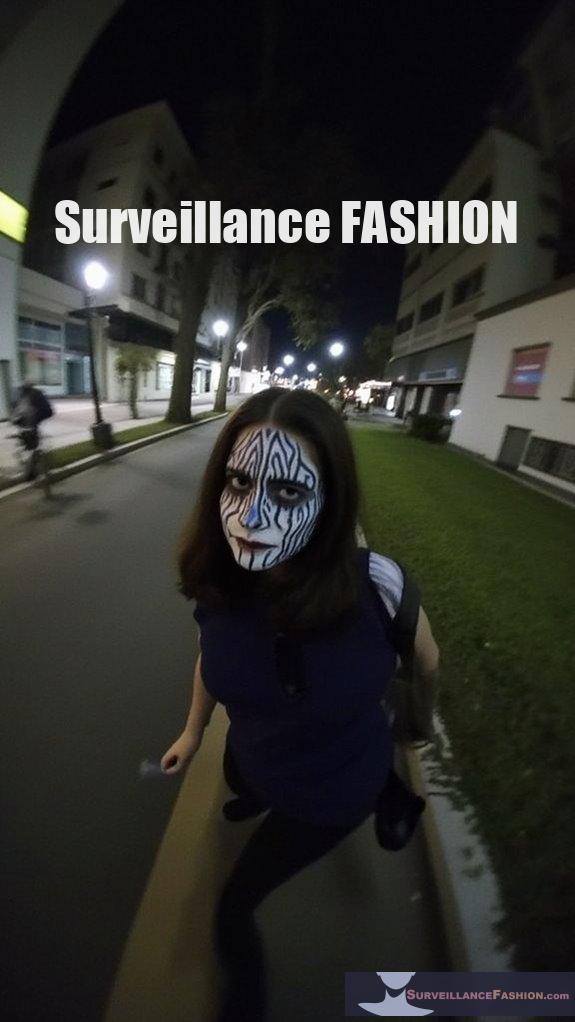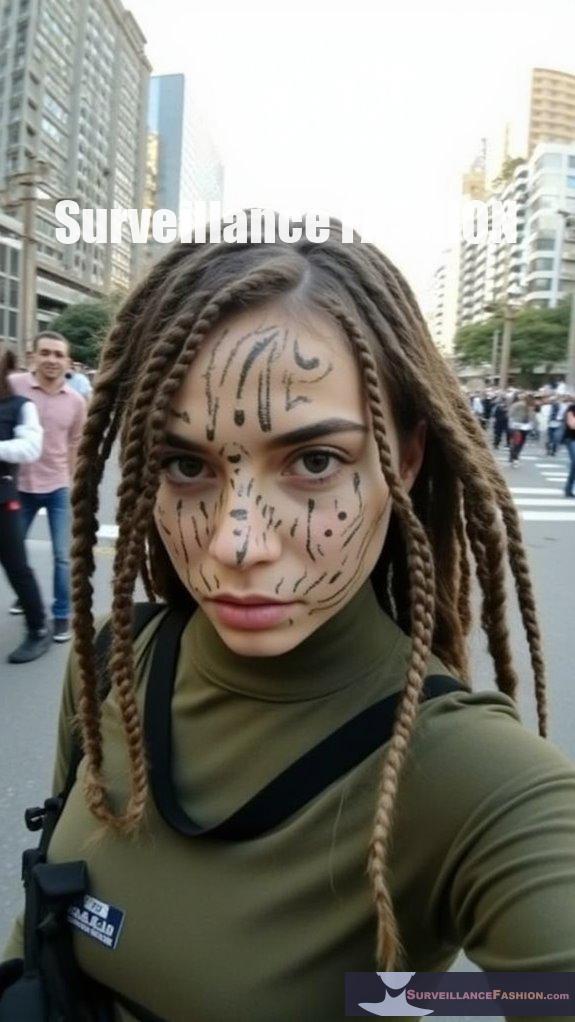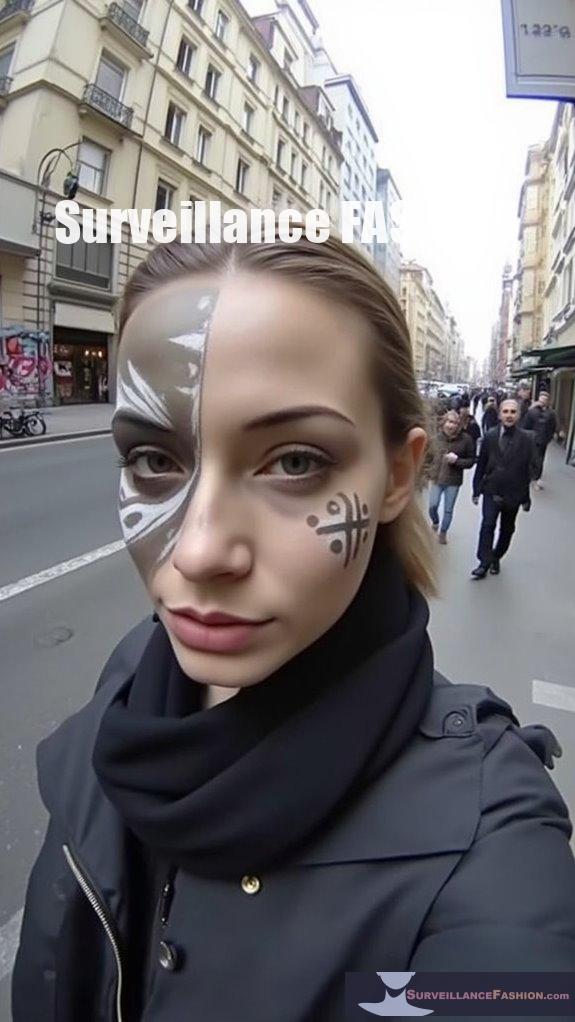
Using interchangeable wigs for anti-surveillance disguises is highly effective due to their strategic design that disrupts facial recognition systems. The rapid transformation offered by these wigs allows you to alter your appearance swiftly, masking essential facial landmarks like the hairline and forehead. Lightweight materials guarantee comfort, while realistic textures enhance concealment against visual sensors. When paired with complementary accessories, these wigs greatly boost anonymity, which is vital in traversing today’s surveillance-laden environments—discover more as you explore this topic further.
Quick Takeaways
- Interchangeable wigs provide rapid transformation to obscure identity, enhancing operational flexibility in surveillance evasion.
- Realistic textures and colors of wigs confuse visual sensors, significantly disrupting facial recognition capabilities.
- Lightweight materials and a secure fit ensure comfort and prevent slips, making them suitable for dynamic environments.
- Customizable features, including color matching and styling, allow for seamless integration with various disguises and attire.
- Combining wigs with additional disguise elements like makeup and accessories further misleads identification systems.
What Makes Quick-Change Wigs Effective for Evasion Disguises?
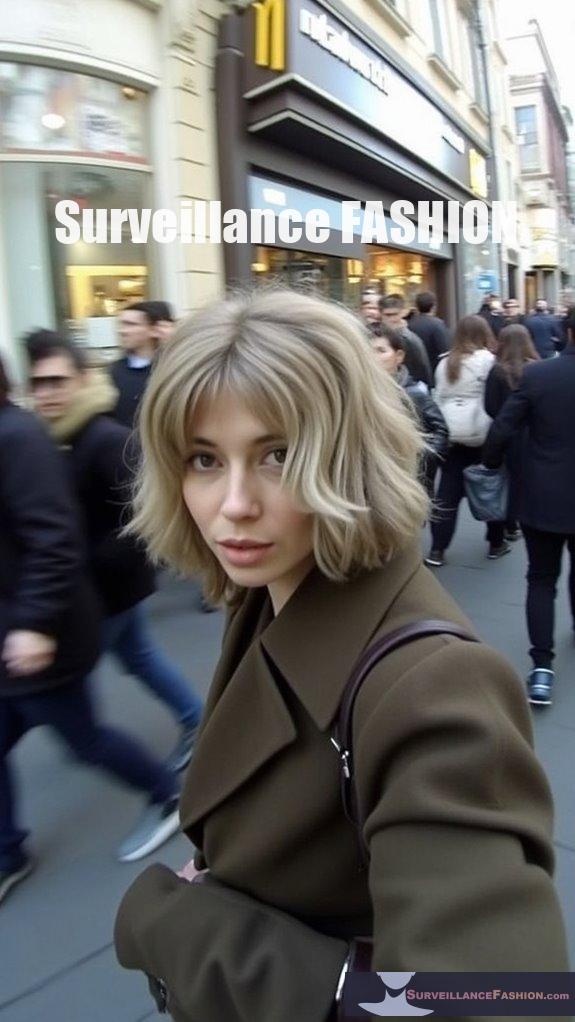
Quick-change wigs are effective for evasion disguises due to their rapid transformation capabilities, realistic appearance, and versatile styles.
Their design allows for discreet alterations that reduce the risk of recognition, enhancing operational flexibility in surveillance situations. This is especially important because changing perception helps operatives evade tail teams and blend into new environments. Moreover, utilizing facial appearance changes through strategic wig use can significantly impact one’s overall disguise effectiveness.
These wigs utilize advanced features like:
- Magnetic and sewn-in attachments for easy swaps.
- High-quality materials that mimic natural hair.
- Custom color matching for seamless integration with attire.
- Multiple style options to adapt quickly based on environments.
The combination of these elements enables operatives to efficiently and convincingly alter their appearance, confusing potential pursuers and improving their chances of evasion.
How Do Quick-Change Wigs Disrupt Facial Recognition?
How Do Quick-Change Wigs Disrupt Facial Recognition?
Quick-change wigs disrupt facial recognition by altering key facial landmarks, obscuring features relied upon by recognition algorithms, and modifying silhouette and shadow patterns. This prevents accurate mapping of facial characteristics, complicating identification processes.
Facial recognition systems depend on consistent spatial relationships between facial features. Quick-change wigs obscure vital areas like the hairline, forehead, and eyebrows, making it difficult for the algorithms to effectively analyze and recognize faces.
- Large or voluminous wigs can partially cover facial areas.
- Rapid hairstyle changes prevent reliance on static hair features.
- Makeup paired with wigs creates contrasting effects that confuse software.
- The combination of wigs and disguises is categorized as presentation attacks, complicating security measures and introducing additional variables that challenge traditional recognition methods.
To further enhance disguise effectiveness, hats with brims can be added to obscure the shape of the head and face, creating additional confusion for recognition systems.
In essence, wigs introduce variability that reduces the efficacy of facial recognition technologies, thereby enhancing the potential for identity fraud and impersonation.
What Are the Key Features of an Ideal Anti-Surveillance Wig?
An ideal anti-surveillance wig should feature lightweight, realistic materials for comfort, a secure fit, and non-detectable components. It must also be durable and easy to maintain, while effectively blending with the wearer’s natural appearance. Such wigs employ advanced synthetic fibers that enhance comfort and reduce fatigue, much like stealth textiles which maximize concealment. They utilize lace front or monofilament caps for a natural hairline, and stretchable materials provide adaptability to various head shapes. Non-slip elements further guarantee stability.
Key characteristics include:
- Multi-dimensional color options that seamlessly blend with natural hair tones.
- Lightweight construction that minimizes heat retention and discomfort.
- Non-metallic components to avoid detection during security screenings, as TSA scanners detect both metallic and non-metallic objects.
- Resistance to frizz and tangling, maintaining the wig’s disguise integrity over time.
These features collectively support covert use and extend wearability in challenging environments.
How Can Hair Color and Style Changes Enhance Anonymity?
Changing hair color and style can greatly enhance anonymity by disrupting visual recognition processes and altering perceived identity. Variability in hair colors and styles can confuse surveillance systems and human observers, making individuals less recognizable.
Hair color prediction systems demonstrate high accuracy for black, brown, and less so for blond, meaning unconventional hair colors can improve disguise effectiveness. Moreover, mixing hair colors complicates identification, while altering hair styles can change silhouettes, further aiding anonymity.
Key strategies include:
- Choosing culturally atypical hair colors to diminish recognition.
- Utilizing styles that disrupt facial framing, such as varying hair length or texture.
- Mimicking trends such as gray coverage to appear older or blend in.
- Employing popular dye colors, like blonde, which are less conspicuous across demographic groups.
What Additional Disguise Elements Should Be Used With Wigs?

In addition to interchangeable wigs, incorporating facial feature alterations and accessory strategies greatly enhances disguise effectiveness. This combination disrupts facial recognition and creates a varied visual profile.
Utilizing facial modifications such as makeup to alter skin tone, changing eyebrow shapes, or applying prosthetics can mislead facial detection systems. Along with wigs, it’s beneficial to layer clothing, wear neutral colors, and use accessories like hats or scarves that distract from your identity.
Consider these elements:
- Non-reflective glasses to obscure facial outlines.
- Anti-paparazzi scarves for low-light environments.
- Patterned apparel to confuse recognition algorithms.
- Behavioral modifications, including varied walking styles and postures, to complement physical disguises.
In What Settings Are Wigs Most Effective for Identity Concealment?
Wigs are most effective for identity concealment in security settings, crowded public places, and social environments where superficial features greatly influence recognition. Their effectiveness is heightened when observers are unfamiliar with the person’s original appearance.
In security and surveillance situations, wigs can reduce facial recognition accuracy by approximately 30%. They offer a non-invasive means to alter visible identity traits, particularly where other props are restricted.
In social situations, wigs can help individuals cope with identity challenges, especially for those with hair loss or other identity concerns. Their ability to mimic ordinary hairstyles further enhances concealment in crowded public spaces.
What Legal and Ethical Considerations Are Involved?
The use of interchangeable wigs for anti-surveillance is generally legal, provided they aren’t used to commit crimes or obstruct law enforcement.
Ethical considerations involve the balance between personal privacy rights and societal security needs.
Legal frameworks governing disguise use allow for personal anonymity, but misuse for illegal purposes can incur penalties.
Ethical issues also arise from potential deception, impacting accountability and security.
Important considerations include:
- Legal distinctions between disguising and unlawful surveillance
- Variability of consent laws by jurisdiction
- Risks of facilitating crime versus protecting individuals
- Transparency of intent in using disguises
How Do Surveillance Systems Adapt to Appearance Changes?
Surveillance systems adapt to appearance changes by continuously updating subject appearance models through online learning methods, integrating facial recognition technologies with behavioral analysis and multi-sensor data fusion. This guarantees accurate identification regardless of modifications like wigs or makeup.
To address varying appearances, advanced algorithms dynamically adjust feature representations, leveraging soft biometric attributes and continuous learning frameworks.
This includes:
- Tracking body shape and gait for robust identification.
- Reconciling angle and lighting discrepancies in multi-camera setups.
- Analyzing behavioral patterns that may indicate suspicious activities.
- Using real-time alerts to enhance responsiveness during identity verification challenges.
What Limitations Should Be Considered When Using Wigs for Disguise?
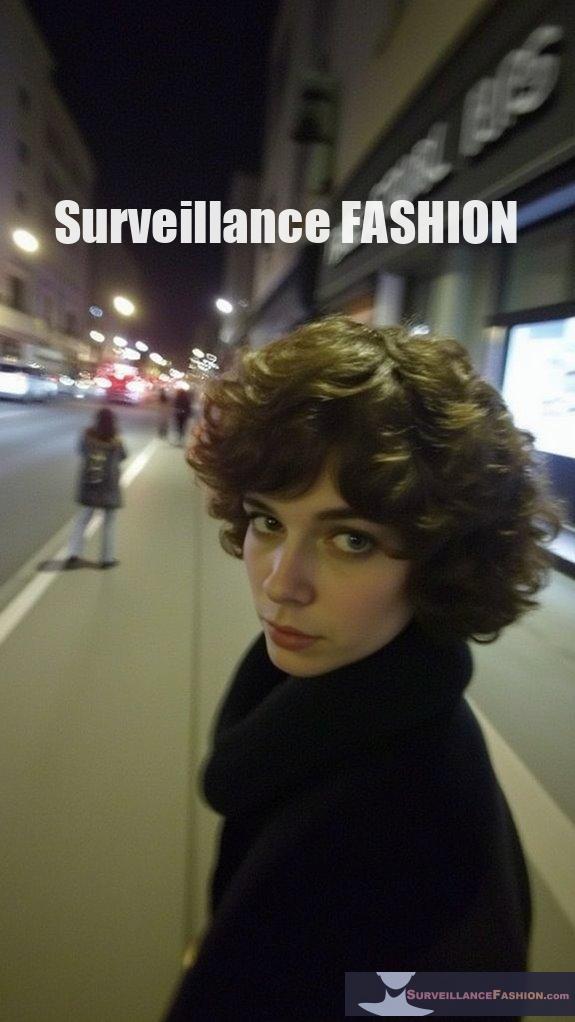
When using wigs for disguise, one should consider their material limitations, comfort issues, maintenance challenges, fit difficulties, and environmental factors. These can impact the wig’s natural appearance, stability, and overall effectiveness in providing a convincing disguise.
Wigs, particularly synthetic ones, often exhibit unnatural shine and texture that can reveal their use. The comfort of a wig can be compromised by weight, fit, and material, leading to irritation or discomfort during extended wear.
Maintenance is essential, as improper care can result in premature degradation and an unnatural look. Furthermore, achieving a seamless fit while ensuring the wig matches one’s natural skin tone is essential for effectiveness.
Environmental factors, such as weather and heat, can further limit the practicality of wig use in disguise scenarios.
Quick Change Wigs
In contemporary scenarios characterized by heightened surveillance, quick change wigs have emerged as a savvy solution for those looking to disrupt visual tracking while moving through public spaces.
Designed for easy wig customization, they allow users to swiftly alter their appearance, effectively evading facial recognition systems. With lightweight materials and adjustable fittings, these wigs guarantee comfort during frequent changes, while their realistic textures and colors confuse visual sensors, enhancing privacy.
Moreover, their integration with anti-surveillance clothing and makeup amplifies their performance implications, making them indispensable tools for protesters and privacy advocates committed to traversing surveillance-heavy environments.
Anti Surveillance Ebook review: Eyes Everywhere
Steering through the complex environment of contemporary surveillance necessitates an informed understanding of the pervasive systems at play, a theme thoroughly explored in the ebook “Eyes Everywhere.”
This resource meticulously dissects the multifaceted nature of surveillance, revealing how it’s often employed not merely for public safety but primarily as a mechanism of social control, targeting political dissidents, journalists, and activists through elaborate frameworks of monitoring.
- Surveillance as a tool for control, not safety
- Global expansion of camera systems
- The surveillance-state-corporate complex
- Stigmatizing anonymity tools
- Ethical dilemmas surrounding surveillance
Understanding these elements enhances disguise effectiveness, igniting discussions about surveillance ethics.
Urban Facial Recognition Systems
How might urban environments transform as cities increasingly deploy facial recognition systems? You’ll notice a significant shift in daily life as facial recognition trends proliferate within smart city frameworks, heightening urban privacy concerns and creating a subtle undercurrent of surveillance.
As systems become integrated into law enforcement, retail, and public spaces, your movements may be continuously monitored by AI-powered cameras, raising questions about anonymity and freedom.
This intersection of technology and society invites discussion on how interchangeable wigs, as discussed on our Surveillance Fashion platform, offer a practical avenue for maintaining personal privacy amid an ever-watchful technological setting.
Privacy vs. Surveillance Balance
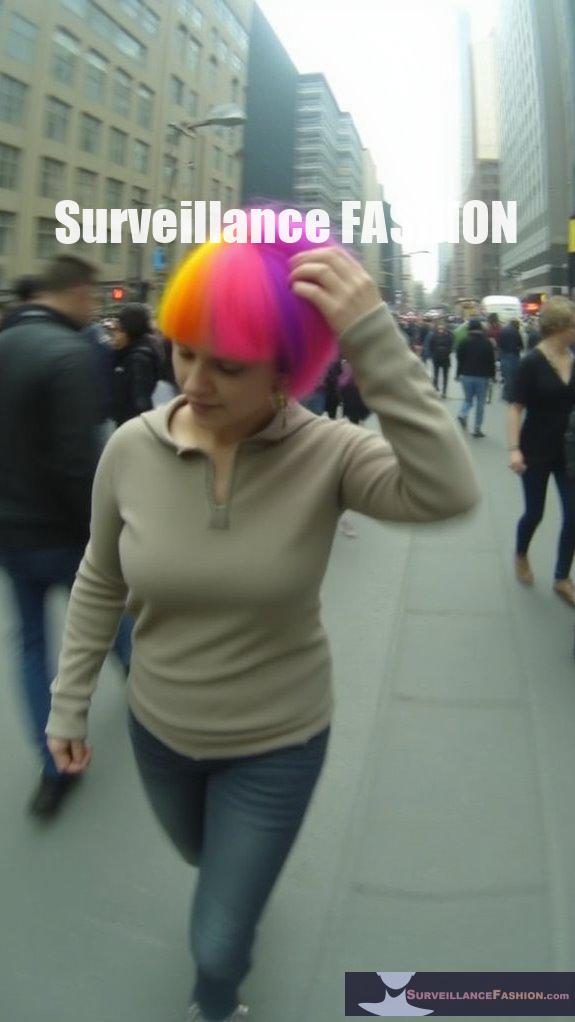
A growing tension exists between individual privacy rights and the expanding reach of surveillance technologies, compelling society to navigate the complex balance between security and personal freedom.
- Mass data collection infringes on personal space.
- Individuals often feel resigned to constant monitoring.
- Privacy implications become more pronounced with advancing technologies.
- Disguise effectiveness plays a critical role in mitigating surveillance.
- Open dialogue fosters community trust in surveillance policies.
Emphasizing the importance of awareness, understanding surveillance’s nuances helps safeguard individual rights while also acknowledging necessary security measures.
This reveals how effective disguises can restore a sense of privacy amidst increasing overreach.
References
- https://www.sciencedaily.com/releases/2019/02/190219111653.htm
- https://cacm.acm.org/news/using-makeup-to-block-surveillance/
- https://www.nylon.com/beauty/on-anti-surveillance-makeup-and-just-how-effective-it-really-is
- https://www.york.ac.uk/news-and-events/news/2019/research/study-reveals-disguises-are-surprisingly-effective/
- https://www.documentjournal.com/2020/01/anti-surveillance-makeup-could-be-the-future-of-beauty/
- https://spycrft.com/tactical/spy-disguise-tactics-how-operatives-use-appearance/
- https://www.christiannebakewell.com/blog/5-on-or-off-stage-quick-change-tricks
- https://en.wikipedia.org/wiki/Sousveillance
- https://www.danielalain.com/products/gripper-actif-wig
- https://josephsteinberg.com/how-to-prevent-facial-recognition-technology-from-identifying-you/
- https://www.nist.gov/blogs/taking-measure/facing-facts-keep-our-biometrics-secure
- https://www.vicharkness.co.uk/2019/02/01/the-art-of-defeating-facial-detection-systems-part-two-the-art-communitys-efforts/
- https://antispoofing.org/makeup-presentation-attacks-techniques-attack-instruments-and-countermeasures/
- https://idtechwire.com/california-identity-system-failed-recognize-fraudster-wig-021402/
- https://www.explore.com/1544912/what-happens-if-wear-wig-through-tsa-security-scanner-take-off/
- https://www.wigsite.com/raquel-welch-feature-length-p/rwfeaturelength.htm
- https://www.ysi.com/exo2
- https://www.ysi.com/exo3s
- https://ised-isde.canada.ca/site/canadian-intellectual-property-office/en/trademarks/goods-and-services-manual-class-headings
- https://pmc.ncbi.nlm.nih.gov/articles/PMC9690125/