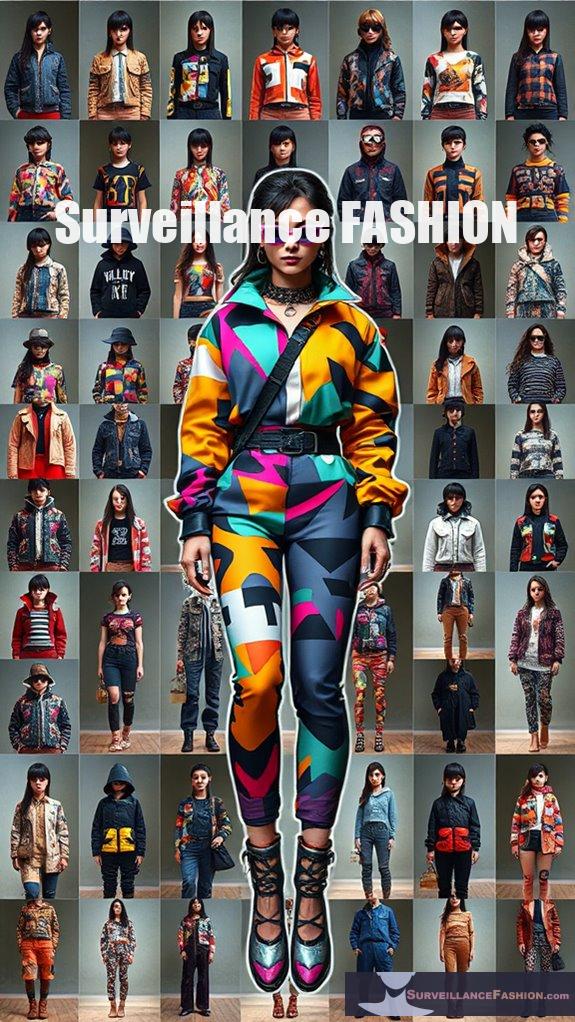
Surveillance cameras can't track certain clothing designs because they utilize adversarial fashion principles, which incorporate patterns and textiles that intentionally disrupt facial recognition algorithms. For instance, optical illusion prints can confuse AI systems, making it difficult to identify individuals. Techniques like light manipulation through advanced materials create optical transparency and camouflage, enhancing invisibility from both visible and infrared detection. This intersection of privacy and fashion is explored through platforms like Surveillance Fashion, where you'll discover more about these innovations.
Quick Takeaways
- Clothing with disruptive patterns misleads facial recognition algorithms, making identification difficult for surveillance cameras.
- Advanced materials like cloaking fabrics manipulate light, rendering wearers less detectable to infrared and visible light surveillance.
- Optical illusion prints create confusion for AI systems, obstructing accurate recognition and tracking capabilities.
- Certain fabrics, such as RFID shielding materials, protect personal devices from being scanned and tracked by surveillance technologies.
- The effectiveness of these designs relies on continuously evolving knowledge of surveillance technology and algorithms.
Adversarial Fashion: Defending Privacy Through Design
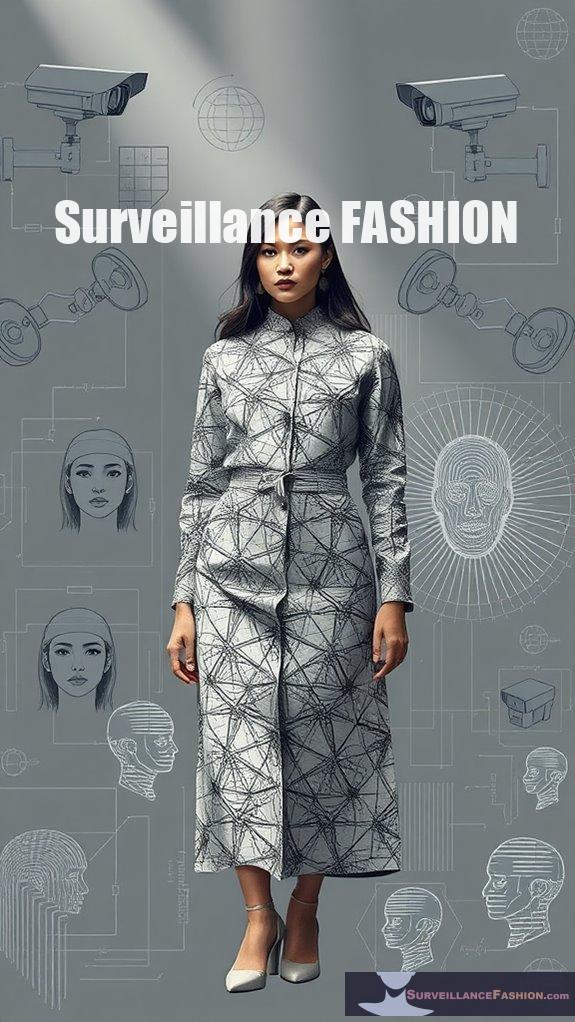
As surveillance cameras proliferate in urban environments, you may find yourself contemplating the implications of these technologies on personal privacy and identity. The rise of surveillance technology, especially those equipped with sophisticated facial recognition systems, poses a unique challenge for individuals who wish to traverse public spaces without being constantly monitored. These systems, enhanced by artificial intelligence, capture images and analyze them through neural networks, aiming to identify individuals with varying degrees of accuracy.
However, the effectiveness of these technologies can be considerably undermined by the strategic use of certain clothing patterns. Adversarial fashion, for instance, is a burgeoning domain where clothing is intentionally designed to confuse and mislead facial recognition software. By employing patterns that suggest multiple faces or even non-human features, designers create garments that can disrupt the identification process. In 2024, innovative designs such as optical illusion prints are emerging, captivating both the eye and the algorithms meant to track individuals.
Adversarial fashion ingeniously disrupts facial recognition, using clever patterns to mislead surveillance technology and protect personal privacy.
Envision wearing a shirt adorned with a chaotic print that, at first glance, seems like an abstract art piece but, upon closer inspection, cleverly plays tricks on the algorithms employed by surveillance cameras. This approach is particularly relevant in a world where the lines between public and private surveillance blur, often leading to concerns about data collection practices that occur without consent.
Moreover, it's essential to recognize that while adversarial fashion can be effective, it isn't universally applicable. The precision with which these designs can thwart surveillance technology hinges on a thorough understanding of the targeted systems. For example, if you wear clothing that features patterns specifically engineered to exploit the weaknesses of a particular facial recognition algorithm, you may find that your anonymity is preserved, at least temporarily.
However, as surveillance technology evolves, so too will the algorithms, potentially rendering certain designs obsolete. Surveillance cameras have increased significantly in number, which further complicates this environment, as it employs advanced image processing to track individuals based on their attire. These systems utilize key features like color histograms and texture elements, making it possible for them to categorize clothing types with varying accuracy.
Yet, this technology isn't infallible; factors such as poor lighting, occlusions, or even deliberate obfuscation through clothing patterns can hinder its functionality. As you consider your own wardrobe choices, you might realize that selecting garments with elaborate designs can serve a dual purpose: personal expression and a form of passive resistance against intrusive surveillance practices.
The implications of these developments extend beyond individual choices; they reflect a broader societal shift in how we interact in public spaces. As more people become aware of the presence of surveillance cameras, the dynamic of public engagement transforms, prompting individuals to rethink their clothing patterns and, by extension, their identities.
This awareness is one of the many reasons we created this website, Surveillance Fashion, to explore the intersection of fashion and privacy in an increasingly monitored world. Ultimately, while surveillance cameras may seem omnipresent, there's a growing movement towards clothing that challenges their effectiveness.
Cloaking Fabric Techniques
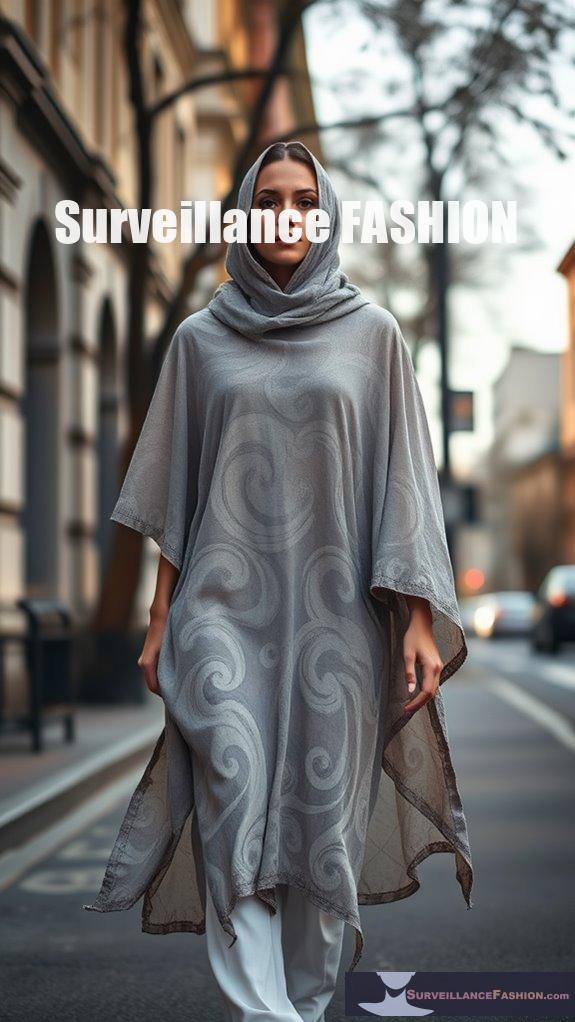
Cloaking fabric techniques represent a remarkable intersection of material science and privacy enhancement, emerging as a response to the growing sophistication of surveillance technologies.
These innovative methods employ light manipulation to redirect photons around objects, achieving optical transparency and enabling thermal invisibility to infrared detectors.
- Light bending creates an illusion of absence, allowing you to blend into your surroundings.
- Advanced materials, like quantum stealth, manipulate both visible and infrared light.
- Thermal control materials mask heat signatures, offering a new level of security.
- Camouflage patterns disrupt AI algorithms while remaining undetectable to the human eye.
- Cost-effective solutions, such as the InvisDefense coat, make these technologies accessible.
- Recent developments in infrared-blocking fabrics are enhancing the effectiveness of these anti-surveillance techniques.
Creative Fabric Choices
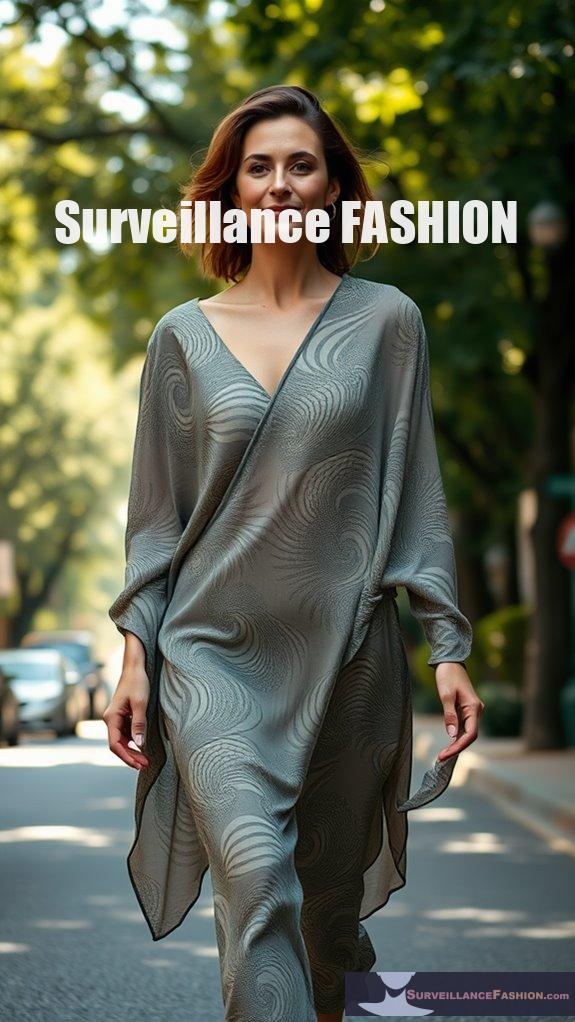
In a world increasingly dominated by surveillance technologies, your choice of fabric can greatly influence your personal privacy. Selecting clothing with disruptive patterns, which mimic the complexities of animal prints, can effectively confuse facial recognition systems. These innovative designs aren't merely aesthetic; they serve a critical purpose in shielding your identity in public spaces. Moreover, fabrics featuring RFID shielding prevent the scanning of your personal devices, ensuring that sensitive information remains secure. As you navigate crowded areas, consider the power of IR-reflective materials, which obscure your presence from night vision surveillance. These materials work by reflecting infrared light, making it difficult for surveillance cameras to capture clear images of your face. Additionally, the incorporation of digital identity-protecting fashion into mainstream clothing lines highlights a growing awareness of surveillance issues. The growing popularity of these creative fabric choices reflects a cultural shift toward valuing privacy, a principle we champion at Surveillance Fashion.
References
- https://www.someweekendreading.blog/tired-surveillance/
- http://cda.psych.uiuc.edu/applied_probabilistic_reasoning/probabilistic_reasoning_modules_two_through_twelve.pdf
- http://users.ece.northwestern.edu/~mya671/mypapers/ICIP11_Yang_Yu.pdf
- https://www.178wing.ang.af.mil/Portals/69/documents/afh33-337.pdf?ver=2016-12-15-101008-313
- https://www.youtube.com/watch?v=gDP4P59KYPg
- https://www.the-independent.com/tech/invisibility-cloak-security-cameras-ai-invisdefense-b2241342.html
- https://lisstudymaterials.wordpress.com/wp-content/uploads/2017/12/dlis002_knowledge_organization_classification_and_cataloguing_theory.pdf
- https://thedebrief.org/invisibility-coat-that-hides-humans-from-ai-security-cameras-developed-by-chinese-students/
- https://www.zmescience.com/feature-post/technology-articles/inventions-1/real-life-invisibility-cloaks/
- https://reolink.com/blog/how-to-hide-security-cameras/