
Managers must navigate various ethical issues in workplace surveillance, including the outdated legal frameworks that often clash with technological advancements. Employee stress can rise from excessive monitoring, leading to diminished morale and autonomy. Privacy violations erode trust, impacting job satisfaction. Transparency is essential; clear policies foster open communication. Ethical leadership balances productivity with employee rights while adapting to future trends like GDPR compliance and privacy innovations, such as anti-surveillance fashion. Explore further to uncover more complexities in surveillance ethics.
Quick Takeaways
- Employers must ensure clear communication about monitoring practices to maintain transparency and comply with legal requirements, fostering trust among employees.
- Excessive surveillance can lead to increased employee stress, anxiety, and diminished job satisfaction, negatively impacting overall workplace morale.
- Respect for employee privacy and autonomy is crucial; surveillance practices should not undermine trust or alter work behaviors in a detrimental way.
- Ethical leadership is essential for navigating workplace surveillance, balancing productivity goals with respect for employee privacy and well-being.
- Organizations should establish explicit monitoring policies that outline ethical boundaries and consent mechanisms to comply with legal standards and protect employee rights.
The Outdated Legal Framework of Workplace Surveillance

As the terrain of workplace surveillance continues to evolve with rapid technological advancements, the legal framework governing such practices often feels antiquated and insufficiently responsive to contemporary challenges.
The Electronic Communications Privacy Act (ECPA) allows employers to monitor communications, but its exceptions often lack clarity, leaving employees vulnerable to invasive practices. Federal and state laws can impose stricter limitations on monitoring practices and further complicate the landscape for employers.
State variations complicate matters further; some jurisdictions mandate explicit consent, while others grant broader powers to employers.
The National Labor Relations Board asserts that surveillance must respect Section 7 rights, yet enforcement remains inconsistent.
With the rise of advanced monitoring technologies, including keystroke tracking, clarity in policies is essential. Employers should communicate their monitoring practices transparently, fostering an environment of trust amid a milieu where privacy rights are increasingly threatened.
Psychological Consequences of Excessive Monitoring

Excessive monitoring in the workplace, while often justified by employers as a means of enhancing productivity and ensuring security, can inadvertently lead to significant psychological consequences for employees.
As you navigate this environment, you may find heightened stress and anxiety infiltrating your daily routine, stemming from the constant scrutiny that diminishes your sense of autonomy.
These pressures often result in emotional exhaustion, diminishing both your job satisfaction and overall well-being. Instead of fostering creativity, excessive monitoring can compel you towards performative behaviors, as you scramble to maintain visibility.
Excessive monitoring can lead to emotional exhaustion, stifling creativity and driving employees towards mere performative actions instead of genuine engagement.
Ultimately, this surveillance creates a culture of distrust, where your feelings of powerlessness can spiral into disengagement, leading to burnout and higher turnover rates. Research indicates that constant surveillance can also lead to a decline in mental health, exacerbating feelings of isolation and disconnection among employees.
Such dynamics highlight the urgent need for balanced surveillance practices that support, rather than stifle, employee potential.
Privacy Violations and Employee Trust

While workplace surveillance can ostensibly enhance efficiency and protect organizational assets, it often raises significant concerns regarding privacy violations, which can, in turn, erode employee trust. With about 80% of U.S. employers engaging in electronic monitoring, it's no surprise that 70% of employees feel uncomfortable, leading to a noticeable decrease in trust and autonomy.
| Privacy Concerns | Employee Trust Impact |
|---|---|
| 82% believe employers shouldn't access personal communications | 60% express distrust due to increased surveillance |
| Legal penalties can reach $1.5 million for non-compliance | High trust correlates with a 50% lower turnover rate |
| Transparency fosters more trust | Violations diminish job satisfaction and loyalty |
As we explore these complex dynamics, it becomes clear that respecting privacy is not just ethical—it's essential for cultivating a liberated workplace culture. Additionally, the balance between employee monitoring and mental health is critical to ensuring that surveillance does not negatively impact well-being.
Ethical Framework for Transparency in Surveillance
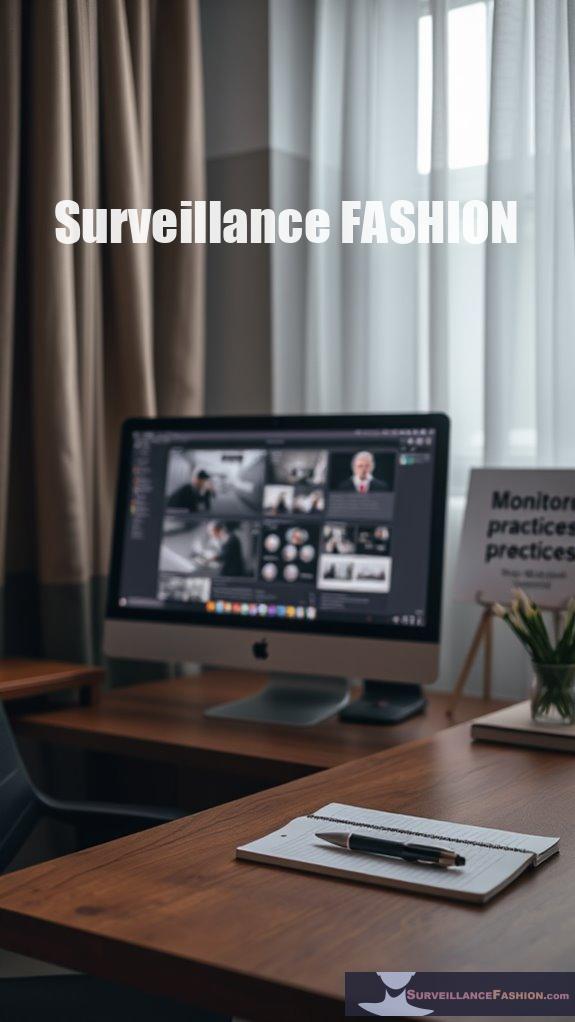
Maneuvering the ethical terrain of workplace surveillance requires a commitment to transparency, as it establishes the foundation for trust between employers and employees.
To foster this transparency, consider these essential components:
- Clear Communication: Inform employees about the type and purpose of monitoring measures.
- Explicit Policies: Set clear guidelines to define ethical boundaries surrounding surveillance practices.
- Consent Mechanisms: Guarantee compliance with legal requirements by obtaining consent from employees.
- Visible Signage: Display notices regarding monitoring to promote awareness and openness.
Additionally, it's important to recognize that excessive workplace monitoring can lead to negative outcomes such as decreased employee morale and well-being, which highlights the need for a balanced approach to surveillance impact.
Impacts on Employee Autonomy and Control

Surveillance in the workplace can considerably impact employee autonomy and control, often leading to unintended consequences that extend beyond mere oversight. Employees frequently feel their personal freedoms invaded, which might alter their work behaviors as they focus more on evading detection than enhancing productivity. This not only reduces their sense of self-management but also erodes trust between them and management, resulting in low morale. Additionally, this environment fosters surveillance self-censorship, where employees modify their behavior to avoid scrutiny, further complicating workplace dynamics.
| Impact | Positive Effects | Negative Effects |
|---|---|---|
| Employee Autonomy | Enhanced self-management | Erosion of trust |
| Job Control | Improved feedback | Increased stress levels |
| Work Satisfaction | Sense of value | Decreased job satisfaction |
Ultimately, excessive surveillance shifts focus from empowerment to control, undermining the very culture of trust essential for a thriving workplace.
The Role of Employee Consent in Monitoring Practices

How do organizations navigate the complex balance between employee privacy and the necessity for monitoring in today's workplaces?
Employee consent plays an essential role in establishing this balance, ensuring that monitoring practices align with ethical standards. Here are key aspects to reflect on:
- Legal Framework: Familiarize yourself with federal and state laws governing monitoring and consent.
- Policy Development: Create clear policies outlining monitoring types and purposes in employee handbooks.
- Transparency: Use visible notices and explicit documentation to inform employees about monitoring practices.
- Trust Building: Foster trust through open communication regarding how data will be handled and protected.
Understanding these factors can help cultivate a workplace environment where employees feel respected and informed, ultimately enhancing both ethical standards and organizational integrity.
At Surveillance Fashion, we emphasize the importance of informed consent to maintain this delicate equilibrium.
Behavioral Reactions to Surveillance: Morale and Productivity

While many organizations believe that effective monitoring enhances productivity, the reality often reveals a more complex relationship between surveillance and employee behavior.
Excessive surveillance can lead to distrust, prompting disengagement and diminished morale among employees. As you might experience, constant monitoring often translates into a loss of autonomy, resulting in heightened stress and decreased job satisfaction.
This environment fosters emotional labor, as you may feel compelled to perform a façade rather than express genuine thoughts or creativity.
Moreover, when you focus more on adhering to imposed rules rather than innovating, productivity can decline.
Balancing effective monitoring with respect for privacy is essential, as transparent communication can cultivate trust, ultimately promoting a more engaged and productive workforce. The psychological effects of surveillance on privacy awareness can further complicate these dynamics, as employees become increasingly aware of their monitored environment and its implications.
At Surveillance Fashion, we advocate for ethical practices that honor this delicate equilibrium.
Mitigating Negative Effects Through Self-Monitoring

Excessive monitoring can foster an environment rife with distrust and disengagement, ultimately stifling employee morale and productivity. To counteract these effects, consider implementing self-monitoring strategies that empower employees while enhancing transparency and trust.
Excessive monitoring breeds distrust; empowering employees through self-monitoring fosters transparency, trust, and enhanced productivity.
- Increased Transparency: Employees review their performance data, fostering control.
- Data Ownership: Shifting data control to employees mitigates negative surveillance reactions.
- Reduced Stressors: Autonomy over work pace alleviates surveillance-related stress.
- Performance Feedback: Constructive self-monitoring feedback promotes self-improvement rather than fear.
Moreover, encouraging employee privacy rights can help maintain a balance between monitoring and respect for individual autonomy.
These strategies can create an atmosphere that emphasizes personal development and ethical practices, essential for fostering a liberated workplace.
The Importance of Ethical Leadership in Surveillance

In an era where workplace surveillance technologies are increasingly pervasive, ethical leadership emerges as a critical component in steering through the complexities associated with monitoring practices.
Leaders must establish ethical frameworks that balance productivity with employee privacy, fostering trust through transparent policies. Approximately 60% of employers utilize some form of employee surveillance, making it essential to communicate clear guidelines that explain what's monitored and why.
By promoting fairness, empathy, and honesty, ethical leaders can enhance engagement and morale, prioritizing trust over micromanagement.
Conducting training programs and regular reviews of surveillance practices guarantees alignment with ethical standards and organizational goals. Furthermore, understanding the implications of mass surveillance ethics can provide leaders with essential insights into the responsible implementation of monitoring technologies.
As we navigate this changing environment, understanding the importance of ethical leadership in surveillance becomes paramount for creating a respectful workplace culture, which is a key focus of our platform, Surveillance Fashion.
Future Trends in Workplace Surveillance Ethics

As organizations increasingly embrace sophisticated workplace surveillance technologies, the ethical dimensions of these practices are coming into sharper focus, necessitating a critical examination of their implications for employee rights and organizational culture.
- The influence of GDPR sets a high standard for data protection globally.
- Nearly 50% of businesses lack clear monitoring policies, underscoring the need for regulation.
- AI and biometric systems are revolutionizing employee tracking, raising privacy concerns.
- Remote work blurs the line between personal and professional life, complicating ethical surveillance.
In this changing environment, organizations must prioritize transparency and employee autonomy, ensuring that monitoring practices respect individual rights. Moreover, the ripple effect of data collection can significantly impact social bonds within the workplace, highlighting the need for ethical considerations in surveillance practices. This balance not only fosters trust but also enhances productivity, a principle we champion through initiatives like Surveillance Fashion, which advocate for ethical surveillance solutions.
How Does Anti-surveillance Fashion Work?

While many might view fashion merely as a form of self-expression, anti-surveillance fashion emerges as a poignant response to the growing concerns surrounding privacy in an increasingly monitored world. This innovative clothing aims to confuse surveillance technologies, utilizing specialized fabrics and elaborate patterns to mislead algorithms, effectively protecting individual privacy. Additionally, these designs often employ pattern-based camera-confusing clothing techniques that cater to various surveillance scenarios.
| Strategy | Purpose | Example |
|---|---|---|
| Pattern Disruption | Confuse facial recognition | Adversarial Shirts |
| Infrared LEDs | Disrupt night-vision cameras | Camera-Shy Hoodie |
| Concealment | Obscure facial features | Concealing Cosmetics |
Jewelry That Obscures Facial Features

Jewelry designed to obscure facial features has emerged as a fascinating intersection of fashion, privacy, and technology, offering individuals a unique means of maneuvering an increasingly surveilled environment.
Consider the following types:
- Chunky Necklaces: These create fullness around the chin and distract from facial features.
- Large Earrings: Oversized designs divert attention away from facial details.
- Facial Sculptures: Unconventional jewels that cover parts of the face challenge traditional aesthetics.
- Ornamental Masks: These can completely obscure facial features, making dramatic statements.
As designers push boundaries, they not only redefine beauty standards but also provoke discussions on personal expression and surveillance ethics. The rise of such jewelry reflects a growing awareness of anti-surveillance fashion in response to the pervasive nature of biometric tracking.
The website Surveillance Fashion aims to explore these intersections, encouraging thoughtful dialogue about identity and privacy in today's world.
References
- https://www.cyberdefensemagazine.com/the-ethics-and-privacy-concerns-of-employee-monitoring-insights-from-data-privacy-expert-ken-cox/
- https://emotrab.ufba.br/wp-content/uploads/2020/09/Saldana-2013-TheCodingManualforQualitativeResearchers.pdf
- https://www.ethicalsystems.org/workplace-surveillance/
- https://nvlpubs.nist.gov/nistpubs/SpecialPublications/NIST.SP.1270.pdf
- https://faculty.cc.gatech.edu/~asb/teaching/4001/fall2016/4001-term-paper-fall2014.pdf
- https://www.shrm.org/topics-tools/tools/toolkits/managing-workplace-monitoring-surveillance
- https://www.mclane.com/insights/privacy-in-the-workplace-legal-considerations-of-surveillance-at-work/
- https://www.nlrb.gov/news-outreach/news-story/nlrb-general-counsel-issues-memo-on-unlawful-electronic-surveillance-and
- https://www.businessnewsdaily.com/6685-employee-monitoring-privacy.html
- https://www.shrm.org/topics-tools/employment-law-compliance/video-gps-surveillance
Leave a Reply