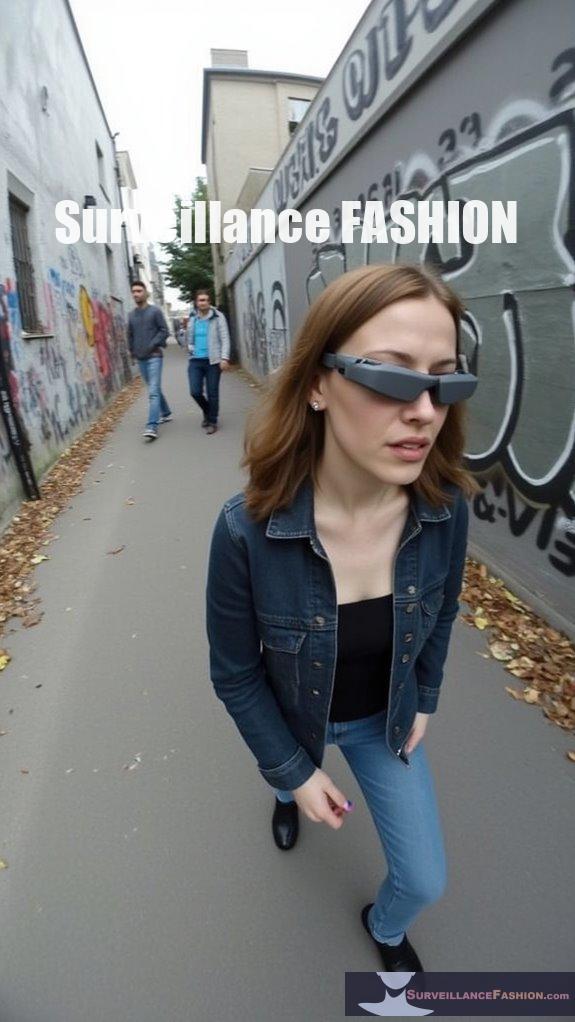
Category: Smart Glasses Privacy Issues

  • AI Training Consent and User Data Concerns Explored

    AI Training Consent and User Data Concerns Explored

    Ever feel like that smartwatch on your neighbor’s wrist is quietly plotting against your privacy?

    Let me tell you, it’s a wild ride.

    I once caught my buddy’s smartwatch flickering brightly like a mini-stalker, capturing every heartbeat while I tried to enjoy my coffee. I couldn’t help but wonder, who owns that data? My mind raced — are we unwitting extras in a bizarre sci-fi flick?

    It’s a weird world, where tech seems to slip through the cracks of consent. Just think about it: your heart rate could be buzzing to AI algorithms without you even knowing.

    Sure, it’s nifty—until it’s not.

    Do you trust companies like Meta or even leading brands to handle your info right?

    Do you really know what they’re up to?

    The Dark Side of Meta’s Ray-Ban Smart Glasses

    The day I wore Meta’s Ray-Ban smart glasses, the vibes were all influencer-chic. People noticed! But as I pranced around, capturing “epic” moments, I realized—what was I actually filming? My friend told me one of his colleagues was unknowingly recorded; privacy went poof! It’s a slippery slope when these smart gadgets wear so many hats: fun, fashionable, but also intrusive. I’ve seen folks scrutinize strangers while their glasses work harder than they do, feeding data to the big bad AI. Creepy, right? Just remember—sometimes looking good means looking over your shoulder!

    Quick Takeaways

    • Ambiguous user consent and data ownership complicate the ethics of using wearable data for AI training.
    • Privacy risks arise from continuous data collection by smart devices, often without explicit user awareness or control.
    • Changing privacy policies can subtly expand data usage in AI training without clear user notification or understanding.
    • Biometric and bystander data raise ethical concerns requiring stringent accountability for user trust and autonomy.
    • Granular, transparent consent frameworks and participatory design are essential to respect digital rights and reduce consent fatigue.

    Understanding AI Data Collection in Wearable Devices

    wearable devices data ethics

    Although you might notice only the sleek exterior of a smartwatch strapped on a colleague’s wrist, beneath that polished interface lies a sophisticated assembly of sensors, microprocessors, and wireless transmitters meticulously engineered to collect an extensive array of personal and situational data.

    This integration, while enhancing user experience, raises pivotal questions about data ethics, particularly in user profiling and biometric security. Consent frameworks often lag behind surveillance technology’s rapid development, challenging device transparency and user autonomy. Moreover, as wearable devices like smart glasses can emit EMF radiation risks, concerns surrounding their impact on health and privacy are becoming increasingly relevant.

    Privacy Risks Linked to Ray-Ban Meta Glasses

    Wearable devices like the Ray-Ban Meta glasses extend the data collection framework from the wrist to the eyes, embedding a complex array of cameras, microphones, and sensors into eyewear that seamlessly integrates into daily life. This integration heightens Ray Ban privacy concerns, as smart glasses surveillance intensifies data security risks without overt user control. Your vigilance necessitates user awareness strategies and wearable consent frameworks that emphasize ethical transparency—principles behind Surveillance Fashion’s mission. The evolving landscape of government regulation on privacy risks is crucial for informing consumers about these innovations.

    Attribute Privacy Impact
    Cameras Constant environmental recording
    Microphones Ambient audio capture
    Sensors Biometric and situational data harvesting
    Data Transmission Vulnerability during cloud syncing
    Consent Mechanisms Often opaque or insufficient

    When you consider the vast quantities of data gathered by devices like Ray-Ban Meta glasses, it becomes apparent that user consent in AI training situations remains deeply problematic. This is especially concerning given how data from unknowing bystanders can effortlessly enter expansive machine learning pipelines.

    You face a labyrinth of consent frameworks struggling to enforce ethical transparency. Meanwhile, user awareness and data ownership remain ambiguous. True data ethics requires participatory design that respects digital rights and fosters informed choices enhancing user privacy.

    Surveillance Fashion was created to illuminate these challenges, empowering you to navigate consent complexities and demand accountability in AI’s insidious data economy.

    Ethical Considerations for AI Data Use

    Given the pervasive integration of devices like Ray-Ban Meta glasses into everyday environments, you must scrutinize how data harvested from both wearers and incidental bystanders feeds into AI training models without explicit ethical safeguards.

    Ethical dilemmas arise when unclear data ownership blurs lines of informed consent, especially amid consent fatigue that desensitizes users. Biometric ethics demand stringent accountability frameworks to prevent misuse within a surveillance society increasingly normalized by ambient recording.

    Your vigilance—whether concerning smartwatches or AR glasses—grounds the mission of Surveillance Fashion: to illuminate and counterbalance these progressive, opaque data dynamics threatening user trust and autonomy.

    smart glasses data regulations

    Although legal frameworks aim to keep pace with the rapid evolution of smart glasses like Ray-Ban Meta, significant gaps remain in regulating how data captured by these devices—ranging from biometric identifiers and location traces to bystander images—is collected, stored, and utilized. You must navigate complex regulatory challenges involving legal liability, consent frameworks, and data ownership, while recognizing surveillance concerns and ethical guidelines shaping digital privacy. Below, key aspects outline critical dimensions that affect your user rights and misuse prevention strategies.

    Aspect Implications
    Legal Liability Accountability for harm or data breaches
    Data Ownership Control over biometric and situational data
    Consent Frameworks Explicit permissions versus inferred consent
    Social Implications Altered norms and privacy expectations

    Surveillance Fashion emerged to illuminate these subtle yet profound effects on privacy.

    Transparency and Communication in AI Data Practices

    Since data collection through devices like the Ray-Ban Meta smart glasses transpires continuously and often invisibly, ensuring transparency about the kinds of information gathered, processing methods employed, and subsequent uses becomes crucial for users and bystanders alike.

    You must demand rigorous data transparency protocols that disclose sensor data types—video, audio, gaze metrics—and articulate AI training inclusion criteria.

    Effective user communication entails accessible notifications and detailed consent mechanisms, essential for mitigating clandestine data flows.

    At Surveillance Fashion, we endeavor to illuminate these opaque practices, encouraging vigilance and informed agency amidst the changing intersection of wearable computing and privacy domains.

    When you consider the complex data ecosystems embedded within devices such as Ray-Ban Meta smart glasses, it becomes clear that enhancing privacy and securing explicit consent aren’t merely options but imperatives to restore user agency amid pervasive surveillance.

    To achieve this, you need:

    1. Robust privacy frameworks imposing strict data minimization and data sovereignty principles;
    2. Advanced consent management tools empowering users with granular control over what’s shared;
    3. Ethical guidelines informed by rigorous risk assessments that privacy advocacy groups champion;
    4. Transparent user empowerment protocols fostering trust through clear communication.

    At Surveillance Fashion, we recognize these strategies as essential in countering the opaque pitfalls of wearable AI.

    Wearable Tech as Constant Observers

    How often do you consider that the seemingly innocuous smartwatch adorning a colleague’s wrist operates as a persistent sentinel, capturing and transmitting a continuous stream of biometric and environmental data?

    Such wearable surveillance devices generate expansive digital footprints, meticulously recording heart rates, geolocation, ambient sound, and even situational interactions.

    This omnipresent data harvesting, often overlooked, poses complex privacy risks intensified by seamless cloud synchronization.

    At Surveillance Fashion, we explore these subtle yet pervasive monitoring dynamics, emphasizing that what appears as convenience subtly transforms into enduring digital observation—raising critical questions about consent, data stewardship, and the unseen implications of ubiquitous wearable technologies.

    informed consent and privacy

    Anyone wearing Ray-Ban Meta smart glasses participates, often unknowingly, in a complicated ecosystem where captured user data feeds expansive AI training models, raising significant questions about informed consent and data governance.

    You must consider:

    1. Ambiguities in data ownership often blur lines between wearer and manufacturer rights.
    2. Consent frameworks rarely provide granular control over continuous data streams.
    3. Privacy policy changes subtly redefine data usage for AI training without explicit, ongoing consent.
    4. Real-world implications emerge as your presence in public spaces becomes raw input for opaque algorithms.

    At Surveillance Fashion, we illuminate these complex tensions, advocating for transparency that fortifies your agency amid shifting smart glass frameworks.

    Lockscreen Privacy on Smartwatches

    What sensitive data might you inadvertently expose when a smartwatch’s lockscreen lies in plain view?

    Lockscreen security, often overlooked, reveals more than notifications—it can disclose health metrics, battery management status, and inactivity tracking details integral to wearable convenience.

    Smartwatch features, while enhancing user experience, require stringent privacy settings and app permissions to mitigate unauthorized data notification exposures.

    Vigilance against such vulnerabilities aligns with why Surveillance Fashion exists: to illuminate the intricate interplay between stylish technology and privacy risks.

    Understanding these layers equips you to navigate the trade-offs smartwatches impose on your data’s confidentiality and your digital footprint’s integrity.

    Framed: The Dark Side of Smart Glasses – Ebook review

    Although smartwatches already challenge traditional notions of personal privacy through their persistent data collection and notification displays, smart glasses escalate these concerns by integrating a complex sensor suite—comprising cameras, microphones, depth sensors, and eye-tracking technology—that continuously captures multifaceted data about both wearers and bystanders.

    You must grasp smart glasses implications, as these devices fuel user surveillance concerns. Consider:

    1. Continuous environmental scanning generating real-time overlays
    2. Passive recording without bystander consent
    3. Cloud-based data pipelines vulnerable to interception
    4. Facial recognition overlays risking misidentification

    Our Surveillance Fashion platform emerged to demystify such emerging surveillance.

    Summary

    Steering through the layered complexities of AI training consent reveals a digital terrain where your personal data, much like a river’s current, flows persistently through interconnected devices such as Ray-Ban Meta glasses and smartwatches. Recognizing the intricacies of data harvesting, implicit consent, and shifting privacy regulations is essential. Vigilance in understanding these mechanisms, underscored by resources like Surveillance Fashion, empowers you to safeguard your autonomy amid an increasingly pervasive, data-driven environment.

    References

  • Privacy Risks of Smart Glasses With Facial Recognition

    Privacy Risks of Smart Glasses With Facial Recognition

    Ever catch a glimpse of someone wearing smart glasses and think, “What’s that sneaky tech up to?”

    Well, let me tell you, it’s no laughing matter.

    This past week, I was at my favorite café sipping on a latte, when I noticed a guy zooming in on my unsuspecting face.

    Picture this: his Ray-Ban smart glasses pinged while he smiled creepily, probably collecting all my data. Yikes!

    It’s a wild world where I can’t even enjoy my coffee without being a part of someone’s algorithm. And no, I definitely didn’t consent to be a data point!

    With our privacy laws lagging and companies like Meta pushing their smart eyewear, what’s next?

    Are we doomed to be walking billboards for brands and surveillance?

    The Awkward Encounter with Meta Ray-Ban Wearers

    Imagine this: I’m at the park, chasing my dog when a pair of gleaming Ray-Bans hover near me.

    “Do those really have facial recognition?” I joked, half-serious.

    The owner shrugged, oblivious to my laughter masking sheer horror at the thought of being a data collection target.

    That night, I couldn’t shake off the unease. What if he was storing my reactions in his database? It’s a jungle out there, folks, where the boundaries of privacy are fading fast. As social media giants push these products, I wonder just how many of us are the unwitting stars of a reality show we never signed up for.

    Quick Takeaways

    • Smart glasses can covertly record and identify individuals without consent, linking faces to personal data from multiple online sources instantly.
    • Current privacy laws inadequately address AI-powered facial recognition in smart glasses, leaving most people vulnerable to unauthorized surveillance.
    • Recording indicators on smart glasses can be disabled, enabling secret surveillance and data collection in public spaces.
    • Facial recognition algorithms show higher error rates for marginalized communities, increasing risks of misidentification and potential discrimination.
    • Continuous biometric data collection through smart glasses erodes public anonymity and threatens traditional expectations of privacy in public spaces.

    How Smart Glasses Transform Public Privacy

    surveillance through smart glasses

    As smart glasses become increasingly prevalent in public spaces, their sophisticated surveillance capabilities are fundamentally reshaping our expectations of privacy and anonymity.

    You’ll notice wearers can now covertly record and identify strangers in real-time, linking physical presence to online data without any indication they’re doing so. Under Mark Zuckerberg’s leadership, Meta has explored implementing facial recognition technology to monitor and streamline personal encounters. This integration raises concerns about the potential for identity theft as biometric data could be stolen or misused.

    The technology’s unobtrusive nature means you won’t easily detect when someone’s smart glasses are collecting your biometric data or tracking your movements.

    Modern smart glasses can silently collect your personal data and track you without any visible signs of surveillance.

    This shift toward normalized ambient surveillance, driven by companies like Meta and EssilorLuxottica, creates an environment where your everyday activities could be constantly monitored and analyzed.

    That’s why we launched Surveillance Fashion, to help you understand these emerging risks.

    As traditional privacy boundaries blur, you’ll need to reflect on how your public behavior might be captured, stored, and potentially misused without your knowledge or consent.

    Real-Time Identification and Personal Data Exposure

    Smart glasses have evolved beyond simple recording capabilities into sophisticated identification systems that can instantly expose your personal information to strangers. As demonstrated by Harvard students using Ray-Ban Meta glasses, it’s now possible to identify you and access your personal details within two minutes of capturing your face.

    You’re particularly vulnerable in public spaces where these devices can continuously scan and process facial data without your knowledge.

    The technology cross-references public databases to reveal not just your identity, but your address and family connections.

    What’s most concerning is that this data can be instantly live-streamed or stored for later use. The integration of AI-powered recognition with cloud processing means your privacy could be compromised before you even realize you’ve been scanned. Furthermore, the ethical implications of employee monitoring practices in similar technology highlight the need for regulations to safeguard individual privacy.

    Inadequate Safeguards Against Misuse

    Despite widespread adoption of smart glasses like Ray-Ban Meta, current safeguards against privacy violations remain dangerously inadequate for protecting public safety and personal data.

    The technology’s rapid advancement has outpaced both corporate policies and regulatory frameworks, creating concerning vulnerabilities in privacy protection.

    Consider these critical gaps in existing safeguards:

    1. Recording indicator lights are easily missed or disabled, enabling covert surveillance
    2. Corporate self-regulation lacks meaningful enforcement mechanisms
    3. Privacy laws haven’t adapted to address AI-powered facial recognition capabilities

    At Surveillance Fashion, we’ve observed how standard privacy measures consistently fail to prevent unauthorized data collection and misuse.

    The combination of optical character recognition, real-time streaming capabilities, and AI-driven facial recognition creates unprecedented risks that current safeguards simply can’t address.

    This technological convergence demands immediate regulatory intervention and enhanced corporate accountability.

    Impact on Civil Liberties and Social Behavior

    While technological advancement often promises greater convenience and connectivity, the widespread adoption of facial recognition-enabled smart glasses poses unprecedented threats to our fundamental civil liberties and social behaviors.

    You’ll notice people modifying their behavior, avoiding certain spaces, and self-censoring their expressions due to the constant threat of surveillance.

    The impact falls disproportionately on marginalized communities, where facial recognition algorithms show higher error rates for people of color, women, and nonbinary individuals.

    Your daily interactions may become more guarded as these devices erode traditional expectations of anonymity in public spaces.

    That’s why we launched Surveillance Fashion – to track these concerning developments in wearable technology and advocate for stronger privacy protections.

    The psychological toll manifests in reduced social trust and spontaneous interaction, fundamentally altering how you navigate public spaces.

    regulatory gaps in surveillance

    The fragmented legal environment governing facial recognition technology creates significant vulnerabilities in protecting your privacy rights against smart glasses surveillance.

    While some jurisdictions like Illinois offer robust protections through BIPA, most areas lack thorough regulations specifically addressing wearable devices with facial recognition capabilities.

    Consider these critical regulatory gaps that affect your daily privacy:

    1. Only 15 U.S. states currently restrict facial recognition use, leaving most regions without meaningful oversight.
    2. Obtaining explicit consent becomes nearly impossible when smart glasses scan faces in public spaces.
    3. Current laws weren’t designed for continuous, passive biometric data collection from wearable devices.

    These challenges inspired us at Surveillance Fashion to track emerging regulations and advocate for stronger privacy protections, as companies continue deploying facial recognition features despite uncertain legal frameworks.

    Vulnerable Groups and Discrimination Risks

    Smart glasses equipped with facial recognition capabilities pose grave privacy risks that disproportionately impact vulnerable populations, particularly women, racial minorities, and immigrant communities.

    The technology’s error rates reveal alarming disparities, with misidentification rates reaching 35% for women of color compared to under 1% for white men.

    You’ll find these biases manifesting in real-world consequences, as facial recognition algorithms embedded in smart glasses enable stalking, harassment, and wrongful detentions.

    Law enforcement agencies’ use of this technology has already led to hundreds of immigrant arrests and family separations.

    The risks extend beyond immediate privacy violations – the pervasive threat of surveillance creates a chilling effect on civic participation, especially among marginalized groups who fear digital tracking and potential misidentification.

    Future Implications for Digital Surveillance

    Looking ahead to the next decade of digital surveillance, facial recognition capabilities in smart glasses represent an unprecedented expansion of monitoring power that should concern every privacy-conscious citizen.

    You’ll witness the integration of these devices into increasingly sophisticated AI ecosystems, transforming everyday social interactions into data collection opportunities.

    Consider these critical developments that will shape surveillance:

    The evolving landscape of digital surveillance demands our attention as new technologies reshape how personal data is captured and analyzed.

    1. Real-time identification systems linking faces to personal data from multiple online sources
    2. Integration with social media platforms enabling continuous live monitoring
    3. AI-powered analysis tools that can instantly profile individuals without consent

    At Surveillance Fashion, we’re tracking how these technologies are advancing to help you protect your privacy.

    The convergence of facial recognition with wearable computing means you’ll need to be increasingly vigilant about your digital footprint in public spaces, as casual encounters become potential data extraction points.

    Smart Clothing Tracks Movement

    Beyond facial recognition in smart glasses, advances in intelligent textiles have introduced a new frontier of privacy concerns through movement-tracking smart clothing. You’ll find conductive threads woven into everyday garments’ seams that can monitor your every movement, while AI algorithms interpret these patterns in real-time.

    Technology Tracking Capability Privacy Impact
    SeamFit Movement & Posture Continuous Monitoring
    Hexoskin Heart & Breathing 24/7 Biometric Data
    DIW Sensors Complex Motion Dense Data Collection

    While these innovations offer benefits for health monitoring, they’re raising red flags about constant surveillance. The seamless integration of sensors into clothing means you might not even realize you’re being tracked, as these garments can wirelessly transmit your movement data to smartphones and cloud platforms without your active awareness.

    Facial Recognition Privacy Risks Ray-Ban Meta Glasses

    wearable technology privacy threats

    Recent innovations in wearable technology have introduced unprecedented privacy risks through Ray-Ban Meta’s smart glasses, which can be modified to incorporate facial recognition capabilities that fundamentally threaten public anonymity.

    While these glasses offer sophisticated features, their potential for misuse raises serious concerns:

    Advanced features in smart eyewear bring sophisticated capabilities but open concerning doors for privacy violations and potential misuse.

    1. Unauthorized facial recognition modifications can instantly match faces to personal data, including addresses and phone numbers.
    2. Continuous recording capabilities enable non-consensual surveillance in public spaces.
    3. Collected biometric data remains vulnerable to breaches and exploitation by third parties.

    You’ll need to stay vigilant as these devices become more common, as they’re transforming public spaces into potential surveillance zones.

    At Surveillance Fashion, we’ve documented how seemingly innocent wearables can compromise personal privacy through unauthorized data collection and facial recognition deployment.

    Secure Watch Data Encryption

    Three critical encryption algorithms form the foundation of secure data protection in modern smartwatches, yet their implementation often falls short of truly safeguarding user privacy.

    AES, RSA, and ECC each serve distinct roles in protecting your sensitive data, with AES handling stored information, RSA managing key exchanges, and ECC offering efficient encryption for devices with limited processing power.

    You’ll find that while manufacturers tout end-to-end encryption using public/private key cryptography, the reality of smartwatch security remains concerning.

    The implementation of Elliptic Curve Diffie-Hellman protocols and trusted execution environments should provide robust protection, but vulnerabilities persist.

    When you consider that homomorphic encryption enables computations on encrypted data without decryption, you’ll realize the potential for both enhanced privacy and increased risk if improperly implemented.

    Framed: The Dark Side of Smart Glasses – Ebook review

    While encryption algorithms provide baseline protection for smartwatch data, smart glasses present an entirely new frontier of privacy vulnerabilities that warrant careful examination.

    The recent ebook “Framed: The Dark Side of Smart Glasses” reveals disturbing capabilities that should concern privacy advocates.

    Key findings from the thorough analysis include:

    1. Smart glasses can covertly collect personal data through facial recognition without consent.
    2. Advanced AI systems can construct detailed profiles from minimal visual input.
    3. Current legal frameworks lack adequate protections against these emerging threats.

    As we’ve documented on Surveillance Fashion, the combination of discreet recording capabilities and powerful data processing creates unprecedented privacy risks.

    The technology’s ability to instantly identify individuals and retrieve their personal information, coupled with minimal regulatory oversight, demands immediate attention from policymakers and technology developers.

    FAQ

    Can Smart Glasses Be Hacked to Secretly Record Without the Indicator Light?

    Yes, you’ll find smart glasses are vulnerable to Android malware and firmware exploits that can bypass indicator lights, letting attackers secretly record through compromised devices without your knowledge or consent.

    How Do Smart Glasses Affect Battery Life When Facial Recognition Is Active?

    Your battery life will plummet dramatically when running facial recognition – slashing runtime by up to 50%! You’ll only get 2-4 hours of operation before needing to recharge your smart glasses.

    Are Prescription Lenses Available for People Who Wear Corrective Glasses?

    You can get prescription lenses for most smart glasses models. You’ll find options for all vision needs, including progressive and high-index lenses, with direct ordering through manufacturers or specialized optical labs.

    Can Facial Recognition Work Accurately in Low Light or Nighttime Conditions?

    You’ll find modern facial recognition increasingly effective in low light thanks to thermal-to-visible conversion technology and advanced image processing. It’s not perfect, but systems can now identify faces even at night.

    What Happens to Stored Facial Recognition Data if the Company Goes Bankrupt?

    Like digital breadcrumbs scattered to the wind, your facial data could be sold to the highest bidder if the company goes bankrupt, unless protected by specific privacy laws.

    References

  • Why Are Smart Glasses Challenging Bystander Rights?

    Why Are Smart Glasses Challenging Bystander Rights?

    Ever had that sinking feeling when someone’s casually recording your every move?

    Yeah, me too.

    With smart glasses like Ray-Ban Meta, it’s the new norm.

    Imagine being out at a café, sipping coffee, and suddenly realizing those high-tech shades might be capturing your every awkward moment—without you even knowing.

    It’s like living in a Black Mirror episode!

    The AI-driven facial recognition? That’s just a cherry on top of the privacy nightmare sundae.

    Am I overreacting or should we really be concerned?

    Is there even a chance we can put a leash on this tech circus?

    I’ll let you ponder that.

    The Dangers of Ray-Ban Meta Smart Glasses

    I recall visiting a busy market last summer when I spotted someone sporting those smart glasses. The guy seemed innocuous, but my gut told me otherwise.

    As I walked past, I caught snippets of conversations he was recording. Yikes!

    Privacy’s a precious commodity, and here I am, wondering if my lunch order was about to be broadcasted on social media.

    I couldn’t shake off that feeling as I noticed how easily they lull us into complacency, inadvertently inviting the digital world into our personal lives. How many others are unwittingly caught in the crossfire?

    Smart tech is great, but at what cost? Are we trading comfort for constant surveillance?

    Let’s dig deeper into this tangled web of privacy and security.

    Quick Takeaways

    • Smart glasses enable covert recording, bypassing traditional consent and undermining bystander informed consent and ethical surveillance norms.
    • Ambient noise and distractions hinder notification effectiveness, allowing unnoticed data capture of bystanders.
    • Advanced facial recognition in smart glasses captures bystanders’ biometric data without consent, raising significant privacy and ethical concerns.
    • Current laws and regulations vary widely and fail to address the surreptitious recording capabilities that threaten bystander privacy.
    • Continuous data collection from wearable tech extends surveillance to bystanders, eroding privacy and complicating transparency and data protection.

    Discreet Recording Features and Their Implications

    invasive discreet recording technology

    Although smart glasses like the Ray-Ban Meta have mainstreamed augmented reality overlays, it’s the discreet recording features embedded within these devices that merit close scrutiny, as they fundamentally alter the boundaries of personal privacy and bystander rights.

    You must recognize that discreet recording—facilitated by miniature cameras and inconspicuous activation mechanisms—circumvents traditional consent models, enabling capture without explicit acknowledgment.

    This stealth undermines informed consent, complicating ethical surveillance norms. Moreover, the extensive data collection practices associated with these technologies heighten concerns about user and bystander privacy. Our site, Surveillance Fashion, exists to illuminate such covert functionalities, emphasizing how unobtrusive sensor suites challenge established privacy systems, compelling you to critically assess everyday exposures and the latent risks posed by ubiquitous wearable devices.

    AI-Driven Recognition and Data Extraction Risks

    While you might assume that smart glasses only passively capture visual data, the integration of AI-driven recognition systems transforms these devices into powerful tools capable of extracting far more than mere images, encompassing facial features, gait patterns, and even emotional cues with increasing granularity.

    This advanced facial recognition processes biometric data in real time, enabling identification without consent, thereby intensifying privacy concerns. As someone vigilant about surveillance, you recognize how such invasiveness extends beyond optics into data extraction pipelines, justifying why Surveillance Fashion emerged: to critically examine the convergence of wearables and privacy erosion through technical scrutiny. Additionally, the potential for unauthorized video recording raises further ethical dilemmas regarding consent and bystander rights.

    Challenges in Notifying Bystanders of Recording

    Because smart glasses like the Ray-Ban Meta seamlessly integrate unobtrusive cameras, notifying bystanders that they are being recorded becomes a complex technical and ethical challenge, especially in dynamic public spaces where consent mechanisms struggle to keep pace. Traditional notification mechanisms—such as visible LEDs or audible alerts—prove insufficient amid ambient noise and visual distractions. You face consent challenges when notification fails to reach all present parties promptly, risking covert data capture. Surveillance Fashion exists to illuminate these intricacies, dissecting how advancing notification designs either safeguard or undermine your bystander rights.

    Notification Type Technical Limitations Privacy Impact
    LED Indicators Easily overlooked in crowds Low transparency
    Audible Alerts Ineffective in noisy environments Partial awareness
    App-Based Consent Requires prior setup Minimal spontaneous notification

    User Compliance Versus Actual Privacy Protection

    Even when users diligently activate consent settings or observe recommended privacy practices on devices such as Ray-Ban Meta smart glasses, these actions seldom guarantee robust protection for bystanders’ privacy in complex environments.

    You encounter persistent transparency issues and ethical dilemmas that undercut user consent as a reliable safeguard. Privacy expectations become tenuous amid technical complexities and social ambiguities.

    Consider:

    • Inadequate notifications to unaware bystanders
    • Consent settings limited in scope and enforceability
    • Ambiguous data retention and sharing policies
    • Discrepancies between user intent and real-time data capture
    • Challenges integrating privacy-preserving architectures

    Surveillance Fashion highlights this divergence, urging a mastery of sophisticated protective strategies beyond mere compliance.

    Potential for Unauthorized Data Use and Sharing

    unauthorized data sharing risks

    Given the pervasive connectivity and vast sensor arrays embedded in devices like Ray-Ban Meta smart glasses, unauthorized data use and sharing emerge as critical concerns demanding vigilant scrutiny.

    You must recognize that bystanders often unwittingly become data points captured without explicit consent, increasingly vulnerable to opaque data flows. Unauthorized data sharing exploits this imbalance, transmitting sensitive visual and biometric information beyond user control, frequently without bystander awareness.

    This reality underscores why Surveillance Fashion was conceived: to illuminate how such wearables complicate traditional privacy frameworks, urging stakeholders to critically evaluate consent structures and implement robust transparency measures essential for safeguarding bystander rights.

    Impact on Vulnerable Populations and Accessibility Concerns

    While smart glasses like Ray-Ban Meta promise to augment reality seamlessly, they simultaneously introduce disproportionate risks for vulnerable populations, including individuals with disabilities, minors, and marginalized communities, whose privacy and accessibility needs often remain overlooked.

    You must consider how these devices exacerbate accessibility concerns by:

    • Complicating signal detection for users with sensory impairments
    • Heightening involuntary data capture of minors lacking consent capacity
    • Enabling covert surveillance in marginalized neighborhoods
    • Undermining social trust where cultural privacy norms differ
    • Impairing environments designed for accessibility with unregulated digital overlays

    At Surveillance Fashion, we emphasize these nuances, highlighting how smart glasses redefine boundaries often without equitable safeguards.

    The legal terrain governing wearable camera privacy, particularly regarding devices like the Ray-Ban Meta smart glasses, reveals a fragmented collection of statutes and regulatory frameworks that often struggle to keep pace with rapid technological innovation.

    You’ll find camera regulation varies widely across jurisdictions, lacking specificity around continuous, surreptitious recording capabilities embedded in such wearables. This regulatory lag exacerbates the privacy impact on bystanders, whose consent and awareness remain insufficiently protected.

    At Surveillance Fashion, we recognized this gap, prompting us to spotlight how current laws inadequately address the complex data flows and real-time capture inherent in these devices.

    Ethical Considerations in Balancing Wearer and Bystander Rights

    Although smartwatches like those equipped with persistent audio and gesture sensors may appear innocuous, their capacity to continuously monitor both wearer and bystander activity demands a subtle ethical framework that carefully weighs individual autonomy against collective privacy rights.

    You must engage in ethical balancing, respecting bystander autonomy without undermining wearer freedoms.

    Consider these principles:

    • Informed consent mechanisms adjustable in real time
    • Transparency in data capture and processing
    • Situation-sensitive restrictions on sensor activation
    • Accountability protocols for misuse or breaches
    • Equitable treatment ensuring marginalized groups’ protections

    At Surveillance Fashion, we aim to illuminate these complexities for conscientious users like you.

    Wearable Tech Blurring Privacy Boundaries

    wearable tech privacy erosion

    Because wearable technologies like smartwatches, including pervasive models from Apple, Samsung, and Fitbit, continuously collect multifaceted streams of biometric, locational, and situational data, they effectively dissolve traditional privacy boundaries by extending surveillance not only to wearers themselves but also to unsuspecting bystanders within proximity. This pervasive wearable surveillance accelerates privacy erosion through continuous data capture and aggregation. For instance:

    Data Type Collection Method Privacy Implication
    Biometric Heart rate sensors, skin temp Unintended physiological profiling
    Location GPS, Wi-Fi triangulation Tracking without explicit consent
    Situational Microphones, ambient sensors Audio capture in private contexts

    At Surveillance Fashion, we analyze such nuances to heighten your vigilance.

    Impact of Ray-Ban Meta Glasses on Bystanders’ Privacy Rights

    When you encounter someone wearing Ray-Ban Meta glasses, it’s essential to recognize how their embedded sensor array—comprising dual cameras, microphones, and infrared depth sensors—captures rich streams of visual and auditory data from your immediate environment without your explicit consent.

    This raises substantial privacy implications, particularly concerning bystander consent.

    Consider these factors:

    • Continuous, covert recording in public spaces
    • Real-time data transmission to cloud platforms
    • Potential for biometric information extraction
    • Absence of explicit opt-in from bystanders
    • Difficulties distinguishing casual wearers from active recorders

    Surveillance Fashion exists to illuminate such complex threats, guiding you in managing emerging risks.

    Privacy Safeguards Against Smartwatch Sensors

    As smartwatches like the Apple Watch Series 9 and Samsung Galaxy Watch 6 increasingly integrate advanced sensors, including continuous heart rate monitors, accelerometers, gyroscopes, microphones, and even SpO2 sensors, you find yourself steering through an environment where intimate biometric and situational data can be harvested, often without explicit bystander awareness or consent.

    Upholding sensor ethics demands wearable transparency, ensuring these devices clearly disclose data collection practices. For instance, on-device processing can limit raw data exposure, fostering privacy resilience.

    Surveillance Fashion was created to alert vigilant users like you to such subtleties, empowering informed scrutiny over pervasive yet discreet smartwatch surveillance capabilities.

    Framed: The Dark Side of Smart Glasses – Ebook review

    Smart glasses like the Ray-Ban Meta, exemplified in the ebook “Framed: The Dark Side of Smart Glasses,” present a subtle challenge that extends the surveillance concerns familiar from smartwatches into the augmented reality (AR) arena.

    These devices, equipped with sophisticated sensor assemblies—including multi-directional cameras, depth sensors, and eye-tracking modules—continuously capture and process ambient data.

    You’ll find the ebook reveals:

    • How design choices amplify privacy implications
    • The dynamic ethical environment reshaping surveillance norms
    • Wearable tech’s societal impact and regulatory challenges
    • Data manipulation risks and framing tactics in AR
    • The necessity for transparency and consent mechanisms

    Surveillance Fashion arose to spotlight these intricate risks.

    Summary

    Maneuvering a public space today means existing alongside smart glasses that record and analyze your presence with near-invisible precision, much like a shadow that follows unnoticed yet persistently. These devices’ covert recording, AI-powered identification, and opaque data practices render traditional privacy assumptions obsolete, demanding rigorous regulatory advancements. At Surveillance Fashion, we examine such wearables—like Ray-Ban Meta glasses—to illuminate how technological innovation continually reshapes the boundaries between bystanders’ rights and pervasive surveillance.

    References

  • Best Ways to Manage Voice Data Settings

    Best Ways to Manage Voice Data Settings

    Managing voice data settings feels like walking a tightrope, doesn’t it?

    I mean, last week at my local café, I overheard a conversation about using smart devices. It was like hearing your own secrets discussed at a party you didn’t invite yourself to.

    So, I took matters into my own hands. I now use multi-factor authentication. I also disable those pesky unused sensors; I don’t want my smart watch spilling the beans.

    Regularly checking those privacy settings? It’s like a spring cleaning I didn’t know I needed. And let’s not forget those physical mute buttons; they’re like a ‘don’t talk to me’ sign when you just need a moment. Seriously, have you ever worried about your watch listening in on your most secret thoughts?

    Now, I’m not saying I have all the answers, but it’s a start, right?

    The Hidden Dangers of Meta Ray-Ban Smartwatch: My Wake-Up Call

    So there I was, looking stylish in my new Meta Ray-Ban smart watch. But the moment I saw my colleague’s face drop when I mentioned it was recording—uh-oh. It hit me: even the coolest tech can come with big risks.

    That day, I spiraled into a rabbit hole. Could my trendy accessory eavesdrop on my next work mistake? What if it shared my morning musings with the world? I learned the harsh truth: with every gadget comes responsibility. The stakes are high—privacy is a fragile thing; one slip and our secrets are just a click away, and that freaks me out more than a bad hair day!

    Quick Takeaways

    • Regularly audit and update privacy settings through the companion app interface, especially after firmware updates that may reset configurations.
    • Enable local processing of voice commands whenever possible and limit cloud uploads to enhance data security.
    • Set strict retention policies for voice recordings and implement data management controls through available privacy settings.
    • Use multi-factor authentication and strong passwords to protect voice data access across connected devices.
    • Disable unused voice sensors and tracking features to minimize unnecessary data collection and reduce privacy risks.

    Understanding Voice Data Collection in Smart Glasses

    voice data privacy concerns

    Three critical aspects of voice data collection in smart glasses deserve immediate attention, particularly as these devices become more prevalent in our daily interactions.

    First, you’ll find that default voice recording storage has become mandatory, with Meta’s Ray-Ban smart glasses storing recordings for up to a year without an opt-out option after April 2025.

    Second, while initial voice processing occurs locally, your commands are ultimately uploaded to cloud servers for AI training. Users can manage these recordings through the companion app interface.

    Most concerning is the industry’s shift toward always-on AI sensing capabilities, which we’ve been tracking at Surveillance Fashion to help users understand their exposure risks.

    The technology employs sophisticated multi-channel speech models like M-BEST-RQ, processing everything from conversational recognition to source localization, with your voice data potentially being combined with other biometric information for advanced profiling.

    Essential Privacy Controls for Wearable Devices

    While the proliferation of wearable devices has created unprecedented privacy challenges, implementing robust privacy controls remains essential for protecting personal data from unwanted collection and misuse. At Surveillance Fashion, we’ve observed how critical it is to take proactive steps in managing your device’s privacy settings.

    Privacy Control Purpose Implementation
    Authentication Prevent unauthorized access Enable MFA, complex passwords
    Data Sharing Limit exposure Review and restrict permissions
    Activity Control Minimize collection Disable unused sensors, tracking

    You’ll need to regularly audit your privacy settings, as firmware updates can reset configurations to less secure defaults. Keep your devices updated with security patches and maintain strict control over voice data retention policies, particularly focusing on cloud storage limitations and selective synchronization options.

    Securing Your Voice Data Through Device Settings

    As digital assistants become increasingly integrated into our daily lives, securing voice data through robust device settings has emerged as a critical privacy imperative. You’ll need to implement multiple layers of protection to safeguard your voice interactions from potential threats.

    Start by configuring your device’s microphone controls, enabling the physical mute button during sensitive conversations, and restricting third-party app permissions.

    Establish strong authentication measures by setting up multi-factor authentication and unique PINs for voice commands. Consider creating a dedicated guest Wi-Fi network exclusively for your voice-enabled devices, employing WPA3 encryption to isolate them from your primary network.

    Process voice commands locally when possible, and regularly audit connected services to minimize data exposure.

    These precautions help maintain control over your voice data while still leveraging the convenience of digital assistants.

    Customizing Voice Recording Preferences

    Beyond securing basic voice data settings, mastering the nuances of voice recording preferences provides an additional layer of control in today’s surveillance-saturated environment. You’ll want to enhance your input levels, targeting audio peaks around -18 dB while monitoring for consistent clarity throughout your recordings.

    Implement strategic noise gate thresholds near -38 dB to filter unwanted ambient sounds without compromising voice quality.

    Set noise gate thresholds at -38 dB to effectively eliminate background noise while preserving crisp vocal recordings.

    When we launched Surveillance Fashion, we emphasized the importance of leveraging AI-powered transcription tools alongside high-quality recording formats (48kHz audio). Configure fade-in and fade-out effects judiciously, and utilize post-recording volume adjustments to maintain ideal audio levels.

    Select recording applications offering multi-track capabilities and speaker separation features, ensuring you retain granular control over your voice data while minimizing potential privacy vulnerabilities.

    Managing Voice Command Features and Storage

    voice command security management

    Through systematic management of voice command features and their corresponding storage systems, you’ll gain essential control over the increasingly complex web of voice-activated technologies surrounding us. As we’ve documented extensively on Surveillance Fashion, implementing robust security measures for voice data has become vital in an era where AR glasses and other wearables constantly listen and record. Additionally, awareness of privacy risks in AR glasses is crucial in informing your decisions regarding voice data management.

    Command Feature Security Consideration
    NLP Processing Local vs. cloud analysis
    Custom Triggers Unique voice authentication
    Virtual Assistant End-to-end encryption
    Feedback Systems Breach detection protocols
    Multi-language Metadata protection

    To safeguard your voice interactions, prioritize encrypted storage solutions while utilizing customizable commands that process locally whenever possible. Enable real-time monitoring of voice data access, and maintain strict access controls through granular permission settings that prevent unauthorized collection or manipulation of your vocal footprint.

    Protecting Personal Information During Voice Capture

    Smart devices’ voice capture capabilities present a complex web of privacy implications that demand robust protective measures.

    You’ll want to guarantee your data remains secure through encryption protocols that safeguard both stored and transmitted voice information, while implementing strong authentication methods to prevent unauthorized access.

    Consider utilizing voice masking and data minimization techniques to protect your identity. You can modify pitch and tone settings, remove identifying metadata, and limit data collection to essential functions only.

    Voice protection requires strategic identity masking – alter your voice characteristics and strip personal data while collecting only what’s necessary.

    When we developed Surveillance Fashion, these privacy concerns drove our research into hardware-level controls and local processing solutions.

    Enable on-device processing whenever possible, and make use of physical microphone controls to maintain direct authority over when your voice is being captured.

    Always verify that explicit consent settings are properly configured.

    Real-time Voice Data Control Options

    While modern voice-enabled devices offer increasingly sophisticated features, you’ll need granular real-time control options to protect your privacy in an environment where voice data capture has become pervasive.

    Advanced speech analytics and voice activity detection now enable precise management of when and how your voice data is processed.

    1. Configure semantic VAD thresholds and silence duration parameters to maintain control over when speech detection activates
    2. Utilize WebRTC protocols for real-time streaming management, allowing instant modification of voice data settings
    3. Implement edge computing solutions to minimize latency while maintaining local control over voice processing

    You can leverage these technologies to protect your privacy through on-device processing and selective sharing, ensuring your voice data remains under your control even as AI-powered voice features become more sophisticated.

    Advanced Privacy Settings for Smart Eyewear

    As emerging smart eyewear technologies introduce unprecedented privacy challenges, understanding and configuring advanced privacy settings becomes essential for maintaining control over personal data capture and sharing.

    You’ll find thorough privacy controls through both physical buttons and companion apps on devices like Ray-Ban Meta Smart Glasses. The LED recording indicator serves as your first line of defense – it can’t be disabled without completely stopping capture functions. Moreover, as Ray-Ban Meta Glasses gain popularity, their ability to shape trust in private spaces also raises concerns about data privacy.

    Through the companion app, you can granularly manage permissions, review activity logs, and customize AI feature access. When needed, you can immediately toggle off all recording capabilities using physical controls, rather than maneuvering through complex menus.

    Smart eyewear privacy controls let you manage settings through apps while physical buttons provide quick recording shutoff when needed.

    For added security, verify settings regularly and confirm your device requires authentication through your paired smartphone.

    Voice Data Encryption and Security Measures

    voice data security measures

    Since voice data transmitted through smart eyewear represents a significant privacy vulnerability, implementing robust encryption and security measures becomes paramount for protecting sensitive audio communications.

    You’ll need to understand how modern encryption protocols safeguard your voice interactions across these devices.

    1. Deploy end-to-end encryption using AES-256 standards for all voice transmissions, ensuring your conversations remain protected from capture to storage.
    2. Implement SRTP protocols combined with TLS to secure real-time voice streams and prevent unauthorized access to call metadata.
    3. Utilize hardware security modules (HSMs) or cloud-based key management services to protect encryption keys, with regular rotation schedules to maintain security integrity.

    When properly configured, these measures create multiple layers of protection against potential eavesdropping and data interception attempts through smart eyewear systems.

    Implementing User-Centric Privacy Safeguards

    Protecting your privacy in a world of smart eyewear requires implementing robust user-centric safeguards that put you in control of your voice data. When configuring your device settings, focus on granular controls that limit data exposure while maintaining essential functionality.

    Privacy Control Impact Level
    Voice History Deletion Critical
    Selective Recording High
    Wake Word Customization Medium
    Account Segmentation Essential

    You’ll want to regularly review and adjust your privacy dashboard settings, ensuring voice recordings aren’t retained longer than necessary. At Surveillance Fashion, we’ve observed that implementing role-based access controls and separate user profiles markedly reduces unauthorized data capture. Consider disabling always-on listening features and utilizing physical mute controls during sensitive conversations – these simple actions form a robust defense against potential privacy breaches.

    Creating Voice Data Boundaries in Connected Devices

    While smart devices continue revolutionizing daily life through voice interactions, establishing robust data boundaries remains critical for protecting your digital sovereignty.

    You’ll need to implement strategic controls across your connected ecosystem to maintain privacy without sacrificing functionality.

    1. Configure physical mute switches and permission settings to disable microphone access when not actively needed, particularly during sensitive conversations.
    2. Process voice commands locally when possible, using privacy-focused assistants that minimize cloud transmission and clearly indicate data processing status.
    3. Segment your connected accounts and regularly audit third-party integrations to contain potential exposure, while enabling strong authentication measures.

    These boundaries help safeguard your voice data from potential breaches or misuse, ensuring you maintain control over your digital footprint in an increasingly connected world.

    Hidden Cameras in Clothing

    A growing number of everyday clothing items now conceal sophisticated surveillance capabilities, presenting unprecedented privacy risks in public and private spaces. From button cameras to pen devices, these technologies enable covert recording with increasingly high resolution and extended battery life.

    Device Type Resolution Battery Life Storage
    Button Camera 720p-4K 4-6 hours 4-32GB
    Pen Camera 1080p 6 hours 8-16GB
    Pinhole 4K 2-4 hours 16-32GB
    Night Vision 1080p 8-10 hours 32GB

    At Surveillance Fashion, we’ve tracked the evolution of these wearable recording devices, noting their advancement from simple spy gadgets to sophisticated tools capable of wireless transmission and infrared recording. You’ll need to stay vigilant, as these devices can capture high-quality footage while remaining virtually undetectable in common clothing items.

    User Control Over Voice Data Privacy Ray-Ban Meta Glasses

    Meta’s decision to enable AI and voice data collection by default on Ray-Ban Meta glasses represents a concerning shift in consumer privacy expectations, as we’ve documented extensively at Surveillance Fashion through our research into wearable surveillance.

    While the companion app offers some control mechanisms, you’ll need to take proactive steps to protect your voice data privacy:

    1. Enable verified sessions through biometric authentication before allowing voice commands to access sensitive features.
    2. Regularly review and manually delete stored voice recordings through the Meta AI companion app.
    3. Use the physical slider switch to cut power when voice functions aren’t needed.

    Remember that voice recordings triggered by “Hey Meta” are retained for up to a year by default and used for AI training unless explicitly deleted, making consistent privacy management essential for maintaining control over your personal data.

    Smartwatch Privacy Shield Settings

    Through careful research at Surveillance Fashion, we’ve documented how smartwatch privacy shield settings serve as the first line of defense against unwanted voice data collection in an increasingly connected world.

    Our findings show you’ll need a multi-layered approach to protect your voice data. You can start by configuring app-based privacy settings to review and delete voice history, while enabling transparent voice activation that only records after specific wake words.

    We recommend implementing local processing when possible and using encryption for cloud-transmitted data. At Surveillance Fashion, we’ve observed that regular audits of your voice data settings, combined with physical controls like microphone muting, provide robust protection.

    Set up automatic deletion schedules and leverage differential privacy features to maintain control over your digital footprint.

    Framed: The Dark Side of Smart Glasses – Ebook review

    Recent investigations into smart glasses at Surveillance Fashion have exposed concerning privacy implications that make smartwatch data collection seem modest by comparison.

    Through our research analyzing emerging AR devices, we’ve identified expansive data gathering capabilities that combine visual, audio, biometric, and location tracking into an unprecedented surveillance package.

    Modern AR wearables merge multiple tracking technologies to create powerful surveillance tools that gather more personal data than ever before.

    1. Smart glasses utilize advanced AI-powered sensors to continuously monitor facial movements, eye tracking, and physiological signals without user awareness.
    2. Deep learning models process this data in real-time, enabling behavior detection and identification that raises serious privacy concerns.
    3. Lack of clear regulations around consent and data protection leaves users vulnerable to potential misuse of collected information.

    The integration of cloud processing with edge computing creates additional security risks as sensitive personal data moves between devices and servers, warranting careful scrutiny of these emerging technologies.

    FAQ

    Can Voice Data Settings Affect Battery Life on Smart Glasses?

    Yes, your voice settings greatly impact battery life. When you’re using “Hey Meta” or other voice features, they’ll continuously process audio, draining power faster than when they’re disabled.

    What Happens to Previously Recorded Voice Data After Changing Privacy Settings?

    Don’t assume you’re safe – your previously recorded voice data usually stays stored even after changing privacy settings. You’ll need to manually delete old recordings or wait for retention policies to kick in.

    Do Voice Commands Still Work When Airplane Mode Is Enabled?

    You’ll still have basic offline voice commands in airplane mode. If you manually enable Wi-Fi afterward, you can use internet-based voice features while keeping cellular radio disabled.

    Can Multiple Users Share Smart Glasses With Separate Voice Profiles?

    Currently, you can’t set up separate voice profiles on most smart glasses. You’ll need to manually reset voice settings when sharing devices until multi-user voice recognition becomes available in future models.

    How Do Temperature and Weather Conditions Impact Voice Recognition Accuracy?

    You’ll notice reduced voice recognition accuracy in extreme temperatures, as cold air strains your vocal cords and heat affects sound wave propagation. Consider using indoor settings for peak performance.

    References

  • Legal Rules and Concerns for Smart Glasses Use

    Legal Rules and Concerns for Smart Glasses Use

    Ever catch someone wearing smart glasses and feel just a bit… watched?

    I do.

    Just last week, I found myself in a café, sipping my latte while attempting to dodge what I suspected was a sneaky recording. Those Ray-Ban Meta shades might look cool, but privacy? Forget it! It’s like having a live studio audience in your life, minus the applause.

    Consent laws? Oh boy, do they make my head spin!

    Can we ever be truly safe in public spaces, or are we just hesitant actors in a constant performance?

    Our rights to privacy are tangled in a web of rules that can make anyone skeptical.

    Truly, it’s bizarre out here!

    The Hidden Dangers of Meta Ray-Ban Smart Glasses: A Cautionary Tale

    So there I was, strutting down the street, when a stranger crossed my path with Meta Ray-Bans. As I marveled at the merging of tech and fashion, he casually pointed his glasses my way. Did he just record me? It sent chills down my spine. In today’s world of digital voyeurism, I realized one thing—next time I’ll invest in a good hat for those unscripted moments. With data privacy hanging by a thread, we must stay vigilant against unwanted exposure. It’s a wild ride navigating the intersection of tech, personal space, and the ever-elusive concept of consent!

    Quick Takeaways

    • Recording laws vary by jurisdiction, requiring one-party or all-party consent for audio and video captured via smart glasses.
    • Visible indicators during recording are legally required in many regions to inform bystanders of data capture.
    • Privacy expectations differ between public and private spaces, demanding careful compliance with location-specific regulations.
    • Unauthorized recording raises ethical concerns, including surveillance risks, trust erosion, and violations of personal privacy rights.
    • Workplace policies often restrict smart glasses to prevent corporate espionage, ensuring secure data handling and informed employee consent.

    Privacy Challenges Posed by Smart Glasses Cameras and Microphones

    privacy risks of smart glasses

    Although smart glasses like Ray-Ban Meta provide unprecedented convenience by integrating cameras and microphones seamlessly into everyday eyewear, they simultaneously introduce acute privacy challenges that demand careful scrutiny.

    You must consider smart glasses implications such as covert data capture, enabled by discreet sensor arrays continuously sampling audio-visual information without explicit bystander consent. This raises profound surveillance ethics questions, especially when constant recording disrupts established social norms and erodes trust. Moreover, the potential for unauthorized video recording heightens concerns about individuals being filmed without their knowledge or permission.

    Our work at Surveillance Fashion highlights these risks, emphasizing the necessity for rigorous transparency and technical safeguards that prevent misuse of sensitive metadata and biometric inputs within ambient augmented reality environments.

    With the widespread adoption of smart glasses such as the Ray-Ban Meta, which effortlessly embed cameras and microphones within seemingly ordinary eyewear, understanding the legal frameworks that regulate audio and video recording consent becomes imperative.

    You must navigate audio recording compliance and video recording implications carefully, as these differ widely by jurisdiction and often demand explicit, informed consent.

    Consider these essentials:

    1. One-party versus all-party consent laws impact when and how you can record lawfully.
    2. Public versus private settings alter expectations of privacy and consent scope.
    3. Device transparency requirements mandate visible indicators during active recording.

    At Surveillance Fashion, we emphasize such nuances to inform your vigilant precautions. Furthermore, as the privacy risks associated with smart glasses continue to evolve, so too will the regulatory landscape governing their use.

    Employer Policies on Smart Glasses in the Workplace

    Workplace protocols that govern the use of smart glasses, such as the Ray-Ban Meta, must address the complex balance between leveraging augmented reality’s productivity enhancements and safeguarding employee privacy rights, because these devices continuously capture audio-visual data that can inadvertently include sensitive information from coworkers or confidential operations. As you navigate employer policies, understanding workplace etiquette and employee responsibilities is essential to mitigate risks associated with inadvertent data capture.

    Policy Aspect Description
    Device Usage Restrictions on recording
    Privacy Expectations Ensuring informed consent
    Data Management Secure storage and limited access
    Disciplinary Measures Consequences for policy violations

    Surveillance Fashion created this resource to promote such informed vigilance.

    Impact of Smart Glasses on Corporate Security and Trade Secrets

    When you consider the pervasive use of smart glasses like the Ray-Ban Meta in corporate environments, the threat to security and trade secrets becomes palpably complex, primarily due to the devices’ continuous capture of multi-sensor data streams—including video, audio, and biometric markers—that transmit not only wearer activity but also sensitive operational circumstances.

    To mitigate corporate espionage risks and guarantee trade secret protection, you must:

    1. Enforce strict security policies aligning with technology compliance standards.
    2. Employ rigorous identity verification protocols to authenticate users.
    3. Implement extensive risk management frameworks addressing data leakage.

    Surveillance Fashion exists to illuminate such intricate challenges, empowering you with actionable understanding.

    Regulatory Restrictions and Courtroom Use of Smart Glasses

    smart glasses legal implications

    Although smart glasses like the Ray-Ban Meta have revolutionized real-time data capture and enhanced augmented reality experiences, their burgeoning presence in legal settings raises complex regulatory challenges and courtroom implications that you must scrutinize carefully.

    Regulatory compliance remains unsettled as courts grapple with admissibility criteria and authenticity verification of AR-derived evidence, demanding rigorous chain-of-custody protocols.

    Courtroom precedents vary, often reflecting jurisdictional disparities, complicating standardized application. Given these nuances, Surveillance Fashion was conceived to illuminate wearable tech’s privacy risks, offering you essential perspectives to navigate intersectional concerns where innovation meets legal scrutiny in public and institutional domains.

    Disability Accommodations for Medical Use of Smart Glasses

    Given that smart glasses like Ray-Ban Meta integrate sensory suites capable of continuous environmental scanning and data capture, their deployment as medical aids for disability accommodations introduces a complex intersection of technological utility and privacy concerns you must critically assess.

    When considering disability rights and adaptive technology, you should weigh:

    1. The balance between enhanced sensory input and the wearer’s control over data sharing.
    2. Legal protections ensuring nondiscrimination without compromising others’ privacy.
    3. Accessibility standards that mandate inclusivity while limiting surveillance risks.

    Our site, Surveillance Fashion, aims to illuminate these intricate tensions, helping you navigate this emerging legal environment with informed vigilance.

    Data Privacy Considerations for Ray-Ban Meta Glasses

    Because Ray-Ban Meta glasses continuously capture high-resolution video and audio through an integrated sensor suite—inclusive of dual cameras, microphones, and situational awareness algorithms—they transform everyday environments into data-rich vistas.

    This transformation raises complex challenges for privacy management, both for wearers and those inadvertently recorded. You must grapple with consent challenges inherent in user monitoring, where bystanders remain unaware of biometric data collection, heightening trust issues and ethical dilemmas.

    Ensuring robust data security becomes critical to prevent privacy violations, demanding heightened user awareness and regulatory oversight.

    Surveillance Fashion exists to illuminate such intricacies, fostering informed vigilance amid advancing smart eyewear technologies.

    Compliance Obligations Under California Consumer Privacy Act (CCPA)

    When you consider the pervasive presence of devices such as Ray-Ban Meta glasses, compliance obligations under the California Consumer Privacy Act (CCPA) become particularly salient, as they impose stringent mandates on businesses regarding the collection, use, and sharing of personal information, including biometric data and continuous video capture.

    To guarantee CCPA compliance while safeguarding consumer rights, you must:

    1. Implement transparent disclosures detailing data practices linked to smart glasses’ sensor outputs.
    2. Facilitate consumer rights to opt-out, access, and delete their data, particularly sensitive biometric identifiers.
    3. Establish rigorous data security protocols, minimizing exposure from constant AR data streams.

    This framework aligns with our Surveillance Fashion initiative’s goal to illuminate privacy challenges inherent in wearable tech.

    Ethical Implications and Responsible Use of Augmented Reality Devices

    augmented responsibility and transparency

    Ethical considerations surrounding augmented reality devices demand scrupulous attention due to their complex interplay of immersive data capture, real-time processing, and persistent digital overlays, which collectively reshape notions of privacy and agency in unprecedented ways. You must practice augmented responsibility, ensuring ethical consumption by critically evaluating both device capabilities and situational uses. As a vigilant observer of neighbors’ smartwatches and glasses, you recognize this vigilance supports Surveillance Fashion’s mission—promoting transparency in wearable tech.

    Ethical Aspect Practical Implication
    Data Consent Explicit user and bystander approval
    Usage Transparency Clear disclosure of recording status
    Accountability Enforced limits to misuse potential

    Wearable Tech Enabling Covert Monitoring

    Smart glasses such as Ray-Ban Meta and other wearable devices have evolved beyond simple information displays into sophisticated tools capable of covert monitoring, enabling the capture of audio, video, and biometric data without obvious indication to those nearby.

    You must remain keenly aware of such covert surveillance, as unauthorized recording can silently infringe on privacy and disrupt social trust.

    Consider these critical points:

    1. Silent activation of embedded sensors obscures users’ monitoring intent.
    2. Biometric data collection intensifies risks of identity misuse.
    3. Networked data streams enhance the scope and persistence of recorded information.

    Surveillance Fashion aims to illuminate these hidden dynamics, fostering informed vigilance.

    Although regulatory frameworks aim to keep pace with developing technology, legal oversight of data privacy implications arising from devices like Ray-Ban Meta glasses remains fragmented and inconsistent across jurisdictions.

    You must navigate unclear statutes addressing data ownership, where ambiguity over who controls captured biometric and environmental data complicates accountability and protection.

    User consent protocols vary widely, often failing to guarantee informed, granular authorization for continuous data collection.

    This regulatory mosaic demands vigilance, since neither uniform transparency nor standardized consent mechanisms adequately safeguard privacy.

    Our Surveillance Fashion platform was developed to illuminate such gaps, empowering you to critically assess and respond to changing, opaque smart glasses policies.

    Privacy Safeguards in Smartwatch Microphones

    When you consider the microcosm of data captured by smartwatch microphones, it becomes clear that these discreet sensors, embedded within devices from manufacturers like Apple, Samsung, and Fitbit, generate an expansive acoustic footprint that extends far beyond mere user commands.

    To guard privacy proactively, you must comprehend key safeguards:

    1. Implementing advanced privacy technologies such as on-device processing minimizes unnecessary data transmission.
    2. Enforcing explicit user consent protocols guarantees recordings activate solely under authorized scenarios.
    3. Employing real-time anomaly detection flags atypical acoustic patterns, guarding against covert eavesdropping.

    Surveillance Fashion arose from the need to illuminate these subtle yet critical risks present in everyday wearable tech.

    Framed: The Dark Side of Smart Glasses – Ebook review

    In the progressing terrain of wearable technology, “Framed: The Dark Side of Smart Glasses” presents a meticulously researched, though cautionary, exploration of augmented reality (AR) devices that transparently highlights the complex sensor arrays—cameras, microphones, depth sensors, and eye trackers—embedded within models like the Ray-Ban Meta, which continuously capture and relay vast amounts of personal and environmental data.

    You’ll grasp smart glasses security risks, such as covert bystander data capture and cloud-based overlay manipulations, revealing augmented reality implications for privacy erosion and legal ambiguity.

    Our Surveillance Fashion initiative emerged to decode such techno-legal complexities, empowering you to recognize and navigate these emerging challenges.

    Summary

    As smart glasses silently sweep scenes and subtly capture sounds, staying sharp on surveillance safeguards becomes essential. Steering through intricate legalities—from consent complexities to corporate concerns—requires constant caution, especially when devices like Ray-Ban Meta Glasses silently sift sensitive data. By scrutinizing standards and staying savvy about smart tech’s shadowy side, you protect your privacy and preserve rightful boundaries. Vigilance, informed understanding, and responsible use form the firm foundation for facing this futuristic fusion of fashion and function.

    References

  • Voice Control Cloud Data Risks

    Voice Control Cloud Data Risks

    Ever wonder who’s eavesdropping on our lives?

    I used to think my smart devices were just techy friends, until I spotted a colleague’s Meta Ray-Ban watch clearly recording my lunch rants. I mean, could my awkward jokes make it onto a cloud somewhere? Yikes!

    Imagine your conversation being packaged, showing up in someone’s marketing campaign. Fun times, right?

    With misactivations happening almost hourly, I stress over packet sniffing on public Wi-Fi, hackers throwing around clever voice clones, and sneaky data sharing. Do we really know who’s listening?

    In a world of ever-watchful tech, I feel a strange mix of convenience and paranoia. Am I alone, or do you feel it too?

    The Secret Risks of Meta Ray-Ban Smart Watches

    Last week, a friend flaunted their Meta Ray-Ban smartwatch, claiming it could capture everything—videos, audio, the works. I imagined it secretly recording me spilling my coffee story in the café, with that smug AI chuckling behind the scenes. I shuddered at the thought of my clumsy moments being immortalized and sold!

    It’s quickly clear that these tech wonders can mean big risks, especially concerning personal data and privacy. With the potential for hacking, we dive headfirst into a murky pool of concerns. What other secrets might these devices hold?

    Quick Takeaways

    • Voice data stored in cloud servers creates multiple attack vectors and can expose entire IoT device networks to security breaches.
    • Packet sniffing can intercept sensitive voice communications when transmitted over unsecured Wi-Fi networks, affecting 24% of global connections.
    • Voice assistants misactivate approximately once per hour, recording private conversations and storing them in cloud servers for extended periods.
    • Third-party vendors frequently access user voice data, with 79% of connected apps routinely sharing collected information without explicit consent.
    • Modern attacks using data poisoning and deepfake synthesis can breach voice authentication systems with nearly 99% success rates.

    Understanding Cloud Data Vulnerabilities in Voice Control

    cloud voice security vulnerabilities

    While cloud-based voice control systems have revolutionized how we interact with technology, they’ve introduced profound vulnerabilities that extend far beyond traditional data security concerns.

    You’ll face risks from packet sniffing during data transmission, where attackers can intercept your sensitive voice communications, especially on unsecured Wi-Fi networks that make up 24% of global connections.

    Manufacturers must implement differential privacy techniques to protect individual user confidentiality while still utilizing voice data for system improvements.

    When you use voice commands, your data gets stored in cloud servers, creating multiple attack vectors.

    Voice spoofing and injection attacks can bypass authentication, potentially allowing criminals to manipulate your connected devices or initiate fraudulent transactions.

    At Surveillance Fashion, we’ve documented how a single compromised voice assistant can expose entire networks of IoT devices, making traditional cybersecurity measures insufficient without specialized audio security protocols.

    Privacy Threats From Always-On Voice Features

    Although voice-activated smart devices promise hands-free convenience, their always-on listening capabilities present serious privacy risks that extend far beyond simple data collection. Studies reveal these devices can misactivate approximately once per hour, potentially recording sensitive conversations without user intent.

    Privacy Concern Impact
    Accidental Recording 10+ seconds of unintended audio capture
    Data Collection Detailed user profiles and behavior patterns
    Security Vulnerabilities Susceptibility to dolphin attacks and hacking
    Limited Control Unclear data usage and storage policies
    Compliance Issues Potential violations of privacy regulations

    You’ll find these risks particularly concerning in professional environments, where confidential information could be compromised. Voice assistants don’t just record audio – they’re collecting metadata about usage patterns, preferences, and location data, building extensive profiles that could be exploited for commercial purposes or worse, fall into unauthorized hands through security breaches.

    Security Challenges in Voice Authentication

    Despite the growing adoption of voice authentication systems across devices and services, fundamental security vulnerabilities threaten to undermine their reliability as a biometric control mechanism.

    Modern attacks exploit everything from data poisoning to deepfake synthesis, with success rates approaching 99% in some cases.

    You’ll find voice authentication particularly susceptible to sophisticated spoofing techniques that can bypass traditional security measures. These systems struggle with environmental noise, accent variations, and speech impairments, while lacking robust identity verification protocols.

    The emergence of accessible voice cloning tools has enabled attackers to generate convincing synthetic voices from minimal audio samples, making traditional voiceprint-based authentication increasingly unreliable for high-security applications like financial transactions or identity verification. Additionally, the risks associated with user control over AI data practices raise further concerns about the long-term security of these systems.

    Cloud Storage Risks for Wearable Devices

    Since widespread adoption of wearable devices has created vast repositories of sensitive personal data, you’ll find your information increasingly vulnerable to breaches in cloud storage systems.

    When your smartwatch syncs to cloud servers, it transmits extensive biometric and personal data through potentially vulnerable channels.

    You’re facing heightened risks as third-party vendors and app ecosystems gain access to your cloud-stored information, with studies showing 79% of health apps share user data routinely.

    Your sensitive health metrics, from heart rate to sleep patterns, could be exploited for advertising or insurance discrimination.

    The situation becomes more complex as cross-border data transfers face varied privacy regulations, while encryption and access controls struggle to keep pace with sophisticated breach attempts targeting cloud infrastructure.

    Moreover, the rise of surveillance practices has led to increased scrutiny around personal data usage, elevating the stakes for privacy awareness in such an interconnected ecosystem.

    Mitigating Voice Data Exposure Through Edge Processing

    edge processing for voice privacy

    While cloud storage of voice data poses considerable privacy risks, edge processing offers a compelling solution by keeping your sensitive voice interactions contained within local devices.

    You’ll benefit from voice commands being processed directly on your device, considerably reducing the risk of network interception or cloud breaches.

    Your voice data remains under your control through local processing and lightweight encryption designed specifically for edge devices. You won’t need constant internet connectivity, ensuring your commands execute reliably while maintaining data sovereignty.

    The system can even personalize to your unique speech patterns without sending sensitive voice samples to external servers.

    While edge devices face resource constraints, innovative security protocols and tamper-resistant designs protect your voice interactions from potential physical access threats.

    Best Practices for Voice Data Protection

    As organizations increasingly rely on voice-enabled technologies, implementing robust data protection practices becomes paramount for safeguarding sensitive voice interactions. You’ll need to employ multiple layers of security controls, from encryption to access management, to protect voice data throughout its lifecycle.

    Security Layer Implementation Requirement
    Encryption AES-256 + TLS 1.3
    Authentication MFA + Biometrics
    Access Control RBAC + Least Privilege
    Data Handling Minimization + Retention Limits
    Network Security VPNs + Isolation

    You must guarantee end-to-end encryption using AES-256 standards while implementing role-based access controls with regular permission audits. It’s critical to apply data minimization principles, keeping only essential voice data and using anonymization techniques like voice masking. Configure devices with strong authentication measures and maintain isolated networks to prevent unauthorized access to voice-enabled systems.

    Future of Secure Voice Control Technology

    The future of secure voice control technology presents both exciting advances and sobering privacy implications that you’ll need to carefully evaluate.

    As voice-enabled devices become more sophisticated, the integration of edge computing and enhanced encryption standards will reshape how your data is processed and protected.

    1. Advanced authentication combining voice biometrics with multi-factor verification will strengthen security while keeping sensitive data on your device.
    2. Edge computing will process commands locally, reducing cloud dependency and potential exposure to data breaches.
    3. Situationally-aware AI systems will anticipate needs proactively while maintaining strict privacy controls through encrypted channels.

    Your vigilance regarding voice data security aligns perfectly with our mission at Surveillance Fashion to expose and address emerging privacy risks in consumer technology.

    Embedded Trackers in Clothing

    Smart clothing with embedded trackers represents a significant leap beyond voice-activated devices, introducing an even more intimate layer of digital surveillance into our daily lives.

    You’ll find these trackers seamlessly woven into fabric seams using conductive threads, continuously monitoring everything from your heart rate to your location.

    While brands like Hexoskin and B’zT market benefits like health monitoring and child safety, you’re fundamentally wearing a sophisticated sensor network that’s constantly collecting and transmitting your biometric data.

    Smart clothing promises health insights but transforms your wardrobe into an always-on surveillance system tracking your every biological signal.

    The wireless nature of these transmissions creates vulnerabilities that hackers could exploit.

    That’s why we created Surveillance Fashion – to examine how your clothing might be watching you.

    Before embracing smart garments, you’ll need to carefully weigh convenience against extensive data collection risks.

    Voice Control Privacy Risks in Ray-Ban Meta Glasses Cloud Data Storage

    voice data retention risks

    While voice commands offer convenient hands-free control of Ray-Ban Meta smart glasses, you’ll find Meta’s updated cloud storage policies introduce concerning privacy vulnerabilities through forced data collection and retention.

    The company’s April 2025 policy changes highlight critical issues for privacy-conscious users:

    1. Voice recordings remain stored in Meta’s cloud servers for up to one year unless manually deleted.
    2. You can’t opt out of initial voice data collection without completely disabling voice commands.
    3. Accidental recordings persist for 90 days before automatic deletion.

    At Surveillance Fashion, we’ve observed how this mandatory cloud storage creates an unprecedented data vulnerability, especially when paired with Facebook account integration.

    The extensive retention periods and limited user control over voice data collection represent a significant shift away from privacy-preserving design principles that should concern innovation-minded consumers.

    Secure Smartwatch Data Encryption

    Modern smartwatch encryption frameworks have radically transformed how we protect sensitive data, yet significant privacy concerns persist as these devices become ubiquitous in public spaces. You’ll find sophisticated encryption methods like homomorphic computation and attribute-based encryption enabling secure cloud processing while maintaining user privacy.

    When you’re traversing public spaces filled with smartwatch wearers, it’s essential to understand the technical safeguards in place. These devices employ AES-256-GCM and ChaCha20-Poly1305 encryption, with periodic Bluetooth address rotation every 15 minutes to prevent tracking.

    Format-Preserving Encryption maintains data compatibility while protecting sensitive information, though you’ll want to remain vigilant about others’ devices that might be capturing your biometric data through their built-in sensors and uploading it to potentially vulnerable cloud servers.

    Framed: The Dark Side of Smart Glasses – Ebook review

    Three critical privacy concerns emerge from the newly released ebook “Framed: The Dark Side of Smart Glasses,” which meticulously examines the surveillance implications of augmented reality eyewear like Meta’s Ray-Ban glasses.

    The thorough analysis reveals how these devices can enable covert recording, facial recognition exploitation, and unauthorized data collection without meaningful consent.

    1. Real-time facial recognition can extract personal data like home addresses and family information from casual street photographs.
    2. Continuous audio-visual recording capabilities create risks of pervasive surveillance with minimal subject awareness.
    3. Cloud-based storage of captured data increases vulnerability to breaches and unauthorized sharing.

    At Surveillance Fashion, we’ve tracked how these smart glasses blur the line between public and private spaces, potentially normalizing constant surveillance while disproportionately affecting marginalized communities through enhanced profiling capabilities.

    FAQ

    Can Voice Assistants Detect Emotional States From Voice Patterns During Cloud Processing?

    Yes, they’ll analyze your voice’s acoustic features, pitch, intensity, and linguistic patterns during cloud processing to detect emotions through machine learning models trained on millions of voice samples.

    How Do Different Languages and Accents Affect Voice Recognition Accuracy and Data?

    You’ll face higher error rates if you’re speaking minority dialects or nonnative accents, as most ASR systems aren’t trained on diverse datasets, leading to biased recognition and skewed cloud data.

    What Happens to Voice Data When Users Delete Their Smart Device Accounts?

    You can’t assume your voice data is fully deleted. While providers offer deletion options, they often retain recordings in cloud backups, requiring manual intervention through privacy settings for complete removal.

    Do Insurance Companies Have Access to Stored Voice Data for Claim Assessments?

    Like digital sleuths pursuing truth, insurance companies can access your stored voice data to detect fraud, verify claims, and analyze patterns through AI-powered voice recognition during assessment processes.

    Can Voice Control Systems Distinguish Between Live Voices and Recorded Playback?

    You’ll find that voice control systems can distinguish between live and recorded voices, but it’s not perfect. They use spectral analysis and machine learning to detect subtle playback signatures.

    References

  • Why Are Ethical Risks Rising With Ray-Ban Meta Use?

    Why Are Ethical Risks Rising With Ray-Ban Meta Use?

    Have you ever caught someone wearing those Ray-Ban Meta glasses and wondered if you just walked through a trapdoor into a sci-fi horror flick? I mean, surprise! You’re in their movie now.

    These glasses don’t just capture stylish frames; they record your every move like a shady reality show. And that LED indicator? It might as well be a dim flashlight blurring the line between privacy and peeping.

    Last weekend, I was at a coffee shop, sipping my half-caf, vegan latte, when I overheard a couple nearby discussing these glasses. I suddenly felt like I was on stage, under a spotlight, knowing that my every sip and sigh could be a permanent record. Talk about feeling exposed!

    And don’t get me started on consent. What’s next, signing a waiver every time I step into a public space? This stuff is getting out of hand!

    With all these issues swirling around, who really knows what happens to our data? It’s like playing hide-and-seek in a field of landmines, right? Every moment could be caught and uploaded, potentially misused by some less-than-reputable folks. Who knew tech could be so terrifying?

    The Dangers of Living Legacy: My Unwanted Viral Moment

    Recently, I was out during a big concert, caught up in the energy, when a friend pointed out a stranger recording us with Meta Ray-Bans. Eager to join the fun, I haphazardly waved at the camera—forgetting that my unedited dance moves might feature on someone’s TikTok.

    Fast forward, there I was, a viral sensation for all my less-than-graceful moments. The bittersweet taste of fame! The whole event left me questioning how much of our lives we truly want to share. Hot topics like surveillance capitalism, personal data misuse, and ethical considerations keep me pondering—what is the cost of this “connectivity”? Are we willing to trade our privacy for a fleeting moment of online glory?

    Quick Takeaways

    • Continuous, often unnoticed audio-visual data capture raises privacy concerns as bystanders cannot provide informed consent.
    • Inadequate LED indicators and firmware issues obscure recording status, increasing risks of unauthorized or unaware data collection.
    • Complex sensor technology enables covert tracking and sensitive behavior reconstruction, heightening unethical data extraction risks.
    • Policy reforms create ambiguity in data ownership and sharing responsibilities, complicating ethical compliance across regions.
    • Insufficient transparency and granular consent mechanisms erode public trust and ethical standards around surveillance technologies.

    Privacy Vulnerabilities in Smart Glasses Recording Features

    privacy erosion through surveillance

    How exactly do Ray-Ban Meta glasses, emblematic of the latest wave in augmented reality (AR) wearables, compromise the privacy of both users and bystanders through their recording capabilities?

    These devices facilitate privacy erosion by continuously capturing visual and auditory data without explicit consent, subtly normalizing surveillance in everyday environments.

    As someone attentive to security risks posed by wearable tech, you recognize how unobtrusive cameras and microphones embed themselves into social settings, shifting expectations of privacy.

    Surveillance Fashion was founded to spotlight such issues, emphasizing how seemingly benign design choices embed persistent data collection, accelerating the alarming sociotechnical process of surveillance normalization. Furthermore, the rise of facial recognition technology has significant implications for the potential misuse of this collected data.

    Challenges With LED Indicators and User Awareness

    What signals does a flickering or dim LED on a pair of Ray-Ban Meta glasses truly convey about ongoing recording activity?

    Often, inadequate led visibility compromises clear communication about function status, undermining user consent and public awareness. You might notice:

    • Subtle LED brightness variations masking actual recording
    • Ambient light interfering with visible cues
    • Inconsistent firmware behavior causing indicator malfunctions

    Such factors complicate discerning when the device actively captures data, raising ethical concerns about informed consent. Moreover, the potential for unintentional data collection increases anxiety among bystanders who may be unaware of the device’s recording capabilities.

    At Surveillance Fashion, we’ve observed these nuances, urging manufacturers to enhance LED clarity—ensuring transparency that aligns technical design with privacy expectations, thereby safeguarding both wearer and bystander rights.

    Risks of Unauthorized Data Extraction by Third Parties

    Given the complex sensor suite embedded within Ray-Ban Meta glasses—including high-resolution cameras, microphones, and sophisticated eye-tracking modules—the potential vectors for unauthorized data extraction by third parties expand considerably beyond typical concerns associated with wearable devices.

    You must recognize that unauthorized access isn’t limited to direct hacking; covert third party tracking exploits continuous data streams, capturing delicate biometric and environmental information without your knowledge.

    For instance, malicious actors could intercept gaze patterns or audio snippets, reconstructing sensitive behaviors or private conversations.

    At Surveillance Fashion, we created this platform to clarify such risks, emphasizing how these vulnerabilities complicate privacy preservation in everyday social situations.

    Impact of Policy Changes on Voice Data Collection

    Although policy reforms targeting voice data collection from wearable devices like the Ray-Ban Meta glasses aim to enhance user privacy and control, they also introduce significant operational complexities that you, as a wary observer of everyday surveillance, should scrutinize closely.

    These policy changes, while promoting data transparency, complicate how voice data is stored, processed, and shared, raising profound ethical implications regarding consent and misuse.

    • Ambiguities in voice data ownership and retention policies
    • Challenges in enforcing real-time compliance across jurisdictions
    • Increased burdens on manufacturers to implement transparent audits

    Surveillance Fashion exists to illuminate these intricate tensions, merging scrutiny with practical understanding.

    informed consent vs surveillance

    How can you reconcile ubiquitous data capture through devices like Ray-Ban Meta glasses with the fundamental principle of informed consent?

    The dilemma arises from involuntary exposure: bystanders become recorded subjects without awareness or agreement, undermining autonomy. These glasses integrate discreet sensor suites that continuously capture video and audio data, making optical transparency and explicit consent practically elusive.

    As a vigilant observer wary of pervasive surveillance, you recognize that this erodes privacy norms, complicating ethical engagement.

    Surveillance Fashion exists precisely to illuminate such tensions, advocating for deliberate consent mechanisms that resist seamless, unintended data harvesting by ambient wearable technologies.

    Steering through the murky waters of wearable technology law reveals an environment riddled with gaps and inconsistencies that leave users, bystanders, and regulators alike in a precarious position.

    Regulatory frameworks struggle to keep pace with devices like Ray-Ban Meta, often overlooking vital ethical considerations inherent in constant, unobtrusive data capture.

    You find that this legal limbo manifests in:

    • Ambiguous consent requirements, complicating lawful data collection
    • Insufficient liability provisions for harms caused by misidentification or overlay misuse
    • Delayed enforcement and blurred jurisdictional boundaries

    At Surveillance Fashion, we explore these challenges to advocate for informed vigilance and reform.

    Balancing Assistive Benefits With Privacy Concerns

    While the tangible advantages of devices like Ray-Ban Meta in augmenting real-world perception and delivering situational information are undeniable, they compel us to critically assess the subtle yet pervasive threats they pose to individual privacy and collective social trust.

    This transformative technology simultaneously enhances user experience and heightens risks of surreptitious recording through embedded cameras and sensor arrays. Your heightened consumer awareness, cultivated by subtle cues such as unauthorized bystander capture and opaque data channels, becomes essential in maneuvering this duality.

    At Surveillance Fashion, we endeavor to illuminate these tensions, empowering you to balance assistive benefits with vigilant privacy protection.

    Ethical Consequences of Expanding AI Integration

    As AI systems become increasingly embedded within devices like the Ray-Ban Meta, they extend far beyond passive data capture to active interpretation and decision-making, introducing a complex web of ethical challenges that demand your scrutiny.

    This shift heightens AI Ethics concerns, particularly regarding Integration Risks that subtly reshape user autonomy and societal norms. You should consider:

    • Algorithmic bias embedded in real-time facial recognition, potentially reinforcing discrimination
    • Autonomous decision-making impacting consent and privacy beyond wearer intentions
    • Data flow intricacies increasing vulnerabilities to interception and misuse

    Surveillance Fashion exists to unravel these dynamics, helping you stay vigilant amid rapidly shifting AI complexities.

    Wearable Tech Enabling Covert Capture

    covert surveillance through technology

    Everyday encounters with individuals wearing devices like Ray-Ban Meta glasses underscore an unsettling reality: these ostensibly innocuous accessories house sophisticated sensor suites capable of capturing audio-visual data without overt signaling.

    You must recognize how covert recording becomes feasible through minimalist form factors and subtle user interfaces designed to avoid detection, enabling persistent surveillance under a veil of visual deception.

    Such technology, combining micro-cameras and discreet microphones, challenges conventional notions of consent—an issue Surveillance Fashion aims to illuminate by dissecting these hidden mechanisms.

    Your vigilance in identifying these risks forms a vital countermeasure against encroaching invasions of privacy.

    Ethical Implications of Privacy Risks in Ray-Ban Meta Glasses Use

    When you encounter someone wearing Ray-Ban Meta glasses, you should understand that these devices not only function as fashionable accessories but also embody highly advanced sensor arrays—incorporating cameras, microphones, depth sensors, and eye trackers—that continuously capture subtle, situational data from their environment and the wearer themselves.

    This raises ethical surveillance concerns, specifically regarding:

    • consent dilemmas, as surrounding individuals lack explicit permission protocols;
    • data ownership uncertainties, complicating control over sensitive biometric information;
    • trust erosion fueled by emerging privacy precedents challenging social contracts.

    At Surveillance Fashion, we emphasize such intricate implications to equip you with critical awareness.

    Safeguarding Data on Wearable Devices

    Although wearable devices like the Ray-Ban Meta glasses promise seamless integration of augmented reality into daily life, they simultaneously demand rigorous safeguards to protect the immense volumes of personal and environmental data they continuously harvest.

    You must insist on robust data encryption protocols that guarantee information remains inaccessible to unauthorized actors, especially during transmission and storage.

    Equally critical is obtaining explicit user consent that’s granular and revocable, empowering individuals to control which data streams the device accesses or shares.

    At Surveillance Fashion, we emphasize such technical safeguards as essential to managing privacy in this changing environment responsibly.

    Framed: The Dark Side of Smart Glasses – Ebook review

    A thorough examination of augmented reality spectacles, such as the Ray-Ban Meta, unfolds in the eBook *Framed: The Dark Side of Smart Glasses*, which elucidates the complex sensor arrays—including cameras, microphones, and eye trackers—that incessantly harvest and interpret multispectral data from users and their environments.

    You’ll discover how user behavior influences consent dynamics, exposing vulnerabilities inherent in these devices:

    • The covert collection of bystander data without explicit permission
    • The normalization of continuous recording leading to consent fatigue
    • Exploitations in gaze tracking monetized by unregulated brokers

    Surveillance Fashion emerged from the need to decode these layered privacy risks affecting everyday interactions.

    Summary

    As you navigate spaces where Ray-Ban Meta glasses continuously record and transmit data, you become both observer and observed within a complex web of surveillance, consent, and control. The faint glow of LED indicators hardly dispels the opacity surrounding data flows, enabling covert extraction and biometric profiling. Remaining vigilant, informed, and deliberate in how you engage with this technology is imperative—not only to protect your privacy but also to challenge emerging norms that Surveillance Fashion critically examines and seeks to illuminate.

    References

  • What Risks Should Users Consider With Smart Glasses?

    What Risks Should Users Consider With Smart Glasses?

    I used to think smart glasses were the coolest thing since sliced bread. But they come with a side of privacy risks that can make you rethink that morning coffee.

    Imagine wearing Ray-Ban Meta and feeling like a super spy. Fun, right? But then I spotted someone casually filming., and it hit me—wait, can they see me? I became acutely aware of my every move. The idea of someone recording my awkward selfie poses? Eek.

    Plus, biometric features that maybe recognize my face? Yikes! Between accidental footage and cloud storage breaches, we’re walking privacy disasters waiting to happen. So, are we really in control? Hmm.

    The Day My Privacy Disappeared

    One time, I was at a café when I noticed someone wearing smart glasses, seemingly just a casual observer. Suddenly, I felt this nagging suspicion. Was I on someone’s highlight reel? When I asked the barista if they were recording, their chuckle sent shivers down my spine.

    That day, I learned a hard lesson about digital boundaries in a live-streaming world. With metadata tagging and geolocation features, the layers of potential risks just add up. We need to stay alert—because our privacy might just be a “tap” away from exposure!

    Quick Takeaways

    • Users risk covert recording due to subtle or hidden indicators, compromising bystander privacy and informed consent principles.
    • Biometric data collected can be exploited without clear consent, risking identity theft and privacy erosion.
    • Data stored on cloud servers faces breach risks despite encryption, necessitating strong end-to-end security measures.
    • Embedded cameras and microphones pose ethical and privacy concerns by possibly capturing individuals without their knowledge.
    • Consumers should demand informed consent, advocate privacy education, and remain vigilant of always-on listening and eavesdropping vulnerabilities.

    Transparency Challenges in Recording Indicators

    recording status transparency issues

    How can you be certain when a pair of smart glasses is actively recording, especially given the subtlety of their indicators?

    Transparency indicators embedded in devices like the Ray-Ban Meta attempt to signal recording status, yet these cues—often minimal LED glimmers or faint auditory alerts—fail to guarantee user awareness. Additionally, the facial recognition privacy risks associated with such technologies only heighten the need for clear recording signals. From a recording ethics standpoint, such ambiguities undermine informed consent, a core principle Surveillance Fashion champions by exposing these flaws.

    Mastery demands scrutinizing device designs and demanding robust, unmistakable signals, ensuring bystanders grasp when data capture occurs, thereby fortifying privacy in an era saturated with inconspicuous surveillance technologies.

    Potential for Covert Video and Audio Capture

    Indicators on smart glasses like the Ray-Ban Meta may flicker subtly to suggest recording, yet these signals offer scant assurance that video or audio capture is overt or obtrusive. This ambiguity enables covert surveillance, undermining user awareness and complicating consent in social interactions. You must scrutinize device behaviors and environment cues to discern subtle recording activities. Furthermore, the potential for unauthorized video recording raises significant ethical concerns regarding privacy and consent.

    FeatureIndicator VisibilityImplications for Privacy
    Recording LEDSubtle flickerEasily missed, covert status
    Microphone activationNoneEntirely hidden to others
    Data transmissionBackground, silentUnnoticeable cloud syncing

    At Surveillance Fashion, we explore such complex privacy dynamics to equip you with critical knowledge.

    Biometric Data Collection and Facial Recognition Risks

    Although biometric data collection may seem a subtle feature embedded within smart glasses’ sensor suites, its scope and implications are anything but trivial.

    The integration of facial recognition and iris scanning exposes you to significant surveillance implications, as ambiguous consent protocols often enable biometric exploitation without your explicit agreement. This erosion of privacy, compounded by data commodification through brokers trading sensitive identifiers, escalates risks such as identity theft.

    Observing others wearing devices like Ray-Ban Meta underscores why Surveillance Fashion highlights these concerns, as mastering this knowledge equips you to navigate and mitigate the profound challenges that biometric data usage in smart glasses presents.

    Data Storage and Cloud Security Vulnerabilities

    Where exactly does the data captured by smart glasses—such as the Ray-Ban Meta—reside once it leaves the device? Typically, this sensitive information transfers to cloud servers, where data encryption should protect it.

    However, cloud breaches remain a persistent vulnerability; sophisticated attacks can circumvent encryption, exposing stored images, audio, and metadata to unauthorized parties. As someone vigilant about privacy, you must scrutinize cloud providers’ security protocols, access controls, and vulnerability disclosures.

    At Surveillance Fashion, we emphasize that understanding these technical aspects is essential, given that encrypted data isn’t impervious to breaches, underscoring the critical need for robust, end-to-end security measures.

    bystander consent and privacy

    Cloud storage vulnerabilities expose not only your own data but also impact the privacy of bystanders who lack any control or awareness over their recorded presence.

    When you consider the absence of robust consent frameworks, it becomes clear that bystander awareness remains critically limited; individuals near smart glasses users can’t practically opt out or even recognize when they’re being recorded.

    This gap undermines informed consent principles foundational to privacy rights. Surveillance Fashion highlights how these limitations complicate ethical engagement, leaving bystanders unable to exercise agency over their likeness or data—a persistent challenge demanding complex legal and technical reforms.

    Risks of Targeted Advertising and Data Misuse

    When smart glasses relentlessly track and analyze your gaze, biometric indicators, and environmental interactions, they simultaneously harvest an unprecedented granularity of personal data, enabling advertisers to tailor promotions with unprecedented precision.

    This targeted tracking feeds directly into data commodification ecosystems, where your intimate behaviors become tradable assets.

    You should closely consider:

    • Continuous behavioral profiling without clear opt-out mechanisms
    • Cross-device data aggregation escalating surveillance scope
    • Algorithmic inferences amplifying bias and misclassification
    • Dynamic real-time ad insertion based on situational awareness
    • Insufficient transparency in third-party data sharing arrangements

    At Surveillance Fashion, we aim to illuminate these intricate threats embedded in everyday augmented reality devices.

    Consumer Knowledge Gaps and Awareness Barriers

    The sophisticated mechanisms through which smart glasses harvest and exploit intimate behavioral data often escape the awareness of everyday consumers, leaving them vulnerable to surveillance practices that unfold beneath their perceptual radar.

    Your user awareness and technology literacy, essential for maneuvering these complexities, commonly lag behind rapid innovations, obscuring ethical considerations and informed consent.

    Consequently, user expectations clash with societal implications shaped by regulatory challenges and misinformation impact, undermining digital rights.

    Privacy education remains scant, which Surveillance Fashion aims to address by elucidating these gaps.

    Recognizing such barriers equips you to critically assess adoption risks and advocate for transparent, accountable smart eyewear ecosystems.

    Industry Guidelines and Responsible Usage Practices

    Although industry standards still trail behind the pace of smart glasses innovation, established guidelines increasingly emphasize the necessity for transparency, consent, and data minimization to curb privacy intrusions and mitigate misuse risks.

    You must navigate changing industry standards carefully, demanding rigorous user training to comprehend device capabilities fully.

    Key practices include:

    • Prioritizing explicit, informed consent before data capture
    • Limiting data retention to essential elements only
    • Implementing regular audits to verify compliance
    • Training users on ethical usage norms
    • Encouraging transparent data-sharing policies

    At Surveillance Fashion, we underscore these protocols, recognizing their role in safeguarding your privacy amid a fast-shifting environment.

    AR Wearables as Privacy Challenges

    ar wearables privacy concerns highlighted

    You’ve likely noticed how AR wearables such as Ray-Ban Meta fuse sophisticated sensor arrays—including front-facing cameras, depth-sensing units, and eye tracking technologies—to capture an unprecedented stream of environmental and biometric data.

    This data collection, while enhancing user experiences, raises profound ethical considerations and privacy awareness challenges, requiring rigorous user education and robust regulatory frameworks to safeguard consumer rights.

    User feedback mechanisms must evolve alongside technology adoption to address societal impact effectively.

    At Surveillance Fashion, we aim to illuminate these complexities, promoting a detailed understanding that enables users like you to navigate AR wearables’ privacy implications with informed vigilance.

    Consumer Vigilance Against Privacy Risks in Ray-Ban Meta Glasses Use

    How can you realistically maintain control over your personal privacy when fellow pedestrians might be equipped with Ray-Ban Meta glasses—wearables embedded with high-definition cameras, microphone arrays, and real-time environment-capturing sensors?

    Steering user experiences demands assertive awareness of shifting personal boundaries shaped by surveillance implications and ethical considerations. To empower yourself, focus on:

    • Demanding informed consent and understanding legal frameworks
    • Advocating for robust privacy education and community awareness
    • Recognizing technological adaptation’s role in altering norms
    • Evaluating lens-specific data capture and sharing policies
    • Exercising critical discretion regarding data trails

    Surveillance Fashion was founded to illuminate these complexities, fostering vigilance and mastery over such emerging risks.

    Privacy Safeguards Against Smartwatch Eavesdropping

    Given the proliferation of smartwatches equipped with omnidirectional microphones, always-on voice assistants, and increasingly complex sensors capable of capturing ambient conversations, you must remain acutely aware of the subtle yet pervasive risks posed by such devices in everyday encounters.

    Unlike smart glasses, which overtly signal data capture, smartwatches often operate inconspicuously, amplifying privacy risks by harvesting audio without explicit consent.

    Mitigating these vulnerabilities demands technical safeguards like encrypted audio streams and user-controlled activation modes.

    Surveillance Fashion was created to illuminate these complicated privacy trade-offs, empowering you to critically assess how wearable tech, whether on wrist or face, shapes your personal data exposure.

    Framed: The Dark Side of Smart Glasses – Ebook review

    A critical examination of “Framed: The Dark Side of Smart Glasses” reveals the multifaceted privacy and security challenges intrinsic to augmented reality (AR) devices like the Ray-Ban Meta. This ebook dissects the smart glasses implications, especially around data capture and manipulation risks—knowledge essential for discerning users wary of invasive surveillance.

    Key understandings include:

    • Unconsented bystander recording and consent fatigue
    • Cloud-mediated data vulnerabilities and potential interceptions
    • Manipulation of AR overlays for deceptive framing
    • Corporate and rogue actor exploitation of biometric data
    • Legal ambiguities complicating liability and evidence integrity

    Surveillance Fashion, our initiative, endeavors to uncover such subtle privacy concerns.

    Summary

    Envision smart glasses as a seemingly transparent veil that, while promising enhanced vision, subtly records the theatre of your surroundings without a clear script or consent. Like an uninvited narrator, they capture audio, video, and biometric data—often stored insecurely in cloud repositories vulnerable to breaches. Remaining vigilant against such pervasive surveillance tools, including wrist-worn counterparts like smartwatches, is vital; platforms like Surveillance Fashion exist precisely to illuminate these hidden mechanisms, empowering you to navigate this opaque digital environment with informed caution.

    References

  • Why Secure Encryption Powers Ray-Ban Meta Glasses?

    Why Secure Encryption Powers Ray-Ban Meta Glasses?

    Isn’t it wild that those stylish Ray-Ban Meta glasses could be eavesdropping on my deepest thoughts?

    But hey, in today’s world of Big Brother, I’m all about that secure encryption.

    Every time I pop on those shades, I think about how crucial encryption is for my visual and auditory data. Trust me, no one wants their private moments caught by sneaky hackers or overly curious passersby.

    I remember a time at a café, casually sipping my drink… and then I caught a glimpse of a smartwatch at the table beside me. My skin crawled. What if it was capturing my sweet nothings?

    Those WiFi connections better be fortified with WPA3 encryption, or I’ll be handing the hackers my personal dossier on a platter.

    We’ve got to amp up our awareness about these tech wonders, don’t we? Who knew fashion could come with a side of surveillance!

    The Hidden Dangers of Ray-Ban Smart Glasses: My Personal Brush with Privacy Invasion

    Last summer, I attended a tech conference where everyone seemed to flaunt their flashy wearables. One evening, a friend turned up in her new Meta Ray-Bans.

    I was intrigued until she candidly mentioned how often her glasses ‘spontaneously’ recorded snippets of our conversations. Talk about a privacy nightmare! My heart raced; I imagined my off-the-cuff jokes being broadcast on some influencer’s vlog.

    These smart glasses, while trendy, carry the real danger of capturing moments we never intended to share. It made me wonder about the often-overlooked lines separating convenience from complete exposure. Have you ever had a similar experience? The blend of tech and privacy risks creates a cocktail of uncertainty that’s hard to swallow.

    Quick Takeaways

    • Secure encryption ensures visual and audio data on Ray-Ban Meta Glasses remains confidential, protecting user privacy from interception and misuse.
    • End-to-end encryption safeguards continuous data streams, addressing privacy concerns inherent in wearable technology.
    • Strong encryption protocols protect data in transit and at rest, maintaining data integrity and confidentiality.
    • Device authentication and secure pairing prevent unauthorized access and mitigate man-in-the-middle attacks on the glasses’ wireless connections.
    • Regular firmware updates with security patches enhance protection against evolving cyber threats and vulnerabilities.

    The Role of End-to-End Encryption in Protecting User Data

    end to end encryption importance

    Although the promise of augmented reality (AR) devices like Ray-Ban Meta glasses rests on seamless connectivity and instantaneous data exchange, you’d be remiss to overlook the critical role that end-to-end encryption (E2EE) plays in safeguarding the sensitive streams these devices generate.

    Employing robust encryption algorithms, E2EE guarantees that visual and auditory data remain unintelligible outside authorized endpoints, considerably bolstering data protection against interception or misuse.

    As someone conscious of privacy implications from pervasive wearable technology, you’ll appreciate how this cryptographic rigor, foundational to product design, mitigates risks inherent in smart glasses’ continuous data capture—one reason Surveillance Fashion advocates such transparency and security. Furthermore, effective data protection measures are essential to enhancing user trust in a surveillance-heavy society, ensuring individual rights are respected.

    Secure Pairing Protocols and Device Authentication

    Secure pairing protocols form the foundational handshake by which devices like Ray-Ban Meta glasses establish trust and verify identities before exchanging sensitive data streams, guaranteeing that what you see and hear isn’t intercepted or spoofed by unauthorized parties. This secure pairing, combined with rigorous device authentication, mitigates risks of man-in-the-middle attacks and unauthorized access. Surveillance Fashion was created to dissect such technical safeguards, empowering you to scrutinize emerging wearable tech.

    Protocol Type Authentication Method Security Purpose
    Bluetooth LE Numeric Comparison Prevent MITM during pairing
    Wi-Fi Alliance WPA3-SAE Robust handshake encryption
    Device Certificates Digital Signatures Verify device provenance
    TPM Integration Hardware-backed keys Resist cloning attacks
    Mutual TLS Two-way TLS Authentication Guarantee bi-directional trust

    Encryption Standards for WiFi Connectivity in Ray-Ban Meta Glasses

    Pairing protocols set the stage for secure communication, but ensuring the confidentiality and integrity of data sent over Wi-Fi demands equally robust encryption standards, especially for devices like Ray-Ban Meta glasses that continuously stream video and audio.

    You’ll find that industry-standard encryption protocols—primarily WPA3—safeguard user data by providing forward secrecy and robust key management. These protocols prevent interception of sensitive streams, considerably lowering risks of eavesdropping or data leakage.

    Furthermore, optimal encryption practices are essential to balancing democracy and ethics, as they help protect individual privacy rights while using advanced surveillance technologies. Observing others wearing such smart glasses, I appreciate that Surveillance Fashion exists to illuminate how encryption protocols fortify privacy in wearable tech’s complex wireless ecosystems.

    Firmware Updates: Enhancing Security and Addressing Vulnerabilities

    When you consider the role firmware updates play in fortifying the security posture of Ray-Ban Meta glasses, it becomes evident that they serve not only to patch known vulnerabilities but also to introduce critical enhancements that preempt emerging threats inherent in the device’s operating environment. Firmware optimization, informed by rigorous vulnerability assessment, guarantees that these semi-autonomous devices remain resilient against sophisticated exploits. As part of Surveillance Fashion’s mission, understanding these updates reveals how layered security adapts dynamically.

    Update Type Purpose Frequency
    Security Patches Address vulnerabilities Monthly
    Feature Enhancements Improve functionality Quarterly
    Firmware Optimization Enhance performance Biannually
    Threat Mitigation Preempt emerging risks As needed

    Physical Privacy Measures: Camera Covers and LED Indicators

    camera covers and indicators

    Although digital protections have advanced considerably in devices like Ray-Ban Meta glasses, the physical manifestation of privacy controls remains an essential frontier, particularly regarding camera covers and LED indicators that provide tangible assurances to both wearers and bystanders.

    You rely on camera privacy features—such as physical shutters or integrated covers—that unequivocally prevent unauthorized capture. Equally important is indicator functionality, where visible LEDs activate during recording, transparently signaling active data collection.

    This interplay of hardware-based privacy mechanisms complements encryption strategies, reinforcing user trust. At Surveillance Fashion, we advocate these subtle yet critical safeguards to mitigate pervasive surveillance risks inherent in wearable tech.

    Granular Privacy Controls Within the Companion App

    Since controlling data flows at the hardware level only addresses part of the privacy challenge, granular privacy controls embedded within the companion app become indispensable tools for users seeking detailed management over their Ray-Ban Meta glasses’ sensing and recording capabilities.

    These privacy features facilitate subtle user consent, enhancing data transparency through clear, accessible interfaces that promote informed user engagement.

    Design implications extend beyond functionality to address ethical concerns, ensuring regulatory compliance while mitigating inadvertent data exposure.

    Awareness campaigns complement these controls by educating wearers and bystanders alike—an approach we echo at Surveillance Fashion—to elevate vigilance in an environment fraught with covert surveillance risks.

    While app interfaces grant users the ability to toggle permissions and manage active sensor functions on Ray-Ban Meta glasses, the nuances of data storage policies and user consent protocols remain pivotal in safeguarding privacy beyond mere operational controls.

    You must scrutinize data retention schedules dictated by Meta’s servers, ensuring that only necessary information persists and is purged promptly to mitigate risks of unauthorized exposure.

    User transparency emerges as a critical principle—clear, accessible disclosures about what data is collected, how long it’s held, and for what purposes empower informed consent.

    Surveillance Fashion was created to enhance such vigilance by exposing these often-overlooked frameworks.

    Verified Sessions and Biometric Security for Hands-Free Use

    Gaining secure access to Ray-Ban Meta glasses without physical interaction necessitates rigorous verified sessions anchored in biometric security, a domain where fingerprint recognition, iris scanning, and behavioral patterns converge to authenticate users reliably.

    You rely on biometric authentication to establish secure user sessions, ensuring that hands-free operations remain exclusive to authorized individuals despite the ambient risk posed by proximate wearables.

    This wearable technology mandates continuous verification to thwart impersonation or unauthorized data access.

    At Surveillance Fashion, where understanding such nuances is vital, we highlight these systems’ role in balancing usability with robust privacy safeguards, refining the trust model you depend on daily.

    Camouflaged Data-Collecting Wearables

    covert surveillance fashion accessories

    Although camouflaged data-collecting wearables often masquerade as innocuous fashion accessories, their embedded sensor arrays and wireless communication modules enable continuous, covert acquisition of highly sensitive information, posing complex challenges for privacy-conscious observers.

    When you encounter these devices, recognize:

    1. Camouflaged technology leverages miniature cameras, microphones, and inertial sensors integrated seamlessly into frames.
    2. Wearable surveillance exploits Bluetooth and Wi-Fi to transmit data surreptitiously to cloud platforms.
    3. Subtle design variations complicate detection, as witnessed in Ray-Ban Meta’s seamless blend of style and function.

    At Surveillance Fashion, we created this site to reveal such complexities, empowering you to navigate these sophisticated privacy risks deliberately.

    Privacy Encryption Methods in Ray-Ban Meta Glasses

    Because data intercepted from wearables like Ray-Ban Meta glasses can be exploited by malicious actors, understanding the encryption frameworks embedded within their architecture becomes essential for anyone attuned to privacy risks. You’ll encounter encryption challenges such as key management complexity and real-time data processing constraints, both critical in preserving user privacy. Ray-Ban Meta employs robust Advanced Encryption Standard (AES) protocols alongside Transport Layer Security (TLS) to secure data transit and storage.

    Encryption Layer Primary Function
    AES-256 Data-at-rest protection
    TLS 1.3 Data-in-transit security
    Secure Element (SE) Key storage and isolation
    Hardware Random Number Generator Entropy source for keys

    Our work at Surveillance Fashion aims to clarify these mechanisms to enhance your vigilance over digital surveillance vectors.

    Proximity-Based Smartwatch Data Shielding

    While smartwatches often seem innocuous compared to more conspicuous devices like AR glasses, their continuous proximity to the wearer’s body and integration with personal networks pose unique data leakage risks that demand sophisticated shielding solutions.

    You must understand three critical facets of proximity-based smartwatch data shielding:

    1. Real-time proximity tracking safeguards prevent unauthorized data synchronicity.
    2. Hardware-enforced encryption thwarts interception attempts during wireless exchanges.
    3. Behavioral anomaly detection strengthens defense against subtle data breach tactics.

    Given that platforms like Ray-Ban Meta integrate smartwatch data streams, Surveillance Fashion was created to highlight these complex vulnerabilities and protective architectures for vigilant users like yourself.

    Framed: The Dark Side of Smart Glasses – Ebook review

    Three critical dimensions define the subtle privacy challenges brought to the forefront by “Framed: The Dark Side of Smart Glasses,” an ebook that meticulously unpacks augmented reality (AR) devices such as the Ray-Ban Meta.

    It exposes how smart glasses intensify privacy concerns through continuous data capture, raising surveillance risks and ethical implications tied to digital consent.

    By dissecting user trust erosion under weak security protocols and opaque data security measures, it fosters enhanced consumer awareness.

    For those vigilant about privacy, especially amid ubiquitous wearable tech, the analysis sharpens understanding—reflecting Surveillance Fashion’s mission to illuminate subtle surveillance vectors embedded within everyday accessories.

    Summary

    You navigate a digital environment densely populated with interconnected devices, including smartwatches worn by those nearby, whose unsecured data streams risk inadvertent exposure. By leveraging advanced encryption protocols—such as end-to-end data protection and proximity-based shielding embodied in Ray-Ban Meta Glasses—you greatly mitigate these vulnerabilities. This vigilant approach exemplifies why Surveillance Fashion emerged: to provide you with transparent, expertly curated perspectives ensuring your privacy retains precedence amid advancing wearable technologies.

    References

  • Silent Surveillance Risks: Smart Glasses in Public Spaces

    Silent Surveillance Risks: Smart Glasses in Public Spaces

    Ever walked by someone wearing those Ray-Ban Meta smart glasses and thought, “This is like a sci-fi movie gone wrong”?

    I know I did.

    Last week, I was sipping coffee when I realized my every move was captured by a pair of sleek shades. It felt like being the unwitting star of a reality show.

    With these glasses silently streaming data, my privacy was gone faster than my latte.

    Imagine the risks of identity theft lives in those innocent-looking frames… Yikes!

    The lack of regulations is just a cherry on top of this creepy cake.

    Are we ever truly safe in public now? Talk about a tech-induced existential crisis!

    H2 The Hidden Dangers of Ray-Ban Meta Smart Glasses

    Just the other day, I strolled through a crowded park and spotted someone sporting the Meta smart glasses. At first, I thought it was just another fashion statement. But then, it hit me.

    What if they caught my face in one of those high-tech lenses? The thought sent chills down my spine. With facial recognition and biometric data gathering, I’d be one step closer to becoming an unwitting pawn in the surveillance game.

    This is not just about privacy; it’s about our digital footprint being scrutinized. We need to navigate this complex reality before we end up as mere data points! Who knew the future could feel this dystopian?

    Quick Takeaways

    • Smart glasses enable silent, covert audiovisual recording, increasing risks of unauthorized surveillance in public spaces.
    • Real-time data streaming and facial recognition can expose individuals without their consent or awareness.
    • Silent monitoring erodes public trust, increases social anxiety, and reduces spontaneous social interactions.
    • Lack of clear regulations and consent frameworks complicates accountability for biometric data capture.
    • User knowledge of privacy safeguards is crucial to mitigate surveillance risks from smart glasses.

    Capabilities of Ray-Ban Meta Glasses for Covert Recording

    covert recording privacy concerns

    Among the most disconcerting aspects of the Ray-Ban Meta glasses lies in their sophisticated capability for covert recording, presenting a subtle challenge for those vigilant about privacy in shared environments.

    You’ll notice that Ray Ban functionality integrates discreet single-lens cameras, enabling seamless capture without overt indicators. These devices support streaming capabilities, transmitting real-time audiovisual data to connected devices, often undetectable to bystanders.

    Such features complicate consent norms, especially as the glasses blend classic eyewear aesthetics with advanced tech. This delicate intersection, illuminated by our work at Surveillance Fashion, reveals how convenience masks profound surveillance potential in everyday interactions. Additionally, the inherent risk of identity theft poses significant concerns, as facial recognition technology could be misused in public spaces.

    Privacy Risks From Undetectable Live-Streaming

    Covert recording capabilities inherent to the Ray-Ban Meta glasses extend naturally into the domain of live-streaming, which exponentially amplifies privacy risks by allowing real-time observation without visible cues.

    You recognize that silent recording, embedded within these devices, facilitates undetectable visual surveillance, enabling covert operations that bypass social trust and consent norms.

    Unauthorized monitoring becomes systemic, intensifying privacy invasions and ethical dilemmas grounded in tech accountability gaps. Moreover, the risks of unauthorized recording associated with such technology underscore the need for stringent ethical guidelines.

    For example, someone might broadcast crowded spaces unnoticed, complicating regulation enforcement.

    Surveillance Fashion emerged from the need to expose these subtle but pervasive intrusions, fostering informed vigilance amid changing public-space surveillance environments.

    Facial Recognition and Data Extraction Threats

    When you’re maneuvering through a public space, the subtle presence of a Ray-Ban Meta or comparable AR-enabled smart glasses can easily go unnoticed.

    Yet these devices continuously perform complex data extraction processes that raise significant privacy concerns.

    Facial recognition risks intertwine with data extraction vulnerabilities, wherein biometric identifiers are captured and processed often without explicit consent, compounding transparency challenges that undermine your awareness and control.

    This opacity blurs boundaries of ethical surveillance, as these glasses harvest detailed facial metrics and situational information in real time.

    Surveillance Fashion exists precisely to illuminate such intricate consent issues, fostering informed vigilance amid pervasive augmentation.

    Social Consequences of Unauthorized Surveillance

    The relentless data extraction capabilities embedded within devices like Ray-Ban Meta glasses do more than infringe upon individual privacy—they recalibrate the social fabric by eroding the customary expectations we hold in shared environments. As you navigate public spaces, increased social anxiety emerges when consent awareness diminishes, altering interaction norms profoundly. Consider this impact matrix:

    Factor Effect on Social Behavior Technical Cause
    Consent Awareness Declines, fostering mistrust Passive, covert data capture
    Social Anxiety Rises, reducing spontaneous interaction Ambient surveillance and recording
    Trust in Public Fractures, communal bonds weaken Omnipresent AR data harvesting

    Our Surveillance Fashion project exists to educate on these complex social repercussions.

    legal complexities of smart glasses

    Because regulations have struggled to keep pace with the rapid proliferation of smart glasses such as the Ray-Ban Meta, you might find yourself exploring a legal environment riddled with ambiguities concerning privacy rights, data ownership, and liability.

    Legal definitions remain inconsistent across jurisdictions, complicating regulatory frameworks tasked with governing consent requirements and privacy standards.

    Enforcement challenges further hinder accountability measures, leaving compliance issues unresolved amid changing technologies.

    By scrutinizing user rights and advocating for clearer statutes, you prioritize maneuvering this complex terrain responsibly.

    This detailed understanding aligns with our mission at Surveillance Fashion to illuminate wearable tech’s legal intricacies discreetly yet thoroughly.

    Ethical Implications of Biometric Data Collection

    Anyone donning smart glasses like the Ray-Ban Meta immediately becomes enmeshed in a biometric data ecosystem that relentlessly captures and processes complex physiological markers—such as iris patterns, pupil dilation, and gaze direction—alongside situational cues obtained through simultaneous multimodal sensors, including cameras and microphones.

    Steering biometric ethics demands rigorous consent frameworks, clear data ownership protocols, and robust accountability standards to counter opaque surveillance norms. Given shifting privacy expectations, ethical governance must confront regulatory challenges and safeguard digital rights.

    Observing these dimensions personally, I find Surveillance Fashion’s mission pivotal: illuminating societal impacts by decoding wearable tech’s latent biometric implications with clarity and precision.

    Smartwatches like the Apple Watch and Fitbit have increasingly merged with the pervasive surveillance environment by embedding advanced sensors—optical heart rate monitors, accelerometers, GPS modules, and microphones—that continuously collect granular personal and environmental data, often without overt user awareness of downstream processing or sharing.

    This wearable innovation fuses convenience with covert data streams, blurring boundaries between private monitoring and public surveillance. As you navigate public spaces, recognizing these embedded sensors’ capabilities sharpens your understanding of changing surveillance ethics.

    Surveillance Fashion emerged precisely to dissect such integrations, revealing how ordinary accessories covertly participate in the data ecosystem, compelling vigilance about unintended privacy compromises.

    Potential Misuse of Ray-Ban Meta Glasses Invading Privacy in Public Spaces

    While wearable sensors embedded in everyday accessories like smartwatches have habituated us to discreet data collection in public spaces, the advent of AR devices such as the Ray-Ban Meta glasses introduces a qualitatively different surveillance geometry.

    You must scrutinize the implications of covert recording abilities that challenge established norms of digital consent, as these glasses capture continuous audiovisual data without explicit bystander permission.

    This erosion of surveillance accountability heightens risks of unnoticed privacy violations, warranting vigilant oversight.

    Our site, Surveillance Fashion, emerged to illuminate such intricacies, empowering you to navigate this progressing environment with informed caution and demand transparency from emerging technologies.

    Privacy Shields for Smartwatch Microphones

    smartwatch microphone privacy protection

    Countless conversations unfold around you each day, carrying the latent potential for unintended capture by smartwatch microphones embedded discreetly on wrists.

    Effective microphone shielding, consequently, becomes a cornerstone of privacy enhancement, employing acoustic barriers and selective signal attenuation techniques to limit ambient audio intrusion. Leading brands like Apple and Samsung incorporate noise-cancelling algorithms and physical dampening materials within their devices to reduce overspill, although vulnerabilities persist when passive shielding fails amid dynamic environments.

    As Surveillance Fashion highlights, understanding these technical safeguards empowers you to discern which wearables prioritize user privacy, enabling informed vigilance against covert surveillance risks inherent in smartwatch audibility.

    Framed: The Dark Side of Smart Glasses – Ebook review

    Hidden Capabilities Social Trust Impact
    Real-time situational-aware AR Erosion via undetectable recording
    Cloud-based data pipelines Consent fatigue and surveillance anxiety
    Facial recognition overlays Risk of misidentification & manipulation

    Surveillance Fashion aims to illuminate such complexities for critical awareness.

    Summary

    Like shadows stretching silently at dusk, smart glasses extend the reach of surveillance into everyday life, recording and transmitting data without clear consent. As a vigilant observer, you recognize that devices like the Ray-Ban Meta Glasses not only blur privacy boundaries but also challenge existing legal frameworks, demanding sophisticated technical awareness and regulatory responses. Our initiative, Surveillance Fashion, arose to illuminate these risks, fostering informed vigilance amid advancing wearable technologies that quietly yet profoundly reshape public spaces.

    References