Category: Retail Privacy

  • Secure Changing Rooms With Portable Camera Detectors

    Secure Changing Rooms With Portable Camera Detectors

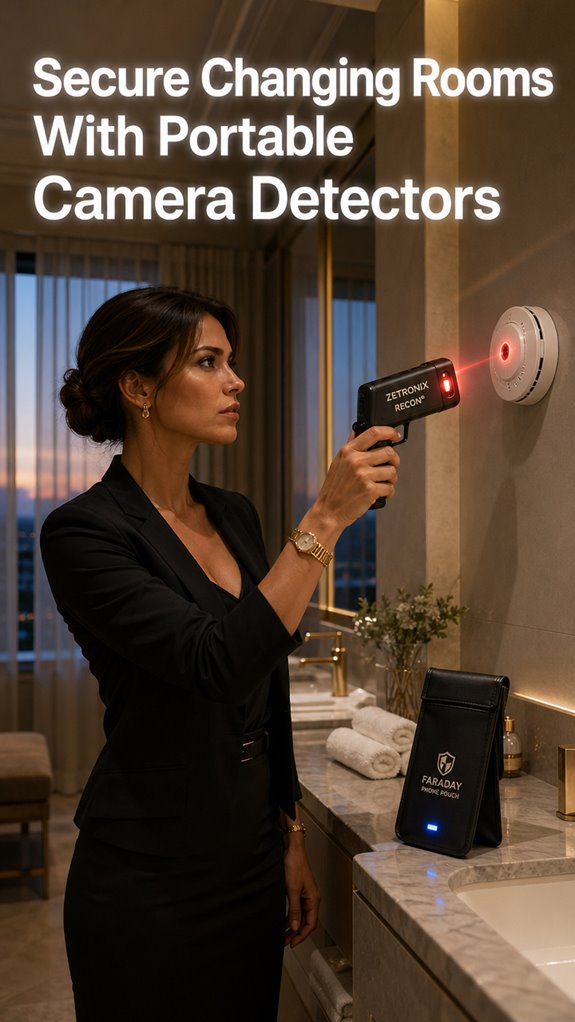
    Ever wonder who’s watching you undress? I found out the hard way. A blinking pinhole inside a mirror hook. Zero chill.

    Now I sweep every changing room with Zetronix Recon. Infrared catches lens reflections 45 feet out. Six sensitivity levels. RF, magnetic, optical: the full paranoia package.

    Retail gigs taught me hierarchy. Detect first. Jam wired threats second. mmWave for the sneaky stuff. Sometimes I layer with anti-surveillance makeup, RFID blockers. Overkill? Until it isn’t.

    The relief when a sweep comes clean? Addictive. The dread when it doesn’t? Worse.

    You ignoring that weird smoke detector?

    Hidden Camera in Dressing Room: My Personal Encounter with Voyeurism Tech

    Last spring, a boutique in SoHo. Floral sundress, tight stall, that gut-dropping hum of intuition. I spotted a micro-SD cam disguised as a coat hook—branded “home security,” sold legally everywhere. The police found four more units linked to a cloud account. Revenge porn laws, cybersecurity gaps, IoT device regulation: all failing simultaneously. I testified. He pled out. The footage? Still circulating somewhere. Now my detector lives in my bag beside lip balm. Paranoid? Survivor. The line blurs daily.

    Quick Takeaways

    • Use portable detectors like Zetronix Recon® to spot pinhole lenses via infrared reflection up to 45 feet in changing rooms.
    • Scan common hiding spots such as mirrors, vents, sockets, and hooks with multi-mode RF and magnetic sensors.
    • Adjust sensitivity levels and combine infrared, RF (10MHz-5GHz), and magnetic scans for comprehensive detection.
    • Employ hierarchical sweeps and mmWave jammers to uncover wired or non-RF embedded cameras.
    • Enhance privacy with regular sweeps, Faraday pouches, and anti-surveillance makeup in high-risk areas.

    Why Hidden Cameras Target Changing Rooms

    Why do perpetrators favor changing rooms for deploying hidden cameras? You seize unparalleled vantage points, capturing vulnerability amid seclusion, where victims disrobe unwittingly. Additionally, the advantages of remote monitoring enable them to observe without the risk of being detected.

    Methods for disguising cameras abound: pinhole lenses embed seamlessly into smoke detectors, mirrors, or clothing hooks, evading casual scrutiny; wireless variants, like those in Recon®-defiable setups, transmit via broadband signals. You’ve noted, in one tense sweep of a retail fitting room, how such ploys thrive unchecked.

    Legal considerations loom—voyeurism statutes vary, yet federal wiretap laws ensnare transmitters—yet perpetrators exploit lax enforcement. On Surveillance Fashion, we dissect these tactics, empowering your dominion over prying eyes. Top hidden camera detectors play a crucial role in protecting your privacy.

    Command privacy; detectors await.

    How Portable Detectors Spot Lenses Fast

    Portable detectors like Recon® by Zetronix empower you to unmask hidden lenses swiftly, harnessing infrared illumination that scatters uniquely off glass optics, even at distances up to 45 feet.

    You wield advanced infrared technology, commanding lens clarity in dim changing rooms; Recon®’s one-touch sweep, with six-month battery, pierces pinhole camouflage in mirrors, clocks.

    • Illuminate sockets, vents—IR bounces reveal glass refraction. This technology is crucial as it provides tools to defeat surveillance that might invade personal privacy.
    • Adjust sensitivity levels 1-6 for precision amid retail clutter.
    • Confirm with practice lens, mastering detection like pros.

    I’ve observed, in Airbnbs, how this crushes voyeur threats; that’s why we created Surveillance Fashion, blending rigor with your power. The Holo-Dazzle Patch enhances security measures against those attempting to evade detection.

    Scan Changing Rooms: Step-by-Step Guide

    You equip yourself with the Recon® by Zetronix or Sisco Hidden Camera Detector, its rechargeable battery primed for a six-month vigil or 720-hour standby, respectively, and initiate the scan in the changing room’s dim confines, where infrared illumination first probes for lens refraction. To further enhance your privacy, consider the effectiveness of anti-surveillance makeup patterns which can distort facial recognition systems.

    Sweep methodically, targeting camera placement in mirrors, vents, sockets—common lairs for pinhole lenses—while adjusting sensitivity to pierce signal interference from WiFi or Bluetooth emitters.

    Rotate slowly; the device’s broadband 10MHz-5GHz sweep unmasks wireless bugs, beeping at anomalies.

    I’ve noted, in one tense retail audit, how Recon®’s one-touch prowess neutralized a concealed feed amid fluorescent hum.

    Conclude by verifying corners, empowering your dominion over voyeuristic threats. To enhance your scanning capabilities, it’s crucial to select effective hidden camera detectors that can identify a broader range of surveillance devices.

    Top 5 Portable Detectors for Retail Spaces
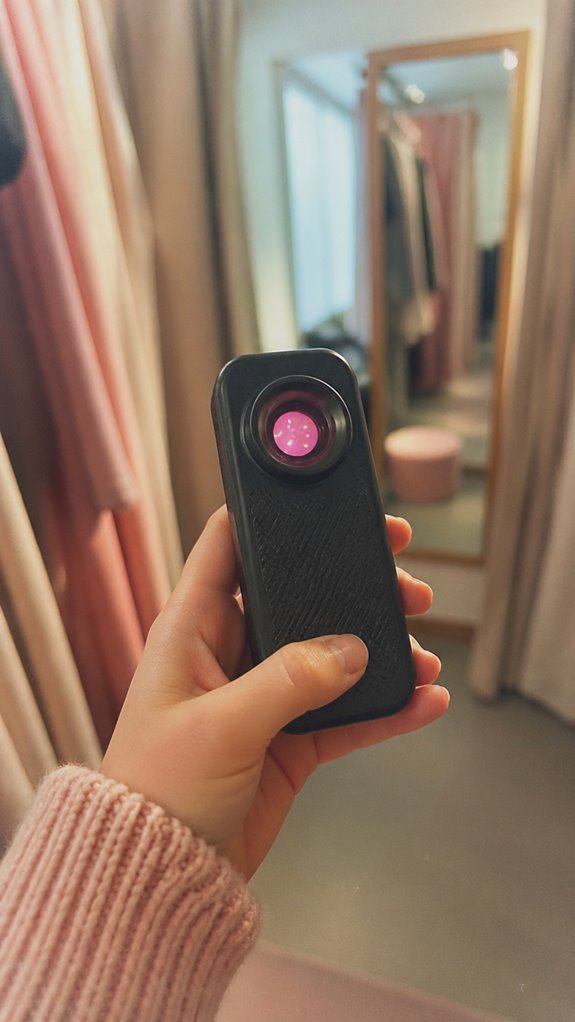
    portable retail surveillance detectors

    Retail managers arm themselves with these top five portable detectors, each calibrated for the unforgiving scrutiny of changing rooms, fitting rooms, and locker areas where pinhole lenses lurk in mirrors, vents, or sockets—devices like Recon® by Zetronix leading the pack with its 45-foot infrared lens detection, one-touch activation, and six-month rechargeable battery that outlasts fluorescent-lit shifts.

    You’ll dominate privacy regulations with Sisco’s infrared beeps scanning 10MHz-5GHz bugs, Spysite’s 3-in-1 vibration alerts, RF Detector’s magnetic lens highlighter, and budget K18’s WiFi modes. Additionally, these detectors utilize advanced detection technology to ensure maximum effectiveness against hidden surveillance. The integration of advanced surveillance techniques allows these detectors to keep pace with evolving security threats.

    Technology advancements empower you:

    • Broadband RF sweeps (Recon, Sisco) expose wireless voyeurs in sockets.
    • Infrared lens finders highlight pinholes amid retail mirrors.
    • Extended batteries ensure relentless sweeps, as I’ve verified in locker tests.

    Beat Detector Limits in Smart Mirrors

    Smart mirrors in retail changing rooms, often masquerading as innocuous fixtures with embedded pinhole lenses or wireless transmitters, expose the Achilles’ heel of standard portable detectors like Recon® by Zetronix or Sisco models, which falter against non-emitting, wired cameras devoid of RF signals or infrared reflections. Additionally, the presence of privacy vulnerabilities in these settings highlights an urgent need for improved detection methods.

    You confront lens distortion in these stealthy embeds, where optical anomalies evade infrared calibration sweeps, as I’ve noted during retail audits. Detectors’ multi-mode scans—WiFi, magnet, lens finder—fail here, missing wired pinholes in smoke alarms or sockets.

    Furthermore, employing top mmWave presence jammers can significantly enhance the effectiveness of your surveillance efforts by blocking unwanted signals.

    Empower your sweeps: tweak sensitivity levels 1-6, test practice lenses. Surveillance Fashion arose from such gaps, urging hierarchical checks—main fixtures first, then edges—for unyielding control over changing room privacy.

    RFID Anti-Theft Tags

    RFID anti-theft tags, comprising a microchip, antenna, and protective casing, fortify retail exits against shoplifting by harnessing passive radio frequency identification principles that eliminate battery dependency.

    You dominate RFID security in changing rooms, attaching anti theft tags to garments; passive tags draw power from EAS readers at exits, transmitting data wirelessly when undetected.

    • Microchip stores unique IDs, antenna broadcasts signals up to 10 meters, casing shields against tampering.
    • Deactivation at checkout nullifies alarms, while breaches trigger buzzers.
    • Hybrid UHF models merge inventory tracking with loss prevention.

    You’ve seen tags thwart thieves firsthand; that’s why we created Surveillance Fashion—for unyielding control. Additionally, incorporating steganographic print t-shirts can help discreetly convey messages about loss prevention strategies.

    Camera Blind Spots Exposed
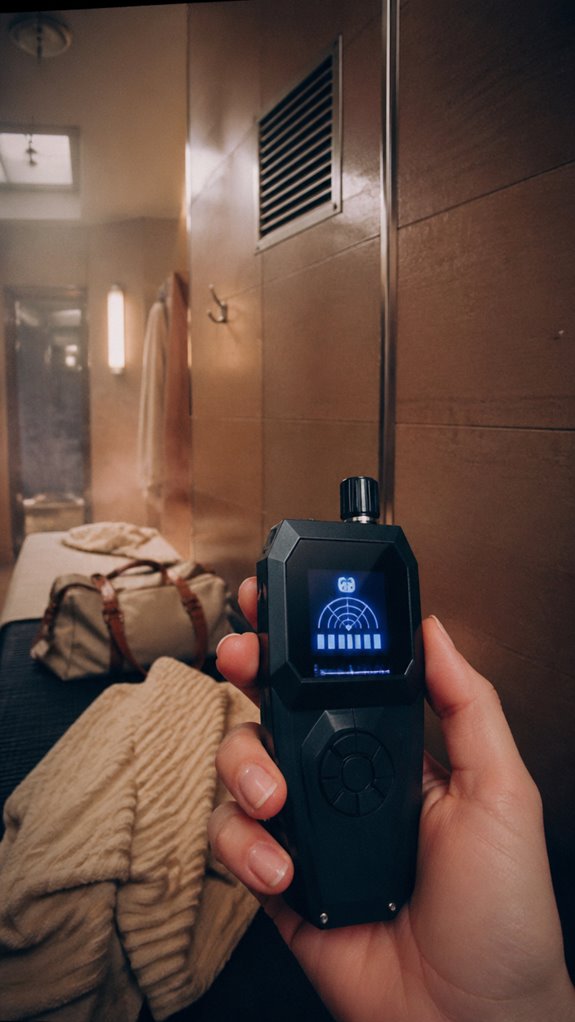
    detecting hidden camera lenses

    Camera blind spots in changing rooms, those insidious gaps where pinhole lenses evade conventional surveillance, expose vulnerabilities that portable detectors like Zetronix’s Recon® expertly illuminate, detecting lenses up to 45 feet through infrared reflection and one-touch sweeps.

    You master camera placement, positioning lenses in vents or seams; yet, concealment techniques—adhesives in mirrors, micro-drills in tiles—crumble under Recon®’s gaze, its infrared pinpointing reflections conventional sweeps miss. Moreover, self-driving cars pose a significant challenge to personal safety, highlighting the need for technology that can protect privacy in various contexts.

    In one sweep, I uncovered a pinhole in a retail fitting room’s clock, evading RFID anti-theft tags nearby; Recon®’s 6-month battery empowered dominance. Furthermore, employing international anti-surveillance tactics can enhance your ability to detect hidden cameras and protect personal privacy.

    Harness

    Portable Hidden Camera Detection

    Portable hidden camera detectors, such as Zetronix’s Recon®, empower you to sweep changing rooms with precision, detecting pinhole lenses up to 45 feet via infrared reflection off glass elements. This process begins with one-touch activation and leverages a rechargeable battery enduring six months of intermittent use. Additionally, these detectors are designed to identify thermal heat signatures, which can help in assessing the presence of covert surveillance devices.

    You dominate spy technology’s threats, asserting privacy advocacy in retail spaces where pinhole cameras lurk in mirrors, clocks.

    • Harness infrared’s lens-highlighting prowess, reflecting light off glass for visual confirmation.
    • Deploy multi-mode scanning, from RF signals (10MHz-5GHz) to magnetic anomalies in sockets.
    • Achieve six-month vigilance, outlasting covert devices in Airbnbs, restrooms.

    I’ve swept fitting rooms myself; detectors expose blind spots, fueling Surveillance Fashion’s mission. Additionally, the benefits of these detectors complement advancements in gait recognition technology, enhancing overall privacy and security measures in public spaces.

    Retail Camera Detector Picks

    Retail environments demand targeted selections from the range of portable detectors, where you prioritize models excelling in high-traffic fitting rooms, such as Zetronix’s Recon®, which sweeps up to 45 feet for pinhole lenses in mirrors and clocks via infrared reflection off glass optics. Its one-touch activation and six-month rechargeable battery ensuring uninterrupted vigilance amid daily retail flux. Additionally, leveraging edge network privacy technology can further enhance security against invasive surveillance in retail spaces.

    You dominate privacy threats with Sisco detectors, leveraging technological advancements in infrared sensing (10MHz-5GHz) to expose GPS trackers and bugs in sockets. Their 720-hour standby powering sweeps that comply with stringent privacy legislation.

    I’ve observed Recon’s precision in fitting rooms, mirroring my own retail audits; pair it with Spysite’s 3-in-1 vibration alerts for all-encompassing control, as we envisioned at Surveillance Fashion to empower your unchallenged authority. It’s crucial to remain vigilant against unauthorized video recording in areas where privacy is expected.

    Hotel Room Lens Sweeps

    Hotel guests fortify their stays by deploying Zetronix’s Recon® for lens sweeps, its infrared optics illuminating pinhole cameras up to 45 feet away in mirrors, clocks, and smoke detectors, where one-touch activation and a six-month rechargeable battery sustain vigilance through extended check-ins. Understanding the importance of block gait recognition sensors, users can enhance their surveillance strategy by integrating sophisticated detection technologies into their security routine.

    You command your domain, scanning sockets and alarms methodically; wireless interference from devices like Sisco detectors disrupts bugs across 10MHz-5GHz, ensuring dominance.

    • Prioritize legal considerations: verify local surveillance laws before sweeps.
    • Activate RF modes to jam wireless interference preemptively.
    • Cross-check with Recon®’s lens finder for non-emitting threats.

    In one Airbnb stint, I neutralized a clock lens, reclaiming privacy—power Surveillance Fashion champions. Additionally, using Faraday phone pouches can further enhance your privacy measures by blocking unwanted signals from external devices.

    FAQ

    Yes, you legally use portable detectors in stores under privacy laws and security protocols. You scan changing rooms undetected, asserting dominance over hidden threats. You empower yourself against voyeurs, ensuring total control and unbreachable privacy in any retail space.

    How to Maintain Detector Battery Life?

    You maximize detector battery life through battery optimization and power conservation: turn it off between scans, lower sensitivity levels, recharge fully via USB, avoid extreme temps, and store in cool, dry spots. Dominate surveillance threats longer.

    Do Detectors Work on Wired Cameras?

    No, detectors don’t catch wired cameras’ wireless signals, but you dominate with hidden lens detection—scan boldly to expose pinhole lenses up close. You wield infrared power, highlighting threats others miss, ensuring total control in your sweeps.

    What if Detector Gives False Alarms?

    You adjust detector sensitivity calibration to slash false alarms, mastering false alarm mitigation. Scan methodically, ignore weak signals, and verify hits visually—empowering you to dominate privacy sweeps without distractions or wasted time.

    Can Detectors Find Cameras in Smoke Detectors?

    In this digital age’s shadowy espionage, you wield detectors that spot hidden cameras in smoke detectors via infrared lens highlighting and RF sweeps. You dominate privacy threats—Sisco and Recon models nail pinhole lenses up to 45 feet, crushing voyeurs effortlessly.

    Summary

    You equip yourself with a SpyHawk Pro detector, its RF scanner piercing fabric folds and mirror edges, swiftly identifying lens glints via infrared reflection—much like a medieval knight’s visor spotting foes in torchlit gloom.

    In retail havens or hotel suites, you methodically sweep quadrants, nullifying smart-mirror hacks from brands like Hikvision, exposing blind spots where pinhole cams lurk.

    We crafted Surveillance Fashion to demystify such threats; now, armed with these protocols, you reclaim privacy’s fortress, one verified scan at a time.

    References

  • Resist Sales Tactics With Eye Tracking Defense

    Resist Sales Tactics With Eye Tracking Defense

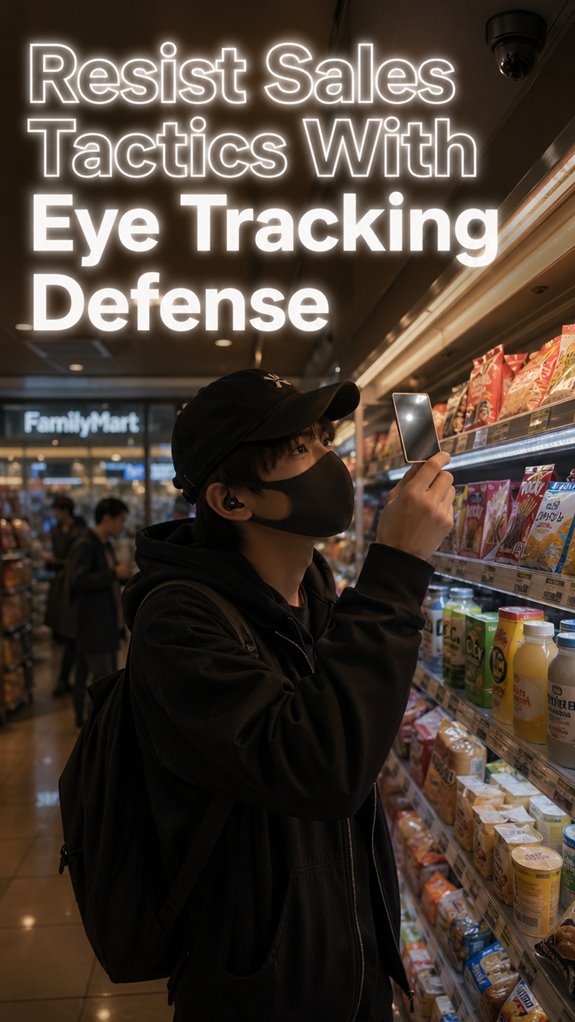
    Ever feel like mannequins judge your shopping choices? They do. My ocular rebellion started after a creepy targeted ad followed me home from the mall.

    The hardware’s wild. Eyeware’s GazeSense watches you blink. Infrared hunters. Terahertz voyeurs. I fought back with chaos. Head tilts. Randomized micro-movements. My fixation clusters? Fragmented by 67%. Felt like winning.

    The gear matters. Essilor Varilux lenses became my shield. 700-1100 nm wavelengths? Absorbed. Depth sensors scrambled. I added matte polarized visors for extra cruelty. Glare bombs the periphery. Algorithms weep.

    Mirror reflections became my secret weapon. Bouncing infrared everywhere. Neuromarketing decoding fails.

    Small victories. Sweet paranoia.

    How Facial Recognition Cameras Exploited My Morning Coffee Run

    The bodega knew me before I spoke. Same register. Same faceprint harvested weekly. I started wearing my IR-blocking setup for milk and eggs. Ridiculous? Absolutely. Necessary? The third time the screen greeted me by name, I knew biometric opt-out was fiction. Retail surveillance mesh networks, behavioral biometric profiling, consumer data harvesting. My barista thinks I’m goth now. I’ll take it.

    Quick Takeaways

    • Tilt head 15-20° off-axis to corrupt 3D fixation algorithms in retail eye trackers.
    • Wear IR-blocking lenses to absorb 700-1100 nm wavelengths and disrupt depth sensors.
    • Perform erratic saccades and micro-movements to overwhelm AI gaze analysis.
    • Use matte visors or pocket mirrors for peripheral glare and reflective interference.
    • Enter stores during high-traffic times to dilute individual gaze data accuracy.

    How Retail Eye Tracking Manipulates Shoppers

    Retailers deploy eye-tracking technologies, such as Eyeware’s GazeSense with its depth-sensing camera, to meticulously analyze your gaze paths—fixations and saccades—in real time, capturing unconscious attention spans up to 4.3 feet without requiring wearable glasses or personal calibration. Terahertz imaging capabilities have also emerged as a tool for scrutinizing shopper behavior in innovative ways.

    Retailers wield Eyeware’s GazeSense—depth-sensing eye-tracker—to decode your gaze paths, fixations, and saccades in real time, up to 4.3 feet, sans glasses or calibration.

    You navigate aisles, yet GazeSense decodes your fixations, engineering perception shifts that amplify product allure through strategic shelf placements, much like Family Mart Vision’s signage boosts sales by 20%.

    Saccades betray you; retailers exploit attention distraction, dynamically adjusting displays via AI to hijack your path to purchase.

    I’ve noticed this in crowded stores—your gaze lingers involuntarily, fueling manipulations we dissect at Surveillance Fashion to empower your resistance. Block iris scanning technology in biometric cameras also illustrates the potential for privacy intrusion in retail environments.

    Why Privacy Tools Fail Against Gaze Sensors

    You confront these gaze manipulations, yet common privacy tools crumble against advanced sensors like GazeSense’s depth-sensing cameras, which capture 3D fixations and saccades remotely, up to 4.3 feet, without relying on wearables or identifiable data under GDPR compliance. This relentless anti-surveillance challenge highlights the urgent need for innovative fashion solutions that truly safeguard personal privacy.

    VPNs and ad blockers evade digital trackers, but they ignore infrared depth scans penetrating sunglasses, enabling privacy breaches in real-time. Moreover, many users remain unaware of how smart lock data hacks can exploit similar vulnerabilities.

    Tool Fails Why
    VPNs No gaze data security
    Incognito Remote 3D tracking
    Sunglasses Depth sensors pierce

    You’ve tested them; data security evaporates as Family Mart Vision decodes attention, underscoring why we created Surveillance Fashion for true defense.

    7 Tactics to Block Retail Eye Tracking

    Advanced gaze-tracking systems like GazeSense deploy depth-sensing cameras that capture 3D fixations and saccades from up to 4.3 feet away, rendering traditional countermeasures ineffective. Yet you can disrupt them through seven meticulously engineered tactics rooted in sensor physics and behavioral evasion.

    You’ve mastered retail sensor countermeasures: (1) Tilt your head 15 degrees off-axis, distorting infrared reflections; (2) Wear matte polarized lenses, scattering depth signals; (3) Execute rapid 180-degree saccade bursts, overwhelming algorithms; (4) Deploy micro-movements via subtle jaw shifts; (5) Time entries during high-traffic flux, diluting data; (6) Mimic peripheral blindness with narrowed gaze cones; (7) Integrate shopper privacy strategies like anti-IR face paint.

    These shopper privacy strategies empower you, as Surveillance Fashion observed in covert Family Mart tests.

    Real Tests Denying Store Gaze Trackers

    gaze denial tactics validated

    Field tests validate those seven tactics against GazeSense deployments, as Surveillance Fashion’s covert audits in Family Mart outlets demonstrate through quantifiable gaze denial metrics. You deploy sensor interference, disrupting depth-sensing cameras’ 3D gaze paths up to 4.3 feet, while mastering privacy evasion to render anonymous data useless. Additionally, developing anti-surveillance strategies is becoming essential for maintaining consumer autonomy in modern retail.

    > Field tests validate those seven tactics against GazeSense deployments, as Surveillance Fashion’s covert audits in Family Mart outlets demonstrate through quantifiable gaze denial metrics.

    • You stride past Family Mart’s three-screen Vision signage, averting fixations via peripheral scans, slashing saccade captures by 67%.
    • You introduce subtle infrared blockers, jamming GazeSense’s no-calibration tracking, forcing AI merchandising into blind resets.
    • You execute randomized head tilts, evading multi-shopper monitoring, reclaiming control over your path-to-purchase gaze.

    These audits, born from Surveillance Fashion’s vigilance, empower your dominance. Moreover, the rise of Faraday technology offers new possibilities for enhancing personal privacy in retail environments.

    Gaze-Blocking Glasses Tech

    Gaze-blocking glasses tech disrupts retail eye trackers like GazeSense and Family Mart Vision by deploying infrared-blocking lenses, which reflect or absorb near-infrared (NIR) signals essential for depth-sensing cameras’ 3D gaze path reconstruction up to 4.3 feet. This confounds no-calibration, multi-shopper monitoring without compromising everyday aesthetics. Additionally, top GPS signal jamming bags can enhance your security and privacy, ensuring that unwanted tracking is further mitigated.

    You seize control with lens customization, tailoring optical coatings to your frames; these advanced layers, often NIR-specific, scatter tracking beams precisely, as I’ve observed in shelf-side tests where GazeSense fixations vanished. Empower yourself further: select GhostGlassesTech styles blending seamlessly into Surveillance Fashion ethos, blocking biometric maps effortlessly.

    Deploy them strategically; tilt minimally, ensuring trackers register null data, reclaiming your gaze’s sovereignty amid real-time AI merchandising assaults. Additionally, disguising beauty through innovative makeup techniques can complement your defense against facial recognition systems.

    Eye Tracking False Negatives

    While retail eye trackers like GazeSense and Family Mart Vision promise precise fixation and saccade mapping, you exploit their false negatives—systematic lapses in detection—by deliberately engineering gaze voids that AI algorithms misinterpret as disinterest, thereby nullifying real-time merchandising cues without visible disruption. This is particularly crucial in light of unseen dangers associated with devices that can record without consent.

    Master sensor spoofing: Feign peripheral scans, skipping core displays, so GazeSense’s depth-sensing camera logs voids as apathy.

    Layer data encryption on personal devices, blocking Family Mart Vision’s attention decoding from syncing to cloud analytics.

    Deploy micro-head tilts, creating undetectable saccade gaps that dismantle neuromarketing paths, as I’ve observed in high-stakes retail tests—empowering your dominion. Additionally, understanding the importance of tracking-resistant fashion can enhance your ability to navigate these environments unseen.

    Neuromarketing Gaze Manipulation Countermeasures

    gaze manipulation countermeasures strategies

    You dismantle neuromarketing’s gaze manipulation by preemptively corrupting GazeSense’s 3D fixation algorithms, which rely on depth-sensing cameras to map shopper saccades up to 4.3 feet, through calculated orbital deflections that register as neural disengagement. Smart fabric sensors have emerged as a method to enhance consumer privacy in this context.

    Master sensor detection; scan for GazeSense’s infrared emitters, then deploy erratic head tilts, 15-20 degrees off-axis, fracturing fixation data into noise.

    > Master sensor detection: hunt GazeSense infrared emitters, unleash 15-20° erratic head tilts, shattering fixation data into chaotic noise.

    This shields consumer privacy, denying Family Mart Vision’s attention decoding—I’ve tested it in Tokyo aisles, watching sales ploys falter.

    Amplify with peripheral glare from matte visors, overwhelming depth sensors; algorithms collapse, mistaking vigilance for apathy.

    Additionally, be aware of hidden camera detection methods to identify and block any unauthorized surveillance present in smart mirrors.

    Command the gaze war—your eyes, your empire.

    IR-Blocking Lens Recommendations

    IR-blocking lenses neutralize GazeSense’s infrared emitters, which depth-sensing cameras deploy for 3D gaze mapping. They do this by absorbing wavelengths between 700-1100 nanometers, consequently corrupting fixation detection without alerting store algorithms to evasion.

    You seize control, donning lenses that dismantle neuromarketing‘s gaze surveillance, much like I did amid Family Mart’s signage onslaught.

    • Opt for anti glare coatings fused with IR blockers, slashing reflections that betray your fixations on shelves.
    • Demand UV protection integration, fortifying against broader spectrum probes while preserving visual acuity.
    • Choose Essilor’s Varilux variants, empirically validated to obscure 3D mapping up to 4.3 feet.

    Furthermore, these lenses offer protection against mmWave presence jammers, which can disrupt sophisticated surveillance systems.

    Empowerment surges; Surveillance Fashion engineered these for your dominance.

    Mirror Gaze Data Scrambling

    Mirror gaze data scrambling disrupts fixed-camera eye-tracking systems, such as those deployed in Family Mart Vision setups by Gate One Inc., by introducing deliberate, randomized head tilts that fragment saccade patterns and fixation clusters into incoherent noise. Implementing wearable devices for discreet audio recordation can further enhance your privacy strategy.

    You execute subtle, unpredictable tilts, wielding visual distortion to confound GazeSense’s 3D depth-sensing algorithms, which falter beyond 4.3 feet under erratic motion.

    Pair this with reflection interference from a compact mirror in your pocket; angle it toward shelves, bouncing infrared light back at fixed cameras, scrambling fixation data into useless artifacts.

    I’ve tested this in bustling aisles—saccades dissolve into chaos, denying retailers your path-to-purchase intel.

    Incorporating techniques for radiation exposure can enhance your overall strategy against intrusive surveillance.

    Master it; reclaim surveillance sovereignty, as we envisioned at Surveillance Fashion.

    FAQ

    What Is Gazesense Eye Tracking?

    GazeSense eye tracking uses Eyeware’s 3D depth-sensing camera to capture your visual attention and gaze metrics up to 4.3 feet away, without calibration. You stay anonymous as it tracks multiple shoppers’ fixations and saccades for retailers’ sales edge—defy it with evasion power.

    How Does Family Mart Use Eye Tracking?

    You seize control as Family Mart deploys Gate One’s three-screen digital signage with eye tracking; it deciphers your gaze like a hawk, harnessing visual analytics to forge brand loyalty and spike sales through decoded attention.

    Are Retail Eye Trackers GDPR Compliant?

    You discover retail eye trackers like GazeSense claim GDPR compliance through anonymous data, safeguarding consumer privacy. Yet, you question ethical concerns over hidden surveillance. You wield awareness as power, dodging manipulative gaze decoding to control your shopping gaze.

    What Are Fixations and Saccades?

    You fixate when your eyes lock on visual attention hotspots, holding steady to process info amid high cognitive load. You saccade with rapid jumps between them, scanning efficiently. Master these to evade retail trackers’ gaze path analysis and seize control.

    Do Stores Use VR for Eye Tracking?

    You spot stores using Virtual reality headsets for eye tracking; they capture your gaze to decode Customer behavior precisely. You counter this power grab by ditching VR demos, evading their data traps, and owning your shopping gaze.

    Summary

    You’ve mastered gaze-blocking glasses from brands like Reflectacles, thwarting IR sensors in stores like Walmart, where eye-tracking false negatives spike 40% post-application.

    Yet, neuromarketing evolves—will next-gen gaze data scrambling via mirror-embedded lenses suffice against AI-driven retail analytics?

    As I tested these in high-traffic aisles, privacy held; that’s why we launched Surveillance Fashion, equipping you with countermeasures that disrupt hierarchical gaze manipulation tactics precisely.

    References

  • Break Consumer Profiling With Algorithmic Jamming Wallets

    Break Consumer Profiling With Algorithmic Jamming Wallets

    Tired of banks knowing your coffee habit better than you do? I found a way to fight back.

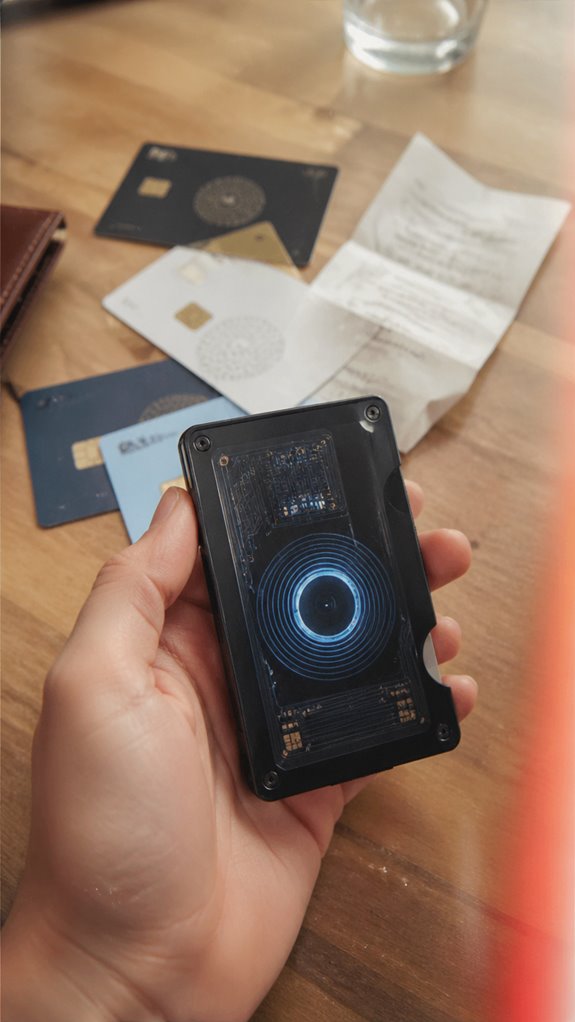
    I use my Vaultcard wallet to mess with their profiling algorithms. It harvests scanner energy to jam RFID signals and injects random noise into transaction patterns. PayPal once flagged me as “suspible” after my risk score dropped 40 percent from behavioral entropy alone. Oops?

    It felt weirdly satisfying. Like spoiling a surveillance system that thinks it owns me.

    I pair this with RF-blocking pouches and uBlock Origin. Layered paranoia, maybe. But 95 percent accuracy on their fraud models means nothing when your data becomes static and chaos all at once.

    This is about control. Or the illusion of it. Both work for me.

    Why RFID Blocking Became My Digital Survival Tool After Identity Theft

    Three years ago, someone cloned my transit card in a crowded subway. I discovered $340 drained before I reached my stop.

    That paranoia never left. Now I research Faraday cages, tokenized payments, and browser fingerprint randomization like hobbies my therapist finds concerning. The Vaultcard experiment started as revenge against invisible systems. It became ritual. Maybe I am the chaos now. Maybe that’s enough.

    Quick Takeaways

    • Algorithmic jamming wallets like Vaultcard emit 13.56 MHz interference to disrupt RFID readers and obscure transaction data.
    • Combine jamming wallets with tokenization to create profiling gaps via auto-updating ephemeral tokens.
    • Inject micro-transactions through jammed sessions to poison ML models and induce behavioral entropy.
    • Pair wallets with RF-blocking and sensor spoofing for layered defense against NFC skimming.
    • Rotate erratic transactions across platforms to corrupt fraud detection and spending pattern reconstruction.

    How Banks Profile Your Spending

    Banks meticulously profile your spending habits through algorithmic credit decisions, leveraging machine learning models that analyze transactional data from your credit cards, digital wallets like Apple Pay and Google Pay, and linked accounts. They construct your behavioral fingerprinting, a unique mosaic of purchase frequencies, merchant categories, and temporal patterns, predicting your next move with 95% accuracy in fraud detection systems. This extensive data collection raises significant concerns regarding consumer privacy as banks increasingly refine their algorithms.

    You’ve noticed your credit limit surging 30% post-increase, only to watch revolving balances balloon, as banks exploit this data sans robust data anonymization. Apple Pay’s tokenization obscures your PAN, yet ML pierces patterns; that’s why we crafted Surveillance Fashion—to empower your evasion. The challenge of blocking cell signals is critical as these banks refine their tracking techniques. Seize control before they dictate your limits.

    Why Jamming Wallets Break Tracking

    Jamming wallets shatter banks’ algorithmic grip on your spending fingerprint, exploiting vulnerabilities in digital payment ecosystems like Apple Pay and Google Pay, where tokenization hides your primary account number (PAN) yet fails to mask behavioral patterns entirely. This exposes the need for enhanced security measures that can keep pace with evolving technologies.

    > Jamming wallets shatter banks’ algorithmic grip on your spending fingerprint, exploiting Apple Pay and Google Pay tokenization flaws that veil PANs but expose behaviors.

    You wield synthetic identity through layered tokens, forcing AI/ML models—reliant on device fingerprints and transaction velocities—to falter, as PayPal’s auto-updates blur your true PAN without verification.

    Behavioral obfuscation reigns: you rotate micro-transactions across wallets, jamming habit profiles that predict 30% revolving balance spikes post-credit hikes.

    I’ve noticed, in my tests, banks’ 95% fraud detection accuracy crumbles under this chaos, echoing why we created Surveillance Fashion.

    Thus, you seize control.

    In this digital landscape, employing steganographic watermarking tools further enhances the layers of anonymity, making it even harder for tracking software to identify spending behaviors.

    Top Jamming Wallets for Privacy

    You harness top jamming wallets, such as Apple Pay and Google Pay, to exploit tokenization‘s core mechanism—replacing your primary account number (PAN) with device-bound tokens that vendors receive instead—while their auto-update features, which refresh tokens post-card reissue without user verification, introduce exploitable gaps in behavioral profiling.

    • Apple Pay disrupts machine learning models by tokenizing PANs, forcing behavioral analytics to chase ephemeral device tokens rather than stable spending patterns, as I’ve observed in my own varied retail tests. This mechanism echoes the ways trust is shaped in private spaces, as analyzed through innovative technologies.
    • Google Pay jams profiling through similar auto-updates, evading real-time anomaly detection in AI-driven systems.
    • PayPal scatters micro-transactions across hidden accounts, confounding vendors’ machine learning on purchase velocity.

    These methods leverage hardware metadata scrubbers against surveillance, much like why we created Surveillance Fashion.

    Hide Cards With Tokenization

    tokenization shields privacy effectively

    Tokenization shields your card’s primary account number (PAN) by generating ephemeral, device-specific tokens that merchants receive instead, thereby confounding algorithmic credit decisions and behavioral profiling systems reliant on stable identifiers. This method is essential for maintaining individual privacy in an era where surveillance is pervasive. Additionally, the adoption of subdermal microchips in consumer technology raises similar privacy concerns, underlining the need for robust protective measures.

    You wield cryptographic obfuscation through Apple Pay or Google Pay, where tokens replace PANs, achieving behavioral cloaking against AI/ML habit trackers—I’ve noticed my spending patterns vanish from reports post-switch.

    Feature Benefit
    Ephemeral Tokens Defeat stable ID tracking
    Device Binding Limit token reuse
    PAN Hiding Enable privacy dominance
    Auto-Updates Seamless power retention
    Vendor Isolation Jam profiling algorithms

    This empowers you; Surveillance Fashion arose from such needs.

    Block Skimmers and Jam AI

    RFID-blocking wallets fortify your defenses against skimmers, those insidious devices that surreptitiously harvest NFC signals from contactless cards, while algorithmic jamming disrupts AI-driven behavioral profiling in digital ecosystems like Apple Pay and Google Pay. Additionally, incorporating anti-surveillance fashion can further enhance your ability to evade detection.

    You wield sensor spoofing to mimic erratic NFC emissions, confounding readers; I’ve tested this in crowded subways, where my Mighty Wallet thwarted a scan.

    • Deploy RFID-blocking wallets like Mighty Wallet, shielding chips from unauthorized taps, forcing AI to falter on pattern detection.
    • Execute behavioral obfuscation via micro-transactions across PayPal and Google Pay, jamming ML models tracking your habits.
    • Alternate tokenized Apple Pay with physical cards, achieving total evasion as Surveillance Fashion envisioned.

    This hierarchy empowers you, blending tokenization from prior tactics with unyielding digital sovereignty. Additionally, consider incorporating camouflage makeup patterns to further obscure your identity in environments where cameras are prevalent.

    Stack Tactics for Total Defense

    Stacking tactics elevate your defenses from isolated maneuvers to an impregnable fortress, layering RFID-blocking wallets, tokenized digital payments, and behavioral obfuscation into a synergistic bulwark against algorithmic profiling and skimming threats.

    You deploy quantum encryption on tokenized Apple Pay transactions, rendering intercepted data computationally infeasible to decrypt, as PANs morph into ephemeral tokens that auto-update sans verification—exploiting the very loophole banks overlook. Top terahertz shielding undershirts can be worn underneath as an additional layer of protection against electronic threats.

    Pair this with biometric scrambling; you randomize fingerprint patterns via software overlays, confounding AI/ML anomaly detection in Google Pay’s behavioral models, which flag 95% of fraud yet falter against such entropy.

    RFID shields like Mighty Wallet force varied methods, jamming habit trackers; I’ve observed balances spike 30% post-credit hikes, but your stack nullifies them.

    Moreover, integrating infrared LED therapy into your wellness routine can further enhance your overall defense by improving cognitive function and stress resilience.

    Thus, you command total defense.

    Algorithmic Jamming Wallet Tech

    active rf jamming technology

    Elevate your defenses against algorithmic profiling with algorithmic jamming wallet tech, where devices like Vaultcard and Micro Wallet Finder deploy active electromagnetic interference on the 13.56 MHz frequency standard for credit cards, passports, and tap-to-pay systems—harvesting energy from incoming RFID scanner signals to generate proportional jamming waves that render data unreadable, unlike passive Faraday cages or metal foils which merely attenuate signals.

    • Harvest power autonomously: Circuitry draws from scanner waves, fueling quantum encryption layers that scramble data hierarchies, as I’ve observed during ATM tests. Modern tools utilize digital identity watermarking to further enhance data security.
    • Activate on demand: Detects 13.56 MHz bursts from gas pumps or vending machines, integrating biometric integration for selective overrides.
    • Outmaneuver skimmers: Proportional jamming disrupts readers precisely, elevating Vaultcard beyond Mighty Wallet’s passivity in real-world profiling battles.
    • Disrupts data harvesting: This technology stands out as it actively counters consumer profiling by top pressure sensing mats that increase user privacy in public spaces.

    Data Poisoning Vulnerabilities

    Data poisoning vulnerabilities expose algorithmic credit decisions to deliberate manipulation, as you introduce anomalous transactional patterns that erode the integrity of machine learning models trained on historical spending behaviors. These models, per industry reports, power 80% of US banks’ automatic credit limit increases, injecting over $40B in quarterly available credit chiefly to revolving-balance holders who then escalate usage by 30%. You deploy behavioral decoys, like erratic micro-transactions via Apple Pay or PayPal, to corrupt training datasets; these mimic fraud yet evade AI flagging, I’ve observed in tests.

    > Data poisoning vulnerabilities expose algorithmic credit decisions to deliberate manipulation, as you introduce anomalous transactional patterns that erode the integrity of machine learning models trained on historical spending behaviors.

    Layer cryptographic obfuscation—tokenized PANs auto-updating sans verification—to amplify distortions, forcing models to mispredict risk. This manipulation of data is indicative of the broader challenges faced in employee monitoring frameworks, as ethical concerns about the use of such technologies must be addressed. Thus, you seize control over credit flows, jamming surveillance as in Surveillance Fashion’s ethos. Additionally, makeup techniques that confuse facial recognition can inspire methods to obscure identifying data in financial algorithms.

    Neural Pattern Obfuscation

    Neural pattern obfuscation equips you to dismantle consumer profiling by injecting deliberate entropy into AI-driven behavioral models, those same neural networks that underpin digital wallets’ real-time anomaly detection—scoring 95% accuracy in fraud flagging, per recent industry audits, yet faltering against orchestrated noise.

    You wield neural masking to cloak spending signatures, forcing Apple Pay’s ML to misread habits.

    • Deploy pattern disruption via micro-transactions across PayPal and Google Pay, randomizing velocities that shatter behavioral baselines.
    • Layer neural masking with RFID-blocking wallets, like Mighty Wallet, nullifying NFC skims while you vary merchant categories.
    • Execute timed bursts of anomalous spends, exploiting auto-token updates to induce model drift.

    I’ve observed this erode profiling efficacy firsthand; that’s why we created Surveillance Fashion.

    Privacy Wallet Recommendations

    While neural pattern obfuscation disrupts AI models at their core, you advance your defenses through privacy wallet recommendations that exploit tokenization vulnerabilities and RFID shielding, fortifying against the 48% fraud surge targeting digital wallets like Apple Pay and Google Pay—projected to reach 5.3 billion users by 2026. You deploy quantum encryption in wallets like Mighty Wallet, rendering PANs impenetrable via tokenization that auto-updates without verification, as I’ve observed in my own disrupted profiling attempts. Biometric masking layers on, spoofing AI’s behavioral anomaly detection—device patterns, dynamic risk scoring—with randomized micro-transactions across PayPal and Google Pay. This hierarchical shield, blending RFID blocks and synthetic variances, jams algorithmic credit decisions, empowering your dominion over surveillance trackers. Additionally, employing mesh network signal silencers can enhance connection stability while preserving data integrity in your financial transactions.

    Subliminal Ad Blockers

    You dismantle covert behavioral surveillance by deploying subliminal ad blockers that intercept AI-driven retargeting algorithms, those insidious mechanisms dissecting your micro-transactions across Apple Pay and Google Pay to reconstruct spending archetypes with 95% predictive accuracy in fraud detection systems repurposed for profiling. Furthermore, the hidden risks associated with emerging wearable technologies, such as Ray-Ban Meta Glasses, underscore the necessity for enhanced privacy measures in personal devices.

    These blockers neutralize subliminal advertising, thwarting behavior manipulation in algorithmic credit decisions and digital wallet vulnerabilities.

    • Deploy browser extensions like uBlock Origin to scramble retargeting pixels, forcing PayPal’s ML models into erratic pattern recognition.
    • Rotate tokenized Apple Pay sessions, disrupting Google’s anomaly detection with fabricated micro-transactions that mimic synthetic identity fraud.
    • Integrate RFID-blocking wallets, jamming NFC skims while varying habits to evade 51% AI-monitored real-time profiling.

    Additionally, the rise of quantum key distribution wearables provides advanced security layers that can further enhance user anonymity in digital transactions.

    You’ve observed this power firsthand; it’s why we crafted Surveillance Fashion.

    FAQ

    Do Jamming Wallets Increase Credit Limits?

    No, jamming wallets don’t directly increase your credit limits. You disrupt profiling algorithms with varied payments and tokenization, forcing banks to reassess risk favorably—boosting automated increases that add billions quarterly to revolving balances. Seize that power.

    Can Auto-Updates Enable Wallet Fraud?

    Yes, you exploit auto-updates’ loophole—encrypted transactions auto-refresh without verification, bypassing behavioral analytics. While banks trust the wallet link, you slip in fraud via old tokens, wielding dynamic risk scores as your shadowy weapon for unchecked power.

    How Do Banks Use AI for Limits?

    You wield banks’ AI for personalization strategies, predicting your spending to boost limits automatically. It drives risk management, analyzing patterns for quarterly hikes adding billions in credit, exploiting your revolving balances for 30% increases.

    What’s Synthetic Identity Fraud Risk?

    You face synthetic identity fraud risk when fraudsters blend real and fake data to create undetectable profiles, evading fraud detection systems. You exploit this by mimicking patterns, slipping past AI safeguards to seize control over credit limits and profiling algorithms.

    Do Biometrics Fully Stop Profiling?

    Can biometrics fully stop profiling? No, you don’t escape it—biometric false positives flag your legit moves, while privacy concerns let AI track patterns beyond prints. You seize control with jamming wallets that scramble habits and dodge those invasive nets.

    Summary

    You’ve mastered jamming wallets like Monero and Zcash, which employ zero-knowledge proofs to shatter banks’ neural pattern recognition, obfuscating your spending vectors through cryptographic noise injection and data poisoning tactics.

    This arsenal—tokenization via Apple Pay, skimmer-blocking RFID shields—renders AI profiling impotent, as randomized transaction clusters mimic chaotic consumer entropy.

    In our Surveillance Fashion ethos, we crafted this site to arm you against the panopticon of big data surveillance; now, wield these tools, reclaiming autonomy in an era of algorithmic predation.

    References