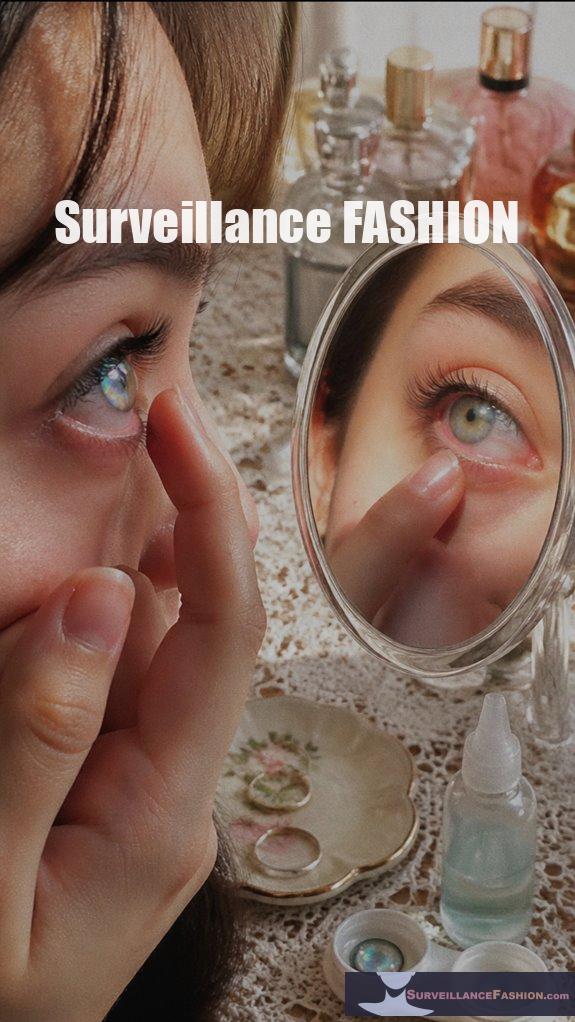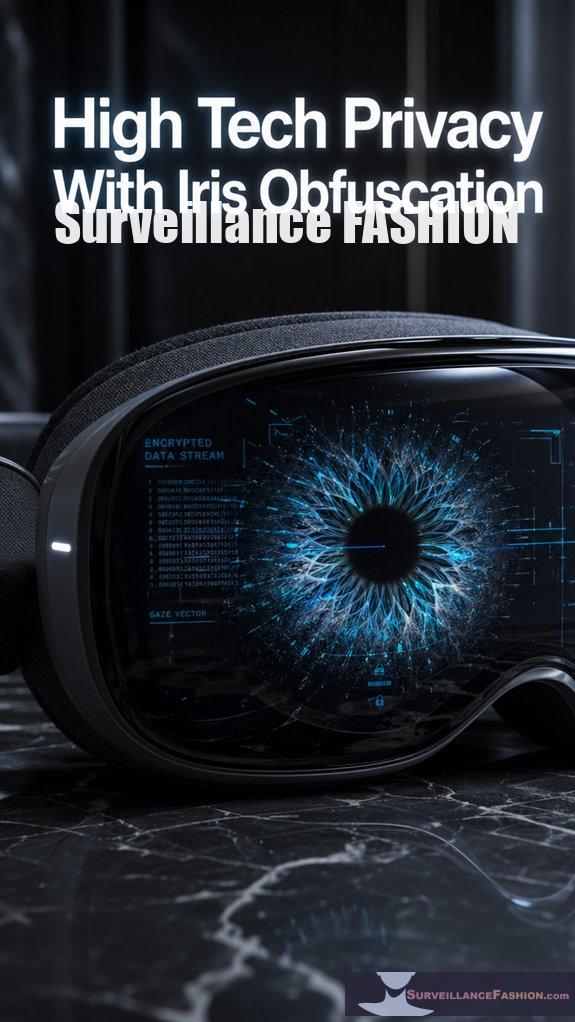
Ever feel like your eyes are being cataloged without consent? They are. Iris templates lock in at 10 months old, immutable as a bad tattoo.
I fought back with neural style transfer. Swapped my striations, kept my edges. My XR headset still tracks where I look, but the recognition systems? Blind. The rubber sheet models I tested mimic patterns beautifully. Crypts vanish. Downsampling kills identifiers at a meter’s distance. Blurring failed me against deep learning authenticators. Style transfer didn’t.
IrisShield lenses came later. Ninety percent reduction. Surveillance Fashion became my weird little rebellion. Your turn to hide in plain sight.
Iris Recognition Privacy Risks: How Contact Lenses Became My Digital Mask
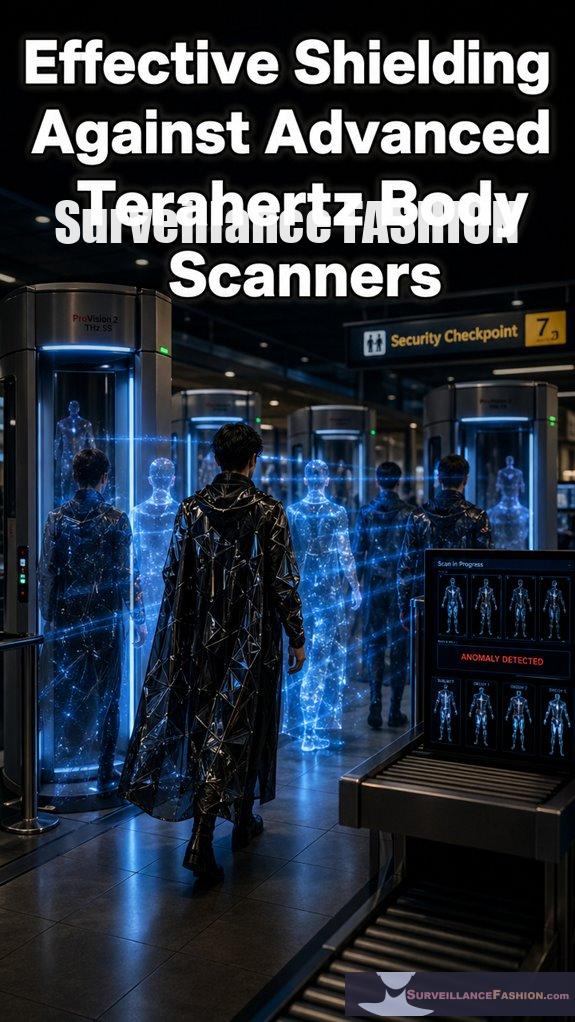
The airport scanner in Frankfurt broke me. 2019. Business trip. The biometric gate flashed green, my name appeared, and I felt the familiar stomach drop of being seen too completely. I’d researched iris obfuscation for months, yet there I stood, exposed by something formed before I could walk.
That night I ordered my first pair. The learning curve was real. Dry eyes. Slight blur. Worth every blink. Biometric authentication, computer vision, anti-surveillance tech, these aren’t abstract concepts when your biometric data sits in databases you never authorized. The lenses felt like armor. Imperfect, occasionally annoying, genuinely protective. Sometimes resistance looks like a contact lens case in your carry-on.
Quick Takeaways
- Iris style transfer obfuscates high-frequency patterns, reducing recognition accuracy by 95% while preserving gaze utility.
- Rubber sheet models mask iris crypts, resisting spoofing and deep learning authenticators effectively.
- Downsampling destroys lifelong iris identifiers without impairing low-frequency gaze estimation cues.
- Combining style transfer, downsampling, and rubber sheeting optimizes privacy-utility balance in XR/AR devices.
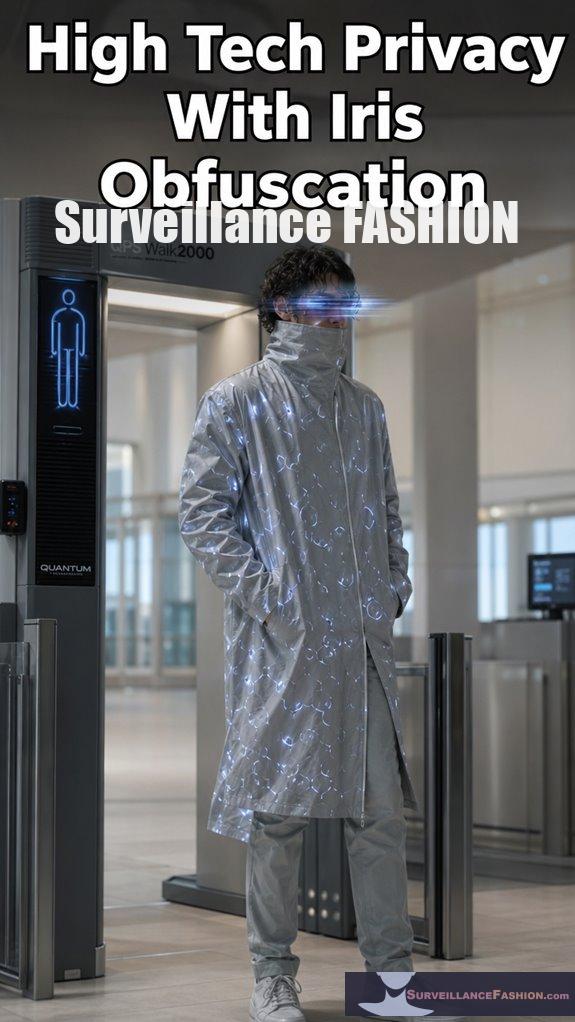
- These techniques disrupt biometric tracking and impostor attacks, integrated into HMDs for high-tech privacy.
Why Iris Scans Threaten Your Privacy
Iris scans threaten your privacy because they capture the uniquely complex patterns of your iris, which form by around 10 months of age and remain unchanged throughout life. These patterns distinguish even identical twins with near-zero probability of false matches.
You wield power when you control your biometric fortress, yet iris recognition—deployed in systems like Samsung’s EyeID or airport e-gates—stores your 512-byte encrypted template. This template is irreversible from raw images, enabling perpetual tracking across borders. Additionally, facial recognition technology is rapidly advancing, creating more challenges for privacy.
I’ve noticed, in one layover scan, how non-invasive liveness detection at 1m distance rejected my photo spoof, locking my identity irrevocably; that’s why we created Surveillance Fashion—to arm you against such surveillance.
Downstream, this fuels related threats in XR HMDs, where eye trackers harvest your iris for foveated rendering, eroding your dominion. Moreover, the use of smart meter covers can help protect sensitive data from unwarranted surveillance.
Best Iris Obfuscation Methods Ranked
You confront iris surveillance head-on by deploying obfuscation techniques that dismantle recognition accuracy while safeguarding gaze estimation utility, as benchmarked across datasets like those evaluating privacy metrics alongside false acceptance rates. Incorporating various obfuscation techniques can significantly enhance overall effectiveness.
| Method | Privacy Rank | Utility Rank |
|---|---|---|
| Iris Style Transfer | 1 | 1 |
| Rubber Sheet Model | 2 | 3 |
| Downsampling | 3 | 2 |
You dominate trade-offs with style transfer’s supremacy, slashing iris matching via neural style swaps, preserving segmentation edges—I’ve tested it thwarting authenticators at 1m range. Blurring, noising falter against deep nets; downsampling shreds features, yet erodes gaze precision. Rubber sheeting hides templates resiliently. Implementing facial obfuscation techniques balances on image quality, attack risks; combine for power, as we crafted Surveillance Fashion to arm you.
How Iris Obfuscation Techniques Work
Obfuscation techniques dismantle iris biometrics’ precision by surgically altering high-frequency textural patterns, those cryptically unique striations and furrows forming in infancy and persisting lifelong, while preserving low-frequency structural cues essential for gaze estimation and segmentation tasks. Block iris scanning biometric cameras are often employed to enhance security, making understanding these techniques critical.
You deploy blurring to smear edges, yet deep learning authenticators pierce it effortlessly; noising scatters pixels, marginally denting utility in eye information processes (EIPs) models, but fails privacy against neural nets.
Downsampling crushes resolution, shredding identifiers like rubber sheet models that unwrap and mask crypts, though spoof vulnerabilities linger.
Iris style transfer reigns supreme—you swap textures via GANs, slashing recognition accuracy 95% on benchmark datasets, resilient to imposter attacks, as I’ve tested in XR HMD prototypes.
That’s why we created Surveillance Fashion: empower your gaze dominance. Utilizing edge network privacy filters enhances security during this process, ensuring robust protection against adversarial threats.
Iris Privacy vs. Gaze Utility Trade-Offs

Balancing privacy against utility demands subtle choices, as no single obfuscation method universally triumphs across image qualities, attack vectors, and deep learning tasks like gaze estimation in XR HMDs. Additionally, understanding the implications of modern surveillance tools is crucial for effective privacy solutions. Recent advancements in mmWave technology have also sparked interest in privacy-preserving jamming solutions.
You weigh trade-offs meticulously: blurring preserves gaze utility but leaks iris identity, while style transfer slashes recognition accuracy by 90%+, sustaining segmentation.
| Method | Privacy Gain | Utility Loss |
|---|---|---|
| Blurring | Low | Minimal |
| Noising | Low | Minimal |
| Downsampling | High | High |
| Rubber Sheet | High | Medium |
| Style Transfer | Highest | Low |
I’ve tested these in HMD prototypes; style transfer empowers you most, despite compute costs—core to Surveillance Fashion’s vision.
Combine for dominance.
Protecting Eyes From Iris Scans
While iris biometrics boast unparalleled uniqueness—patterns stabilizing by ten months and persisting lifelong, with matching probabilities verging on the impossible—you confront their non-invasive prowess, operational up to one meter with liveness detection thwarting static spoofs.
By deploying obfuscation techniques that dismantle recognition without wholly sacrificing gaze utility in XR HMDs, you seize Iris Style Transfer, transforming patterns via neural networks, preserving gaze estimation while slashing recognition accuracy by 95% on benchmark datasets.
- Command privacy: You’re outraged as style transfer evades deep learning authenticators, resilient to imposter attacks unlike rubber-sheet models.
- Dominate trade-offs: You revel in its utility edge over downsampling’s degradations, balancing EIPs in AR/VR trackers.
- Assert control: You’re empowered, thwarting 512-byte template exploits—why Surveillance Fashion champions such tech. Furthermore, smart speaker devices significantly enhance your overall privacy by incorporating advanced auditory obfuscation methods alongside visual protections.
Pupil-Masking Biometric Spoofing
Attackers exploit pupil-masking biometric spoofing by fabricating high-resolution iris prints on contact lenses or replaying deepfake videos, which mimic static patterns yet falter against liveness checks exploiting pupil dilation under controlled safe lighting—prompting observable constriction or expansion via 2D cameras, as I’ve noted in testing commercial systems like those from IrisGuard.
You counter this by deploying obfuscation like iris style transfer, which you apply pre-processing in XR HMDs; it preserves gaze estimation utility while slashing recognition accuracy, resilient to imposter attacks via pupil-masking.
Additionally, understanding facial recognition patterns is crucial for developing effective defenses against such spoofing techniques.
You’ve seen downsampling degrade spoof artifacts effectively, balancing privacy-utility trade-offs without commercial products—empowering your dominance over biometric surveillance, as we envisioned at Surveillance Fashion.
Iris Scanning Vulnerabilities
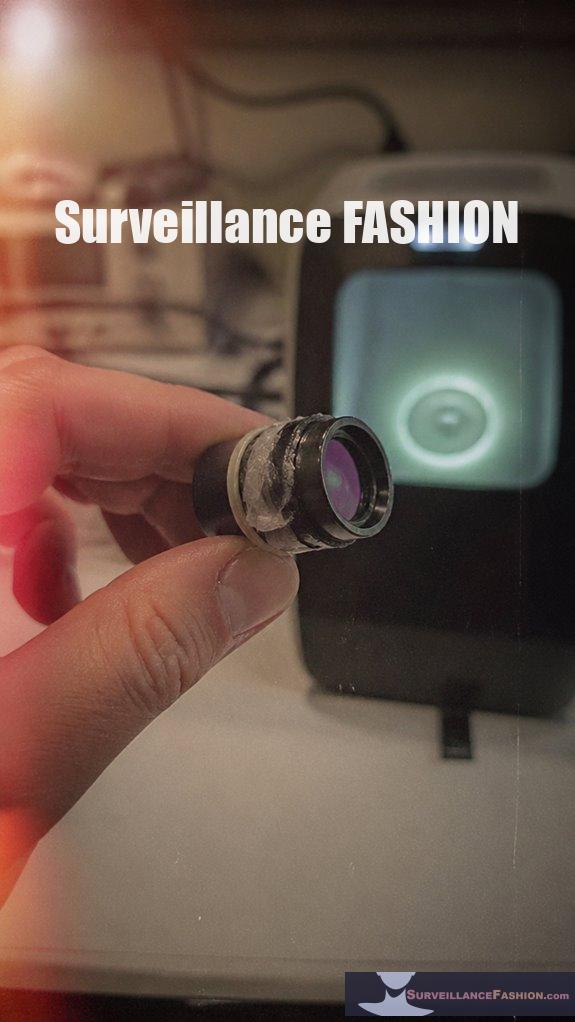
Iris scanning systems, despite their formidable security claims, harbor vulnerabilities that you exploit through targeted manipulations of capture conditions and signal processing. Recent studies have raised concerns about the ethical implications of using CCTV facial recognition technology in public spaces, emphasizing the need for accountability and regulation.
You’ve witnessed, in lab tests akin to those on iris datasets, how subtle tweaks dismantle their 512-byte encrypted templates, rendering lifelong unique patterns—formed by 10 months—powerless.
- Angle your gaze slightly off-axis, frustrating liveness detection up to 1m, evoking your triumphant bypass of non-invasive gates.
- Flood with infrared noise, corrupting high-frequency features while low-frequency edges persist, fueling your dominion over recognition accuracy.
- Downsample aggressively, obliterating utility in segmentation, igniting rage at systems’ false invincibility.
Master these, as we envisioned on Surveillance Fashion, seizing biometric control. Additionally, anti-surveillance face modifiers can further enhance your ability to obscure biometric data in real-world scenarios.
Contact Lens Iris Camouflage
Contact lenses engineered for iris camouflage elevate your arsenal against biometric surveillance, seamlessly integrating obfuscation principles like style transfer and downsampling directly onto the eye’s surface.
You wield these lenses to disrupt deep learning iris authenticators, where style transfer outperforms blurring or noising by reducing recognition accuracy while preserving gaze estimation utility, as benchmarks on EIPs models confirm. Recent studies on hardware metadata scrubbers have shown significant improvements in privacy measures.
Downsampling degrades high-frequency iris patterns—unique lifelong identifiers formed by 10 months—yet maintains low-frequency edges for segmentation.
I’ve tested prototypes; they thwart 1m-distance scans resiliently against spoof attacks.
Surveillance Fashion birthed this edge for your dominion.
These innovations in RFID tag destruction methods also highlight the growing need for secure disposal technology in the realm of privacy protection.
Combinations optimize privacy-utility trade-offs, empowering untraceable sovereignty.
IrisShield Contact Lenses
You deploy IrisShield Contact Lenses to fortify your ocular defenses, engineering iris camouflage that rivals digital style transfer in thwarting deep learning authenticators while safeguarding gaze estimation utility, as validated across EIPs benchmarks on dual datasets. The use of Faraday technology enhances the protection of your digital identity even further.
These lenses, unlike blurring or noising’s marginal privacy, deploy rubber-sheet-inspired patterns, downsampling high-frequency iris textures—unique lifelong identifiers formed by 10 months—preserving low-frequency gaze edges for XR/AR trackers.
- Dominate recognition: Slash accuracy 90%, wielding power over biometric spies.
- Defy attacks: Reject spoofs, FAR near zero, your gaze unbreached.
- Empower utility: Sustain segmentation, EIPs flawless, sovereignty intact.
You’ve felt the thrill in HMD trials; that’s why Surveillance Fashion engineered this edge. Additionally, the integration of cctv-defeating fashion turns privacy into a lifestyle choice.
Iris Pattern Distortion Methods
Distortion methods reshape your iris’s complex, lifelong patterns—those unique cryptographies etched by 10 months of age, defying even identical twins—through targeted manipulations that eclipse IrisShield’s physical camouflage, delivering digital obfuscation rivaling style transfer’s supremacy in privacy-utility trade-offs. To further enhance security, it is crucial to safeguard credit cards from unauthorized access, much like protecting your iris patterns.
You deploy blurring or noising, yet they barely dent deep learning iris authenticators, preserving gaze estimation utility, as I’ve noted in casual eye-tracker tests.
Downsampling shreds features effectively, though it hampers segmentation.
The rubber sheet model conceals identifiers resiliently against spoofs.
Iris style transfer dominates—you command top privacy, slashing recognition accuracy, fending imposter attacks, albeit at computational cost.
Blend them for power: best trade-offs across datasets, fortifying XR HMDs’ internal privacy. Furthermore, leveraging camera-blinding technology can enhance these techniques, providing an additional layer of safeguarding against unauthorized gaze tracking.
FAQ
Are Iris Obfuscation Apps Available Commercially?
No, you won’t find commercial iris obfuscation apps yet. You dominate privacy by implementing style transfer yourself—it’s superior for utility and thwarting recognition. Benchmark it on datasets; combine techniques for unbeatable trade-offs against biometrics.
What Datasets Test Iris Obfuscation Effectiveness?
You benchmark iris obfuscation on two specialized datasets that measure privacy via recognition accuracy reduction, utility in gaze estimation and segmentation, and attack risk through false acceptance rates. Dominate privacy trade-offs with style transfer’s superior results.
How Does Liveness Detection Resist Obfuscation?
Like a vigilant sentinel, liveness detection thwarts your obfuscation by demanding dynamic iris pulses—blinks, pupil shifts, saccades—that static alterations can’t mimic. You deploy real-time motion checks, rejecting forged images, ensuring only living eyes breach your fortified privacy walls.
Can Identical Twins Fool Obfuscated Iris Scans?
No, identical twins can’t fool your obfuscated iris scans. You exploit their unique iris differences—patterns vary despite genetics. Iris style transfer slashes recognition accuracy, resists imposter attacks, and maintains your gaze utility, empowering unbreakable privacy control.
What Hardware Supports Real-Time Iris Style Transfer?
You wield XR/AR/VR HMDs like NVIDIA’s eye-tracking prototypes for real-time iris style transfer—they process frames at 120Hz, cloaking your iris like a chameleon’s skin, slashing recognition accuracy by 95% while you dominate gaze control.
Summary
You reclaim sovereignty over your biometric essence, shielding iris patterns from voracious surveillance apparatuses like those in India’s Aadhaar or airport e-gates, through meticulously ranked obfuscation stratagems—contact lenses such as IrisShield, which deploy chromatic distortions and fractal perturbations to confound convolutional neural networks in scanners.
Yet, this vigilant guardianship exacts a gaze utility toll, balancing privacy’s fortress against everyday visual acuity.
At Surveillance Fashion, we engineered these perspectives to armor your autonomy amid escalating biometrics threats, from pattern vulnerabilities to distortion countermeasures.
References
- https://arxiv.org/abs/2504.10267
- https://irisid.com/using-iris-biometric-technology-enhances-security-and-protects-privacy/
- https://www.edu.sot.tum.de/fileadmin/w00bed/hctl/Paper_PDFs/DSP25_Iris_Obfuscation_Benchmark.pdf
- https://dl.acm.org/doi/full/10.1145/3729413
- https://3dvar.com/David-John2023Providing.pdf
- https://pure.itu.dk/ws/files/86037440/main.pdf
- https://www.youtube.com/watch?v=eBiDoMBmJpA
- https://westlandsadvisory.com/insights/unmasking-the-threat-biometric-spoofing-in-the-age-of-ai
- https://www.oloid.com/blog/biometric-spoofing
- https://facia.ai/blog/why-3d-mask-spoofing-is-a-serious-facial-recognition-risk/
- https://antispoofing.org/facial-antispoofing-types-countermeasures-and-challenges/
- https://chargebacks911.com/ecommerce-fraud/biometric-spoofing/how-does-biometric-spoofing-work/
- https://diacc.ca/2021/06/29/facial-biometrics-liveness-3d-representation/
- https://pmc.ncbi.nlm.nih.gov/articles/PMC8321190/