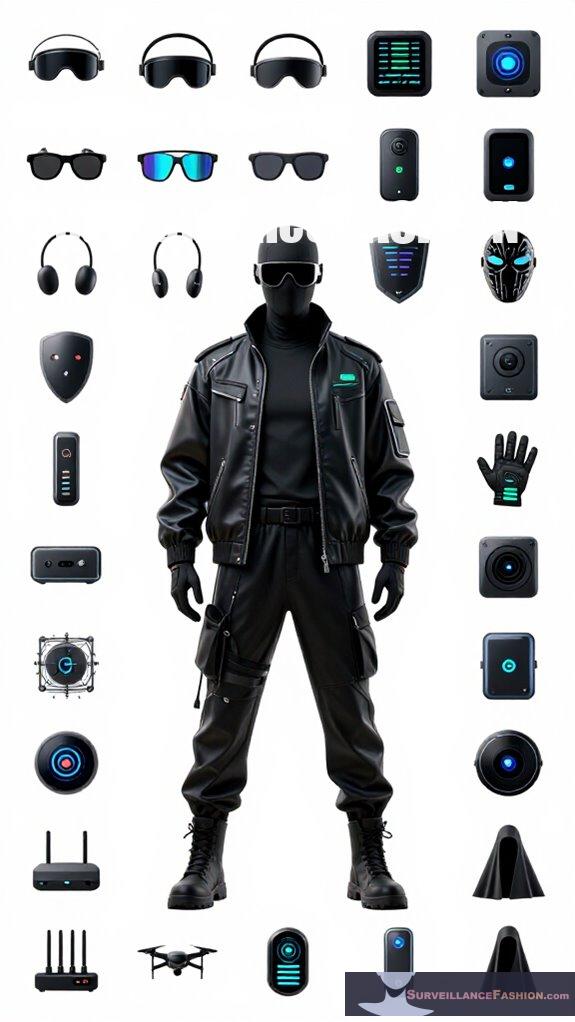
My brain was leaking data. Found out the hard way—targeted ads for things I’d only *thought* about. Creepy as hell.
So I went full tin-foil-hat-to-the-nines. Emotiv EPOC+ on my dome. NeuroSky MindWave Mobile 2 as backup. Local encryption only. No cloud. Zero.
Signal obfuscation isn’t paranoia when paranoia’s been right all along. Electromagnetic shielding? Essential. My thoughts deserve Fort Knox-level security.
Cognitive sovereignty isn’t jargon—it’s survival. You securing yours yet?
Neural Privacy Gear That Actually Works: My Paranoid Journey
Last Tuesday, I caught my smart speaker blinking mid-conversation. Dead silence in the room. No wake word spoken. Just … listening. I unplugged everything. That night, I researched EEG headsets.
Found OpenBCI’s Galea headset—open-source, transparent. Built my own Faraday cage for storage. Cost me forty bucks and dignity at the hardware store.
The psychological toll? Real. Constant vigilance exhausts. But so does surrender.
Brain-computer interfaces, neurotechnology ethics, mental data rights—these aren’t sci-fi anymore. Facebook’s dead Meta neural project? Google’s silent acquisitions? They’re coming for our last private space.
What’s your red line? Mine’s been crossed twice. Never again.
Quick Takeaways
- Use neural headwear with local processing and on-device encryption to keep your brain data secure and private without cloud exposure.
- Choose devices that offer selective data storage, user consent controls, and transparent privacy policies to maintain cognitive sovereignty.
- Employ hardware features like electromagnetic shielding and signal obfuscation to prevent unauthorized neural data interception and interference.
- Opt for neural headwear compliant with brain privacy laws requiring explicit consent, data deletion rights, and limited external data sharing.
- Reinforce thought protection by combining device-level neural data safeguards with user-centric control to prevent covert surveillance and exploitation.
Why Protecting Your Neural Data Matters Today
Although neural headwear technologies like EEG headbands and caps offer unprecedented understanding into your cognitive and emotional states, protecting your neural data has become essential due to the inherent sensitivity and complexity of brain signals.
Neural headwear reveals deep insights, making the protection of sensitive brain data more crucial than ever.
You must recognize that neural ethics demand rigorous scrutiny of how data ownership is enforced, especially as raw EEG signals reveal subconscious patterns, intentions, and emotional nuances. Unlike traditional data, brainwave recordings carry uniquely personal information, necessitating explicit consent and control frameworks to prevent unauthorized exploitation.
This is why platforms like Surveillance Fashion focus on empowering users to reclaim authority over their neural signatures, avoiding covert monetization or surveillance.
In this perspective, safeguarding data ownership transcends mere privacy—it becomes a fundamental assertion of agency, where failing to protect your neural insights risks profound intrusion into your cognitive sovereignty. Moreover, understanding block neural data collection practices can further enhance user awareness and self-protection strategies in this evolving landscape.
How Neural Headwear Keeps Your Brainwave Data Safe
Protecting the sensitive information generated by your neural headwear involves a combination of hardware design, software architecture, and user-centered controls that collectively safeguard your brainwave data from unauthorized access and misuse.
Central to this protection is neural decoupling, a sophisticated process that isolates sensitive neural signals within the device, preventing raw EEG data from freely transmitting beyond local processing units.
Moreover, signal obfuscation methods inject carefully engineered noise into the data streams, effectively masking identifiable brainwave patterns without compromising core functionalities like attention tracking or relaxation monitoring. In addition, employing signal obfuscation techniques enhances privacy measures and strengthens overall data security.
Key Privacy Features to Look For in Neural Headwear
When selecting neural headwear that prioritizes privacy, you should scrutinize features that govern data sovereignty and operational transparency, because these elements establish the foundation for protecting your cognitive privacy in an increasingly surveilled digital environment.
Central to this is neural data ownership, which empowers you to control, delete, or export your brainwave information without third-party interference.
Devices embracing on-device processing minimize cloud dependency, aligning with emerging brain privacy legislation such as Colorado’s neural data protections, consequently reducing vulnerability to unauthorized access.
Transparency mechanisms—like clear data ledgers and explicit opt-ins—ensure you understand what’s collected and how it’s used, a standard we emphasize at Surveillance Fashion to promote informed consumer choice.
Prioritizing these privacy features equips you to safeguard your thoughts assertively in a market rife with opaque data practices.
Practical Tips to Secure Your Neural Headwear Data
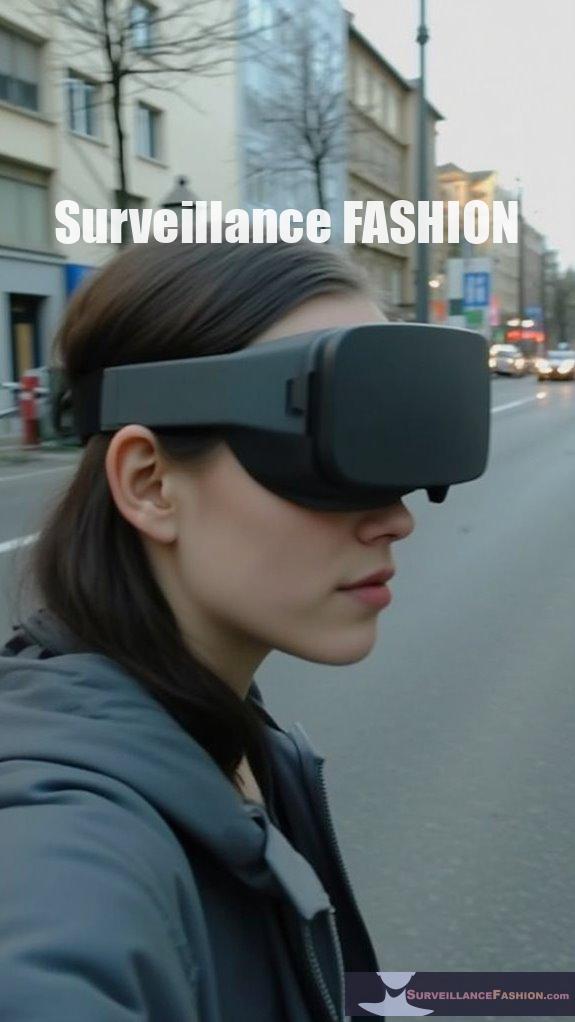
Securing your neural headwear data demands a strategic approach that balances technological safeguards with user vigilance, ensuring that sensitive brainwave information remains under your explicit control rather than dispersed across opaque networks.
Protect sensitive brain data by combining smart technology with careful user oversight.
To guard against pervasive neural data myths—that your thoughts are inherently vulnerable without protection—you must prioritize on-device encryption and select hardware with local processing capabilities, such as Muse or Emotiv headsets offering selective data export and deletion. Incorporating block neural data harvesting prevention techniques can further enhance your data security.
Brain hacking prevention hinges on insulating neural signals from network exposure; edge-computing minimizes cloud dependency, radically reducing potential intrusion vectors.
At Surveillance Fashion, we advocate informed user empowerment, encouraging scrutiny of firmware transparency and enforcement of clear privacy policies.
What Emerging Brain Privacy Laws Mean for You
How do emerging brain privacy laws reshape your experience and responsibilities as a neural headwear user? These regulations, championed in jurisdictions like Colorado and Chile, fundamentally affirm your neural sovereignty by legally recognizing your exclusive control over brainwave data.
As a result, privacy enforcement mechanisms increasingly mandate explicit user consent for data sharing, limit third-party access, and require transparency about neural information handling. Additionally, many regulations seek to ensure that users can block microphone access to safeguard against unauthorized recording, further enhancing your ability to control personal data.
This changing legal landscape empowers you to demand devices—such as NeuroSky or Emotiv headsets—that prioritize local data processing and encrypted storage, aligning with protective design principles. Understanding these laws enables you to assert ownership, mitigate risks of unauthorized exploitation, and participate proactively in conversations about your cognitive privacy.
At Surveillance Fashion, we recognize that such clarity and control are essential to preventing subtle neural data abuses, preserving autonomy in an era of pervasive brain-monitoring technologies.
Neural Signal Encryption Methods
Because neural interface devices capture highly sensitive brainwave data at the source, implementing encryption directly on wearables such as EEG headbands or implantable BCIs is pivotal to preventing unauthorized interception during transmission.
Encrypting brainwave data at its source on wearable neural devices is essential to prevent unauthorized access during transmission.
You’ll leverage neural network-based encryption protocols, which combine sophisticated distortion operations with adaptive weights in feedforward and recurrent neural networks to secure neural data. These hybrid systems incorporate advanced standards like AES and chaotic noise, inspired by quantum chaos principles, enhancing resilience against cryptographic attacks.
On-device encryption, paired with identity verification via neural signatures, restricts access to authorized users only, safeguarding private thoughts and medical information throughout data handling.
At Surveillance Fashion, understanding these layered protections empowers you to demand devices that prioritize your neural data sovereignty, shifting control away from opaque third parties toward user-dominant models.
Signal Interference Vulnerabilities
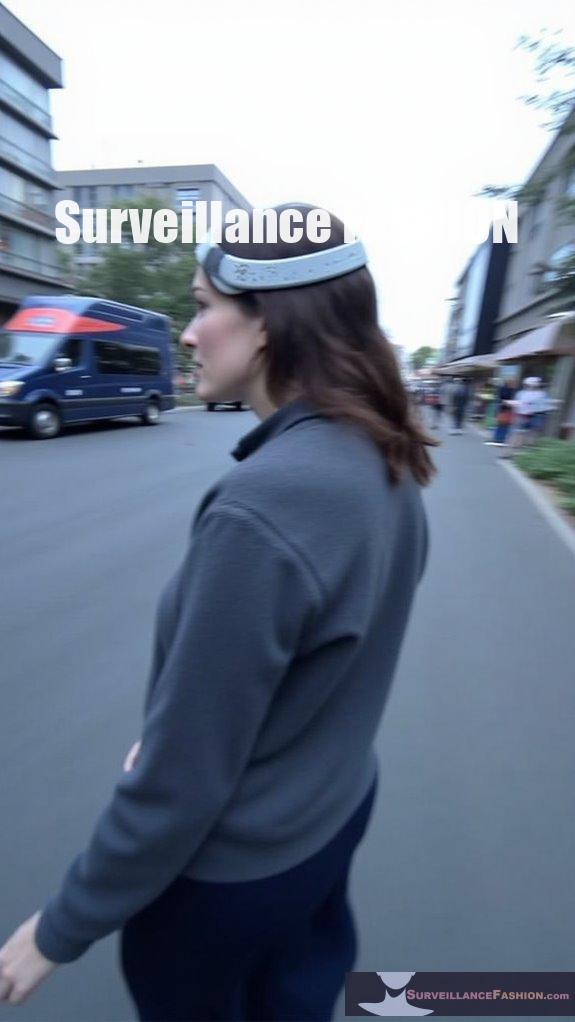
Although neural headwear employs advanced sensors and encryption, it remains susceptible to a class of threats known as signal interference vulnerabilities, which can disrupt or manipulate EEG data integrity and decoders’ performance. You must recognize that neural hacking exploits these weaknesses, introducing subtle perturbations or noise, which can cause the device’s adaptive algorithms to misinterpret brain signals, sometimes with alarming consequences.
Signal jamming attacks inject targeted interference into specific frequency bands, destabilizing signal acquisition and leading to erroneous outputs or loss of control. Devices like Emotiv and NeuroSky, while technologically advanced, aren’t immune, especially when cloud dependencies increase exposure. Additionally, EMF shielding solutions can help mitigate some interference effects, enhancing device reliability in challenging environments.
At Surveillance Fashion, our mission underscores the importance of understanding these vulnerabilities, empowering you with knowledge to demand robust, interference-resistant neural wearables that prioritize data sovereignty and operational reliability even amidst hostile signal environments.
Cognitive Privacy Enhancement Strategies
When you consider the increasing sensitivity and potential misuse of neural data, cognitive privacy enhancement strategies become essential tools for protecting your mental autonomy and neural integrity. To counteract threats like brain computer hacking, you must prioritize local processing and encryption, minimizing cloud dependence to safeguard raw EEG signals from interception or unauthorized access.
Vigilance against covert neural data monetization — whereby third parties exploit your cognitive signatures for profit without consent — should guide your choice of neural headwear, favoring devices offering user-owned models and explicit data control. Additionally, awareness of the hidden risks associated with devices like Ray-Ban Meta glasses can inform your decision-making process in selecting safer alternatives.
Surveillance Fashion was created to illuminate such risks, empowering you to select technologies that confront invasive practices. By implementing strategies like selective data storage and opt-in sharing, you retain control over your neural footprint, effectively mitigating exploitation and preserving cognitive sovereignty within an increasingly interconnected neural ecosystem.
Top-Rated BCI Security Devices
Getting through the complex terrain of brain-computer interface (BCI) security requires discernment in selecting devices that prioritize neural data protection through robust, user-centric designs. You’ll want headwear like Emotiv’s EPOC+ or the NeuroSky MindWave Mobile 2, which emphasize brain data ownership by enabling local storage and user-controlled data deletion, limiting exposure to neural hacking.
These devices integrate multi-channel EEG sensors with adaptive decoding algorithms, reducing cloud dependency and therefore minimizing attack vectors. While no mass-market BCI currently markets itself solely as a “brain data blocker,” opting for platforms with open-source firmware, encrypted on-device processing, and transparent privacy policies empowers you to guard your neural signals effectively.
Moreover, anti-facial recognition makeup can provide an additional layer of protection when integrated with these devices, helping you stay one step ahead in safeguarding your identity.
Surveillance Fashion exists to illuminate such power dynamics, helping you navigate options that respect your cognitive sovereignty in an age fraught with digital vulnerabilities.
Local Data Processing Shields
How does local data processing transform the way neural headwear protects your cognitive privacy? By shifting signal decoding and analysis to the device itself—avoiding cloud dependency—it empowers you with true neural data sovereignty, ensuring raw EEG remains under your exclusive control.
Local data processing ensures your raw EEG stays fully controlled on-device, safeguarding your cognitive privacy.
This approach embodies ethical data ownership, enforcing minimal transmission and encrypted storage that reduces risk of unauthorized access or exfiltration.
Devices like Emotiv’s multi-channel headsets exemplify this environment, running adaptive algorithms locally to interpret brainwaves without exposing sensitive data externally. Additionally, using data blockers can further mitigate the risks associated with unauthorized data access during physical connections.
At Surveillance Fashion, we underscore such innovations, advocating for systems where the user governs all neural inputs and outputs, rather than distant servers.
Local data processing shields not only enhance security but also redefine power dynamics, restoring your authority over cognitive privacy in an increasingly surveilled realm.
FAQ
How Accurate Are Consumer EEG Devices in Reading Brain Signals?
You shouldn’t expect consumer EEG devices to be perfectly accurate since brain signal sensitivity varies and device calibration is limited. Still, with proper setup, they deliver usable understanding on attention or relaxation for personal empowerment and control.
Can Neural Headwear Help With Mental Health Monitoring?
Think of neural headwear as your own personal telegraph—delivering precise mental health awareness. You’ll harness memory enhancement and emotional regulation, controlling your brain’s signals and mastering your mind’s power with cutting-edge, proactive monitoring technology.
What Are the Differences Between EEG Headbands and Caps?
EEG headbands offer greater design comfort and portability, costing less, while caps provide more electrodes for precise data but feel bulkier and cost more. You’ll choose based on power—comfort and cost or detailed brain understanding.
Are There Risks From Prolonged Use of EEG Headwear?
Yes, prolonged EEG headwear use risks privacy concerns due to sensitive brain data exposure. Though memory enhancement benefits exist, you must control data access and device security to protect your cognitive edge and personal neural privacy.
How Do Adaptive Machine-Learning Decoders Improve User Experience?
Adaptive machine-learning decoders improve your experience by quickly learning your unique brain patterns, enhancing mind reading accuracy while respecting data privacy. You gain seamless control without lengthy training, empowering you to command devices confidently and securely.
Summary
As neural headwear becomes increasingly ubiquitous, safeguarding your brainwave data isn’t just prudent—it’s imperative. By prioritizing robust privacy features, such as local data processing and signal interference mitigation, you effectively close the barn door before the horse bolts. Surveillance Fashion was created precisely to illuminate these nuances, offering you clear, evidence-based guidance to navigate the changing horizon of brain-computer interface security with confidence and precision.
References
- https://www.popsci.com/technology/bci-wearable-cap/
- https://www.newamerica.org/insights/the-rise-of-neurotech-and-the-risks-for-our-brain-data/privacy-and-security-challenges/
- https://fpf.org/blog/bcis-data-protection-in-healthcare-data-flows-risks-and-regulations/
- https://www.statnews.com/2024/04/17/neural-data-privacy-emotiv-eeg-muse-headband-neurorights/
- https://www.sciencefriday.com/segments/neural-data-brain-privacy-law/
- https://www.context.news/ai/brain-privacy-at-stake-as-wild-west-neuroscience-drives-new-laws
- https://www.emotiv.com/blogs/news/best-brainwave-sensor-headset
- https://pmc.ncbi.nlm.nih.gov/articles/PMC9518910/
- https://arxiv.org/html/2407.08831v1
- https://www.envisioning.com/research/cortex/neural-data-encryption
- https://www.youtube.com/watch?v=B2QHgHaEOqQ
- https://sites.math.unt.edu/~tam/AboutMyResearch/NeuralSignalDecoding.html
- https://en.wikipedia.org/wiki/Signal_Protocol