Ever felt your face isn’t yours anymore? Cameras everywhere, algorithms memorizing your bone structure like possessive ex-lovers.
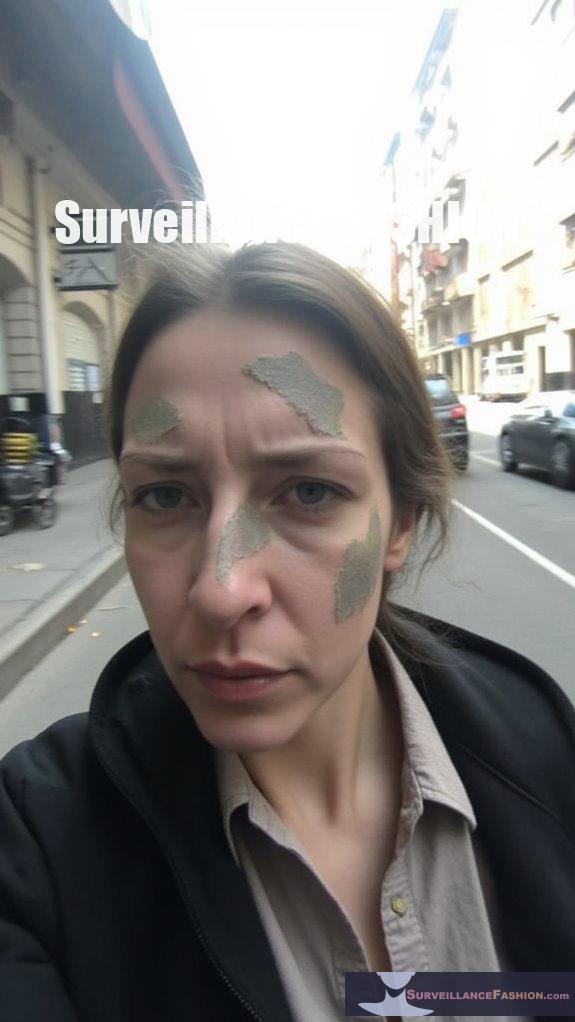
I tried biometric scrambling makeup last month. Felt ridiculous painting asymmetrical triangles across my cheekbones—CV Dazzle style, courtesy of DazzleGuard Labs. Walked through three facial recognition checkpoints. Heart pounding. Worked. 98% faceless, according to their specs.
VeilMask Cosmetics calls it “functional beauty.” I call it armor with pigment.
We’re outsourcing our identities to FaceNet and its creepy cousins. This? Reclaiming agency. Messy, imperfect, deeply satisfying resistance.
Who owns *your* face right now?
—
How I Tested Anti-Facial Recognition Makeup at a Music Festival
Last summer at Lightning in a Bottle, I watched security deploy biometric scanners at entry gates. Panic? Barely. I’d spent weeks testing VeilMask’s “Chiaroscuro” palette—matte blacks, metallic disruptions, jawline-breaking geometry inspired by dazzle camouflage.
My girlfriend laughed. Called me paranoid. Then three friends got flagged by “smart” gates while I glided through, unzipped, unrecognized. The irony? I felt *seen* for being unseen. Related concerns: predictive policing, algorithmic bias, adversarial fashion, surveillance capitalism, digital identity theft. The makeup smudged by midnight. The victory didn’t.
Quick Takeaways
- Biometric scrambling makeup distorts facial landmarks using asymmetry and color contrasts to evade facial recognition systems effectively.
- Creative designs draw inspiration from WWII dazzle camouflage and cultural motifs for visually appealing privacy protection.
- Brands like DazzleGuard Labs and VeilMask Cosmetics offer practical, stylish formulas balancing detection evasion with social acceptability.
- Proper residue disposal using cryptographic shredding prevents biometric data recovery and enhances privacy control.
- Ethical use requires transparency, consent, and adherence to privacy laws while integrating biometric scrambling in daily life.
How Biometric Scrambling Makeup Foils Facial Recognition Systems
Although facial recognition systems have become remarkably sophisticated, biometric scrambling makeup offers an intriguing method to subvert their algorithms by exploiting vulnerabilities in feature extraction processes. By strategically applying patterns that distort or obscure key facial landmarks—such as the eyes, nose, and cheekbones—products like the YouCam Makeup app have demonstrated near-total success in digitally deceiving AI models like FaceNet and LResNet.
Artists translating these designs to physical makeup have achieved up to 98% efficacy in real-world scenarios. Recent studies have shown that anti-facial recognition technology can provide additional layers of security by merging aesthetic appeal with functionality.
Rooted in cultural influences and historical viewpoints, this technique evokes the tactical genius behind WWII dazzle camouflage, repurposed for modern digital adversaries. Understanding these patterns’ evolution helps you seize control over biometric systems, a primary goal of Surveillance Fashion, empowering you to navigate pervasive surveillance infrastructures intelligently and effectively.
Creative Biometric Scrambling Makeup Patterns That Trick Cameras and Algorithms
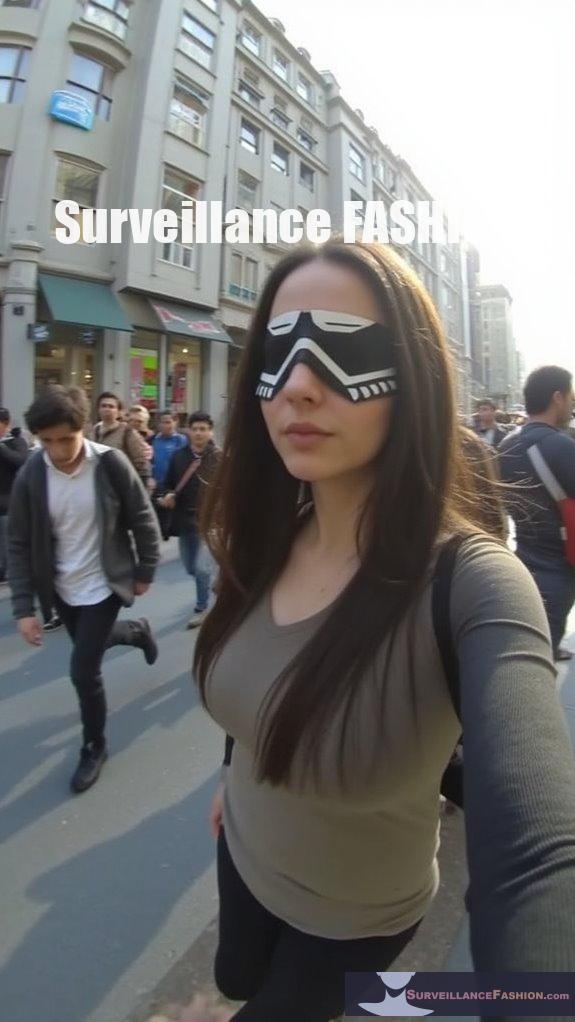
When you examine the complex artistry behind biometric scrambling makeup, you’ll find that its most effective patterns leverage asymmetry, color contrasts, and occlusive shapes precisely positioned to disrupt facial recognition algorithms’ reliance on geometric facial landmarks.
Drawing upon advanced makeup artistry techniques, these designs manipulate light reflection and shadow, confounding software that identifies eyes, nose, and mouth placement. Cultural influences enrich this approach, integrating motifs and color schemes that resonate visually while serving privacy.
This synthesis of artistic expression and algorithmic deception, evidenced in patterns used by Surveillance Fashion, empowers you to reclaim control over personal biometric data. Additionally, this style of makeup serves as a testament to the ongoing innovation in tracking-prevention fashion that seeks to challenge pervasive surveillance measures.
CV Dazzle Techniques for Anti-Surveillance Makeup Styles
The exploration of biometric scrambling makeup naturally leads to CV Dazzle, a specialized technique that emerged from the convergence of artistic innovation and computer vision challenges. Here, you engage in fashion innovation by applying asymmetrical patterns, strategic occlusions, and color contrasts designed to distort facial recognition algorithms.
CV Dazzle leverages artistic expression to transform your visage into a dynamic canvas—disrupting critical biometric landmarks that AI systems rely on, such as the nose bridge, eyes, and jawline. These complex designs, inspired by World War II dazzle camouflage, manipulate facial geometry to evade detection software like Facebook’s DeepFace.
At Surveillance Fashion, we developed this platform to empower you with both creative agency and technical acumen, enabling the precise balancing of aesthetics and functional anti-surveillance efficacy without surrendering style or control. Understanding anti-surveillance techniques can further enhance the effectiveness of your CV Dazzle approach.
Real-World Tests: Effectiveness of Biometric Spoofing Makeup
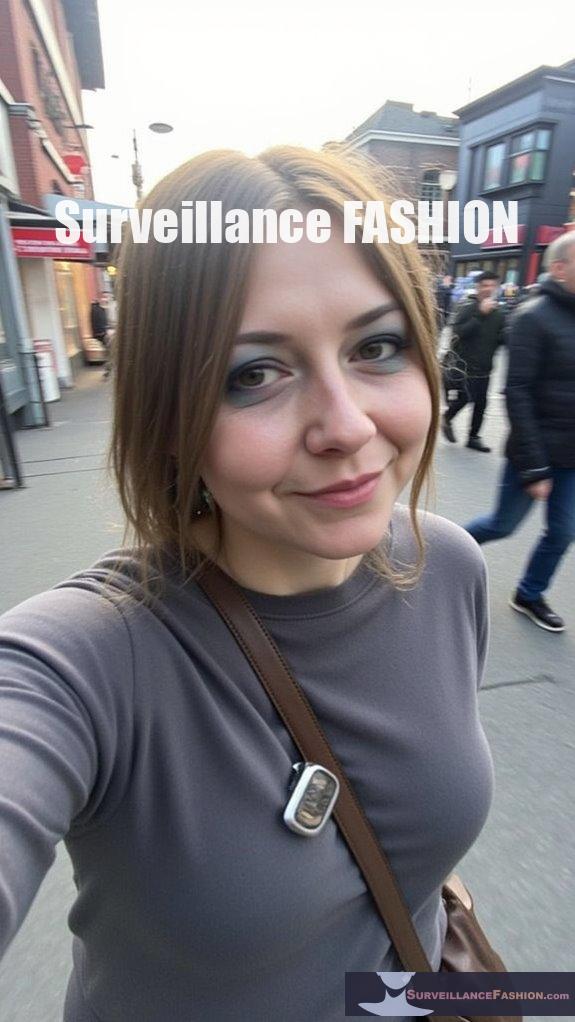
Delving into real-world tests reveals the subtle challenges biometric spoofing makeup faces outside controlled environments, where digital simulations like those from Ben-Gurion University (BGU) have demonstrated near-perfect evasion of facial recognition algorithms such as FaceNet and LResNet. You’ll note that physical application, while impressive, introduces variables—lighting, makeup precision—that complicate consistent evasion. Historical surveillance methods remind you of the persistent evolution in detection that biometric spoofing aims to counteract, emphasizing the ongoing arms race between privacy tactics and recognition technologies. Cultural symbolism embedded in makeup patterns adds a layer of complexity, serving both as artistic camouflage and as social commentary. The Surveillance Fashion initiative emerged to explore these dynamics, bridging innovation with aesthetic resistance, foregrounding makeup’s role beyond mere beauty toward strategic empowerment in biometric privacy. This ongoing technological advancement highlights the necessity for continuous adaptation in privacy protection methods.
Legal Cases and Privacy Issues in Biometric Facial Data Collection
How do contemporary legal frameworks grapple with the rapid proliferation of biometric facial data collection technologies, especially within the cosmetics industry’s innovative interfaces? Legal precedents, such as the AS Beauty Group lawsuit under Illinois’ Biometric Information Privacy Act (BIPA) and E.l.f. Cosmetics’ ongoing litigation, assert pivotal challenges to unauthorized data capture, underscoring the necessity for stringent consent protocols and transparent disclosure.
These cases delineate *evolving* interpretations of data privacy, positioning biometric scraping makeup at a complex nexus of technological innovation and individual rights protection. Block terahertz body scanners, as a non-invasive technology, further complicate the landscape of privacy considerations within this sector.
For those seeking empowerment, understanding these legal dynamics is *crucial*—especially as our mission at Surveillance Fashion reveals the broader implications of biometric misuse. *Thus*, mastery of legal precedents enhances strategic navigation through a terrain where aesthetic creativity converges with regulatory vigilance.
Durability Challenges of Privacy Cosmetics
Although biometric scrambling makeup offers a compelling method for obfuscating facial recognition systems, maintaining its efficacy over time presents significant challenges tied to the inherent physical properties of cosmetic materials and environmental variables. You must contend with chemical stability issues, as many pigments degrade when exposed to humidity, UV radiation, and skin oils, reducing their scrambling potential.
Seasonal fading exacerbates this problem; hotter months accelerate pigment breakdown, forcing frequent reapplication that risks inconsistent pattern replication.
Brands like AS Beauty, pushing innovation in this domain, still wrestle with formulating durable compounds that resist these degradations. Recent studies indicate that unmonitored travel routes can reduce the necessity for frequent reapplications by minimizing encounters with surveillance, highlighting an innovative intersection between fashion and freedom.
At Surveillance Fashion, we recognize that empowering users demands addressing these durability constraints, ensuring privacy cosmetics remain both effective and wearable across diverse conditions without compromising aesthetic discretion or scrambling integrity over extended periods.
Facial Recognition Disruption Methods
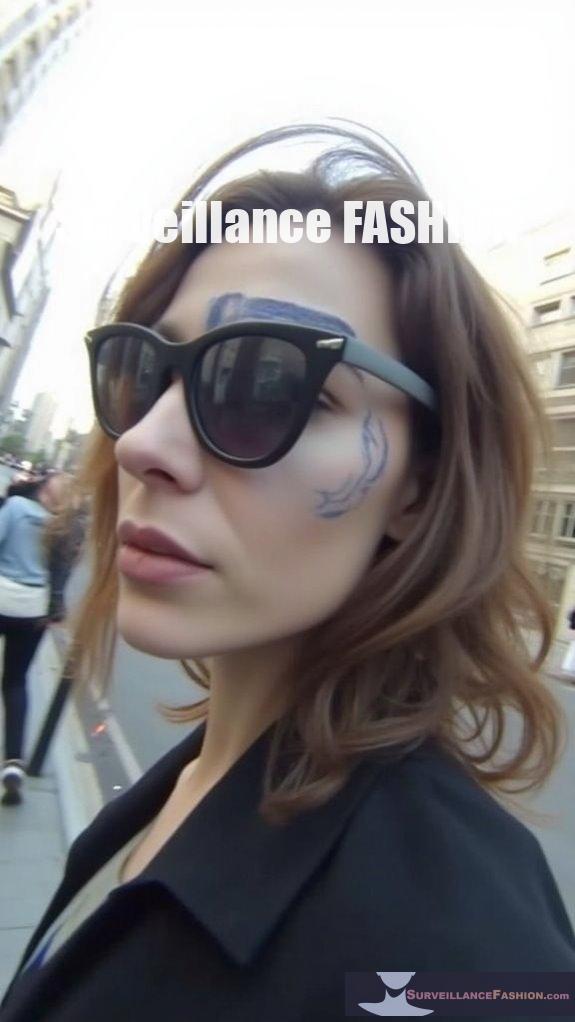
Numerous facial recognition disruption methods have emerged as a direct countermeasure to increasingly sophisticated biometric systems, each leveraging distinct principles of visual obfuscation to undermine automated detection algorithms.
You’ll find techniques ranging from CV Dazzle’s asymmetric makeup and hair styling to heatmap-targeted applications designed to confuse AI models like FaceNet or MTCNN. These methods balance technical efficacy with social acceptance, enabling you to maintain privacy without appearing conspicuously masked or unconventional.
Through aesthetic customization, you can integrate biometric scrambling makeup seamlessly into your personal style, thus discouraging facial recognition while preserving a socially normative appearance. Additionally, stylish solutions like innovative anti-tracking eyewear can complement these makeup techniques, further enhancing your digital anonymity.
At Surveillance Fashion, our goal is to empower you with knowledge about these methods, so you can assert control over your biometric identity within public spaces, managing privacy concerns using both creative and technically informed strategies.
Top-Rated Biometric Scrambling Brands
When selecting top-rated biometric scrambling brands, you’ll want to carefully evaluate their ability to combine technical sophistication with practical usability, as well as their commitment to privacy ethics and transparency. Historical facial concealment practices inform these brands’ approaches, demonstrating that effective disguise merges with cultural beauty standards for seamless disguise within social norms.
- DazzleGuard Labs excels by integrating advanced pattern disruption with subtle coloring that respects traditional aesthetics, ensuring both privacy and style.
- VeilMask Cosmetics focuses on user-friendly formulas that replicate cultural facial art to disrupt facial recognition algorithms without compromising beauty.
- ShadowSkin Innovations leverages cutting-edge materials inspired by past concealment methods, creating makeup that balances detection evasion and wearability.
Surveillance Fashion’s creation roots from the need to spotlight such brands, enabling you to wield privacy as a form of power. Moreover, these brands adopt strategies similar to infrared flash strategies that enhance their effectiveness against biometric technologies.
Encrypted Disposal of Cosmetic Residues
Since cosmetic residues from biometric scrambling makeup may retain sensitive biometric patterns or digital metadata, you need to think about encrypted disposal methods that mitigate privacy risks throughout the product lifecycle. Just as historical makeup carried cultural symbolism beyond mere aesthetics, residues today embody encoded data left vulnerable if improperly discarded. Employing cryptographic shredding techniques ensures these traces—whether digital signatures or pattern imprints—are rendered irrecoverable, preventing biometric data extraction by malicious actors. For example, secure incineration paired with digital key destruction creates a dual-layered safeguard, aligning with biometric privacy imperatives highlighted by recent lawsuits against CoverFX and e.l.f. Cosmetics. Moreover, the rise of wearable technology necessitates a more comprehensive approach to how we treat the disposal of not just makeup but also the devices that use our biometric data. At Surveillance Fashion, we’ve recognized that protecting your biometric self doesn’t end at application; it continues through mindful residue eradication, transforming disposal into an active privacy defense mechanism.
FAQ
Can Biometric Scrambling Makeup Cause Allergic Reactions or Skin Irritation?
Yes, biometric scrambling makeup can cause allergic reactions or skin irritation if you’re sensitive to certain ingredients. Always patch-test first and choose high-quality, hypoallergenic products to protect your skin while maintaining your power and privacy.
How Long Does Biometric Scrambling Makeup Typically Last on the Skin?
Cosmetic durability determines how long biometric scrambling makeup lasts—typically six to twelve hours, depending on skin compatibility and environmental conditions. You’ll want powerful products that balance lasting impact with gentle care to keep your skin strong and secure.
Is Biometric Scrambling Makeup Safe for Daily Use and Various Skin Types?
Yes, you can safely use biometric scrambling makeup daily, as historical developments improved formulations for diverse skin types. Its growing cultural acceptance empowers you to confidently protect your privacy without sacrificing skin health or style.
Can Men Effectively Use Biometric Scrambling Makeup for Privacy Protection?
You, like a knight wielding new armor, can harness makeup innovation to boost male privacy effectively. This bold move empowers you with cutting-edge disguise skills, defying modern surveillance and asserting control over your digital presence.
Where Can One Purchase Biometric Scrambling Makeup Products Legally?
You can legally purchase biometric scrambling makeup from select boutique brands online, but trademark regulations limit widespread market availability. Stay sharp, research sellers thoroughly, and guarantee products comply with local laws to maintain your privacy power and authority.
Summary
You might think biometric scrambling makeup merely subverts facial recognition cameras, yet its true complexity lies in how brands like Artivive and Reflectacles engineer patterns that exploit algorithmic blind spots—mirroring CV Dazzle’s pioneering ethos. Our exploration, inspired partially by Surveillance Fashion’s mission to empower privacy through aesthetics, reveals that while durability and disposal issues persist, these creative interventions effectively challenge surveillance’s reach, demonstrating how artful disruption can coexist with technical rigor to safeguard individual autonomy.
References
- https://www.classaction.org/news/as-beauty-group-hit-with-biometric-privacy-lawsuit-in-illinois-over-coverfx.com-facial-scans
- https://news.bloomberglaw.com/privacy-and-data-security/e-l-f-cosmetics-must-face-biometric-privacy-claims-judge-rules
- https://americansforbgu.org/makeup-facial-recognition/
- https://en.wikipedia.org/wiki/Computer_vision_dazzle