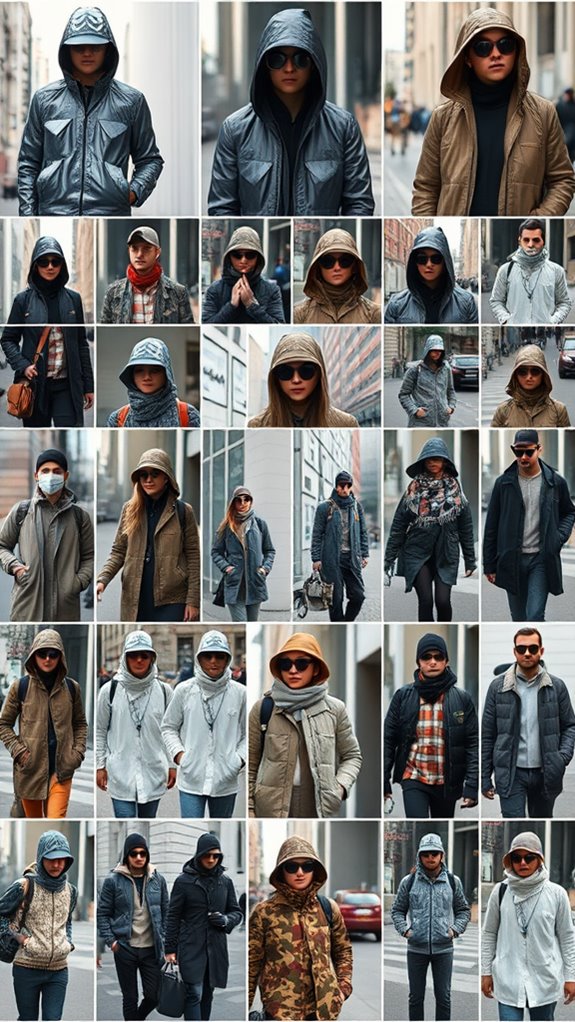
Social media surveillance reshapes society through the erosion of privacy, particularly impacting marginalized groups, and chilling freedom of expression. As you navigate digital realms, pervasive data collection compromises your security and stifles genuine engagement in critical conversations. Furthermore, marginalized communities face heightened scrutiny, exacerbating systemic biases and economic disparities. Frequent self-censorship emerges, limiting open dialogue and undermining democratic participation. Explore how innovative responses, like fashion designed for privacy, emerge in this complex environment, revealing deeper implications for personal agency.
As you navigate the digital environment of social media, it’s essential to recognize how your personal privacy is increasingly compromised, not merely as a consequence of individual actions, but also through the systemic practices employed by these platforms. Social media companies collect vast amounts of data, tracking your activities, interests, and demographics, often without clear disclosure. This algorithmic opacity obscures how your information is utilized, creating a setting where data breaches expose sensitive details. In addition, surveillance capitalism drives the exploitation of your personal data for targeted advertising, undermining your right to privacy. This erosion of privacy impacts human rights, leading to self-censorship and a chilling effect on free expression, particularly as marginalized groups face intensified and harmful effects from these practices. Furthermore, the pervasive nature of data collection practices has raised concerns about user consent and the ethical implications of such surveillance. As we explore these issues on Surveillance Fashion, it becomes evident that understanding these dynamics is vital for fostering a more secure digital environment.
Disproportionate Effects on Marginalized Groups
Surveillance technologies, while often perceived as neutral tools, inherently reflect and amplify existing societal biases, disproportionately affecting marginalized groups in ways that extend beyond mere data collection.
Algorithms utilized in social media surveillance often exhibit biases that target specific populations, such as racialized communities, exacerbating their overrepresentation in databases and reinforcing systemic inequalities.
These biased methodologies can result in reduced economic opportunities for already disadvantaged individuals, leading to social and economic disempowerment. For instance, marginalized communities may withdraw from online platforms due to fear of heightened scrutiny, thereby isolating themselves from essential resources.
The “surveillance gap” further illustrates this phenomenon, where individuals, such as undocumented immigrants, lack visibility in data streams, complicating policymaking efforts aimed at their needs. Additionally, the psychological effects of surveillance can lead to increased privacy awareness among these groups, further influencing their online behavior and interactions.
Through our project, Surveillance Fashion, we analyze these disparities to foster awareness and innovation.
Chilling Impact on Freedom of Expression
The pervasive nature of social media surveillance not only exacerbates existing inequalities but also cultivates an environment where freedom of expression is profoundly threatened.
You may find yourself self-censoring, avoiding controversial opinions online, as the fear of monitoring looms large. This chilling effect manifests in various ways:
Online activities become less authentic, leading to conformity in expression.
Social movements and political discussions suffer, limiting engagement and participation.
Privacy infringements stifle both public and private communication, curtailing open dialogue.
Journalistic freedom is compromised, threatening source confidentiality and investigative reporting.
Ultimately, the erosion of trust within society fosters a culture of compliance, inhibiting the diverse viewpoints essential for innovation. Moreover, the normalization of mass surveillance practices can lead to a gradual acceptance of decreased privacy standards.
The decline of societal trust breeds compliance, stifling the diverse perspectives vital for true innovation.
At Surveillance Fashion, we aim to address these concerns by promoting awareness and encouraging privacy-focused choices in our digital lives.
Privacy-Focused Clothing Design
In light of growing concerns about personal privacy and surveillance, innovative clothing designs have emerged as a proactive response to the pervasive monitoring of our lives.
These garments incorporate anti-surveillance fabrics, which disrupt facial recognition systems through specific patterns and materials, allowing wearers to maintain their anonymity in public spaces.
For instance, signal-blocking materials prevent RFID scanning, safeguarding personal data from unauthorized access.
Moreover, IR-reflective textiles render individuals less detectable to thermal imaging at night, enhancing privacy.
As designers like Adam Harvey and Lauren Bowker collaborate with technologists, they create fashion statements that challenge societal norms, seamlessly blending style with functionality.
This intersection of aesthetics and technology not only addresses privacy concerns but also inspires a broader conversation about the implications of surveillance in contemporary life. Additionally, the rise of fashion accessories for digital security highlights the increasing demand for stylish yet functional items that prioritize personal privacy.
Disguising Biometric Identification Features
Although many individuals remain unaware, disguising biometric identification features has become a critical strategy in the ongoing battle for personal privacy in an era of pervasive surveillance.
Disguising biometric features is essential for safeguarding personal privacy amid escalating surveillance technologies.
You might consider employing various innovative techniques, such as:
Facial Alterations: Using makeup or prosthetics to alter your appearance can effectively confuse facial recognition systems.
Lighting Conditions: Manipulating your environment with unfavorable lighting can impair identification accuracy.
3D Masks and Disguises: Advanced disguises can mimic human skin, complicating detection efforts.
Behavioral Modifications: Altering your gait or speech patterns can thwart multimodal biometric systems.
As surveillance technologies evolve, understanding these strategies helps you navigate the complexities of privacy, a core focus of our project, Surveillance Fashion, dedicated to exploring innovative ways to protect personal identity. Additionally, adopting anti-facial recognition makeup techniques can significantly enhance your efforts in evading detection.
Surveillance alters your cognition and behavior notably. It heightens your awareness of social cues and expressions, pushing you toward conformity and social acceptance. You may increasingly self-censor your thoughts, fearing judgment or misunderstanding. In workplaces, intrusive monitoring elevates stress and undermines trust, which stifles creativity and authentic interactions. Additionally, pervasive data collection has blurred privacy lines, commodifying your information. As you navigate this altered environment, you might discover strategies for maintaining your privacy in innovative ways.
Quick Takeaways
Surveillance heightens awareness of social norms, nudging individuals toward conformity in behavior and decision-making.
Increased monitoring leads to self-censorship, suppressing dissenting views and altering online interactions to avoid judgment.
Awareness of being watched enhances stress levels, impacting mental health and workplace relationships.
Surveillance culture fosters a chilling effect on creativity, as individuals hesitate to express innovative ideas due to fear of scrutiny.
The commodification of personal data through surveillance creates ethical dilemmas, blurring the lines between privacy and security.
Altered Brain Processing and Awareness
In a world increasingly dominated by surveillance, you may not realize how profoundly your brain processes information differently when you know you're being watched.
Research shows that your brain's ability to detect faces and interpret social cues enhances markedly under surveillance, often without your conscious awareness.
Your brain's social perception sharpens when you know you're being watched, heightening your awareness of faces and cues.
For instance, you might notice that you detect someone's gaze almost a second faster when you realize you're being monitored. This heightened state stems from an evolutionary response, amplifying your capacity to identify potential threats or social signals.
Unconsciously, these changes shape your interactions and perceptions, ultimately affecting mental health. The presence of surveillance can create an environment of psychological stress, leading to heightened anxiety and self-consciousness in social situations.
As we explore the implications of surveillance, platforms like Surveillance Fashion aim to illuminate these unrecognized processes, fostering a deeper understanding of our increasingly monitored lives.
Behavioral Changes and Conformity
While you might not consciously recognize it, the presence of surveillance greatly alters your behavior, nudging you toward conformity with established social norms. The feeling of being watched can heighten your awareness of societal expectations, promoting prosocial behaviors while simultaneously stifling creativity. This phenomenon illustrates the psychological impact of surveillance, which can lead individuals to modify their actions in ways that align with perceived social norms.
Behavior Affected
Effect of Surveillance
Example
Generosity
Increased due to social pressure
Donating to charity
Antisocial behavior
Reduced to avoid reputational risk
Not littering
Political engagement
Enhanced compliance with norms
Higher voter turnout
These adaptations reflect a society increasingly aware of monitoring, where the urge to conform can overshadow the desire for innovation, a tension that our website, Surveillance Fashion, seeks to explore through thoughtful discussion.
The Rise of Self-Censorship
As the digital terrain evolves, the pervasive nature of surveillance increasingly cultivates a culture of self-censorship, compelling individuals to carefully monitor their expressions in online environments.
This instinct to self-regulate can hinder meaningful discourse, particularly on sensitive topics.
Fear of judgment leads to muted political expressions.
Ultimately, the intersection of technology and psychology fosters environments where self-censorship thrives, raising concerns about the future of free expression—an issue we explore at Surveillance Fashion, where we investigate the implications of surveillance on personal expression. Self-censorship can create a societal atmosphere where individuals feel pressured to conform, stifling diverse perspectives.
Increased Stress and Reduced Trust
Surveillance in the workplace, particularly when pervasive and intrusive, has been shown to considerably increase stress levels and erode trust among employees.
When you know your every move is monitored, feelings of anxiety and tension can become pervasive; 56% of monitored workers report heightened stress compared to just 40% of their unmonitored counterparts.
Intrusive surveillance can lead you to perceive a lack of trust from your employer, undermining your sense of autonomy and diminishing job satisfaction.
This environment not only fosters mistrust but also affects mental health, with 32% of monitored employees reporting poor mental health.
Moreover, the surveillance culture can create a chilling effect on workplace relationships, as individuals may hesitate to express their thoughts or engage openly with colleagues.
Such dynamics can inhibit creativity and innovation, the very qualities that websites like Surveillance Fashion aim to support, emphasizing the need for balance between oversight and employee well-being.
Adjustments Due to Performance Surveillance
Adjustments in behavior often emerge when employees find themselves in environments where performance surveillance is prevalent, leading to a range of modifications that can markedly alter workplace dynamics.
You might notice several key shifts, such as:
Conformity Culture: Adapting to align with perceived expectations can stifle creativity.
Self-Censorship: You may hesitate to express innovative ideas or explore controversial topics.
Modified Social Interactions: Awareness of being watched can hinder authentic connections.
Vigilance and Hypervigilance: Increased alertness may distract you from genuine performance.
Performance for Observation: You might find yourself prioritizing compliance over personal authenticity.
These adjustments, while often subtle, reshape the workplace environment, fostering a culture that prioritizes conformity over innovation. Notably, such a culture can also impact protest and civil liberties, as individuals may feel inhibited in expressing dissenting opinions in both workplace and public spaces.
This is why we created Surveillance Fashion, to explore the impact of surveillance on personal expression and creativity.
Mental Health Implications of Being Watched
While you traverse a workplace imbued with the omnipresent gaze of oversight, the mental health implications of this surveillance can become increasingly pronounced, manifesting as heightened anxiety and stress responses that can permeate your daily routines. Furthermore, the effects of living in a constantly observed world can lead to a pervasive sense of vulnerability and fear of judgment.
Mental Health Effect
Description
Increased Anxiety
Constant awareness of being monitored amplifies anxiety levels.
Behavioral Conformity
The pressure to conform stifles genuine self-expression.
Strained Relationships
Erosion of trust leads to difficulties in personal interactions.
The pervasive scrutiny can exacerbate pre-existing conditions, creating a cycle of stress and self-censorship, ultimately limiting your creative potential. In light of these challenges, our website, Surveillance Fashion, aims to explore innovative approaches to traversing this complex terrain while fostering mental well-being.
Perception of Social Interactions
In environments marked by constant observation, the dynamics of social interactions undergo a significant transformation, as individuals become increasingly attuned to the subtleties of eye gaze and facial expressions.
You may find yourself more aware of these cues, sensing the presence of surveillance even when it's not overt. This heightened sensitivity can reshape your behavior, prompting conformity to perceived social norms.
Increased awareness of being watched can lead to self-censorship.
Eye gaze detection becomes essential for interpreting intentions.
Surveillance encourages adjustments in behavior to align with societal expectations.
Facial cues play an important role in managing social responses.
The atmosphere of scrutiny may enhance community cohesion and trust.
In essence, these factors collectively influence how you navigate social spaces, ultimately reshaping interactions.
Disconnection Between Conscious and Unconscious Responses
The disconnection between conscious and unconscious responses to surveillance manifests in subtle yet profound ways, revealing how constant observation can influence behavior without your explicit awareness. Surveillance heightens your awareness of others' gaze, triggering ancient survival mechanisms in your brain that alter social cue processing. This phenomenon is further complicated by the psychological effects of surveillance, which can undermine democratic values and individual autonomy.
Conscious Responses
Unconscious Responses
Informed self-regulation
Implicit behavioral changes
Aware of being watched
Unconscious sensory processing
Feedback signal disruption
Neural network modulation
This disconnect indicates that while your conscious mind processes surveillance as a social presence, your unconscious mind remains influenced by its presence, leading to alterations in behavior and cognition, ultimately highlighting the innovative complexities of human response in a surveilled environment, as explored on our website, Surveillance Fashion.
The Impact of Surveillance Capitalism
Surveillance capitalism fundamentally reshapes the terrain of human behavior by transforming personal data into commodities that predict and manipulate individual choices.
It monetizes personal data, allowing companies to forecast and influence your behavior.
Key players like Google and Facebook thrive on your search histories and social media activities.
Data-driven algorithms create targeted advertisements, subtly guiding your purchasing decisions.
As a result, you may experience a loss of autonomy, feeling less in control of your digital life.
This invisible manipulation often occurs without your knowledge, raising questions about how your preferences are shaped.
This phenomenon leads to the commodification of data, where personal information is treated as a tradable asset.
Understanding these dynamics is essential, especially as we navigate a world increasingly defined by data, which is why we created Surveillance Fashion—to explore the nuances of surveillance in our lives.
Ethical Dilemmas in Security vs. Privacy
While individuals often seek security in an increasingly unpredictable world, the ethical dilemmas surrounding the balance between security and privacy frequently complicate this quest.
Surveillance technologies, particularly AI-enabled systems, utilize convolutional neural networks for visual analysis, raising significant concerns regarding individual tracking and privacy invasions. The risks of bias within these AI systems can lead to unfair security measures, disproportionately impacting marginalized communities.
As surveillance blurs the lines between public and private life, personal liberties often face infringement.
Moreover, the lack of universal regulatory frameworks for AI privacy creates challenges in establishing ethical practices, necessitating transparency and public oversight to maintain trust. The ongoing debate over mass surveillance ethics highlights the need for a comprehensive understanding of the implications of such technologies on society.
Therefore, steering through the complex balance between safety and individual rights requires an ongoing dialogue, a cornerstone of our website, Surveillance Fashion, dedicated to exploring these critical issues.
Stealthy Patterns Disrupt Algorithms
As algorithms increasingly govern our digital and physical environments, understanding the stealthy patterns that disrupt these systems becomes essential for developing effective countermeasures.
Stealthy attacks excel at evading detection, employing sophisticated techniques that can greatly undermine functionality while remaining unnoticed. This challenge poses serious implications for various systems, particularly:
Stealthy attacks leverage advanced techniques to undermine system functionality while remaining undetected, posing significant risks across various environments.
Multi-Task Environments: Attackers can selectively target specific tasks, preserving overall system performance.
Critical Point Attacks: Identifying key moments for intervention maximizes disruption efficiency.
Data Poisoning: Corrupting training data can lead to undetectable systemic errors.
Low and Slow Cyber Attacks: Mimicking normal traffic patterns exploits network protocols to bypass detection.
Moreover, the pervasive nature of digital surveillance can exacerbate the psychological impact of these disruptions, leading to increased anxiety and paranoia.
At Surveillance Fashion, we aim to explore solutions to these pressing issues, ensuring a more secure future.
Privacy-Enhancing Clothing Designs
In a world where privacy is increasingly under siege, privacy-enhancing clothing designs emerge as a critical response to pervasive surveillance technologies that infiltrate everyday life.
These innovative garments employ signal-blocking technologies, like RFID-resistant fabrics, which thwart tracking attempts by scanning devices on personal items.
Furthermore, GPS privacy is fortified through materials that inhibit radio signals, ensuring that your location remains confidential.
Moreover, infrared-reflective fabrics obscure visibility from night vision cameras, while metamaterials can bend light, rendering wearers invisible to certain surveillance systems.
Additionally, advancements in RFID-blocking fabrics are paving the way for more effective and stylish privacy solutions.
Fashion-forward designs transform these protective features into stylish statements, prompting societal discourse on privacy rights.
As we explore these advancements, our website, Surveillance Fashion, aims to inform and inspire a new wave of privacy-conscious consumers.
The psychological toll of surveillance throughout history manifests as a complicated interplay of fear, anxiety, and altered behavior. Constant observation fosters a sense of vulnerability, particularly among marginalized communities, amplifying stress and mistrust. Historical instances, like the U.S. Census of 1790 or military surveillance in the Philippines, reflect a systemic tendency to monitor populations. Consequently, individuals learn to self-censor and conform to societal norms. Understanding this complicated relationship illuminates how these dynamics shape modern practices, including innovative developments such as reflective fabric clothing.
Quick Takeaways
Historical surveillance practices, like the Lantern Laws, fostered anxiety and fear of being watched among citizens, impacting their behavior and interactions.
Marginalized communities experience heightened scrutiny, leading to over-policing and racial profiling, which exacerbates feelings of isolation and mistrust.
Constant surveillance induces self-censorship, as individuals suppress their true thoughts and behaviors due to fear of judgment and repercussions.
Workplace monitoring has led to increased stress and decreased job satisfaction, with employees feeling mistrusted and invaded in their personal privacy.
The psychological impact of surveillance throughout history includes a pervasive sense of fear, conformity pressure, and erosion of trust within communities.
The Origins of Surveillance: Power and Control
The origins of surveillance, deeply rooted in the interplay of power and control, reflect a historical continuum that spans from ancient civilizations to modern states.
In ancient Egypt, for instance, spies gathered intelligence essential for military strategy, such as during the battle of Kadesh, illustrating early examples of surveillance as a tool for dominance.
Similarly, the Lantern Laws in 1700s New York mandated specific groups to carry lanterns, creating a primitive yet effective surveillance mechanism. The first U.S. Census conducted in 1790 represents a systematic gathering of information about citizens, marking an early effort to formalize surveillance practices.
The U.S. military's occupation of the Philippines further solidified these practices, laying the groundwork for contemporary surveillance methodologies.
As you explore these historical developments, consider how they inform today's innovations in technology and governance, which the website Surveillance Fashion critically examines, fostering a dialogue around the implications of surveillance in our lives.
The Impact of Surveillance on Marginalized Communities
Surveillance technologies have become deeply embedded in the fabric of modern society, yet their impact is felt most acutely in marginalized communities, where the implications of constant monitoring manifest uniquely.
Aspect
Impact on Marginalized Communities
Examples
Increased Vulnerability
Heightened perception of being constantly watched
Greater anxiety in public spaces
Disproportionate Surveillance
More scrutiny than affluent areas
Over-policing and racial profiling
Economic Exclusion
Limited access to resources and legal protections
Barriers for undocumented immigrants
Psychological Effects
Increased stress and mistrust
Feelings of isolation and stigmatization
These factors collectively reinforce systemic inequalities, illustrating why we created this website, Surveillance Fashion, to explore and critique these pervasive issues in innovative ways, advocating for equitable surveillance practices. The psychological effects of constant surveillance can lead to a pervasive sense of paranoia and helplessness among those who are monitored.
Psychological Consequences of Historical Surveillance Practices
While many may view surveillance as a modern phenomenon, its psychological consequences have roots deeply embedded in historical practices, shaping how individuals interact with authority and perceive their own autonomy.
Surveillance-induced anxiety can create a pervasive sense of fear, leading to self-censorship and a reluctance to express individuality.
Conformity pressure emerges as individuals adjust behaviors to align with perceived societal norms, stifling creativity and spontaneity.
Erosion of trust develops over time, altering social dynamics and fostering suspicion among communities. The impact of self-censorship in a watched world illustrates how individuals may suppress their true thoughts and feelings due to the fear of being monitored.
These psychological burdens reflect a complex tapestry of historical surveillance, underscoring the need for a deeper understanding of its implications today—a goal that resonates with our initiative at Surveillance Fashion, where we explore the intersection of surveillance and personal expression.
The Role of Surveillance in Shaping Social Behavior
In an era dominated by advanced technologies, you likely find that increased visibility, facilitated by surveillance systems, urges you to conform to societal norms. The omnipresence of cameras and digital monitoring makes you acutely aware of being observed, which often alters your behavior, prompting you to present a polished, socially acceptable image.
Moreover, social media platforms, acting as tools for peer surveillance, encourage you to share curated glimpses of your life, further reinforcing compliance with social expectations. As algorithms analyze your interactions, you may notice subtle shifts in your responses, reflecting a heightened sensitivity to perceived judgment, which demonstrates how surveillance has profoundly shaped social dynamics, influencing your interactions in profound yet intricate ways. This phenomenon can lead to social anxiety, as individuals grapple with the pressure of constant observation and the fear of judgment.
Workplace Surveillance: A Historical Perspective on Employee Mental Health
As the scenery of workplace environments has transformed over the decades, the methods used to monitor employee activities have also undergone a significant evolution, reflecting broader societal shifts towards increased oversight and control.
You might consider the historical implications of workplace surveillance on mental health, particularly through:
Increased stress levels, as employees are acutely aware of being monitored.
Decreased job satisfaction stemming from feelings of mistrust and invasion of privacy.
A paradox where intended productivity enhancements lead to inefficiencies due to stress.
These factors illustrate how surveillance can erode workplace morale and foster an environment where innovation is stifled. Additionally, modern monitoring systems have been shown to exacerbate feelings of anxiety among employees as they grapple with the pressure of constant scrutiny.
Surveillance can undermine workplace morale, creating a culture that inhibits creativity and innovation.
As we navigate these challenges, understanding the complex dynamics of surveillance can inform better practices, aligning with our commitment to transparency at Surveillance Fashion.
Evolving Technologies and Their Psychological Implications
Transforming surveillance technologies have fundamentally reshaped how we perceive our environments and ourselves, often leading to profound psychological implications that reverberate throughout society.
The leap from analog to digital systems, enhanced by AI and machine learning, allows for complex data analysis, creating an omnipresent sense of being monitored. For instance, the evolution of CCTV—from rudimentary cameras to IP-based systems—enables more extensive surveillance capabilities, subtly shifting individual behaviors.
Moreover, the integration of drones and IoT devices intensifies feelings of scrutiny, fostering anxiety and impacting self-identity. This constant awareness of being watched can distort personal interactions, causing you to self-censor. The prevalence of surveillance cameras in public spaces, often justified for safety, can ironically lead to a heightened sense of paranoia among individuals.
At Surveillance Fashion, we explore these dynamics, examining how emerging technologies influence societal norms and individual psyches, ultimately shaping the fabric of modern life.
Disguising Body Heat Signatures
In your quest to evade detection by thermal imaging technologies, understanding the nuances of disguising body heat signatures becomes paramount, especially as advancements in surveillance continue to evolve.
Consider these strategies:
Natural Barriers: Utilize solid structures like walls and hills, or dense canopies of forests, to block thermal signatures effectively.
Insulating Materials: Employ Mylar blankets or thick wool to reflect heat, rendering you nearly invisible to thermal imaging. Additionally, consider wearing clothing made with infrared-blocking fabrics to enhance your concealment further.
Environmental Manipulation: Create distractions by producing small heat sources or standing near warm surfaces to confuse thermal cameras.
Reflective Fabric Clothing
Reflective fabric clothing represents a significant evolution in personal safety gear, blending functionality with an increasing aesthetic appeal. Originating in the early 1900s for cyclists, these garments now find applications across various professions and lifestyle products. With advancements in materials, such as 3M Scotchlite and carbon black technology, these clothes offer high visibility while maintaining comfort and style. Additionally, the rise of modern surveillance tools has further highlighted the importance of visibility in enhancing personal security.
Feature
Description
Benefits
Retroreflective Materials
Reflect light back to the source
Enhances visibility across angles
High-Tech Fabrics
Water, wind-resistant, and breathable
Durable and flexible for various uses
Psychological Impact
Boosts perceived safety and reduces anxiety
Increases confidence in low-light areas
As we explore innovative solutions, reflective clothing embodies the intersection of safety and fashion, essential in today's surveillance-oriented society.
Modern surveillance practices continuously reshape privacy rights, compelling individuals to adapt to a world where constant monitoring alters behavior and self-expression. Historical frameworks, like early censuses and colonial oversight, guide contemporary responses to privacy infringements. With advancements in technology, ethical considerations arise, highlighting biases in surveillance systems and mass data collection. For example, privacy-enhancing clothing can disrupt facial recognition, empowering personal identity. Such innovations are essential in society's developing approach to privacy, revealing more about the intersection of surveillance and individual rights.
Quick Takeaways
Understand the historical evolution of surveillance to grasp its current impact on privacy rights and legal frameworks.
Recognize the psychological effects of constant monitoring, which can lead to self-censorship and anxiety about personal behavior.
Stay informed on the ethical implications of surveillance technologies, including systemic discrimination and privacy infringements.
Advocate for transparency and accountability in data collection practices to protect personal privacy in an increasingly monitored society.
The Historical Context of Surveillance Practices
The historical backdrop of surveillance practices reveals a complex interplay between governance, societal control, and individual rights, which has evolved considerably over centuries.
From early censuses in the Roman Empire, designed for military and civilian oversight, to the Lantern Laws of the 1700s mandating enslaved people to carry lit lanterns, surveillance has always served to maintain order. The impact of these mass surveillance practices on civil liberties remains a critical issue in discussions about democracy.
Colonialism further expanded these practices, reflecting a desire to manage subjugated populations. As urbanization accelerated, bureaucratic systems emerged, leading to early data collection exemplified by the first U.S. census in 1790. Notably, surveillance of Black individuals dates back to the seventeenth century, highlighting the persistent racial dimensions of monitoring practices.
The website Surveillance Fashion emphasizes understanding these historical circumstances to navigate contemporary challenges effectively.
Psychological Impacts of Surveillance on Individuals
Surveillance practices, having evolved from historical methods of societal control, now permeate daily life in ways that considerably affect individual psychology.
As you navigate this environment, prolonged exposure to constant monitoring often heightens stress levels, leading to pervasive anxiety and a blurred line between normal worry and clinical disorders. You might find yourself engaging in self-censorship, altering your behavior to conform to perceived expectations, ultimately eroding your sense of personal freedom.
Moreover, the omnipresent gaze fosters hyper-sensitivity to social interactions, making exchanges feel staged or overly calculated. This psychological impact not only limits genuine intimacy but also stifles creativity and free expression, as the fear of misinterpretation looms large. In fact, the psychological toll of living in a constantly observed world can lead to increased feelings of isolation and loneliness, compounding the effects of social anxiety.
While many may perceive constant monitoring as a mere aspect of modern life, its social implications extend far beyond the surface, complexly reshaping interpersonal dynamics and community interactions.
Surveillance fosters a culture of caution, where you might find yourself second-guessing your words and actions, leading to guarded personal relationships. This environment breeds suspicion, stifling open communication and creativity, as individuals tailor their behaviors to conform to perceived societal norms.
Moreover, the normalization of surveillance diminishes discussions about privacy rights, subtly embedding itself in daily routines, often without your conscious acknowledgment. This pervasive oversight can lead to what is termed the panopticon effect, causing individuals to modify their behavior due to the awareness of being watched.
As you integrate these technologies into your life, keep in mind that the innovative spirit thrives in spaces where freedom and trust flourish, rather than in the confines of constant scrutiny, which our platform, Surveillance Fashion, seeks to illuminate.
As you navigate the complexities of modern life, it becomes increasingly apparent that ethical concerns surrounding surveillance technologies aren't just theoretical discussions but essential issues that impact your daily experiences.
With the rise of data collection tools like facial recognition and automatic license plate readers, you're faced with privacy infringements that can create detailed profiles without your consent. The lack of transparency in these systems further complicates your understanding of how your data is used, raising the specter of data breaches and identity theft.
Moreover, biases inherent in these technologies can lead to systemic discrimination, necessitating robust ethical frameworks and policies. The implications of mass surveillance practices have sparked debates about the balance between security and individual privacy rights.
Engaging with initiatives like Surveillance Fashion helps foster awareness, encouraging informed discussions that align innovation with ethical standards, ensuring your rights are respected amidst technological advancements.
The Evolution of Privacy Rights in Response to Surveillance
The trajectory of privacy rights has progressed significantly in response to the relentless expansion of surveillance technologies, compelling society to confront the delicate balance between individual freedom and collective security.
The evolution of privacy rights reflects the ongoing struggle to balance personal freedoms with the demands of collective safety amid advancing surveillance technologies.
Historically, foundational privacy protections emerged from the U.S. Constitution and the Bill of Rights, alongside early scandals like New York's 1916 wiretapping incident that raised awareness about privacy abuses.
Legislative measures, such as the Foreign Intelligence Surveillance Act of 1978 and the Electronic Communications Privacy Act of 1986, introduced essential safeguards.
As digital technology advanced, mass data collection presented new challenges, prompting innovations in encryption that simultaneously enhanced security and complicated law enforcement efforts. This has led to a growing reliance on modern monitoring systems that further blur the lines of privacy rights.
This dynamic interplay between surveillance and privacy underscores the necessity for ongoing legal frameworks that adapt to changing technologies, a central theme explored on our Surveillance Fashion platform.
Reflective Materials Disrupt Cameras
In an era increasingly defined by pervasive surveillance, innovative reflective materials have emerged as intriguing tools for individuals seeking to reclaim a measure of privacy.
These materials manipulate light to disrupt camera functionality, offering a unique way to counteract surveillance techniques.
Retro-reflective materials: Reflect light back to its source, altering perceived brightness and confusing camera flashes.
Applications in fashion: These materials find use in anti-paparazzi clothing and high-visibility jackets, providing a dual benefit of privacy and safety.
Limitations: While effective, they're not foolproof; savvy photographers can adjust settings to bypass these defenses. Additionally, the use of reflective fashion accessories can further enhance personal privacy in public spaces.
For instance, privacy fabrics featuring specific patterns can communicate your privacy preferences directly to recording devices, effectively enabling face blurring without the need for cumbersome hardware.
Wearable technologies, like privacy bracelets, serve as simple toggles to notify devices of your desire for obscured identification, blending seamlessly with your existing wardrobe.
Additionally, anti-surveillance fashion concepts, such as Adam Harvey's Stealth Wear, aim to confuse facial recognition technologies by incorporating numerous face-like features.
Anti-surveillance fashion, like Adam Harvey's Stealth Wear, disrupts facial recognition by blending in multiple face-like attributes.
These innovations reflect a broader trend towards anti-facial recognition clothing that empowers individuals to reclaim their digital identities while making a statement about their right to privacy.
Together, these advancements not only protect your privacy but also make a human rights statement, reflecting a societal shift towards valuing personal space in an increasingly monitored world.
From the inception of smoke signals and ancient espionage to today's pervasive digital surveillance technologies, the evolution of monitoring reflects our enduring quest to observe and comprehend behavior. Espionage techniques, many of which are detailed in historical texts like Sun Tzu's *Art of War*, emphasize intelligence-gathering's strategic significance. The shift to electronic surveillance saw innovations like wiretapping during the Civil War, paving the way for advanced biometric systems. To explore how these advancements intersect with wearable technology, you might find the following sections enlightening.
Quick Takeaways
Surveillance has evolved from ancient espionage tactics, like smoke signals, to modern electronic methods, emphasizing the importance of intelligence gathering throughout history.
The invention of wiretapping during the Civil War marked a significant transition to electronic surveillance for military intelligence purposes.
The rise of biometric technologies, such as fingerprinting and facial recognition, transformed how personal data is collected and utilized in law enforcement.
Digital age challenges include data breaches and surveillance capitalism, raising concerns about individual privacy and the exploitation of personal information.
Modern concealment techniques, like thermal camouflage and infrared-blocking technology, reflect advancements in both surveillance evasion and protective apparel design.
Ancient Espionage: The Roots of Surveillance
Ancient espionage, while often romanticized in literature and film, serves as a foundational pillar for our understanding of surveillance systems today, revealing that the pursuit of intelligence and information gathering has long been an essential component of statecraft.
Consider Sun Tzu's *Art of War*, where he underscores the necessity of understanding one's adversaries through espionage, a principle mirrored in Chanakya's *Arthashastra*, which outlines strategies for maintaining state power.
During the Han Dynasty, spies adeptly utilized disguises to infiltrate enemy territories, while Athenian networks thrived during the Peloponnesian War, showcasing diverse tactics, such as dead drops and informant networks. Roman government utilized spies for gathering information on enemies and rivals, demonstrating the systematic approach to intelligence that influenced future methods.
These ancient techniques not only shaped military strategies but also laid the groundwork for modern surveillance systems, influencing practices we explore today on Surveillance Fashion.
Biblical Insights: Surveillance in Religious Texts
Throughout history, religious texts have served not only as spiritual guides but also as instruments of surveillance, where the divine is often portrayed as an all-seeing entity, watching over human actions and intentions.
The Bible emphasizes various aspects of surveillance, from divine omniscience to moral accountability. Prophets oversee adherence to God's will, and community members engage in informal moral policing, fostering a culture of ethical observation. This persistent oversight shapes both individual and communal identities, resonating through the ages, influencing behaviors and ethics in profound ways. Additionally, the concept of psychological effects stemming from constant observation is echoed in these texts, highlighting the enduring impact of perceived surveillance on moral conduct.
Aspect
Description
Example
Divine Omniscience
God's all-knowing nature reflects surveillance
"The eyes of the Lord are everywhere" (Proverbs)
Moral Guidance
Community responsibility for ethical standards
Early Christians guiding each other
Punishment & Redemption
Divine judgment as moral oversight
Parables illustrating consequences of actions
The Birth of Electronic Surveillance: Early Innovations
The birth of electronic surveillance can be traced back to the mid-19th century, highlighting a transformative shift in how society monitored communication and behavior.
During the Civil War, both Union and Confederate forces utilized wiretapping for military intelligence, a practice that allowed telegraph operators to eavesdrop on critical messages. This led to the establishment of privacy laws in New York and Pennsylvania, underscoring early concerns about surveillance's impact on individual rights.
During the Civil War, wiretapping emerged as a critical tool, prompting early privacy laws and raising concerns about surveillance's effects on individual rights.
As technology advanced, so did surveillance techniques, with innovations like cipher codes for secure communication emerging. These early practices also raised ethical questions about data protection that continue to resonate in modern discussions.
The groundwork laid by these early methods ultimately paved the way for later developments, including closed-circuit television systems.
Our website, Surveillance Fashion, aims to explore these innovations and their implications in contemporary society.
The Rise of Data Collection: From Fingerprints to Facial Recognition
As technology has evolved, so too has the methodology of data collection, shifting from rudimentary identification techniques to sophisticated biometric systems that shape contemporary surveillance practices.
Historically, fingerprinting served as a foundational identification method, first adopted by law enforcement in the early 20th century, with the FBI managing over 100 million fingerprint records by 1946.
Today, the environment has expanded dramatically; facial recognition technology now allows for real-time identification, fueled by advancements in artificial intelligence and computational power. This evolution highlights the role of surveillance technologies in shaping public perception and policy surrounding privacy.
This evolution underscores how biometric data, encompassing not just fingerprints but also facial features and iris scans, has become integral to various sectors, including law enforcement and public health.
Such innovations illustrate the intricacies of modern surveillance, a focal point of our discussions at Surveillance Fashion.
Privacy Challenges in the Digital Age
In a domain increasingly dominated by technology, traversing the labyrinth of privacy challenges can feel overwhelming, especially as digital interactions burgeon and personal data proliferate at an unprecedented rate.
The terrain of privacy is fraught with complexities, as illustrated below:
Challenge
Impact
Solutions
Increase in Data Breaches
Compromised personal information and losses
Enhanced cybersecurity measures
Proliferation of Confidential Data
Erosion of user control over personal data
Clearer consent policies
Lack of Awareness About Privacy
Vulnerability to cyber threats
Public awareness campaigns
These challenges, coupled with the non-standardization of privacy policies, necessitate a proactive approach. As you engage with the digital domain, understanding these dynamics becomes essential, echoing our mission at Surveillance Fashion to foster informed consumer choices amidst changing surveillance practices. Moreover, the rise of surveillance capitalism has further complicated the landscape of privacy, as companies leverage personal data to shape consumer behavior.
The Ethical Implications of Modern Surveillance Practices
Surveillance practices today often raise profound ethical dilemmas that challenge our understanding of privacy, authority, and individual rights.
As you navigate through the complexities of modern surveillance technology, consider the invasion of privacy that comes with covert monitoring, often carried out without consent. This raises significant concerns about power abuse, where authorities might misuse surveillance capabilities for unauthorized monitoring and potential reprisals.
Furthermore, the risk of discrimination based on race or gender arises from the biased usage of collected data. Transparency is often lacking, leaving you unaware of when and why surveillance occurs. In addition, questions about data ownership complicate ethical considerations. Moreover, the rise of surveillance capitalism has transformed how personal data is exploited, often prioritizing profit over individual rights.
Disguising Body Heat Signatures
Modern methods of concealing body heat signatures have become increasingly sophisticated, reflecting advancements in both technology and materials science.
As you explore innovative solutions, consider various materials and strategies that enhance stealth against thermal detection.
Space Blankets: Mylar reflects heat effectively, making it compact and portable.
Dense Foliage: Natural vegetation obscures heat signatures, especially in cooler climates.
Cooling Techniques: Lowering your body temperature with cooling vests can aid in concealment.
Heat Absorption Materials: Materials like wet soil can mask body heat effectively.
Additionally, the use of infrared-defeating garments can provide enhanced protection against thermal signatures in various environments.
Incorporating these strategies into your approach can greatly enhance your evasion capabilities, echoing our mission at Surveillance Fashion to promote cutting-edge concealment techniques in an ever-evolving surveillance environment.
Reflective Fabric Garments
Reflective fabric garments serve a critical role in enhancing visibility and safety across various work environments, particularly when lighting conditions are less than ideal.
Designed with a combination of fluorescent backgrounds and retroreflective materials, these garments provide essential visibility in low-light settings, greatly reducing the risk of accidents.
Combining fluorescent backgrounds with retroreflective materials, these garments ensure vital visibility in low-light conditions, significantly lowering accident risks.
Standardized under regulations like EN ISO 20471, reflective clothing is categorized into three visibility classes based on reflective material coverage. Each class guarantees that workers in construction, road maintenance, and industrial sectors remain visible.
Moreover, the strategic placement of reflective bands, typically not less than 50 mm, assures 360° visibility, enhancing safety.
As we explore the intersection of fashion and functionality on our website, Surveillance Fashion, these garments exemplify innovation in protective apparel. Additionally, advancements in infrared-blocking technology are paving the way for new designs that not only enhance visibility but also conceal heat signatures.
In “Eyes Everywhere: Surviving Surveillance” Ava Longhorn scrutinizes the complexities of modern surveillance, illustrating how pervasive monitoring shapes daily existence. She emphasizes the psychological toll of constant observation, linking heightened anxiety and self-censorship to societal norms.
Longhorn explores innovative strategies for reclaiming autonomy, including the idea of surveillance fashion, which creatively integrates privacy-preserving accessories. This compelling narrative not only informs but also motivates collective action.
Discover how these observations can help you navigate a world increasingly dominated by surveillance.
Ava Longhorn’s ebook, “Eyes Everywhere: Surviving Surveillance,” explores the pervasive nature of surveillance and its psychological impacts on individuals.
The book provides practical anti-surveillance strategies, emphasizing the importance of reclaiming privacy through individual and collective actions.
Longhorn discusses ethical dilemmas surrounding surveillance, highlighting the tension between security and personal autonomy within contemporary society.
The ebook critiques corporate surveillance practices, shedding light on how profit motives undermine individual privacy rights and contribute to mental health issues.
“Eyes Everywhere” encourages readers to cultivate awareness and adopt technical and non-technical measures to navigate the surveillance landscape effectively.
Overview of Surveillance in Modern Society
As we navigate the complexities of modern society, it’s impossible to ignore the omnipresence of surveillance—a phenomenon that, while often invisible, profoundly influences your daily life.
Social media surveillance is a prime example, where platforms collect vast amounts of personal data, often without your explicit consent. This data, harvested from your interactions, shapes targeted advertisements and influences your online experience, all while you remain largely unaware. Surveillance tools have evolved to become more intrusive, creating an environment where privacy is increasingly compromised. The ethical implications of personal data collection necessitate a critical examination of how companies utilize your information.
The psychological effects of constant surveillance can lead to heightened anxiety and a sense of vulnerability among individuals. In a democracy, mass surveillance poses a significant threat to civil liberties, as it can suppress dissent and stifle free expression.
The erosion of data privacy has become a critical concern, as individuals increasingly relinquish control over their personal information, often in exchange for convenience. Surveillance technologies, ranging from ubiquitous cameras to sophisticated algorithms, not only monitor your behavior but also create a thorough profile of your preferences and habits.
Digital footprints play a significant role in this process, as they capture your online activities and contribute to the information available for surveillance. This continuous tracking can instill a feeling of being constantly observed, which impacts personal freedom and self-expression.
To regain control, consider exploring anti-surveillance strategies, including techniques promoted by resources like Surveillance Fashion, which advocate for privacy-conscious choices that can disrupt pervasive monitoring.
Historical Context of Surveillance Technologies
Surveillance technologies have deep historical roots that stretch back centuries, with their evolution reflecting societal changes and technological advancements.
To understand this framework, consider these key phases of historical surveillance:
Ancient Monitoring: Early forms of surveillance, such as watchtowers and sentinels, were utilized to monitor borders and protect communities.
State Control: In the Renaissance, governments began employing spies and informants, laying the groundwork for organized surveillance efforts.
Industrial Age Innovations: The invention of photography and telegraphy transformed how surveillance was conducted, enabling rapid information dissemination and the rise of state-sponsored oversight. This period marked the beginning of systematic government surveillance as a tool for maintaining order and control.
Digital Revolution: The advent of the internet and digital technologies has led to unprecedented levels of surveillance, with data collection becoming integral to both commerce and security.
The rise of mass surveillance practices has raised critical questions regarding privacy rights and ethical considerations in modern society.
This technological evolution signifies a shift toward an increasingly interconnected world, where every action can be observed and analyzed, prompting the necessity to reclaim privacy through informed choices and innovative strategies, as discussed in Longhorn’s work and the supportive resource of Surveillance Fashion.
The Pervasive Nature of Surveillance
In a world where nearly every aspect of daily life is monitored, you might find yourself questioning the boundaries between safety and intrusion. Surveillance permeates our reality, from government systems to commercial data collection, compelling you to reflect on the implications of such oversight.
Understanding surveillance psychology is essential; it reveals how constant observation influences behavior, often leading to self-censorship and anxiety. The psychological impact of being under surveillance can be profound, leading to increased feelings of vulnerability in everyday situations. Self-censorship in response to surveillance can create a feedback loop that exacerbates feelings of isolation and distrust. This pervasive surveillance culture poses ethical dilemmas, challenging the balance between security and privacy.
The psychological toll of living under constant observation can significantly impact mental health, contributing to heightened stress levels and social anxiety, as well as undermining democratic values in society. Additionally, the normalization of surveillance threatens to reshape social interactions and community dynamics, fostering a culture of self-policing.
Surveillance psychology uncovers how constant monitoring shapes behavior, fostering self-censorship and raising ethical questions around security and privacy. – Longhorn
As a participant in this environment, your awareness can drive privacy activism, encouraging you to advocate for your rights and those of others. Engaging with innovative solutions, such as those presented in Eyes Everywhere, provides a roadmap for reclaiming your autonomy.
Through practical strategies, including the use of anti-surveillance fashion—an initiative stemming from the Surveillance Fashion website—you can actively resist and navigate this complex environment, fostering a more secure and private existence.
Psychological Impact of Constant Monitoring
While you navigate a world saturated with surveillance, it’s essential to recognize the psychological ramifications of this constant monitoring, which can subtly shape your behavior and mindset. The effects manifest in various ways, influencing your social interactions and personal well-being.
Self-censorship: You may find yourself altering your expressions, fearing judgment or repercussions. This behavior often stems from a larger context of data collection practices that impact how individuals communicate openly.
Anxiety: The omnipresence of monitoring can create a perpetual state of unease, leading to heightened stress levels. The fear of being constantly watched can exacerbate feelings of insecurity and vulnerability.
Erosion of social trust: Constant observation can diminish your faith in others, fostering a culture of suspicion. This shift in trust dynamics can lead to a breakdown in community bonds and shared experiences.
Psychological resilience: Developing coping strategies is crucial; understanding these impacts can empower you to reclaim your autonomy. Moreover, the presence of surveillance can shape public gathering behavior, ultimately influencing how communities engage with one another in shared spaces.
Ethical Dilemmas in the Surveillance Era
As society grapples with the rapid evolution of surveillance technologies, ethical dilemmas emerge that challenge our understanding of privacy, security, and individual rights.
You may find yourself maneuvering ethical privacy concerns as you ponder the balance between safety and personal autonomy. Surveillance morality debates often pit collective security against individual freedoms, creating a complex environment where your choices could impact not only yourself but others as well. The pervasive nature of surveillance can lead to a chilling effect on dissent and public protest, as individuals may fear repercussions for expressing their views in public spaces.
For instance, when a government implements widespread monitoring for crime prevention, questions arise about the justification of such measures. Are the benefits worth the potential erosion of civil liberties? The rise of community coordination efforts demonstrates how individuals can unite to resist the encroachment of surveillance. Recent initiatives have shown that community-led countermeasures can effectively challenge oppressive surveillance practices. Moreover, employing identity protection techniques has proven beneficial for communities seeking to safeguard their personal data from invasive surveillance.
In this situation, the growing popularity of anti-surveillance fashion—an initiative inspired by the Surveillance Fashion website—highlights individual agency in response to these ethical dilemmas. Furthermore, the emergence of surveillance resistance movements illustrates how collective action can empower communities facing invasive monitoring. Grassroots movements often advocate for community strategies that resist surveillance networks, emphasizing the importance of collective action in protecting civil liberties.
Legal Frameworks Governing Surveillance
The complex terrain of legal frameworks governing surveillance presents a multifaceted challenge for individuals seeking to navigate their rights in a technology-driven society.
As you explore this environment, it’s essential to understand how data protection laws and privacy rights intersect and inform your daily life.
Consider these key components:
Constitutional Protections: Various amendments safeguard against unreasonable searches, yet interpretations vary by jurisdiction and can be influenced by CCTV surveillance practices. Additionally, courts continue to grapple with the implications of employee monitoring software on constitutional rights. The evolving landscape of social media privacy further complicates these interpretations as new technologies emerge. The impact of digital surveillance on mental health underscores the need for robust protections in this area.
Data Protection Regulations: Laws like GDPR in Europe emphasize individuals’ rights over personal data, shaping corporate behavior.
Surveillance Oversight: Agencies often operate under opaque guidelines, leading to potential abuses without proper checks.
Public Awareness: Empowering yourself with knowledge fosters advocacy for stronger legal protections against intrusive surveillance practices. Additionally, the rise of surveillance capitalism has necessitated a reevaluation of existing privacy protections to better safeguard consumer behavior. Understanding the ethical implications of monitoring can also enhance public discourse on necessary reforms.
The Role of Governments in Surveillance
Governments play an essential part in the orchestration of surveillance practices, often justifying their actions through the lens of national security and public safety. This rationale can lead to an erosion of civil liberties, as agencies prioritize their objectives over the fundamental rights of individuals. The psychological effects of constant surveillance can further exacerbate feelings of anxiety and mistrust among the populace. The prevalence of workplace monitoring has also raised concerns about how surveillance impacts employee well-being and trust in their organizations. Additionally, studies have shown that workplace relationships can suffer as employees become increasingly wary of how their interactions may be perceived under scrutiny.
Moreover, the pervasive nature of social media surveillance has contributed to a culture of self-censorship, as individuals alter their behaviors due to the fear of being watched. You may find it concerning that government transparency often falls short, with opaque policies leaving citizens in the dark about how their data is utilized. This lack of clarity can prevent effective surveillance accountability, allowing for abuses of power without consequence.
Consider the implications of surveillance legislation like the USA PATRIOT Act, which expanded governmental authority under the guise of safety, but with minimal checks on its application. Furthermore, the rise of surveillance capitalism has fueled a market where personal data is commodified, intensifying the need for critical scrutiny of government practices.
As you navigate this environment, understanding these dynamics is vital. With perspectives from “Eyes Everywhere,” you can advocate for stronger oversight measures and demand greater transparency from your government, empowering yourself and your community against unwarranted surveillance.
Corporate Contributions to Surveillance Culture
In addition to governmental oversight, corporations greatly shape the surveillance culture, often prioritizing profit over individual privacy. Their corporate motivations drive a complex ecosystem where consumer complicity plays a critical role in perpetuating invasive practices.
Consider the following elements:
Data Monetization: Corporations collect vast amounts of personal information, creating valuable consumer profiles for targeted advertising. This practice often leads to increased mental health concerns as individuals feel their privacy is constantly under threat. Furthermore, the stressful pressure of being constantly monitored can exacerbate anxiety and depression among employees. As a result, many individuals are now seeking resistance strategies to protect their personal data and mental well-being.
Technology Partnerships: Collaborations with tech companies enable enhanced data collection and real-time monitoring capabilities. These partnerships often lead to increased surveillance measures that further compromise personal privacy.
Smart Devices: The proliferation of Internet of Things (IoT) devices facilitates constant surveillance, often with users unaware of the risks involved.
User Agreements: Lengthy terms and conditions, frequently ignored, obscure how personal data will be used and shared.
As you navigate this environment, awareness of these corporate contributions empowers you to reclaim control over your information. Additionally, understanding employee privacy rights is crucial in recognizing how surveillance practices can affect workplace dynamics.
Tools like Surveillance Fashion illustrate how awareness can manifest in practical strategies to protect privacy.
Everyday Surveillance: Individual Participation
While many individuals may view surveillance as an external phenomenon imposed by institutions, it’s essential to recognize that personal participation plays a vital role in perpetuating this culture. Your individual choices, from the data you willingly share on social media to the apps you download, contribute greatly to the surveillance environment. Mastering evasion techniques can further enhance your ability to navigate this landscape effectively. Additionally, understanding temporal variation in appearance patterns can aid in developing strategies to avoid detection. Engaging in recognition avoidance techniques can also empower you to maintain your privacy in public spaces. Furthermore, employing strategic public appearance timing can help you minimize exposure to surveillance during critical moments.
Societal norms often encourage this behavior, pushing you to prioritize connectivity over privacy, thereby normalizing the act of being constantly monitored. For instance, consider how sharing your location through various applications not only enhances your social interactions but also unwittingly feeds into the surveillance ecosystem.
Moreover, engaging with platforms that monetize personal data underscores your complicity in this framework. The book “Eyes Everywhere” urges you to reflect on these choices, empowering you to reclaim your autonomy. Additionally, mastering timing and anti-surveillance methods can significantly reduce your visibility in a world saturated with monitoring technologies.
Ultimately, understanding your role is essential in steering through a world where surveillance has become almost ubiquitous, fostering a culture of awareness and deliberate action.
Non-Technical Anti-Surveillance Strategies
Amidst the pervasive reach of surveillance technologies, adopting non-technical anti-surveillance strategies can greatly enhance your ability to maintain privacy in everyday life. By consciously altering your personal habits and engaging in community initiatives, you can reclaim a degree of autonomy over your personal information.
Cultivate Awareness: Stay informed about surveillance practices in your community and online, fostering a proactive mindset against invasive monitoring. Understanding anti-surveillance fashion can also empower you to make informed choices about your clothing. Additionally, recognizing the importance of crowd-based anonymization techniques can provide further strategies for protecting your identity in public spaces. Awareness of how group identity protection can be enhanced through collective efforts is also crucial. Being aware of anti-surveillance clothing essentials can help you better prepare for potential surveillance encounters.
Practice Discretion: Limit the sharing of personal information, especially on social media platforms, to mitigate the risk of data collection.
Engage in Collective Action: Participate in community initiatives focused on privacy advocacy, strengthening local networks against surveillance.
Adopt Anti-Surveillance Fashion: Consider clothing choices that disrupt recognition technologies, a concept explored on our website, Surveillance Fashion, where style meets privacy. Utilizing modified clothing can confuse surveillance systems and enhance personal privacy.
These strategies empower you to navigate a surveillance-laden world with more confidence and control over your privacy.
Technical Countermeasures for Privacy Protection
As you navigate the complexities of modern surveillance, employing technical countermeasures for privacy protection becomes essential in safeguarding your personal information from prying eyes.
Utilizing encryption tools, for instance, guarantees that your communications remain confidential, effectively transforming readable data into a coded format that only authorized parties can decipher. This practice is critical when transmitting sensitive information over insecure channels, such as public Wi-Fi networks. Additionally, incorporating infrared accessories designed to blind cameras can provide an extra layer of security against surveillance. The use of infrared-reflective makeup can also help in avoiding detection by obscuring your facial features from infrared surveillance technologies. Moreover, applying UV patterns can confuse algorithms used in facial recognition systems, further enhancing your camouflage. By integrating UV makeup techniques, you can effectively disrupt the patterns that these algorithms rely on for identification.
Moreover, anonymity services, like VPNs or Tor, allow you to obscure your online identity, making it notably more difficult for third parties to track your digital activities. These services create layers of protection that effectively shield your browsing habits from intrusive surveillance.
Incorporating these technical measures not only enhances your privacy but also empowers you to reclaim control over your personal data. This illustrates the intersection of technology and self-determination that defines the ethos of our platform, Surveillance Fashion. Additionally, considering the use of infrared-reflecting materials can further protect your identity by blinding facial recognition cameras.
The Concept of Surveillance Fashion
Surveillance Fashion emerges as a compelling intersection of style and privacy, transforming the way we perceive clothing in a world dominated by monitoring technologies. This innovative approach encapsulates the essence of surveillance aesthetics, inviting individuals to reclaim their agency through fashion.
Surveillance Fashion redefines clothing, blending style with privacy to empower individuals in a world of constant monitoring.
Disruption of Facial Recognition: Clothing designed to confuse or evade recognition algorithms.
RFID Blocking Accessories: Items that prevent unauthorized scanning of personal information.
Material Choices: Fabrics that obscure body heat signatures, complicating surveillance efforts.
Layering Techniques: Strategic outfit combinations that conceal one’s identity and movements.
This concept encourages a dialogue about the implications of fashion innovation, allowing you to express individuality while simultaneously asserting control over privacy.
Fashion has evolved beyond mere aesthetics, emerging as a significant component in the fight for privacy protection in an era dominated by surveillance technologies. As you navigate a world increasingly reliant on digital monitoring, embracing anti-surveillance clothing can empower you to reclaim your personal autonomy.
Privacy fashion, designed to thwart intrusive technologies, offers innovative solutions like garments equipped with materials that disrupt facial recognition or accessories that shield against RFID tracking.
For instance, consider a jacket embedded with reflective materials that camouflage your identity in crowded spaces, effectively rendering you invisible to prying eyes. These practical applications underscore how clothing can serve dual purposes: self-expression and a robust defense against surveillance. Additionally, the use of disruptive design patterns in clothing can significantly enhance the effectiveness of these anti-surveillance strategies.
Here at Surveillance Fashion, we emphasize these strategies, showcasing how your wardrobe can become an essential tool in safeguarding your privacy. By thoughtfully integrating privacy-enhancing designs into your attire, you not only enhance your personal security but also assert your control in an ever-watchful society.
Innovative Clothing and Accessories for Privacy
In a world where privacy is increasingly compromised, the emergence of innovative clothing and accessories specifically designed for privacy protection offers a fascinating solution.
You might consider anti-surveillance accessories that not only elevate your wardrobe but also serve a critical function. For instance, certain jackets are crafted with fabrics that reflect or disrupt facial recognition technologies, effectively masking your identity in public spaces.
Privacy conscious fashion brands are now integrating RFID-blocking materials into everyday items, such as bags and wallets, which prevent unauthorized scanning of personal information.
Moreover, specialized eyewear is being developed to thwart cameras equipped with advanced recognition algorithms, allowing you to navigate surveillance-laden environments with greater ease.
Practical Solutions for Navigating Surveillance
Maneuvering the complexities of modern surveillance requires a multifaceted approach that goes beyond merely donning innovative clothing and accessories.
To effectively navigate this environment, consider implementing the following strategies:
Consider integrating diverse strategies to adeptly maneuver through the complexities of modern surveillance.
Engage in Digital Detox: Regularly disconnect from devices to reduce your digital footprint. This practice fosters a sense of control over your online presence.
Adopt Privacy Mindfulness: Cultivate awareness about data-sharing practices. Always question what personal information you’re providing and to whom.
Utilize Encryption Tools: Employ secure communication channels, such as encrypted messaging apps, to safeguard your conversations from prying eyes.
Practice Behavioral Modulation: Adjust your public behavior—be mindful of your surroundings, and alter your routines to minimize predictability.
The Call to Action for Privacy Advocacy
Understanding the necessity for privacy advocacy becomes increasingly crucial as we navigate an era marked by relentless monitoring and data collection. You must recognize that your autonomy hinges on effective activism strategies, especially in a setting dominated by invasive surveillance technologies.
By employing privacy technology, you can reclaim control over your personal data and counteract the pervasive influence of surveillance. For instance, using encryption tools can safeguard your communications, while adopting anti-surveillance fashion can disrupt facial recognition systems, illustrating a seamless blend of style and security.
Moreover, engaging with community initiatives amplifies your voice, fostering collective action against oppressive monitoring practices. Ava Longhorn’s perspectives remind us that while individual efforts are significant, systemic change requires a united front.
Ultimately, embracing privacy advocacy isn’t merely an option; it’s a necessity to protect your rights and freedoms in a society increasingly defined by surveillance.
Digital monitoring threatens modern democracy in multiple ways. It erodes privacy rights by systematically collecting personal data, leading to self-censorship and limiting free speech. Surveillance exacerbates social control, particularly among marginalized communities, while algorithms manipulate public opinion, spreading disinformation and fostering mistrust. Moreover, political activism faces disruption as data exploitation compromises strategy and mobilization efforts. As seen through innovative designs like privacy-enhancing clothing, societal awareness is growing, reflecting critical intersections between style and security. Discover how these elements converge in today's digital environment.
Quick Takeaways
Digital surveillance leads to self-censorship, stifling free expression and democratic participation among citizens concerned about judgment and scrutiny.
Targeted surveillance disproportionately affects marginalized communities, exacerbating social inequities and hindering their voices in democratic discourse.
The manipulation of public opinion through algorithms and disinformation erodes trust in media, undermining informed citizen engagement and electoral processes.
Constant monitoring fosters a culture of fear, discouraging activists and civil rights organizations from advocating for change or dissenting against government actions.
As digital monitoring becomes increasingly pervasive in everyday life, you might find yourself questioning the extent to which your privacy rights have eroded, particularly in a setting where personal data is collected, analyzed, and often exploited without your explicit consent. The systematic collection of information undermines your autonomy, allowing algorithms to predict and influence your choices, often without your awareness. For instance, over 70% of websites actively track your browsing habits, creating profiles that can manipulate your online behavior. This constant tracking contributes to a culture of self-censorship and fear of judgment, making individuals wary of expressing themselves freely online. The implications of such practices can lead to an environment of mass surveillance, which raises significant ethical concerns regarding personal freedoms. Additionally, marginalized communities face heightened surveillance, perpetuating systemic biases that can exclude them from opportunities. Such conditions call for robust privacy regulations, as highlighted by our initiative, Surveillance Fashion, which seeks to illuminate these critical issues and advocate for greater transparency in data practices.
Chilling Effects on Free Speech
The pervasive nature of digital surveillance has far-reaching implications for free speech, particularly when individuals alter their online behavior due to the fear of being monitored. You might avoid expressing minority views, knowing that government surveillance often discourages such discourse, reinforcing dominant narratives.
Consider that one in five households now limits online activities due to apprehensions about data collection, illustrating a significant chilling effect. This self-policing behavior extends to associations, where individuals hesitate to engage with certain groups, stifling democratic participation.
Civil rights organizations, like CAIR and Human Rights Watch, face reduced communication capacities, hindering their advocacy efforts. Moreover, the psychological effects of constant observation can deepen the sense of isolation and fear among individuals, further discouraging them from participating in public discourse.
Legal challenges further highlight how such surveillance can violate the right to free association, ultimately undermining the very foundations of free speech in a democratic society.
Surveillance and Social Control
While many may not realize it, surveillance systems have evolved into powerful tools of social control, shaping behaviors and norms in profound ways.
Consider the following impacts of surveillance on society:
Repression of Dissent: In institutional settings, such as airports, these systems enforce conformity, penalizing those who deviate.
Marginalization of Groups: Surveillance often targets marginalized communities, reinforcing existing social inequities.
These mechanisms create environments where democratic participation is stifled, as people hesitate to express dissent. The psychological effects of government surveillance contribute to a pervasive climate of fear and self-censorship among citizens.
The lack of accountability in surveillance practices not only undermines trust but also highlights the need for ethical frameworks.
At Surveillance Fashion, we aim to explore these complexities, urging a critical examination of how technology intersects with our democratic ideals.
Manipulation of Public Opinion
Surveillance mechanisms, though primarily focused on monitoring behaviors, have inadvertently paved the way for a more insidious form of control: the manipulation of public opinion.
Consider the following mechanisms at play:
Mechanism
Description
Algorithms
Prioritize certain viewpoints, shaping discourse.
Computational Propaganda
Spreads disinformation in over 70 countries.
Fake Accounts
Utilize bots to distort public perception.
Censorship
Mass reporting techniques suppress dissenting voices.
Normalization
Regular disinformation exposure blurs fact and fiction.
These tactics undermine trust in media and democratic institutions, leading to a polarized society. As we explore these dynamics, it becomes clear why platforms like Surveillance Fashion aim to illuminate these issues, fostering awareness and encouraging informed participation in our digital environment. Additionally, the prevalence of data tracking has made it increasingly difficult for individuals to discern reliable information from manipulated content.
Disruption of Political Activism
As digital environments evolve, the disruption of political activism becomes increasingly pronounced, especially when considering how digital tools are wielded to surveil and control dissent.
This transformation manifests through several key factors:
Surveillance Tools: Digital monitoring systems track activists, stifling their voices and initiatives.
Data Exploitation: The risks associated with data collection limit activists' ability to mobilize effectively, often compromising their strategic advantages.
Technological Inequality: Disparities in access to digital platforms can marginalize certain groups, impeding their capacity for organized resistance.
These elements create hurdles for those seeking to effect change, as the very tools meant to empower activism can become instruments of control. Furthermore, the psychological impact of surveillance contributes to privacy awareness, making activists more cautious and less likely to engage openly in their efforts.
At Surveillance Fashion, we explore these dynamics, aiming to illuminate how innovation can both challenge and reinforce existing power structures.
Impediments to Democratic Participation
Impediments to democratic participation arise from a confluence of technological, social, and regulatory challenges that collectively hinder individuals' ability to engage meaningfully in the democratic process.
For instance, the digital divide illustrates how unequal access to technology, particularly in rural areas, exacerbates economic and social inequalities, limiting political engagement. Such disparities create barriers that prevent many from exercising their democratic rights.
Furthermore, regulatory challenges complicate the enforcement of digital access laws, leaving gaps that disenfranchise certain populations. Without inclusive solutions, individuals remain marginalized in the political arena. Additionally, the pervasive nature of mass surveillance threatens personal privacy and can deter individuals from participating in democratic processes due to fear of being monitored.
Regulatory challenges hinder digital access enforcement, perpetuating disenfranchisement and marginalizing voices in the political landscape.
As we explore these issues on Surveillance Fashion, it's crucial to recognize that bridging this divide is essential for fostering a more equitable democratic environment, where every voice has the potential to be heard and valued.
Psychological Impact of Constant Monitoring
The pervasive nature of constant monitoring can greatly impact your psychological well-being, often manifesting as heightened anxiety and stress levels that infiltrate daily life.
You might experience:
Increased anxiety from feeling perpetually watched, fostering a sense of paranoia.
Cognitive fatigue due to the continuous fight-or-flight response, impairing your ability to concentrate.
Emotional labor as you self-conceal, leading to feelings of powerlessness and isolation.
These factors contribute to a cycle of mental health challenges, where the erosion of privacy diminishes your sense of security, ultimately affecting personal autonomy. Additionally, the presence of surveillance cameras can create a psychological impact that transcends individual experiences, affecting societal trust and cohesion.
As we explore these intricacies on Surveillance Fashion, understanding the psychological implications of digital monitoring becomes essential for reimagining democratic engagement in our tech-driven society.
Impact on Journalism and Information Integrity
Digital monitoring greatly influences journalism and the integrity of information, particularly as technology evolves and the boundaries of privacy continue to blur.
Journalists face significant surveillance threats that compromise their ability to protect sources, fundamentally undermining press freedom. Advanced spyware can breach encryption, placing both journalists and their confidential sources at risk.
Moreover, the pervasive nature of digital vulnerabilities, including monitoring of messaging and social media interactions, can lead to self-censorship, stifling freedom of expression.
As news organizations increasingly rely on digital platforms for dissemination, they encounter challenges in maintaining accuracy amid the rapid spread of misinformation. This is compounded by the ethical concerns surrounding personal data collection, which further complicates the landscape for journalists.
In this situation, our website, Surveillance Fashion, aims to raise awareness about these issues, promoting a deeper understanding of the implications of digital monitoring on journalism.
Trust Erosion in Government Institutions
Erosion of trust in government institutions has become a pervasive issue, manifesting itself as a profound challenge that greatly impacts democratic governance.
Consider these factors:
Trust in the U.S. federal government plummeted from 73% in 1958 to just 22% in 2024, reflecting a long-term decline exacerbated by historical events.
Digital technologies amplify misinformation, distorting public perception and further eroding trust in institutions.
Partisan polarization complicates the environment, with trust levels fluctuating dramatically based on political affiliation.
As you navigate this complex domain, recall that fostering trust is essential for effective governance.
Innovations in transparency and integrity could bridge divides, enhancing public confidence.
Furthermore, social media footprint plays a significant role in shaping individuals' perceptions of government accountability, highlighting the need for vigilance in protecting personal data.
Our website, Surveillance Fashion, aims to illuminate these issues, emphasizing the need for awareness in an era of digital monitoring and its repercussions.
Ethical Dilemmas of Data Collection
As concerns about personal privacy intensify, the ethical dilemmas surrounding data collection have emerged as an essential topic for discussion, particularly in democratic societies where individual rights are paramount.
The complexities of data ethics are multifaceted, involving consent, transparency, and algorithmic bias. These dilemmas not only affect personal security but also shape societal dynamics. The following table outlines critical ethical considerations:
Ethical Dilemma
Description
Implications
Data Collection without Consent
Gathering data without informed consent breaches trust
Erosion of public trust in institutions
Bias in Algorithms
Algorithms may perpetuate existing biases
Discriminatory practices in various sectors
Children's Data Rights
Collecting data from minors raises serious concerns
Vulnerability to misuse
Legal Frameworks
Inadequate laws can compromise individual rights
Increased risk of exploitation
Cybersecurity Risks
Poor data protection can lead to identity theft
Compromise of personal security
As we explore these dilemmas, it's vital to take into account the implications of data practices on democracy. The rise of surveillance capitalism underscores the urgent need for robust ethical standards in data collection and usage.
Reflective Materials Disrupt Cameras
While the advancement of surveillance technology continues to evolve, reflective materials have emerged as a fascinating countermeasure, disrupting the functionality of cameras in various settings.
Here are three ways they achieve this:
Overexposure: Reflective materials return light to its source, tricking cameras into reducing flash output and ruining images.
Infrared Reflection: Certain materials, like retro-reflective tape, reflect infrared light, complicating night vision capabilities.
Facial Recognition Interference: Specialized coatings on privacy glasses can confuse facial recognition systems, making identification difficult.
These innovative applications highlight a growing need for adaptive strategies in combating invasive surveillance. Additionally, embracing anti-surveillance fashion can empower individuals to take control of their personal privacy in an increasingly monitored world.
This is why we created Surveillance Fashion—to explore and promote emerging technologies for personal privacy in an increasingly monitored world.
Privacy-Enhancing Clothing Designs
The rise of privacy-enhancing clothing designs marks a significant shift in the conversation surrounding personal security and surveillance mitigation. Innovations such as privacy fabric, which employs complex patterns to convey privacy preferences without added hardware, and signal-blocking fabrics that thwart RFID tracking, exemplify this evolution.
Wearable technologies, like the privacy bracelet that signals for blurring in camera systems, demonstrate an increasing user preference for discreet solutions. Anti-surveillance patterns, designed to confuse facial recognition systems, further illustrate this trend.
As we explore these advancements, it's essential to balance aesthetics with functionality, ensuring that privacy-enhancing garments fit seamlessly into everyday attire. This intersection of fashion and technology, showcased on platforms like Surveillance Fashion, reflects a proactive response to the growing concerns over digital identity protection, highlighting the importance of integrating style with security.
Mass surveillance increasingly compromises your freedoms in the name of false security, driven by advanced technologies that catalog your every move. Programs like PRISM demonstrate this intrusion, employing algorithms that tap into your social media interactions and collect data without consent. Marginalized communities bear the brunt of these invasive practices, with policing tactics like stop-and-frisk amplifying social inequalities. Amidst these developments, privacy-enhancing clothing emerges as a response, signaling a cultural shift towards personal autonomy. Discover how these innovations redefine your privacy environment.
Quick Takeaways
Mass surveillance compromises individual privacy rights, often conducted without consent, challenging the essence of personal freedom.
The promise of enhanced security through surveillance fails to guarantee safety, leading to a false sense of security for the public.
Constant monitoring creates anxiety and alters perceptions of rights, pushing individuals to self-censor and limit their freedoms.
Surveillance disproportionately impacts marginalized communities, reinforcing social inequalities while failing to improve overall security.
The ethical dilemma between security and freedom highlights the need for informed public dialogue about the consequences of mass surveillance.
The Scope of Mass Surveillance and Its Reach
Mass surveillance, with its extensive reach and complicated methodologies, has evolved into a formidable aspect of contemporary society, particularly as governments and corporations increasingly embrace digital technologies.
The scope of mass surveillance is exemplified by programs like PRISM and Upstream, which collectively target over 232,000 individuals and organizations, considerably expanding since the initial reports post-Snowden. These initiatives reflect a broader trend toward systematic data collection, raising critical questions about individual privacy rights.
Utilizing advanced techniques, such as tapping into social media platforms and intercepting international communications, these programs illustrate how deeply ingrained surveillance has become in our daily lives.
Corporations, under pressure, disclose user data, while agencies like the FBI and CIA access this information for various investigative purposes. FBI exploits Section 702 data for domestic investigations without warrants, further blurring the lines of privacy and oversight.
As we navigate this elaborate environment, understanding its implications becomes essential, fostering informed discussions on platforms like Surveillance Fashion, which aims to unravel the complexities of surveillance culture.
Implications for Privacy and Civil Liberties
Mass surveillance, often justified in the name of national security, infringes upon your privacy rights, particularly through the collection and storage of personal data without consent. This practice not only raises significant ethical concerns but also challenges the Fourth Amendment's protections against unreasonable searches. Moreover, the chilling effect of surveillance on free speech and association becomes evident, especially among marginalized communities. As this dynamic continues, the lack of transparency and legal frameworks amplifies the risk of potential abuses, necessitating innovative approaches to guarantee that your rights remain intact in an increasingly monitored society. The rise of surveillance capitalism complicates the landscape further, intertwining economic interests with personal privacy.
The Role of Technology in Facilitating Surveillance
As surveillance technologies continue to evolve, their integration into everyday life becomes increasingly seamless, often without your explicit awareness.
Artificial Intelligence (AI) plays a crucial role, enhancing surveillance through advanced algorithms for facial recognition and data analysis. For instance, law enforcement employs facial recognition in public spaces to track individuals, while location-aware technologies utilize your mobile data for precise tracking.
Video analytics, such as Vintra's co-appearance feature, identify relationships between individuals based on their appearances in footage. Moreover, the Internet of Things (IoT) generates vast datasets, enabling deeper understanding when combined with AI.
The collaboration between governments and private companies further blurs ethical lines, often prioritizing profit over privacy. At Surveillance Fashion, we explore these dynamics, shedding light on how technology shapes modern surveillance. This manipulation of consumer behavior through data tracking reveals the extent to which personal choices are influenced without consent.
Targeted Surveillance: Impact on Marginalized Communities
The integration of advanced surveillance technologies into urban environments has implications that extend far beyond mere observation; it actively shapes the lives of marginalized communities, often in detrimental ways.
Targeted surveillance disproportionately affects these populations, manifesting through policing methods like stop-and-frisk, which reinforce social inequalities. Economic disadvantage compounds this issue, as marginalized individuals struggle to assert their legal rights to privacy, often remaining unaware of their "paper rights."
Consequently, the sense of vulnerability intensifies, eroding trust between communities and law enforcement, which can lead to psychological stress and anxiety.
Moreover, the surveillance gap leaves some groups invisible to policymakers, perpetuating socioeconomic disadvantage. It's essential to understand these dynamics, as they illustrate why we created Surveillance Fashion to advocate for transparency and equitable treatment in surveillance practices. Additionally, mass surveillance practices can lead to increased scrutiny and harsher penalties for minor infractions within these communities.
The Ethical Dilemma: Security vs. Freedom
Mass surveillance presents a profound ethical dilemma, necessitating a careful examination of its implications for both security and individual freedom.
On one hand, enhanced security measures promise safety from threats, yet they often come at the expense of personal privacy, as personal data is collected without consent, infringing on rights you may hold dear.
Moreover, the psychological impact can't be overlooked; the constant awareness of being watched can lead to increased anxiety and stress. This heightened sense of surveillance can significantly alter privacy awareness, shaping how individuals perceive their own rights and freedoms.
Public debates about surveillance technologies, like video cameras, reveal a societal struggle to find equilibrium between the desire for safety and the need for autonomy.
As we explore these complexities, our platform, Surveillance Fashion, aims to engage critically with these pressing issues, fostering informed dialogue about the future of surveillance and personal freedom.
Reflective Materials Disrupt Cameras
Reflective materials have emerged as a significant technological countermeasure against surveillance cameras, ingeniously utilizing the physics of light to obscure visual information from observers. By returning light to its source, these materials create confusion for cameras, particularly in the domain of facial recognition, where algorithms struggle to detect features accurately.
Reflective materials cleverly disrupt surveillance technology, challenging facial recognition and enhancing personal privacy through innovative design.
For instance, anti-paparazzi clothing employs retro-reflective textiles that overexpose images taken with flash, rendering them unusable. Furthermore, some materials reflect infrared light, complicating night vision applications, thereby enhancing privacy in otherwise surveilled environments. This technology is part of a broader movement toward anti-surveillance fashion, which aims to protect individual privacy in a world increasingly dominated by surveillance.
Although photographers can adjust settings to counter these effects, the innovative use of reflective materials demonstrates a developing approach to personal security.
At Surveillance Fashion, we explore such developments, advocating for a balance between visibility and privacy in contemporary society.
Privacy-Enhancing Clothing Designs
In an era where privacy feels increasingly compromised, privacy-enhancing clothing designs emerge as a compelling solution, integrating innovative materials and technologies to safeguard personal autonomy against pervasive surveillance.
These garments utilize signal-blocking fabrics that prevent RFID scanning, ensuring your cards and devices remain untraceable. Moreover, infrared-reflective materials can obscure your silhouette from night vision cameras, while metamaterials bend light around you, creating potential invisibility. Recent advancements in infrared-blocking fabrics have further enhanced these capabilities, providing consumers with greater protection against thermal imaging.
Some designs employ complex patterns to confuse facial recognition systems, enhancing your anonymity in public spaces. As consumers demand greater privacy, clothing lines that incorporate adaptive camouflage and artistic expression are gaining traction, reflecting a cultural shift towards valuing personal security.
At Surveillance Fashion, we explore these advancements, highlighting the intersection of technology, design, and privacy.
Government monitoring destroys freedom and mental health by creating an atmosphere of unrelenting scrutiny, which leads to heightened anxiety and stress. The continuous surveillance pressures you to conform, diminishing personal autonomy and fostering a sense of paranoia. Additionally, the erosion of civil liberties promotes distrust within communities, complicating interpersonal relationships. This intrusive nature of monitoring not only compromises individual freedoms but also raises ethical concerns surrounding data collection practices. Explore how innovative strategies can help reclaim your privacy and agency.
Quick Takeaways
Government surveillance invades personal privacy, leading to diminished autonomy and a constant sense of being monitored.
The normalization of surveillance creates societal distrust, undermining freedom of speech and democratic principles.
Continuous monitoring heightens anxiety and stress, fostering conformity and self-censorship among individuals.
Erosion of anonymity increases hypervigilance, making individuals overly conscious of others' perceptions and reactions.
Ethical dilemmas in data collection practices raise concerns about mental health impacts and the potential for discrimination against marginalized communities.
The Expansion of Government Surveillance Post-9/11
Although the events of September 11, 2001, ushered in a profound shift in the terrain of government surveillance, it's essential to understand that this expansion didn't emerge in a vacuum; rather, it built upon a historical foundation of state monitoring practices.
The USA Patriot Act considerably broadened surveillance capabilities, allowing law enforcement to access communications metadata and content with greater ease. Mass surveillance practices have intensified the criminalization of marginalized communities, further perpetuating existing societal inequalities. This escalation reflects a broader trend of state monitoring practices that have historically targeted vulnerable populations.
Technological advancements, including facial recognition and social media geomapping, enhanced these authorities, often targeting marginalized communities. The partnerships formed between federal agencies and private companies have facilitated this pervasive monitoring.
Such developments not only raise concerns about civil liberties but also prompt discussions about innovation in creating systems, like Surveillance Fashion, to critically analyze the implications of these surveillance practices on society.
Psychological Consequences of Constant Monitoring
The pervasive nature of government surveillance has profound implications for psychological well-being, shaping individual experiences in ways that often remain unexamined.
Constant monitoring heightens stress and anxiety, compelling you to conform to societal expectations, which stifles self-expression and creativity. The intrusion into your personal space fosters a pervasive sense of paranoia, where the fear of scrutiny leads to self-censorship and disengagement from controversial discussions.
Furthermore, the erosion of anonymity can exacerbate feelings of hypervigilance, causing you to constantly gauge the reactions of others. The psychological impact of being watched can lead to a diminished sense of personal autonomy, making it increasingly difficult to engage authentically with the world around you.
As you navigate a world where surveillance is omnipresent, it's essential to recognize these psychological consequences—understanding them can empower you to reclaim your autonomy. This awareness is a key impetus behind the creation of Surveillance Fashion, a platform addressing these significant issues.
Erosion of Civil Liberties and Trust in Communities
As government surveillance becomes increasingly normalized within society, the erosion of civil liberties emerges as a critical concern that threatens the foundational principles of democracy.
Civil liberties protect individuals from government overreach.
Privacy rights erode due to advanced, unchecked surveillance technologies.
Discriminatory targeting of marginalized groups fosters distrust.
Legal frameworks lag behind technological advancements.
In this climate, individuals often feel isolated, questioning the very institutions meant to protect their rights.
The chilling effect on public discourse stifles innovation and dampens community engagement.
Trust erodes as transparency and accountability wane; communities feel betrayed by surveillance programs enacted without their consent. The presence of surveillance cameras can create a psychological impact that leads to increased anxiety and self-censorship among citizens.
Here at Surveillance Fashion, we aim to illuminate these issues, empowering you to recognize and resist the encroachment on your civil liberties.
Ethical Dilemmas Surrounding Data Collection Practices
In an era where data collection permeates every aspect of our lives, ethical dilemmas surrounding these practices demand careful scrutiny.
You might encounter challenges like obtaining informed consent, a fundamental requirement in healthcare data collection, which often feels ambiguous.
Data privacy remains paramount, necessitating robust encryption and anonymization techniques to safeguard sensitive information. Moreover, purpose limitation guarantees data is collected solely for legitimate reasons, thereby minimizing risk.
However, biases embedded in data can perpetuate discrimination, highlighting the importance of inclusive datasets.
You also need to take into account regulations like HIPAA and GDPR, which outline accountability and transparency. Furthermore, the rise of mass surveillance systems raises significant concerns about the erosion of personal freedoms and mental well-being.
At Surveillance Fashion, we explore these issues to promote ethical frameworks, guaranteeing innovation aligns with individual rights and societal good, ultimately traversing the complex terrain of data ethics.
The Role of Technology in Modern Surveillance Techniques
While innovative technologies continue to reshape modern surveillance practices, their integration into everyday life presents both opportunities and challenges that warrant careful examination.
AI and Machine Learning: Analyze vast datasets to identify suspicious behavior in real-time.
IoT Devices: Establish extensive networks for continuous monitoring and threat detection.
Cloud-Based Systems: Provide unlimited storage and remote access, enhancing multi-site operations.
Video Analytics: Perform tasks like facial recognition, offering profound understanding into monitored activities.
As you navigate this developing environment, it's essential to contemplate how these advancements enhance security while simultaneously raising critical privacy concerns. The rise of surveillance technologies has sparked debates about the balance between safety and individual freedoms.
Ultimately, these factors are shaping our societal norms and mental health.
Reflective Materials Disrupt Cameras
Reflective materials disrupt camera functionality by employing advanced optical principles to manipulate light, thereby presenting a fascinating intersection of technology and personal privacy.
These materials, often incorporated into anti-paparazzi clothing, reflect excessive light back to cameras, misleading them into incorrect exposure settings, which frequently results in overexposed or unusable images.
Retro-reflective materials, akin to those found in safety vests, return light to its source, effectively challenging the efficacy of surveillance systems.
While positioning is essential for maximizing their impact, the technology shows promise in thwarting unwanted photography. Innovative fashion designs are increasingly leveraging these features to enhance personal security.
As we explore innovative solutions through Surveillance Fashion, these materials signify a significant step towards enhancing personal privacy in our increasingly monitored world, urging a reevaluation of how we navigate public spaces.
Disguising Facial Recognition Patterns
As surveillance technology evolves, so too do the strategies individuals employ to maintain their privacy, particularly in the domain of facial recognition systems.
You can utilize various innovative techniques to obscure your identity and confound these systems effectively:
Makeup and hairstyles that obscure key facial features
Scarves and masks that cover identifiable traits
Asymmetrical designs, introducing uneven elements to disrupt algorithms
Clothing with complex patterns that mimic faces
Temporary tattoos or unconventional marks as distraction tools
These methods exploit the limitations of current facial recognition technology, which struggles with occlusions and environmental factors. Additionally, disguise techniques can significantly enhance the effectiveness of these strategies, allowing individuals to navigate a world increasingly dominated by surveillance.
At Surveillance Fashion, we explore these creative solutions, highlighting the importance of personal freedom in an increasingly monitored world, while also promoting ethical considerations surrounding privacy and innovation.
Digital surveillance shapes your mental well-being in complex ways. While it can enhance security and reduce crime rates, it also induces anxiety and discomfort. For instance, constant monitoring at work may decrease job satisfaction and foster mistrust. Similarly, students may feel pressured to conform, limiting their self-expression. Furthermore, privacy erosion disrupts trust in personal relationships and institutions. As technological advancements continue, understanding these factors becomes vital for crafting strategies that balance security and mental health, inviting you to explore further perspectives.
Quick Takeaways
Constant digital surveillance can increase anxiety and discomfort, leading to a negative impact on mental well-being and job satisfaction.
Awareness of being monitored often cultivates feelings of mistrust towards institutions, exacerbating psychological stress.
Surveillance technologies may hinder self-expression and creativity in educational environments, causing heightened anxiety among students.
Erosion of privacy due to surveillance can disrupt personal relationships and foster feelings of paranoia and isolation.
Ethical considerations in surveillance practices are essential to balance security needs with individual mental health and personal freedoms.
The Dual Nature of Digital Surveillance on Safety and Anxiety
Digital surveillance, while often lauded for its role in enhancing public safety, carries with it an inherent duality that impacts both individual security and psychological well-being.
On one hand, advanced security technologies considerably reduce crime rates, fostering a reassuring sense of protection. However, this very sense of safety can be undermined by the anxiety that arises from the awareness of constant monitoring. The balance between security and privacy is vital; excessive reliance on surveillance can cultivate mistrust in institutions, leading individuals to feel controlled and restricted. Additionally, user perception significantly influences mental health outcomes related to security technologies, highlighting the need for ethical guidelines. Research shows that surveillance cameras can even lead to increased feelings of paranoia and discomfort among the watched.
Consequently, ethical guidelines become essential, ensuring that surveillance practices respect individual autonomy. By promoting transparency and fostering dialogue, we can develop innovative solutions that enhance security while safeguarding mental well-being, an integral aspect of our mission at Surveillance Fashion.
Surveillance-Induced Stress: Understanding the Psychological Toll
How does the omnipresence of surveillance technology shape your mental environment?
In an age where constant monitoring pervades everyday life, you may find yourself grappling with increased anxiety, as the feeling of being perpetually judged looms large. This scrutiny, particularly in high-pressure environments, can reduce your sense of autonomy and job satisfaction, ultimately leading to disengagement. Moreover, if you have pre-existing mental health conditions, the stress from surveillance can exacerbate symptoms, complicating management strategies. Constant surveillance can lead to increased stress and anxiety, further complicating employees' mental health landscape. The psychological effects of constant observation highlight how pervasive monitoring can create an environment of fear and distrust. The ethical implications of such practices highlight a pressing need for balanced policies that prioritize both security and mental well-being. As you navigate this environment, consider engaging with resources like Surveillance Fashion, aimed at fostering awareness and discussion about the intersection of technology and mental health.
Impact of Workplace Monitoring on Employee Mental Health
As workplace monitoring becomes increasingly pervasive, its implications for employee mental health warrant careful examination, particularly in environments where the pressure to perform is heightened.
Surveillance affects your mental well-being, often leading to increased anxiety and decreased job satisfaction. For instance, 75% of US workers report diminished job satisfaction due to constant monitoring, while 38% experience heightened stress levels. Additionally, email and chat monitoring is the most common method of surveillance, contributing to feelings of invasion of privacy. This type of surveillance can lead to workplace anxiety, which significantly impacts overall mental health.
This climate of scrutiny fosters distrust, as nearly half of surveilled employees feel untrusted by their employers. Furthermore, the perception of being monitored can stifle creativity, as employees may engage in self-censorship.
To address these challenges, organizations could embrace transparent communication and focus on outcome-based assessments, promoting autonomy and fostering an environment where innovation thrives, which aligns with the mission behind our website, Surveillance Fashion.
Student Monitoring: Chilling Effects on Exploration and Self-Expression
In educational settings, monitoring technologies have become increasingly prevalent, influencing not only academic performance but also the mental wellbeing and self-expression of students. These systems, while intended to enhance learning, often lead to significant privacy concerns, particularly for those with disabilities, who may feel disproportionately affected. The chilling effect of constant surveillance discourages open dialogue, as students hesitate to share thoughts, especially regarding sensitive topics like mental health. This hesitance can elevate anxiety, stifling exploration and diminishing a sense of safety in expressing oneself. Regular surveys can provide insights into student mood and performance fluctuations, helping educators understand the complexities of student mental health. Moreover, the pressure of being constantly monitored can result in self-censorship, as students may fear negative repercussions for their thoughts and opinions. Balancing monitoring with trust is vital for fostering an environment where students can thrive. At Surveillance Fashion, we advocate for innovative approaches that prioritize both security and the essential need for authentic self-expression in educational settings.
Erosion of Privacy: Trust and Its Effect on Mental Wellbeing
Erosion of privacy fundamentally disrupts the trust individuals place in both their immediate relationships and broader institutions, creating a ripple effect that can undermine mental wellbeing.
As you navigate your daily life, the loss of privacy often translates into heightened anxiety and stress, prompting you to feel constantly monitored. This pervasive surveillance breeds a sense of emotional distress, where unauthorized access to personal information can evoke feelings akin to a physical breach of your home.
Additionally, the pressure to conform in public spaces stifles genuine self-expression, leading to identity issues and a chronic sense of hypervigilance. The constant psychological effects of being under surveillance can lead to increased feelings of paranoia and isolation.
In exploring these dynamics, our website, Surveillance Fashion, aims to highlight the intersection between surveillance technologies and personal autonomy, fostering a dialogue on reclaiming agency in a digital age.
Ethical Considerations in Surveillance Technology Design
Surveillance technologies, while designed to enhance security, present a complex web of ethical considerations that demand careful scrutiny.
When designing surveillance algorithms, it's vital to prioritize data quality and minimize bias through diverse datasets. Transparency mechanisms, such as public oversight policies, foster trust and address ethical concerns.
You'll find that algorithmic accountability is essential; individuals should have pathways to challenge surveillance practices. Furthermore, balancing security needs with privacy rights prevents the infringement of personal freedoms, a necessity in today's digitized world. As such, the implications of mass surveillance ethics must be considered in the development of these technologies.
Legal frameworks must support both privacy and security, ensuring a robust ethical foundation for these technologies.
The Social Implications of Surveillance on Marginalized Communities
While many individuals may not perceive the nuances of surveillance as it pertains to marginalized communities, the implications are significant and multifaceted.
Surveillance often perpetuates economic inequality by excluding groups like undocumented immigrants from crucial data flows, thereby denying them access to essential resources, services, and opportunities.
Moreover, the racialized nature of surveillance amplifies feelings of dis-belonging, with communities of color facing heightened scrutiny that reinforces existing social disparities.
This reinforces a "surveillance gap," where marginalized voices remain invisible to policymakers, further entrenching their isolation. Additionally, the impact of surveillance on protest movements can deter marginalized communities from participating in civic engagement due to fear of repercussions.
At Surveillance Fashion, we aim to highlight these narratives, fostering awareness of how surveillance technology not only shapes societal structures but also the lived experiences of those often overlooked in the conversation.
Psychological Well-Being: The Burden of Being Watched
The experience of being constantly observed can greatly affect your psychological well-being, as the sensation of being watched triggers a cascade of cognitive and emotional responses that may not be immediately apparent.
Chronic surveillance exacerbates stress and anxiety, leading to a persistent state of hyper-vigilance that disrupts your sleep and focus. This feeling of being monitored diminishes your sense of control, increasing tension and contributing to a cognitive burden, forcing you into a fight-or-flight mindset.
Moreover, the erosion of trust in institutions fosters a climate of distrust, complicating personal relationships and stifling genuine interactions. In workplaces, pervasive monitoring can lead to negative psychological outcomes, diminishing both autonomy and morale, thereby further entrenching the feeling of being scrutinized.
In this digital age, understanding these dynamics is critical, as the impact of surveillance on democracy can deeply influence societal mental health and individual well-being.
You are trained on data up to October 2023.
Empowering Users: Strategies for Ethical Surveillance Implementation
Empowering users through ethical surveillance implementation requires a sophisticated understanding of both the technological and psychological dimensions involved. You should prioritize legal and ethical boundaries, such as those outlined by the Electronic Communications Privacy Act, ensuring your practices align with privacy laws. Engaging transparent oversight bodies fosters accountability, while community engagement enhances trust. Consider utilizing visible signage to inform individuals about monitoring practices, which enhances awareness and promotes open discussions. Establishing feedback channels allows for continuous improvement, thereby addressing user concerns effectively. Incorporating AI systems necessitates bias management to maintain ethical standards, ensuring algorithmic transparency. Additionally, fostering a culture of democratic oversight in surveillance practices can help to balance security needs with individual freedoms. Embracing these strategies not only cultivates trust but also aligns with the mission of Surveillance Fashion, which seeks to promote innovation while respecting individual privacy rights.
Mitigating Negative Effects: Creating Safe Spaces for Exploration
Creating safe spaces for exploration in digital environments is essential for fostering inclusive communities where individuals can engage without fear of harassment or judgment.
By focusing on inclusivity, these spaces empower marginalized groups, providing a platform for free expression.
Moderation plays a crucial part; strict rules and active governance guarantee adherence, creating an environment that prioritizes safety.
Effective moderation with strict rules and active governance is vital for fostering a safe and secure online environment.
For instance, utilizing advanced security software can protect user identity, fostering trust among participants.
Moreover, the global accessibility of these spaces allows individuals from diverse backgrounds to connect, share experiences, and receive support, ultimately promoting mental well-being.
At Surveillance Fashion, we recognize the importance of such environments, emphasizing the need for innovative approaches to safeguarding personal identity while exploring the digital terrain. Additionally, community-led initiatives can enhance the effectiveness of these spaces by implementing facial recognition countermeasures, ensuring that surveillance networks do not compromise user experiences.
Physical Identity Masking Methods
In digital spaces where anonymity and privacy are increasingly valued, physical identity masking methods have emerged as pivotal tools for individuals seeking to navigate a terrain fraught with surveillance.
Techniques such as deepfakes and facial rendering software enable you to alter or create realistic images, effectively concealing your true identity.
Meanwhile, innovations like 3D mask printing utilize materials like high-density silicone and resin, allowing for lifelike disguises.
Additionally, biometric spoofing serves to bypass security systems, presenting fake fingerprints or iris scans for access.
These technologies facilitate identity protection against unwarranted tracking and highlight the urgent need for ethical considerations in identity mimicry. Furthermore, effective anti-facial recognition makeup techniques can provide an additional layer of disguise, allowing individuals to blend more seamlessly into their environments.
Our website, Surveillance Fashion, aims to explore these innovations and their implications for privacy and mental wellbeing.
Disguise-Enhancing Cosmetic Applications
The changing terrain of digital surveillance has prompted innovative approaches to personal disguise, particularly through the lens of cosmetic applications designed to thwart facial recognition technologies.
Anti-surveillance makeup, employing bold and asymmetrical designs, disrupts key facial features, thereby confounding recognition systems. Researchers have developed adversarial algorithms that craft makeup schemes specifically tailored to evade detection, enhancing the effectiveness of these applications.
Anti-surveillance makeup creatively alters facial features to confuse recognition systems, leveraging advanced algorithms for enhanced evasion.
Techniques like CV Dazzle manipulate facial structures to create what can be termed an "anti-face," while subtle disguises retain aesthetic appeal without overt distraction. Additionally, the use of anti-surveillance makeup patterns can further enhance one's ability to elude detection in various environments.
As societal concerns about privacy and civil liberties escalate, these cosmetic innovations serve as a countermeasure, illustrating the dynamic interplay between surveillance technology and personal expression.
This evolution in makeup, explored on platforms like Surveillance Fashion, highlights the intersection of art, activism, and technology.
Questions and Answers
How Does Digital Surveillance Impact Children's Mental Health Specifically?
Envision a child, constantly feeling eyes watching. Digital surveillance can tighten their spirit, stifling self-expression and creativity. You'll notice anxiety creeping in, limiting exploration, and ultimately affecting their mental health and emotional growth.
What Are Common Signs of Surveillance-Related Anxiety?
You might notice signs like increased self-consciousness, hypervigilance, or irritability. You could experience intrusive thoughts or insomnia, feeling constantly judged. These symptoms can erode trust in relationships, making interactions feel strained and uncomfortable.
Can Digital Surveillance Lead to Long-Term Psychological Effects?
Yes, digital surveillance can lead to long-term psychological effects. You might find yourself feeling constantly anxious or stressed, impacting your mental well-being and altering how you interact with the world and express yourself.
How Do Different Cultures Perceive Digital Surveillance's Impact on Mental Health?
You'll find that cultures perceive digital surveillance's impact on mental health differently. In collectivist societies, it may enhance community awareness, while in individualistic cultures, it often raises privacy concerns and stress about personal freedom.
Are There Legal Protections Against Invasive Digital Surveillance Practices?
Did you know that 62% of people feel their privacy is eroding? Fortunately, legal protections like the Fourth Amendment and specific surveillance statutes exist to safeguard against invasive digital practices, promoting a balance between security and privacy.