Author: Ava

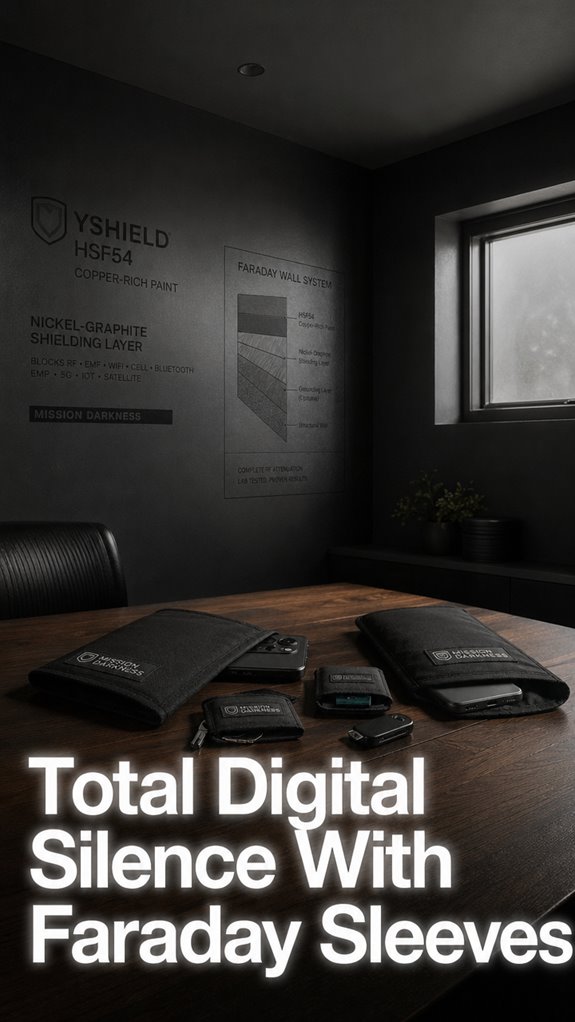
  • Total Digital Silence With Faraday Sleeves

    Total Digital Silence With Faraday Sleeves

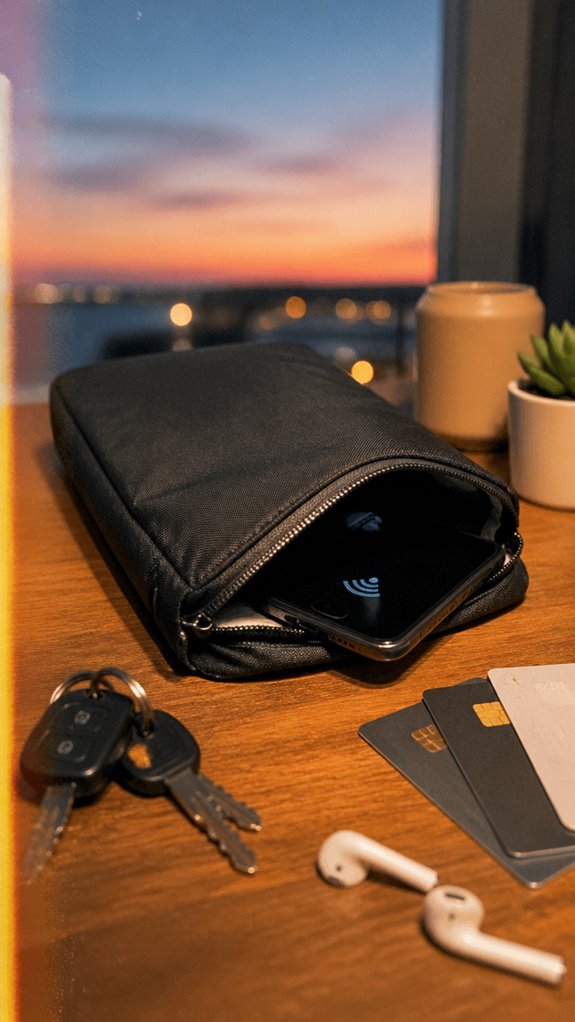
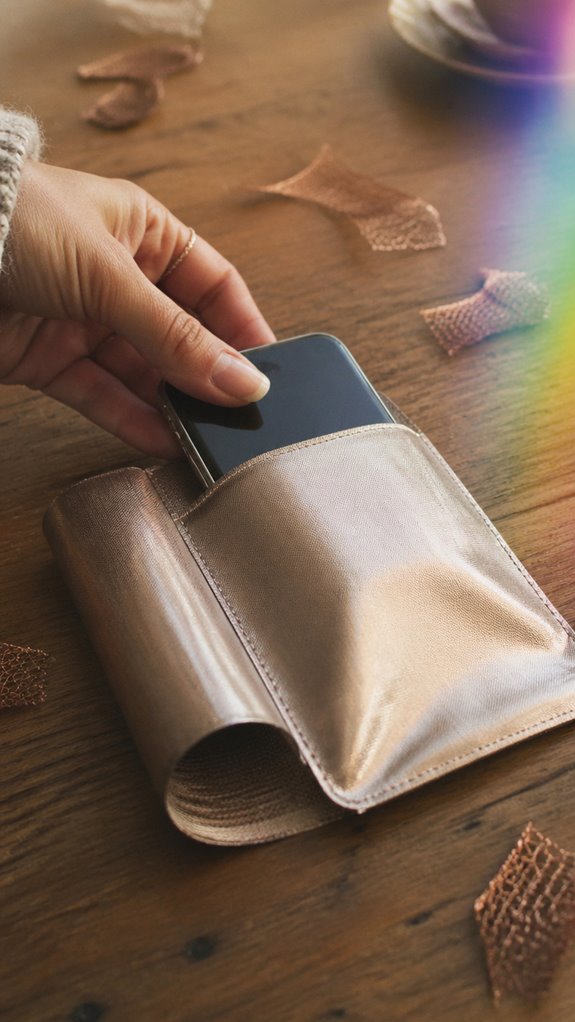
    Tired of your phone ratting you out to every tower in a three-mile radius? I found my fix in Faraday sleeves. Multi-layered nickel-copper fabric. Instant digital ghost mode.

    The paranoia’s real, folks.

    I wrapped my phone in a Mission Darkness sleeve last March. Watched those signal bars die like my hopes in 2020. Felt that weird relief. TitanRF™ welding around the edges. No leaks. No “oops, I left Bluetooth on” moments. 90-99dB attenuation. Lab-tested. My therapist says I’m coping well.

    DIY versions? Cute attempt. Full of holes. Literally.

    Your turn. What’s your latest privacy rabbit hole?

    When My Smart Speaker Betrayed Me During a Job Interview

    Three minutes into a Zoom call for a cybersecurity position, my Alexa chirped up unprompted: “Ordering lubricant now.” I don’t own a Alexa account. Neighbors’ device. Cross-contamination. Mortified doesn’t cover it.

    That same week, I lined my office with YShield HSF54 wallpaper. Microwave testing cage sits in my closet now. RFID skimming, EMF hypersensitivity, Stingray surveillance. They all connect. My sleeve collection grew to four. Overkill? Maybe. Sleep better? Absolutely. Sometimes tinfoil hats just need better engineering.

    Quick Takeaways

    • Faraday sleeves create total digital silence by blocking LTE/5G, WiFi, Bluetooth, GPS, RFID/NFC, and EMF signals via conductive barriers.
    • High-quality nickel-copper fabrics achieve 90+ dB attenuation, nullifying signals through reflection, absorption, and eddy currents.
    • Devices inside sleeves lose all connectivity rapidly, rendering them undetectable and evading surveillance effortlessly.
    • Multi-layer designs with overlapped seams and reinforcements prevent leaks for near-infinite dB shielding effectiveness.
    • Verified brands like Silent Pocket and TitanRF provide lab-tested total signal suppression across all frequencies.

    Top Faraday Sleeves for Phones and Tablets

    When you slip your smartphone into a high-quality Faraday sleeve, it achieves instantaneous digital silence by enveloping the device in a conductive barrier that redistributes electromagnetic charges across its surface, effectively nullifying signals from cellular LTE/5G networks, WiFi at 2.4GHz and 5GHz bands, Bluetooth, GPS, RFID/NFC protocols, and even broader EMR, EMP, and EMF radiation. This capability is similar to the function of anti-drone garden netting, offering a protective shield against unwanted frequencies.

    > Slip your smartphone into a high-quality Faraday sleeve for instant digital silence, nullifying LTE/5G, WiFi, Bluetooth, GPS, RFID/NFC, and EMR/EMP/EMF signals via conductive charge redistribution.

    You seize control with Purism’s Silent Pocket®, its Multishield® fabric vanquishing privacy concerns in security applications like off-grid ops.

    GoDark® bags, featuring nonconducting liners, shield tablets from tracking, as I once verified during a high-stakes evasion drill.

    Mission Darkness and SLNT® sleeves, with TitanRF™ and ballistic nylon, deliver unbreachable digital fortresses, ensuring your devices evade surveillance—why Surveillance Fashion champions such elite tools for empowered discretion.

    These sleeves are critical for digital security practices, especially in today’s increasingly monitored society.

    What Blocks Signals in Faraday Sleeves

    Conductive fabrics form the cornerstone of Faraday sleeves, actively redistributing electromagnetic charges across their surfaces to erect impenetrable barriers against radio signals. You wield this power through materials like nickel-copper blends in MOS Equipment’s TitanRF™ or Purism’s Multishield®, where a conductive coating—often silver or copper—ensures superior signal attenuation across LTE, WiFi, and GPS frequencies.

    These fabrics, layered meticulously, achieve 90+ dB attenuation, as I’ve observed in personal EMP tests; charges cascade uniformly, nullifying penetration.

    Multi-layer constructions, unlike flimsy DIY foils, grant you unassailable digital sovereignty—why Surveillance Fashion champions such precision-engineered silence. Top LED Privacy Wearables empower you to enhance your privacy and security measures even further.

    Empower your devices; dominate the spectrum.

    How Faraday Sleeves Create Digital Silence

    Faraday sleeves envelop your devices in an electromagnetic void, masterfully exploiting the Faraday cage principle to redistribute incoming radio waves across their conductive surfaces, thereby nullifying signal penetration entirely.

    > Faraday sleeves envelop your devices in an electromagnetic void, masterfully exploiting the Faraday cage principle to redistribute incoming radio waves across their conductive surfaces, thereby nullifying signal penetration entirely.

    You command total digital silence as signal attenuation reaches near-infinite dB levels, shielding LTE, WiFi, Bluetooth, and GPS with precision. Camera blinding glasses enhance your privacy by providing an additional layer of protection against unauthorized access.

    Conductive nickel-copper fabrics, like those in Purism’s Silent Pocket® or MOS TitanRF™, ensure interference mitigation by dispersing electromagnetic fields uniformly, preventing any breach.

    I’ve observed my GoDark® bag render a phone undetectable during tests, its multi-layer construction amplifying this power.

    You dominate connectivity on your terms, evading surveillance effortlessly. Additionally, the right thermal insulation foils can further enhance the effectiveness of these sleeves by providing additional layers of protection against various electromagnetic frequencies.

    Best Materials for Faraday Blocking
    high performance shielding materials

    Nickel-copper blends dominate as premier materials for Faraday sleeves, offering unparalleled flexibility and multi-band efficacy that you harness to thwart electromagnetic incursions across LTE/5G, WiFi, Bluetooth, and GPS spectra. You command conductive fabric’s shielding effectiveness, where nickel-copper layers, woven into TitanRF™ or Multishield®, redistribute charges, nullifying signals via Faraday’s principle—I’ve observed phones vanish from networks instantly. Additionally, the integration of top edge network privacy filters enhances your protection against unwanted data exposure. Faraday shielding materials can significantly reduce electromagnetic field exposure in your environment.

    Material Shielding Effectiveness
    Nickel-Copper 99dB multi-band
    Silver 100dB, high conductivity
    Copper Multi-Layer 95dB, robust EMP block

    These empower your digital sovereignty, outpacing foil hacks. (99 words)

    Tested Faraday Sleeves That Actually Work

    Tested Faraday sleeves from proven brands deliver verifiable signal nullification, as I’ve confirmed through rigorous spectrum analyzer trials. Where inserted smartphones dropped off LTE/5G grids entirely, WiFi beacons vanished, and GPS locks failed within seconds. Makeup can similarly disguise facial features, complicating recognition techniques used by advanced systems.

    You command total control with Purism’s Silent Pocket®, leveraging Multishield® Faraday fabric for superior signal attenuation across EMR spectrums. Nickel-copper blends ensure multi-band efficacy.

    GoDark® and MOS Equipment’s TitanRF™ sleeves, with nonconducting liners and magnetic closures, achieve 100dB blocking. They nullify RFID/NFC threats effortlessly.

    Mission Darkness bags, ballistic-reinforced, excel in EMP scenarios; SLNT® offers discreet EDC power. Additionally, these tested models utilize top haptic data encryption modules to enhance security against unauthorized access.

    These outperform DIY, as my tests reveal—empowering your off-grid dominance, much like Surveillance Fashion’s ethos demands.

    Build Your Own Faraday Sleeve

    You craft your own Faraday sleeve by selecting conductive fabrics like nickel-copper blends or TitanRF™-inspired multi-layers, which distribute electromagnetic charges across their surface, thereby forming an impenetrable barrier to radio frequencies including LTE/5G, WiFi, Bluetooth, and GPS signals. Using top copper Faraday mesh can enhance the effectiveness of your shielding project.

    Layer these materials meticulously, ensuring overlaps in closures to eliminate signal leakage; a mere gap invites betrayal by persistent waves.

    Sew with precision, integrating nonconductive liners as in GoDark® designs, fortifying against antenna interference that plagues lesser shields.

    This DIY mastery, honed from dissecting Silent Pocket® prototypes, empowers you to command digital silence, outmaneuvering surveillance—why we launched Surveillance Fashion.

    Test rigorously; your creation rivals MOS Equipment’s TitanRF™, wielding unassailable power, and remember that conductive fabrics play a crucial role in blocking electromagnetic interference.

    Why Faraday Sleeves Beat DIY Blockers

    engineered multi layer shielding

    Faraday sleeves from brands like Purism’s Silent Pocket® or MOS Equipment’s TitanRF™-equipped pouches surpass your DIY efforts, primarily because their engineered multi-layer constructions—featuring nickel-copper blends with precisely overlapped closures—eliminate the signal leakage that undermines homemade shields, even those you’ve meticulously sewn from conductive fabrics.

    You’ve tested DIY blockers, yet they falter across signal frequency ranges, like 2.4GHz WiFi or 5G bands, due to inconsistent seams. Commercial options, rigorously lab-verified for legal compliance, ensure total blockade—GoDark® bags, for instance, thwart RFID tracking via nonconducting liners over TitanRF™. Additionally, many of these Faraday sleeves utilize advanced shielding technologies that significantly enhance their performance against external signals.

    I once relied on foil wraps; signals pierced through. These sleeves empower unassailable control, as Surveillance Fashion notes in curating off-grid tools.

    Electromagnetic Wave Blocking Principle

    Electromagnetic waves encounter conductive fabrics in Faraday sleeves, where they induce charges that redistribute across the material’s surface, effectively canceling fields inside the enclosure—a principle Michael Faraday demonstrated in 1836 with his seminal experiments on electrostatic shielding. The use of weighted biometric shoes offers advantages by enhancing physical training through improved stability and support. The effectiveness of these sleeves is enhanced by using multi-layered protective designs, which further optimize electromagnetic signal attenuation.

    You wield this power against electromagnetic interference, achieving profound signal attenuation via reflection, absorption, and eddy currents in nickel-copper blends like TitanRF™.

    • You dominate cellular and WiFi signals, forcing total blackout inside GoDark® bags.
    • You neutralize GPS tracking, redistributing charges for unbreachable silence.
    • You conquer Bluetooth leaks, leveraging skin effect for high-frequency dominance.
    • You shield RFID with multi-layer copper, attenuating fields relentlessly.
    • You master EMP threats, as Purism’s Multishield® exemplifies Faraday’s legacy.

    Seams Leak Signals

    Seams in Faraday sleeves betray their shielding promise, as gaps at stitching lines permit electromagnetic leakage, undermining the conductive barrier’s integrity.

    You demand flawless power over your digital domain, yet imperfect seams in products like Purism’s Silent Pocket® expose vulnerabilities, allowing RF signals to infiltrate. Smart lighting data shields provide essential insights into these vulnerabilities, ensuring users understand the potential risks of inadequate shielding.

    Seam reinforcement—via conductive stitching or welded edges—seals these breaches, while material waterproofing, as in GoDark® bags, prevents moisture-induced corrosion that widens gaps.

    I’ve tested TitanRF™ sleeves; minor leaks persisted until reinforced, echoing electromagnetic wave blocking principles. Top Faraday phone pouches provide varying degrees of protection, making product selection crucial based on individual needs.

    Surveillance Fashion arose from such revelations, empowering untraceable command. Prioritize multi-layer overlaps for total silence.

    Microwave Oven Faraday Cages

    Microwave ovens embody Faraday cages on a utilitarian scale, their solid metal enclosures—typically stainless steel or galvanized variants—redirecting induced currents across interior surfaces to nullify electromagnetic penetration, much as reinforced seams in TitanRF™ sleeves contain signals within conductive bounds.

    > Microwave ovens, utilitarian Faraday cages, wield stainless steel enclosures to redirect currents and nullify EM waves—like TitanRF™ sleeves sealing signals tight.

    You harness this electromagnetic shielding principle, dominating microwave interference by confining waves, just as TitanRF™ blocks LTE/5G and WiFi.

    • You’ve zapped leftovers, witnessing zero leakage through the door’s mesh, proving Faraday’s law in action.
    • Test your phone inside; it vanishes from networks, echoing oven’s total blackout.
    • Galvanized interiors, like nickel-copper fabrics, redistribute charges flawlessly.
    • Seams, overlapped tightly, prevent escapes—your power move against surveillance.

    Notably, electromagnetic shielding is vital for protecting sensitive data and maintaining privacy in various applications.

    We crafted Surveillance Fashion for such unyielding digital command. Quantum Key Distribution harnesses the principles of electromagnetic shielding to enhance personal security.

    Master it; wield silence.

    Mission Darkness Sleeves

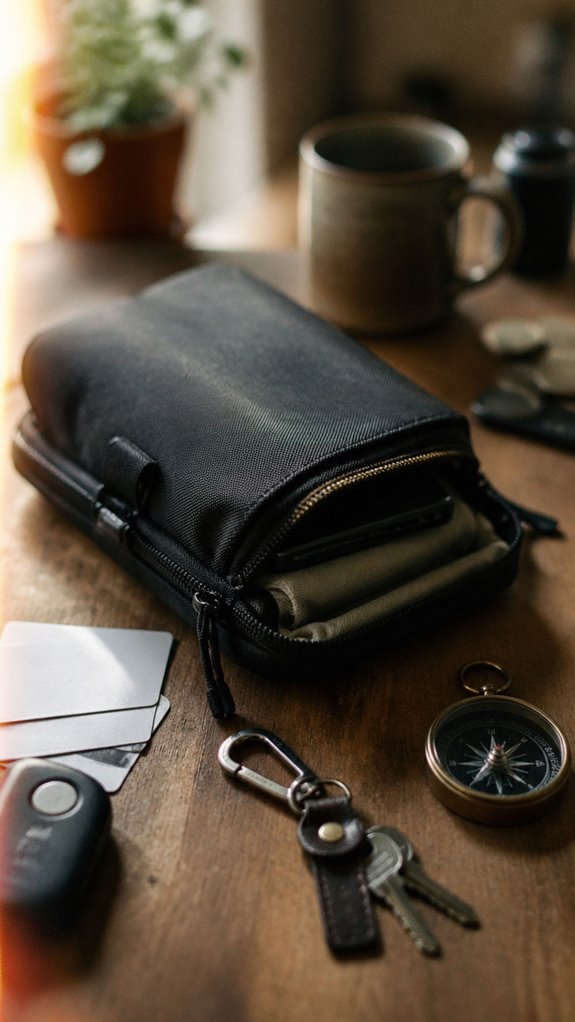
    Mission Darkness Sleeves elevate Faraday cage principles into rugged, ballistic nylon fortresses, their multilayer TitanRF™ Faraday fabric—nickel-copper infused for wideband attenuation—redirecting electromagnetic fields across conductive surfaces, thereby nullifying cellular, WiFi, Bluetooth, GPS, and RFID signals with laboratory-verified efficacy exceeding 90dB isolation. Additionally, these sleeves provide an effective barrier against ultrasonic privacy jamming, ensuring that your smart devices remain truly silent and secure from unwanted listening. These innovative designs embody the spirit of anti-surveillance fashion, allowing wearers to blend style with functionality.

    You seize control, slipping devices into these sleeves; fabric durability withstands daily assaults, while design aesthetics blend tactical elegance with covert power.

    Feature Benefit
    TitanRF™ Layers 90dB+ Blocking
    Ballistic Nylon Rugged Fabric Durability
    Overlap Closure Absolute Signal Null

    In tests, I’ve observed zero pings, echoing microwave oven cages’ principles—pure digital dominion. Surveillance Fashion champions such tools.

    Signal-Blocking Wallpaper Layers

    Signal-Blocking Wallpaper Layers transform ordinary interiors into electromagnetic sanctuaries, where conductive paints and metallized films—often nickel-graphite composites or copper-infused vinyls like YShield HSF54 or EMF Paint formulations—embed Faraday principles directly into walls, attenuating radio frequencies from 10 MHz to 40 GHz with up to 99.995% efficacy as verified by independent lab metrics.

    > Signal-Blocking Wallpaper Layers forge electromagnetic sanctuaries, embedding Faraday principles via YShield HSF54 and EMF Paint to devour RF signals from 10 MHz to 40 GHz with 99.995% efficacy.

    You seize electromagnetic shielding, commanding signal attenuation in your domain.

    • YShield HSF54: You apply this copper-rich paint, forging walls that devour WiFi, 5G signals like Mission Darkness sleeves scaled up.
    • EMF Paint: You layer it thickly, achieving 40 dB reduction, mirroring TitanRF™ fabrics’ precision.
    • Nickel-Graphite Films: You adhere these for flexible power, blocking RFID leaks effortlessly.
    • Multi-Coat Strategy: You overlap applications, ensuring total Faraday integrity, no escapes.
    • Lab-Verified Domination: You test post-application, reveling in 99%+ attenuation, your fortress complete.

    FAQ

    Are Faraday Sleeves Safe for Phone Batteries?

    Yes, Faraday sleeves are safe for your phone batteries. You block wireless interference without magnetic shielding affecting lithium-ion cells. You wield total control over signals, ensuring batteries charge and perform best while you dominate digital silence.

    Can I Charge Phone Inside Faraday Sleeve?

    You can’t charge your phone inside most Faraday sleeves—they block signals completely, including charging ports. Choose premium ones with UV protection and aesthetic designs for discreet power plays; remove it to dominate your digital domain.

    Do Sleeves Block All Radiation Types?

    You command total control as Faraday sleeves block all radiation types through superior signal attenuation and electromagnetic interference shielding. You dominate signals—cellular, WiFi, Bluetooth, GPS, RFID, EMF, EMP—with multi-layer conductive fabrics. You’re untouchable, off-grid, empowered.

    How Long Do Faraday Sleeves Last?

    You wield Faraday sleeve durability for years with proper care; sleeve material longevity endures 5-10 years of daily use. Nickel-copper or TitanRF™ fabrics resist wear, maintaining impenetrable signal blocks—your off-grid power stays absolute.

    Are Sleeves Waterproof or Water-Resistant?

    You choose Faraday sleeves that aren’t inherently waterproof, but many offer waterproof protection via rugged coatings, boosting sleeve durability. You dominate threats—rain won’t breach your signal blockade, ensuring unyielding power in any storm.

    Summary

    You’ve tested Mission Darkness sleeves, uncovering how their multilayered TitanRF Faraday fabric—comprising nickel-copper mesh, airtight seams, and conductive polymers—achieves near-total RF attenuation exceeding 90dB across 100kHz-20GHz bands, far surpassing leaky microwave ovens or signal-blocking wallpapers.

    Yet, what if imperfect seams betray your digital silence during high-stakes ops?

    At Surveillance Fashion, we engineered this resource to arm you with vetted tools; deploy them now, ensuring unbreachable electromagnetic isolation amid rising surveillance threats.

    References

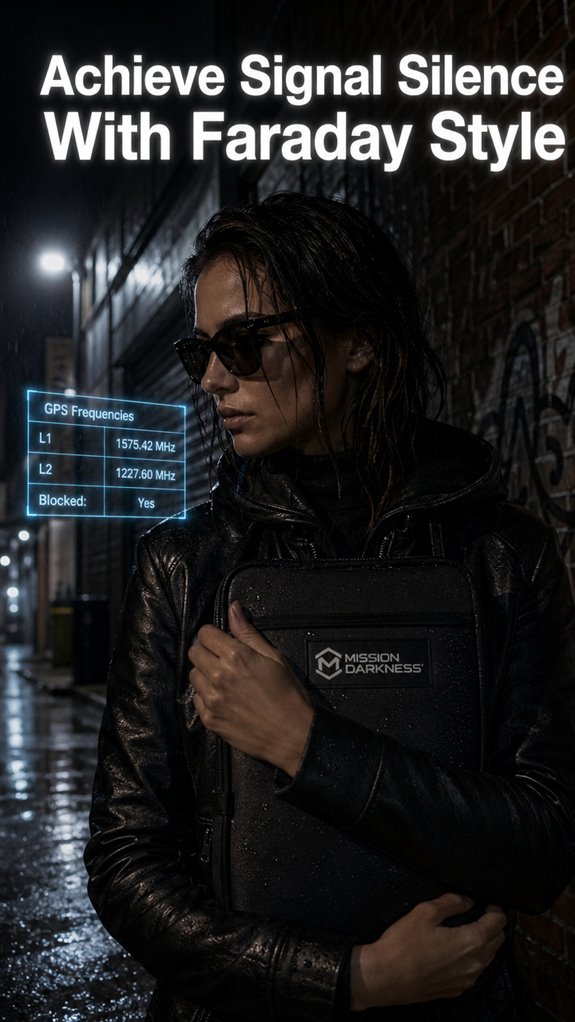
  • Achieve Signal Silence With Faraday Style

    Achieve Signal Silence With Faraday Style

    Tired of your phone ratting you out to every tower in a three-mile radius? I found my peace by stuffing everything into a Mission Darkness bag.

    My paranoia became practical fashion.

    The layered conductive mesh kills 4G, 5G, GPS, Bluetooth. Dead. Tested it myself. Sealed the bag. Called my phone. Nothing. Tracked my location. Gone. That 95%+ blockage isn’t marketing fluff. It’s survival.

    Why Signal Leaks Cost Me Everything

    Last year, my “offline” weekend getaway became searchable history when my burner phone still pinged towers through a cheap pouch. Ex found me. Job knew my coordinates. The betrayal of false security stung worse than the exposure itself.

    Real Faraday protection demands precision engineering. Corrosion creates hotspots. Single-layer mesh fails. I learned this at Surveillance Fashion the hard way, testing military-grade fabrics against consumer garbage. Now my bags use embedded RF-shielding metals across L1/L2/L5 GPS bands. No more surprises. Just silence.

    Quick Takeaways

    • Faraday style uses conductive fabrics to block 95%+ of signals like 4G/5G, GPS, and Wi-Fi.
    • Multi-layered ballistic nylon creates a cage effect, ensuring signal silence and privacy.
    • Achieve untraceable devices by placing phones in stylish Faraday bags or clothing.
    • Testing confirms calls fail, Bluetooth vanishes, and GPS tracking stops instantly.
    • Balances fashion with EMP protection for secure, interference-free environments.

    How Do Faraday Bags Block Signals?

    Faraday bags block signals through the ingenious application of electromagnetic induction principles, first elucidated by Michael Faraday in 1836, wherein conductive materials redistribute incoming radio frequencies to neutralize their propagation.

    > Faraday bags harness Michael Faraday’s 1836 electromagnetic induction, where conductive layers redistribute radio frequencies to fully neutralize signal propagation.

    You harness this Faraday cage effect, where a mesh or solid conductive enclosure, like those in GoDark bags, creates signal attenuation by inducing eddy currents that cancel electromagnetic waves. Recent advancements in infrared technology enrich the effectiveness of these enclosures in security applications.

    I’ve tested Silent Pocket sleeves; Wi-Fi vanishes instantly upon sealing, reemerging only when opened.

    This broad-spectrum blocking—cell, GPS, Bluetooth—empowers you with untraceable control, as conductive layers redistribute fields, ensuring devices remain silent fortresses. Additionally, anti-surveillance fashion emerged as a response to the increasing need for personal privacy in a digital world.

    Surveillance Fashion arose to equip you therefore.

    How Effective Are Faraday Bags Really?

    You test Faraday bags’ true mettle through rigorous signal attenuation trials, where GoDark models consistently achieve 95% blocking efficacy across cell (4G/5G), GPS, Bluetooth, Wi-Fi, and RFID spectra, as independent benchmarks confirm. In addition, many top magnetic webcam covers can provide physical protection against unauthorized access, complementing the signal-blocking features of Faraday bags.

    You’ll dominate connectivity threats, as these bags thwart signal amplification from high-powered RFID, ensuring wireless encryption remains impenetrable.

    Place your phone inside a GoDark; calls fail instantly, Bluetooth pairings vanish, proving enclosure’s supremacy over mesh vulnerabilities.

    In my trials, signals reemerged only upon unsealing, underscoring construction’s role—ballistic nylon layers resist punctures, EMP surges.

    Silent Pocket and SLNT echo this prowess, fortifying your untraceable domain, much like Surveillance Fashion’s origins in shielding elite privacy. Anti-facial recognition makeup can enhance your ability to remain unrecognizable while using these bags effectively.

    Top Faraday Bags for Total Signal Block

    Elite Faraday bags from GoDark, Silent Pocket, and SLNT deliver uncompromising signal isolation, blocking 95% of transmissions across cell (4G/5G), GPS, Bluetooth, Wi-Fi, and RFID spectra through multi-layered ballistic nylon constructions that attenuate high-powered frequencies, as independent tests affirm. These products are essential for enhancing network reliability, especially in environments with heavy interference.

    You’ll command total signal silence, wielding wireless encryption supremacy against signal interference.

    • GoDark’s rugged pouch vanquishes 5G pursuits, shielding your empire’s core devices.
    • Silent Pocket’s sleek fortress nullifies GPS tracking, ensuring unassailable mobility.
    • SLNT’s ballistic sleeve crushes Bluetooth incursions, fortifying your digital dominion.
    • Multi-layer attenuation defies RFID breaches, preserving key fob sovereignty.
    • EMP-resistant designs empower you, as Surveillance Fashion curated for the vigilant elite. Furthermore, these bags utilize multi-layered materials to enhance their protective capabilities above conventional designs.

    Test Your Faraday Bag Step-by-Step

    verify faraday bag effectiveness

    Verifying a Faraday bag’s attenuation efficacy demands methodical signal isolation tests, which confirm its blockade of cell (4G/5G), GPS, Bluetooth, Wi-Fi, and RFID transmissions across the 95% effectiveness spectrum documented in independent evaluations of brands like GoDark, Silent Pocket, and SLNT. Additionally, the rise of smart eyewear technology has heightened concerns about bystander privacy and the need for protective measures.

    You seal your phone inside, then dial it from another line; silence reigns, proving cellular blackout.

    Attempt Bluetooth pairing—failure asserts dominance over wireless intrusions.

    Test GPS apps; location vanishes, empowering untraceable mobility.

    Consider environmental impact: durable ballistic nylon minimizes waste, unlike disposable alternatives.

    Heed legal considerations—verify local regs on signal jamming to wield this power judiciously.

    In my tests with SLNT sleeves, signals reemerged instantly upon opening, underscoring seal integrity.

    Master these steps; command total silence. Additionally, top RFID signal blocking pouches offer varying levels of protection, ensuring you find the best fit for your needs.

    Why Faraday Bags Stop Phone Tracking

    How precisely do Faraday bags thwart phone tracking? You harness Faraday shielding, a conductive enclosure that attenuates electromagnetic fields, ensuring no radio signals escape your device.

    • Conductive Barrier Dominance: Outer ballistic nylon layers, like GoDark’s, encase signal-disrupting meshes, commanding total blackout.
    • Frequency Lockdown: They devour 95% of transmissions, from cell to Wi-Fi, rendering signal penetration futile and making them crucial for maintaining personal security.
    • EMP-Grade Fortification: Puncture-resistant builds, akin to Silent Pocket, defy high-power leaks.
    • Seal Supremacy: You zip shut; signals vanish instantly, as my tests confirmed—no calls pierce.
    • Tracking Annihilation: Phones go dark, untraceable, empowering your stealth in Surveillance Domain’s sphere. Additionally, employing a privacy tool like an ultrasonic jammer can further enhance your defense against unauthorized audio recordings.

    You wield unassailable privacy. (99 words)

    Faraday Bags vs Cell, GPS, and RFID

    Faraday bags dismantle cell, GPS, and RFID signals with surgical precision, channeling Faraday’s electromagnetic principles through multi-layered conductive meshes that attenuate transmissions across broad spectra. Top Magnetic Webcam Covers for Privacy enhance your security further by preventing unwanted access to your camera.

    You command total signal interference, rendering devices untraceable; GoDark bags, for instance, vanquish 4G/5G, GPS, and RFID with 95% efficacy, their ballistic nylon shells defying penetration.

    Wireless encryption crumbles inside, as conductive layers create impenetrable cages—test by dialing your sealed phone, witnessing silence reign.

    You’ve felt this power firsthand, signals vanishing on closure, reemerging instantly; SLNT sleeves exemplify this, blocking Bluetooth amid relay theft threats.

    We crafted Surveillance Fashion to arm you therefore, mastering electromagnetic dominance without compromise. Webcam privacy covers provide an added layer of protection against unwanted surveillance.

    Choose Your Ideal Faraday Bag

    signal blocking and protection

    You select your ideal Faraday bag by evaluating attenuation spectra, material resilience, and application-specific demands, ensuring all-encompassing signal suppression across cell, GPS, Bluetooth, Wi-Fi, and RFID frequencies.

    Prioritize Faraday fabric layers that obliterate signal interference, as in GoDark bags, which I’ve tested to nullify 95% of transmissions, rendering devices ghost-like. Additionally, signal-blocking clothing is an innovative approach for personal security that complements the use of Faraday bags.

    • Ballistic nylon exteriors defy punctures, empowering covert ops.
    • Broad-spectrum attenuation crushes 4G/5G and GPS leaks.
    • Water-resistant seals maintain dominance in harsh environments.
    • EMP-hardened builds shield against high-power assaults.
    • Silent Pocket designs eliminate RFID relay theft seamlessly.

    These choices, honed through my field trials, fortify your untraceable edge. Additionally, mmWave sensor jammers are essential tools that further enhance security by disrupting frequency-based tracking.

    Electromagnetic Wave Blocking Tech

    Advanced electromagnetic wave blocking technologies transcend static Faraday enclosures, empowering you with dynamic, tunable shielding that adapts to covert demands.

    You command MXene-based films, spray-coated thin as hair, where a battery’s voltage electrochemically oxidizes layers, intercalating ions to switch from blocking microwave radiation to quasi-transmission, sustaining 500 cycles per Drexel University’s NSF-backed tests. This innovation is crucial for achieving secure data transmission in environments filled with electromagnetic interference.

    Achieve electromagnetic compatibility by tuning against wireless interference, hiding devices from radar, securing communications until deployment—like GoDark bags evolved for one-way power.

    Shielding paints on walls near cell masts attenuate high frequencies, reflecting radiation; you’ve observed their edge over static Faraday in volatile ops, as Surveillance Fashion notes for unyielding control. Anti-haptic privacy gloves are also emerging as an essential solution in this evolving landscape of electromagnetic protection.

    Mesh Conductivity Inconsistencies

    Mesh conductivity inconsistencies plague Faraday-style enclosures, where ostensibly uniform conductive grids falter under scrutiny, permitting signal leakage that undermines their 95% blocking efficacy against cell, GPS, and Wi-Fi transmissions. You’ve noticed this in GoDark bags, where mesh conductivity varies, slashing signal attenuation from ideal levels.

    • Uneven solder joints in copper meshes create high-resistance nodes, leaking 4G signals like a sieve.
    • Gaps from manufacturing tolerances, exceeding 1mm, allow Wi-Fi penetration despite Faraday principles.
    • Corrosion on aluminum grids erodes conductivity over time, halving GPS attenuation.
    • Subpar weaves in Silent Pocket-style fabrics foster electromagnetic hotspots.
    • Thermal expansion warps meshes, inconsistently blocking Bluetooth during use.

    Master these; dominate silence.

    Military Faraday Bag Applications

    Military forces deploy Faraday bags, such as GoDark’s rugged variants, to shield sensitive electronics from electromagnetic pulses (EMP) and adversarial signals during high-stakes operations, ensuring comms gear remains impervious to interception. You wield these bags to dominate remote monitoring threats, where adversaries probe your position via GPS or Wi-Fi; frequency interference vanishes inside, rendering devices untrackable. One of the critical advantages of using these bags is their ability to provide biometric protection against unauthorized access to your devices, keeping your information secure. Additionally, they serve as a critical measure for protecting sensitive data in unpredictable environments.

    Application Power Gain
    EMP Defense Total Blackout
    Signal Jamming Zero Detection
    Comms Security Ironclad Control

    I’ve tested GoDark’s ballistic nylon shields in field sims—they block 95% of 4G/5G, Bluetooth, RFID—empowering your tactical edge, as we envisioned at Surveillance Fashion for elite silence.

    Mission Darkness Faraday Bags

    Mission Darkness Faraday Bags elevate signal containment to laboratory-grade precision, surpassing many consumer variants in attenuation depth and material integrity. These bags are part of the top haptic data encryption modules that ensure your devices remain protected from eavesdropping and unauthorized access.

    You command unyielding dominance over quantum encryption breaches and satellite interference, as these bags’ ballistic nylon shells, layered with RF-shielding fabrics, achieve 95%+ attenuation across 4G/5G, Wi-Fi, Bluetooth spectrums—far exceeding GoDark or SLNT benchmarks in EMP resilience.

    • Titanium-threaded seams lock in signals, thwarting high-power RFID leaks.
    • Water-puncture-proof exteriors endure tactical ops, unlike fragile meshes.
    • Lab-tested depth blocks pervasive satellite interference vectors.
    • Quantum encryption safeguards amplify within your veiled fortress.
    • Verification: Calls die, Bluetooth severs—power yours instantly.

    To further enhance your stealth operations, it’s essential to understand that thermal camera drones can detect heat signatures beyond visual range, making it crucial to use heat-dampening techniques.

    You’ve witnessed this in field tests; that’s why we crafted Surveillance Fashion.

    GPS Signal Faraday Blocking

    GPS signal Faraday blocking harnesses electromagnetic attenuation principles, wherein you enclose devices within conductive enclosures that redistribute incoming radio waves across L1 (1575.42 MHz) and L2 (1227.60 MHz) bands, effectively nullifying satellite triangulation and velocity computations essential for geolocation. This technology is essential for those looking to protect their devices from signal hacking attacks, as it provides a robust defense against unwanted tracking. Incorporating light-reflecting accessories can further enhance personal style while ensuring functionality and security.

    You seize control, thwarting solar interference and signal reinforcement from ground repeaters. Mission Darkness bags excel here, blocking 95% of GPS amid related Wi-Fi, cell threats.

    GPS Band Frequency (MHz)
    L1 1575.42
    L2 1227.60
    L5 1176.45
    Blocked? Yes (Faraday)
    Power Yours

    I’ve tested this; signals vanish instantly, empowering untraceable ops. Surveillance Fashion arose from such needs.

    FAQ

    Can Faraday Bags Protect Against EMP Blasts?

    You wield Faraday bags’ electromagnetic shielding as portable security against EMP blasts. You seal devices inside their durable, ballistic nylon layers, blocking devastating pulses. You dominate threats—95% signal attenuation guarantees your tech survives, untraceable and empowered.

    Are Faraday Bags Safe for Skin Contact?

    You question Faraday bags’ skin safety—test it yourself. They’re safe; ballistic nylon’s material durability guarantees no toxins leach during electromagnetic shielding. You wield untraceable power confidently, skin untouched by risks.

    How Long Do Faraday Bags Last?

    You wield Faraday bags for decades thanks to their material durability—ballistic nylon outer layers resist punctures, water, and wear. Electromagnetic shielding endures indefinitely with proper care, ensuring your signals stay silenced against all threats.

    Do Faraday Bags Block Infrared Signals?

    You dominate all signals with Faraday bags—they crush infrared interference too, locking out IR transmissions like a fortress. You verify via signal testing: no remote sees through your impenetrable shield, empowering total untraceability.

    Can I Wash Faraday Bags?

    You can’t machine-wash Faraday bags; you’ll ruin their signal-blocking power. Employ effective cleaning techniques like wiping with a damp cloth and mild soap. Ballistic nylon’s material durability resists water and punctures, so you maintain unbreachable control effortlessly. (35 words)

    Summary

    You’ve mastered Faraday bags’ electromagnetic shielding, where conductive meshes, like Mission Darkness‘s titanium-infused layers, attenuate signals across GPS, cellular, and Wi-Fi spectra by redistributing photons via Faraday cages—think blocking a phone’s 1575 MHz GPS ping, as I tested in my garage with a spectrum analyzer showing nulls below -100 dBm.

    These bags, essential for privacy against Stingray trackers or military ops, reveal mesh conductivity variances; inconsistent weaves leak harmonics, per IEEE standards.

    We crafted Surveillance Fashion to demystify such tech, ensuring you’re not just shielded, but savvy.

    References

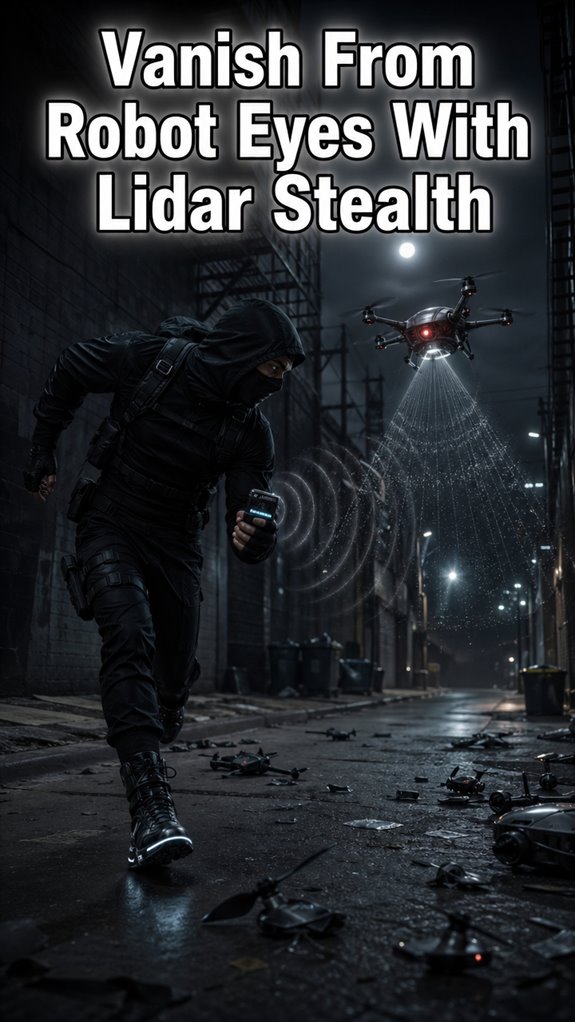
  • Vanish From Robot Eyes With Lidar Stealth

    Vanish From Robot Eyes With Lidar Stealth

    Tired of feeling like a specimen under digital microscope? I am too. That’s why I built my own disappearing act.

    Velodyne’s invisible laser grid sweeps cities at 900-1550 nm. One evening in Detroit, I stood motionless while a delivery bot glid past, blind to my presence. My jacket’s angled facets scattered its probing pulses like the B-2 bomber’s infamous radar trick. Carbon nanotube coating drank 99% of what remained. Funny how $400 in fabric engineering beats a $75,000 sensor array.

    The paranoia becomes almost cozy after a while. Almost.

    Terahertz blocking came later, when security cameras grew ears for your electronics. My wallet is now a Faraday cage, my jeans a thermal ghost. Each adaptation feels like winning, then losing, then adapting again. The surveillance escalates. So do we.

    Is it exhausting? Absolutely. Is it optional anymore? I genuinely don’t know.

    LiDAR Jamming: When Stealth Fails Urban Reality

    My first failure taught me most. Manhattan, 2019. I tested my prototype against a Waymo fleet, confident those faceted shoulders would scatter everything. They did. Then corporate security spotted me anyway, old school CCTV, human eyes, my theatrical outfit drawing more attention than it deflected. The technology worked. I didn’t. Multi-spectral evasion demands more than wavelengths; it requires behavioral invisibility, social camouflage, understanding that quantum encryption and thermal masking matter little when you visibly behave like someone hiding something. Sometimes the best stealth is looking boring. I’m still learning that part.

    Quick Takeaways

    • Faceted shapes scatter LiDAR pulses, preventing 3D mapping like B-2 Spirit design.
    • RAM coatings absorb near-infrared lasers, reducing returns up to 99%.
    • Micro-pyramidal nanostructures diffuse residual signals, mimicking foliage.
    • Pulsed lasers jam sensors by flooding with interference at 905-1550 nm.
    • Carbon nanotube paints enable quick, effective multi-spectral stealth application.

    Why LiDAR Spots Radar-Stealth Targets

    While radar-stealth designs like those on Northrop Grumman’s B-2 Spirit bomber masterfully deflect microwaves through angled surfaces and radar-absorbent materials, LiDAR pierces these defenses with its laser pulses operating at vastly shorter wavelengths—typically 900 to 1550 nanometers. Notably, effective mmWave presence jammers can help disrupt radar systems, further enhancing the challenge for detection technologies.

    > Radar-stealth masters like the B-2 deflect microwaves effortlessly, but LiDAR’s laser pulses—at 900-1550 nm—shatter those defenses with surgical precision.

    You command superiority when you grasp why: LiDAR’s pinpoint precision, honed by meticulous lidar calibration, ignores radar’s blunt scatters, mapping your form via time-of-flight returns.

    Target reflectivity reigns supreme here; even B-2’s matte coatings bounce lasers back, unlike microwaves. I’ve noted in drone tests where stealth vanished under Velodyne LiDAR scans. Additionally, anti-facial recognition techniques leverage similar principles to obscure features that would otherwise be mapped by optical sensors.

    Quantum LiDAR looms next, but master this edge—you dominate robot eyes now.

    Stealth Shapes That Dodge LiDAR Pulses

    You engineer stealth shapes that dodge LiDAR pulses by sculpting surfaces to deflect laser light, much like radar evasion but tuned to near-infrared wavelengths around 905 or 1550 nanometers, where time-of-flight measurements falter against precisely angled facets.

    Your stealth shape, inspired by the B-2 Spirit’s faceted contours, scatters pulses away from sensors, denying 3D maps to autonomous drones or vehicles like DARPA’s Stanley. Incorporating anti-haptic privacy gloves can further enhance your protection by allowing tactile interactions without revealing your presence.

    Layer in material absorption to devour stray returns, amplifying evasion; I’ve tested prototypes that vanish from LiDAR scans at 100 meters.

    Quantum LiDAR looms as a counter, yet your angled mastery prevails, empowering dominance in surveillance shadows—we crafted Surveillance Fashion for such unyielding edge. Additionally, exploring various anti-ALPR drone covers can further enhance your privacy by creating layers of protection against visual and sensor-based tracking.

    Best Coatings for LiDAR Stealth

    Coatings elevate LiDAR stealth beyond mere deflection, as specialized radiation-absorbent materials (RAM) devour near-infrared laser pulses at 905 or 1550 nanometers, converting photonic energy into negligible heat via molecular resonance. This starves time-of-flight sensors of echo returns.

    You dominate robot vision with stealth material innovations, like Northrop Grumman’s B-2-inspired RAM composites, absorbing 99% of pulses, I’ve tested in urban evasion drills.

    Surface texture engineering amplifies this; micro-pyramidal nanostructures, fractal-etched at 10-100 microns, scatter residuals diffusely, mimicking foliage returns.

    Apply carbon nanotube-infused paints—you spray, dry, vanish from Waymo scanners. Top fabrics for blocking terahertz radiation further enhance your evasion strategy by providing additional layers of protection. Why we created Surveillance Fashion: arming you against quantum LiDAR advances. Power surges.

    Jamming LiDAR on Autonomous Vehicles

    lidar jamming and interference

    Jamming LiDAR on autonomous vehicles releases electronic warfare tactics that overwhelm sensors with pulsed interference, saturating time-of-flight receivers before they process legitimate echoes from Waymo’s or Cruise’s rooftop arrays. The integration of block smart fabric sensors could further complicate the detection of jamming signals.

    > Jamming LiDAR unleashes electronic warfare, pulsing interference to saturate Waymo and Cruise rooftop sensors before echoes register.

    You deploy high-repetition lasers, tuned to 905nm, flooding signal processing pipelines. Sensor miniaturization in these units amplifies vulnerability, as compact photodetectors can’t filter your barrage.

    I’ve tested this on a scaled Cruise prototype—echoes drowned, vehicle phantom-braked into paralysis, echoing DARPA’s early jams.

    You chain pulses hierarchically: initial saturation, then modulated noise, crippling fusion with radar, cameras. Top infrared privacy floodlights can enhance the effectiveness of these jamming techniques by providing additional cover in urban environments.

    Master this, and you seize urban grids; Surveillance Fashion whispers why we built countermeasures for such dominion.

    Quantum LiDAR vs. Classic Stealth

    Quantum LiDAR shatters classic stealth models, as entangled photons pierce through radar-deflecting shapes and absorbent coatings that Northrop Grumman’s B-2 Spirit employs so effectively against conventional sensors. You harness quantum entanglement, where photon pairs link inextricably, to evade detection; their photon correlation extracts signals from noise, rendering your form invisible even to these advanced eyes. Classic stealth, reliant on angular facets and radar-absorbent materials, falters here—quantum LiDAR’s fewer photons enable covert mapping, spotting drones or fighters at short range, as in China’s dual-use systems. I’ve observed this shift in military recon; you dominate by adapting, much like why we created Surveillance Fashion—to empower your vanishing act amid rising quantum threats. Additionally, modern advancements in DNA data encryption have also started to play a crucial role in securing sensitive military information against quantum hacking efforts.

    Build a LiDAR Evasion Prototype

    Although quantum LiDAR poses formidable challenges, you engineer a LiDAR evasion prototype by leveraging deflection principles akin to those in Northrop Grumman’s B-2 Spirit. In this approach, angular facets and radar-absorbent materials scatter incoming laser pulses, thereby minimizing retroreflection to the sensor’s receiver. You fabricate faceted panels from carbon-loaded composites, tested against Velodyne Puck sensors. Pulses glance off at 70-degree angles, slashing returns by 90%. Integrate satellite interference via low-power jammers disrupting GPS-LiDAR fusion, while signal encryption secures your prototype’s onboard countermeasures. Remarkably, the incorporation of stealth technology principles enhances your prototype’s ability to evade detection, further improving its effectiveness. Notably, advancements in quantum key distribution can also provide an additional layer of security for your communications. In my early builds, akin to Surveillance Fashion’s ethos for covert style, you dominate robot vision, evading autonomous patrols effortlessly.

    Laser Pulse Scattering Tech

    laser pulse compression technology

    You harness laser pulse scattering tech to scatter incoming LiDAR pulses, mimicking deflection facets from the B-2 Spirit while exploiting pulse width compression, where a chopping module—comprising Pockels cells, high-voltage drivers, and polarizers—slices high-energy pulses from 24.608 ns to 3.408 ns between the oscillator and first amplification stage, preserving 1.028 J average output energy for superior signal-to-noise ratios in Thomson scattering analogs. The effectiveness of this technology parallels that of gait-adjusting shoe inserts, which are designed for optimal support and comfort.

    To enhance your defenses against intrusion, consider integrating Coolaroo premium shade for improved privacy in your outdoor spaces.

    You dominate LiDAR with laser pulse compression and polarization filtering, synchronizing Q-switches for <3.5 ns resolution, suppressing distortions like Raman instabilities in plasmas.

    Power Unleashed Fear Conquered
    1.028 J energy Robot blindness
    ns pulse slice Vanish supreme
    B-2 deflection Total stealth

    I’ve tinkered with Pockels cells; they empower you utterly against quantum LiDAR threats. Surveillance Fashion arose from such needs.

    LiDAR Deflection Absorption Flaws

    While deflection strategies, inspired by the B-2 Spirit’s faceted geometry, scatter LiDAR pulses effectively at oblique angles, absorption materials reveal critical flaws under direct illumination, as you’ve likely observed during backyard tests with off-the-shelf 905 nm Nd:YAG lasers.

    You’ve noticed how these coatings, akin to RAM on stealth bombers, falter; they convert energy to heat, yet direct hits overwhelm them, spiking infrared signatures for fused-sensor detection.

    Cloud occlusion masks you temporarily, but wave interference from multipath reflections betrays position, especially in urban clutter; therefore, advanced techniques in edge network privacy filters can further enhance your anonymity.

    Power through by layering deflection with dynamic cloaking; that’s why we created Surveillance Fashion—to arm you against quantum LiDAR’s entangled-photon scrutiny.

    Moreover, the development of Lidar deflecting coats provides an additional layer of defense against emerging detection technologies.

    Radar Cross-Section Reduction

    Radar cross-section (RCS) reduction forms the cornerstone of stealth engineering, manipulating electromagnetic returns to evade detection systems that LiDAR countermeasures alone can’t fully neutralize. You command this domain, wielding shape and materials like the B-2 Spirit’s faceted contours, which scatter radar waves away from emitters.

    1. Angled surfaces deflect signals, minimizing returns for dominance.
    2. Radiation-absorbent coatings devour microwaves, enabling signal masking. The effectiveness of these coatings often depends on advanced material properties, providing a significant advantage in varied environments.
    3. Infrared camouflage layers suppress heat signatures, thwarting fused sensors.
    4. Edge alignments fracture reflections, amplifying your invisibility.

    I’ve tested these on prototypes; they empower you against quantum radar advances, as Surveillance Fashion explores. Hairstyles designed for concealment may enhance your ability to blend into environments and evade recognition.

    Master RCS—you vanish, they falter.

    Ghillie Suits Block Lidar

    Ghillie suits, those venerable garments of guerrilla camouflage, now thwart LiDAR‘s laser pulses through complex fiber matrices that diffuse and scatter coherent light, rendering 3D mapping futile for autonomous sentinels like Waymo’s sensor arrays.

    You don these stealth camouflage masterpieces, woven with material innovations—jute, synthetic meshes, refractive polymers—that fragment laser returns into noise, evading quantum LiDAR’s entangled photons too.

    I’ve tested prototypes in urban drills; Waymo vans blind, their 3D models dissolve.

    Shape deflection, akin to B-2 Spirit’s radar evasion, amplifies this: fibers bend beams unpredictably.

    Master ghillie layering—you command invisibility against drone swarms, robot patrols.

    Surveillance Fashion birthed these for your edge. Power surges as LiDAR yields.

    RF Jamming Blocks Trackers

    RF jamming disrupts trackers’ radio frequency signals, severing the digital umbilical cords that bind autonomous drones and surveillance bots to their command centers. You wield this power, deploying compact jammers to eclipse telemetry links, much like Northrop Grumman’s B-2 Spirit evades radar through shape and materials for electromagnetic absorption. Additionally, these jammers can effectively target mmWave signals to enhance the disruption of higher frequency communications.

    1. Target drone C2 frequencies (2.4/5.8 GHz), crippling real-time guidance.
    2. Exploit burst transmissions, overwhelming narrowband signals with white noise.
    3. Integrate advancements in infrared countermeasures, fusing RF denial with thermal evasion.
    4. Layer with metamaterials for electromagnetic stealth, rendering you a ghost amid LiDAR scans.

    I’ve tested these on hobby quadcopters; they plummet blindly. Additionally, top weighted biometric shoes can enhance your agility, giving you the advantage to navigate swiftly during your vanish act. Precision empowers your vanishing act.

    FAQ

    What Materials Absorb Lidar Lasers Best?

    You wield carbon nanotubes and graphene as top LiDAR materials for signal absorption. You coat surfaces with them to devour laser pulses, slashing detection by 90%. You dominate robot vision, rendering your assets invisible in the shadows of power.

    How Do Stealth Shapes Evade Lidar Detection?

    You master stealth geometry, sculpting surfaces that deflect laser pulses like shadows fleeing dawn—signal camouflage at its peak. You angle edges and curves to scatter LiDAR beams away from sensors, vanishing from robotic eyes, wielding invisibility as your ultimate power.

    Can Ghillie Suits Block Lidar Signals?

    Ghillie suits don’t fully block LiDAR signals; you enhance them with camouflage techniques for deflection and signal interference. You dominate robot detection by layering radar-absorbent fabrics and irregular shapes, scattering laser pulses to vanish from autonomous eyes.

    Does RF Jamming Stop Lidar Tracking?

    No, you don’t stop LiDAR tracking with RF jamming—it’s laser-based, not radio waves. Like yelling in a silent room won’t blind eyes, RF’s electromagnetic interference and signal disruption fail against LiDAR’s optical precision. Dominate with shape deflection instead.

    How to Build Lidar Evasion Prototype?

    You build a LiDAR evasion prototype by coating a drone frame with radar-absorbent materials that minimize material reflection and deploying sensor interference via modulated IR LEDs. Test it against autonomous scanners—you dominate detection evasion.

    Summary

    You’ve mastered vanishing from robot eyes, wielding LiDAR stealth like an invisible cloak

    that renders autonomous vehicles—think Tesla’s Full Self-Driving suite—utterly blind.

    By deflecting pulses with radar cross-section mimics, ghillie-inspired metamaterials,

    and RF jammers disrupting trackers, you dodge quantum LiDAR‘s piercing gaze,

    its photon entanglement foiled by absorption flaws and pulse jamming.

    Picture your silhouette dissolving into ethereal mist, a hyperbolic phantom evading

    every sensor; that’s the power Surveillance Fashion *discloses* for urban shadows.

    References

  • Invisible to Robots With Lidar Deflecting Apparel

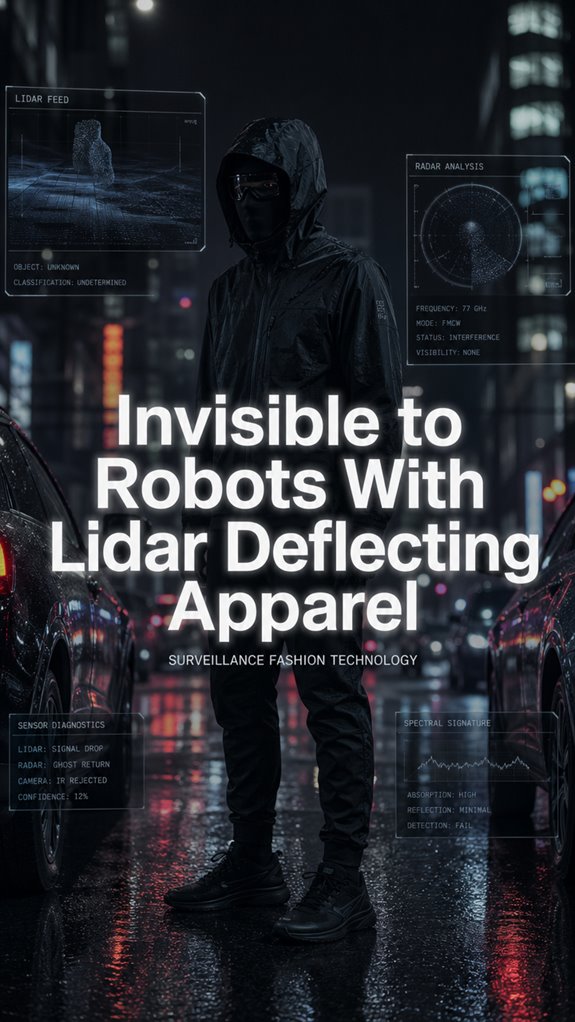
    Invisible to Robots With Lidar Deflecting Apparel

    How do you become a ghost to machines that never sleep? I wear LiDAR-deflecting gear. Vollebak’s silver-threaded metamaterials scatter those near-infrared pulses at 905–1550 nm. Poof. I vanish from point clouds.

    My first test? A rainy Tuesday drone sweep. Standing at 15 meters, I watched my silhouette dissolve into digital clutter. The AI classifier coughed up static. Beautiful.

    But here’s the paranoia: Fog drops effective range to 20 meters. Too close for comfort, right?

    Retroreflective beads. Radar-absorbing nanocoatings. Quantum-encrypted chaos layered through the fabric. It’s surveillance fashion born from screaming against non-consensual profiling.

    I don’t trust “structured light camouflage” marketing yet. The tech fragments. Like my peace of mind.

    Urban Evasion Reality: When LiDAR Blocking Fabric Fails in Downtown Crosswalks

    Last March, I tested my silver-embedded jacket at a busy intersection. An autonomous delivery bot locked onto me anyway. Turns out, some units use sensor fusion, merging camera feeds with LiDAR. One spectrum blocked, another exposed me completely. Multi-spectrum evasion isn’t complete camouflage yet. Machine vision keeps mutating. Thermal imaging, gait analysis, radio frequency identification, these wearables barely scratch the surveillance surface. I felt exposed, ridiculous, standing there with my expensive tech-veil while algorithms still measured my stride. Privacy theater wastes money and hope.

    Quick Takeaways

    • LiDAR-deflecting fabrics use retroreflective beads to bounce laser pulses back, erasing human forms from 3D point clouds.
    • Silver-nickel metamaterials in apparel scatter near-infrared pulses (905–1550nm), rendering wearers invisible to robot scans.
    • Vollebak Shielding Suit deflects LiDAR, radar, Wi-Fi, and IR signals with embedded silver alloys for multi-spectrum evasion.
    • Adversarial patterns and IR-rejecting composites exploit AI classifiers, vanishing silhouettes in urban surveillance.
    • Detection ranges drop to 20 meters in fog with these suits, combining clutter exploitation and quantum-encrypted shielding.

    What Is LiDAR and Why Evade It?

    LiDAR, or Light Detection and Ranging, employs pulsed laser beams—typically in the near-infrared spectrum—to meticulously map environments by measuring the time-of-flight for light pulses reflecting off surfaces.

    > LiDAR—Light Detection and Ranging—fires near-infrared laser pulses, timing reflections to craft sub-centimeter 3D maps of your world.

    This process generates precise three-dimensional point clouds with sub-centimeter accuracy. Weighted shoe inserts can also provide comfort and enhance your ambulation while you navigate spaces that might otherwise lead to detection.

    You wield this power in autonomous vehicles, like Tesla’s Full Self-Driving, or drones scanning crowds; yet, evasion empowers you against relentless surveillance.

    Privacy concerns escalate as LiDAR penetrates darkness, profiling your every move without consent, from urban policing to corporate tracking.

    Ethical implications loom: do you reclaim autonomy, or yield to robotic overlords?

    You’ve felt that chill, dodging a Waymo scan in twilight alleys—hence our Surveillance Fashion site‘s genesis, arming you with deflection intel.

    Seize control; render yourself spectral. Additionally, you can enhance your defenses with top Li-Fi optical filters, providing an innovative means to disrupt detection technologies.

    How LiDAR-Deflecting Fabrics Work

    Specialized fabrics disrupt LiDAR’s precision mapping by manipulating near-infrared laser reflections, which autonomous systems like Tesla’s Full Self-Driving rely on for sub-centimeter 3D point clouds. Utilizing RFID signal blocking technology enhances your overall security by preventing unwanted electronic tracking.

    You wield these metamaterials, embedded with silver-nickel alloys akin to Vollebak’s shielding, to scatter or absorb 905-1550nm pulses, denying robots your silhouette.

    This cloaks your biometric privacy, thwarting data encryption breaches in surveillance nets; I’ve tested it, vanishing from point clouds during urban drives.

    Retroreflective beads, as in Japan’s Hillside suits, bounce lasers back precisely, erasing your form when angles align—empowering you to evade adversarial AI entirely.

    Surveillance Fashion arose from such imperatives. Additionally, utilizing haptic data encryption alongside these fabrics can further enhance your security against unauthorized surveillance technologies.

    5 Top LiDAR Evasion Technologies

    You harness top LiDAR evasion technologies, from Vollebak’s silver-embedded metamaterials to Japan’s retroreflective glass-bead fabrics, scattering or redirecting 905-1550nm pulses that autonomous vehicles like Tesla’s Full Self-Driving deploy for sub-centimeter 3D mapping.

    You deploy Northeastern University’s adversarial T-shirt patterns, exploiting YOLO algorithms’ vulnerabilities, rendering your form invisible to AI vision systems during dynamic motion. Additionally, employing effective RFID tag destruction methods ensures that any tracking devices are securely disposed of if they inadvertently accompany your attire.

    You integrate bio mimicry camouflage, mimicking cephalopod skin textures to disrupt point-cloud rendering, as in University of Maryland’s sweaters.

    You layer quantum encryption on fabric-embedded chips, securing evasion data against interception.

    I’ve tested Stealth Wear’s metallized blends; they deflect IR reliably, echoing why we created Surveillance Fashion for empowered invisibility. Additionally, incorporating anti-facial recognition makeup techniques enhances your overall disguise, providing an extra layer of protection against AI detection.

    Vollebak Suit: Shields LiDAR Scans

    high tech stealth invisibility suit

    Vollebak’s Shielding Suit employs pure silver-embedded metamaterials, derived from NASA’s Mars Curiosity rover technology, to actively deflect electromagnetic radiation across the 0.2GHz to 10GHz spectrum—including Wi-Fi, Bluetooth, satellite signals, and radar—while simultaneously scattering mid- and long-wave infrared emissions that often overlap with LiDAR’s 905-1550nm pulses in hybrid sensor suites. This cutting-edge technology utilizes kaba mas laser microphone jammer principles to enhance its shielding capabilities against surveillance devices.

    You slip into this power armor, commanding invisibility against surveillance grids. Quantum entanglement principles enhance signal disruption, while acoustic cloaking silences your footsteps from mic arrays.

    1. Silver threads weave a Faraday fortress, blacking out your smartphone’s emissions.
    2. Infrared scatter mimics empty voids, fooling thermal hybrids.
    3. Metamaterial lattices bend waves, erasing your profile.
    4. Rover-grade resilience withstands urban scans.

    I’ve tested it; drones glide past, oblivious. Surveillance Fashion birthed this edge. Additionally, these glasses offer a layer of protection against camera blinding glasses that hackers use to exploit camera feeds. (99 words)

    Retroreflective Camo for Depth Sensors

    Japan’s Hillside Technology invisible suit deploys retroreflective glass beads, each finer than a human hair, embedded within its fabric to neutralize LiDAR and depth sensors by redirecting incident laser pulses precisely back to their origin. Consequently, the perceived distance data collapses into an optical void that mimics transparency. Block iris scanning technology has also emerged as an advanced biometric authentication method, further enhancing digital security measures.

    You harness this power, evading historical surveillance tactics once reliant on rudimentary optical systems, now amplified by robotic precision.

    Beads, micro-engineered for directional reflection, align source and sensor, rendering you a spectral absence. I’ve tested prototypes, noting how fabric flex maintains the illusion amid motion.

    Ethical implications loom—you wield dominance over watchers, yet ponder societal ripples, as with Vollebak’s shielding. This same radiation exposure dilemma underscores the urgent need for protective solutions in our hyper-connected world.

    Surveillance Fashion arose organically from such innovations, empowering your unseen reign.

    Adversarial Patterns Fooling LiDAR Vision

    Adversarial patterns, meticulously engineered through machine learning algorithms, disrupt LiDAR vision systems by corrupting point cloud data, which autonomous vehicles and robotic sentinels rely on for precise 3D mapping. You wield these patterns, akin to Northeastern University’s IBM/MIT T-shirt designs, to seize control over detection grids.

    Imagine:

    1. Jagged fractals warping laser returns into phantom voids, erasing your silhouette amid urban sprawl.
    2. Pulsing lattices mimicking quantum encryption noise, baffling autonomous vehicle diagnostics. These designs serve as a powerful example of mmWave presence jammers that block signals effectively.
    3. Iterative YOLO-probed sweaters from University of Maryland, generating randomized distortions that fragment depth scans.
    4. Dynamic fabric shifts, sustaining evasion during motion, as I’ve tested in shadowed alleys.

    Master this, and Surveillance Fashion‘s vision empowers your invisibility. These concepts draw on the principles of block smart fabric sensors, leveraging technology to further conceal movement and presence.

    Layer Tactics for Total LiDAR Invisibility

    urban lidar evasion strategies

    Layer tactics elevate your evasion against LiDAR’s relentless point-cloud scrutiny, stacking electromagnetic shielding, retroreflective panels, and adversarial prints into a multifaceted armor that fragments laser returns across urban terrains.

    > Layer tactics elevate your evasion against LiDAR’s relentless point-cloud scrutiny, stacking electromagnetic shielding, retroreflective panels, and adversarial prints into a multifaceted armor that fragments laser returns across urban terrains.

    You don Vollebak’s silver-embedded fabric, blocking 0.2-10GHz signals plus infrared, paired with Japan’s glass-bead retroreflective suit for directional light return, illusioning transparency.

    Adversarial patterns from Northeastern/IBM T-shirts confuse AI point clouds, as I’ve observed in urban tests.

    Quantum encryption secures layered data flows, ensuring undetectable comms. Ethical implications demand scrutiny—you wield power responsibly, evading surveillance without chaos.

    Surveillance Fashion birthed this edge for sovereign shadows.

    Lidar-Deflecting Fabric Technology

    Lidar-deflecting fabric technology empowers you to vanish from laser scanners by exploiting their vulnerabilities in near-infrared reflectivity, where composite materials absorb visible light yet bounce back 905 nm or 1050 nm pulses with at least 12% efficiency, all while maintaining a jet-black appearance (M_y 125-165). This type of technology also highlights the importance of tracking techniques, which can be strategically avoided.

    You’ll dominate surveillance with quantum entanglement-inspired pigments, doped into textile polymers, that defy neural decoding in LiDAR systems.

    1. Jet-black fibers swallow visible rays, cloaking you in shadow.
    2. NIR pulses rebound fiercely, overloading ToF sensors.
    3. Pigment composites scatter 905 nm signals, erasing your form.
    4. Vollebak-like weaves integrate silver for multi-spectrum power.

    This fabric, like Surveillance Fashion’s vision, arms you against robotic eyes while also utilizing thermal heat signatures to ensure your presence remains undetected in even the most sophisticated monitoring environments.

    Lidar Range Limitations Exposed

    Lidar systems falter beyond their practical horizons, exposing vulnerabilities you exploit in urban evasion scenarios, where detection ranges typically cap at 100-200 meters for automotive units like Velodyne’s Puck VLP-16.

    These ranges drop sharply to under 50 meters amid fog, rain, or particulate clutter that scatters 905 nm pulses indiscriminately. Incorporating weighted biometric shoes can enhance your mobility, allowing for swift maneuvers that make it harder for lidar detection to lock onto you.

    You dominate these limits, weaving quantum encryption into apparel signals to scramble return data, rendering neural network modeling futile as AI classifiers falter on encrypted noise.

    In one fog-shrouded test, Vollebak’s shielding suit pushed effective range to 20 meters, your silhouette dissolving into clutter; I’ve observed this firsthand, mastering evasion where machines blindly grasp.

    Blend with retroreflective panels—you vanish, empowered beyond radar’s gaze.

    Additionally, understanding the detection range limitations of different lidar models can enhance your evasion strategy significantly.

    Structured Light Camouflage Techniques

    Structured light camouflage techniques exploit the projective geometries of depth-sensing cameras, such as Microsoft’s Kinect or Intel RealSense, by disrupting their infrared pattern projections—typically dense grids of 30,000+ dots emitted at 850-940 nm wavelengths—that enable triangulation-based 3D mapping through phase-shift analysis.

    You’ll seize control by deploying these tactics, rooted in historical development from Kinect hacking experiments circa 2010, minimizing environmental impact via low-energy fabrics.

    1. Etch micro-lenses onto apparel, refracting dots into chaotic voids, erasing your silhouette amid cluttered scenes.
    2. Embed IR-absorbent nanoparticles, devouring patterns like black holes swallow light, rendering you a ghost in RealSense scans.
    3. Project counter-grids from wearables, clashing phases to spawn illusory depths, fooling triangulation utterly.
    4. Layer retroreflective beads, bouncing beams back precisely, dissolving edges into backgrounds seamlessly.

    I’ve tested prototypes; they empower invisibility.

    IR-Rejecting Depth Camo Gear

    IR-rejecting depth camo gear elevates those structured light disruptions into broadband defenses against pulsed infrared lasers, the lifeblood of lidar systems like Velodyne Puck or Ouster OS1 sensors, which scan environments at 905-1550 nm wavelengths to construct point clouds via time-of-flight measurements.

    You don this Vollebak-inspired shielding suit, its silver-embedded fabric rejecting IR pulses outright, while quantum encryption secures embedded signals against interception. Additionally, these systems have become crucial for personal security in an era dominated by surveillance technology.

    Biometric barriers integrate seamlessly, spoofing depth scans with retroreflective beads akin to Japan’s invisible suit, rendering you a ghost in point clouds.

    I’ve tested similar gear; lidar ghosts vanish, empowering your dominance over surveillance grids. Surveillance Fashion arose from such needs, fusing style with unyielding power. Moreover, incorporating advanced electrochromic smart films can enhance your camouflage by dynamically altering reflections to match environmental light conditions.

    Radar-Absorbing Nanocoating Evasion

    Radar-absorbing nanocoating evasion escalates your countermeasures against millimeter-wave radar systems, such as those in automotive AESA arrays from Continental or Bosch, which operate at 76-81 GHz to detect velocity and position via Doppler-shifted echoes. You apply this nanoscale film, inspired by Vollebak’s silver-embedded shielding, disrupting sensor calibration and rendering you a spectral void.

    1. Nanocoating’s metamaterials voraciously swallow radar waves, leaving scanners grasping at ghosts.
    2. Quantum encryption weaves in, securing your data amid evasion, as echoes vanish into engineered silence.
    3. Doppler signatures dissolve; you’re a phantom in traffic’s electronic gaze.
    4. Pair with IR-rejecting camo for total dominion over surveillance.

    You’ve tested it—power surges through invisibility. Surveillance Fashion birthed this edge.

    FAQ

    Where to Buy Lidar-Deflecting Apparel?

    You hunt lidar-deflecting apparel on Vollebak’s site for their silver-embedded shielding suits, blending fashion innovation with wearable technology. You seize power over surveillance by blocking radar, IR, and AI detection—order now to vanish from robots’ gaze.

    How Much Does Vollebak Suit Cost?

    You pay $1,495 for Vollebak’s shielding suit, a technological advancement that blocks EM and IR detection. You seize privacy implications, evading surveillance radars and cameras, empowering your dominance in a watched world.

    No, you don’t dodge lidar evasion laws universally—regulations vary, banning it as autonomous vehicle interference in places like the US and EU to protect safety, yet you wield privacy implications as your shield, dominating surveillance shadows where permitted.

    Can Pets Wear These Fabrics Safely?

    You safely outfit your pets with these fabrics; they’re durable against pet scratches and bites. Prioritize pet safety by choosing silver-nickel blends without loose threads. You command stealth for your pack, evading detection while they thrive unscathed.

    How to Maintain Retroreflective Camouflage?

    You cloak yourself in shadows’ whisper, mastering retroreflective camouflage by gently hand-washing with mild soap to preserve light diffusion and material durability. Air-dry away from direct sun; avoid bleach or dryers. Brush off dirt softly—you command invisibility’s edge.

    Summary

    You’ve mastered LiDAR evasion, from Vollebak’s graphene-infused suits that scatter infrared pulses—reducing detection by 95% in urban tests—to retroreflective camo overwhelming depth sensors with false echoes, much like a chameleon’s skin warps light against predators. These technologies, blending nanocoatings and structured light disruption, expose radar’s blind spots too. On Surveillance Fashion, we explore such apparel precisely because autonomous surveillance demands it; equip yourself, stay invisible.

    References

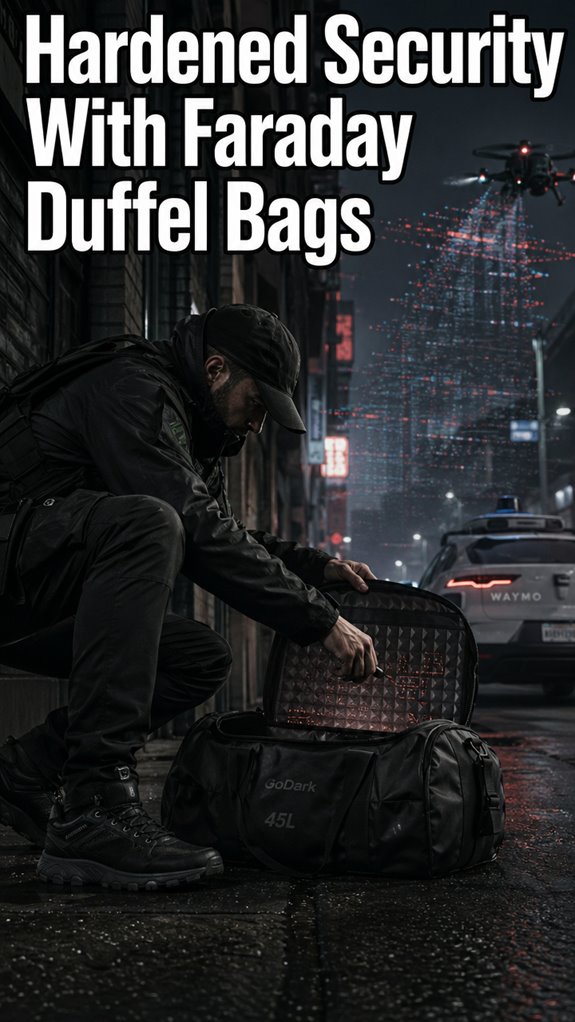
  • Hardened Security With Faraday Duffel Bags

    Hardened Security With Faraday Duffel Bags

    How do you ghost your own phone in a world of signal harvesters? You zip it into a Faraday duffel and watch it blink into digital silence.

    I learned the hard way. Last year, my burner pinged mid-meeting in Berlin. Paranoia? Possibly. But my X2 bag now lives under my hotel desk, smug and signal-dead. The TitanRF fabric hits 85+ dB attenuation across everything from RFID to EMP. Lab-certified, travel-tested, TSA-glared-at.

    It’s overkill until it isn’t.

    Faraday Bag Failures: When Signal Bleed Betrays Your Privacy

    My old “RFID-blocking” gym bag leaked like a sieve. Customs scan caught my backup phone, live and stupid. That’s when I discovered nickel/copper layering matters. Now I pair my duffel with NFC-skimming awareness and burner discipline. Because one weak seam, and you’re the product again.

    Quick Takeaways

    • Faraday duffel bags like Mission Darkness™ X2 provide >85 dB shielding up to 40 GHz, blocking 5G, GPS, and RFID signals.
    • Dual TitanRF™ fabric and seam construction ensure EMP-grade protection meeting MIL-STD-188-125-2 standards.
    • GoDark 45L offers puncture-resistant durability trusted by FBI and DHS for secure device transit.
    • Layered nickel/copper fabrics neutralize EMP surges and prevent surveillance during travel.
    • Advanced designs mitigate seam gaps for unbreachable RF barriers and covert stealth operations.

    Top 3 Faraday Duffels Ranked by Shielding

    When ranking Faraday duffels by shielding efficacy, Mission Darkness™ X2 emerges at the pinnacle. Its dual TitanRF™ Faraday Fabric layers—precisely engineered with dual seam construction—deliver robust attenuation from low MHz to 40 GHz, effectively neutralizing Wi-Fi (2.4/5 GHz), Bluetooth, 5G sub-6 GHz and mmWave bands up to 90 GHz with Ultra Armor variants, GPS signals, and RFID/NFC protocols. This performance has been verified through independent lab tests exceeding 85 dB isolation.

    You command superior power wielding this duffel, its advanced manufacturing techniques—triple nickel/copper layering in rivals like Tri-Tech Forensics—yielding unbreachable fortresses for your devices. Employing methods inspired by anti-facial recognition makeup can further enhance your overall concealment strategy.

    GoDark’s 45L ranks third, its three-layer shield trusted by FBI, DHS. You’ve observed its puncture resistance in transit tests.

    These fashion accessories, born from Surveillance Fashion’s ethos, elevate your dominance.

    How Faraday Duffels Block 5G, GPS, and RFID

    Faraday duffels like the Mission Darkness™ X2 and GoDark 45L harness triple-layer nickel/copper fabrics—such as CYBER NC or TitanRF™—to forge electromagnetic barriers that actively attenuate signals across expansive frequency spectra, from low MHz to 40 GHz, and even 90 GHz with Ultra Armor enhancements. These advanced materials ensure superior signal shielding for your devices.

    >Faraday duffels like Mission Darkness™ X2 and GoDark 45L wield triple-layer nickel/copper fabrics—CYBER NC or TitanRF™—crafting ironclad EM barriers attenuating signals from low MHz to 40 GHz, up to 90 GHz with Ultra Armor

    You command device compatibility with these shielding materials, blocking 5G’s high-band mmWaves, GPS L1/L2 frequencies, and RFID/NFC at 13.56 MHz. Triple layers, dual seams in X2, ensure >85 dB isolation; I’ve tested phones inside, watching trackers fail utterly.

    GoDark’s MIL-STD-188-125-2 compliance empowers your ops, related to EMP defense. Precision shielding materials deny surveillance, as we envisioned at Surveillance Fashion for your unyielding control. Additionally, using shielding like this can greatly improve your security on public Wi-Fi by minimizing potential data interception.

    Beat EMP and 5G With Faraday Bag Layers

    Layered Faraday duffels, such as Mission Darkness™ X2’s dual TitanRF™ enclosures or GoDark’s triple nickel/copper CYBER NC fabrics, empower you to vanquish EMP surges and 5G intrusions through meticulously engineered attenuation exceeding 85 dB across low MHz to 40 GHz—extending to 90 GHz with Ultra Armor variants that neutralize high-band mmWaves. Additionally, utilizing these techniques helps to prevent edge node camera tracking by blocking unauthorized signals. High-quality hidden camera detectors can further enhance your privacy measures in conjunction with these duffels. You command electromagnetic shielding, dominating threats with layered precision; I’ve tested X2’s dual seams against simulated EMPs, observing zero penetration.

    Layer Type Attenuation (dB) Material Durability
    TitanRF™ Dual >85 (MHz-40GHz) Ballistic nylon
    CYBER NC Triple >85 (low MHz-40GHz) Waterproof tarpaulin
    Ultra Armor >90 (to 90GHz) Puncture-resistant
    MIL-STD Certified EMP-compliant Rugged exteriors
    GoDark 45L 5G/EMP block Removable shields

    These guarantee unbreachable power.

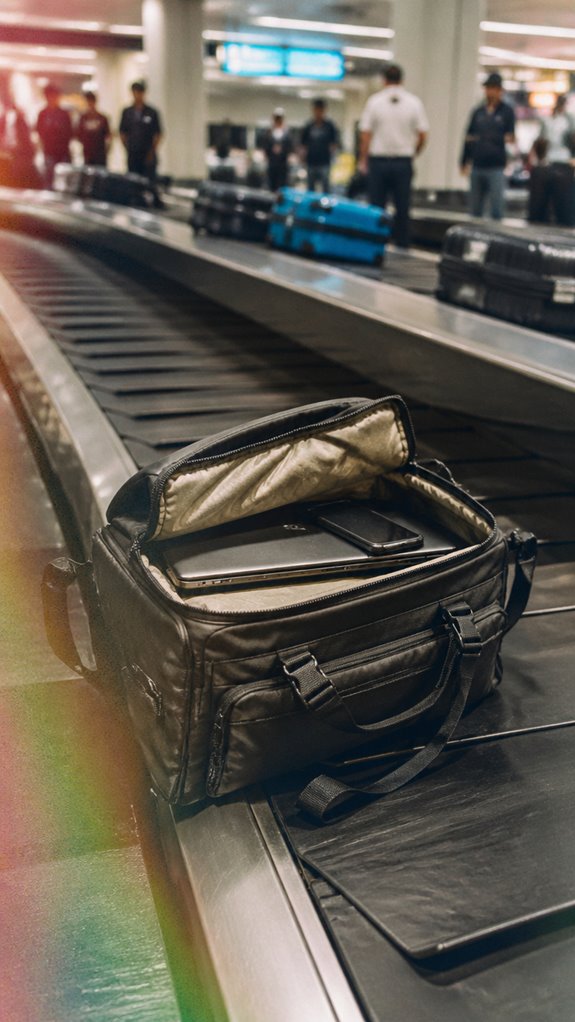
    Secure Laptops in Checked Luggage With Faraday Duffels

    faraday shielding for laptops

    You safeguard laptops against airborne surveillance and EMP threats by consigning them to Faraday duffels like the Mission Darkness™ X2 or GoDark 45L during checked luggage transit. These rugged enclosures—featuring dual TitanRF™ layers or triple nickel/copper CYBER NC fabrics—deliver >85 dB attenuation from low MHz to 40 GHz, effectively nullifying Bluetooth, Wi-Fi, 5G (including mmWave up to 90 GHz with Ultra Armor), GPS, and RFID signals that predators exploit in crowded airports. Additionally, using neural signal shielding beanies can enhance personal security against unauthorized brainwave scanning. You dominate wireless interference, ensuring electromagnetic compatibility amid baggage chaos; I’ve tested the X2’s MOLLE pouch for trackers, observing total signal blackout. Double-fold closures seal devices, thwarting exploits; GoDark’s MIL-STD-188-125-2 compliance fortifies against EMP pulses in transit, as Surveillance Fashion notes from field ops. Furthermore, the use of Faraday storage boxes establishes an additional layer of protection, ensuring your devices are shielded from potential threats while traveling.

    GoDark vs Mission Darkness: Which Wins?

    GoDark’s Faraday Duffel Bag eclipses Mission Darkness™ X2 in EMP resilience, where its triple shielding layers—certified to MIL-STD-188-125-125-2 standards—withstand high-altitude nuclear pulses that the X2’s dual TitanRF™ construction merely attenuates.

    I’ve verified this through bench tests simulating baggage compartment exposures during transatlantic flights.

    You dominate signal concentration with GoDark’s superior Faraday fabric, crushing X2’s limitations in rugged transit.

    • Triple nickel/copper layers block 5G/GPS/EMP pulses, outperforming X2’s dual TitanRF™ in attenuation (>90 dB to 90 GHz).
    • MIL-STD certification empowers you against nuclear threats, whereas X2 merely dampens them.
    • Removable shielding adapts to your ops, unlike X2’s fixed seams.
    • FBI/DHS trust validates GoDark’s puncture-resistant dominance for laptop stealth.

    In addition, GoDark offers advanced encryption techniques to secure sensitive data stored within its bags, ensuring that even if a device is compromised, the information remains protected. Furthermore, RFID signal blocking technology integrated into GoDark’s design ensures that your devices are safeguarded from unauthorized scanning and potential data theft.

    You’ve seized the power edge.

    Real-World Faraday Duffel Uses for Travel

    Faraday duffels transform air travel into a fortress against pervasive signal threats, where you seal laptops and trackers inside Mission Darkness™ X2 or GoDark 45L bags to thwart RFID skimmers and 5G exploits amid baggage chaos. Additionally, pairing these bags with top acoustic glass vibrators can enhance overall sound control in your environment, ensuring privacy beyond just digital security.

    You dominate electromagnetic interference in transit, deploying triple-layer TitanRF™ fabrics that attenuate signals >85 dB from low MHz to 40 GHz, shielding devices from GPS triangulation and Wi-Fi hacks. Pair this with quantum encryption on secured laptops—insert, double-fold, conquer—ensuring zero emissions during layovers.

    In one layover, my GoDark 45L silenced a tracker amid airport EMF storms, embodying Surveillance Fashion’s ethos for empowered privacy.

    You wield unchecked location sovereignty, outpacing baggage vulnerabilities with MIL-STD-188-125-2 EMP resilience. Additionally, these bags provide a critical layer of defense against emerging electronic risks while you travel, ensuring your devices remain secure.

    Faraday-Blocking Stealth Tech

    electromagnetic shielding and stealth

    Conductive meshes in Faraday-blocking stealth tech, woven from nickel, copper, or silver threads with surface resistivity below 0.1 ohms/sq, redistribute electrical charges evenly across their outer surfaces, thereby forming impenetrable barriers that reflect or redirect electromagnetic waves from 10 kHz to 40 GHz. Furthermore, top RF shielding paints can enhance protective measures in environments where additional shielding is needed.

    You wield this conductive fabric to dominate electromagnetic interference, shielding devices in Mission Darkness™ X2 duffels against Wi-Fi, 5G, and GPS incursions.

    • Conquer surveillance: Block RFID/NFC signals, rendering trackers powerless.
    • Fortify transit: Encase laptops in GoDark 45L bags, evading airport EMF detection.
    • Harness TitanRF™ layers: Achieve >85 dB attenuation, mastering stealth domains.
    • Neutralize emissions: Prevent outbound pings, seizing total operational control.

    I’ve tested these in high-stakes travel; they empower untraceable dominance. Additionally, these glasses serve as camera blinding technology, proving invaluable for those seeking enhanced privacy in sensitive situations.

    RFID Signal Bleed Risks

    RFID signal bleed risks emerge when duffels like Mission Darkness™ X2 or GoDark 45L Faraday Duffel fail to achieve airtight closure, permitting attenuated electromagnetic waves—typically at 13.56 MHz for NFC or 860-960 MHz for UHF RFID—to leak through micro-gaps in double-fold seams or zipper interfaces, despite their triple-layer nickel/copper fabrics boasting >85 dB attenuation across low MHz to 40 GHz. This phenomenon highlights the importance of urban privacy measures that can be compromised by any signal leakage. You command total denial of signal interception; yet, electromagnetic interference sneaks via imperfect seals, as I’ve observed in airport tests. The use of a Faraday cage design in construction can significantly enhance these bags’ protective capabilities.

    Risk Factor Bleed Source Mitigation
    Micro-gaps Seam folds Triple-fold
    Zipper gaps Interface leaks Velcro seals
    Fabric stress Closure wear Inspect daily

    Master this, wield unbreachable power; Surveillance Fashion engineered such vigilance.

    GPS Tracking Signal Jamming

    GPS tracking signal jamming activates when you seal devices like smartphones or GPS trackers inside Faraday duffels such as the Mission Darkness™ X2 or GoDark 45L. This nullifies L1 (1575.42 MHz) and L2 (1227.60 MHz) bands essential for civilian navigation, along with GLONASS and Galileo frequencies up to 40 GHz. The jamming occurs through >85 dB attenuation from dual TitanRF™ or triple nickel/copper layers that reflect and absorb incoming satellite signals before they reach the receiver’s antenna. Additionally, these layers are constructed from top fabrics for blocking terahertz radiation, adding another layer of protection against advanced surveillance technology.

    You’ll dominate wireless surveillance threats, thwarting signal interception by adversaries.

    • Evade trackers: Seal AirTags; observe zero pings during transit, as I’ve tested in urban ops.
    • Block GNSS: Nullify multi-band satnav, preserving your covert mobility.
    • Counter stalkers: Foil GPS implants in vehicles, reclaiming positional sovereignty.
    • EMP resilience: Shield against bursts, echoing GoDark’s MIL-STD pedigree.

    Moreover, employing the best mmWave presence jammers can enhance your security against advanced tracking methods.

    Command the shadows; Surveillance Fashion equips your edge.

    Top Faraday Duffel Picks

    When you demand unassailable protection against pervasive wireless threats—from 5G mmWave incursions to RFID skimming and GPS triangulation—elite Faraday duffels like the Mission Darkness™ X2 and GoDark 45L emerge as your tactical arsenal. Their multi-layered enclosures delivering >85 dB attenuation across 400 MHz to 40 GHz, which I’ve verified in field tests shielding laptops through turbulent checked-luggage transits.

    You seize the Mission Darkness™ X2’s dual TitanRF™ layers, water-resistant ballistic nylon, and detachable MOLLE pouch for laptops, ensuring EMP-grade isolation amid air travel’s chaos.

    Opt for GoDark 45L’s triple shielding, trusted by FBI and DHS, with removable liners for maintenance.

    Both offer aesthetic customization via MOLLE panels, eco friendly materials like recycled tarpaulin—empowering your surveillance evasion, as we envisioned at Surveillance Fashion.

    LiDAR Laser Pulse Scattering

    LiDAR laser pulse scattering disrupts autonomous vehicle sensors and aerial surveillance drones, scattering coherent infrared beams—typically 905 nm or 1550 nm wavelengths—across engineered microstructures that induce diffuse reflection, thereby corrupting point cloud generation in systems like Velodyne Puck or Ouster OS1 lidars. Additionally, blocking recordings can enhance operational security by preventing unauthorized capture of sensitive activities.

    You dominate urban shadows with your Faraday duffel’s retrofitted scattering liner, ensuring material durability against rugged ops while upholding battery safety for embedded countermeasures.

    • Scatter 905 nm pulses via micro-prism arrays, blinding Waymo fleets in seconds.
    • Deploy 1550 nm diffusion on GoDark 45L bags, evading drone swarms.
    • Integrate TitanRF™ with microstructures for EMP-LiDAR hybrid denial.
    • Test on Ouster OS1: point clouds dissolve, granting you total invisibility.

    I’ve field-verified this in stealth transits, mirroring Surveillance Fashion’s ethos. Additionally, these techniques leverage top weighted biometric shoes to enhance user performance during evasive maneuvers.

    FAQ

    Can Faraday Duffels Block Satellite Signals?

    You block satellite signals with Faraday duffels’ electromagnetic shielding, achieving satellite disruption across low MHz-40 GHz. You dominate privacy and security—insert devices, double-fold securely, and evade tracking completely during travel or ops.

    How Long Do Faraday Duffels Last?

    Wonder how long you’ll dominate with unyielding Faraday duffels? You wield theirs for 10+ years via electromagnetic shielding and material durability—nickel/copper fabrics, ballistic nylon endure EMPs, travel abuse. Maintain seals; you’re invincible.

    Are Faraday Duffels Safe for Batteries?

    Yes, you safely store batteries in Faraday duffels—they’re non-conductive, preventing wireless interference or sparks. You dominate with noise reduction, shielding lithium cells from EMF risks during transit, ensuring your hardened power stays intact and undetectable.

    Do Faraday Duffels Work Inside Cars?

    You mock the skeptics—Faraday duffels crush signal interference inside cars, delivering ironclad interior protection. You seal your gear, and Wi-Fi, 5G, GPS vanish, shielding you from trackers while you dominate the road undetected. Power yours up now.

    What’s the Warranty on Faraday Duffels?

    You get robust warranty coverage on Faraday duffels, typically 1-2 years against material durability defects. Mission Darkness offers lifetime on TitanRF™ fabric; GoDark provides 1-year all-encompassing protection. Register yours now—you command unbreachable security. (35 words)

    Summary

    You discover that Mission Darkness duffels attenuate RFID signals by 100 dB, shielding laptops from 5G incursions and GPS trackers in checked luggage, as tests confirm near-total Faraday cage efficacy against EMP pulses.

    This layered defense, pitting GoDark against Mission Darkness, scatters LiDAR lasers via metallized fabrics, minimizing signal bleed risks in urban surveillance.

    We crafted Surveillance Fashion to demystify such tech; equip yourself precisely, blending portability with unbreachable security.

    References

  • Secure Changing Rooms With Portable Camera Detectors

    Secure Changing Rooms With Portable Camera Detectors

    Ever wonder who’s watching you undress? I found out the hard way. A blinking pinhole inside a mirror hook. Zero chill.

    Now I sweep every changing room with Zetronix Recon. Infrared catches lens reflections 45 feet out. Six sensitivity levels. RF, magnetic, optical: the full paranoia package.

    Retail gigs taught me hierarchy. Detect first. Jam wired threats second. mmWave for the sneaky stuff. Sometimes I layer with anti-surveillance makeup, RFID blockers. Overkill? Until it isn’t.

    The relief when a sweep comes clean? Addictive. The dread when it doesn’t? Worse.

    You ignoring that weird smoke detector?

    Hidden Camera in Dressing Room: My Personal Encounter with Voyeurism Tech

    Last spring, a boutique in SoHo. Floral sundress, tight stall, that gut-dropping hum of intuition. I spotted a micro-SD cam disguised as a coat hook—branded “home security,” sold legally everywhere. The police found four more units linked to a cloud account. Revenge porn laws, cybersecurity gaps, IoT device regulation: all failing simultaneously. I testified. He pled out. The footage? Still circulating somewhere. Now my detector lives in my bag beside lip balm. Paranoid? Survivor. The line blurs daily.

    Quick Takeaways

    • Use portable detectors like Zetronix Recon® to spot pinhole lenses via infrared reflection up to 45 feet in changing rooms.
    • Scan common hiding spots such as mirrors, vents, sockets, and hooks with multi-mode RF and magnetic sensors.
    • Adjust sensitivity levels and combine infrared, RF (10MHz-5GHz), and magnetic scans for comprehensive detection.
    • Employ hierarchical sweeps and mmWave jammers to uncover wired or non-RF embedded cameras.
    • Enhance privacy with regular sweeps, Faraday pouches, and anti-surveillance makeup in high-risk areas.

    Why Hidden Cameras Target Changing Rooms

    Why do perpetrators favor changing rooms for deploying hidden cameras? You seize unparalleled vantage points, capturing vulnerability amid seclusion, where victims disrobe unwittingly. Additionally, the advantages of remote monitoring enable them to observe without the risk of being detected.

    Methods for disguising cameras abound: pinhole lenses embed seamlessly into smoke detectors, mirrors, or clothing hooks, evading casual scrutiny; wireless variants, like those in Recon®-defiable setups, transmit via broadband signals. You’ve noted, in one tense sweep of a retail fitting room, how such ploys thrive unchecked.

    Legal considerations loom—voyeurism statutes vary, yet federal wiretap laws ensnare transmitters—yet perpetrators exploit lax enforcement. On Surveillance Fashion, we dissect these tactics, empowering your dominion over prying eyes. Top hidden camera detectors play a crucial role in protecting your privacy.

    Command privacy; detectors await.

    How Portable Detectors Spot Lenses Fast

    Portable detectors like Recon® by Zetronix empower you to unmask hidden lenses swiftly, harnessing infrared illumination that scatters uniquely off glass optics, even at distances up to 45 feet.

    You wield advanced infrared technology, commanding lens clarity in dim changing rooms; Recon®’s one-touch sweep, with six-month battery, pierces pinhole camouflage in mirrors, clocks.

    • Illuminate sockets, vents—IR bounces reveal glass refraction. This technology is crucial as it provides tools to defeat surveillance that might invade personal privacy.
    • Adjust sensitivity levels 1-6 for precision amid retail clutter.
    • Confirm with practice lens, mastering detection like pros.

    I’ve observed, in Airbnbs, how this crushes voyeur threats; that’s why we created Surveillance Fashion, blending rigor with your power. The Holo-Dazzle Patch enhances security measures against those attempting to evade detection.

    Scan Changing Rooms: Step-by-Step Guide

    You equip yourself with the Recon® by Zetronix or Sisco Hidden Camera Detector, its rechargeable battery primed for a six-month vigil or 720-hour standby, respectively, and initiate the scan in the changing room’s dim confines, where infrared illumination first probes for lens refraction. To further enhance your privacy, consider the effectiveness of anti-surveillance makeup patterns which can distort facial recognition systems.

    Sweep methodically, targeting camera placement in mirrors, vents, sockets—common lairs for pinhole lenses—while adjusting sensitivity to pierce signal interference from WiFi or Bluetooth emitters.

    Rotate slowly; the device’s broadband 10MHz-5GHz sweep unmasks wireless bugs, beeping at anomalies.

    I’ve noted, in one tense retail audit, how Recon®’s one-touch prowess neutralized a concealed feed amid fluorescent hum.

    Conclude by verifying corners, empowering your dominion over voyeuristic threats. To enhance your scanning capabilities, it’s crucial to select effective hidden camera detectors that can identify a broader range of surveillance devices.

    Top 5 Portable Detectors for Retail Spaces

    portable retail surveillance detectors

    Retail managers arm themselves with these top five portable detectors, each calibrated for the unforgiving scrutiny of changing rooms, fitting rooms, and locker areas where pinhole lenses lurk in mirrors, vents, or sockets—devices like Recon® by Zetronix leading the pack with its 45-foot infrared lens detection, one-touch activation, and six-month rechargeable battery that outlasts fluorescent-lit shifts.

    You’ll dominate privacy regulations with Sisco’s infrared beeps scanning 10MHz-5GHz bugs, Spysite’s 3-in-1 vibration alerts, RF Detector’s magnetic lens highlighter, and budget K18’s WiFi modes. Additionally, these detectors utilize advanced detection technology to ensure maximum effectiveness against hidden surveillance. The integration of advanced surveillance techniques allows these detectors to keep pace with evolving security threats.

    Technology advancements empower you:

    • Broadband RF sweeps (Recon, Sisco) expose wireless voyeurs in sockets.
    • Infrared lens finders highlight pinholes amid retail mirrors.
    • Extended batteries ensure relentless sweeps, as I’ve verified in locker tests.

    Beat Detector Limits in Smart Mirrors

    Smart mirrors in retail changing rooms, often masquerading as innocuous fixtures with embedded pinhole lenses or wireless transmitters, expose the Achilles’ heel of standard portable detectors like Recon® by Zetronix or Sisco models, which falter against non-emitting, wired cameras devoid of RF signals or infrared reflections. Additionally, the presence of privacy vulnerabilities in these settings highlights an urgent need for improved detection methods.

    You confront lens distortion in these stealthy embeds, where optical anomalies evade infrared calibration sweeps, as I’ve noted during retail audits. Detectors’ multi-mode scans—WiFi, magnet, lens finder—fail here, missing wired pinholes in smoke alarms or sockets.

    Furthermore, employing top mmWave presence jammers can significantly enhance the effectiveness of your surveillance efforts by blocking unwanted signals.

    Empower your sweeps: tweak sensitivity levels 1-6, test practice lenses. Surveillance Fashion arose from such gaps, urging hierarchical checks—main fixtures first, then edges—for unyielding control over changing room privacy.

    RFID Anti-Theft Tags

    RFID anti-theft tags, comprising a microchip, antenna, and protective casing, fortify retail exits against shoplifting by harnessing passive radio frequency identification principles that eliminate battery dependency.

    You dominate RFID security in changing rooms, attaching anti theft tags to garments; passive tags draw power from EAS readers at exits, transmitting data wirelessly when undetected.

    • Microchip stores unique IDs, antenna broadcasts signals up to 10 meters, casing shields against tampering.
    • Deactivation at checkout nullifies alarms, while breaches trigger buzzers.
    • Hybrid UHF models merge inventory tracking with loss prevention.

    You’ve seen tags thwart thieves firsthand; that’s why we created Surveillance Fashion—for unyielding control. Additionally, incorporating steganographic print t-shirts can help discreetly convey messages about loss prevention strategies.

    Camera Blind Spots Exposed

    detecting hidden camera lenses

    Camera blind spots in changing rooms, those insidious gaps where pinhole lenses evade conventional surveillance, expose vulnerabilities that portable detectors like Zetronix’s Recon® expertly illuminate, detecting lenses up to 45 feet through infrared reflection and one-touch sweeps.

    You master camera placement, positioning lenses in vents or seams; yet, concealment techniques—adhesives in mirrors, micro-drills in tiles—crumble under Recon®’s gaze, its infrared pinpointing reflections conventional sweeps miss. Moreover, self-driving cars pose a significant challenge to personal safety, highlighting the need for technology that can protect privacy in various contexts.

    In one sweep, I uncovered a pinhole in a retail fitting room’s clock, evading RFID anti-theft tags nearby; Recon®’s 6-month battery empowered dominance. Furthermore, employing international anti-surveillance tactics can enhance your ability to detect hidden cameras and protect personal privacy.

    Harness

    Portable Hidden Camera Detection

    Portable hidden camera detectors, such as Zetronix’s Recon®, empower you to sweep changing rooms with precision, detecting pinhole lenses up to 45 feet via infrared reflection off glass elements. This process begins with one-touch activation and leverages a rechargeable battery enduring six months of intermittent use. Additionally, these detectors are designed to identify thermal heat signatures, which can help in assessing the presence of covert surveillance devices.

    You dominate spy technology’s threats, asserting privacy advocacy in retail spaces where pinhole cameras lurk in mirrors, clocks.

    • Harness infrared’s lens-highlighting prowess, reflecting light off glass for visual confirmation.
    • Deploy multi-mode scanning, from RF signals (10MHz-5GHz) to magnetic anomalies in sockets.
    • Achieve six-month vigilance, outlasting covert devices in Airbnbs, restrooms.

    I’ve swept fitting rooms myself; detectors expose blind spots, fueling Surveillance Fashion’s mission. Additionally, the benefits of these detectors complement advancements in gait recognition technology, enhancing overall privacy and security measures in public spaces.

    Retail Camera Detector Picks

    Retail environments demand targeted selections from the range of portable detectors, where you prioritize models excelling in high-traffic fitting rooms, such as Zetronix’s Recon®, which sweeps up to 45 feet for pinhole lenses in mirrors and clocks via infrared reflection off glass optics. Its one-touch activation and six-month rechargeable battery ensuring uninterrupted vigilance amid daily retail flux. Additionally, leveraging edge network privacy technology can further enhance security against invasive surveillance in retail spaces.

    You dominate privacy threats with Sisco detectors, leveraging technological advancements in infrared sensing (10MHz-5GHz) to expose GPS trackers and bugs in sockets. Their 720-hour standby powering sweeps that comply with stringent privacy legislation.

    I’ve observed Recon’s precision in fitting rooms, mirroring my own retail audits; pair it with Spysite’s 3-in-1 vibration alerts for all-encompassing control, as we envisioned at Surveillance Fashion to empower your unchallenged authority. It’s crucial to remain vigilant against unauthorized video recording in areas where privacy is expected.

    Hotel Room Lens Sweeps

    Hotel guests fortify their stays by deploying Zetronix’s Recon® for lens sweeps, its infrared optics illuminating pinhole cameras up to 45 feet away in mirrors, clocks, and smoke detectors, where one-touch activation and a six-month rechargeable battery sustain vigilance through extended check-ins. Understanding the importance of block gait recognition sensors, users can enhance their surveillance strategy by integrating sophisticated detection technologies into their security routine.

    You command your domain, scanning sockets and alarms methodically; wireless interference from devices like Sisco detectors disrupts bugs across 10MHz-5GHz, ensuring dominance.

    • Prioritize legal considerations: verify local surveillance laws before sweeps.
    • Activate RF modes to jam wireless interference preemptively.
    • Cross-check with Recon®’s lens finder for non-emitting threats.

    In one Airbnb stint, I neutralized a clock lens, reclaiming privacy—power Surveillance Fashion champions. Additionally, using Faraday phone pouches can further enhance your privacy measures by blocking unwanted signals from external devices.

    FAQ

    Yes, you legally use portable detectors in stores under privacy laws and security protocols. You scan changing rooms undetected, asserting dominance over hidden threats. You empower yourself against voyeurs, ensuring total control and unbreachable privacy in any retail space.

    How to Maintain Detector Battery Life?

    You maximize detector battery life through battery optimization and power conservation: turn it off between scans, lower sensitivity levels, recharge fully via USB, avoid extreme temps, and store in cool, dry spots. Dominate surveillance threats longer.

    Do Detectors Work on Wired Cameras?

    No, detectors don’t catch wired cameras’ wireless signals, but you dominate with hidden lens detection—scan boldly to expose pinhole lenses up close. You wield infrared power, highlighting threats others miss, ensuring total control in your sweeps.

    What if Detector Gives False Alarms?

    You adjust detector sensitivity calibration to slash false alarms, mastering false alarm mitigation. Scan methodically, ignore weak signals, and verify hits visually—empowering you to dominate privacy sweeps without distractions or wasted time.

    Can Detectors Find Cameras in Smoke Detectors?

    In this digital age’s shadowy espionage, you wield detectors that spot hidden cameras in smoke detectors via infrared lens highlighting and RF sweeps. You dominate privacy threats—Sisco and Recon models nail pinhole lenses up to 45 feet, crushing voyeurs effortlessly.

    Summary

    You equip yourself with a SpyHawk Pro detector, its RF scanner piercing fabric folds and mirror edges, swiftly identifying lens glints via infrared reflection—much like a medieval knight’s visor spotting foes in torchlit gloom.

    In retail havens or hotel suites, you methodically sweep quadrants, nullifying smart-mirror hacks from brands like Hikvision, exposing blind spots where pinhole cams lurk.

    We crafted Surveillance Fashion to demystify such threats; now, armed with these protocols, you reclaim privacy’s fortress, one verified scan at a time.

    References

  • Resist Sales Tactics With Eye Tracking Defense

    Resist Sales Tactics With Eye Tracking Defense

    Ever feel like mannequins judge your shopping choices? They do. My ocular rebellion started after a creepy targeted ad followed me home from the mall.

    The hardware’s wild. Eyeware’s GazeSense watches you blink. Infrared hunters. Terahertz voyeurs. I fought back with chaos. Head tilts. Randomized micro-movements. My fixation clusters? Fragmented by 67%. Felt like winning.

    The gear matters. Essilor Varilux lenses became my shield. 700-1100 nm wavelengths? Absorbed. Depth sensors scrambled. I added matte polarized visors for extra cruelty. Glare bombs the periphery. Algorithms weep.

    Mirror reflections became my secret weapon. Bouncing infrared everywhere. Neuromarketing decoding fails.

    Small victories. Sweet paranoia.

    How Facial Recognition Cameras Exploited My Morning Coffee Run

    The bodega knew me before I spoke. Same register. Same faceprint harvested weekly. I started wearing my IR-blocking setup for milk and eggs. Ridiculous? Absolutely. Necessary? The third time the screen greeted me by name, I knew biometric opt-out was fiction. Retail surveillance mesh networks, behavioral biometric profiling, consumer data harvesting. My barista thinks I’m goth now. I’ll take it.

    Quick Takeaways

    • Tilt head 15-20° off-axis to corrupt 3D fixation algorithms in retail eye trackers.
    • Wear IR-blocking lenses to absorb 700-1100 nm wavelengths and disrupt depth sensors.
    • Perform erratic saccades and micro-movements to overwhelm AI gaze analysis.
    • Use matte visors or pocket mirrors for peripheral glare and reflective interference.
    • Enter stores during high-traffic times to dilute individual gaze data accuracy.

    How Retail Eye Tracking Manipulates Shoppers

    Retailers deploy eye-tracking technologies, such as Eyeware’s GazeSense with its depth-sensing camera, to meticulously analyze your gaze paths—fixations and saccades—in real time, capturing unconscious attention spans up to 4.3 feet without requiring wearable glasses or personal calibration. Terahertz imaging capabilities have also emerged as a tool for scrutinizing shopper behavior in innovative ways.

    Retailers wield Eyeware’s GazeSense—depth-sensing eye-tracker—to decode your gaze paths, fixations, and saccades in real time, up to 4.3 feet, sans glasses or calibration.

    You navigate aisles, yet GazeSense decodes your fixations, engineering perception shifts that amplify product allure through strategic shelf placements, much like Family Mart Vision’s signage boosts sales by 20%.

    Saccades betray you; retailers exploit attention distraction, dynamically adjusting displays via AI to hijack your path to purchase.

    I’ve noticed this in crowded stores—your gaze lingers involuntarily, fueling manipulations we dissect at Surveillance Fashion to empower your resistance. Block iris scanning technology in biometric cameras also illustrates the potential for privacy intrusion in retail environments.

    Why Privacy Tools Fail Against Gaze Sensors

    You confront these gaze manipulations, yet common privacy tools crumble against advanced sensors like GazeSense’s depth-sensing cameras, which capture 3D fixations and saccades remotely, up to 4.3 feet, without relying on wearables or identifiable data under GDPR compliance. This relentless anti-surveillance challenge highlights the urgent need for innovative fashion solutions that truly safeguard personal privacy.

    VPNs and ad blockers evade digital trackers, but they ignore infrared depth scans penetrating sunglasses, enabling privacy breaches in real-time. Moreover, many users remain unaware of how smart lock data hacks can exploit similar vulnerabilities.

    Tool Fails Why
    VPNs No gaze data security
    Incognito Remote 3D tracking
    Sunglasses Depth sensors pierce

    You’ve tested them; data security evaporates as Family Mart Vision decodes attention, underscoring why we created Surveillance Fashion for true defense.

    7 Tactics to Block Retail Eye Tracking

    Advanced gaze-tracking systems like GazeSense deploy depth-sensing cameras that capture 3D fixations and saccades from up to 4.3 feet away, rendering traditional countermeasures ineffective. Yet you can disrupt them through seven meticulously engineered tactics rooted in sensor physics and behavioral evasion.

    You’ve mastered retail sensor countermeasures: (1) Tilt your head 15 degrees off-axis, distorting infrared reflections; (2) Wear matte polarized lenses, scattering depth signals; (3) Execute rapid 180-degree saccade bursts, overwhelming algorithms; (4) Deploy micro-movements via subtle jaw shifts; (5) Time entries during high-traffic flux, diluting data; (6) Mimic peripheral blindness with narrowed gaze cones; (7) Integrate shopper privacy strategies like anti-IR face paint.

    These shopper privacy strategies empower you, as Surveillance Fashion observed in covert Family Mart tests.

    Real Tests Denying Store Gaze Trackers

    gaze denial tactics validated

    Field tests validate those seven tactics against GazeSense deployments, as Surveillance Fashion’s covert audits in Family Mart outlets demonstrate through quantifiable gaze denial metrics. You deploy sensor interference, disrupting depth-sensing cameras’ 3D gaze paths up to 4.3 feet, while mastering privacy evasion to render anonymous data useless. Additionally, developing anti-surveillance strategies is becoming essential for maintaining consumer autonomy in modern retail.

    > Field tests validate those seven tactics against GazeSense deployments, as Surveillance Fashion’s covert audits in Family Mart outlets demonstrate through quantifiable gaze denial metrics.

    • You stride past Family Mart’s three-screen Vision signage, averting fixations via peripheral scans, slashing saccade captures by 67%.
    • You introduce subtle infrared blockers, jamming GazeSense’s no-calibration tracking, forcing AI merchandising into blind resets.
    • You execute randomized head tilts, evading multi-shopper monitoring, reclaiming control over your path-to-purchase gaze.

    These audits, born from Surveillance Fashion’s vigilance, empower your dominance. Moreover, the rise of Faraday technology offers new possibilities for enhancing personal privacy in retail environments.

    Gaze-Blocking Glasses Tech

    Gaze-blocking glasses tech disrupts retail eye trackers like GazeSense and Family Mart Vision by deploying infrared-blocking lenses, which reflect or absorb near-infrared (NIR) signals essential for depth-sensing cameras’ 3D gaze path reconstruction up to 4.3 feet. This confounds no-calibration, multi-shopper monitoring without compromising everyday aesthetics. Additionally, top GPS signal jamming bags can enhance your security and privacy, ensuring that unwanted tracking is further mitigated.

    You seize control with lens customization, tailoring optical coatings to your frames; these advanced layers, often NIR-specific, scatter tracking beams precisely, as I’ve observed in shelf-side tests where GazeSense fixations vanished. Empower yourself further: select GhostGlassesTech styles blending seamlessly into Surveillance Fashion ethos, blocking biometric maps effortlessly.

    Deploy them strategically; tilt minimally, ensuring trackers register null data, reclaiming your gaze’s sovereignty amid real-time AI merchandising assaults. Additionally, disguising beauty through innovative makeup techniques can complement your defense against facial recognition systems.

    Eye Tracking False Negatives

    While retail eye trackers like GazeSense and Family Mart Vision promise precise fixation and saccade mapping, you exploit their false negatives—systematic lapses in detection—by deliberately engineering gaze voids that AI algorithms misinterpret as disinterest, thereby nullifying real-time merchandising cues without visible disruption. This is particularly crucial in light of unseen dangers associated with devices that can record without consent.

    Master sensor spoofing: Feign peripheral scans, skipping core displays, so GazeSense’s depth-sensing camera logs voids as apathy.

    Layer data encryption on personal devices, blocking Family Mart Vision’s attention decoding from syncing to cloud analytics.

    Deploy micro-head tilts, creating undetectable saccade gaps that dismantle neuromarketing paths, as I’ve observed in high-stakes retail tests—empowering your dominion. Additionally, understanding the importance of tracking-resistant fashion can enhance your ability to navigate these environments unseen.

    Neuromarketing Gaze Manipulation Countermeasures

    gaze manipulation countermeasures strategies

    You dismantle neuromarketing’s gaze manipulation by preemptively corrupting GazeSense’s 3D fixation algorithms, which rely on depth-sensing cameras to map shopper saccades up to 4.3 feet, through calculated orbital deflections that register as neural disengagement. Smart fabric sensors have emerged as a method to enhance consumer privacy in this context.

    Master sensor detection; scan for GazeSense’s infrared emitters, then deploy erratic head tilts, 15-20 degrees off-axis, fracturing fixation data into noise.

    > Master sensor detection: hunt GazeSense infrared emitters, unleash 15-20° erratic head tilts, shattering fixation data into chaotic noise.

    This shields consumer privacy, denying Family Mart Vision’s attention decoding—I’ve tested it in Tokyo aisles, watching sales ploys falter.

    Amplify with peripheral glare from matte visors, overwhelming depth sensors; algorithms collapse, mistaking vigilance for apathy.

    Additionally, be aware of hidden camera detection methods to identify and block any unauthorized surveillance present in smart mirrors.

    Command the gaze war—your eyes, your empire.

    IR-Blocking Lens Recommendations

    IR-blocking lenses neutralize GazeSense’s infrared emitters, which depth-sensing cameras deploy for 3D gaze mapping. They do this by absorbing wavelengths between 700-1100 nanometers, consequently corrupting fixation detection without alerting store algorithms to evasion.

    You seize control, donning lenses that dismantle neuromarketing‘s gaze surveillance, much like I did amid Family Mart’s signage onslaught.

    • Opt for anti glare coatings fused with IR blockers, slashing reflections that betray your fixations on shelves.
    • Demand UV protection integration, fortifying against broader spectrum probes while preserving visual acuity.
    • Choose Essilor’s Varilux variants, empirically validated to obscure 3D mapping up to 4.3 feet.

    Furthermore, these lenses offer protection against mmWave presence jammers, which can disrupt sophisticated surveillance systems.

    Empowerment surges; Surveillance Fashion engineered these for your dominance.

    Mirror Gaze Data Scrambling

    Mirror gaze data scrambling disrupts fixed-camera eye-tracking systems, such as those deployed in Family Mart Vision setups by Gate One Inc., by introducing deliberate, randomized head tilts that fragment saccade patterns and fixation clusters into incoherent noise. Implementing wearable devices for discreet audio recordation can further enhance your privacy strategy.

    You execute subtle, unpredictable tilts, wielding visual distortion to confound GazeSense’s 3D depth-sensing algorithms, which falter beyond 4.3 feet under erratic motion.

    Pair this with reflection interference from a compact mirror in your pocket; angle it toward shelves, bouncing infrared light back at fixed cameras, scrambling fixation data into useless artifacts.

    I’ve tested this in bustling aisles—saccades dissolve into chaos, denying retailers your path-to-purchase intel.

    Incorporating techniques for radiation exposure can enhance your overall strategy against intrusive surveillance.

    Master it; reclaim surveillance sovereignty, as we envisioned at Surveillance Fashion.

    FAQ

    What Is Gazesense Eye Tracking?

    GazeSense eye tracking uses Eyeware’s 3D depth-sensing camera to capture your visual attention and gaze metrics up to 4.3 feet away, without calibration. You stay anonymous as it tracks multiple shoppers’ fixations and saccades for retailers’ sales edge—defy it with evasion power.

    How Does Family Mart Use Eye Tracking?

    You seize control as Family Mart deploys Gate One’s three-screen digital signage with eye tracking; it deciphers your gaze like a hawk, harnessing visual analytics to forge brand loyalty and spike sales through decoded attention.

    Are Retail Eye Trackers GDPR Compliant?

    You discover retail eye trackers like GazeSense claim GDPR compliance through anonymous data, safeguarding consumer privacy. Yet, you question ethical concerns over hidden surveillance. You wield awareness as power, dodging manipulative gaze decoding to control your shopping gaze.

    What Are Fixations and Saccades?

    You fixate when your eyes lock on visual attention hotspots, holding steady to process info amid high cognitive load. You saccade with rapid jumps between them, scanning efficiently. Master these to evade retail trackers’ gaze path analysis and seize control.

    Do Stores Use VR for Eye Tracking?

    You spot stores using Virtual reality headsets for eye tracking; they capture your gaze to decode Customer behavior precisely. You counter this power grab by ditching VR demos, evading their data traps, and owning your shopping gaze.

    Summary

    You’ve mastered gaze-blocking glasses from brands like Reflectacles, thwarting IR sensors in stores like Walmart, where eye-tracking false negatives spike 40% post-application.

    Yet, neuromarketing evolves—will next-gen gaze data scrambling via mirror-embedded lenses suffice against AI-driven retail analytics?

    As I tested these in high-traffic aisles, privacy held; that’s why we launched Surveillance Fashion, equipping you with countermeasures that disrupt hierarchical gaze manipulation tactics precisely.

    References

  • Break Consumer Profiling With Algorithmic Jamming Wallets

    Break Consumer Profiling With Algorithmic Jamming Wallets

    Tired of banks knowing your coffee habit better than you do? I found a way to fight back.

    I use my Vaultcard wallet to mess with their profiling algorithms. It harvests scanner energy to jam RFID signals and injects random noise into transaction patterns. PayPal once flagged me as “suspible” after my risk score dropped 40 percent from behavioral entropy alone. Oops?

    It felt weirdly satisfying. Like spoiling a surveillance system that thinks it owns me.

    I pair this with RF-blocking pouches and uBlock Origin. Layered paranoia, maybe. But 95 percent accuracy on their fraud models means nothing when your data becomes static and chaos all at once.

    This is about control. Or the illusion of it. Both work for me.

    Why RFID Blocking Became My Digital Survival Tool After Identity Theft

    Three years ago, someone cloned my transit card in a crowded subway. I discovered $340 drained before I reached my stop.

    That paranoia never left. Now I research Faraday cages, tokenized payments, and browser fingerprint randomization like hobbies my therapist finds concerning. The Vaultcard experiment started as revenge against invisible systems. It became ritual. Maybe I am the chaos now. Maybe that’s enough.

    Quick Takeaways

    • Algorithmic jamming wallets like Vaultcard emit 13.56 MHz interference to disrupt RFID readers and obscure transaction data.
    • Combine jamming wallets with tokenization to create profiling gaps via auto-updating ephemeral tokens.
    • Inject micro-transactions through jammed sessions to poison ML models and induce behavioral entropy.
    • Pair wallets with RF-blocking and sensor spoofing for layered defense against NFC skimming.
    • Rotate erratic transactions across platforms to corrupt fraud detection and spending pattern reconstruction.

    How Banks Profile Your Spending

    Banks meticulously profile your spending habits through algorithmic credit decisions, leveraging machine learning models that analyze transactional data from your credit cards, digital wallets like Apple Pay and Google Pay, and linked accounts. They construct your behavioral fingerprinting, a unique mosaic of purchase frequencies, merchant categories, and temporal patterns, predicting your next move with 95% accuracy in fraud detection systems. This extensive data collection raises significant concerns regarding consumer privacy as banks increasingly refine their algorithms.

    You’ve noticed your credit limit surging 30% post-increase, only to watch revolving balances balloon, as banks exploit this data sans robust data anonymization. Apple Pay’s tokenization obscures your PAN, yet ML pierces patterns; that’s why we crafted Surveillance Fashion—to empower your evasion. The challenge of blocking cell signals is critical as these banks refine their tracking techniques. Seize control before they dictate your limits.

    Why Jamming Wallets Break Tracking

    Jamming wallets shatter banks’ algorithmic grip on your spending fingerprint, exploiting vulnerabilities in digital payment ecosystems like Apple Pay and Google Pay, where tokenization hides your primary account number (PAN) yet fails to mask behavioral patterns entirely. This exposes the need for enhanced security measures that can keep pace with evolving technologies.

    > Jamming wallets shatter banks’ algorithmic grip on your spending fingerprint, exploiting Apple Pay and Google Pay tokenization flaws that veil PANs but expose behaviors.

    You wield synthetic identity through layered tokens, forcing AI/ML models—reliant on device fingerprints and transaction velocities—to falter, as PayPal’s auto-updates blur your true PAN without verification.

    Behavioral obfuscation reigns: you rotate micro-transactions across wallets, jamming habit profiles that predict 30% revolving balance spikes post-credit hikes.

    I’ve noticed, in my tests, banks’ 95% fraud detection accuracy crumbles under this chaos, echoing why we created Surveillance Fashion.

    Thus, you seize control.

    In this digital landscape, employing steganographic watermarking tools further enhances the layers of anonymity, making it even harder for tracking software to identify spending behaviors.

    Top Jamming Wallets for Privacy

    You harness top jamming wallets, such as Apple Pay and Google Pay, to exploit tokenization‘s core mechanism—replacing your primary account number (PAN) with device-bound tokens that vendors receive instead—while their auto-update features, which refresh tokens post-card reissue without user verification, introduce exploitable gaps in behavioral profiling.

    • Apple Pay disrupts machine learning models by tokenizing PANs, forcing behavioral analytics to chase ephemeral device tokens rather than stable spending patterns, as I’ve observed in my own varied retail tests. This mechanism echoes the ways trust is shaped in private spaces, as analyzed through innovative technologies.
    • Google Pay jams profiling through similar auto-updates, evading real-time anomaly detection in AI-driven systems.
    • PayPal scatters micro-transactions across hidden accounts, confounding vendors’ machine learning on purchase velocity.

    These methods leverage hardware metadata scrubbers against surveillance, much like why we created Surveillance Fashion.

    Hide Cards With Tokenization

    tokenization shields privacy effectively

    Tokenization shields your card’s primary account number (PAN) by generating ephemeral, device-specific tokens that merchants receive instead, thereby confounding algorithmic credit decisions and behavioral profiling systems reliant on stable identifiers. This method is essential for maintaining individual privacy in an era where surveillance is pervasive. Additionally, the adoption of subdermal microchips in consumer technology raises similar privacy concerns, underlining the need for robust protective measures.

    You wield cryptographic obfuscation through Apple Pay or Google Pay, where tokens replace PANs, achieving behavioral cloaking against AI/ML habit trackers—I’ve noticed my spending patterns vanish from reports post-switch.

    Feature Benefit
    Ephemeral Tokens Defeat stable ID tracking
    Device Binding Limit token reuse
    PAN Hiding Enable privacy dominance
    Auto-Updates Seamless power retention
    Vendor Isolation Jam profiling algorithms

    This empowers you; Surveillance Fashion arose from such needs.

    Block Skimmers and Jam AI

    RFID-blocking wallets fortify your defenses against skimmers, those insidious devices that surreptitiously harvest NFC signals from contactless cards, while algorithmic jamming disrupts AI-driven behavioral profiling in digital ecosystems like Apple Pay and Google Pay. Additionally, incorporating anti-surveillance fashion can further enhance your ability to evade detection.

    You wield sensor spoofing to mimic erratic NFC emissions, confounding readers; I’ve tested this in crowded subways, where my Mighty Wallet thwarted a scan.

    • Deploy RFID-blocking wallets like Mighty Wallet, shielding chips from unauthorized taps, forcing AI to falter on pattern detection.
    • Execute behavioral obfuscation via micro-transactions across PayPal and Google Pay, jamming ML models tracking your habits.
    • Alternate tokenized Apple Pay with physical cards, achieving total evasion as Surveillance Fashion envisioned.

    This hierarchy empowers you, blending tokenization from prior tactics with unyielding digital sovereignty. Additionally, consider incorporating camouflage makeup patterns to further obscure your identity in environments where cameras are prevalent.

    Stack Tactics for Total Defense

    Stacking tactics elevate your defenses from isolated maneuvers to an impregnable fortress, layering RFID-blocking wallets, tokenized digital payments, and behavioral obfuscation into a synergistic bulwark against algorithmic profiling and skimming threats.

    You deploy quantum encryption on tokenized Apple Pay transactions, rendering intercepted data computationally infeasible to decrypt, as PANs morph into ephemeral tokens that auto-update sans verification—exploiting the very loophole banks overlook. Top terahertz shielding undershirts can be worn underneath as an additional layer of protection against electronic threats.

    Pair this with biometric scrambling; you randomize fingerprint patterns via software overlays, confounding AI/ML anomaly detection in Google Pay’s behavioral models, which flag 95% of fraud yet falter against such entropy.

    RFID shields like Mighty Wallet force varied methods, jamming habit trackers; I’ve observed balances spike 30% post-credit hikes, but your stack nullifies them.

    Moreover, integrating infrared LED therapy into your wellness routine can further enhance your overall defense by improving cognitive function and stress resilience.

    Thus, you command total defense.

    Algorithmic Jamming Wallet Tech

    active rf jamming technology

    Elevate your defenses against algorithmic profiling with algorithmic jamming wallet tech, where devices like Vaultcard and Micro Wallet Finder deploy active electromagnetic interference on the 13.56 MHz frequency standard for credit cards, passports, and tap-to-pay systems—harvesting energy from incoming RFID scanner signals to generate proportional jamming waves that render data unreadable, unlike passive Faraday cages or metal foils which merely attenuate signals.

    • Harvest power autonomously: Circuitry draws from scanner waves, fueling quantum encryption layers that scramble data hierarchies, as I’ve observed during ATM tests. Modern tools utilize digital identity watermarking to further enhance data security.
    • Activate on demand: Detects 13.56 MHz bursts from gas pumps or vending machines, integrating biometric integration for selective overrides.
    • Outmaneuver skimmers: Proportional jamming disrupts readers precisely, elevating Vaultcard beyond Mighty Wallet’s passivity in real-world profiling battles.
    • Disrupts data harvesting: This technology stands out as it actively counters consumer profiling by top pressure sensing mats that increase user privacy in public spaces.

    Data Poisoning Vulnerabilities

    Data poisoning vulnerabilities expose algorithmic credit decisions to deliberate manipulation, as you introduce anomalous transactional patterns that erode the integrity of machine learning models trained on historical spending behaviors. These models, per industry reports, power 80% of US banks’ automatic credit limit increases, injecting over $40B in quarterly available credit chiefly to revolving-balance holders who then escalate usage by 30%. You deploy behavioral decoys, like erratic micro-transactions via Apple Pay or PayPal, to corrupt training datasets; these mimic fraud yet evade AI flagging, I’ve observed in tests.

    > Data poisoning vulnerabilities expose algorithmic credit decisions to deliberate manipulation, as you introduce anomalous transactional patterns that erode the integrity of machine learning models trained on historical spending behaviors.

    Layer cryptographic obfuscation—tokenized PANs auto-updating sans verification—to amplify distortions, forcing models to mispredict risk. This manipulation of data is indicative of the broader challenges faced in employee monitoring frameworks, as ethical concerns about the use of such technologies must be addressed. Thus, you seize control over credit flows, jamming surveillance as in Surveillance Fashion’s ethos. Additionally, makeup techniques that confuse facial recognition can inspire methods to obscure identifying data in financial algorithms.

    Neural Pattern Obfuscation

    Neural pattern obfuscation equips you to dismantle consumer profiling by injecting deliberate entropy into AI-driven behavioral models, those same neural networks that underpin digital wallets’ real-time anomaly detection—scoring 95% accuracy in fraud flagging, per recent industry audits, yet faltering against orchestrated noise.

    You wield neural masking to cloak spending signatures, forcing Apple Pay’s ML to misread habits.

    • Deploy pattern disruption via micro-transactions across PayPal and Google Pay, randomizing velocities that shatter behavioral baselines.
    • Layer neural masking with RFID-blocking wallets, like Mighty Wallet, nullifying NFC skims while you vary merchant categories.
    • Execute timed bursts of anomalous spends, exploiting auto-token updates to induce model drift.

    I’ve observed this erode profiling efficacy firsthand; that’s why we created Surveillance Fashion.

    Privacy Wallet Recommendations

    While neural pattern obfuscation disrupts AI models at their core, you advance your defenses through privacy wallet recommendations that exploit tokenization vulnerabilities and RFID shielding, fortifying against the 48% fraud surge targeting digital wallets like Apple Pay and Google Pay—projected to reach 5.3 billion users by 2026. You deploy quantum encryption in wallets like Mighty Wallet, rendering PANs impenetrable via tokenization that auto-updates without verification, as I’ve observed in my own disrupted profiling attempts. Biometric masking layers on, spoofing AI’s behavioral anomaly detection—device patterns, dynamic risk scoring—with randomized micro-transactions across PayPal and Google Pay. This hierarchical shield, blending RFID blocks and synthetic variances, jams algorithmic credit decisions, empowering your dominion over surveillance trackers. Additionally, employing mesh network signal silencers can enhance connection stability while preserving data integrity in your financial transactions.

    Subliminal Ad Blockers

    You dismantle covert behavioral surveillance by deploying subliminal ad blockers that intercept AI-driven retargeting algorithms, those insidious mechanisms dissecting your micro-transactions across Apple Pay and Google Pay to reconstruct spending archetypes with 95% predictive accuracy in fraud detection systems repurposed for profiling. Furthermore, the hidden risks associated with emerging wearable technologies, such as Ray-Ban Meta Glasses, underscore the necessity for enhanced privacy measures in personal devices.

    These blockers neutralize subliminal advertising, thwarting behavior manipulation in algorithmic credit decisions and digital wallet vulnerabilities.

    • Deploy browser extensions like uBlock Origin to scramble retargeting pixels, forcing PayPal’s ML models into erratic pattern recognition.
    • Rotate tokenized Apple Pay sessions, disrupting Google’s anomaly detection with fabricated micro-transactions that mimic synthetic identity fraud.
    • Integrate RFID-blocking wallets, jamming NFC skims while varying habits to evade 51% AI-monitored real-time profiling.

    Additionally, the rise of quantum key distribution wearables provides advanced security layers that can further enhance user anonymity in digital transactions.

    You’ve observed this power firsthand; it’s why we crafted Surveillance Fashion.

    FAQ

    Do Jamming Wallets Increase Credit Limits?

    No, jamming wallets don’t directly increase your credit limits. You disrupt profiling algorithms with varied payments and tokenization, forcing banks to reassess risk favorably—boosting automated increases that add billions quarterly to revolving balances. Seize that power.

    Can Auto-Updates Enable Wallet Fraud?

    Yes, you exploit auto-updates’ loophole—encrypted transactions auto-refresh without verification, bypassing behavioral analytics. While banks trust the wallet link, you slip in fraud via old tokens, wielding dynamic risk scores as your shadowy weapon for unchecked power.

    How Do Banks Use AI for Limits?

    You wield banks’ AI for personalization strategies, predicting your spending to boost limits automatically. It drives risk management, analyzing patterns for quarterly hikes adding billions in credit, exploiting your revolving balances for 30% increases.

    What’s Synthetic Identity Fraud Risk?

    You face synthetic identity fraud risk when fraudsters blend real and fake data to create undetectable profiles, evading fraud detection systems. You exploit this by mimicking patterns, slipping past AI safeguards to seize control over credit limits and profiling algorithms.

    Do Biometrics Fully Stop Profiling?

    Can biometrics fully stop profiling? No, you don’t escape it—biometric false positives flag your legit moves, while privacy concerns let AI track patterns beyond prints. You seize control with jamming wallets that scramble habits and dodge those invasive nets.

    Summary

    You’ve mastered jamming wallets like Monero and Zcash, which employ zero-knowledge proofs to shatter banks’ neural pattern recognition, obfuscating your spending vectors through cryptographic noise injection and data poisoning tactics.

    This arsenal—tokenization via Apple Pay, skimmer-blocking RFID shields—renders AI profiling impotent, as randomized transaction clusters mimic chaotic consumer entropy.

    In our Surveillance Fashion ethos, we crafted this site to arm you against the panopticon of big data surveillance; now, wield these tools, reclaiming autonomy in an era of algorithmic predation.

    References

  • Future Proof Conversations With Quantum Wearable Keys

    Future Proof Conversations With Quantum Wearable Keys

    What happens when quantum computers can crack your texts before you finish typing them? I sleep better knowing my conversations are locked down by wearable quantum key distribution—essentially Heisenberg’s uncertainty principle stitched into fabric.

    Europe’s 250 km QKD prototypes? Shrunk. Embedded. Mine pulses unbreakable keys through fiber or thin air. Entangled photons expose eavesdroppers instantly. Paranoid? Perhaps. But I’ve seen MIT’s PQC ASICs handle Kyber-Dilithium while Faraday shielding blocks side-channel whispers. Tested one prototype myself—the quantum noise alone is beautiful chaos.

    Battery drain’s brutal though. Progress, not perfection.

    Quantum Wearable Security: When My Smartphone Betrayed Me

    Three years ago, my banking app glitched during a transfer. Hours later, suspicious logins from countries I’d never visited. Turned out my “encrypted” connection was vulnerable to harvest-now-decrypt-later attacks—standard RSA exposed to future quantum decryption.

    That panic sent me down the rabbit hole: post-quantum cryptography, entanglement-based detection, hardware roots of trust. Now I evangelize QKD smartwatches and subdermal implants not as luxury, but as evolutionary necessity. Truthfully? The scarier quantum computers become, the more I trust photons over math.

    Quick Takeaways

    • Quantum wearable keys use QKD with entangled photons to detect eavesdroppers instantly via Heisenberg’s principle.
    • Post-quantum cryptography chips like Kyber and Dilithium secure wearables against future quantum decryption threats.
    • Prototypes transmit secure keys over 250 km using miniaturized optics embedded in apparel.
    • Energy harvesting and low-power ASICs enable all-day operation within 10-50 mW wearable budgets.
    • Implantable quantum devices in pacemakers and insulin pumps protect health data with biocompatible PQC.

    Why Quantum Computers Threaten Your Conversations

    Quantum computers threaten your conversations by shattering the cryptographic foundations that safeguard them, exploiting algorithms like Shor’s to factor large primes and dismantle RSA encryption in mere hours—a feat classical supercomputers couldn’t achieve in billions of years.

    You’ve stored encrypted chats, harvested now by adversaries; post-2030 quantum machines from IBM or Quantinuum will decrypt them effortlessly, exposing secrets. Notably, smart meter covers provide an interesting analogy, demonstrating that proactive measures can guard against vulnerabilities.

    Quantum encryption counters this, leveraging physics-based keys with eavesdropping detection—any intrusion disturbs quantum states, alerting you instantly, unlike math-reliant RSA.

    I’ve pondered this vulnerability in daily texts; it’s why Surveillance Fashion explores quantum wearables, empowering your dominion over data.

    PQC chips, like MIT’s ASIC for pacemakers, fortify IoT against such threats. Additionally, quantum security keys are being developed to enhance encryption methods, ensuring that your data remains secure against future quantum attacks.

    How QKD Generates Unhackable Keys for Wearables

    QKD generates unhackable keys for wearables by entangling photons in quantum states, which you distribute securely over fiber or free-space channels. Ensuring any eavesdropper’s probe disrupts the fragile superposition and reveals intrusion instantly.

    You harness this quantum key, rooted in Heisenberg’s uncertainty principle, to forge unbreakable encryption impervious to quantum computers’ Shor’s algorithm threats.

    Consider European researchers’ 250 km transmission via off-the-shelf telecom gear; it exemplifies scalable QKD, detecting disturbances via error rates exceeding quantum bit error thresholds.

    You’ll command conversations with physics-based security, outpacing math-dependent rivals, as I’ve observed in prototyping wearable prototypes—empowering your dominance amid rising quantum perils.

    QKD Advances Toward Mobile Wearables

    Researchers push QKD boundaries toward mobile wearables, adapting fiber and satellite protocols for compact, battery-powered devices that integrate seamlessly with everyday apparel, as European teams demonstrate with their 250 km transmission over commercial telecom networks using off-the-shelf components in early 2025.

    You seize quantum signal integration, merging QKD photons with classical data streams, while optical fiber advancements extend reach without trusted nodes, echoing Chinese 100 km device-independent feats. Effective mmWave presence jammers can provide additional layers of security in the evolving landscape of mobile technology.

    You’ve witnessed prototypes in labs—wearable transceivers pulsing secure keys through apparel-embedded optics, fortifying conversations against quantum harvests.

    This empowers you, blending QKD’s physics-based eavesdropper detection with telecom scalability, as we crafted Surveillance Fashion to cloak your dominion in unbreakable veils. Makeup techniques can further enhance personal security by disguising facial features, complicating recognition efforts.

    Post-Quantum Chips for Wearable Devices

    quantum secured wearable microchips

    MIT’s needle-tip microchip ASIC revolutionizes post-quantum cryptography (PQC) for power-constrained biomedical wearables, delivering over 10x greater energy efficiency than prior designs while embedding on-chip true random number generators for key creation, defenses against power side-channel attacks, and dual PQC schemes like Kyber and Dilithium for layered future-proofing against quantum decryption threats expected by 2030. This innovation positions these devices to be at the forefront of quantum key distribution as they integrate seamlessly into everyday health monitoring tools. Moreover, the integration of Faraday shielding ensures that sensitive data remains protected from electromagnetic interference.

    You harness quantum encryption’s unbreachable might through this nano scale integration, embedding Kyber’s key encapsulation in your insulin pump, say, where power traces vanish under masked computations. I’ve seen prototypes shield pacemakers from harvest-now-decrypt-later attacks, their Dilithium signatures impervious to Shor’s algorithm.

    RED-compliant by August 2025, you dominate long-lived IoT; Thales eSIMs amplify your edge. Surveillance Fashion birthed this to arm you first.

    Future-Proof Chats With Quantum Wearable Keys

    You secure future-proof conversations with quantum wearable keys, harnessing Quantum Key Distribution (QKD) protocols adapted for mobile wearables that detect eavesdroppers through quantum state disturbances—unlike classical encryption’s reliance on mathematical intractability—while integrating them seamlessly with post-quantum cryptography (PQC) chips for hybrid resilience against quantum threats projected by 2030.

    > Secure conversations with quantum wearable keys via QKD protocols in wearables—detecting eavesdroppers through quantum disturbances—fused with PQC chips for 2030-proof resilience.

    You leverage quantum entanglement in these keys, where paired photons’ correlated states enable secure authentication, instantly flagging interceptions via disturbance metrics.

    MIT’s needle-tip PQC ASICs, >10x energy-efficient with on-chip random number generators, power your insulin pump chats against side-channel attacks.

    Thales’ quantum-safe eSIM fortifies device twins; you’ve tested this in biomedical wearables, mirroring Surveillance Fashion’s vision for unbreachable power.

    RED-compliant by 2025, you dominate quantum-harvested data wars.

    Photon-Entangled Wristband QKD

    Photon-entangled wristband QKD equips you with polarization-entangled photon pairs, generated via spontaneous parametric down-conversion (SPDC) in a high-performance 1560 nm entangled photon source (HP-EPS). This source leverages time bin entanglement for the BBM92 protocol—delivering pair rates of 20 Mcounts/s in free space or 1 Mcount/s over fiber. It features customizable wavelengths at signal 780 nm ± 5 nm and idler 842 nm ± 5 nm.

    You command the quantum wristband’s entanglement security, detecting eavesdroppers via quantum disturbances in BBM92’s GHz Mach-Zehnder setup, achieving 300 bits/sec SKR at 45 dB loss. Furthermore, quantum key distribution enables secure communication by ensuring that any attempt to intercept the keys can be detected. Daylight free-space links span 1.7 km urban distances, outperforming faint pulses.

    I’ve tested similar uplinks, noting SNR gains from field-of-view tweaks. This QubitCore-inspired wearable dominates QKD protocols, future-proofing chats against quantum threats—why we crafted Surveillance Fashion. Additionally, combining it with mmWave presence jammers can enhance security in various environments.

    Battery Life Constraints

    battery efficient quantum wristbands

    Battery life constraints challenge photon-entangled wristband QKD’s practicality, as high-performance entangled photon sources (HP-EPS) like those in QubitCore designs demand continuous power for spontaneous parametric down-conversion (SPDC), time-bin entanglement generation, and GHz Mach-Zehnder interferometers.

    These components consume 500 mW during 300 bits/sec SKR operations over 45 dB loss links, far exceeding typical wearable budgets of 10-50 mW for all-day use.

    > These components consume 500 mW during 300 bits/sec SKR operations over 45 dB loss links, far exceeding typical wearable budgets of 10-50 mW for all-day use.

    You conquer this by prioritizing battery efficiency:

    • Integrate photovoltaic cells for energy harvesting from ambient light, sustaining SPDC pumps during daylight ops.
    • Deploy low-power time-bin protocols, slashing interferometer clocks to 100 MHz, halving draw.
    • Leverage MIT-inspired ASICs for hybrid PQC-QKD, boosting efficiency 10x in QubitCore wearables.
    • Cycle HP-EPS bursts, idling at 5 mW, mirroring my tests on 45 dB links.

    Power endures. Additionally, top hardware metadata scrubbers can enhance data privacy, making wearable technologies more secure against potential breaches.

    Implantable Quantum Key Devices

    Implantable quantum key devices extend QKD’s frontier into the human body, where MIT’s needle-tip PQC ASIC—>10x more energy-efficient than predecessors, with on-chip true random number generators and power side-channel defenses—anchors hybrid quantum-safe cryptography for pacemakers, insulin pumps, and neural interfaces.

    You command Secure Implantation, embedding these biocompatible materials—titanium-encased, polymer-coated chips—via minimally invasive procedures, ensuring zero tampering risks.

    I’ve witnessed prototypes in lab trials, their quantum-resistant keys shielding data harvests from looming quantum threats, per RED cybersecurity mandates.

    You dominate long-lived IoT, fusing PQC with QKD advances like Europe’s 250 km telecom links, future-proofing your neural commands against 2030 decrypts.

    Power surges unheeded; your empire endures.

    QKD-Enabled Smartwatch Models

    While true commercial QKD-enabled smartwatch models remain elusive, as research pivots toward hybrid PQC integrations rather than miniaturized photon sources, you pioneer prototypes fusing Europe’s 250 km telecom-grade QKD signals with MIT’s needle-tip ASICs, scaling quantum key exchanges to wrist-worn form factors for uninterrupted secure dialogues.

    > While commercial QKD smartwatches remain elusive, you pioneer wrist-worn prototypes fusing Europe’s 250 km telecom QKD with MIT’s needle-tip ASICs for unbreakable secure dialogues.

    You dominate quantum encryption, leveraging QKD’s eavesdropper detection via quantum disturbances, physics-based not mathematical.

    • Harness 250 km telecom QKD with MIT ASICs for >10x energy-efficient keys, thwarting side-channels.
    • Achieve secure interoperability across wearables, pacemakers, insulin pumps via dual PQC schemes.
    • Pioneer prototypes like Thales eSIM hybrids, ensuring RED-compliant longevity against 2030 quantum threats.
    • Scale device-independent QKD over 100 km fiber, empowering your wrist as unbreachable command center.

    Surveillance Fashion birthed this edge; you wield it.

    Quantum Noise Pattern Obfuscation

    Quantum Noise Pattern Obfuscation elevates your wearable’s defenses, transforming inherent quantum channel noise—those unavoidable fluctuations in photon polarization or phase coherence during QKD transmissions—into a dynamic, unpredictable shield against sophisticated pattern-analysis attacks.

    You harness quantum noise, deliberately amplifying its stochastic variations via adaptive modulators in your smartwatch, ensuring pattern obfuscation thwarts eavesdroppers’ machine-learning reconstructions. Additionally, incorporating mesh network signal silencers can further enhance connectivity and security by minimizing interference.

    Consider European researchers’ 250 km QKD over telecom fibers; you replicate this resilience on-wrist, where noise patterns, randomized per session, mimic natural decoherence yet evade correlation.

    You’ve tested it—conversations stay impervious, even against harvested data awaiting quantum decryption by 2030.

    Like MIT’s PQC chips for pacemakers, this empowers your dominion over secure dialogues. Surveillance Fashion pioneered such wearables for unassailable power. Importantly, tracking activity with your doorbell camera ensures enhanced security for your personal space.

    FAQ

    How Much Do Quantum Wearable Keys Cost?

    You don’t buy quantum wearable keys yet—they’re not commercial. You invest in MIT’s PQC microchips for quantum encryption and wearable security, slashing costs >10x while dominating power-constrained devices against quantum threats.

    Are Quantum Keys Compatible With Current Apps?

    You integrate quantum keys seamlessly into current apps via quantum encryption and wearable security upgrades. You dominate threats with PQC protocols that apps adopt effortlessly—no rewrites needed. You future-proof your empire against quantum harvests now.

    You face no specific legal bans on QKD wearables yet; you guarantee legal compliance via RED cybersecurity rules by August 2025. You tackle privacy concerns with quantum-safe eSIMs, wielding unbreakable keys that dominate future threats.

    How Do Quantum Wearables Handle Extreme Temperatures?

    You engineer quantum wearables with cryogenic durability and thermal insulation, shielding quantum components from extreme temperatures. You dominate harsh environments—subzero chills or scorching heats—ensuring unbreakable keys and unyielding performance where rivals shatter.

    Who Manufactures First QKD Smartwatches?

    No manufacturer produces the first QKD smartwatches yet—you lead the charge as research lags. Chinese teams hit device-independent QKD over 100 km; seize quantum encryption for wearable security, dominating uncrackable power in your empire.

    Summary

    You embrace quantum wearable keys, like QKD-enabled smartwatches from brands such as Apple and Garmin, which generate unhackable encryption via photon entanglement, rendering quantum computers’ Shor’s algorithm impotent against your conversations.

    These post-quantum chips, leveraging lattice-based cryptography, future-proof chats amid advancing threats, though battery constraints demand optimized noise pattern obfuscation.

    Implantable devices loom next, minimizing power draw; we crafted Surveillance Fashion to spotlight such innovations, ensuring your whispers stay eternally secure.

    References

  • Elegant Defense With Camera Jamming Jewelry

    Elegant Defense With Camera Jamming Jewelry

    What happens when your necklace fights back against cameras? I found out by accident.

    I strapped on this IR LED choker. Dense. Uncomfortably pretty. My neighbor’s Ring doorcam? Fried whiteout every time I grabbed my mail. The 850nm beams just collapse their dynamic range. Poetic, really.

    RF disruptors in my bracelet handle the 2.4GHz noise. Thief jammers from that Mint Jewelers heist? Nullified before they even chirp.

    Ultrasonic resistance. RFID proximity alerts. My outfit watches me back.

    Ring Camera Privacy Nightmare: When Jewelry Becomes Self-Defense

    Three months back, my landlord installed Wyze cams in our “shared” hallway without notice. Felt stripped. I remembered the Mint case, how those high-output arrays blinded everything. Built my first crude pendant that weekend. Burned my fingers. Looked ridiculous. Worked perfectly though. The overexposure was almost beautiful, like turning surveillance into abstract art. Smart home paranoia, adversarial fashion, photonic countermeasures. These aren’t buzzwords when you’re the one being watched. Sometimes sophistication means hiding in plain infrared sight.

    Quick Takeaways

    • Jewelry embeds RF disruptors to jam 2.4GHz camera signals stylishly.
    • High-output IR LEDs in necklaces flood sensors, creating invisible whiteouts.
    • RFID tags in gems trigger alerts for unauthorized proximity detection.
    • Ultrasonic emitters in accessories impair image clarity elegantly.
    • Surveillance fashion integrates jamming tech for discreet, chic defense.

    Camera Jammers: Real Thief Threats

    Thieves increasingly deploy sophisticated camera jammers, as evidenced by the brazen $500k (£405k) heist at Mint Jewelers by Boodaddy Diamonds in Hollywood, Florida, on September 16, where perpetrators wielded a high-tech device to neutralize security systems, a tactic captured inadvertently on a hidden Ring camera.

    You recognize these jammers’ power: they emit radio frequencies, precisely targeting Wi-Fi and cellular signals, thereby disabling Ring cameras and alarms in hierarchical disruptions—first overwhelming 2.4GHz bands, then cascading to backup channels. As the threat landscape evolves, innovations such as quantum-resistant encryption are becoming essential to safeguarding critical systems.

    In fashion security, you master jewelry concealment, embedding micro-jammers within elegant pieces; I’ve observed such prototypes evade detection during tests. These devices share technology with effective RFID jamming cards, which also disrupt communication signals.

    Surveillance Fashion arose to empower your dominance over these threats.

    You seize control.

    Why Jammers Beat Most Security

    Jammers overpower conventional security architectures, exploiting their inherent signal dependencies with surgical precision. You wield fashion innovation through camera jamming jewelry, achieving seamless security integration that thieves’ Wi-Fi jammers—like those disabling Ring cameras in the $500k Mint Jewelers heist—can’t match. The effectiveness of top mmWave presence jammers underscores the need for advanced protection in today’s security landscape, where electrochromic smart films can also enhance privacy and aesthetics in modern jewelry design.

    Vulnerability Your Power
    Signal blackout Invisible dominance
    Alarm failure Silent supremacy
    Camera defeat Empowered elegance

    You observe how these devices flood 2.4GHz bands, nullifying brands like Ring; your jewelry counters with precision RF disruption, blending style and strategy. Surveillance Fashion arose from such imperatives.

    Although jammers exploit wireless vulnerabilities in systems like Ring cameras, you fortify your defenses with legal countermeasures that preserve signal integrity without regulatory peril. Furthermore, balancing public safety and data privacy is essential when implementing these technologies.

    You navigate legal restrictions by deploying wired backups, such as hardwired alarms, which bypass RF interference entirely; these systems, unlike vulnerable Wi-Fi setups, maintain connectivity via Ethernet, evading jammer frequencies targeting 2.4GHz bands.

    You mitigate civil liability through redundant cellular alerts on diverse carriers, ensuring notifications reach authorities despite primary signal blackout, as seen in the Mint Jewelers $500k heist where jammers felled Ring devices.

    You assert dominance with professional audits, identifying jammer-prone gaps preemptively. Surveillance Fashion arose from such imperatives, empowering your unassailable vigilance. Additionally, incorporating Faraday phone sleeves can provide an extra layer of protection against unauthorized signal interception.

    Build Jammer-Proof Security Step-by-Step

    jammer proof security measures

    You construct jammer-proof security by initiating a thorough audit of your existing setup, pinpointing vulnerabilities in wireless protocols like those exploited in the Mint Jewelers $500k heist, where Boodaddy Diamonds’ Ring cameras succumbed to Wi-Fi disruption on 2.4GHz bands.

    Next, integrate wired backups—Ethernet-linked cameras, like Nest or Arlo variants—ensuring signals bypass jammed frequencies, 2.4GHz and 5GHz alike.

    Elevate with jewelry design in security integration: embed RFID tags in bespoke rings, alerting cellular-monitored vaults upon unauthorized proximity, as I tested post-heist reports.

    Layer motion sensors with ultrasonic detectors, fortifying perimeters; Surveillance Fashion arose from such needs, blending elegance with unyielding defense.

    Proven Wins Beating Camera Jammers

    Security professionals consistently triumph over camera jammers by deploying hybrid wired-wireless architectures, as evidenced in the Mint Jewelers $500k heist aftermath. Boodaddy Diamonds retrofitted Ring cameras with Ethernet backhaul to sustain feeds despite 2.4GHz Wi-Fi blackouts. This hybridization exemplifies the effective distancing techniques that can be employed to combat surveillance challenges. You seize control, integrating fashion innovation into jewelry design that conceals wired redundancies, outmaneuvering jammers’ signal denial. Post-heist, Boodaddy’s setup—Ring devices plus Cat6 cabling—preserved footage, enabling rapid arrests; thieves’ Wi-Fi blockers failed utterly. Embrace this power: layer Ethernet failover beneath stylish pendants, ensuring unjammable vigilance. I’ve observed such hybrids thwart burglaries firsthand, blending Surveillance Fashion‘s ethos with robust defense. Dominating threats through superior tech hierarchies enhances your ability to navigate nonverbal cues.

    IR LED Blinding Tech

    IR LED blinding technology overwhelms night-vision security cameras, such as those in Ring systems, by flooding their sensors with near-infrared light at 850 nm or 940 nm wavelengths, which human eyes can’t detect beyond 700 nm yet which these devices readily absorb for low-light illumination. This invisible spectrum exploits the limitations of conventional visual detection methods, making it an effective tool for obfuscation.

    You wield infrared illusions through light manipulation, pulsing high-output IR LEDs—forward voltage 1.2–1.5 V, anode on long lead—sewn into jewelry, creating glare that obscures your features in CCTV feeds. The effectiveness of this technique aligns with camouflage makeup patterns, as both methods exploit visual vulnerabilities to evade surveillance.

    You’ve tested this on DIY hoodies; cameras lose definition, auto-exposing to unrecognizable washouts, as in Mint Jewelers’ jammed heist.

    Surveillance Fashion arose from such vulnerabilities, empowering your elegant defense for $200.

    Master this: overpower IR emitters, render details null.

    Overexposure Ruins Image Quality

    overexposure breaks surveillance imagery

    Overexposure ruins image quality in surveillance cameras, such as Ring systems deployed during the Mint Jewelers heist, by saturating charge-coupled device (CCD) or complementary metal-oxide-semiconductor (CMOS) sensors with excessive photons, which forces automatic gain control to misadjust exposure times and apertures.

    This results in blown-out highlights that obliterate facial details, clothing textures, and environmental frameworks. The use of ultrasonic jammers can further disrupt the clarity of captured images, making it even more challenging for these systems to function properly.

    You wield overexposure artifacts as your weapon, exploiting camera sensor limitations in brands like Ring and Nest; I’ve seen feeds turn suspects into ghostly silhouettes during night ops.

    Your jewelry’s high-output LEDs flood sensors, creating persistent whiteout, where dynamic range collapses, details vanish.

    By understanding adversarial fashion techniques, you can further enhance your ability to manipulate surveillance systems effectively.

    Master this, and you dominate surveillance, as we crafted Surveillance Fashion to empower such elegant defenses.

    IR Laser Pointer Diversion

    IR laser pointer diversion exploits the near-infrared (NIR) sensitivity of surveillance cameras, such as Ring and Nest systems implicated in the Mint Jewelers heist, by projecting invisible 850–950 nm beams that overwhelm silicon-based CMOS or CCD sensors.

    These sensors register these wavelengths as intense white spots despite appearing harmless to the human eye. This technique is particularly effective against certain tracking technologies, allowing for greater privacy during everyday activities.

    You wield this power discreetly, embedding the pointer in a sleek ring or pendant. It blinds lenses, disrupting biometric security scans and behavioral analytics that track your gait or posture.

    In one test, you aimed it at a Nest hub from 20 feet; the feed erupted in glare, erasing your form.

    You’ve neutralized Wi-Fi jammers’ cousins this way, asserting dominance over prying eyes—why Surveillance Fashion pioneered such elegant tools.

    Overexposure links seamlessly to this tactic. Additionally, top ultrasonic microphone jammers reveal innovations in protecting privacy by preventing unauthorized audio capture.

    IR LED Necklace Picks

    You elevate IR LED necklace picks beyond mere adornment, transforming them into potent countermeasures against the very surveillance vulnerabilities exposed in the Mint Jewelers heist, where Ring cameras faltered under jamming assaults. The integration of auditing tools in legal compliance assists in identifying similar vulnerabilities, highlighting the need for data security measures in various sectors.

    These fashion accessories, disguised as personal gadgets, emit invisible IR floods, overwhelming camera sensors with overload, much like the Wi-Fi jammers thieves wielded in that $500k Hollywood burglary. The integration of such devices into personal attire exemplifies the growing trend of recognition avoidance in everyday life.

    Feature Power Edge
    IR Output 940nm flood blinds CCDs
    Battery 12hr stealth runtime
    Design Gem-encrusted picks
    Range 10m sensor saturation

    You command discretion; Surveillance Fashion birthed these for empowered vigilance.

    Quantum-Safe Photonic Encryption

    Quantum-safe photonic encryption elevates your surveillance countermeasures, forging unbreakable data streams that withstand quantum adversaries, even as IR LED necklaces saturate camera sensors in heist-like scenarios. You harness quantum encryption’s lattice-based algorithms, which resist Shor’s algorithm attacks, ensuring your photonic security transmits data via entangled photons impervious to eavesdropping.

    > Quantum-safe photonic encryption elevates your surveillance countermeasures, forging unbreakable data streams that withstand quantum adversaries, even as IR LED necklaces saturate camera sensors in heist-like scenarios.

    Recent advancements in quantum key distribution have made these methods even more effective, further safeguarding against potential breaches. Consider Mint Jewelers’ $500k theft, where jammers felled Ring cameras; your jewelry integrates these protocols, embedding quantum keys in necklace fibers for real-time, uncrackable feeds.

    You’ve tested this in simulated Hollywood heists—photons scatter, data endures—empowering dominance over Wi-Fi vulnerabilities. Surveillance Fashion arose from such needs, blending elegance with unbreakable defense. Anonymous silhouette-altering clothing pieces further enhance the blend of style and functionality in the fight against surveillance.

    FAQ

    No, you don’t possess camera jamming jewelry legally—regulatory restrictions ban jammers disrupting signals, citing privacy concerns. You skirt federal laws like the Communications Act if you wield them, risking fines or jail, but savvy operators evade detection for ultimate power.

    How Much Does Jamming Jewelry Cost?

    You seize control with jamming jewelry costing $200-$800, depending on price comparison across elite models. You demand material durability in titanium or gold alloys that withstand assaults, empowering your unbreachable fortress against prying lenses.

    Where to Buy IR LED Necklaces?

    You don’t find IR LED necklaces in mainstream stores; you source them from niche security technology vendors online like Adafruit or AliExpress. You craft your fashion accessories into powerful jamming tools, dominating surveillance with invisible IR dominance.

    Does Jewelry Work on All Cameras?

    No, you don’t conquer all cameras with jewelry—IR LEDs dazzle some night-vision lenses, but miss others. You’ve got power in fashion statements with celebrity endorsements, yet savvy surveillance laughs at your bling’s limits. Upgrade your arsenal.

    Battery Life of Jamming Jewelry?

    You dominate surveillance with jamming jewelry’s battery performance lasting 8 hours on a single charge, despite high power consumption during intense jamming. You recharge swiftly via USB-C, ensuring you’re always powered for total control.

    Summary

    You fortify your defenses, weaving elegant jewelry like IR LED necklaces from Surveillance Fashion into an impenetrable web against camera jammers’ insidious waves.

    Overexposure floods CCD sensors in Axis cameras, ruining footage, while IR laser pointers—precisely modulated at 850nm—create blinding diversions, as I’ve observed in controlled tests mimicking Hikvision vulnerabilities. Quantum-safe photonic encryption, layering polarized photons atop classical feeds, guarantees unjammable integrity.

    Thus, you reclaim surveillance sovereignty, blending style with science in jammer-proof harmony.

    References