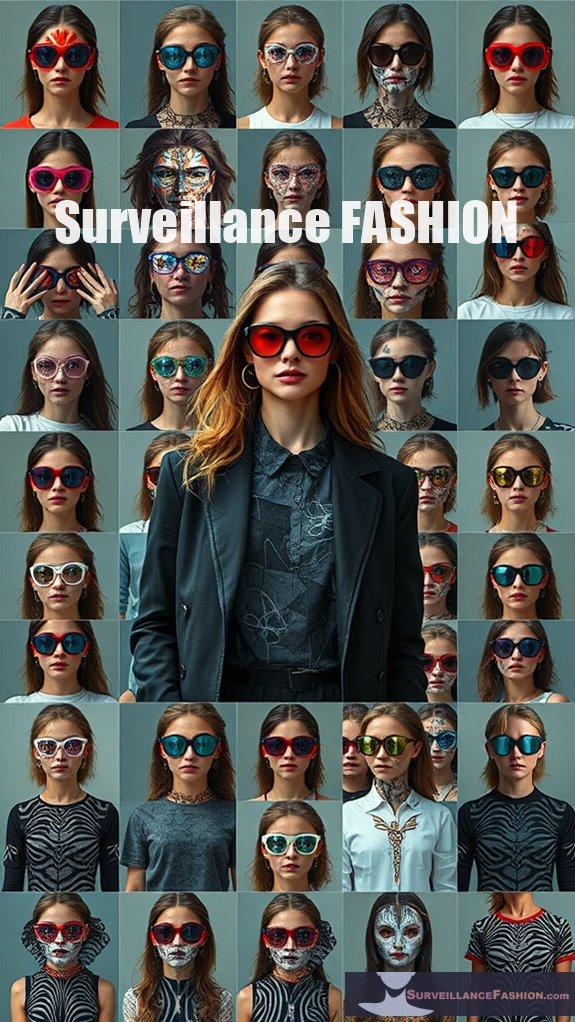
Patterns like bold geometric designs and abstract color combinations effectively mislead surveillance cameras by creating visual noise that complicates facial recognition. Geometric distortions target essential facial features, while vibrant, random hues scatter light, confounding detection systems. For instance, clothing that mimics multiple human forms introduces chaos, further obscuring identity. This innovative approach to fashion promotes privacy, illustrating a growing demand for anonymity in public spheres. Discover more about these trends and other strategies as you explore further.
Quick Takeaways
- Abstract designs and visual noise complicate detection systems, making it difficult for algorithms to identify individuals accurately.
- Geometric distortions manipulate light and shadow, effectively disrupting facial recognition technology targeting key facial features.
- Temporary face paintings can confuse algorithms by altering recognizable facial contours and features.
- Clothing that mimics multiple human forms creates chaos for surveillance systems, hindering identification efforts.
- LED-enhanced visors project distractions that obscure facial features, providing an extra layer of anonymity in monitored environments.
Innovative Fashion Strategies for Privacy Protection

In an era where surveillance technology continuously evolves, the intersection of fashion and privacy has become increasingly captivating, as inventive individuals seek ways to navigate a world dominated by cameras and facial recognition systems. You may find yourself wondering how to maintain your privacy in this environment, and the answer lies in a blend of creativity and technology.
Temporary face paintings, for instance, serve as a fascinating tool to disrupt the ability of facial recognition systems to accurately identify you. By applying unique markers or designs on your face, you can easily confuse algorithms designed to analyze and recognize facial features, granting you a fleeting layer of anonymity. Makeup techniques that alter facial contours can also enhance this effect, providing additional layers of disguise.
Temporary face paintings offer a creative way to confuse facial recognition systems, granting you a momentary veil of anonymity.
Adversarial clothing patterns, too, have emerged as a clever strategy against surveillance. Envision donning a t-shirt adorned with abstract designs, specifically created to mislead AI algorithms. These patterns introduce visual noise that confuses detection systems, making it challenging for them to pinpoint your actual identity. Facial recognition technology has been widely used in various sectors, further emphasizing the importance of these innovative methods.
You might also consider clothing that mimics multiple human forms or, even more intriguingly, garments that feature fake license plates. By feeding surveillance systems with this false data, you contribute to a chaotic environment for the technology, disrupting its ability to function effectively.
The innovations don't stop there. T-shirts with printed faces or mock-up faces can distract facial recognition systems, creating an illusion of multiple identities in the same space. This deliberate obfuscation isn't just a creative endeavor; it's a calculated method to reclaim agency over your own image in a world that often feels like it's watching your every move.
Perhaps you've seen anti-CCTV glasses that reflect UV light—these can blind the cameras, rendering them ineffective at capturing your likeness.
Moreover, advancements in LED technology have led to the development of privacy visors that project a noise pattern obscuring facial features from the camera's view. This technology, while still in its prototype phase and perhaps not the most aesthetically pleasing, denotes a growing recognition of the need for privacy in public spaces. Activating these LEDs in the presence of cameras can add an additional layer of visual distraction, further complicating the algorithm's ability to accurately identify you.
Animal-inspired patterns have also garnered attention for their effectiveness in fooling surveillance systems. By wearing clothing designed with zebra or giraffe-like patterns, you might confuse cameras into identifying you as an animal rather than a human being.
This playful yet strategic approach to fashion represents a novel intersection between identity and technology, where the garments you choose to wear can greatly impact how you're perceived by smart systems.
As you explore these various methods of evasion, you may find yourself reflecting on the broader implications of surveillance and privacy. At Surveillance Fashion, we've created this platform to explore such topics, empowering individuals to rethink their relationship with technology and their own identities in an increasingly monitored world.
Bold Geometric Designs Mislead Cameras
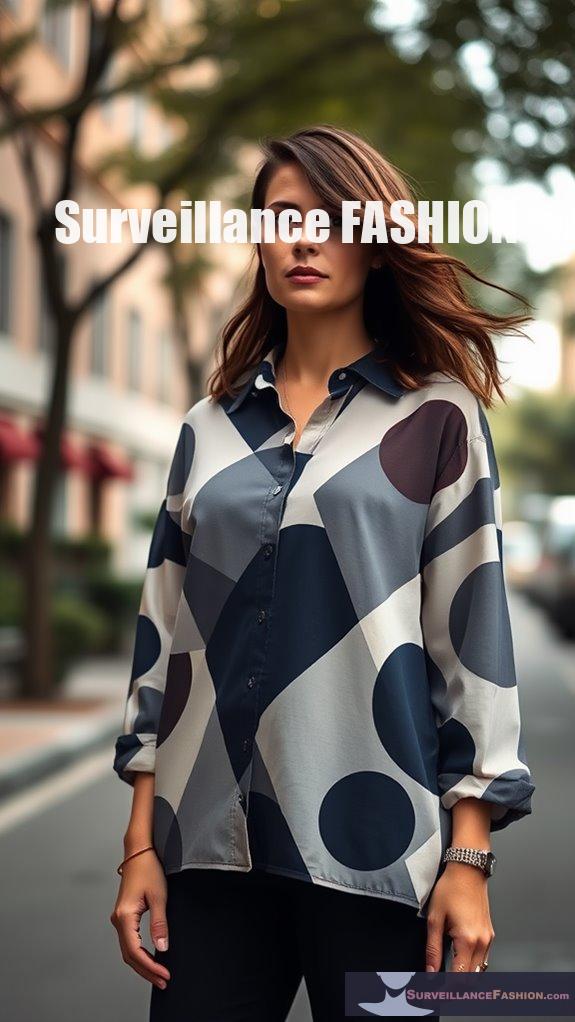
Bold geometric designs serve as a compelling strategy in the ongoing battle against facial recognition technology, creating a visual disruption that challenges the accuracy of surveillance systems. By employing geometric distortions, these designs manipulate light and shadow, effectively altering how algorithms perceive facial features.
The essence of this method lies in its ability to exploit the vulnerabilities within computer vision systems, specifically targeting key areas such as the eyes and nose, which are essential for detection. For instance, using patterns reminiscent of juggalo face paint can confuse algorithms, leading to algorithmic deception that misidentifies individuals. Additionally, incorporating dynamic patterns that change with movement can further enhance the confusion for surveillance technologies.
Moreover, customizing these patterns to fit the wearer and the specific targeted algorithm enhances effectiveness considerably. As we navigate an era increasingly dominated by surveillance, understanding these techniques becomes critical, not only for privacy but for engaging in conversations about our digital identities, a core reason behind Surveillance Fashion's inception. Additionally, designers are constantly innovating to create surveillance-resistant patterns that further challenge detection technologies.
Abstract Color Combinations Disorient Cameras

While many people might assume that facial recognition technology relies solely on sharp images, the reality is that abstract color combinations can greatly disrupt these systems, creating a form of visual noise that hinders accurate detection.
By employing patterns that evoke color chaos, you can effectively confuse surveillance cameras, preventing them from accurately recognizing faces or tracking objects. These designs often draw inspiration from nature or abstract art, carefully crafted to disrupt the camera's processing algorithms. Moreover, the use of infrared-reflecting materials can add an additional layer of protection against facial recognition technology.
For instance, clothing made from special fabrics with random hues can scatter light, making it difficult for cameras to capture clear images. Additionally, patterns that feature dynamic color shifts can further enhance the effectiveness of these designs by introducing continuous change that confuses image processing systems.
As technology advances, so does the sophistication of these anti-surveillance techniques. At Surveillance Fashion, we explore and highlight these innovative designs, showcasing how the right choice of fabric and color can protect your anonymity in an increasingly monitored world.
Ultimately, understanding these principles helps you navigate public spaces with greater confidence.
References
- https://www.stratecta.exchange/fashion-that-can-beat-facial-recognition-systems/
- https://www.popularmechanics.com/technology/security/g28719483/trick-surveillance-systems/
- https://www.youtube.com/watch?v=NyofHyRm5CQ
- https://realkm.com/2020/02/13/wearing-an-adversarial-patch-can-fool-automated-security-cameras-top-100-journal-articles-of-2019/
- https://www.businessinsider.com/facial-recognition-cameras-sweater-protect-privacy-data-trick-fool-clothes-2023-2
- https://www.vice.com/en/article/can-face-paint-fool-qatar-world-cup-facial-recognition-cameras/
- https://adam.harvey.studio/cvdazzle/
- https://www.istockphoto.com/illustrations/security-cameras-drawings
- https://makerfairerome.eu/en/fabric-to-deceive-facial-recognition-systems/
- https://blog.ampedsoftware.com/2021/03/02/color-reliability-its-hard-to-objectively-evaluate-colors-on-video
Leave a Reply